

Attenborough’s Long-Beaked Echidna Zaglossus attenboroughi
Critically Endangered
Extant (resident)
West Papua
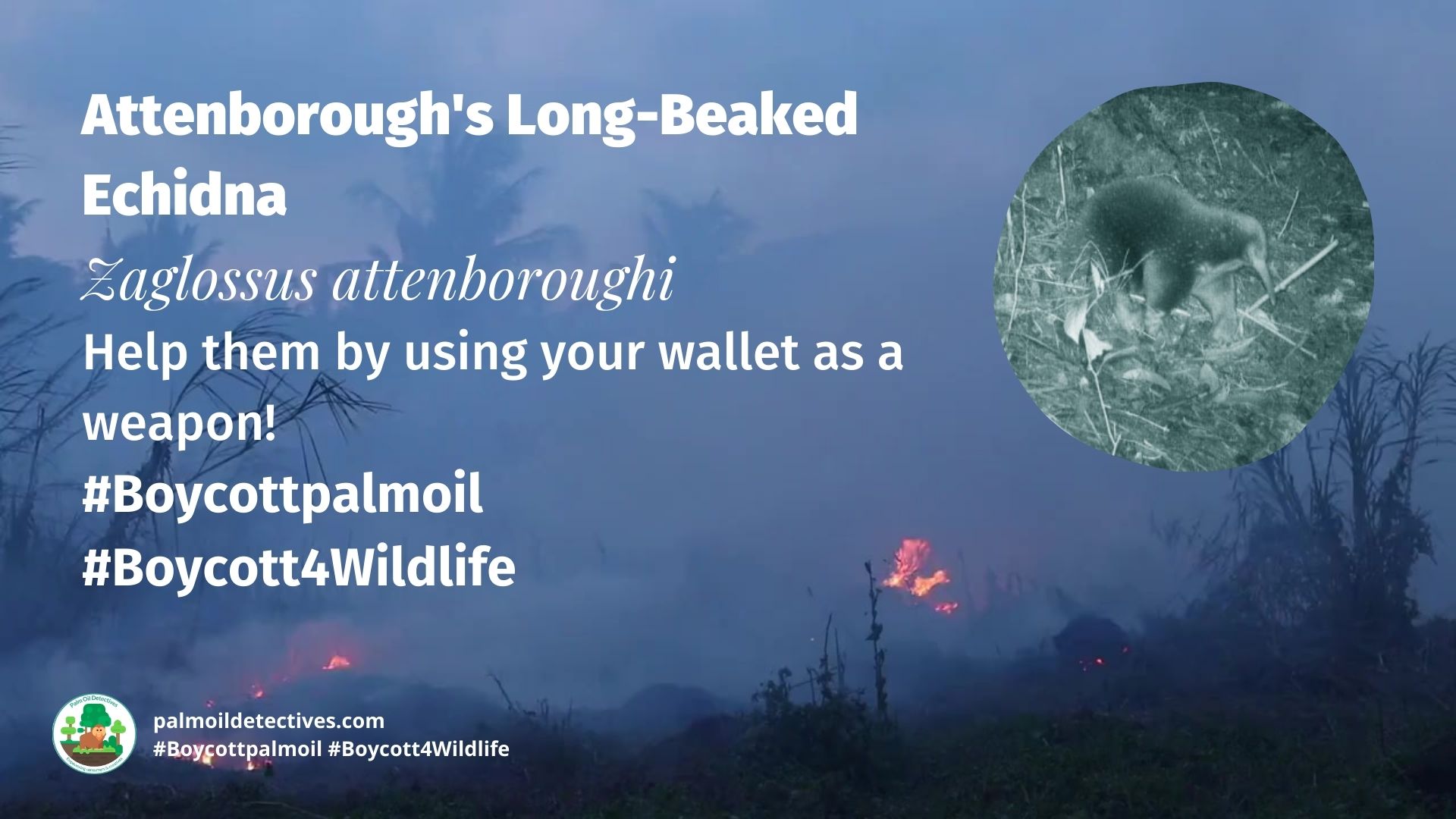
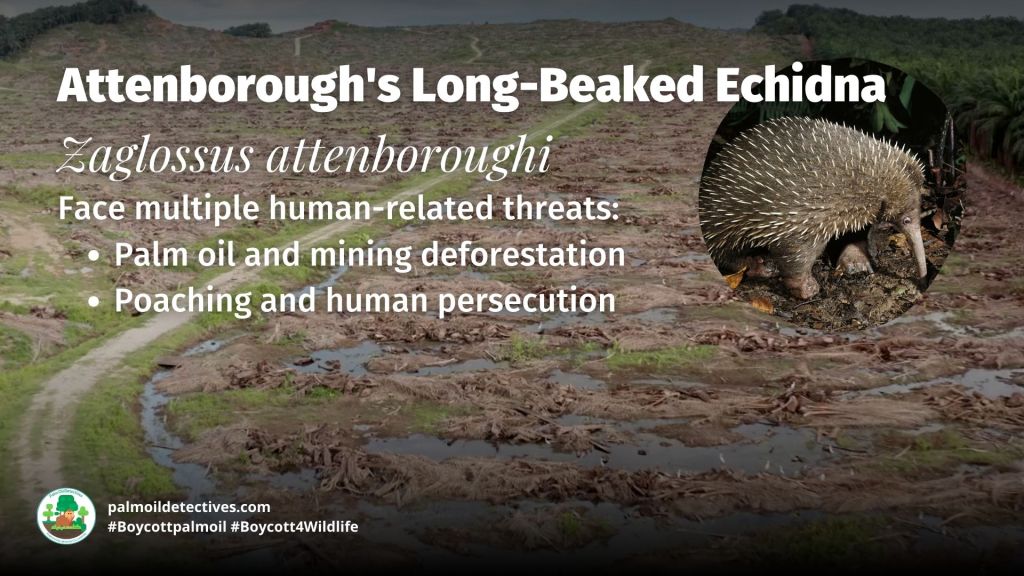
Attenborough’s long-beaked #echidna (Zaglossus attenboroughi), known locally as “Payangko,” is one of the most evolutionarily distinct mammals and is native to the Cyclops Mountains in Indonesian occupied #WestPapua. This critically endangered monotreme is distinguished by its unique feeding technique and smaller size compared to other long-beaked echidnas. Despite not being recorded by scientists since 1961, a recent expedition led to its rediscovery in 2023, offering renewed hope for the species. Facing threats from #hunting and habitat degradation, we must protect this elusive creature by supporting sustainable practices and community-led conservation. #BoycottPalmOil #Boycott4Wildlife
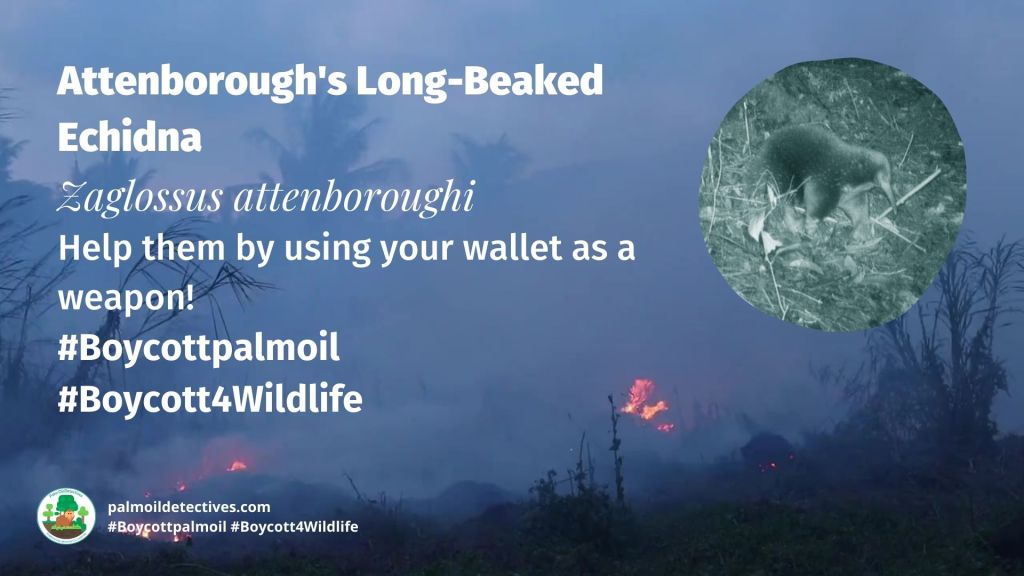
Living in #WestPapua, the Attenborough’s Long-Beaked #Echidna was thought extinct until rediscovery in 2023. They’re now on the knife-edge of survival from #palmoil #mining #deforestation. Help them and #Boycottpalmoil #Boycott4Wildlife @palmoildetect https://wp.me/pcFhgU-7Qj
Part of an ancient group of egg-laying monotreme #mammals, Attenborough Long-Beaked #Echidnas of #WestPapua are critically endangered. Fight for their survival when you shop and #Boycottpalmoil #Boycott4Wildlife via @palmoildetect https://wp.me/pcFhgU-7Qj
Appearance & Behaviour
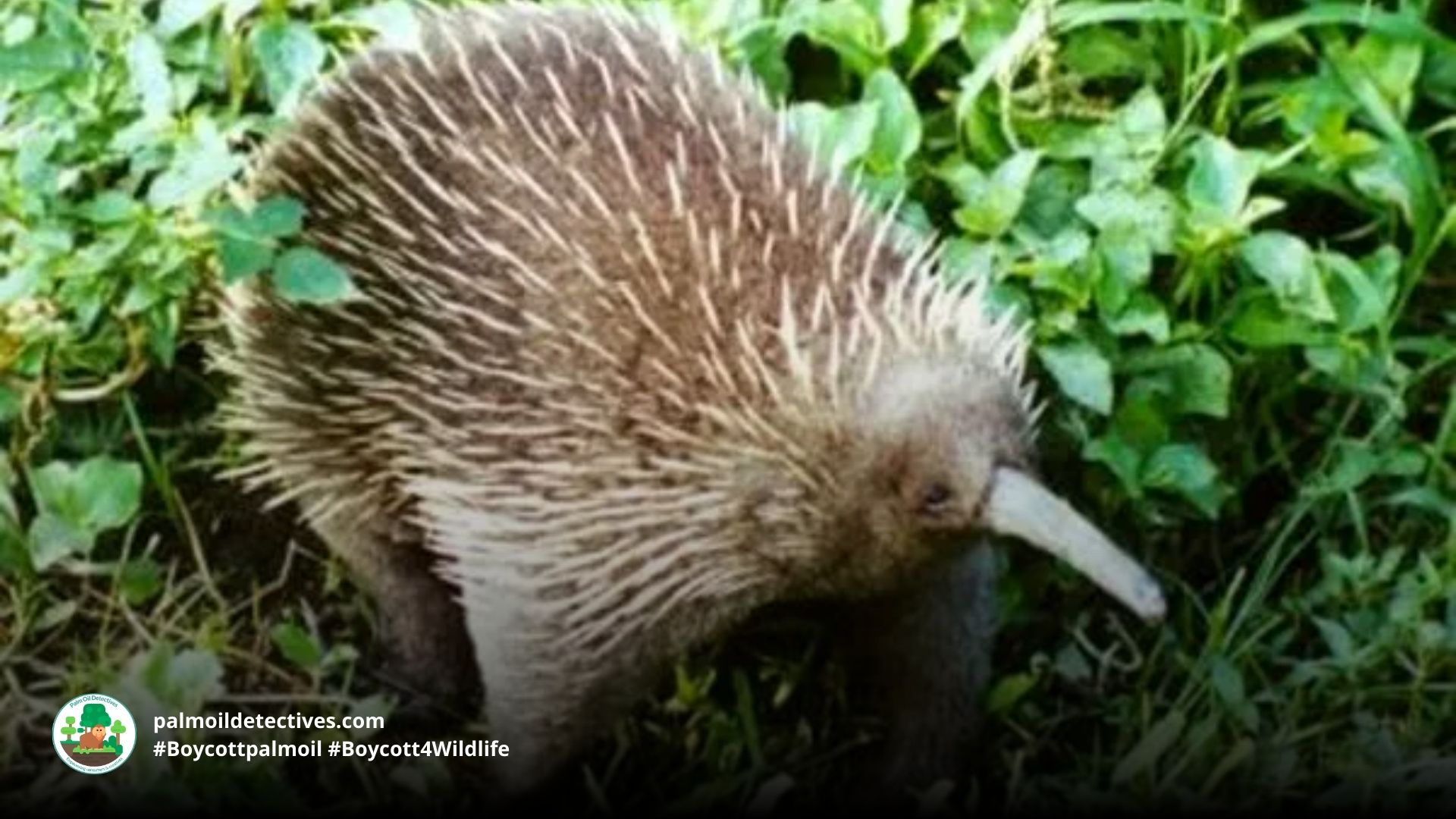
As the smallest member of the genus Zaglossus, the Attenborough’s long-beaked echidna is comparable in size to the short-beaked echidna. Males have spurs on their hind legs, and both sexes sport a long, narrow beak. They are solitary, coming together only once a year to mate. When threatened, they curl into a spiny ball, resembling a hedgehog.
- Monotreme Lineage: One of the few egg-laying mammals, with ancestors dating back 46 million years.
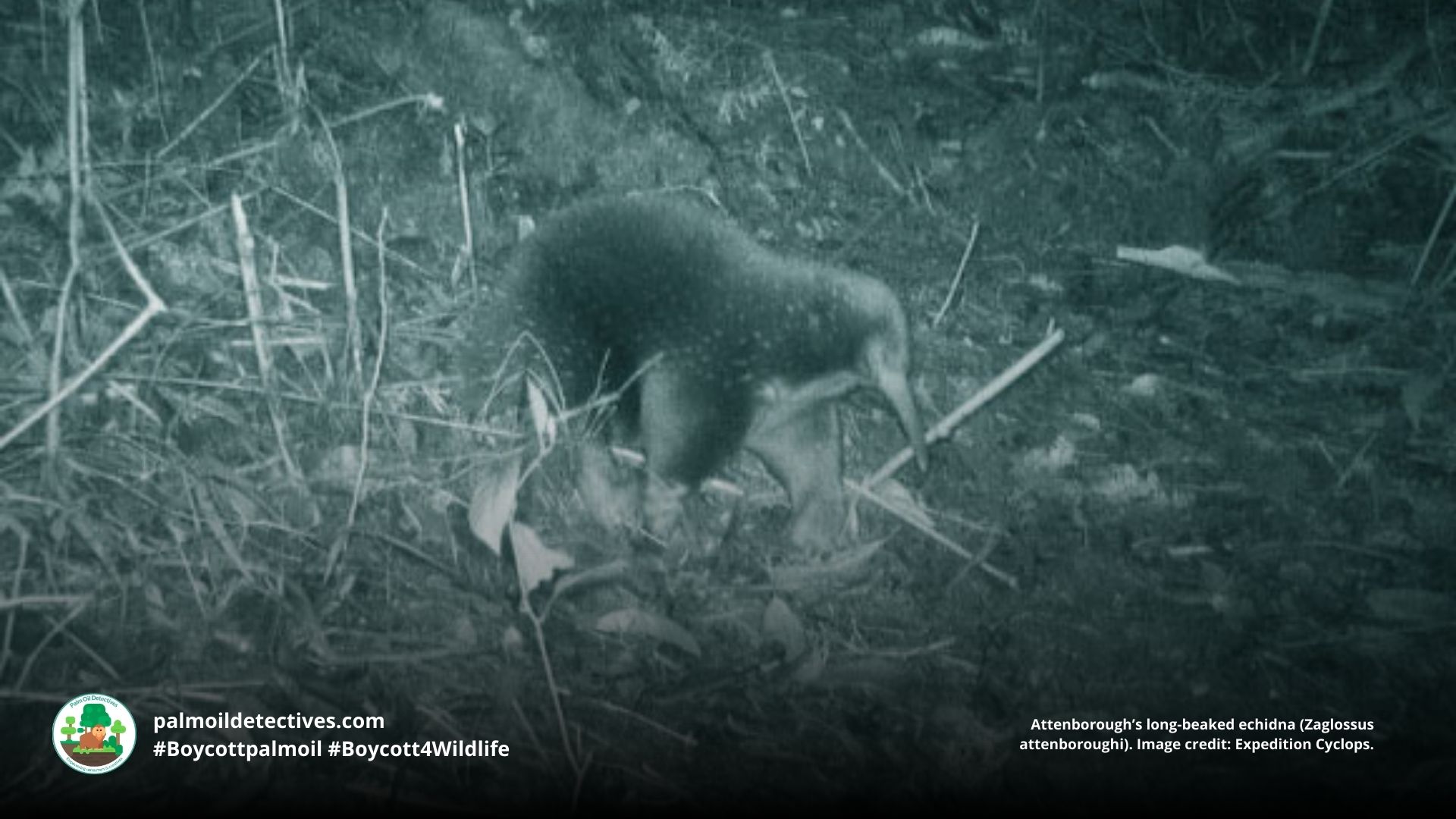
- Rediscovered Species: After not being recorded for over six decades, this critically endangered species was spotted through trail camera footage in 2023.
- Nose Pokes: Their distinctive feeding behavior leaves behind “nose pokes” in the soil, revealing where they dig for earthworms and termites.

Threats
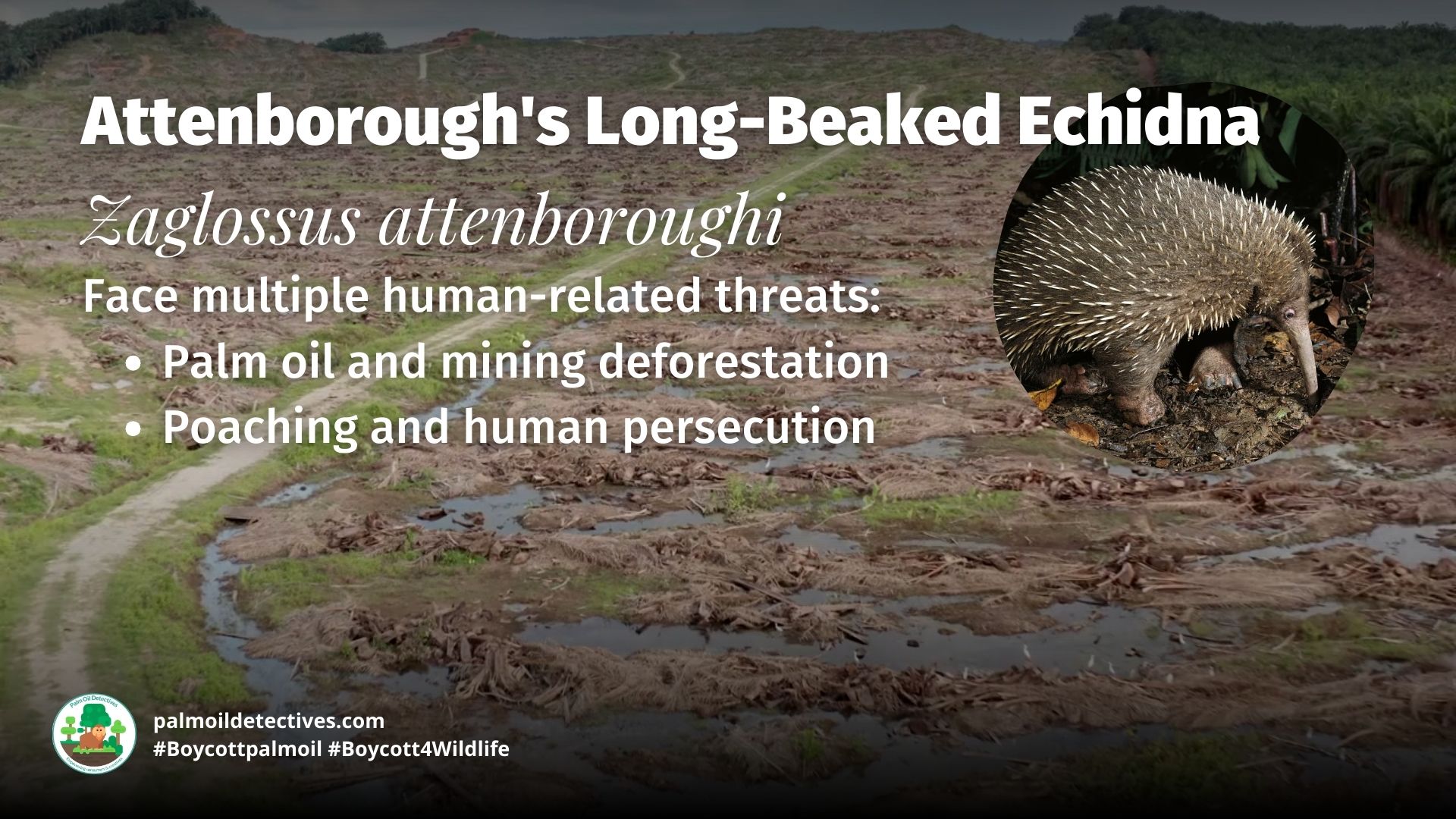
Long thought extinct for decades, a chance discovery of them on camera traps revealed they have survived. Yet they are critically endangered due to serious ongoing threats:
- Hunting with Dogs: Local hunting practices using trained dogs to detect their burrows pose a significant threat.
- Habitat Destruction: Logging for timber, palm oil agriculture, and forest conversion for gold mining make these echidnas put these animals at risk.
- Hunting: Forest clearance puts them at risk for predation and hunting.
You can help them to survive when you consciously avoid and boycott products with palm oil in them and support local efforts to protect them. #BoycottPalmOil #Boycott4Wildlife
Habitat
This species is found exclusively in the tropical montane forests of the Cyclops Mountains in Papua, Indonesia. Their range includes lowland to montane elevations.
Diet
Their diet consists primarily of earthworms, termites, insect larvae, and ants. They use their long beaks to sniff out prey and then dig with their powerful claws, leaving behind the characteristic “nose poke” marks.
Mating and breeding
Attenborough’s long-beaked echidnas come together only once a year for mating. The female lays an egg, and the offspring remain in the mother’s pouch for around eight weeks until their spines develop. They have a long weaning period of approximately seven months.
Support Attenborough’s Long-Beaked Echidna by going vegan and boycotting palm oil in the supermarket, it’s the #Boycott4Wildlife
Support the conservation of this species
This animal has no protections in place. Read about other forgotten species here. Create art to support this forgotten animal or raise awareness about them by sharing this post and using the #Boycottpalmoil #Boycott4Wildlife hashtags on social media. Also you can boycott palm oil in the supermarket.
Further Information
Leary, T., Seri, L., Flannery, T., Wright, D., Hamilton, S., Helgen, K., Singadan, R., Menzies, J., Allison, A., James, R., Aplin, K., Salas, L. & Dickman, C. 2016. Zaglossus attenboroughi. The IUCN Red List of Threatened Species 2016: e.T136322A21964353. https://dx.doi.org/10.2305/IUCN.UK.2016-2.RLTS.T136322A21964353.en. Accessed on 09 May 2024.
Re:wild. (2023). Attenborough’s long-beaked echidna rediscovered. https://rewild.org/news/attenboroughs-long-beaked-echidna-rediscovered
Reuters. (2023, November 10). Species of mammal named after David Attenborough believed extinct rediscovered. The Guardian. https://www.theguardian.com/world/2023/nov/10/attenborough-long-beaked-echidna-seen-first-time-cyclops-mountain-photos-footage
Wikipedia. (n.d.). Attenborough’s long-beaked echidna. https://en.wikipedia.org/wiki/Attenborough%27s_long-beaked_echidna

How can I help the #Boycott4Wildlife?
Take Action in Five Ways
1. Join the #Boycott4Wildlife on social media and subscribe to stay in the loop: Share posts from this website to your own network on Twitter, Mastadon, Instagram, Facebook and Youtube using the hashtags #Boycottpalmoil #Boycott4Wildlife.
2. Contribute stories: Academics, conservationists, scientists, indigenous rights advocates and animal rights advocates working to expose the corruption of the palm oil industry or to save animals can contribute stories to the website.



3. Supermarket sleuthing: Next time you’re in the supermarket, take photos of products containing palm oil. Share these to social media along with the hashtags to call out the greenwashing and ecocide of the brands who use palm oil. You can also take photos of palm oil free products and congratulate brands when they go palm oil free.
4. Take to the streets: Get in touch with Palm Oil Detectives to find out more.
5. Donate: Make a one-off or monthly donation to Palm Oil Detectives as a way of saying thank you and to help pay for ongoing running costs of the website and social media campaigns. Donate here
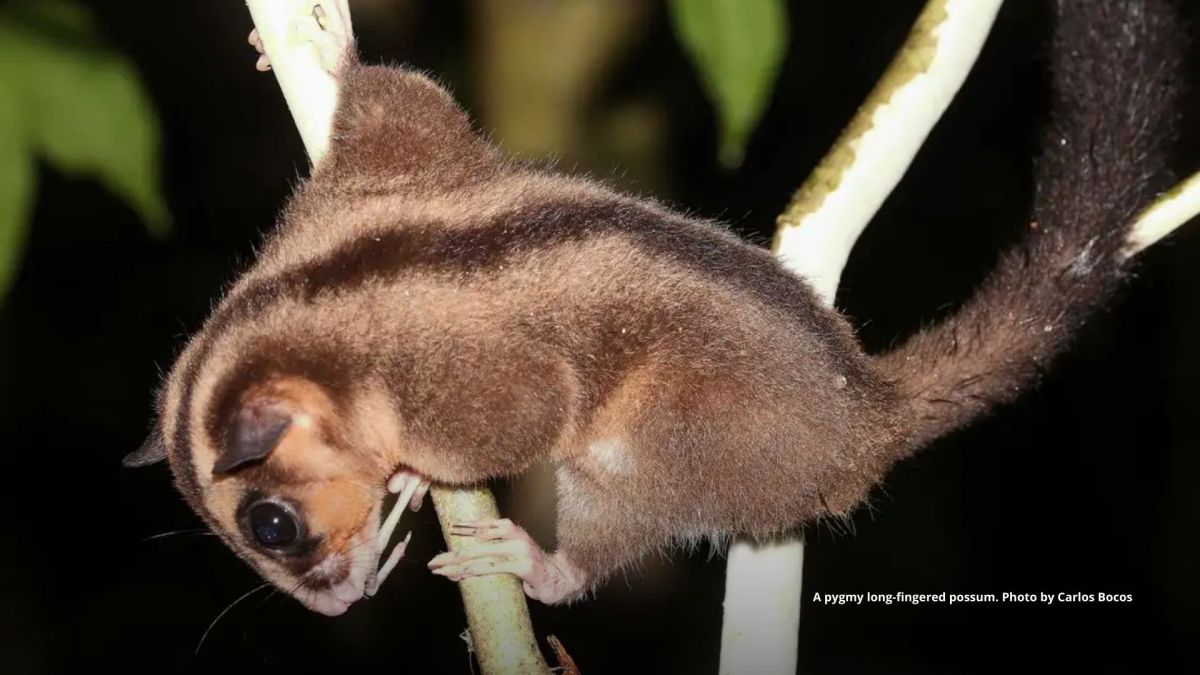
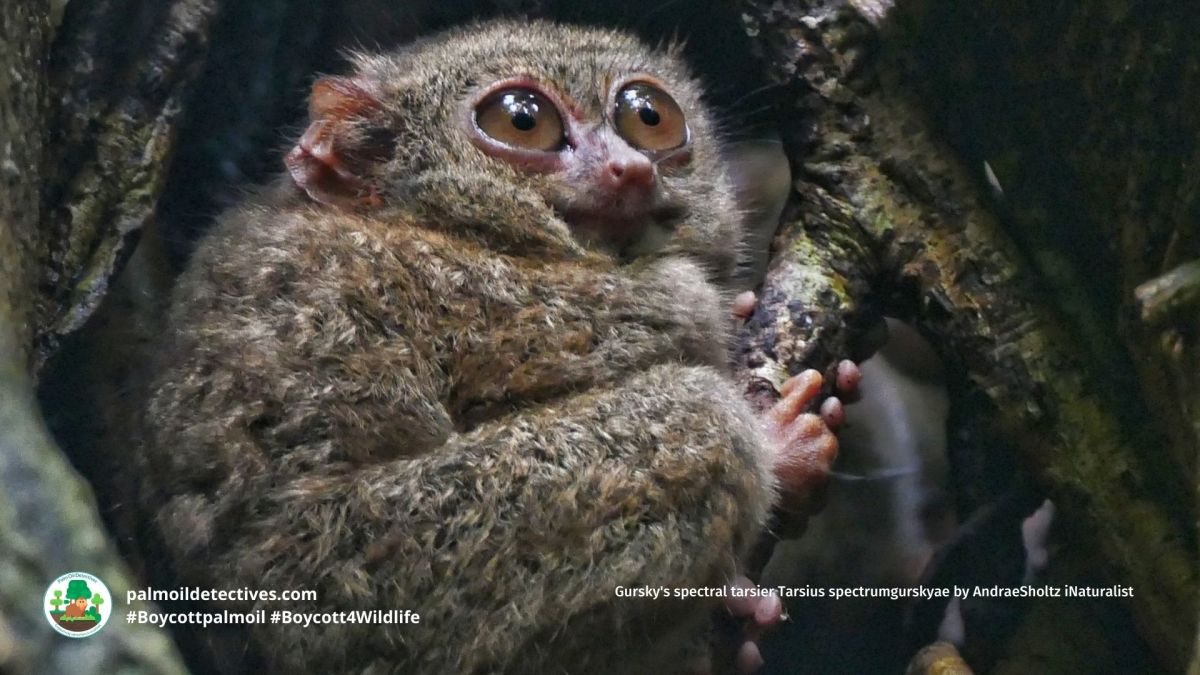
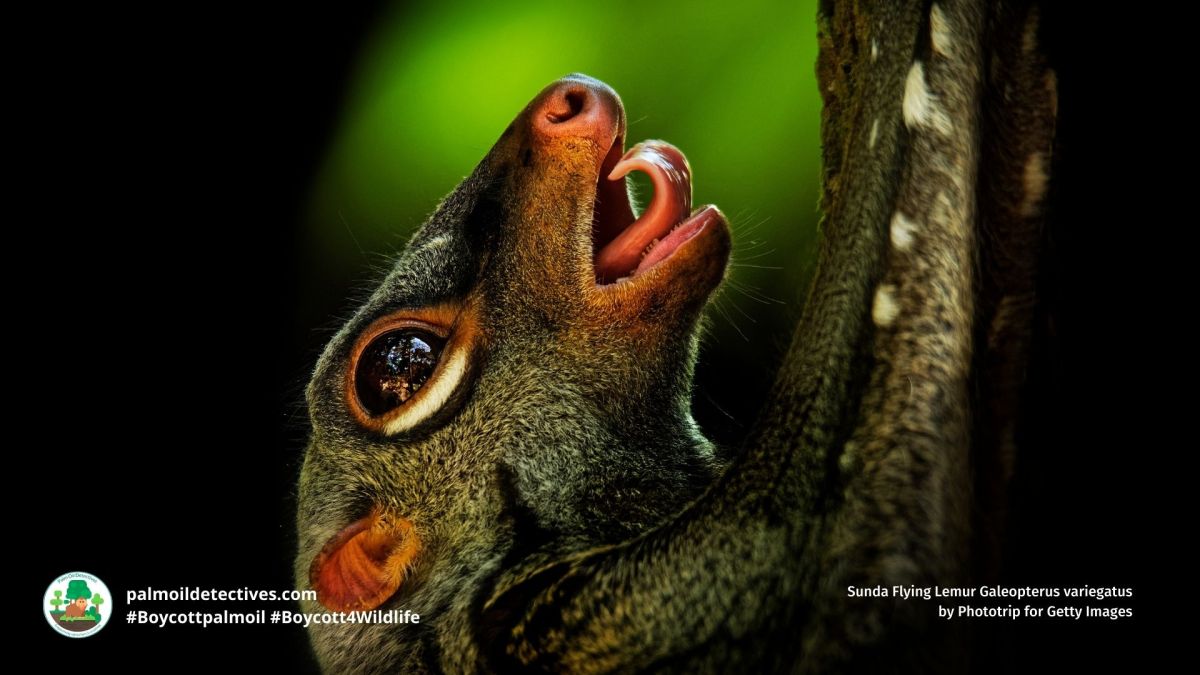
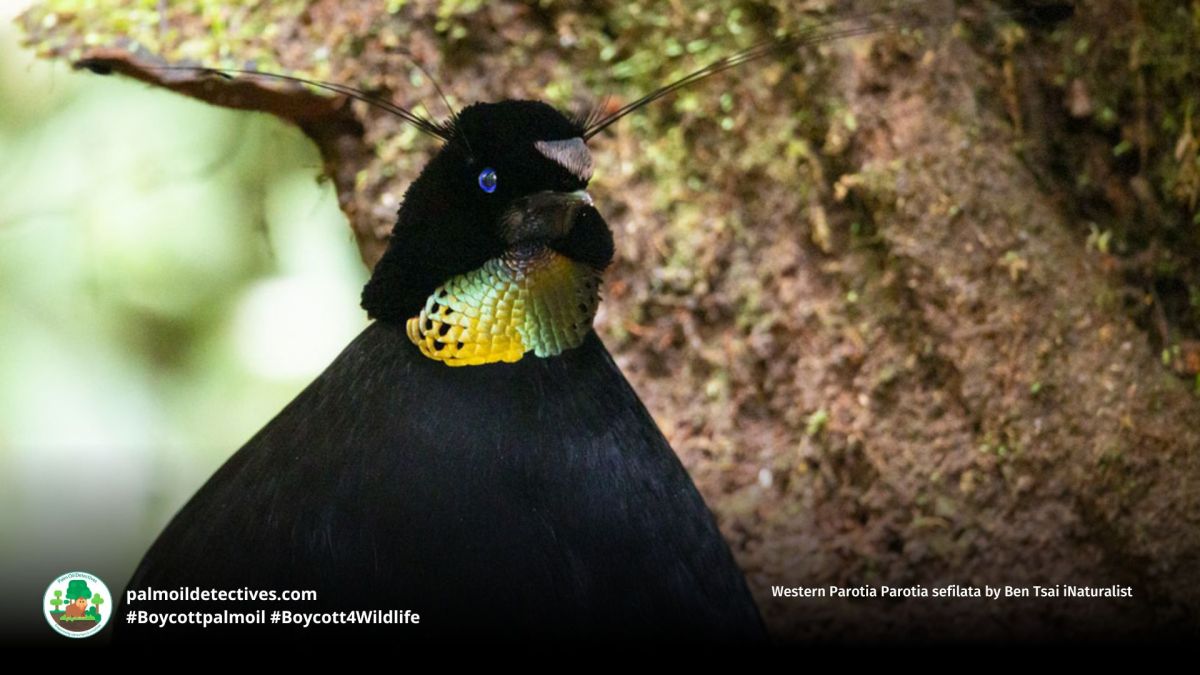
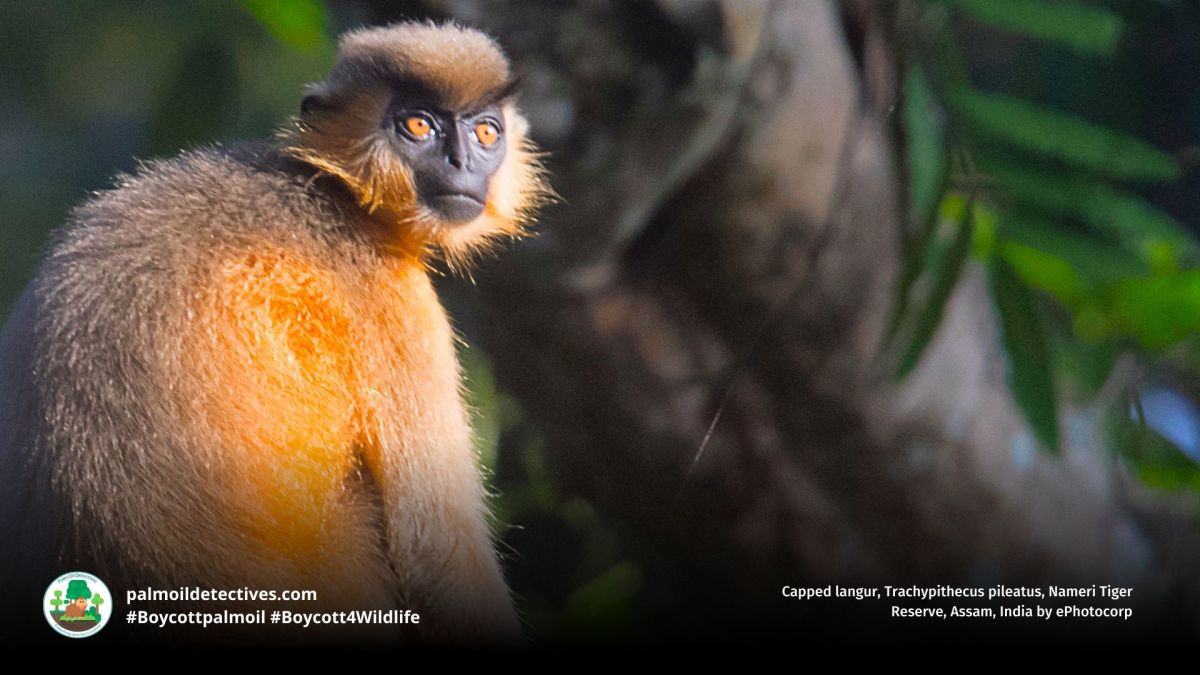
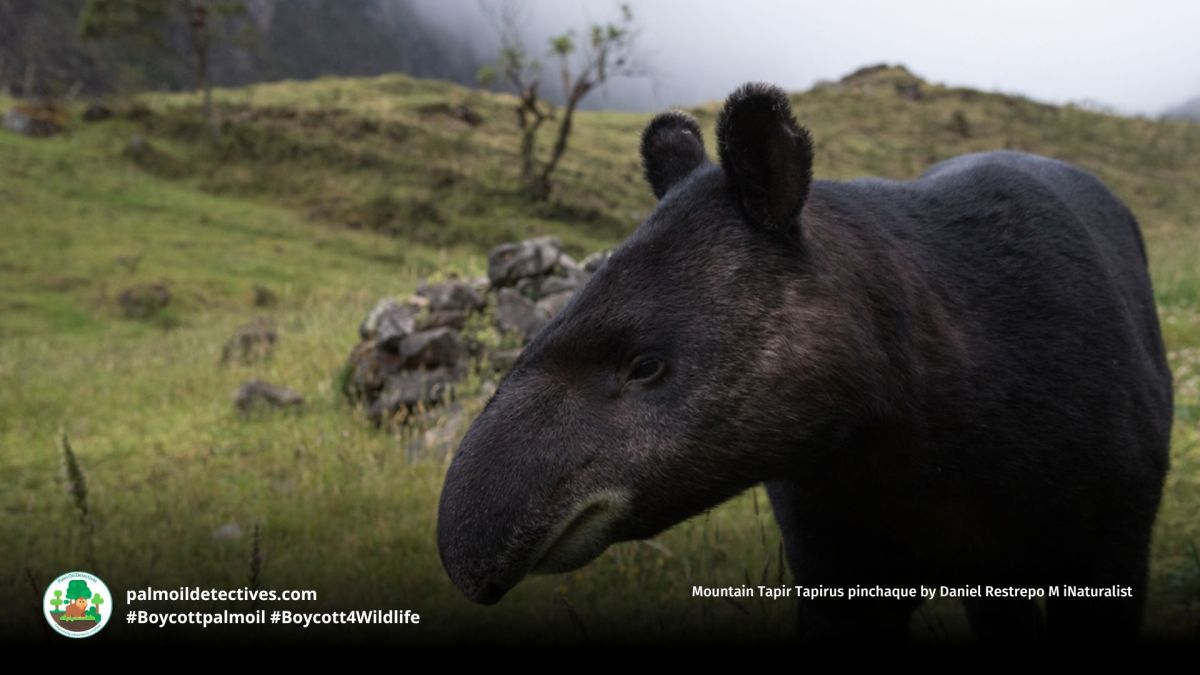
Learn about other animals endangered by palm oil and other agriculture
Learn about “sustainable” palm oil greenwashing
Read more about RSPO greenwashing
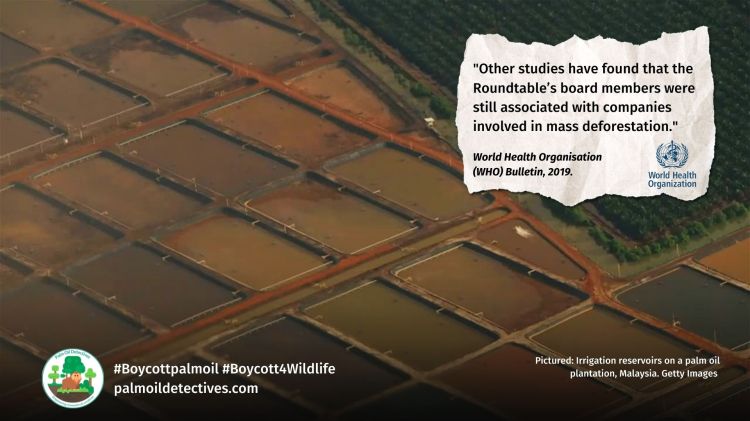
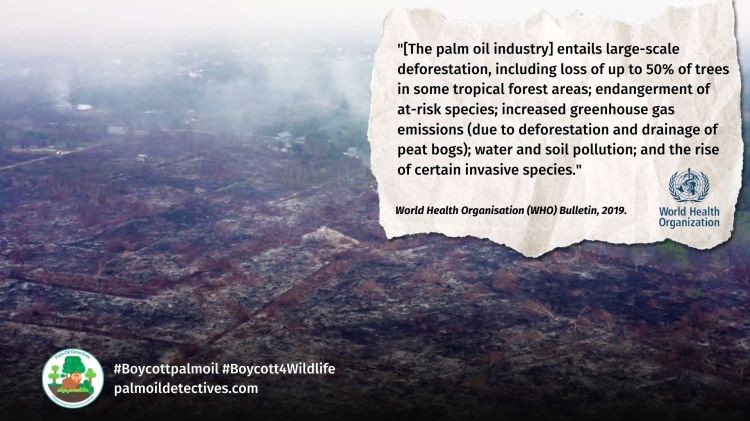
A 2019 World Health Organisation (WHO) report into the palm oil industry and RSPO finds extensive greenwashing of palm oil deforestation and the murder of endangered animals (i.e. biodiversity loss)



Discover more from Palm Oil Detectives
Subscribe to get the latest posts sent to your email.
 Palm Oil Detectives
One thought on “Attenborough’s Long-Beaked Echidna Zaglossus attenboroughi”