
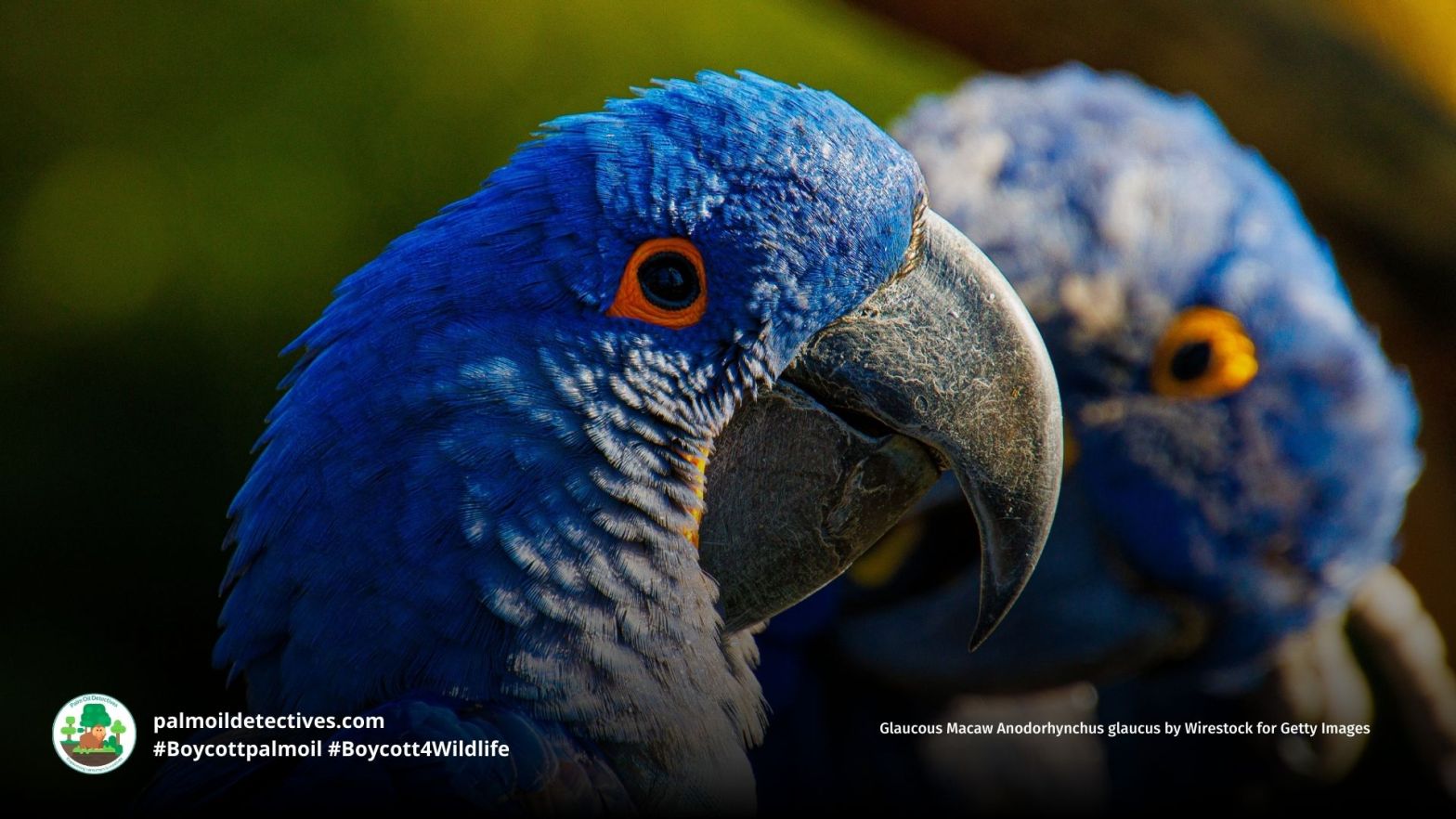
Glaucous Macaw Anodorhynchus glaucus
Critically endangered
Extant (resident)
Argentina; Brazil; Paraguay; Uruguay
The Glaucous #Macaw stands out not only for their vibrant coloration but also for their vocalisations, which led to its Guaraní name “guaa-obi.” As part of a larger group of neotropical macaws, they are closely related to the Lear’s macaw (A. leari) and the hyacinth macaw (A. hyacinthinus). Although often confused with similar species, the Glaucous Macaw is a unique denizen of South America’s gallery forests and palm savannahs.
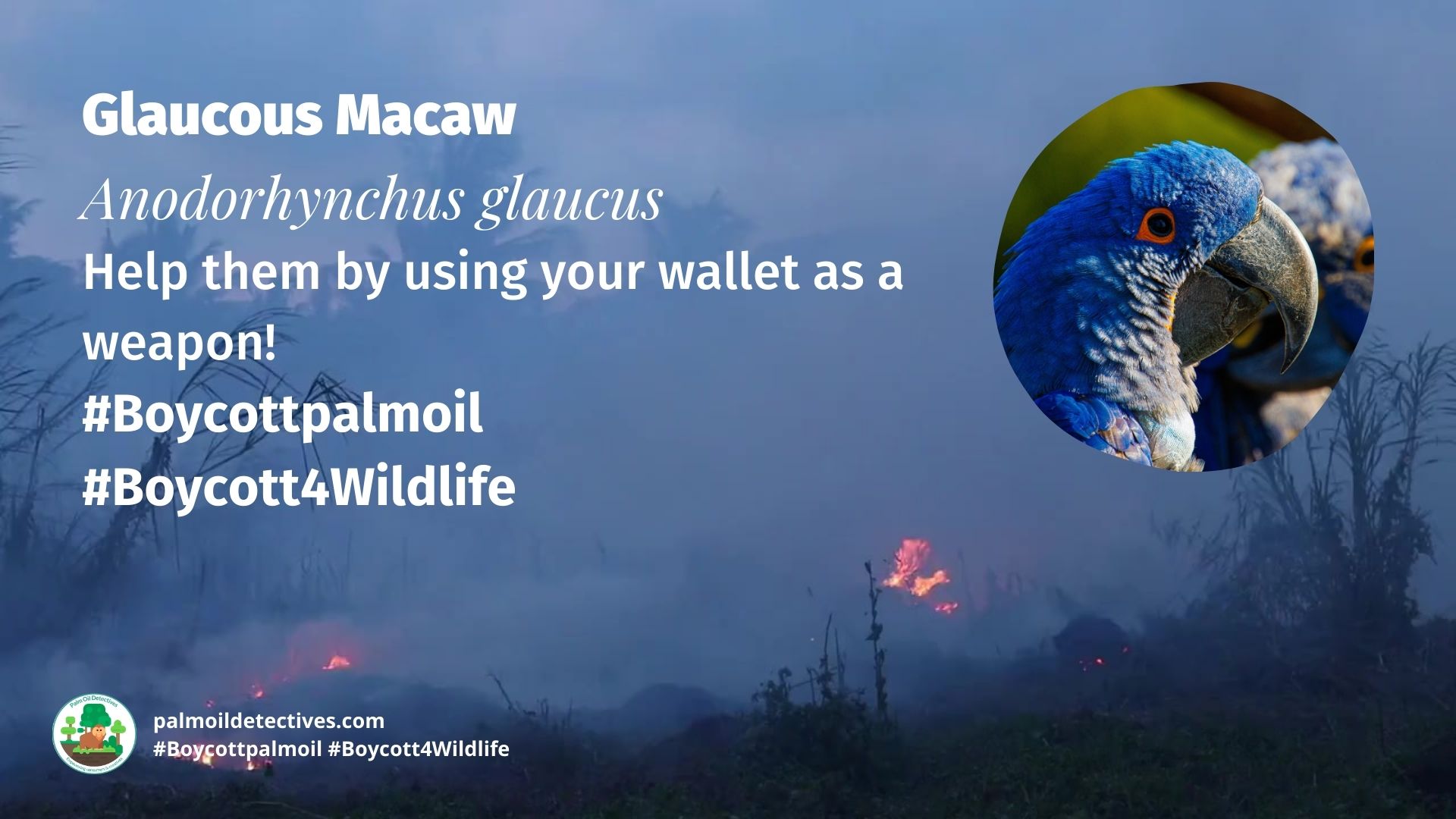
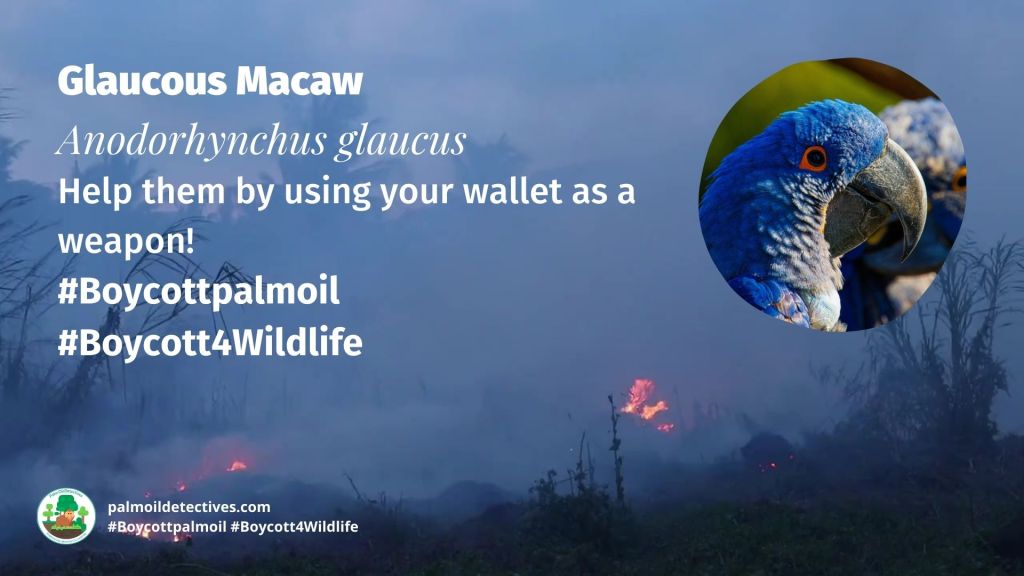
Use your wallet as a weapon and help the Glaucous Macaw and other rare #birds. They face many threats to their survival including forest destruction for meat, palm oil, soy and gold. Join the movement to #BoycottPalmOil #BoycottGold and #Boycott4Wildlife. Together we can empower people we know to make conscious supermarket decisions for wildlife survival.
Their regal blue feathers have led the Glaucous #Macaw to being targeted by those in the illegal #pet trade and their home is being razed for #palmoil, #gold and #meat Help them to survive! #Boycottpalmoil #BoycottGold and be #vegan @palmoildetect https://wp.me/pcFhgU-7R7
The alluring deep blue Glaucous #Macaw 🦜 has an immeasurably tragic tale to tell 😭🙁 Critically endangered in #SouthAmerica, fight for their survival, when you shop make sure you #Boycottpalmoil #BoycottGold 🚫🔥#Boycott4Wildlife @palmoildetect https://wp.me/pcFhgU-7R7
Appearance & Behaviour
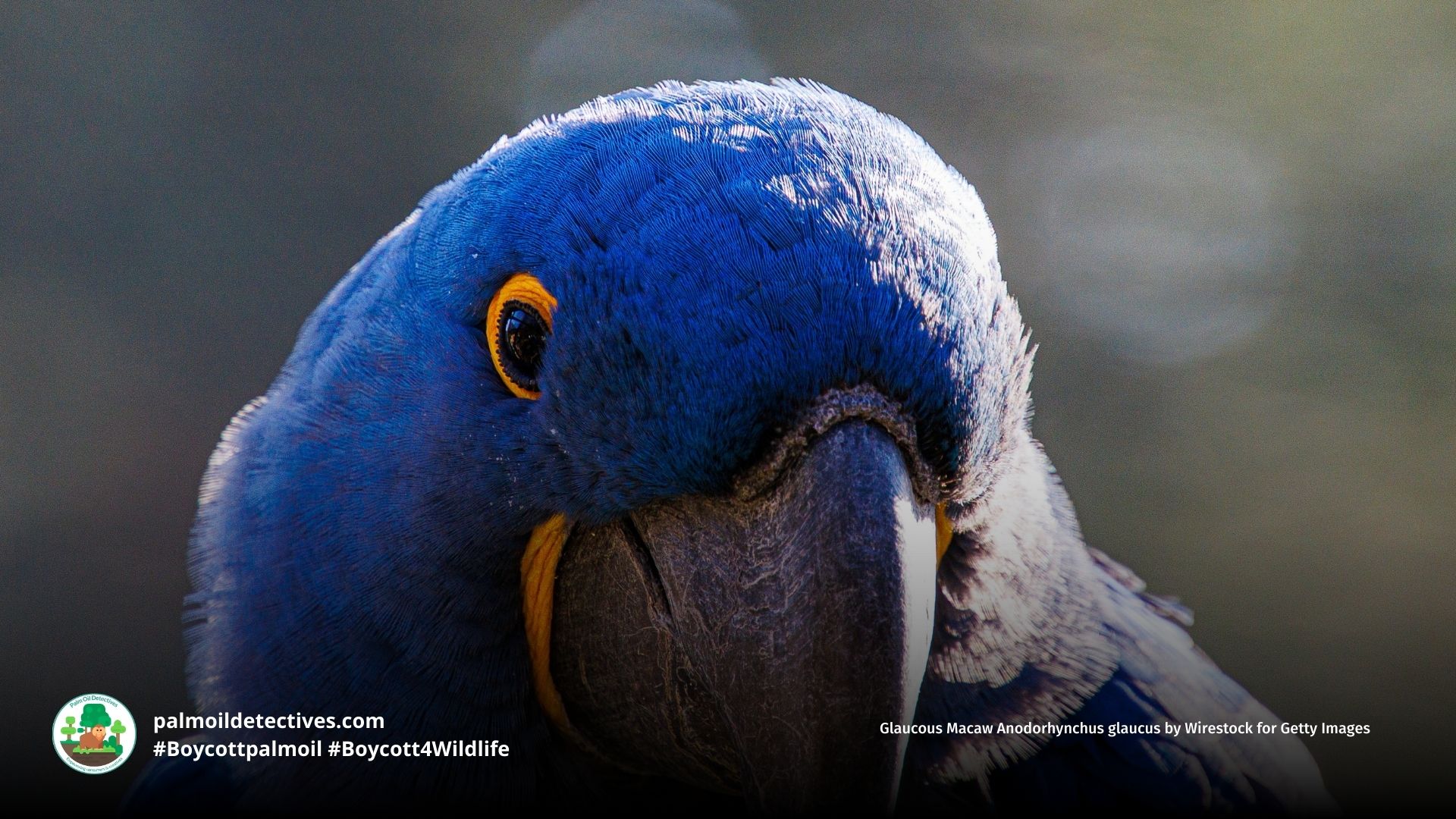
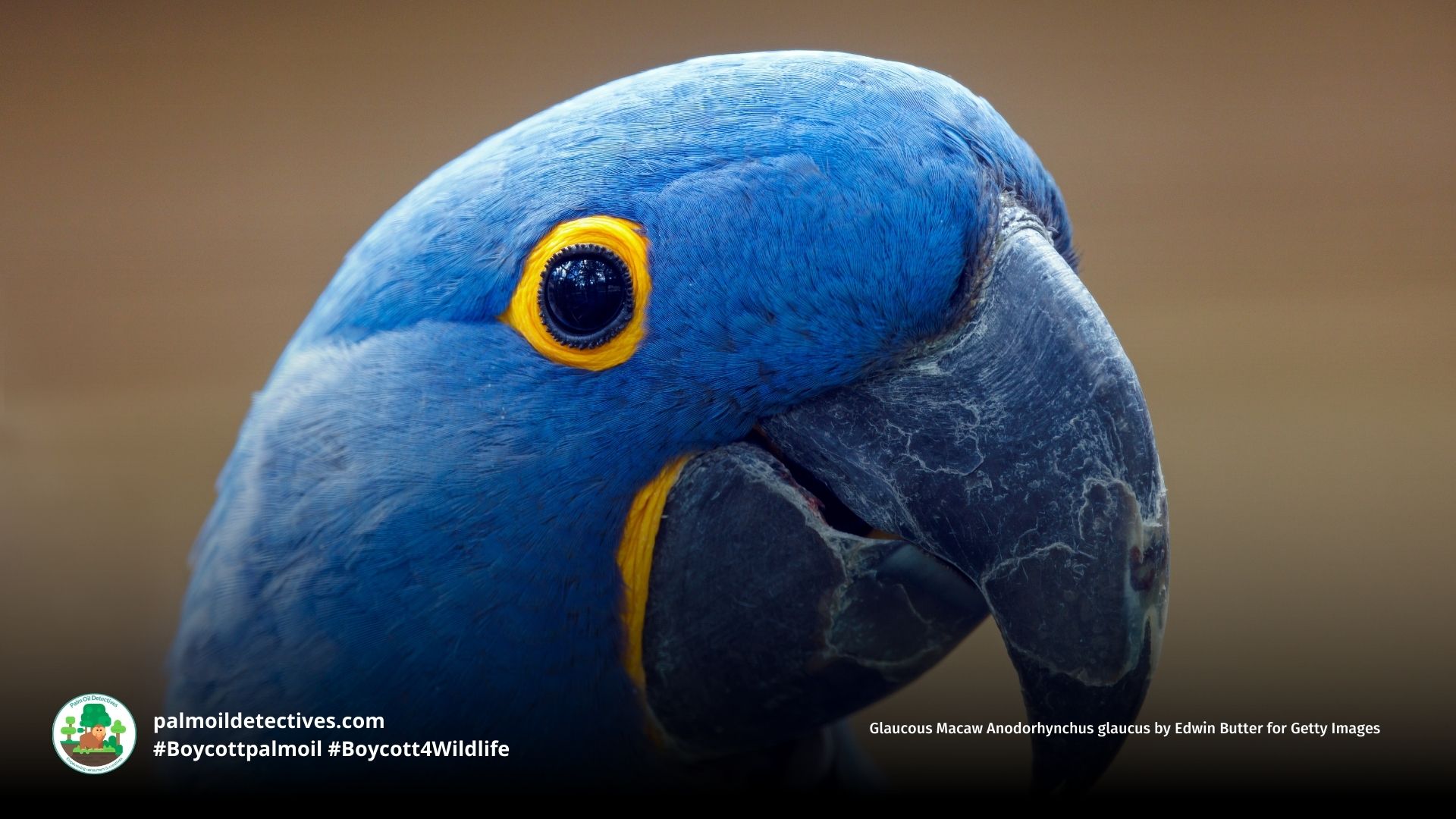
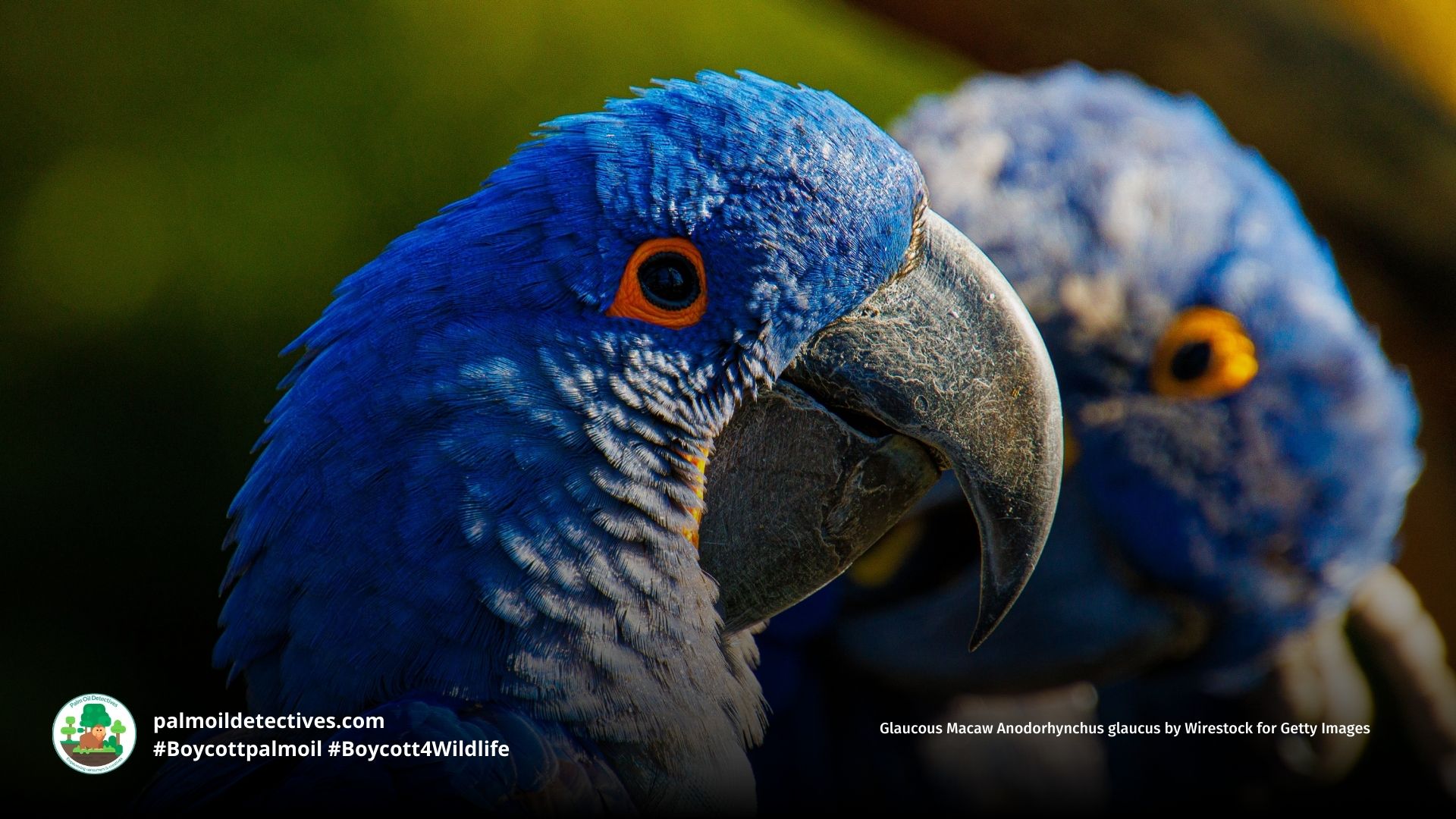
The Glaucous Macaw Anodorhynchus glaucus are known for their pale turquoise-blue plumage and distinctive grey head, is a critically endangered bird native to South America. With a length of 70 cm (28 in), this striking macaw features a long tail, yellow eye ring, and half-moon lappets around its large mandible. Despite their formidable size and stunning appearance, the bird is rarely seen in the wild today due to habitat loss and poaching.

Threats
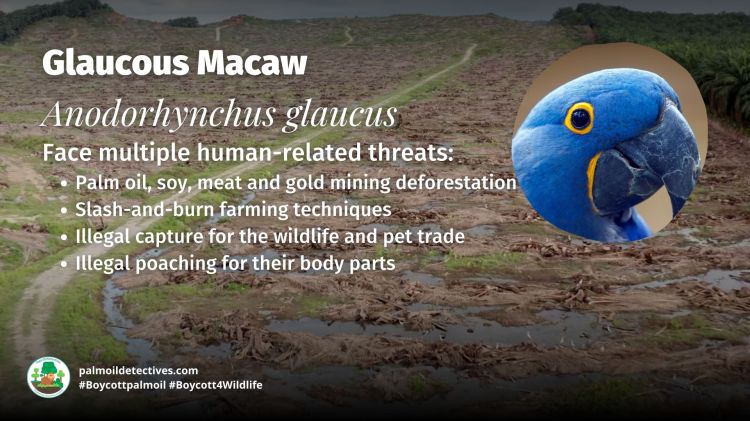
The Glaucous Macaw faces have faced significant human-related threats that have driven them to the brink of extinction. This is an immeasurable tragedy.
- Habitat Loss: Widespread logging, gold mining and palm oil agriculture led to the destruction of crucial yatay palm groves.
- Poaching: The bird was heavily targeted for the illegal pet trade due to their striking appearance.
- Deforestation: Conversion of forests for palm oil and cultivation along with gold mining and cattle ranching has destroyed many suitable habitats for the Glaucous Macaw.

Habitat
The Glaucous Macaw was historically found across Argentina, Paraguay, Uruguay, and Brazil, favoring river basins with yatay palms or open forests. They relied on these palm groves for nesting and feeding. Their disappearance from these areas due to logging, agriculture, and hunting is a poignant reminder of the importance of habitat conservation. We cannot let them disappear!
Diet
Primarily feeding on the yatay palm nuts, the Glaucous Macaw supplemented their diet with other fruits and seeds. The loss of these critical palms directly impacted the bird’s survival and forced the remaining macaws to seek alternative, often insufficient, food sources.
Mating and breeding
Little is known about the breeding behaviour of this species due to their rarity. It is thought they nested on rocky cliffs in colonies, likely laying eggs in secure nests. Their colonial nature made them especially vulnerable to hunters.
Support Glaucous Macaw by going vegan and boycotting palm oil in the supermarket, it’s the #Boycott4Wildlife
Support the conservation of this species
This animal has no protections in place. Read about other forgotten species here. Create art to support this forgotten animal or raise awareness about them by sharing this post and using the #Boycottpalmoil #Boycott4Wildlife hashtags on social media. Also you can boycott palm oil in the supermarket.
Further Information
Animalia. (n.d.). Glaucous Macaw. Retrieved from https://animalia.bio/glaucous-macaw
BirdLife International. (n.d.). Glaucous Macaw Conservation. Birds of the World
BirdLife International. 2019. Anodorhynchus glaucus. The IUCN Red List of Threatened Species 2019: e.T22685527A154380861. https://dx.doi.org/10.2305/IUCN.UK.2019-3.RLTS.T22685527A154380861.en. Accessed on 09 May 2024.

How can I help the #Boycott4Wildlife?
Take Action in Five Ways
1. Join the #Boycott4Wildlife on social media and subscribe to stay in the loop: Share posts from this website to your own network on Twitter, Mastadon, Instagram, Facebook and Youtube using the hashtags #Boycottpalmoil #Boycott4Wildlife.
2. Contribute stories: Academics, conservationists, scientists, indigenous rights advocates and animal rights advocates working to expose the corruption of the palm oil industry or to save animals can contribute stories to the website.





3. Supermarket sleuthing: Next time you’re in the supermarket, take photos of products containing palm oil. Share these to social media along with the hashtags to call out the greenwashing and ecocide of the brands who use palm oil. You can also take photos of palm oil free products and congratulate brands when they go palm oil free.
4. Take to the streets: Get in touch with Palm Oil Detectives to find out more.
5. Donate: Make a one-off or monthly donation to Palm Oil Detectives as a way of saying thank you and to help pay for ongoing running costs of the website and social media campaigns. Donate here
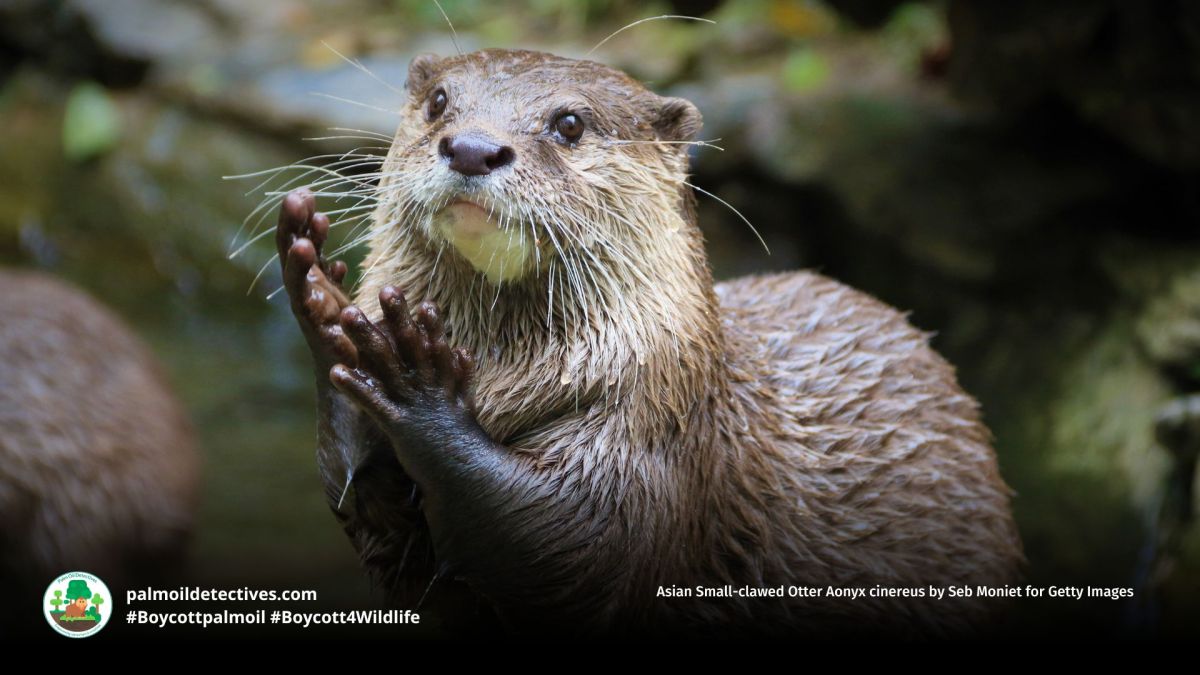
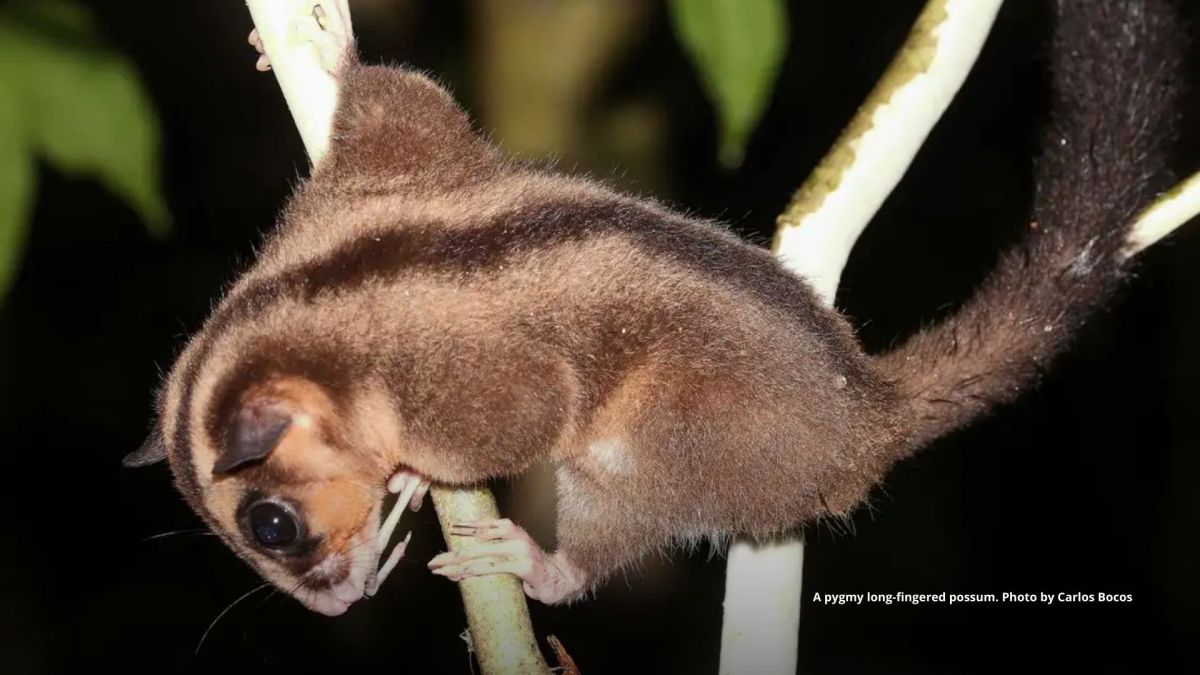
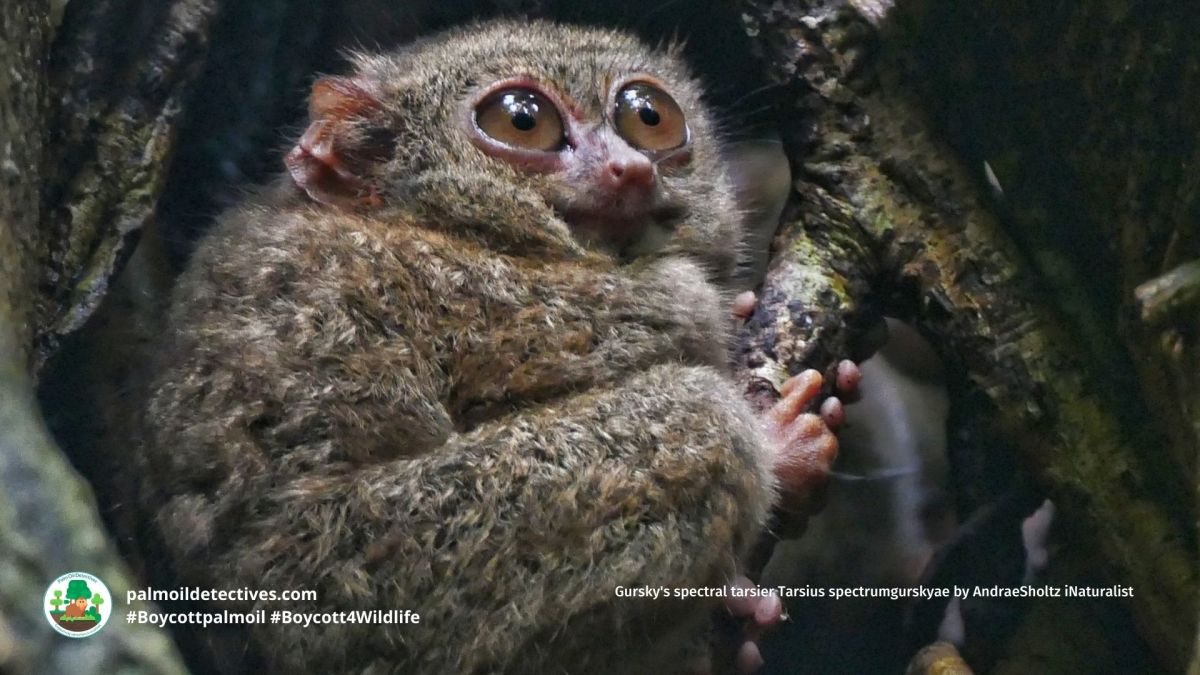
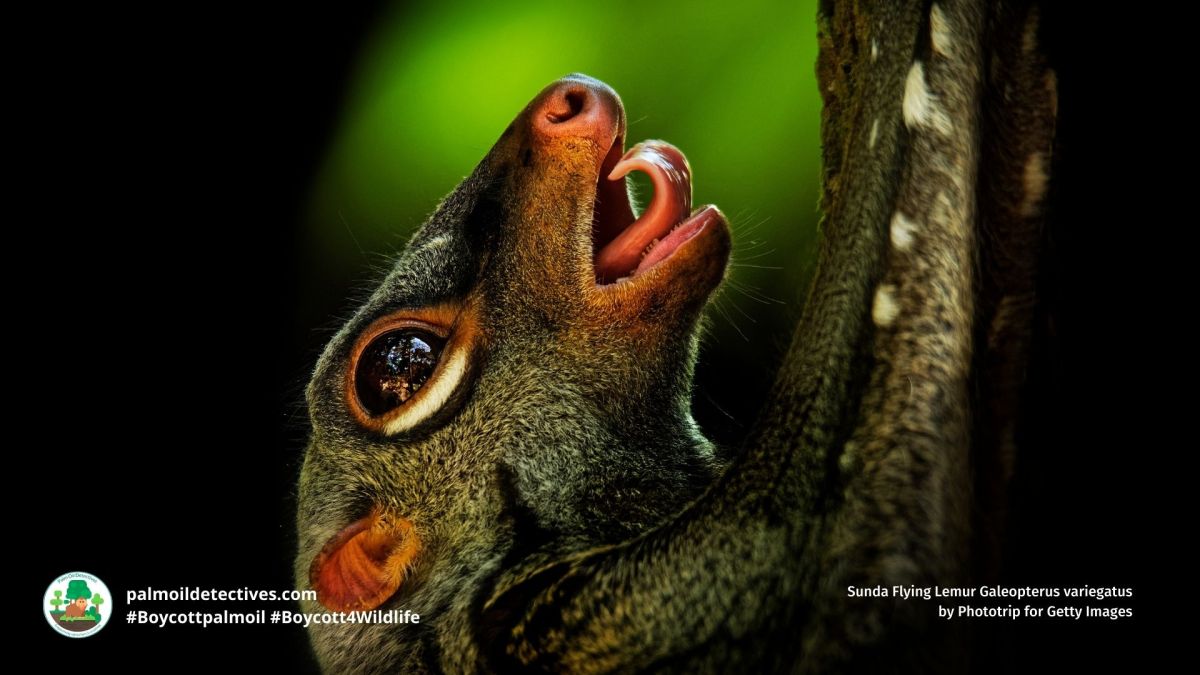
Learn about other animals endangered by palm oil and other agriculture
Learn about “sustainable” palm oil greenwashing
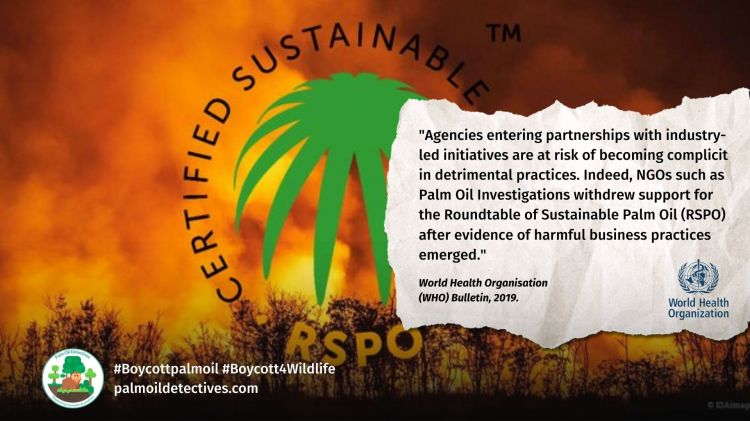
Read more about RSPO greenwashing
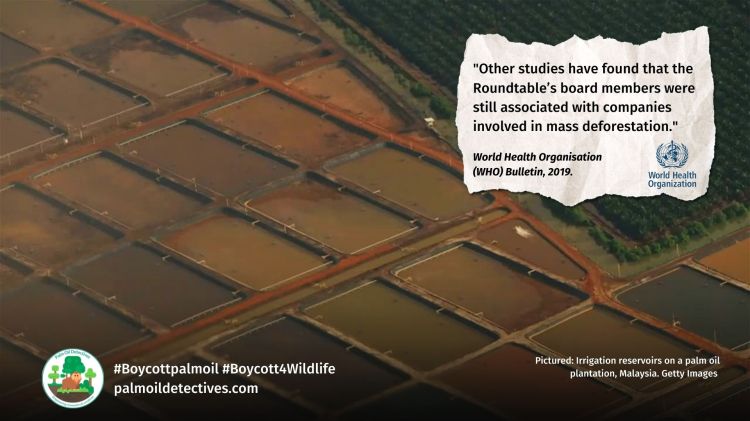
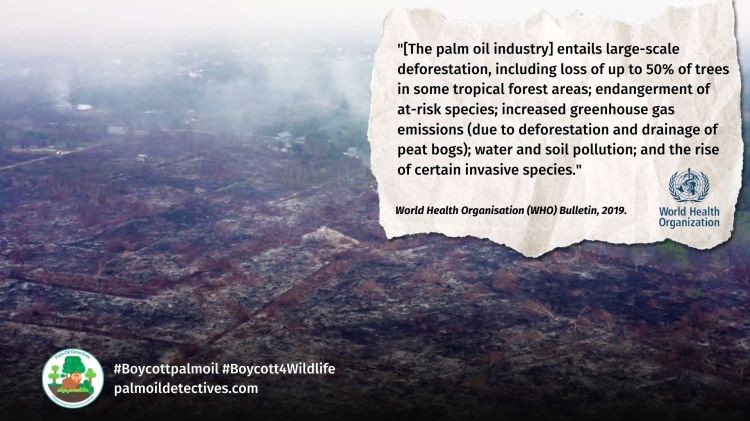
A 2019 World Health Organisation (WHO) report into the palm oil industry and RSPO finds extensive greenwashing of palm oil deforestation and the murder of endangered animals (i.e. biodiversity loss)


Discover more from Palm Oil Detectives
Subscribe to get the latest posts sent to your email.
 Palm Oil Detectives