
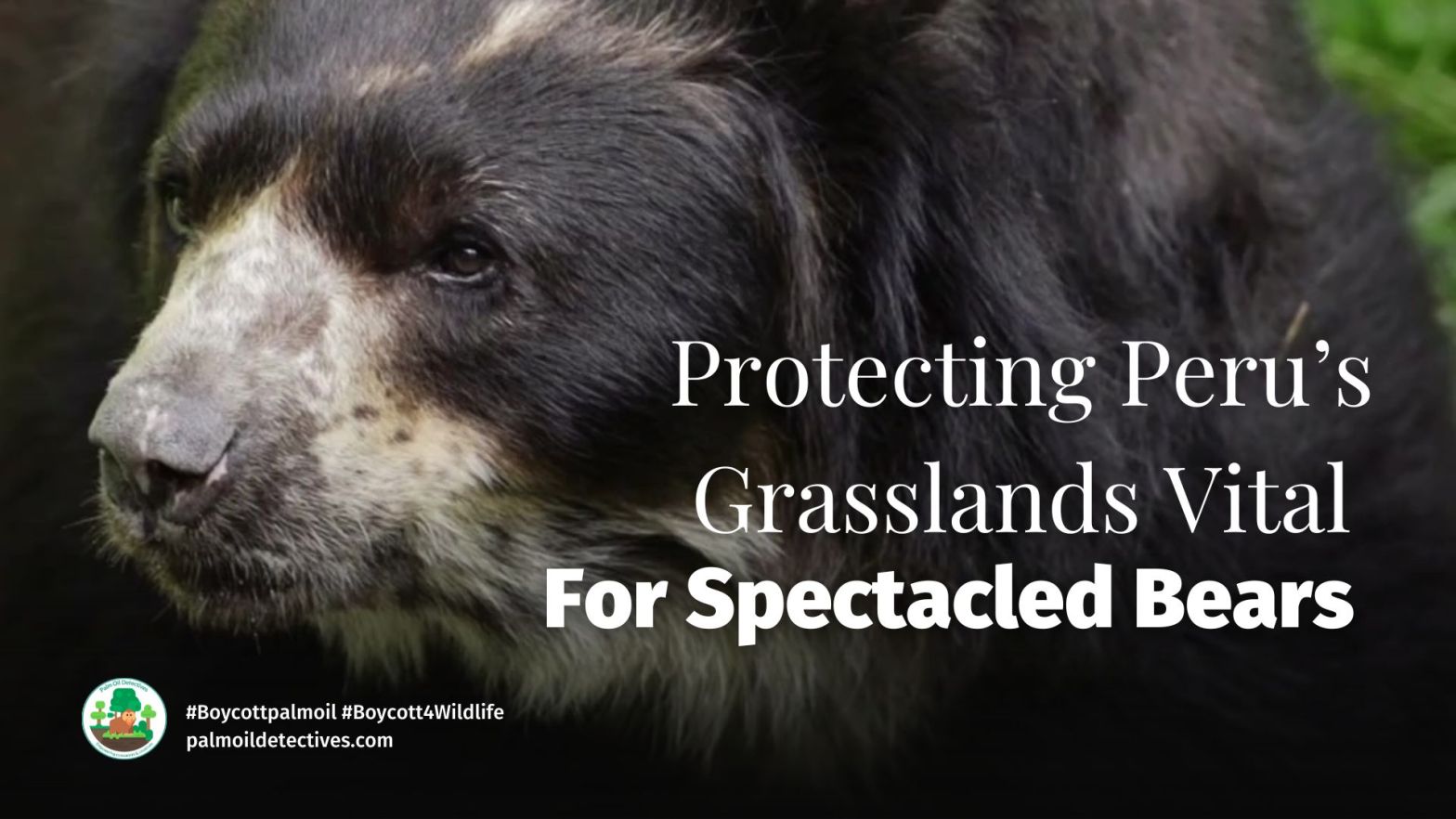
Protecting Peru’s Grasslands Vital for Spectacled Bears | A recent study highlights the importance of conserving Peru’s high-altitude puna grasslands to support the foraging habits of the vulnerable Andean bear AKA Spectacled Bear. The research reveals that these bears prefer young bromeliad plants in specific grassland areas and tend to avoid regions impacted by livestock. Conservation efforts focusing on these habitats could enhance the bears’ survival prospects.
#News: 🐻🌿 Protecting #Peru’s grasslands vital for #vulnerable Spectacled #bear. #Research finds bears prefer foraging areas with negative impact of #meat #soy and #palmoil agriculture. #BoycottMeat #BoycottPalmOil 🌴🥩⛔️ #Boycott4Wildlife @palmoildetect https://wp.me/pcFhgU-9OQ
PLOS. (2024, December 18). Conserving high-elevation grasslands in Peru is key to protect Andean bears. ScienceDaily. Retrieved from https://www.sciencedaily.com/releases/2024/12/241218174935.htm
The Andean bear, also known as the spectacled bear due to distinctive facial markings, is native to the Andes Mountains and currently classified as vulnerable by the International Union for Conservation of Nature (IUCN). A study published on December 18, 2024, in PLOS ONE emphasizes the critical role of high-elevation puna grasslands in Peru for the species’ foraging activities.
Researchers conducted extensive surveys in and around Manu National Park, focusing on two bromeliad species: Puya leptostachya and Puya membranacea. They observed that Andean bears selectively foraged in approximately 16.7% of available bromeliad patches, showing a preference for young plants located on east-facing, steep slopes at the forest’s edge. Notably, the bears avoided areas with active livestock grazing but were found in regions where livestock had been absent for several decades, indicating a potential for habitat recovery and reoccupation by the bears.
The study suggests that the cessation of livestock grazing can lead to the restoration of puna grasslands, making them more suitable for Andean bears in a relatively short timeframe. This finding underscores the need for targeted conservation strategies that mitigate human disturbances, particularly livestock grazing, to preserve these essential habitats.
Lead author Nicholas Pilfold from the San Diego Zoo Wildlife Alliance stated, “Using the largest collection ever of field data on the feeding behavior of Andean bears in high elevation grasslands, we found that the bears actively selected for specific food resources within the grasslands, indicating that these areas are of nutritional importance to the bears.”
The findings advocate for conservation managers to prioritize the protection and restoration of high-altitude grasslands bordering cloud forests, considering the adverse impacts of livestock on these ecosystems. Implementing such measures is vital for the sustenance and recovery of Andean bear populations in Peru.
PLOS. (2024, December 18). Conserving high-elevation grasslands in Peru is key to protect Andean bears. ScienceDaily. Retrieved from https://www.sciencedaily.com/releases/2024/12/241218174935.htm
ENDS
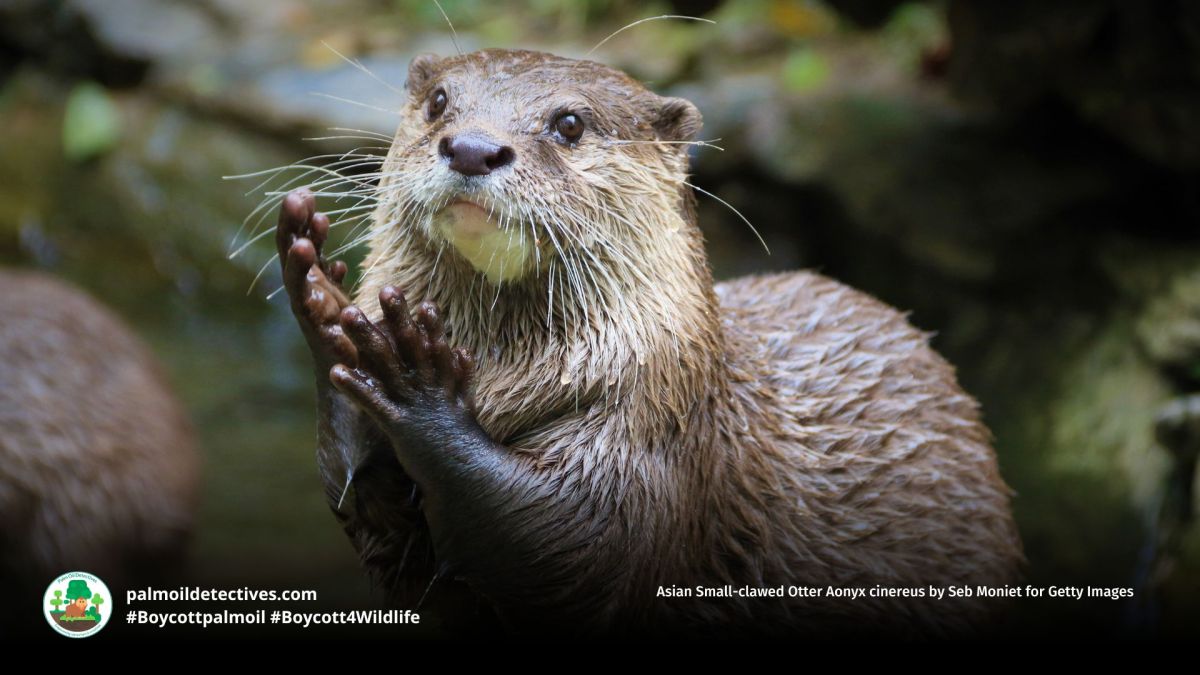
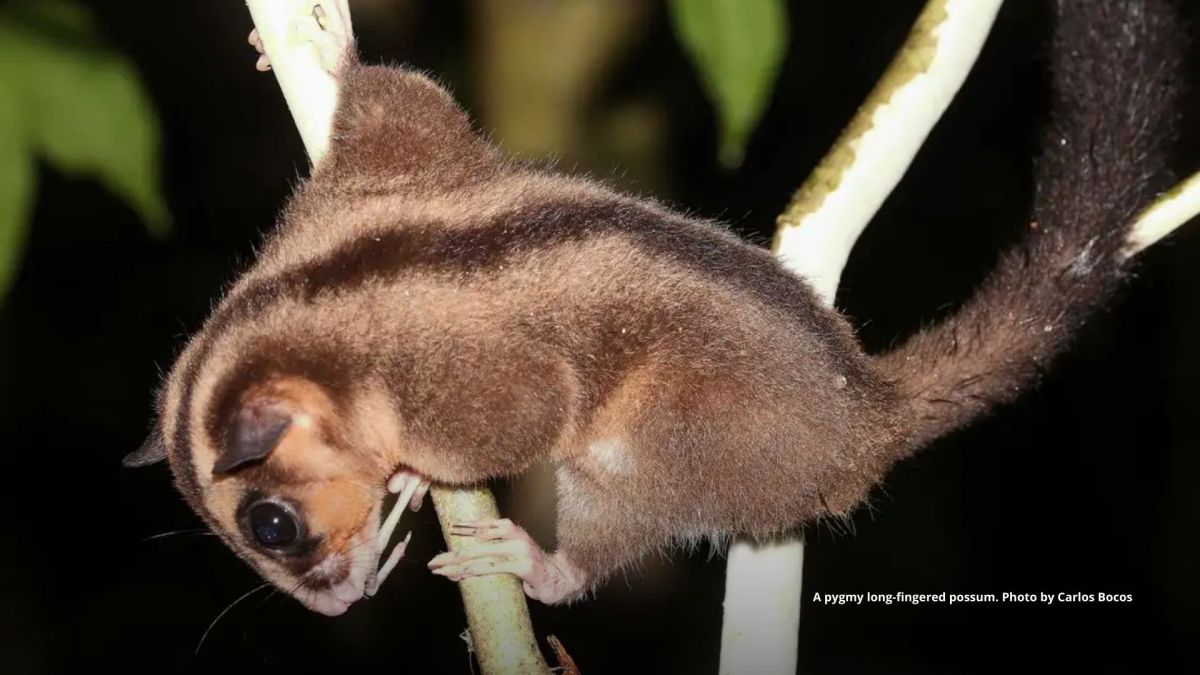
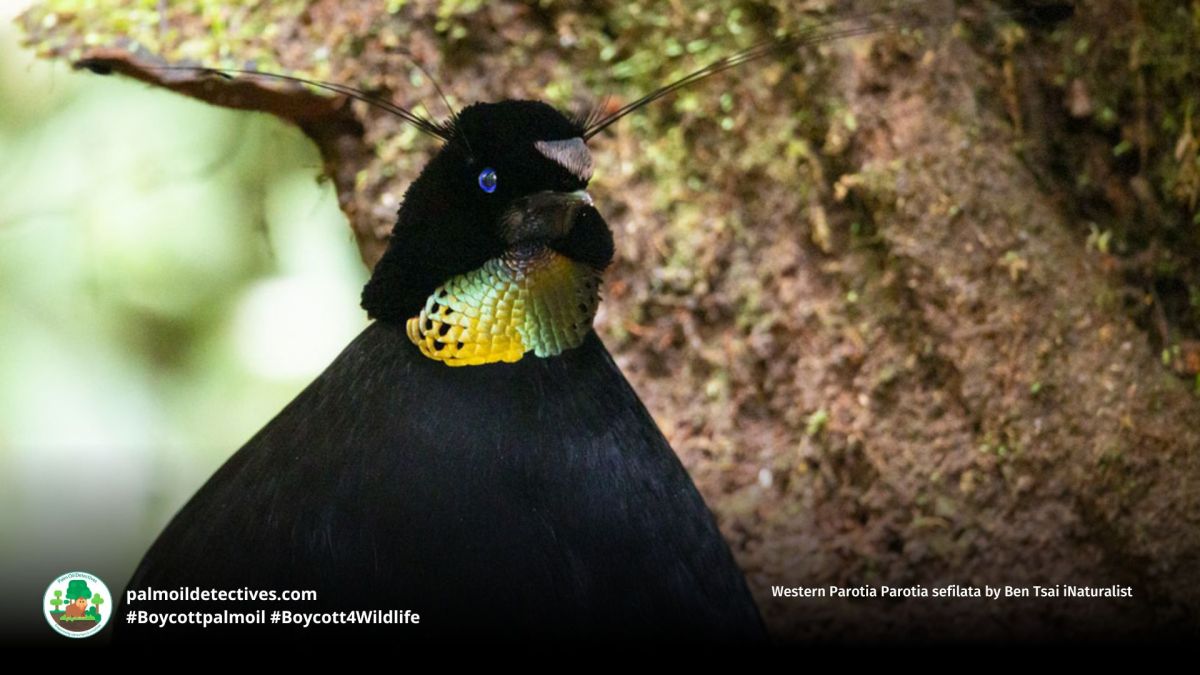
Learn about other animals endangered by palm oil and other agriculture


Learn about “sustainable” palm oil greenwashing
Read more about RSPO greenwashing
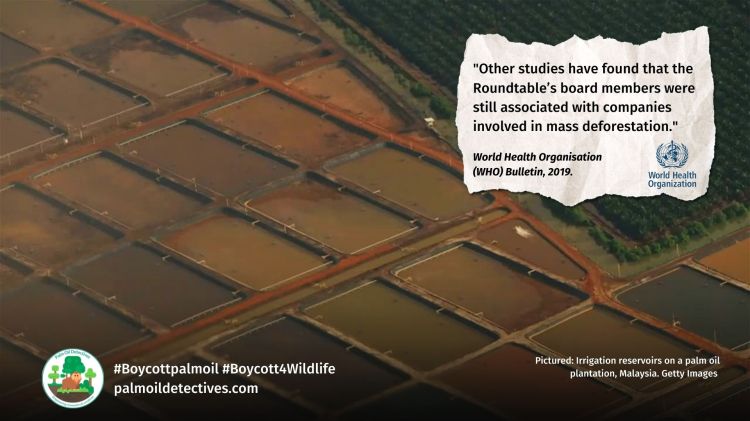
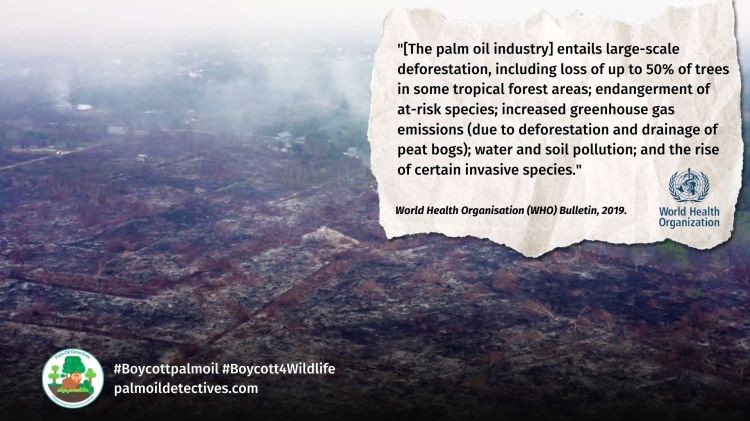
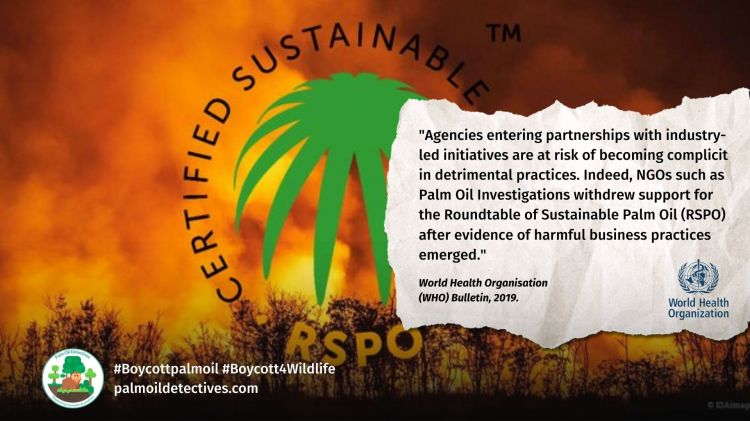
A 2019 World Health Organisation (WHO) report into the palm oil industry and RSPO finds extensive greenwashing of palm oil deforestation and the murder of endangered animals (i.e. biodiversity loss)


Take Action in Five Ways
1. Join the #Boycott4Wildlife on social media and subscribe to stay in the loop: Share posts from this website to your own network on Twitter, Mastadon, Instagram, Facebook and Youtube using the hashtags #Boycottpalmoil #Boycott4Wildlife.
2. Contribute stories: Academics, conservationists, scientists, indigenous rights advocates and animal rights advocates working to expose the corruption of the palm oil industry or to save animals can contribute stories to the website.




3. Supermarket sleuthing: Next time you’re in the supermarket, take photos of products containing palm oil. Share these to social media along with the hashtags to call out the greenwashing and ecocide of the brands who use palm oil. You can also take photos of palm oil free products and congratulate brands when they go palm oil free.
4. Take to the streets: Get in touch with Palm Oil Detectives to find out more.
5. Donate: Make a one-off or monthly donation to Palm Oil Detectives as a way of saying thank you and to help pay for ongoing running costs of the website and social media campaigns. Donate here
Discover more from Palm Oil Detectives
Subscribe to get the latest posts sent to your email.
 Palm Oil Detectives