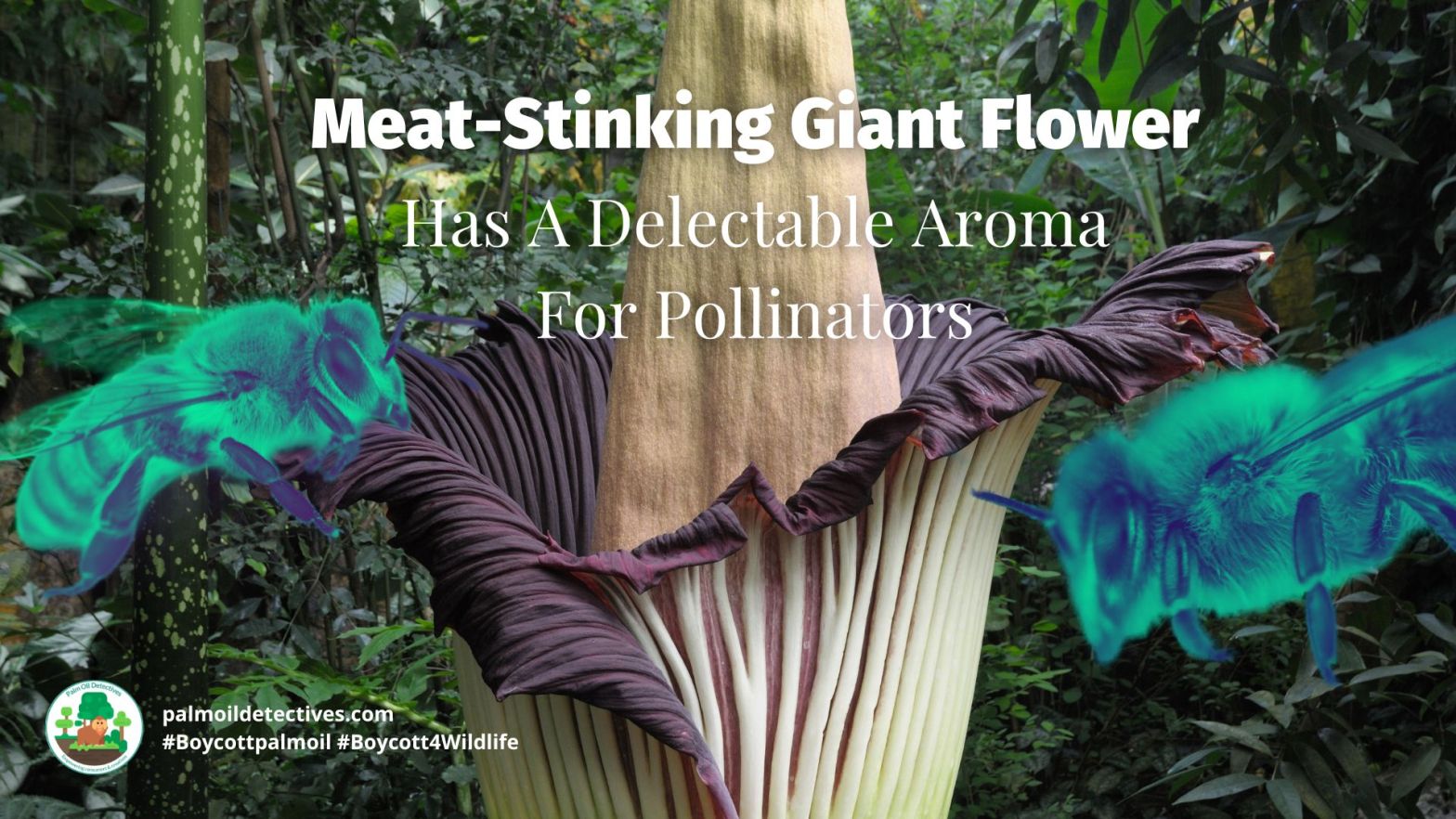
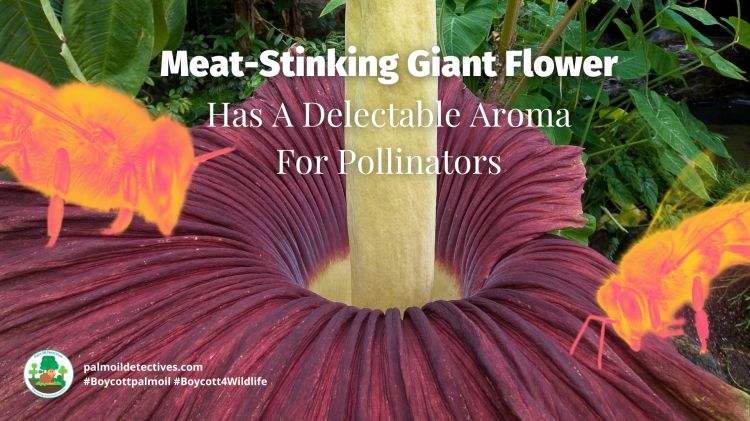
The Titan Arum, more commonly known as the ‘Corpse Flower’ is famous for its repulsive meat smell. Designed to repel humans, in contrast pollinators find the putrid aromas irresistible in the plant’s native environment. The Corpse Flower Titan Arum lives deep inside of Sumatra’s imperilled rainforests. endangered by palm oil and mining deforestation. Now researchers have gained greater insight into how the plant warms itself up before blooming – known as thermogenesis and have discovered a new compound called ‘putrescine’ which gives the plant its strong aroma. Help these rare stinking beauties to survive when you #BoycottPalmOil #Boycott4Wildlife
The gigantic Titan Arum #plant better known as the ‘Corpse Flower’ stinks like rotting flesh. They live deep in #Sumatra’s #rainforest. Endangered by #palmoil #deforestation, learn how to protect them! #BoycottPalmOil #Boycott4Wildlife 🌴👎🛢️⛔ @palmoildetect.bsky.social https://wp.me/pcFhgU-9bK
Corpse #Flowers are unusual 🌸 as they emit heat before flowering. Scientists have found the smelly compound causing their aroma: ‘Putrescine’. They’re #endangered by #palmoil #deforestation. Take action! #BoycottPalmOil #Boycott4Wildlife 🌴🔥❌ @palmoildetect.bsky.social https://wp.me/pcFhgU-9bK
Alveena Zulfiqar, Beenish J Azhar, Samina N Shakeel, William Thives Santos, Theresa D Barry, Dana Ozimek, Kim DeLong, Ruthie Angelovici, Kathleen M Greenham, Craig A Schenck, G Eric Schaller. Molecular basis for thermogenesis and volatile production in the titan arum. PNAS Nexus, 2024; DOI: 10.1093/pnasnexus/pgae492

The Titan Arum, more commonly known as the ‘Corpse Flower’, is famous for its repulsive meat smell. While designed to repel humans, this putrid aroma irresistibly attracts pollinators in its native environment—the imperilled rainforests of Sumatra, now under threat from palm oil plantations and mining activities. Researchers have recently uncovered how the plant generates heat before blooming, a process known as thermogenesis, and have identified a new compound called ‘putrescine’, which contributes to its potent stench.
A study led by G. Eric Schaller, Professor of Biological Sciences at Dartmouth College, explored the genetic and biological mechanisms behind the Titan Arum’s remarkable heating and scent production. The research relied on tissue samples from ‘Morphy’, Dartmouth’s 21-year-old Corpse Flower, to analyse RNA sequences. This allowed scientists to pinpoint which genes are active during the phases of heating and scent release.
The Titan Arum is not a single flower but a cluster of tiny flowers hidden within a massive central stalk, known as the spadix, which can reach up to 12 feet in height. It blooms rarely—typically once every 5 to 7 years—and only for a brief period. “The blooms are rare and also short-lived, so we only get a small window to study these phenomena,” Schaller explains.
During blooming, the spadix heats up, raising its temperature by as much as 20 degrees Fahrenheit above the surrounding air. This thermogenic phase coincides with the emission of its signature scent, a mixture of sulphur-based compounds designed to attract flies and carrion beetles, which play a vital role in the plant’s pollination.
The RNA analysis revealed that genes associated with alternative oxidases—plant equivalents of animal uncoupling proteins—are highly active during the heating phase, especially in the spadix’s appendix. Additionally, genes involved in sulphur transport and metabolism were expressed, driving the production of the odour. Among these compounds, researchers identified putrescine, an organic chemical not previously recognised as part of the Corpse Flower’s scent profile.
This research sheds light on the evolutionary adaptations of the Titan Arum while highlighting the urgent need to conserve its natural habitat. Protecting the rainforests of Sumatra from deforestation caused by palm oil cultivation and mining is critical for the survival of this extraordinary species. By choosing to #BoycottPalmOil and supporting campaigns such as #Boycott4Wildlife every time you shop, individuals can help safeguard the delicate ecosystems these rare flowers depend on, ensuring they continue to thrive for generations to come.
Alveena Zulfiqar, Beenish J Azhar, Samina N Shakeel, William Thives Santos, Theresa D Barry, Dana Ozimek, Kim DeLong, Ruthie Angelovici, Kathleen M Greenham, Craig A Schenck, G Eric Schaller. Molecular basis for thermogenesis and volatile production in the titan arum. PNAS Nexus, 2024; DOI: 10.1093/pnasnexus/pgae492
ENDS
Learn about other animals endangered by palm oil and other agriculture



Learn about “sustainable” palm oil greenwashing
Read more about RSPO greenwashing
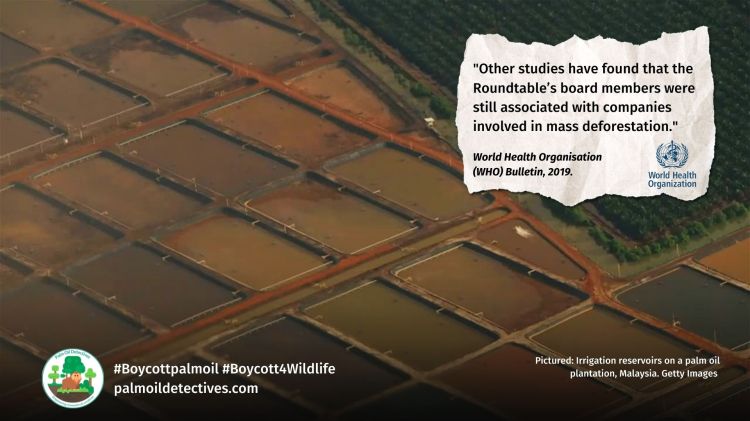
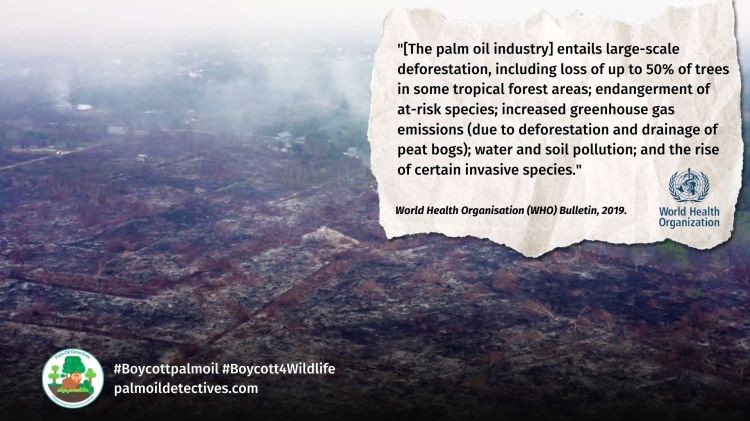
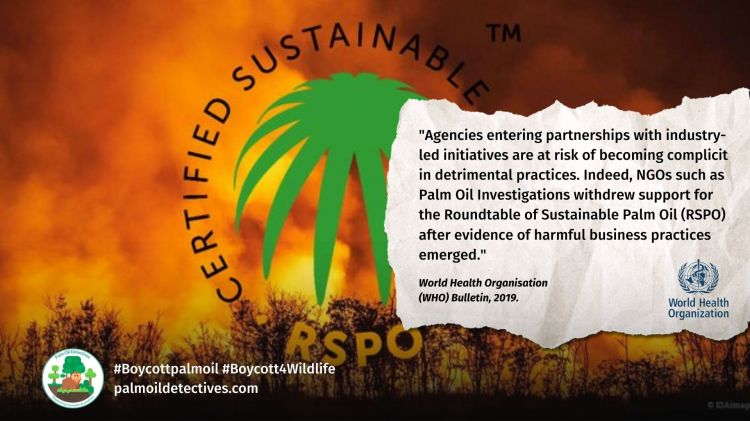
A 2019 World Health Organisation (WHO) report into the palm oil industry and RSPO finds extensive greenwashing of palm oil deforestation and the murder of endangered animals (i.e. biodiversity loss)


Take Action in Five Ways
1. Join the #Boycott4Wildlife on social media and subscribe to stay in the loop: Share posts from this website to your own network on Twitter, Mastadon, Instagram, Facebook and Youtube using the hashtags #Boycottpalmoil #Boycott4Wildlife.
2. Contribute stories: Academics, conservationists, scientists, indigenous rights advocates and animal rights advocates working to expose the corruption of the palm oil industry or to save animals can contribute stories to the website.






3. Supermarket sleuthing: Next time you’re in the supermarket, take photos of products containing palm oil. Share these to social media along with the hashtags to call out the greenwashing and ecocide of the brands who use palm oil. You can also take photos of palm oil free products and congratulate brands when they go palm oil free.
4. Take to the streets: Get in touch with Palm Oil Detectives to find out more.
5. Donate: Make a one-off or monthly donation to Palm Oil Detectives as a way of saying thank you and to help pay for ongoing running costs of the website and social media campaigns. Donate here
Discover more from Palm Oil Detectives
Subscribe to get the latest posts sent to your email.
 Palm Oil Detectives