
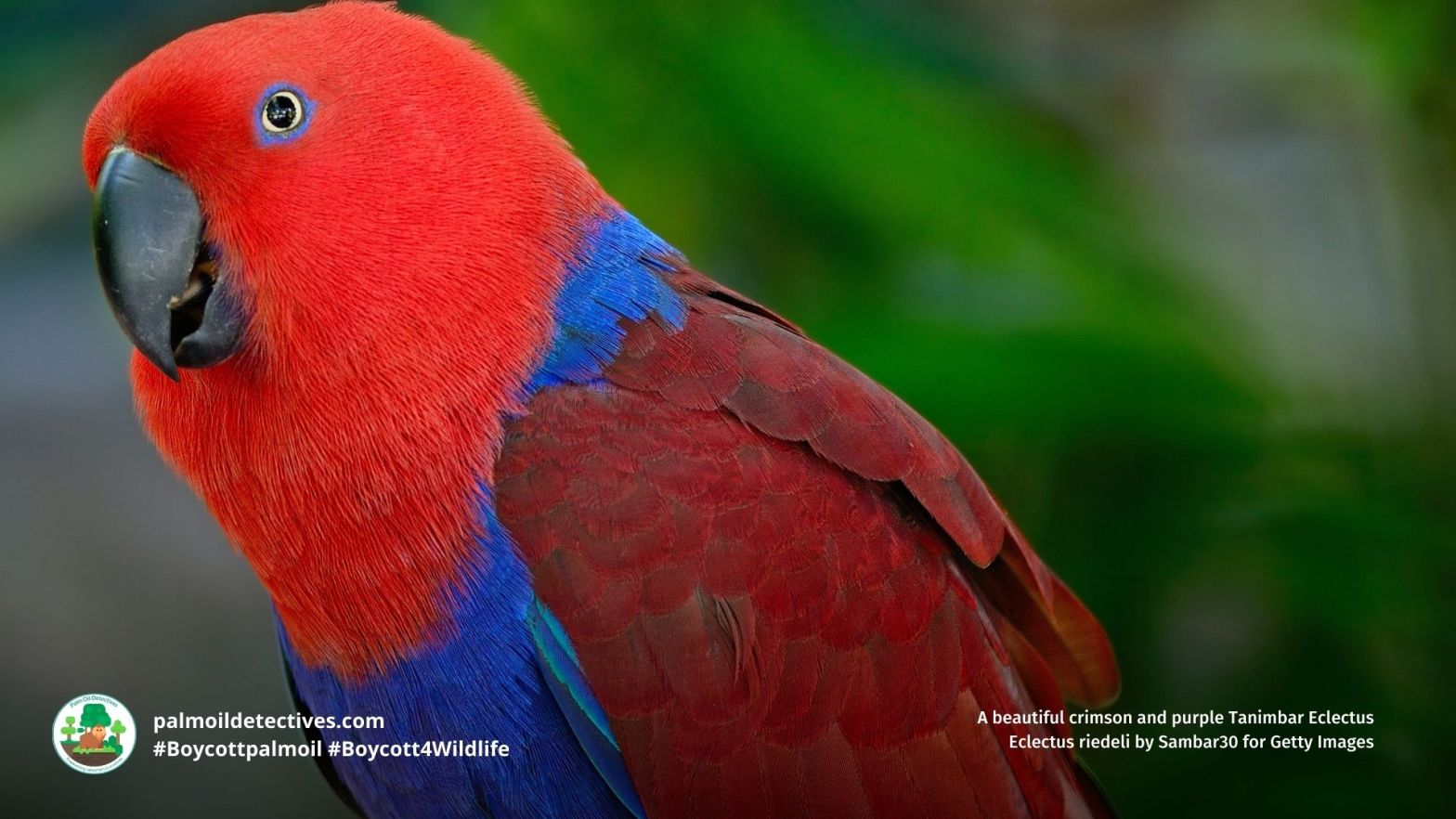
Tanimbar Eclectus Parrot Eclectus riedeli
IUCN Status: Vulnerable
Locations: Endemic to Yamdena and Larat islands, Tanimbar Archipelago, Indonesian occupied West Papua.
The Tanimbar Eclectus Parrot Eclectus riedeli also known as the Eclectus Parrot or Tanimbar Eclectus is a rare and striking #parrot found only on the #Tanimbar Islands of Indonesian occupied #WestPapua. Males display a brilliant emerald green plumage, while females are adorned in deep crimson and cobalt blue feathers, making them one of the most visually stunning #parrots in the world. These parrots face growing threats from habitat destruction, the pet trade, and climate change.
Forests are disappearing due to timber logging and #palmoil monoculture, while #poaching for the illegal #pettrade continues to remove individuals from the wild, disrupting their populations. #Climatechange also poses an increasing risk, with rising temperatures, storms, and unpredictable weather patterns affecting their habitat and food sources. The best way to protect these parrots is to keep them in the wild, not in cages. Use your wallet as a weapon in the supermarket and choose #PalmOilFree #BoycottPalmOil #Boycott4Wildlife.
Stunning and vibrantly coloured Tanimbar Eclectus #Parrots 🦜💚💋are #vulnerable due to the illegal pet trade and #palmoil’s endless devastation. Fight for their survival when u #Boycottpalmoil 🌴🪔☠️⛔️ #Boycott4Wildlife @palmoildetect.bsky.social https://wp.me/pcFhgU-a7t
The curious Tanimbar Eclectus #Parrots 🦜 of #WestPapua fall in love with each other’s exquisite plumage 🌈😻 #PalmOil #ecocide is a big threat 😿 Resist for these #birds and go #PalmOilFree #Boycottpalmoil 🌴🛢️💩🤮❌ #Boycott4Wildlife @palmoildetect https://palmoildetectives.com/2025/07/20/tanimbar-eclectus-parrot-eclectus-riedeli/
Appearance & Behaviour
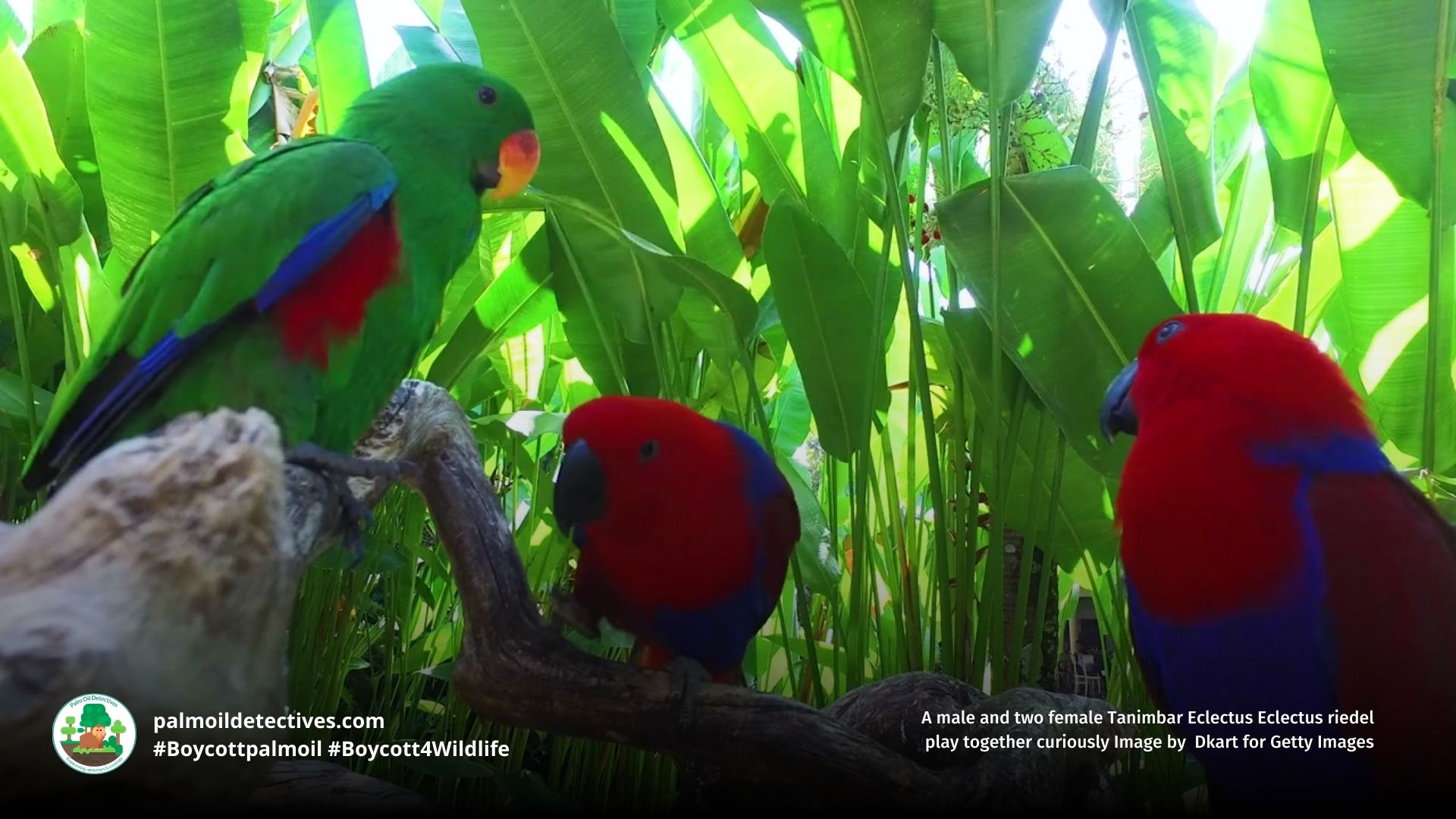
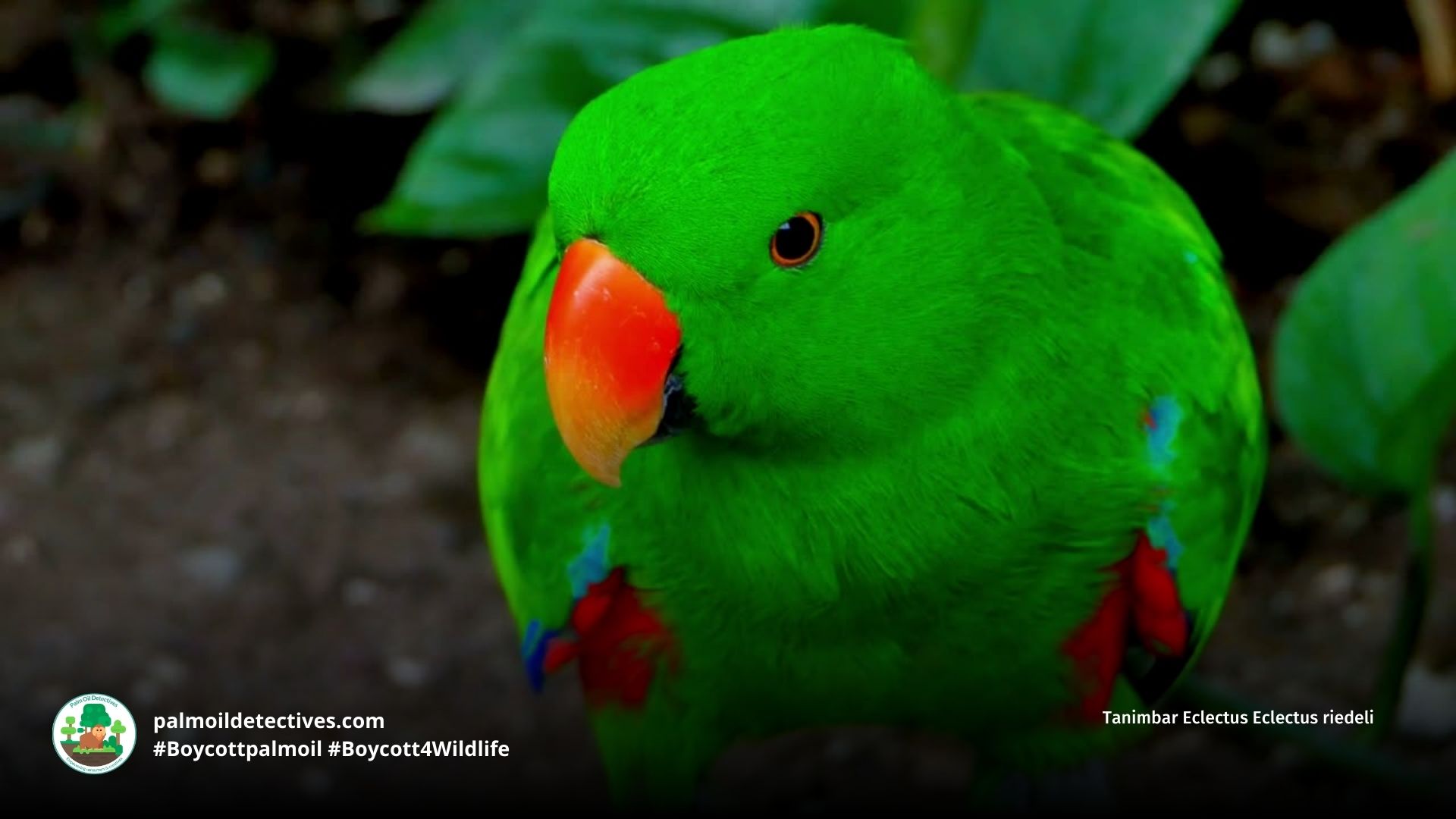
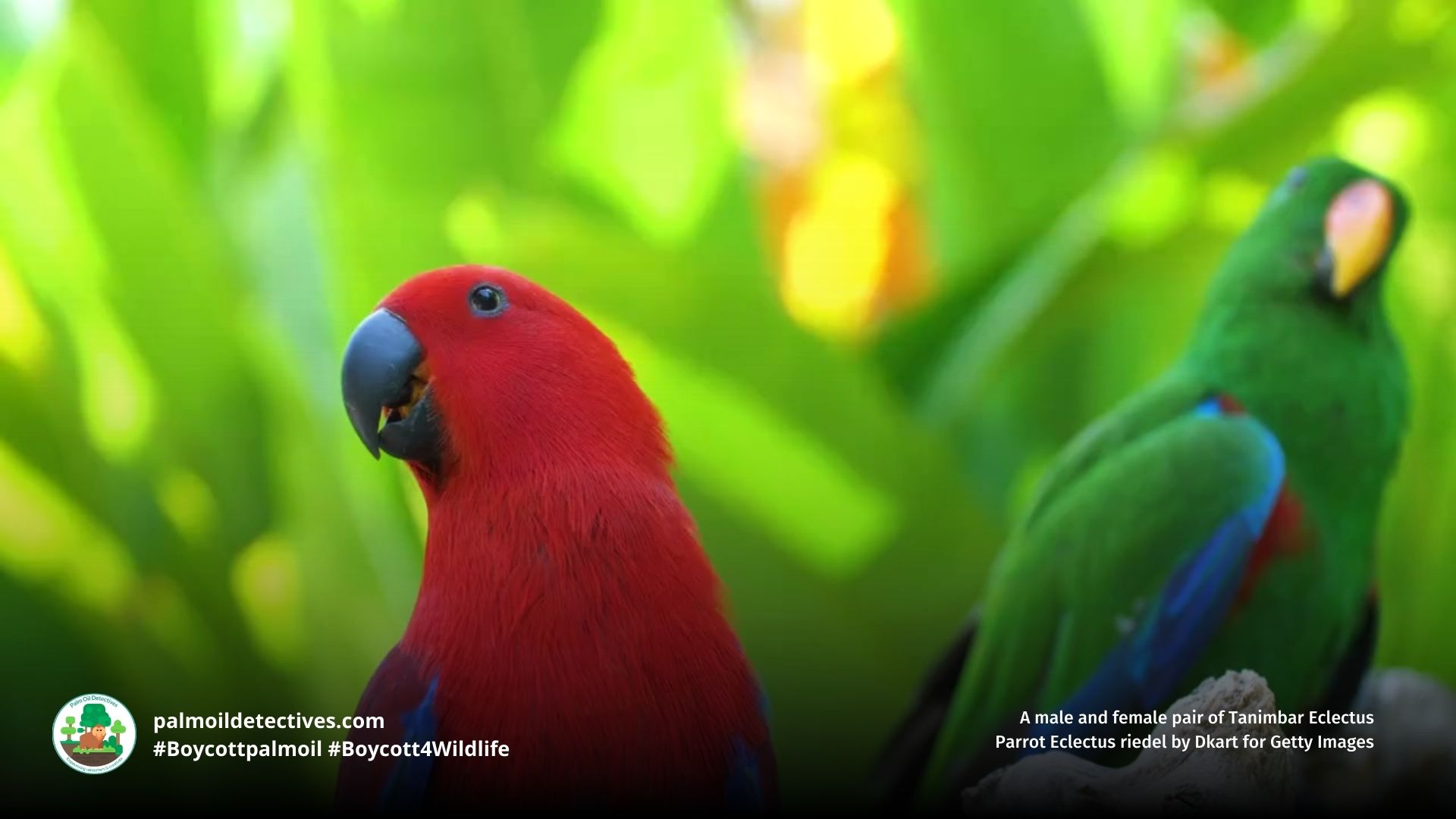
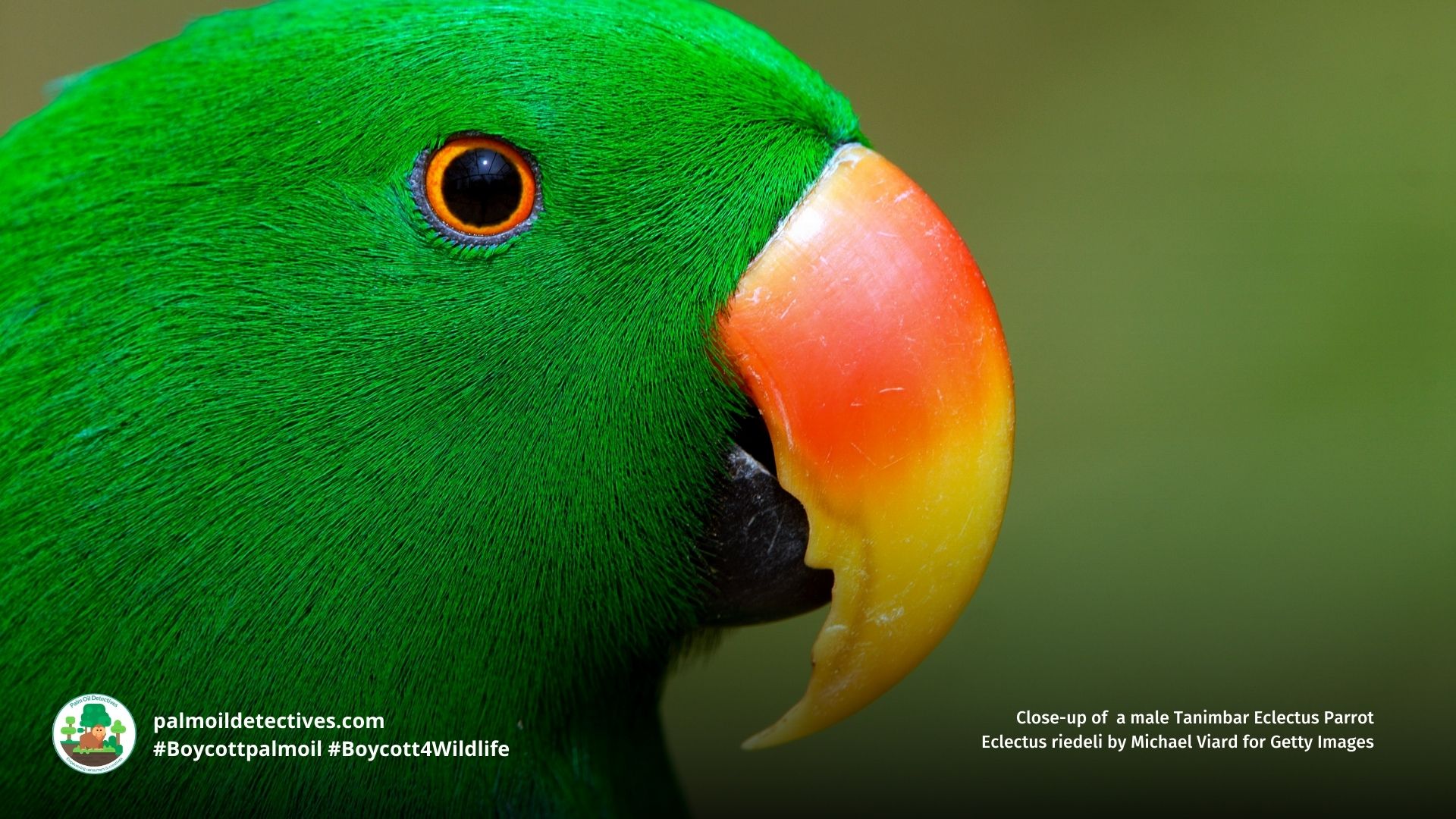
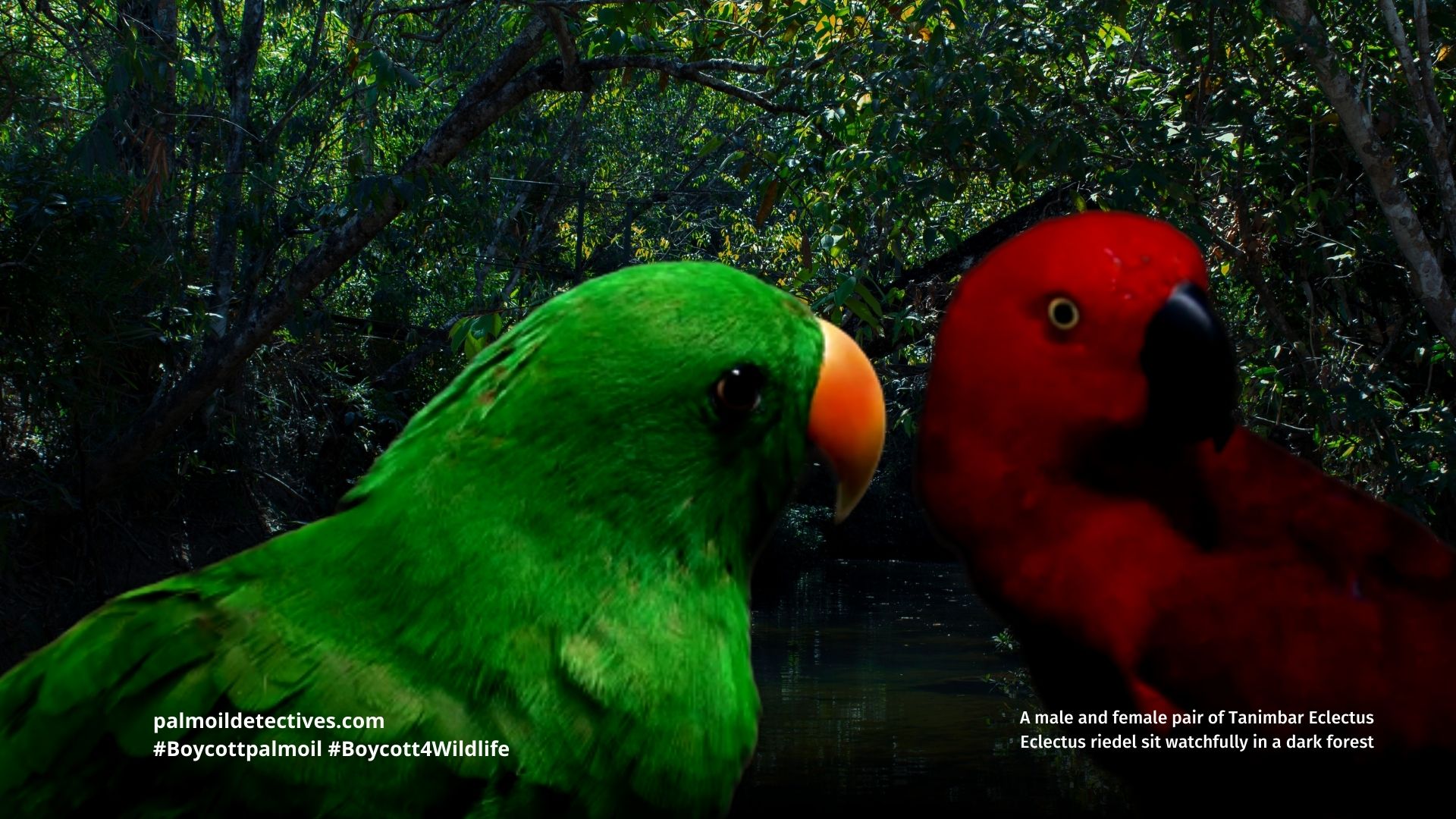
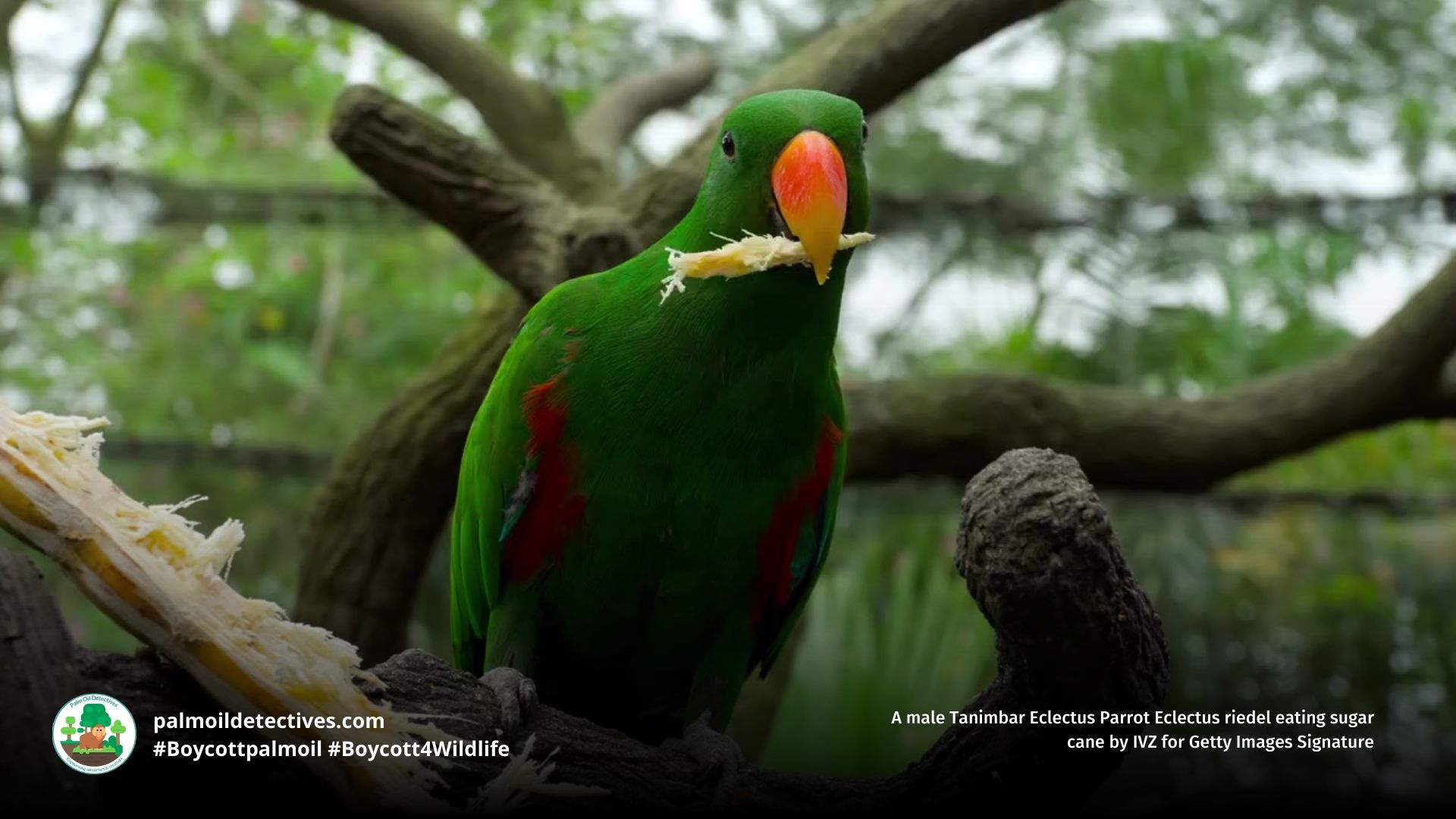
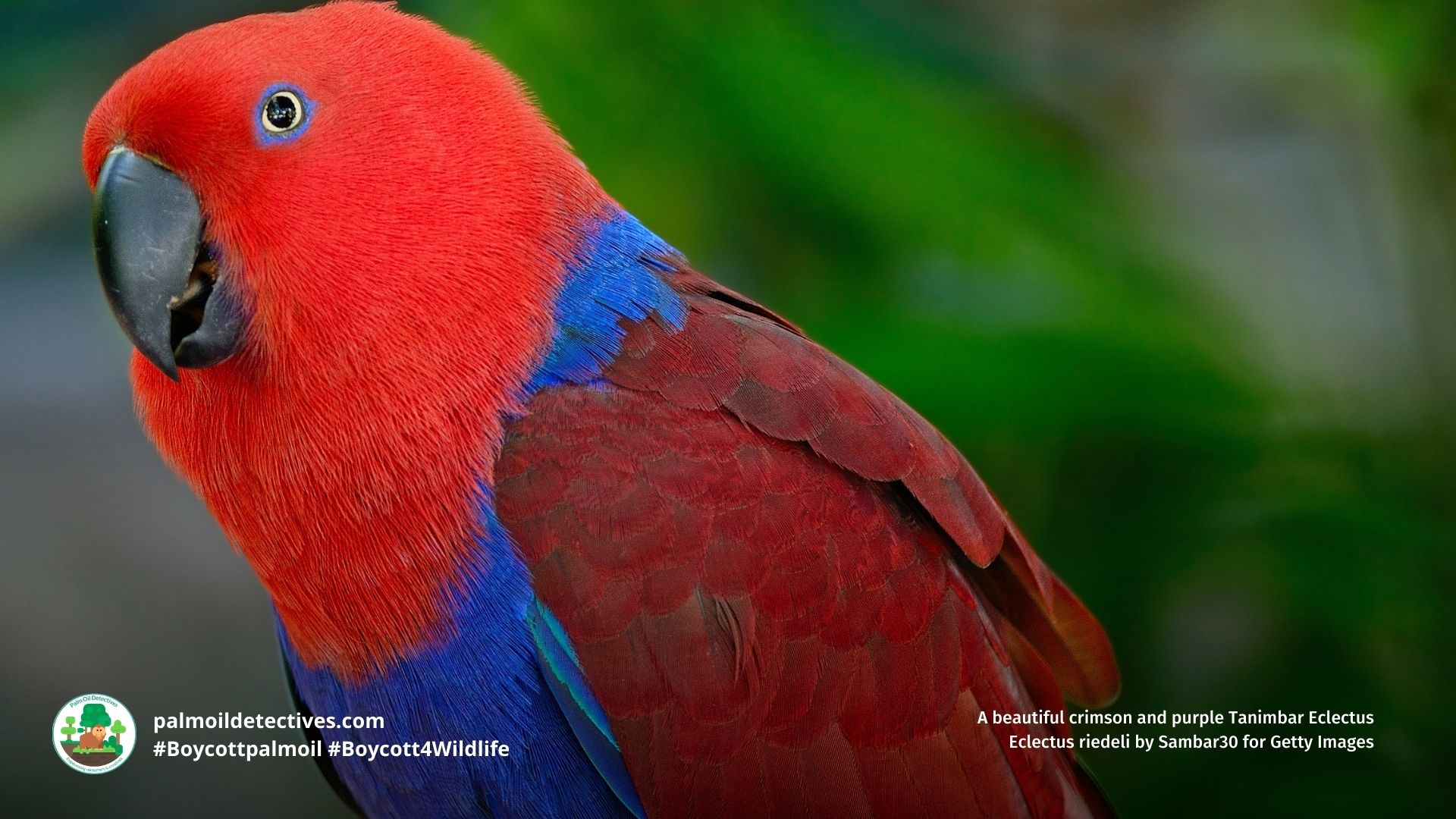
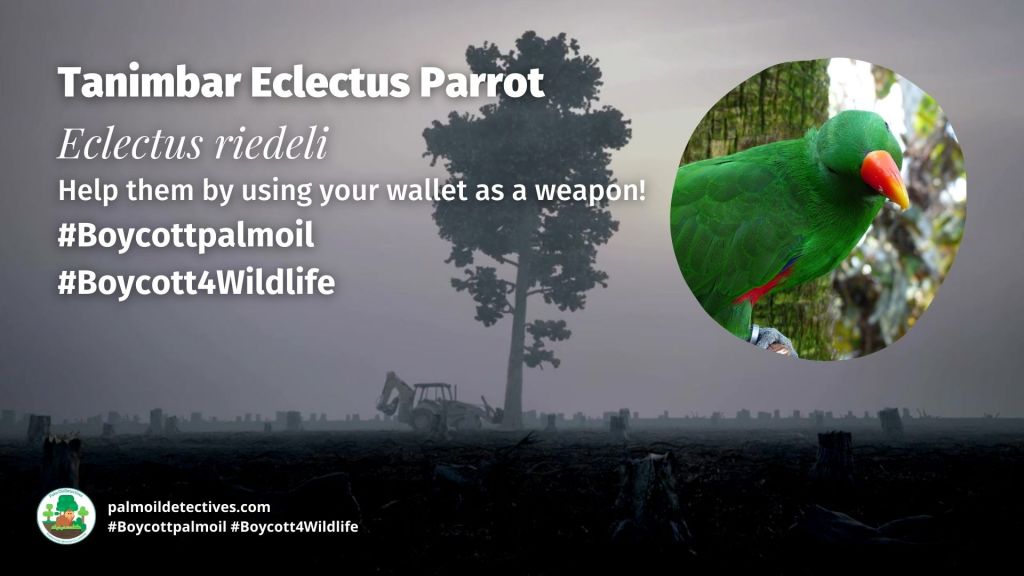
Tanimbar Eclectus parrots are known for their dramatic sexual dimorphism. Male birds are covered in vibrant green feathers, with a yellow-orange beak, while females are deep red with bright blue undersides and a striking black beak. Their unique colours provide camouflage in the dense tropical foliage of their island home. These parrots are highly intelligent, social, and vocal, using a range of calls to communicate with their mates and flock members. They are strong fliers and spend most of their time in the high canopy, searching for food and nesting sites.
Threats
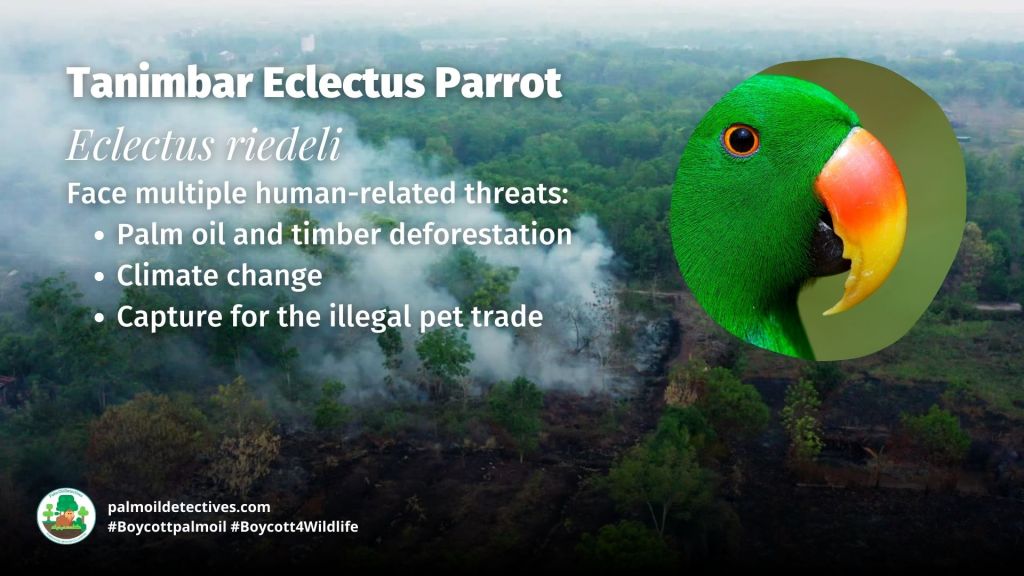
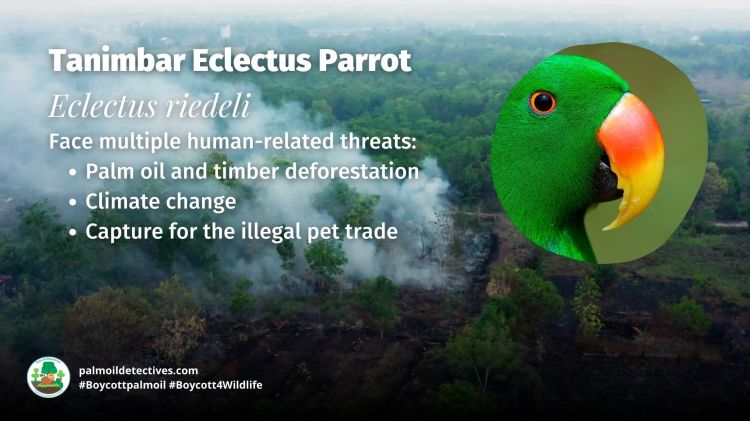
Palm Oil and Timber Deforestation
The Tanimbar Islands still hold large areas of forest, but deforestation for timber and palm oil is rapidly increasing. Logging, agricultural expansion, and human settlement rapidly shrinking the habitat of the Tanimbar Eclectus Parrot. This bird species’ range has already experienced an estimated 8% loss over the past three generations, and this rate is expected to accelerate as pressure on the islands’ forests grows.
The Illegal Pet Trade
Although the Tanimbar Eclectus is not yet widely traded internationally, it is still caught and sold within local markets. Parrots stolen from the wild often die from stress and injury before they even reach a buyer. The pet trade not only depletes populations but also leaves chicks abandoned in nests, causing further losses.
Climate Change
Rising temperatures and unpredictable weather patterns threaten the Tanimbar Eclectus in multiple ways. Intense storms and cyclones damage the forests they rely on, destroying nesting trees and food sources. Heatwaves and prolonged droughts also impact their breeding success and reduce fruit availability, making survival even more challenging.
Geographic Range
The Tanimbar Eclectus Parrot is found exclusively on the islands of Yamdena and Larat in the Tanimbar Archipelago, of West Papua, a region illegally occupied by Indonesia. They primarily inhabit lowland and forest edges, relying on dense tropical forests for nesting and foraging.
Diet
The Tanimbar Eclectus Parrot feeds primarily on fruit, seeds, nuts, and flowers. They are particularly dependent on native fig trees and tropical fruiting plants found in their lowland forests. Their role as seed dispersers is crucial for maintaining the health of their ecosystem.
Mating and reproduction
These parrots are monogamous and form strong pair bonds. Breeding pairs nest in large tree hollows, where the female seals herself inside for protection while incubating eggs. The male is responsible for feeding his mate and chicks throughout this period. They typically lay 2–3 eggs, though only one chick often survives due to competition for food.
FAQs
Are Eclectus parrots endangered?
Yes, the Tanimbar Eclectus is listed as Vulnerable on the IUCN Red List due to habitat destruction and the pet trade. While not as heavily trafficked as some other bird species, local trapping remains a threat, and deforestation is reducing their available habitat.
How much do Eclectus parrots cost?
The real cost of buying an Eclectus parrot is far greater than any price tag. Whether wild-caught or captive-bred, keeping these intelligent, highly social birds in cages is cruel and unnatural. In the wild, they soar across vast rainforests, flying hundreds of kilometres each day, foraging, socialising, and raising their young in the towering canopy. No cage—no matter how large—can ever replace this freedom.
Parrots are not ornaments, conversation pieces, or living decorations. Confined to captivity, they suffer from boredom, frustration, and loneliness, often plucking out their own feathers, screaming incessantly, or developing neurotic behaviours. Their wings, meant for the open skies, become symbols of imprisonment.
Rather than supporting the pet trade, which fuels the demand that threatens wild populations, the best way to protect the Tanimbar Eclectus is to advocate for their conservation, protect their rainforest habitat, and reject the captivity of wild animals altogether.
How to keep an Eclectus Parrot as a pet?
Keeping a wild Tanimbar Eclectus or Eclectus Parrot as a pet is an incredibly damaging and selfish act. Many parrots captured for the pet trade are taken from their nests as chicks, leading to the destruction of their family units. Parrots stolen from the wild often die from stress and malnutrition before they even reach a buyer. Removing them from their habitat weakens their population, pushing them closer to extinction. Parrots born in a cage live in unnatural and cruel conditions all of their lives. These intelligent beings never know what its like to fly for 100’s of kilometres a day as they are meant to do. How would you feel to be born in a cage, live for around 70 years and then die in a cage?
Are Eclectus parrots aggressive?
Eclectus parrots are not naturally aggressive, but they are highly intelligent and require constant social interaction and mental stimulation. In captivity, frustration and isolation can cause behavioural issues, including biting and screaming. This is another strong reason why these birds should be left in the wild.
How does climate change affect the Tanimbar Eclectus / Eclectus Parrot?
Climate change poses a serious threat to this species. Rising temperatures, unpredictable storms, and habitat degradation are already having negative effects. More frequent cyclones destroy nesting trees and fruiting plants, while prolonged droughts limit their food supply. Changes in seasonal patterns may also disrupt their breeding cycles.
Take Action!
The Tanimbar Eclectus Parrot needs your help. The pet trade and palm oil deforestation are driving them toward extinction. Every time you shop, make ethical choices to protect their future.
- 🐦 Do not support the illegal pet trade!
- 🌳 Support indigenous-led conservation efforts to protect forests.
- 🛑 Avoid products containing palm oil.
- 🔥 Use your wallet and supermarket choices to help save them—#BoycottPalmOil #Boycott4Wildlife.
Support the Tanimbar Eclectus Parrot by going vegan and boycotting palm oil in the supermarket, it’s the #Boycott4Wildlife
Support the conservation of this species
This animal has no protections in place. Read about other forgotten species here. Create art to support this forgotten animal or raise awareness about them by sharing this post and using the #Boycottpalmoil #Boycott4Wildlife hashtags on social media. Also you can boycott palm oil in the supermarket.
Further Information
Bishop, K.D., & Brickle, N. W. (1999). The status of the Tanimbar Eclectus in Indonesia. Retrieved from https://dx.doi.org/10.2305/IUCN.UK.2019-3.RLTS.T155073764A155087808.en.
BirdLife International. 2019. Eclectus riedeli. The IUCN Red List of Threatened Species 2019: e.T155073764A155087808. https://dx.doi.org/10.2305/IUCN.UK.2019-3.RLTS.T155073764A155087808.en. Accessed on 07 February 2025.
Parrots.org. (n.d.). Tanimbar Eclectus species profile. Retrieved from https://www.parrots.org/encyclopedia/tanimbar-eclectus.

How can I help the #Boycott4Wildlife?
Take Action in Five Ways
1. Join the #Boycott4Wildlife on social media and subscribe to stay in the loop: Share posts from this website to your own network on Twitter, Mastadon, Instagram, Facebook and Youtube using the hashtags #Boycottpalmoil #Boycott4Wildlife.
2. Contribute stories: Academics, conservationists, scientists, indigenous rights advocates and animal rights advocates working to expose the corruption of the palm oil industry or to save animals can contribute stories to the website.






3. Supermarket sleuthing: Next time you’re in the supermarket, take photos of products containing palm oil. Share these to social media along with the hashtags to call out the greenwashing and ecocide of the brands who use palm oil. You can also take photos of palm oil free products and congratulate brands when they go palm oil free.
4. Take to the streets: Get in touch with Palm Oil Detectives to find out more.
5. Donate: Make a one-off or monthly donation to Palm Oil Detectives as a way of saying thank you and to help pay for ongoing running costs of the website and social media campaigns. Donate here
Learn about other animals endangered by palm oil and other agriculture
Learn about “sustainable” palm oil greenwashing
Read more about RSPO greenwashing
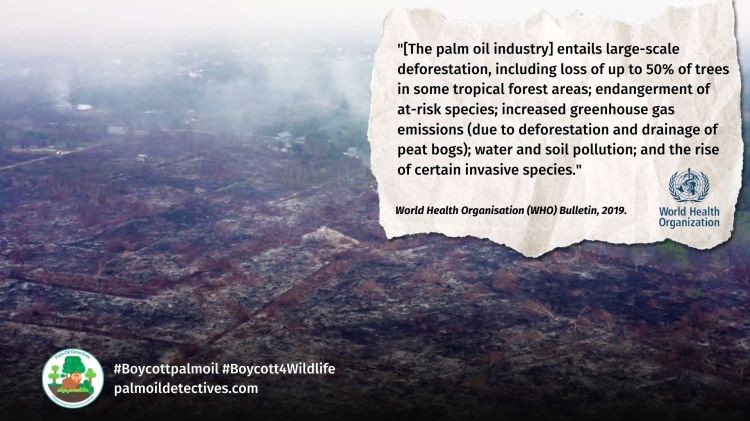
A 2019 World Health Organisation (WHO) report into the palm oil industry and RSPO finds extensive greenwashing of palm oil deforestation and the murder of endangered animals (i.e. biodiversity loss)




Discover more from Palm Oil Detectives
Subscribe to get the latest posts sent to your email.
 Palm Oil Detectives
One thought on “Tanimbar Eclectus Parrot Eclectus riedeli”