
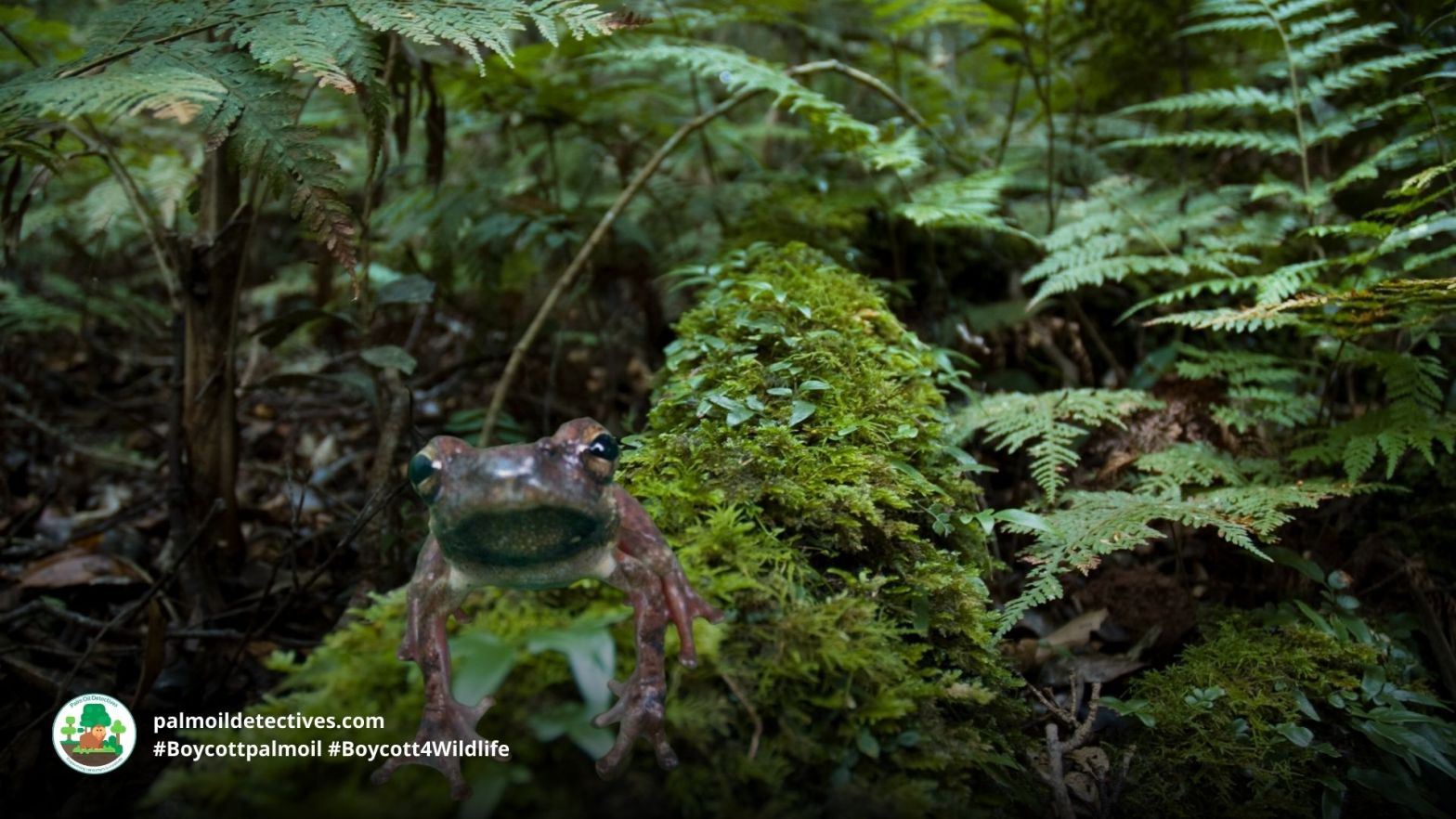
Mount Nimba Reed Frog Hyperolius nimbae
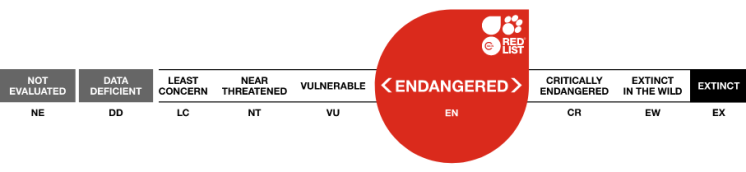
Endangered
Extant (resident): Côte d’Ivoire
Presence Uncertain: Guinea; Liberia
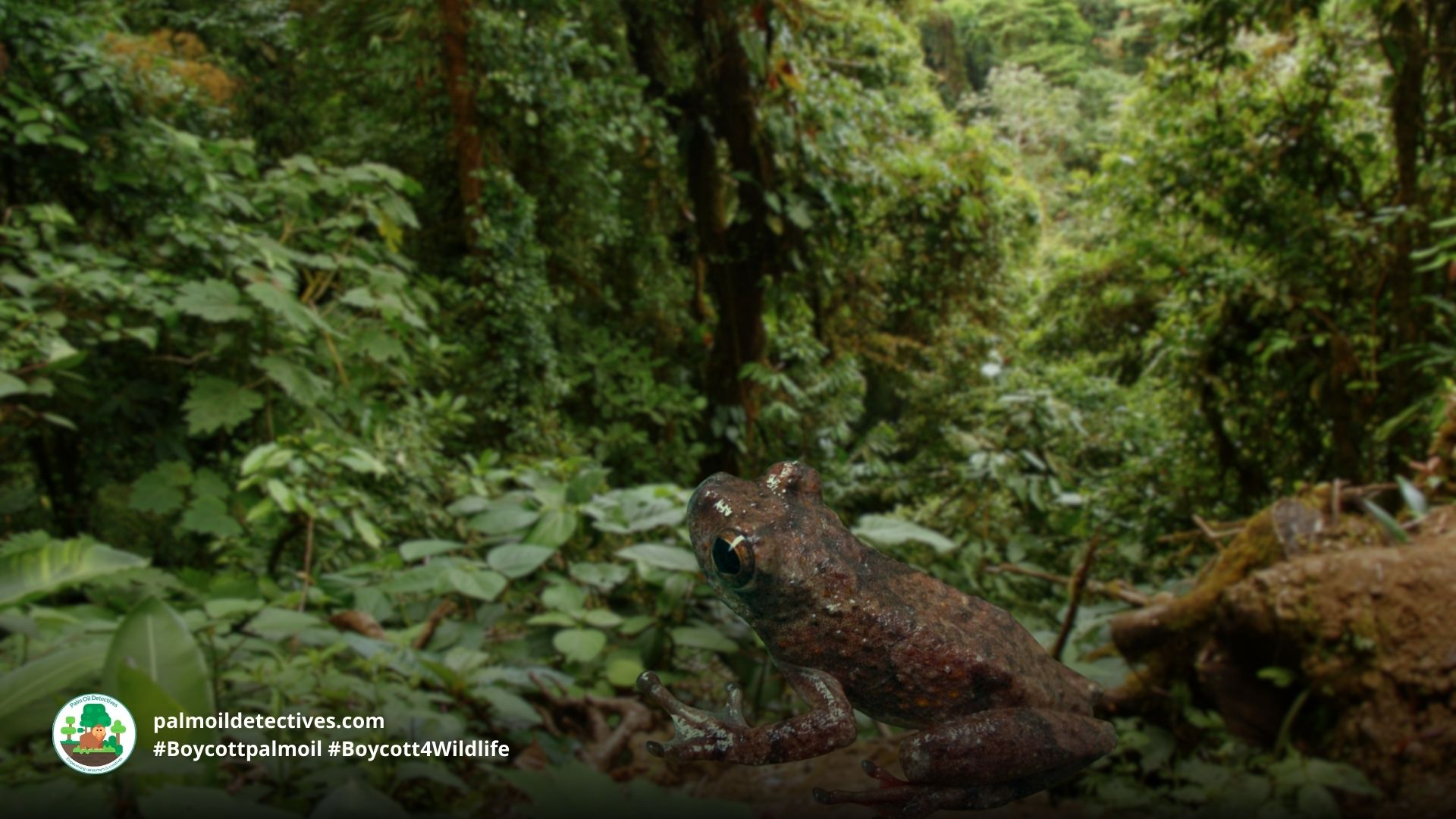
Fragile Mount Nimba Reed Frogs 🐸💚 hang on to life in Côte d’Ivoire 🇨🇮 Africa. Seldom seen and often forgotten, they’re endangered due to palmoil and meat agriculture. Serving as both predator and prey, Mount Nimba Reed Frogs are integral to the local ecology of Mount Nimba. Take action and advocate for indigenous-led conservation initiatives that prioritise the biodiversity protection. Fight for their survival when you shop and #BoycottMeat #BoycottPalmOil #Boycott4Wildlife
The Mount Nimba Reed #Frog 🐸 lives in Côte d’Ivoire #Africa. They’re #endangered due to #PalmOil and #mining and #meat #deforestation. Support this forgotten species when you shop #BoycottPalmOil #Boycott4Wildlife 🌴🩸💀🔥👎⛔️ @palmoildetect https://palmoildetectives.com/2021/01/18/mount-nimba-reed-frog-hyperolius-nimbae/
Fragile Mount Nimba Reed #Frogs 🐸💚 hang on to life in Côte d’Ivoire 🇨🇮 #Africa. Seldom seen and often forgotten, they’re #endangered due to #palmoil #meat #agriculture. Fight for their survival when you #BoycottMeat #BoycottPalmOil #Boycott4Wildlife https://palmoildetectives.com/2021/01/18/mount-nimba-reed-frog-hyperolius-nimbae/
The Mount Nimba Reed Frog is a tiny, curious and captivating amphibian living deep in the lush landscapes of Côte d’Ivoire’s swamps. Their survival is crucial and reflects the overall health of their delicate mangrove and swamp ecosystem.
Appearance and Behaviour
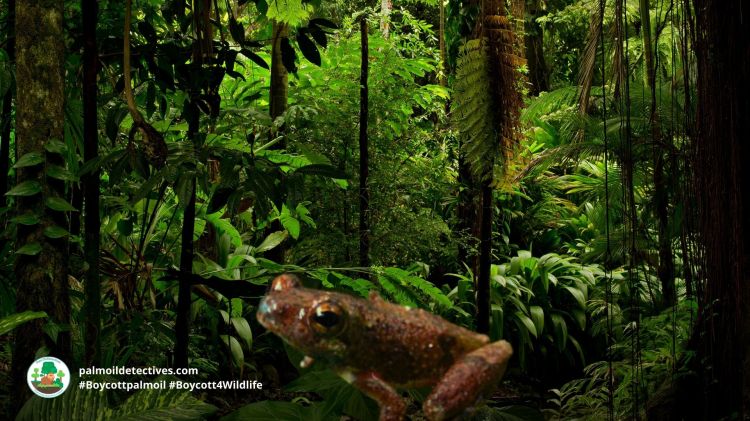
Adorned with a striking red-brown network pattern interspersed with dark spots, the Mount Nimba Reed Frog is instantly recognisable. Their behaviours, such as their characteristic calls at the edges of swamps, add to the rich tapestry of life in their habitat.
Geographical Range and Habitat
Endemic to the eastern foothills of Mount Nimba in Côte d’Ivoire, these frogs inhabit subtropical or tropical moist lowland forests and swamps. They thrive in swampy forests and even in rice fields within degraded forests and areas of secondary growth.
Diet
As insectivores, Mount Nimba Reed Frogs play a vital role in controlling insect populations in swamp ecosystems.
Threats
The Mount Nimba Reed Frog is listed as Endangered on the IUCN Red List, with their population continuing to decline. Immediate action is needed to address the pressures they face. Mount Nimba Reed Frogs face a range of human-related threats to their ongoing survival:
• Habitat Destruction: Forests are being cleared for agricultural expansion, including rice farming, which disrupts their natural habitat.
• Human Encroachment: The development of infrastructure and settlements poses ongoing threats to their fragile ecosystems.
• Pollution: Agricultural runoff from palm oil, rice and other pollutants degrade the quality of the swamps they rely on for survival.
• Climate Change: Altered rainfall patterns and rising temperatures further stress their already restricted habitats.
References:
• Kouamé, N. G., Assemian, N. E., Tohe, B., & Adeba, P. J. (2016). Rediscovery of the Mount Nimba Reedfrog, Hyperolius nimbae LAURENT, 1958, in western Ivory Coast. Herpetozoa, 29(1-2), 3-13.
• IUCN SSC Amphibian Specialist Group. (2017). Hyperolius nimbae. The IUCN Red List of Threatened Species 2017: e.T56170A16926587.
More Information
IUCN SSC Amphibian Specialist Group. 2017. Hyperolius nimbae. The IUCN Red List of Threatened Species 2017: e.T56170A16926587. https://dx.doi.org/10.2305/IUCN.UK.2017-2.RLTS.T56170A16926587.en. Downloaded on 07 April 2021.
Kouamé, N. G., Assemian, N. E., Tohe, B., & Adeba, P. J. (2016). Rediscovery of the Mount Nimba Reedfrog, Hyperolius nimbae, LAURENT, 1958, in western Ivory Coast. Herpetozoa, 29(1-2), 3-13.
You can support this beautiful animal
There are no known conservation activities for this animal. Share out this post to social media and join the #BoycottPalmOil #Boycott4Wildlife on social media to raise awareness
Further Information
IUCN SSC Amphibian Specialist Group. 2017. Hyperolius nimbae. The IUCN Red List of Threatened Species 2017: e.T56170A16926587. https://dx.doi.org/10.2305/IUCN.UK.2017-2.RLTS.T56170A16926587.en. Downloaded on 17 January 2021.

How can I help the #Boycott4Wildlife?
Take Action in Five Ways
1. Join the #Boycott4Wildlife on social media and subscribe to stay in the loop: Share posts from this website to your own network on Twitter, Mastadon, Instagram, Facebook and Youtube using the hashtags #Boycottpalmoil #Boycott4Wildlife.
2. Contribute stories: Academics, conservationists, scientists, indigenous rights advocates and animal rights advocates working to expose the corruption of the palm oil industry or to save animals can contribute stories to the website.



3. Supermarket sleuthing: Next time you’re in the supermarket, take photos of products containing palm oil. Share these to social media along with the hashtags to call out the greenwashing and ecocide of the brands who use palm oil. You can also take photos of palm oil free products and congratulate brands when they go palm oil free.
4. Take to the streets: Get in touch with Palm Oil Detectives to find out more.
5. Donate: Make a one-off or monthly donation to Palm Oil Detectives as a way of saying thank you and to help pay for ongoing running costs of the website and social media campaigns. Donate here
Discover more from Palm Oil Detectives
Subscribe to get the latest posts sent to your email.
 Palm Oil Detectives