
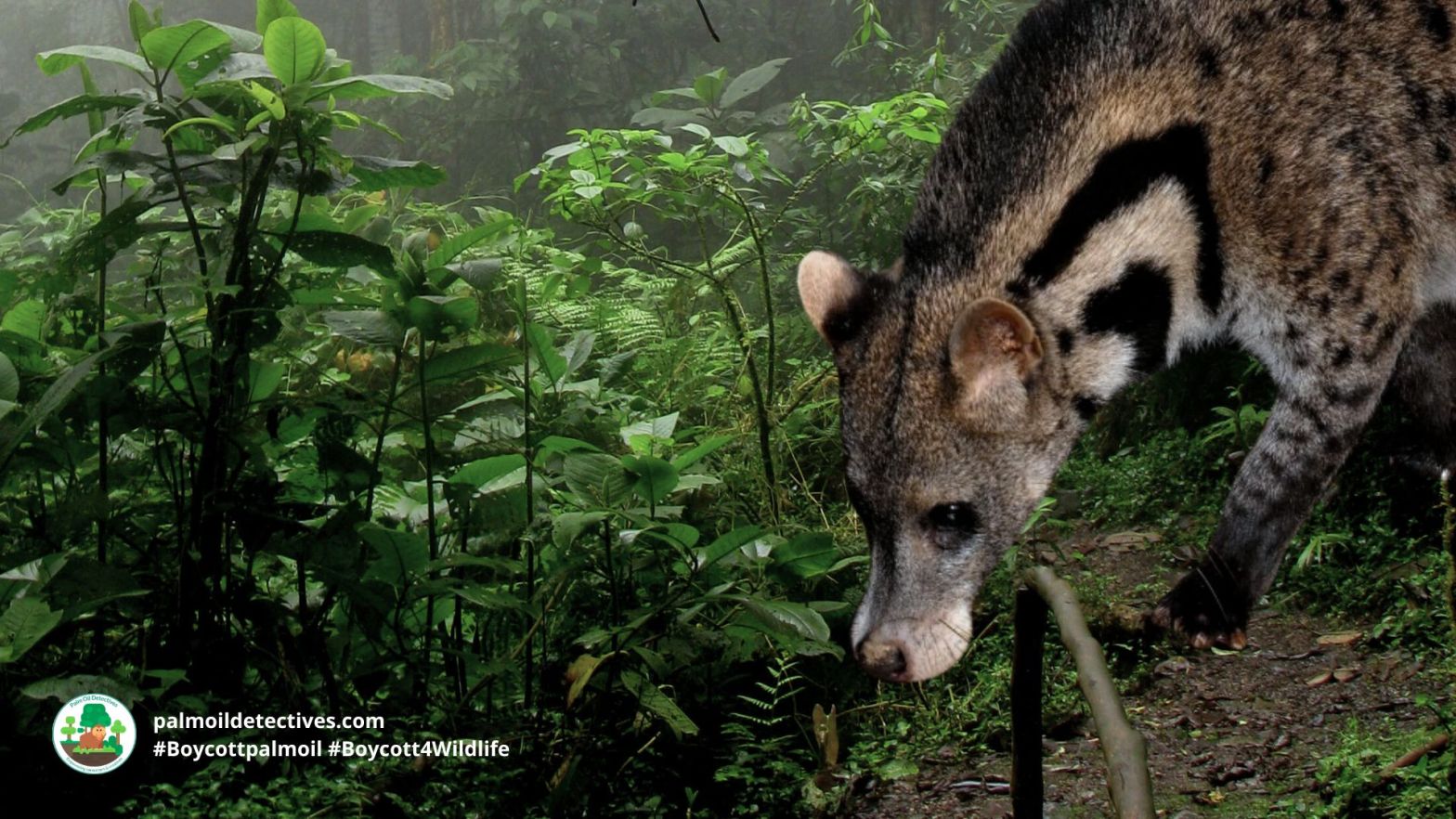
Large-spotted Civet Viverra megaspila
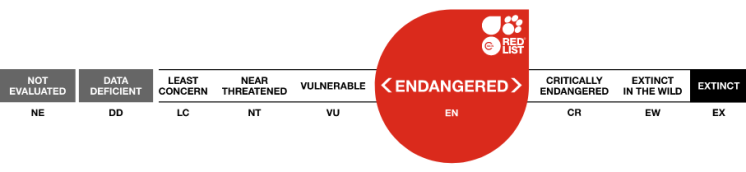
Endangered
Extant (resident): Cambodia; Laos; Malaysia (Peninsular Malaysia); Myanmar; Thailand
Possibly Extinct: China; Vietnam
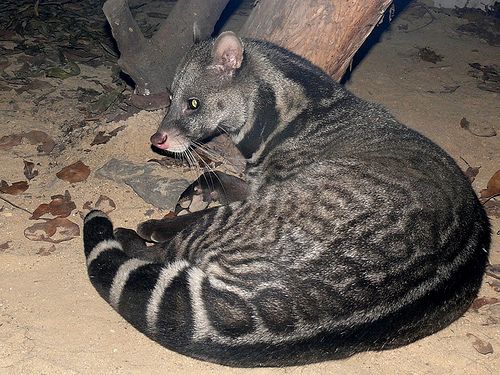
The Large-spotted Civet is an elusive and mysterious nocturnal carnivore of Southeast Asia. They are recognised for their large black spots on a greyish-buff coat and play an essential role in the health of their ecosystems. Preferring lowland forests and wetlands, they are elusive and rarely sighted. Unfortunately, habitat destruction for palm oil, hunting, and the illegal wildlife trade have contributed to their decline, with the species now classified as Endangered. Their predicted population decline is more than 50% over three generations. To protect the Large-spotted Civet, boycott products linked to deforestation and palm oil. Use your wallet as a weapon to fight for their survival. #BoycottPalmOil #Boycott4Wildlife
Large Spotted #Civets look a bit feline but they’re not. #Endangered in SE Asia, they’re eaten in China and may be #extinct there now. Their main threat is #palmoil #deforestation 🌴🪔☠️⛔️ Take action and #BoycottPalmOil #Boycott4Wildlife @palmoildetect https://palmoildetectives.com/2021/01/24/large-spotted-civet-viverra-megaspila/
Appearance and Behaviour
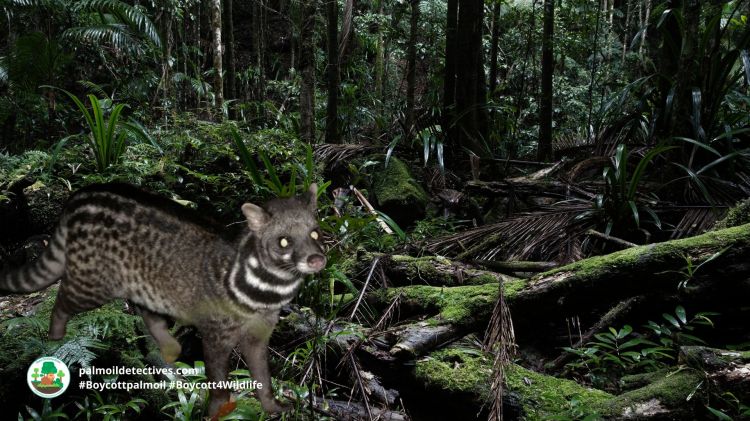
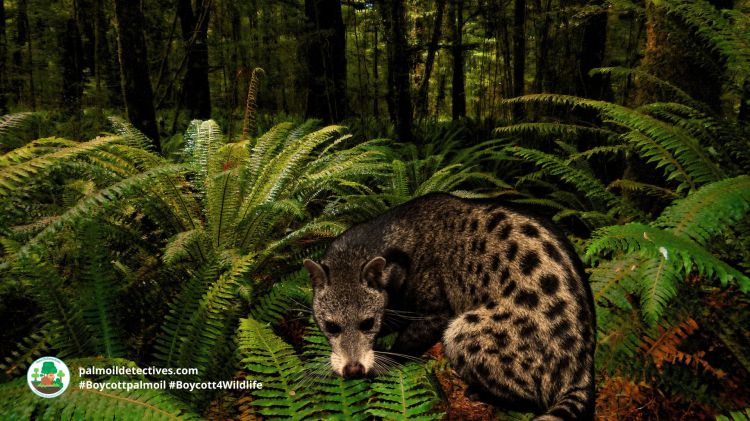
Large-spotted Civets have a distinctive appearance, featuring black spots on their sides and thighs, with black legs and a tail adorned with 4–5 bands. Their elongated face and sturdy build allow them to adapt to various habitats.
Primarily nocturnal, they are solitary animals that forage on the ground. Their diet includes small vertebrates, insects, and fruits, helping maintain a balance in their ecosystems. Large-spotted Civets are also known for their secretive nature, making them challenging to study.
Geographic Range
Large-spotted Civets are native to Southeast Asia, found in Cambodia, Laos, Malaysia (Peninsular Malaysia), Myanmar, and Thailand. They are believed to be extinct in China and Vietnam due to habitat loss. Their preferred habitats include lowland forests, wetlands, and riverine areas, but these environments are increasingly fragmented.
Diet
Large-spotted Civets are omnivorous. Their diet consists of small mammals, birds, reptiles, insects, and fruits. As ground foragers, they play an important role in controlling prey populations and dispersing seeds.
Reproduction and Mating
Little is known about the reproductive behaviour of Large-spotted Civets due to their elusive nature. Like other civet species, they are believed to have seasonal breeding, with females giving birth to litters after a gestation period. Detailed studies are needed to understand their mating systems, gestation length, and parental care.
Threats
The Large-spotted Civet is listed as Endangered on the IUCN Red List, with populations continuing to decline. Conservation measures include habitat protection, anti-poaching initiatives, and community education to reduce hunting pressures. However, the species remains poorly understood, underscoring the need for further research.
IUCN Status: Endangered
• Habitat Loss: Deforestation for agriculture, palm oil plantations, and urban expansion has fragmented their habitats.
• Hunting and Trade: They are hunted for their meat and body parts used in traditional medicine.
• Limited Range: With a restricted geographic range and shrinking habitats, they are vulnerable to environmental changes.
Take Action!
Protect the Large-spotted Civet by boycotting products linked to deforestation, such as palm oil. Use your wallet as a weapon to support ethical and eco-friendly choices. Share their story and fight for their survival with #BoycottPalmOil and #Boycott4Wildlife.
You can support this beautiful animal
There are no known conservation activities for this animal. Share out this post to social media and join the #BoycottPalmOil #Boycott4Wildlife on social media to raise awareness
Further Information
Timmins, R., Duckworth, J.W., WWF-Malaysia, Roberton, S., Gray, T.N.E., Willcox, D.H.A., Chutipong, W. & Long, B. 2016. Viverra megaspila. The IUCN Red List of Threatened Species 2016: e.T41707A45220097. https://dx.doi.org/10.2305/IUCN.UK.2016-1.RLTS.T41707A45220097.en. Downloaded on 24 January 2021.
ResearchGate. (2020). Camera-trap photographs of Viverra megaspila. Retrieved from ResearchGate
Thai National Parks. (n.d.). Large-spotted Civet. Retrieved from Thai National Parks
Wikipedia contributors. (n.d.). Large-spotted Civet. Retrieved from Wikipedia

How can I help the #Boycott4Wildlife?
Take Action in Five Ways
1. Join the #Boycott4Wildlife on social media and subscribe to stay in the loop: Share posts from this website to your own network on Twitter, Mastadon, Instagram, Facebook and Youtube using the hashtags #Boycottpalmoil #Boycott4Wildlife.
2. Contribute stories: Academics, conservationists, scientists, indigenous rights advocates and animal rights advocates working to expose the corruption of the palm oil industry or to save animals can contribute stories to the website.




3. Supermarket sleuthing: Next time you’re in the supermarket, take photos of products containing palm oil. Share these to social media along with the hashtags to call out the greenwashing and ecocide of the brands who use palm oil. You can also take photos of palm oil free products and congratulate brands when they go palm oil free.
4. Take to the streets: Get in touch with Palm Oil Detectives to find out more.
5. Donate: Make a one-off or monthly donation to Palm Oil Detectives as a way of saying thank you and to help pay for ongoing running costs of the website and social media campaigns. Donate here
Discover more from Palm Oil Detectives
Subscribe to get the latest posts sent to your email.
 Palm Oil Detectives
To the Public, Big Business is destroying Rainforests for palm oil! Please check labels to be sure your groceries do not contain palm oil, which is unhealthy but commonly used! Animals suffer when their natural habitat is destroyed! Child slave labor is part of this destruction!
LikeLiked by 2 people