
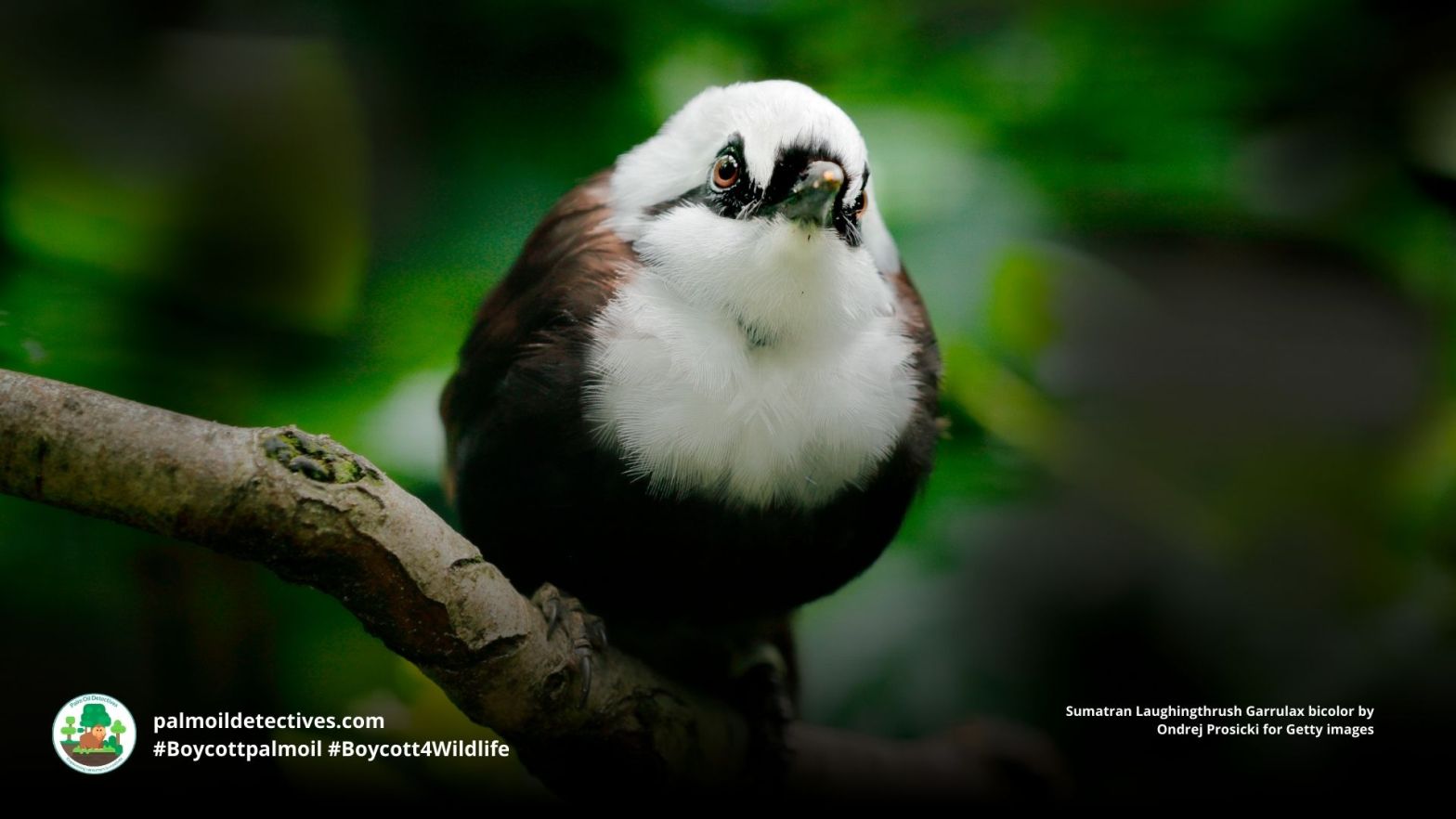
Sumatran Laughingthrush Garrulax bicolor
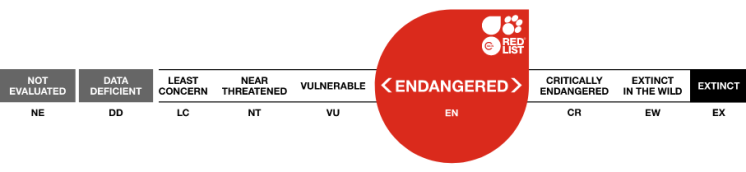
Endangered
Indonesia (Sumatera)
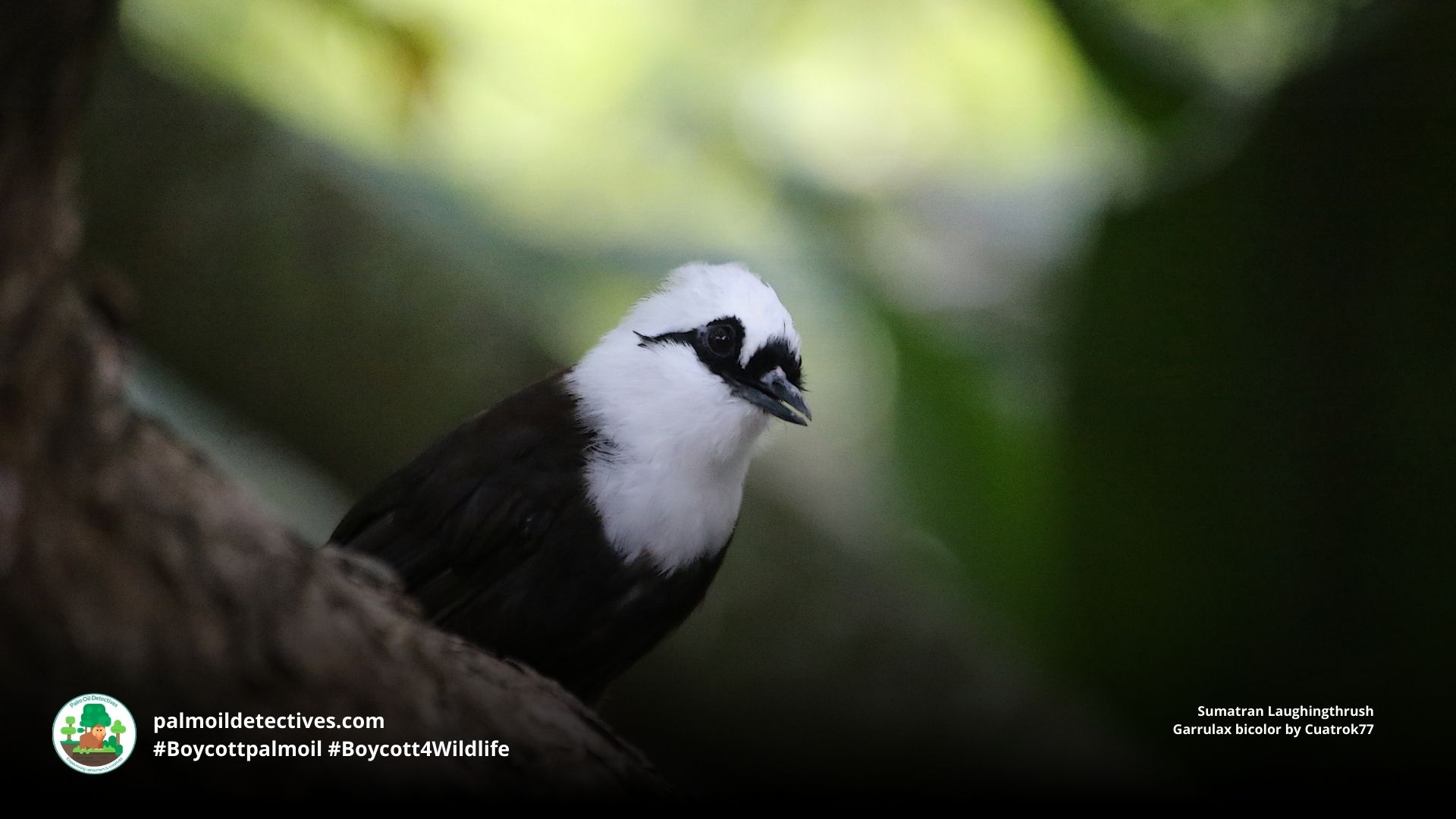
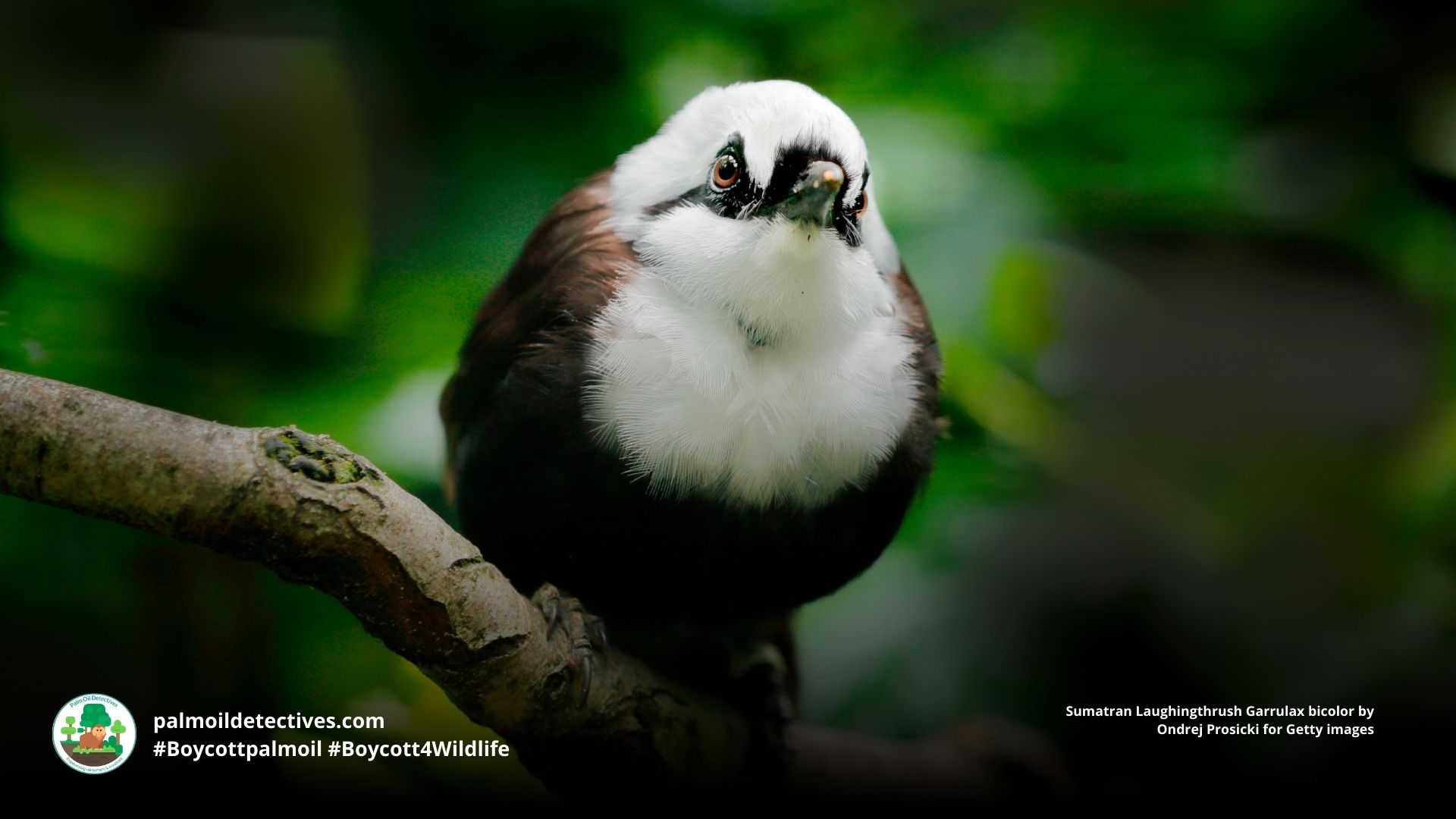
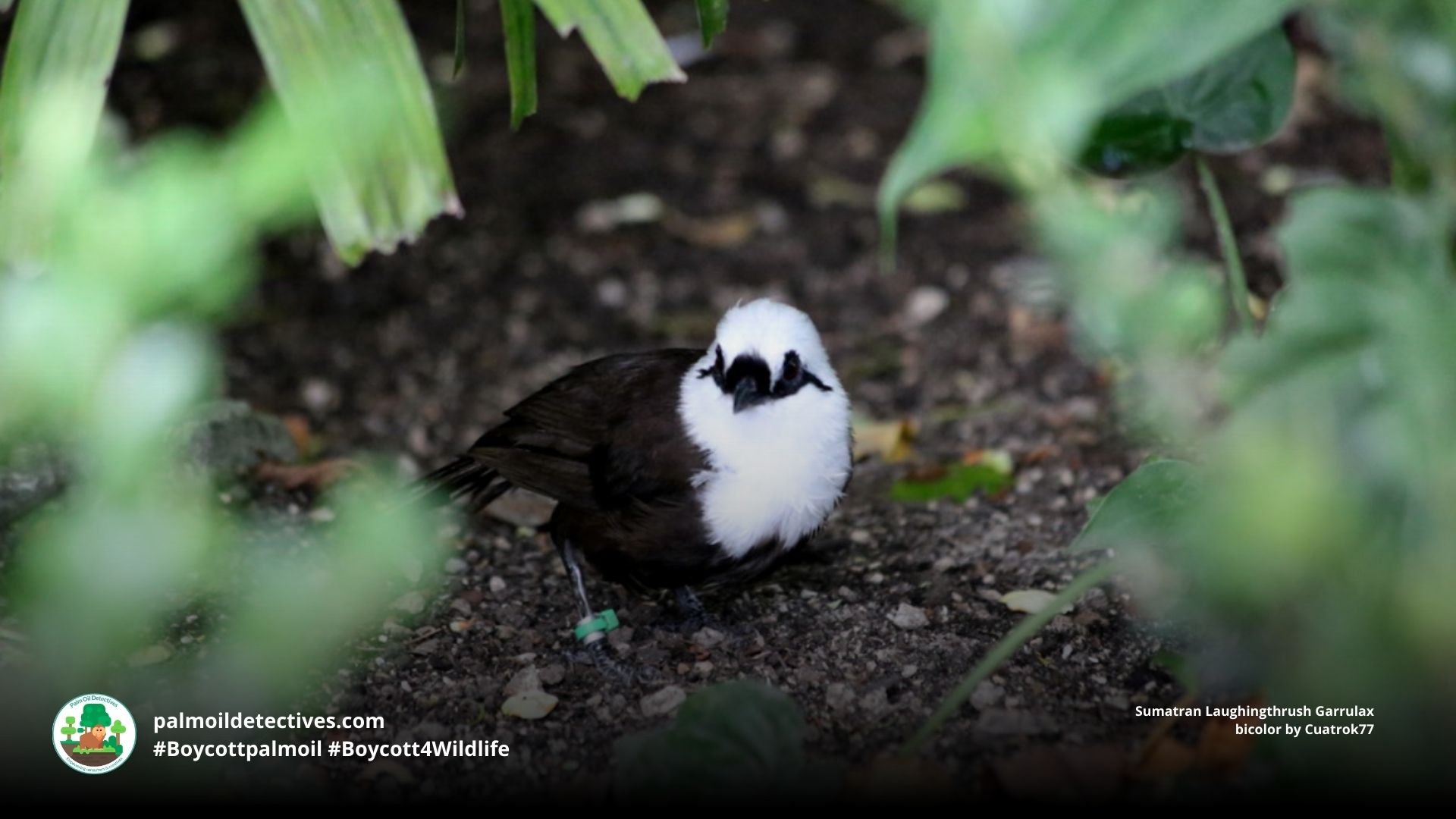
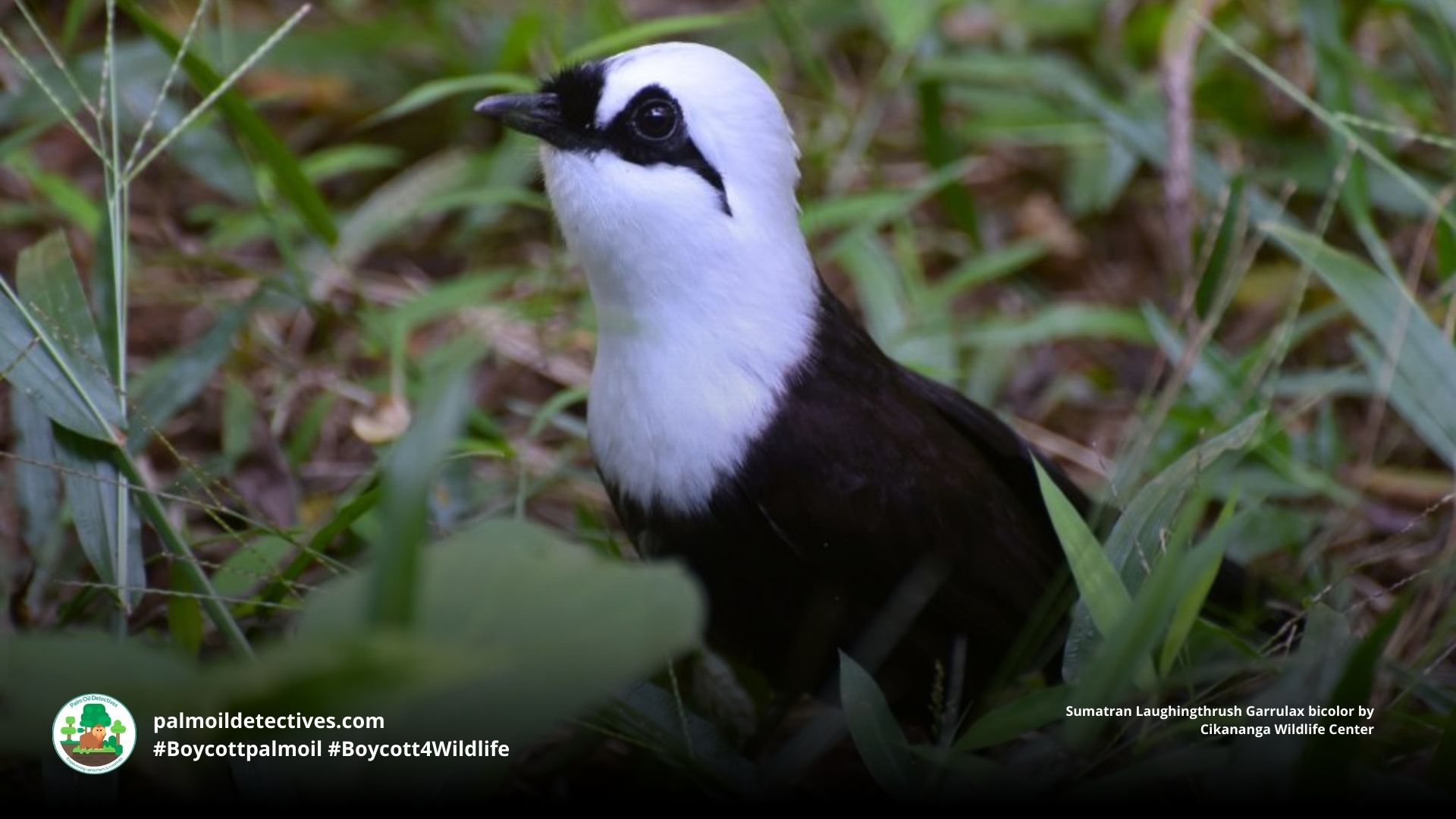
The Sumatran laughingthrush, with their striking black-and-white plumage and melodic song, is one of Sumatra’s most distinctive bird species. Found exclusively in the island’s montane forests, this critically endangered species faces an uncertain future due to habitat destruction and the illegal wildlife trade.
The species’ captivating vocalisations have tragically made them a target for poachers seeking to sell them into the cage bird trade. As deforestation for agriculture, including palm oil plantations, continues to decimate their habitat, the Sumatran laughingthrush is rapidly vanishing from the wild. Fight for their survival each time you shop. Boycott palm oil and join the #BoycottPalmOil #Boycott4Wildlife movement.
Striking #songbird Sumatran laughingthrush is highly social with a laughter-like trill🦜🦜💚🎶🥁 They are #endangered due to the illegal caged bird trade and #palmoil #deforestation. Take action! #BoycottPalmOil 🌴☠️🤮🙈⛔️ #Boycott4Wildlife @palmoildetect https://wp.me/pcFhgU-ji
The Sumatran laughingthrush is a highly social song #bird 🦤of #Sumatra 🇮🇩. Only 1K birds remain in the wild, a decline of 80% over decades due to #palmoil #deforestation and the illegal #pet trade 🌴🪔💀🚫#BoycottPalmOil #Boycott4Wildlife @palmoildetect https://wp.me/pcFhgU-ji
Appearance and Behaviour
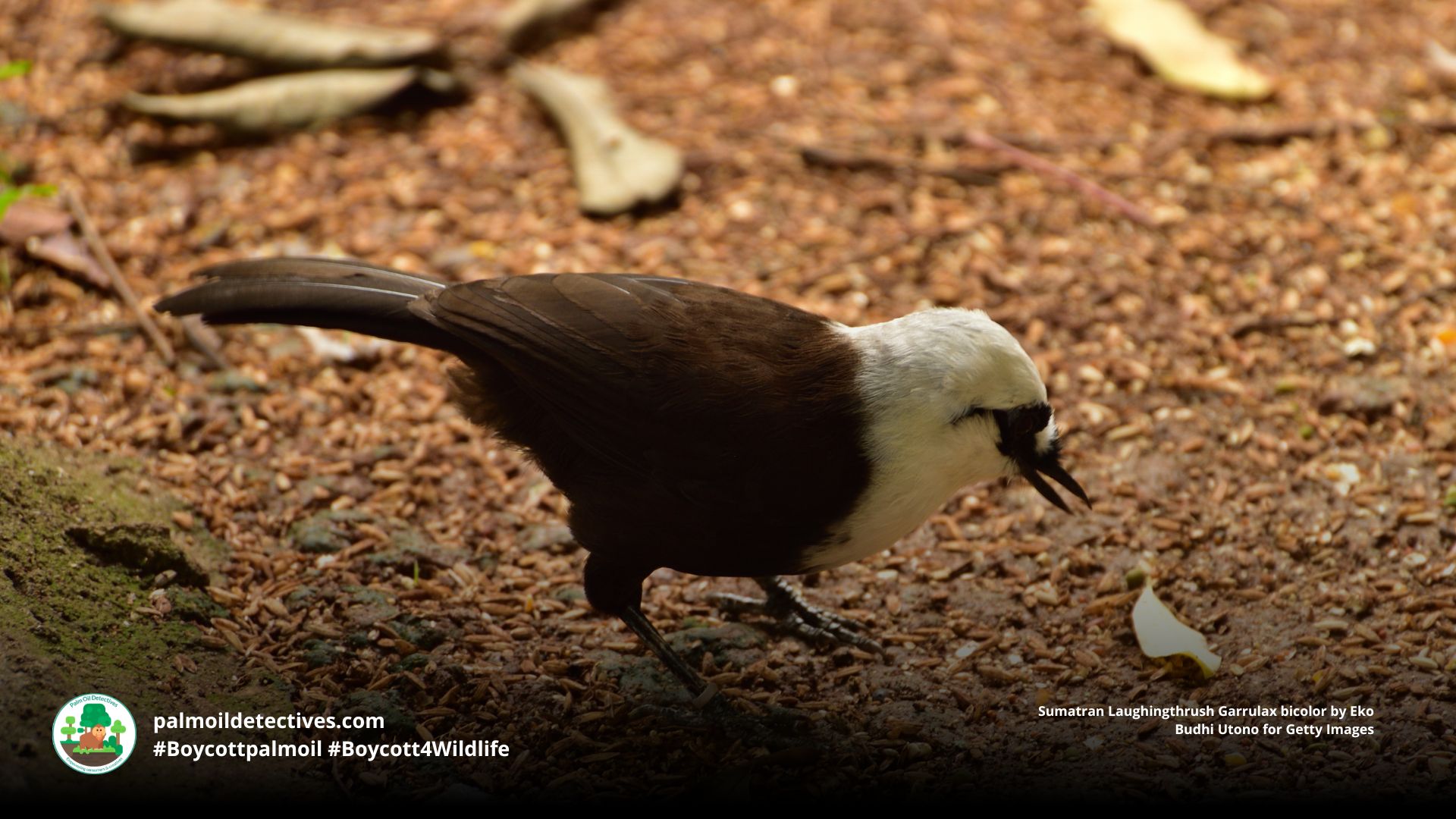
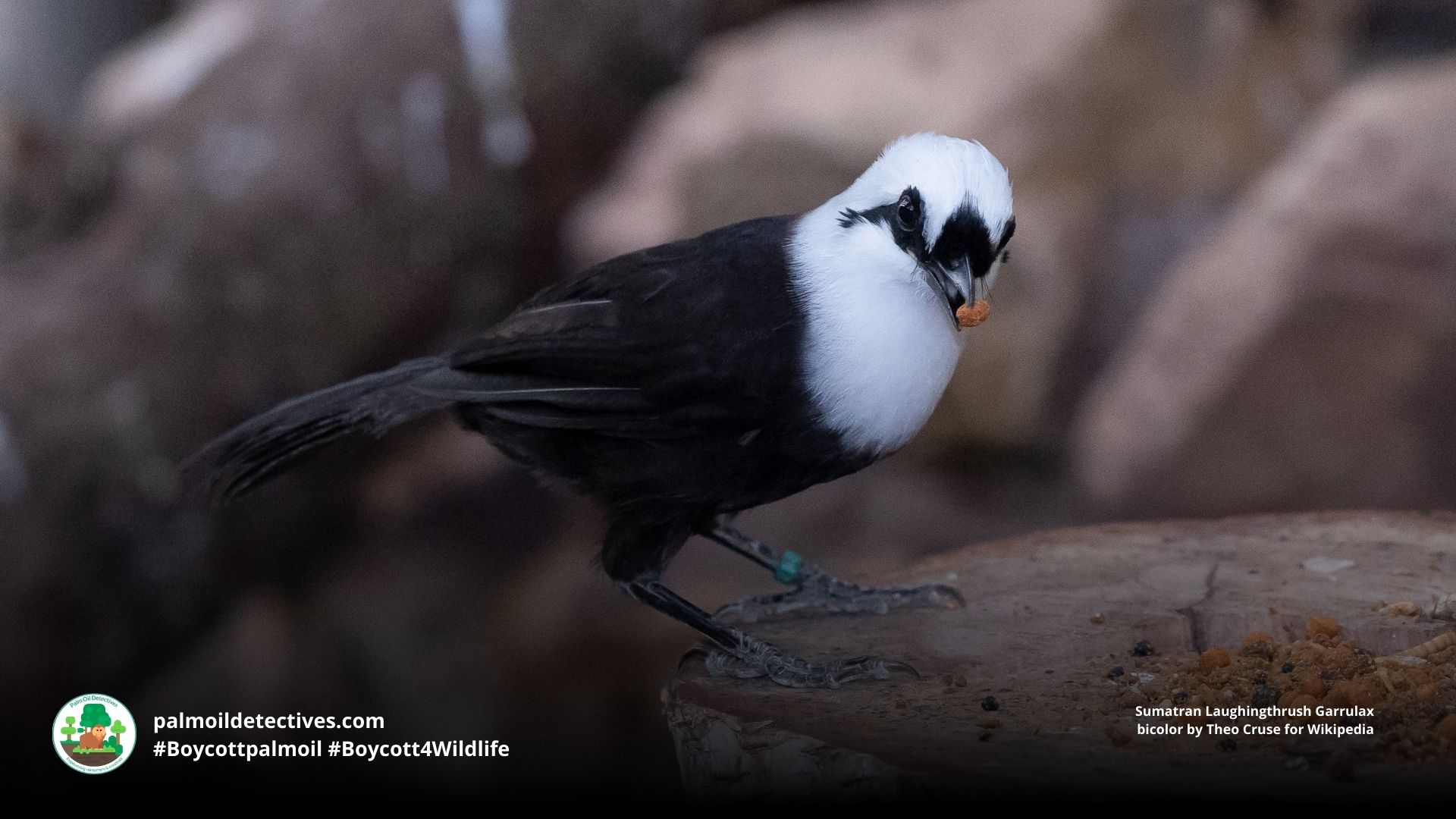
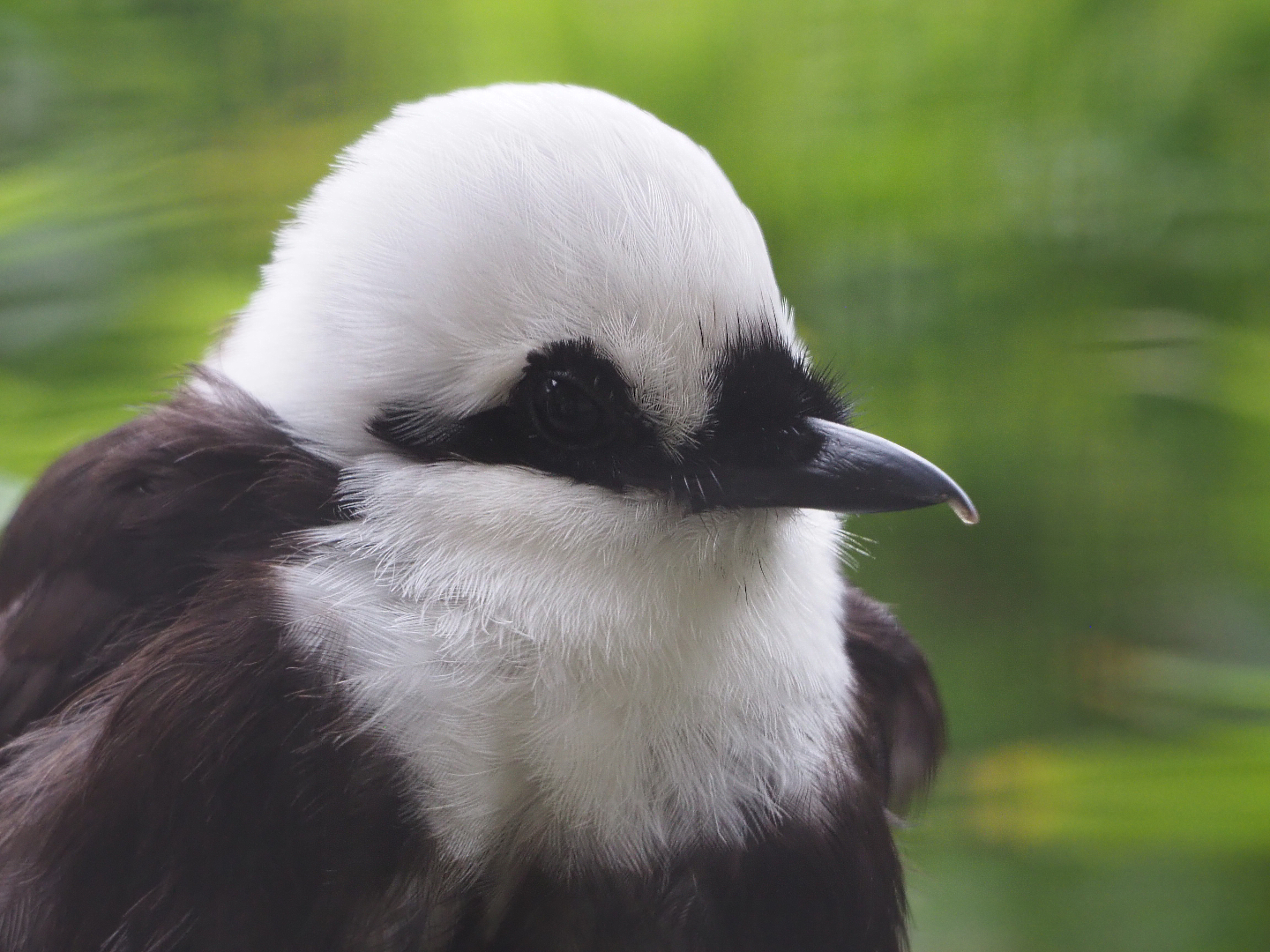
The Sumatran laughingthrush is a medium-sized passerine bird, growing up to 30 centimetres in length. Its plumage is predominantly black, with striking white markings on its wings, tail, and underparts. This contrast gives them an elegant appearance, enhanced by bright yellow eyes and strong, dark bill.
Known for their complex, melodious calls, these birds are highly social and often found in small flocks. Their name, “laughingthrush,” originates from their song, which resembles a series of whistles, trills, and laughter-like notes. These vocalisations are a key element of their social structure, aiding in communication and flock cohesion.
Geographic Range
The Sumatran laughingthrush is endemic to Sumatra and restricted to montane forests at elevations between 800 and 2,000 metres. Their preferred habitats include dense, moist forest understorey and secondary growth near clearings. Fragmentation of these habitats has isolated populations, making them more vulnerable to extinction.
Diet
Sumatran laughingthrushes are omnivorous, feeding on a diverse diet of insects, fruits, and seeds. They forage in the lower and middle forest canopy, often in mixed-species flocks. Their diet supports forest health by aiding in seed dispersal, an essential role for maintaining biodiversity in their montane ecosystem.
Reproduction and Mating
Little is known about the reproductive habits of the Sumatran laughingthrush. They are believed to nest in dense vegetation, constructing cup-shaped nests using leaves, twigs, and moss. Like other laughingthrushes, they are presumed to lay small clutches of eggs and exhibit parental care, although further studies are needed to confirm these behaviours.
Threats
The Sumatran laughingthrush is listed as Endangered on the IUCN Red List. Studies indicate that the wild population has declined by more than 80% in recent decades, with fewer than 1,000 mature individuals remaining (Birds of the World, 2020).While several individuals exist in captivity, efforts to protect the wild population remain insufficient. Conservation measures include habitat restoration, stronger enforcement of anti-poaching laws, and public awareness campaigns to reduce demand in the illegal wildlife trade (Collar et al., 2020).
Several organisations have initiated breeding programs to establish assurance populations, but these are only a short-term solution. Protecting their natural habitat and halting deforestation are essential to securing their future.
IUCN Status: Critically Endangered
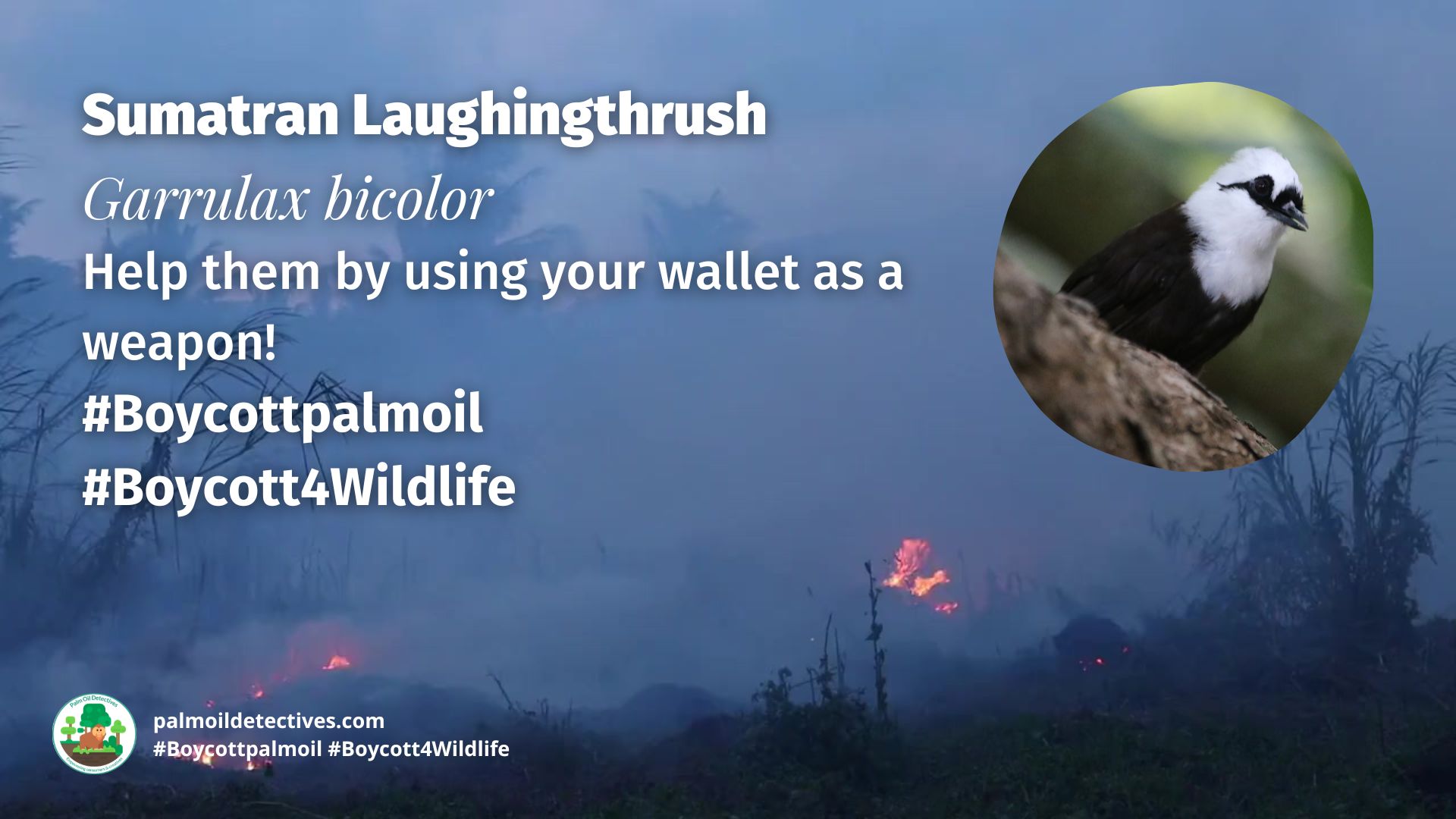
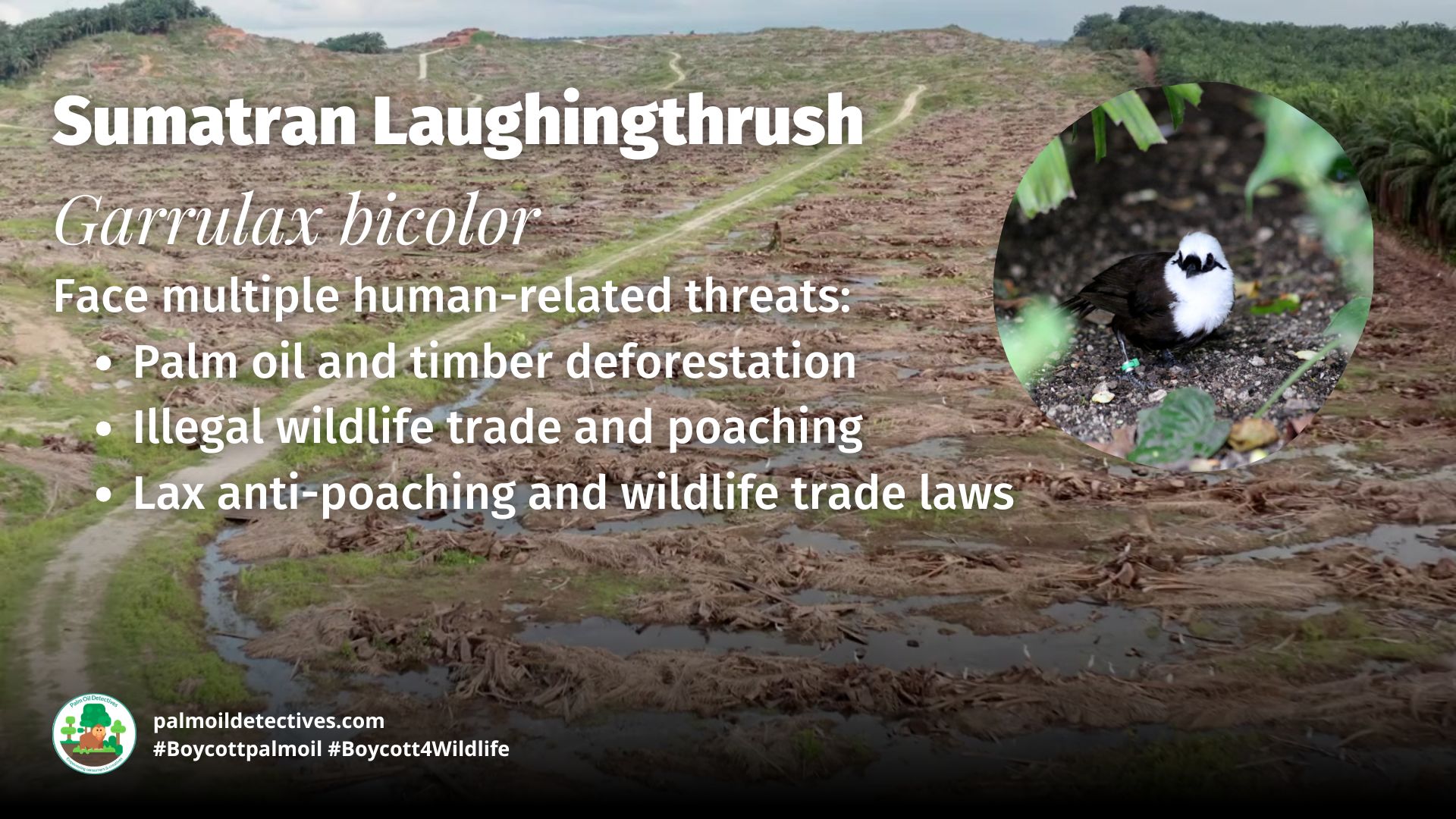
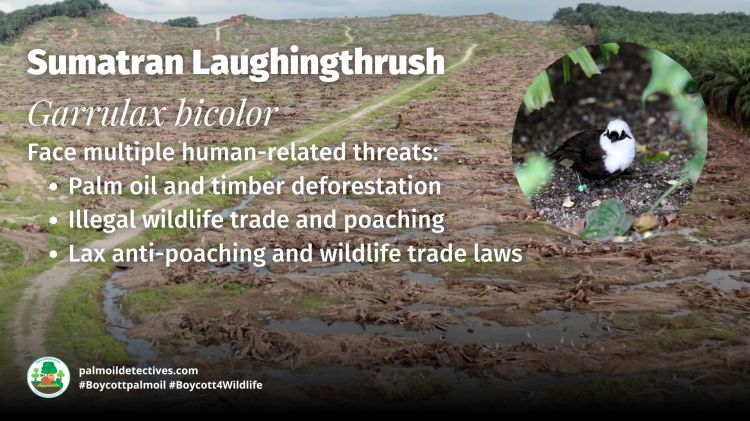
- Deforestation for palm oil and timber: Deforestation for palm oil plantations, logging, and agriculture has destroyed much of their montane forest habitat, fragmenting populations and reducing available resources.
- Illegal Wildlife Trade: The Sumatran laughingthrush is highly prized for their song, making them a frequent target for poachers. Large numbers are captured annually for sale in the illegal pet trade, particularly in Indonesia and Southeast Asia (BirdLife International, 2020).
- Capture for the caged bird trade: Their pretty and melodic song has historically made them popular for the illegal caged bird trade.
- Lax anti-poaching and illegal wildlife laws.
Take Action!
Protect the Sumatran laughingthrush by boycotting palm oil and supporting organisations dedicated to wildlife conservation. Raise awareness about the illegal pet trade and its devastating impact on these beautiful birds. Together, we can fight for their survival. #BoycottPalmOil #Boycott4Wildlife
You can support this beautiful animal
There are no known conservation activities for this animal. Share out this post to social media and join the #BoycottPalmOil #Boycott4Wildlife on social media to raise awareness
Further Information
BirdLife International. 2016. Garrulax bicolor. The IUCN Red List of Threatened Species 2016: e.T22734448A95085919. https://dx.doi.org/10.2305/IUCN.UK.2016-3.RLTS.T22734448A95085919.en. Downloaded on 24 January 2021.
Collar, N. J., & BirdLife International. (2020). A case for better international protection of the Sumatran laughingthrush (Garrulax bicolor). Bird Conservation International.
eBird. (2020). Sumatran laughingthrush (Garrulax bicolor).
Birds of the World. (2020). Flocking and foraging behaviour of the Sumatran laughingthrush (Garrulax bicolor).
TRAFFIC. (2020). The illegal trade of Sumatran laughingthrushes. TRAFFIC Bulletin, 25(2), 45–50.

How can I help the #Boycott4Wildlife?
Take Action in Five Ways
1. Join the #Boycott4Wildlife on social media and subscribe to stay in the loop: Share posts from this website to your own network on Twitter, Mastadon, Instagram, Facebook and Youtube using the hashtags #Boycottpalmoil #Boycott4Wildlife.
2. Contribute stories: Academics, conservationists, scientists, indigenous rights advocates and animal rights advocates working to expose the corruption of the palm oil industry or to save animals can contribute stories to the website.





3. Supermarket sleuthing: Next time you’re in the supermarket, take photos of products containing palm oil. Share these to social media along with the hashtags to call out the greenwashing and ecocide of the brands who use palm oil. You can also take photos of palm oil free products and congratulate brands when they go palm oil free.
4. Take to the streets: Get in touch with Palm Oil Detectives to find out more.
5. Donate: Make a one-off or monthly donation to Palm Oil Detectives as a way of saying thank you and to help pay for ongoing running costs of the website and social media campaigns. Donate here
Discover more from Palm Oil Detectives
Subscribe to get the latest posts sent to your email.
 Palm Oil Detectives