
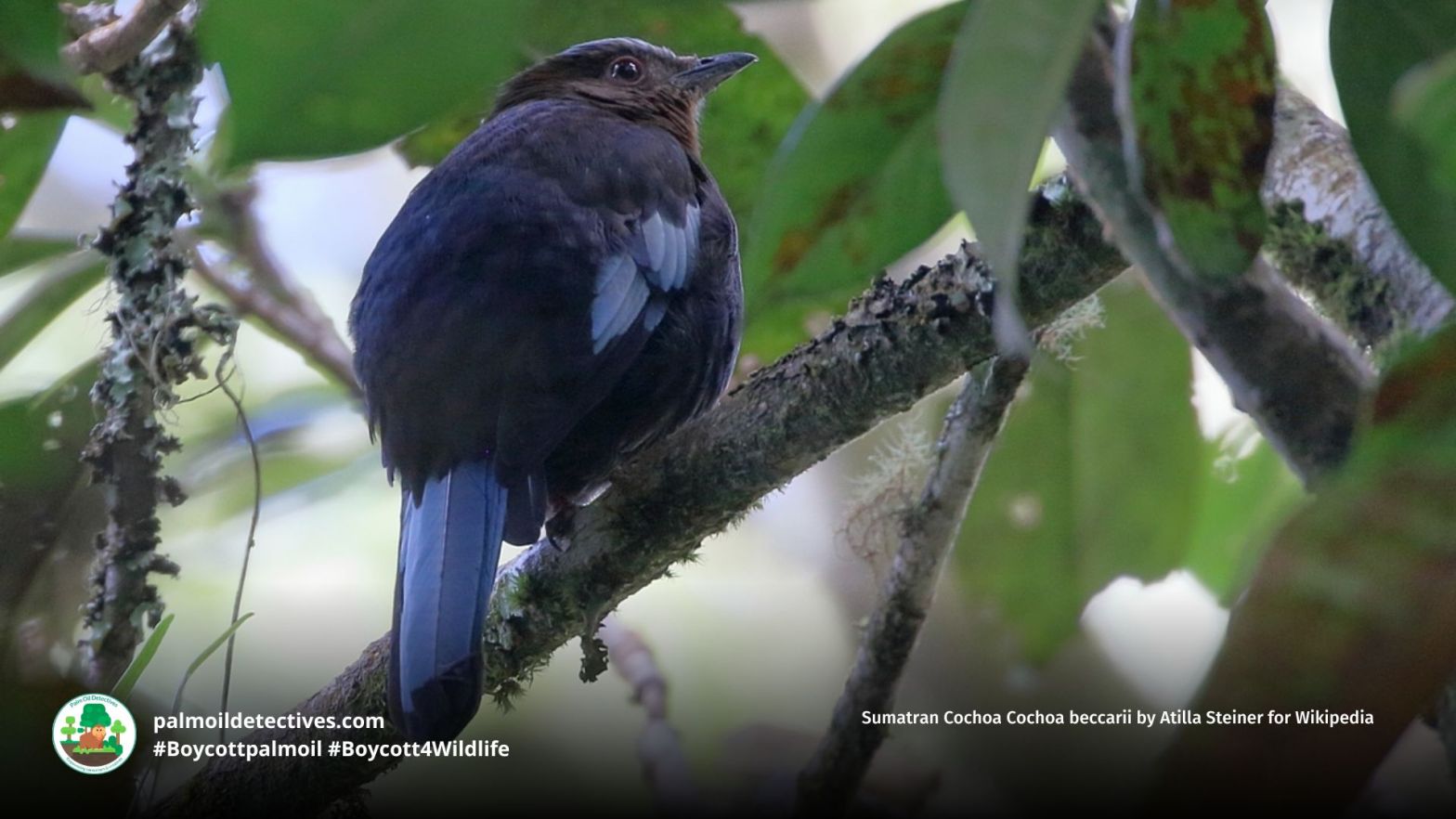
Sumatran Cochoa Cochoa beccarii
Red List Status: Vulnerable
Location: Indonesia (Sumatra)
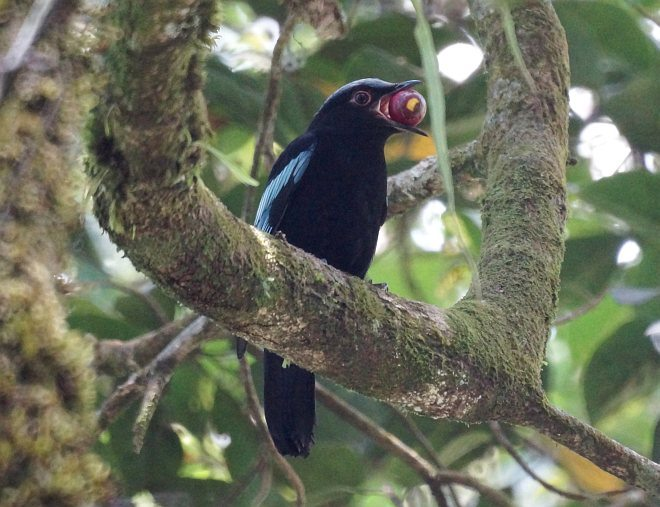
This elusive forest bird is restricted to the montane forests of Sumatra, found between 1,000 and 2,200 metres above sea level in the island’s tropical lower montane zones.
The Sumatran Cochoa Cochoa beccarii is a rare and secretive forest-dwelling #songbird found only in the highland rainforests of #Sumatra #Indonesia. With their shimmering electric blue and smoky black plumage and elusive behaviour, this species of songbird moves in a melodic symphony of song through the middle and upper canopy, often remaining hidden from view. Although currently listed as #Vulnerable, the species is experiencing a slow but steady decline caused by #deforestation and trapping for the illegal bird trade. As demand for exotic songbirds grows, especially online, the Sumatran Cochoa faces a very real risk of disappearing from the wild. Use your wallet as a weapon. Say no to palm oil and never support the illegal wildlife trafficking and illegal songbird trade. Campaign against wildlife trafficking and #BoycottPalmOil #Boycott4Wildlife #Vegan
The Sumatran Cochoa is a rare #songbird 🎶🕊️ of #Sumatra #Indonesia 🇮🇩 They are #vulnerable due to #palmoil #deforestation and capture for the illegal #pet trade. Say NO to captive birds and #BoycottPalmOil #Boycott4Wildlife 🌴🪔💀⛔️ @palmoildetect https://palmoildetectives.com/2021/01/24/sumatran-cochoa-cochoa-beccarii/
The Sumatran Cochoa is a #bird living in the middle and upper storeys of tropical lower montane forest between 1,000 m and 2,200 m in Sumatra, Indonesia. This species qualifies as Vulnerable because they occur at very low densities and thus is suspected to have a small population, they are likely to be undergoing a continuing decline owing to habitat loss at the lower fringes of its altitudinal range due to oil palm plantations.


Appearance and Behaviour
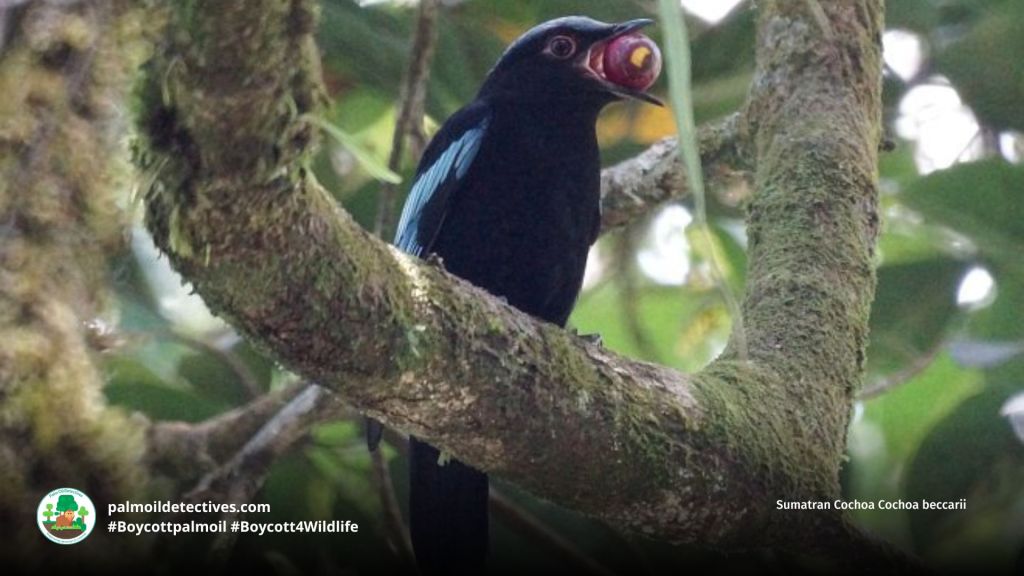
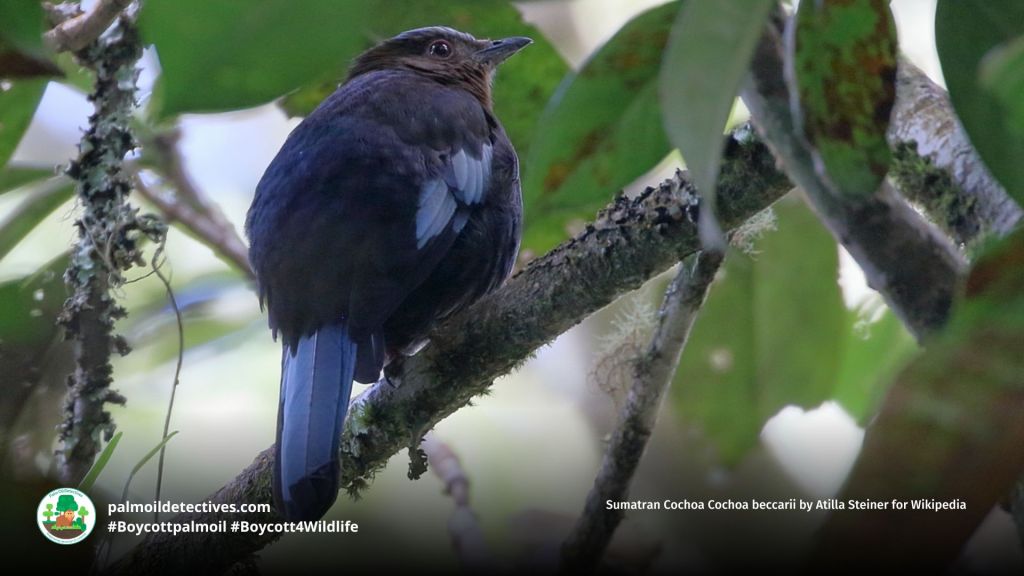
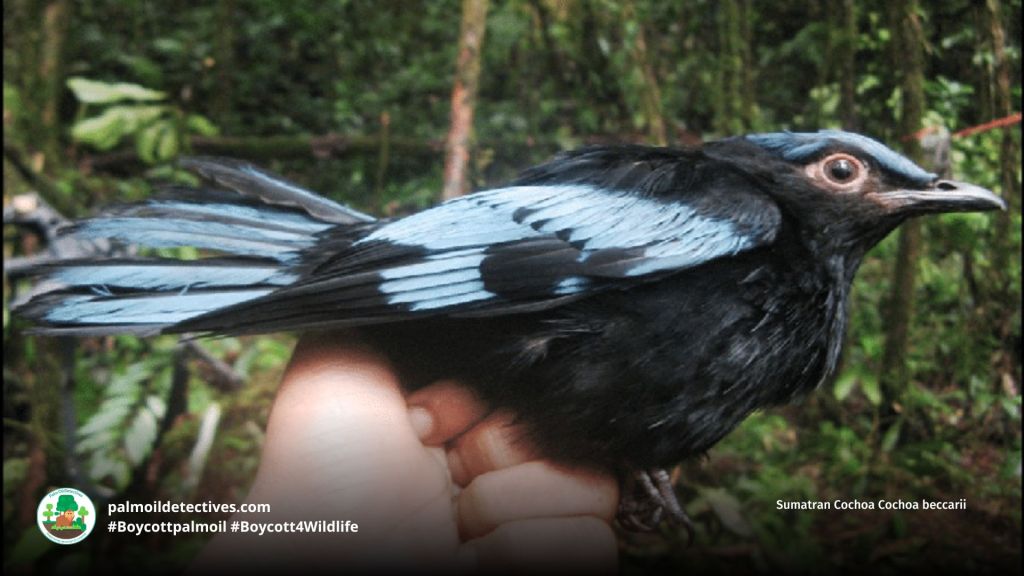
The Sumatran Cochoa is a shy and striking song bird that inhabits the cooler heights of tropical forests. Their plumage is a flash of iridescent blue and soft black feathers, similar to other cochoas, although detailed descriptions remain scarce due to the species’ cryptic habits. Often remaining high in the forest canopy, the Sumatran Cochoa rarely descends and prefers dense, shaded environments far from human disturbance.
Although little has been documented, this songbird likely moves in deliberate hops between branches, occasionally breaking into soft song. The Sumatran Cochoa is thought to be largely sedentary, but may exhibit small local seasonal movements depending on food availability.
Diet
The diet of the Sumatran Cochoa has not been fully studied, however based on related species, they likely feed on insects, berries, and other soft fruits found in the montane canopy. Foraging likely occurs in the mid to upper levels of the forest, using precise movements to pick food from leaves, branches, or air.
Reproduction and Mating
Breeding behaviour has not been directly observed, but the Sumatran Cochoa may share nesting traits with other members of the genus Cochoa. The songbird likely builds a cup-shaped nest in the fork of a tree branch or against mossy bark, laying one to three eggs. The breeding season is suspected to follow seasonal patterns in Sumatra’s montane forest, although more field research is urgently needed.
Geographic Range
The Sumatran Cochoa is a song bird endemic to Sumatra and occurs only in the island’s mountainous regions, between 1,000 and 2,200 metres above sea level. The bird inhabits tropical lower montane forests, where they prefer undisturbed canopies and thick vegetation. Habitat fragmentation due to palm oil and timber agriculture, and infrastructure development has drastically reduced their range and led to isolated populations.
Threats

• Habitat loss from palm oil and timber deforestation and forest conversion
The montane forests of Sumatra are increasingly affected by land clearance for plantations, agriculture, and road construction. Between 2009 and 2022, forest cover in the bird’s range declined by an estimated 3–4%. Even small-scale encroachment can damage the intact canopy structure that the species depends on for shelter, food, and breeding.
• Trapping for the illegal songbird trade
Although rarely seen in physical markets, the Sumatran Cochoa has been targeted for the illegal bird trade. A study using web-scraping and machine learning tools found three confirmed online advertisements for the species among 105,000 listings (Okarda et al., 2022). This suggests that the species is extremely rare in trade, but even occasional trapping can cause local extinctions, especially in accessible forest edges.
• Lack of ecological data and targeted conservation
Very little is known about the species’ biology, behaviour, and population size. This lack of information makes conservation planning difficult and reduces the likelihood of targeted protection. Without focused research, the species may vanish unnoticed, especially in areas under threat from ongoing palm oil and timber deforestation.
Take Action!
Protect the future of the Sumatran Cochoa and other Sumatran song birds. Avoid palm oil products and support forest-friendly, indigenous-led agroecology. Never purchase wild-caught birds or keep songbirds as pets. Demand stronger laws to protect wildlife from illegal online trade and campaign against the wildlife trade and against palm oil online. #BoycottPalmOil #Boycott4Wildlife #Vegan #EndSongbirdTrade
FAQs
How many Sumatran Cochoas are left in the wild?
Exact numbers of these unique songbirds are unknown. Due to the bird species’ elusive nature and high-altitude habitat, no full population survey has been conducted.
Why is the songbird trade a threat to Sumatran Cochoas?
Although one recent study found that the Sumatran Cochoa is rarely sold, the broader Indonesian songbird market has exploded—particularly online. Machine learning research found hundreds of thousands of songbirds for sale, including many threatened species (Okarda et al., 2022). Even rare songbird species like the Sumatran Cochoa are at risk due to high demand from hobbyists and collectors.
Where does the Sumatran Cochoa live?
This bird lives only on the Indonesian island of Sumatra, between 1,000 and 2,200 metres in elevation. It prefers cool, misty, undisturbed montane forests and may be highly sensitive to forest disturbance or fragmentation.
Is the Sumatran Cochoa affected by palm oil?
Yes. Palm oil expansion contributes to widespread deforestation across Sumatra, including in upland forest edges where these birds live. Dramatic reductions in forest cover make it easier for poaching, hunting and illegal wildlife trade to occur leading to local extinction.
Do Sumatran Cochoas make good pets?
Absolutely not. Trapping wild birds for pets is cruel and contributes to the extinction of many species. Songbirds belong in the wild, and the Sumatran Cochoa is no exception. Instead if you like songbirds you should campaign for an end to the songbird trade and protection of highland forest ecosystems.

Further Information

BirdLife International. 2017. Cochoa beccarii (amended version of 2016 assessment). The IUCN Red List of Threatened Species 2017: e.T22710150A110098195. https://dx.doi.org/10.2305/IUCN.UK.2017-1.RLTS.T22710150A110098195.en. Downloaded on 24 January 2021.
Okarda, B., Muchlish, U., Kusumadewi, S. D., & Purnomo, H. (2022). Categorizing the songbird market through big data and machine learning in the context of Indonesia’s online market. Global Ecology and Conservation, 39, e02280. https://doi.org/10.1016/j.gecco.2022.e02280

How can I help the #Boycott4Wildlife?
Take Action in Five Ways
1. Join the #Boycott4Wildlife on social media and subscribe to stay in the loop: Share posts from this website to your own network on Twitter, Mastadon, Instagram, Facebook and Youtube using the hashtags #Boycottpalmoil #Boycott4Wildlife.
2. Contribute stories: Academics, conservationists, scientists, indigenous rights advocates and animal rights advocates working to expose the corruption of the palm oil industry or to save animals can contribute stories to the website.




3. Supermarket sleuthing: Next time you’re in the supermarket, take photos of products containing palm oil. Share these to social media along with the hashtags to call out the greenwashing and ecocide of the brands who use palm oil. You can also take photos of palm oil free products and congratulate brands when they go palm oil free.
4. Take to the streets: Get in touch with Palm Oil Detectives to find out more.
5. Donate: Make a one-off or monthly donation to Palm Oil Detectives as a way of saying thank you and to help pay for ongoing running costs of the website and social media campaigns. Donate here
Discover more from Palm Oil Detectives
Subscribe to get the latest posts sent to your email.
 Palm Oil Detectives