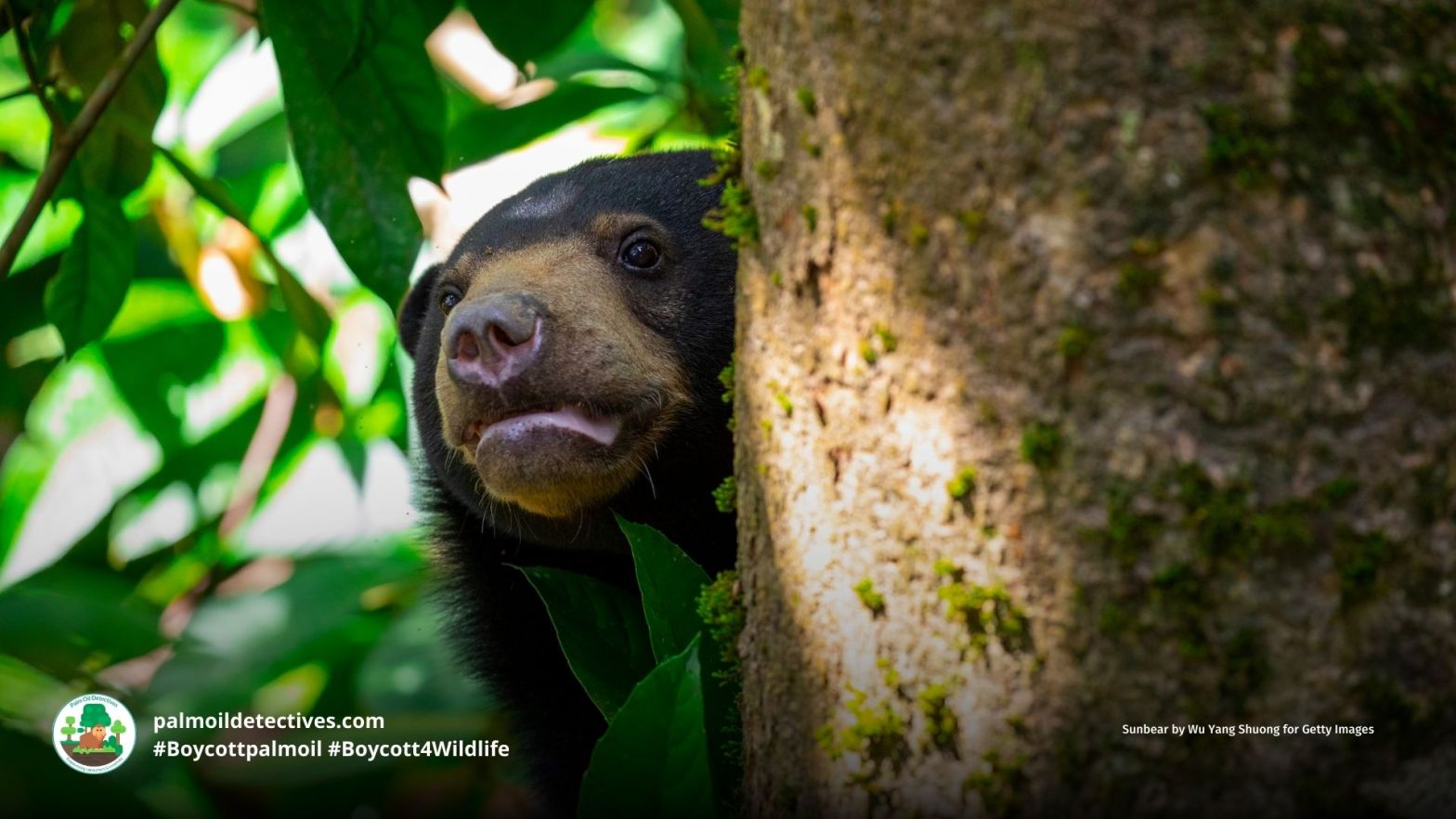
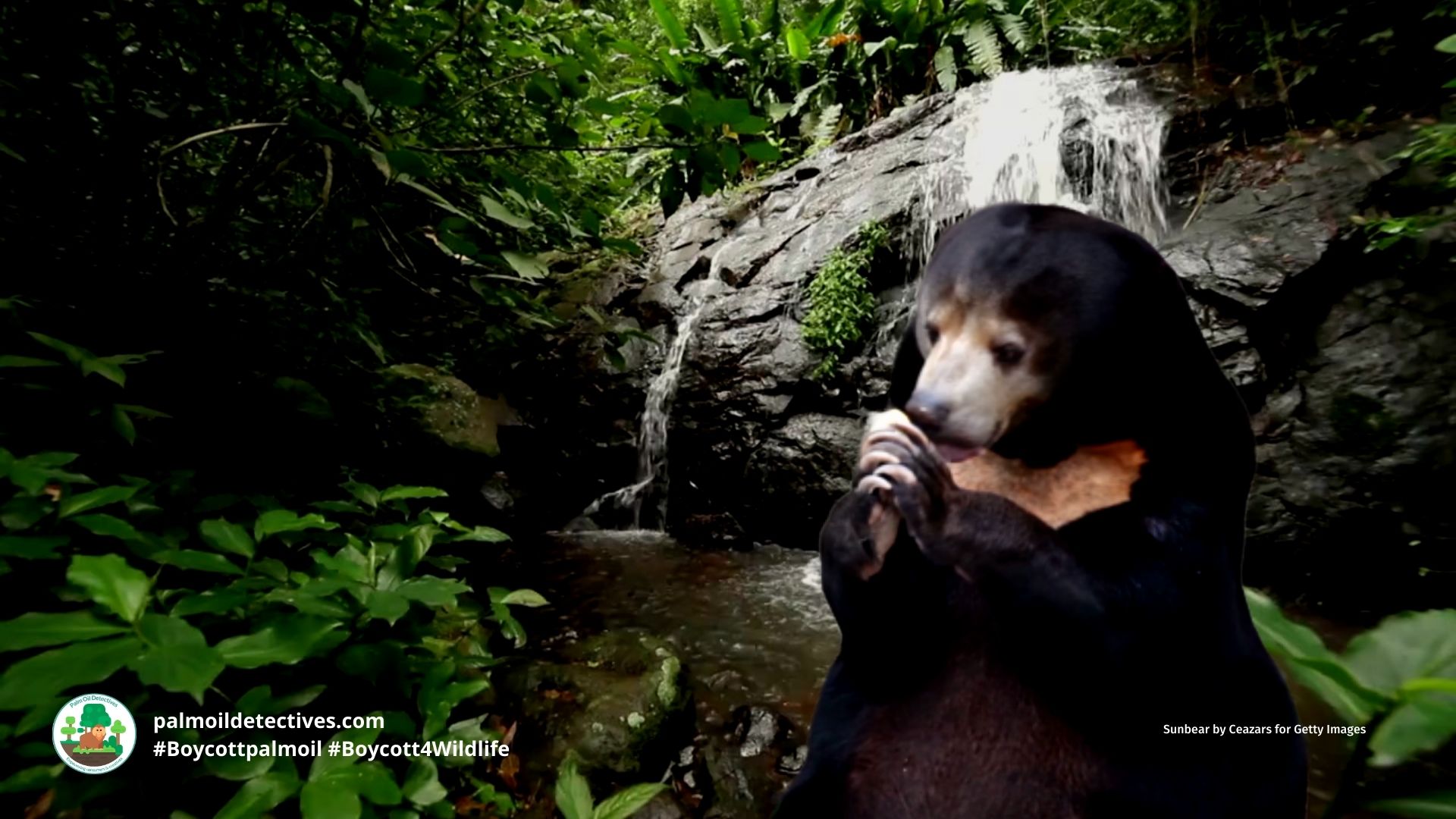
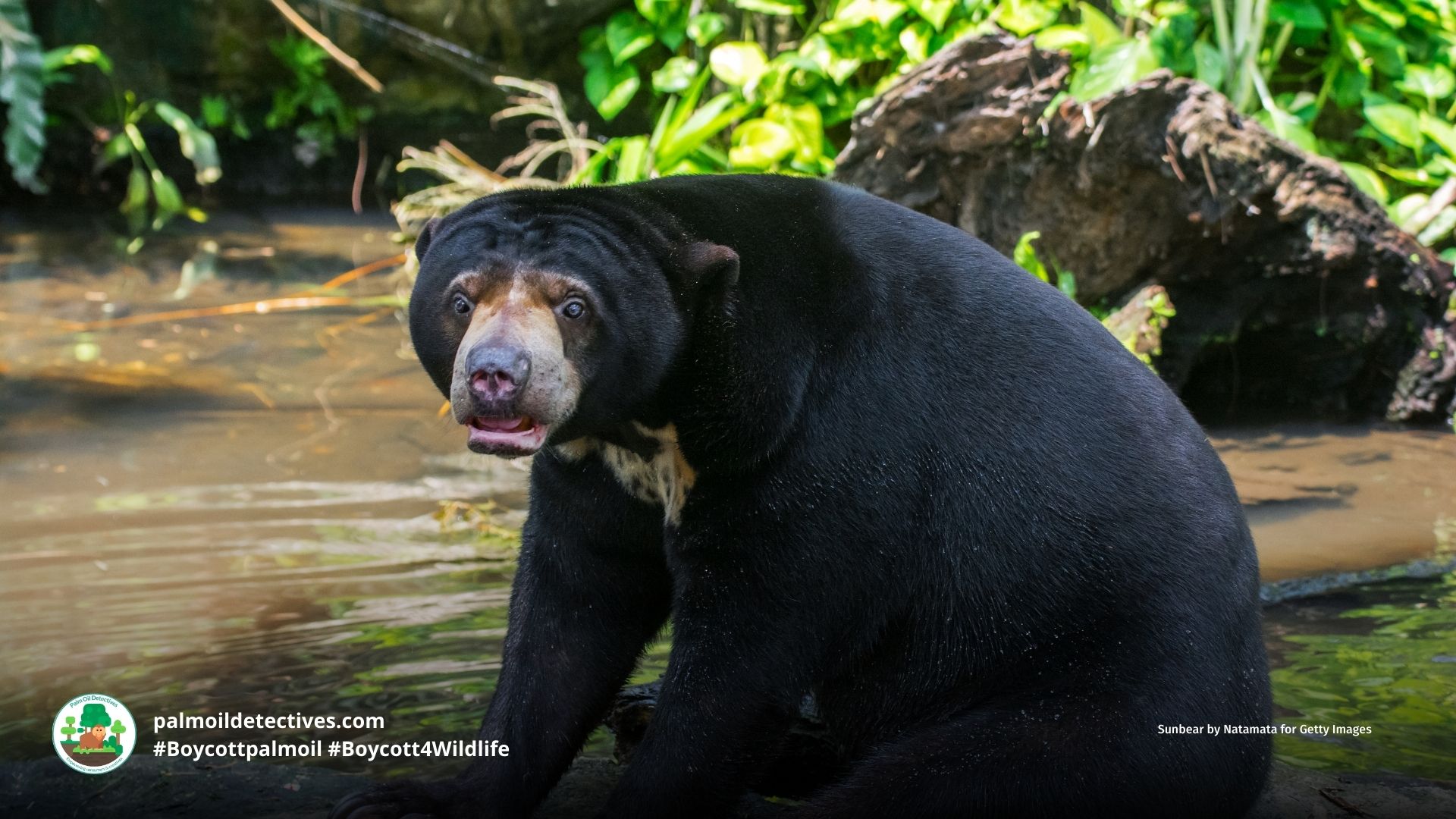
With their glistening golden crescent chest markings, these bears embody uniqueness and bold beauty. Despite their tenacity, palm oil and timber deforestation is an unmatched threat to their survival. They are now vulnerable from this and other threats and have lost 50-80% of their range. Help to protect them and #Boycottpalmoil #Boycott4Wildlife in the supermarket!
🌿🐻 #Sunbears have lost 50-80% of their range due to #palmoil #deforestation. They are now vulnerable and need your help! Take action and boycott products containing #palmoil! #Boycottpalmoil #Boycott4Wildlife. Learn more https://wp.me/pcFhgU-jY @palmoildetect
Playful and boisterous #sun bears 🐻🪩🎉🪅 are the rolly-polly tricksters of SE #Asia’s #rainforests. They’re vulnerable mainly from #palmoil #deforestation. Fight for them and #Boycottpalmoil #Boycott4Wildlife in the supermarket https://wp.me/pcFhgU-jY @palmoildetect
Deforestation rates and reported high volumes of hunting and trade throughout the Sun Bear range form the basis for this assessment. Sun Bears are forest dependent species, and, thus area of forest loss is directly linked with population decline.
IUCN red list
Behaviour and appearance
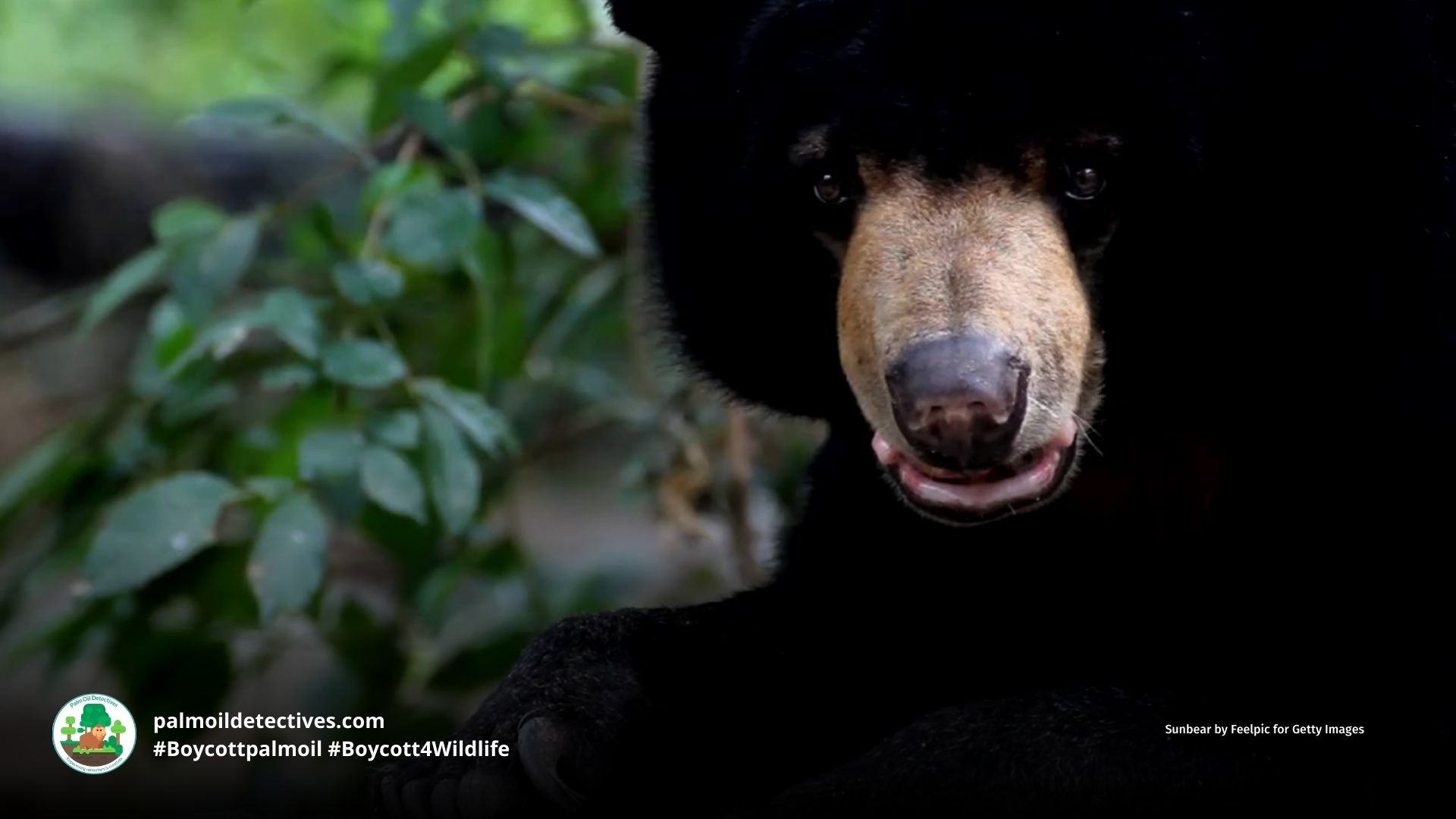
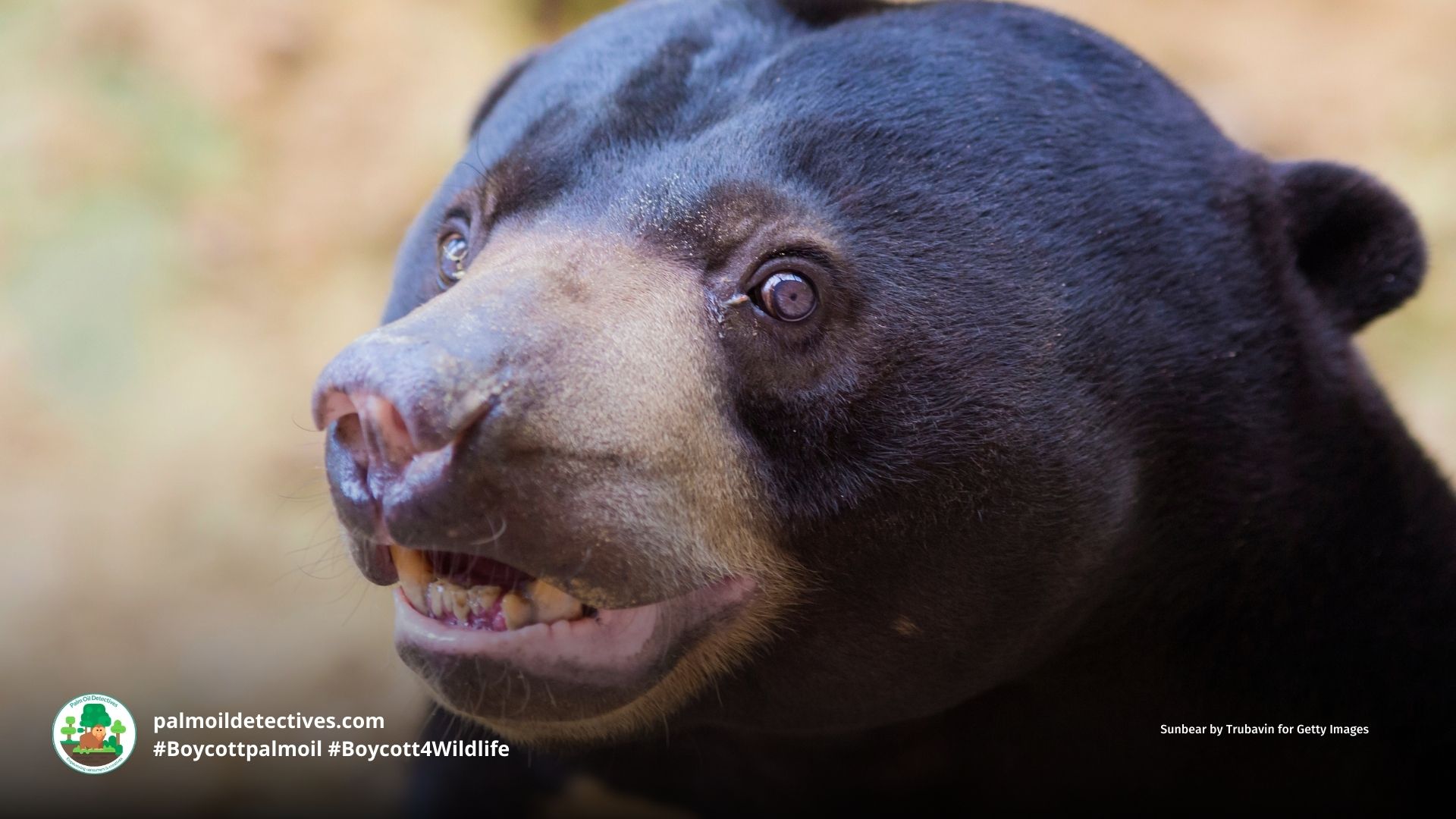
Sun bears exhibit a fascinating array of behaviors and possess distinct physical traits. Their sleek, jet-black fur is complemented by a distinctive golden crescent marking on their chest. This has earned them the endearing moniker of “sun bear.” Every sun bear has a unique configuration of markings, much like a fingerprint – no two are completely the same.
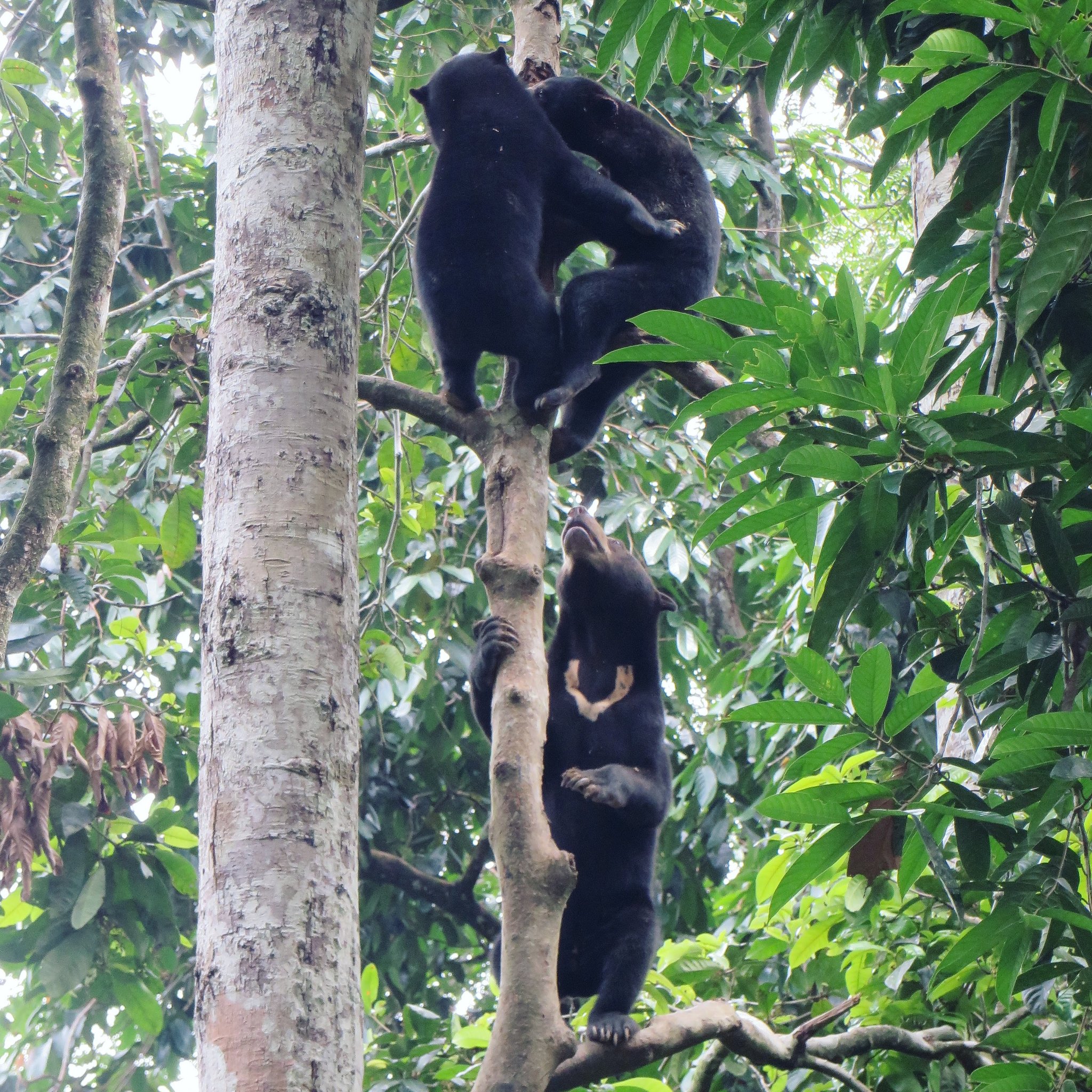
Despite their diminutive size, these bears boast powerful jaws and long, curved claws adapted for climbing trees with remarkable agility. Their long tongues help them to prise out fruits, insects, small vertebrates, and honey from the rainforest canopy. Sun bears are solitary creatures, except during the mating season or when mothers are raising their cubs.
Geographic range
Sun bears are indigenous to the tropical forests of Southeast Asia. They inhabit a wide geographical range spanning from eastern India through Myanmar, Thailand, Cambodia, Laos, Vietnam, Malaysia, and Indonesia, including the islands of Sumatra and Borneo. Their presence in these biodiverse regions underscores their critical role in maintaining ecosystem balance and biodiversity. However, rampant deforestation and habitat fragmentation threaten the survival of sun bear populations across their range, necessitating urgent conservation measures to safeguard these iconic creatures and their forest habitats for generations to come.
Major threats to Sun Bears
Forest Loss in Southeast Asia due to Palm Oil Expansion:
Southeast Asia has experienced a higher relative rate of forest loss over the past 30 years than any other part of the world, primarily driven by palm oil plantation expansion.
Shrinking habitats in China, Bangladesh, and Vietnam, with projections of a 50–80% decline in Vietnam’s sun bear population in the next 30 years.
Habitat fragmentation observed, particularly in Borneo and Sumatra, as forests are cleared for palm oil cultivation.
Isolated habitat patches in southern Myanmar, central Thailand, southern Cambodia, and southern Vietnam signify further fragmentation caused by palm oil development and other agriculture and mining.
Continued Deforestation and Degradation:
Deforestation and habitat degradation persist due to ongoing palm oil expansion, posing sustained threats to sun bear populations.
Loss of forest cover exacerbates habitat fragmentation, increasing vulnerability to extinction.
Persistent Trade in Bears and Bear Parts:
Illegal poaching and trade in sun bears and their parts remain prevalent, driven partly by habitat destruction for palm oil.
The palm oil industry’s impact on sun bear habitats contributes to population decline and poses a significant threat to sun bears across their range.
Ominous Future Outlook:
The combined effects of palm oil-driven forest loss, fragmentation, and trade present a dire future for sun bears.
Urgent conservation efforts targeting palm oil-related deforestation are essential to prevent further decline and secure the future of sun bear populations.
An emaciated sun bear desperately searches for food on a palm oil plantation
“We were surprised. None of us have ever seen anything like it,” said one worker, reported by the Borneo Post, Sunday, February 1, 2015. According to the workers, this animal crawls, has sharp claws. “When we came to our senses, we chased him back into the forest,” he said. Meanwhile, regarding this discovery, a spokesman for the Sarawak Forestry Corporation told The Sunday Post that based on observations, it is very likely that the strange animal belonged to the sun bear species. Characterized by a black nose, long claws, and a body shape that is almost similar. However, due to illness, the bear’s body became strange.
Scotson, L., Fredriksson, G., Augeri, D., Cheah, C., Ngoprasert, D. & Wai-Ming, W. 2017. Helarctos malayanus (errata version published in 2018). The IUCN Red List of Threatened Species 2017: e.T9760A123798233. https://dx.doi.org/10.2305/IUCN.UK.2017-3.RLTS.T9760A45033547.en. Downloaded on 24 January 2021.
1. Join the #Boycott4Wildlife on social media and subscribe to stay in the loop: Share posts from this website to your own network on Twitter, Mastadon, Instagram, Facebook and Youtube using the hashtags #Boycottpalmoil #Boycott4Wildlife.
2. Contribute stories: Academics, conservationists, scientists, indigenous rights advocates and animal rights advocates working to expose the corruption of the palm oil industry or to save animals can contribute stories to the website.
3. Supermarket sleuthing: Next time you’re in the supermarket, take photos of products containing palm oil. Share these to social media along with the hashtags to call out the greenwashing and ecocide of the brands who use palm oil. You can also take photos of palm oil free products and congratulate brands when they go palm oil free.
More and more palm oil free 🦧 products in Australia 🇦🇺. Customer awareness is increasing month by month. Of course Bart Van Assen will keep pushing "sustainable" palm oil with Orangutan Land Trust. Boycott palm oil to protect wildlife! There is not planet B #boycott4wildlifepic.twitter.com/rm7chub5Rb
If possible to get Ovomaltine, please promote it among your friends. It openly advertises with 0 palm oil. No RSPO no bullshit. For me it even tasts better than nuttela. It substantiates that chocolate spread can be made delicious without filthy palm oil. pic.twitter.com/cyV5Tm3tLd
4. Take to the streets: Get in touch with Palm Oil Detectives to find out more.
5. Donate: Make a one-off or monthly donation to Palm Oil Detectives as a way of saying thank you and to help pay for ongoing running costs of the website and social media campaigns. Donate here
Palm Oil Detectives is an investigative journalism non-profit platform that exists to expose commodity greenwashing and corruption in the meat, palm oil and gold industries. Palm Oil Detectives is a global collective of animal rights and indigenous rights advocates. Together we expose the devastating impacts of palm oil, gold and meat deforestation on human health, the environment, wild animals and indigenous communities. The Palm Oil Detectives #Boycott4Wildlife movement empowers activists, scientists, conservationists and creatives worldwide to #BoycottPalmOil and advocate for genuine alternatives to ecocide.
Read more: https://palmoildetectives.com/
https://x.com/PalmOilDetect
https://m.youtube.co/@Palmoildetectives
https://mastodonapp.uk/@palmoildetectives
View more posts









 Palm Oil Detectives