
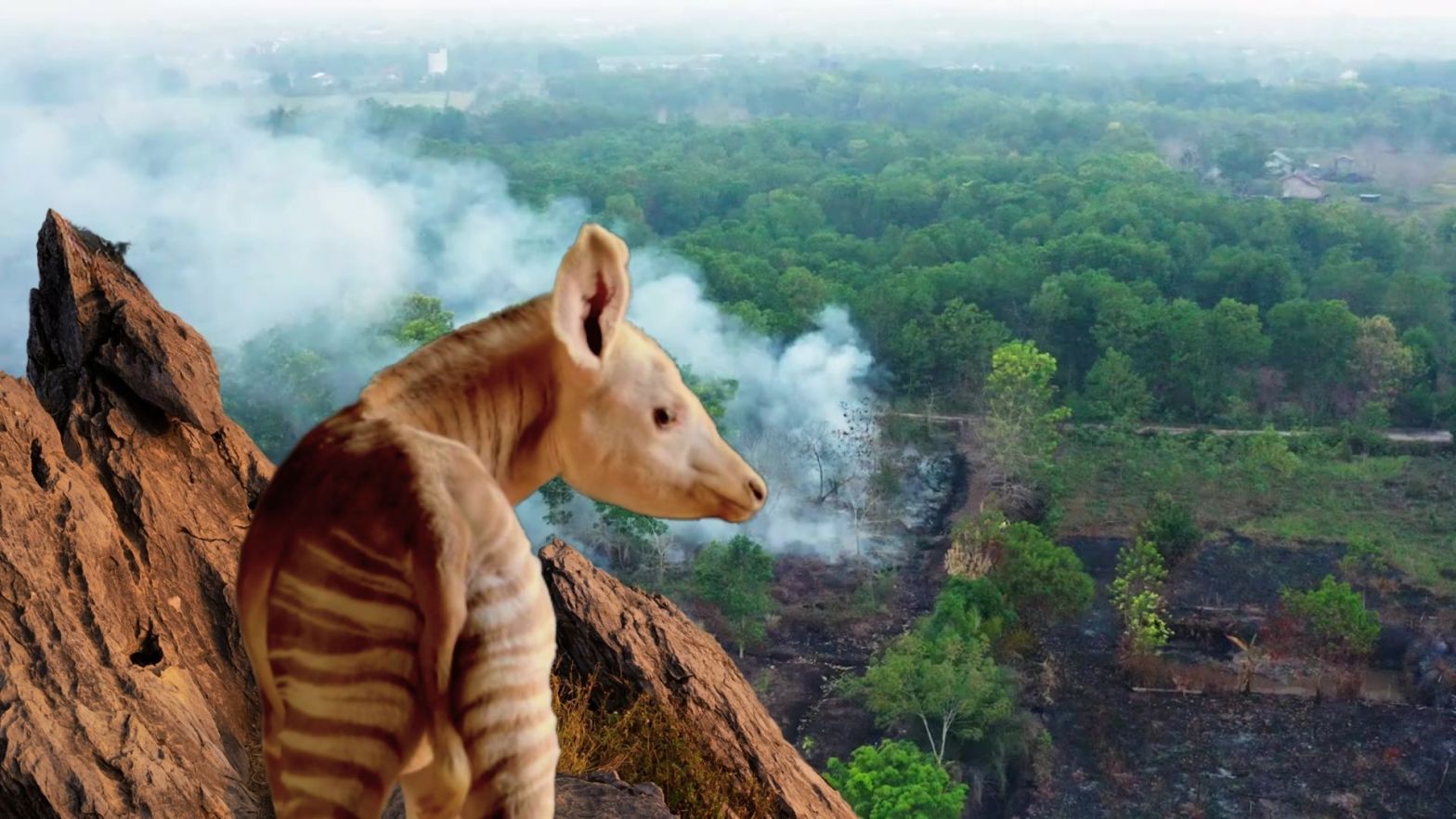
Okapi Okapia johnstoni
Endangered
Location: The Democratic Republic of Congo
The mysterious and enchanting Okapi, also known as the forest giraffe, roams the dense rainforests of the Democratic Republic of Congo. With a large expressive eyes and ears, velvety dark brown coat adorned with striking white stripes and large – they captivate the imagination! These solitary creatures have a remarkable prehensile tongue for foraging and grooming. Okapi mothers use inaudible sounds to communicate with their young. Sadly these remarkable creatures are endangered and face severe threats from palm oil, mining and tobacco deforestation, hunting and human conflict. You can help protect them by making mindful palm oil free supermarket choices. #BoycottPalmOil and #Boycott4Wildlife to safeguard these beautiful animals.
DYK #Okapi mothers use sounds humans can’t hear to communicate? Sadly, these enchanting creatures are #endangered in #DRC due to armed conflict and #palmoil #deforestation. Safeguard their future when you #BoycottPalmOil #Boycott4Wildlife https://palmoildetectives.com/2021/01/29/okapi-okapia-johnstoni/
Deep in the #Congo is a curious creature a bit like a horse or a giraffe. The #Okapi is to the Congo what the Panda is to China. #Palmoil and #mining #deforestation threaten their survival #Boycottpalmoil #Boycott4Wildlife @palmoildetect https://palmoildetectives.com/2021/01/29/okapi-okapia-johnstoni/
Appearance and Behaviour
The Okapi Okapia johnstoni dwells deep in the forests of the Democratic Republic of Congo. They are also known as the ‘forest giraffe’, due to their striking appearance with a velvety dark brown to reddish-brown coat, contrasting sharply with their white horizontal stripes and rings on their legs and ankles.
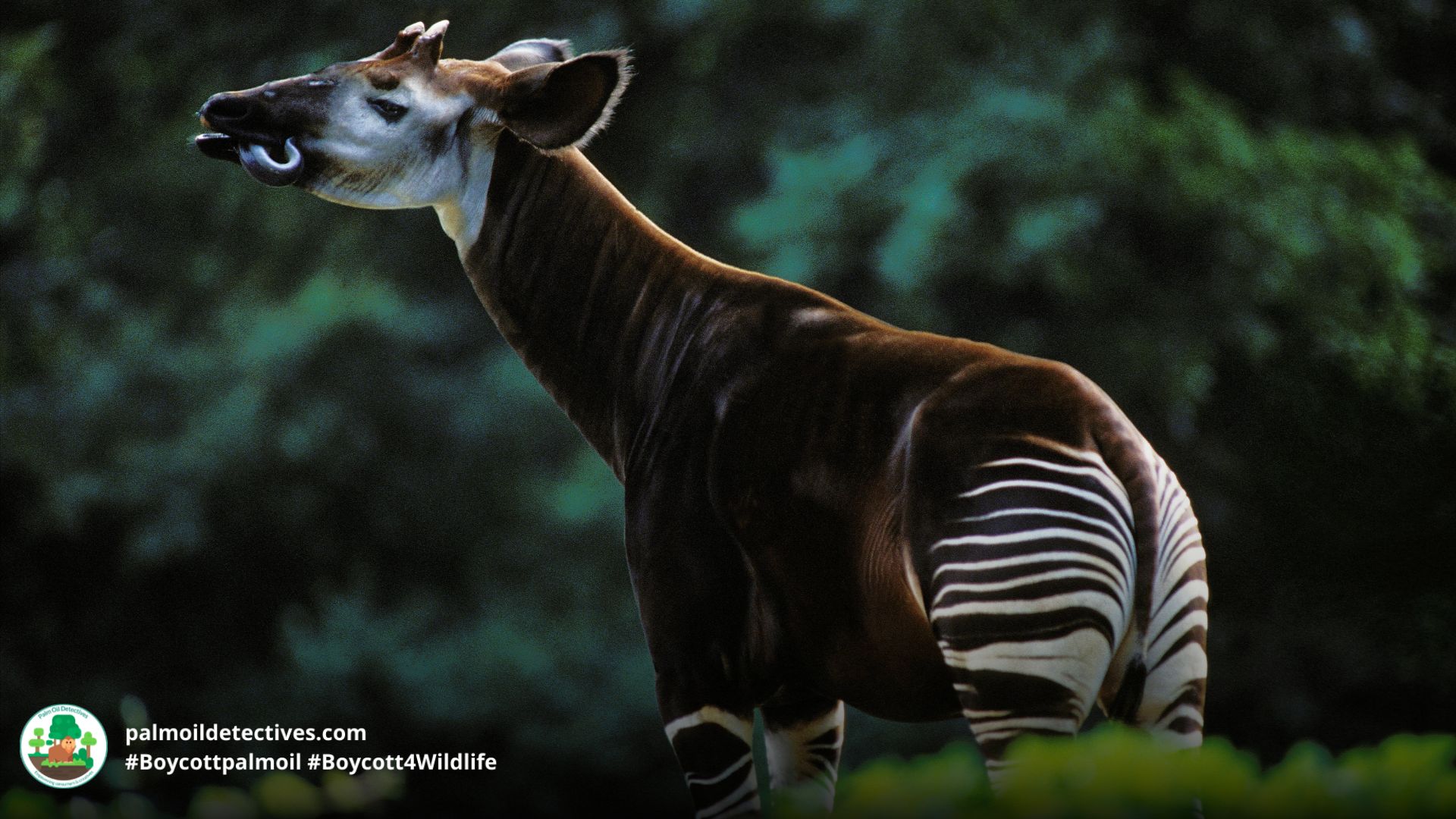
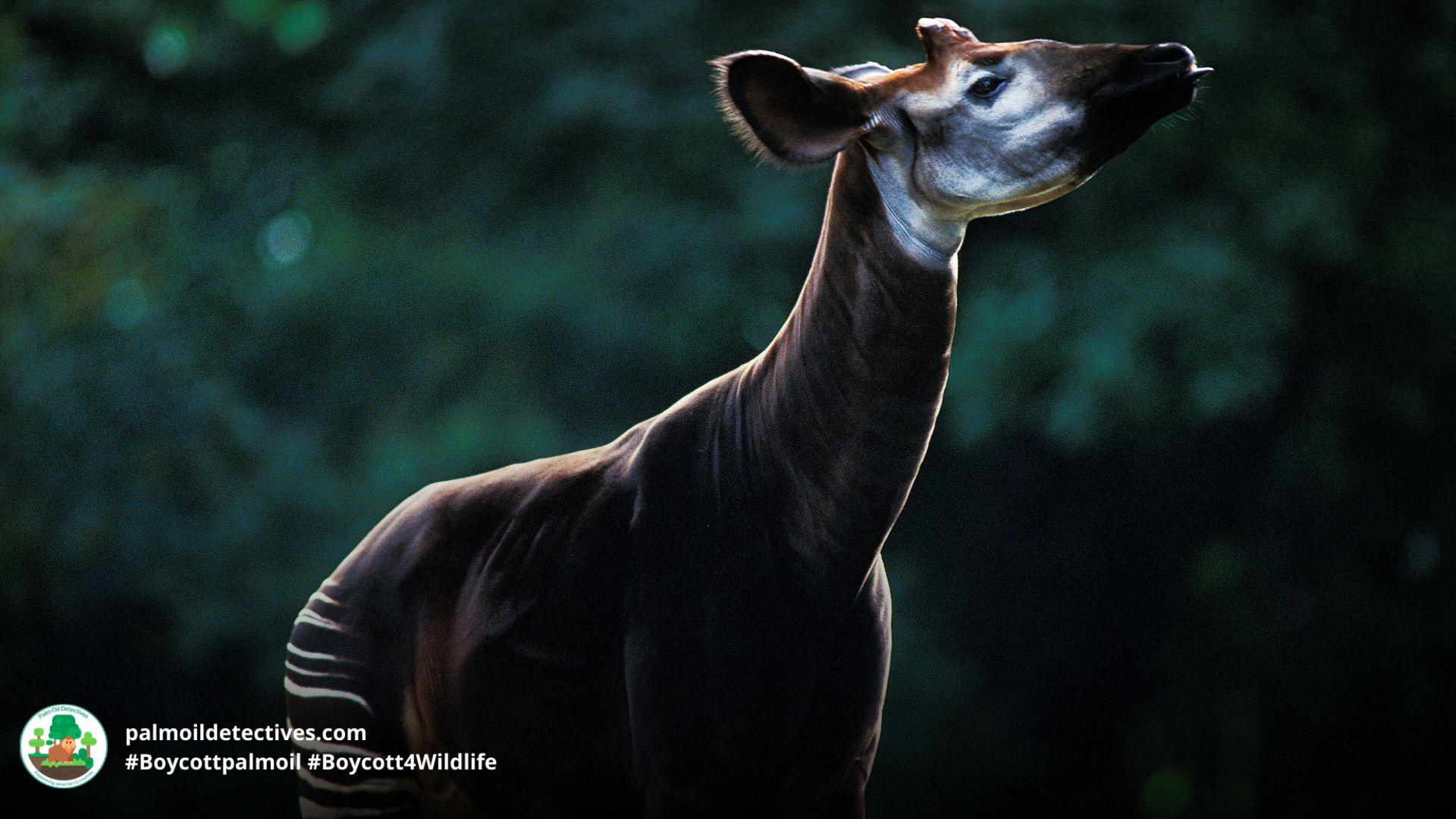
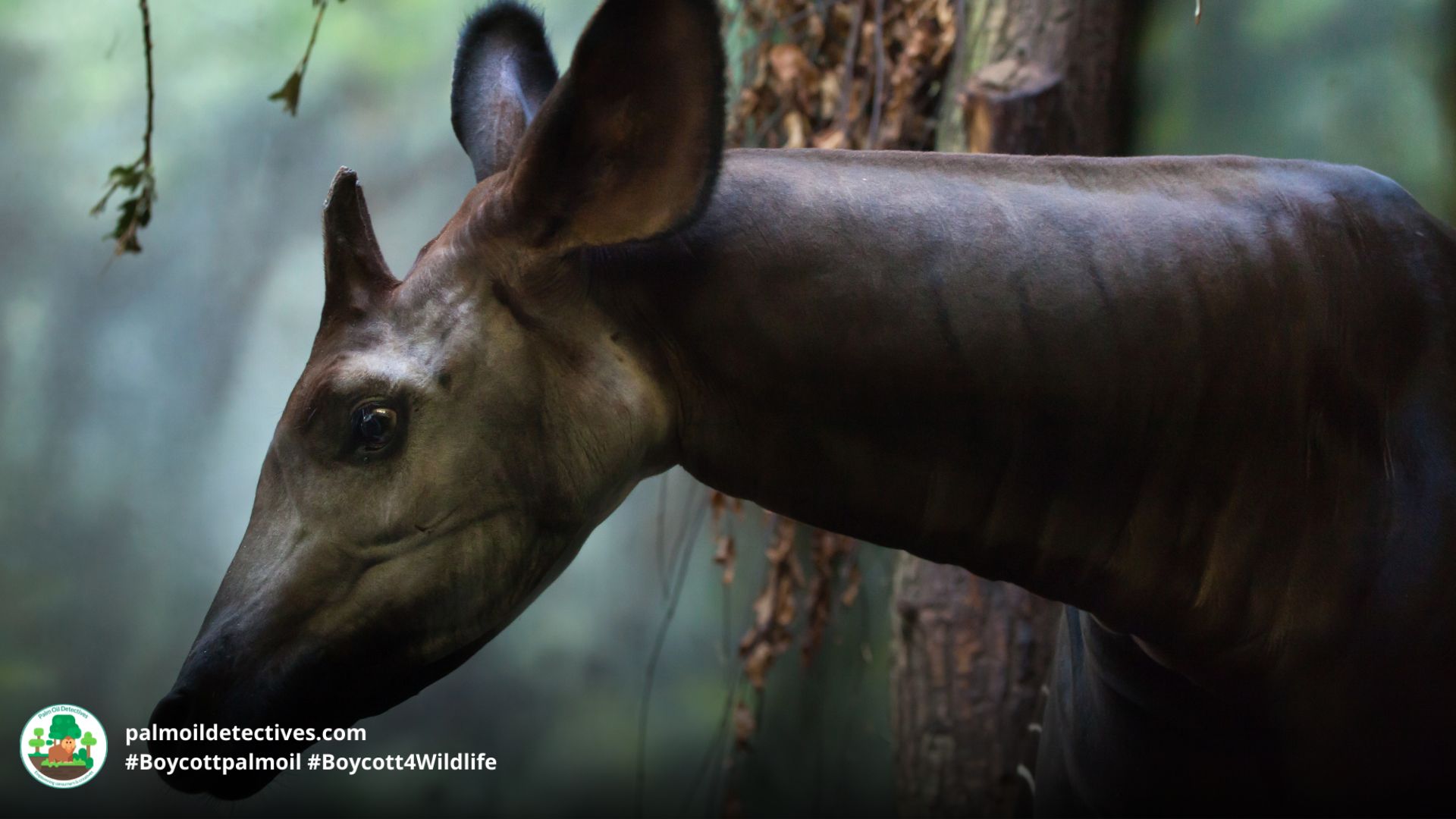

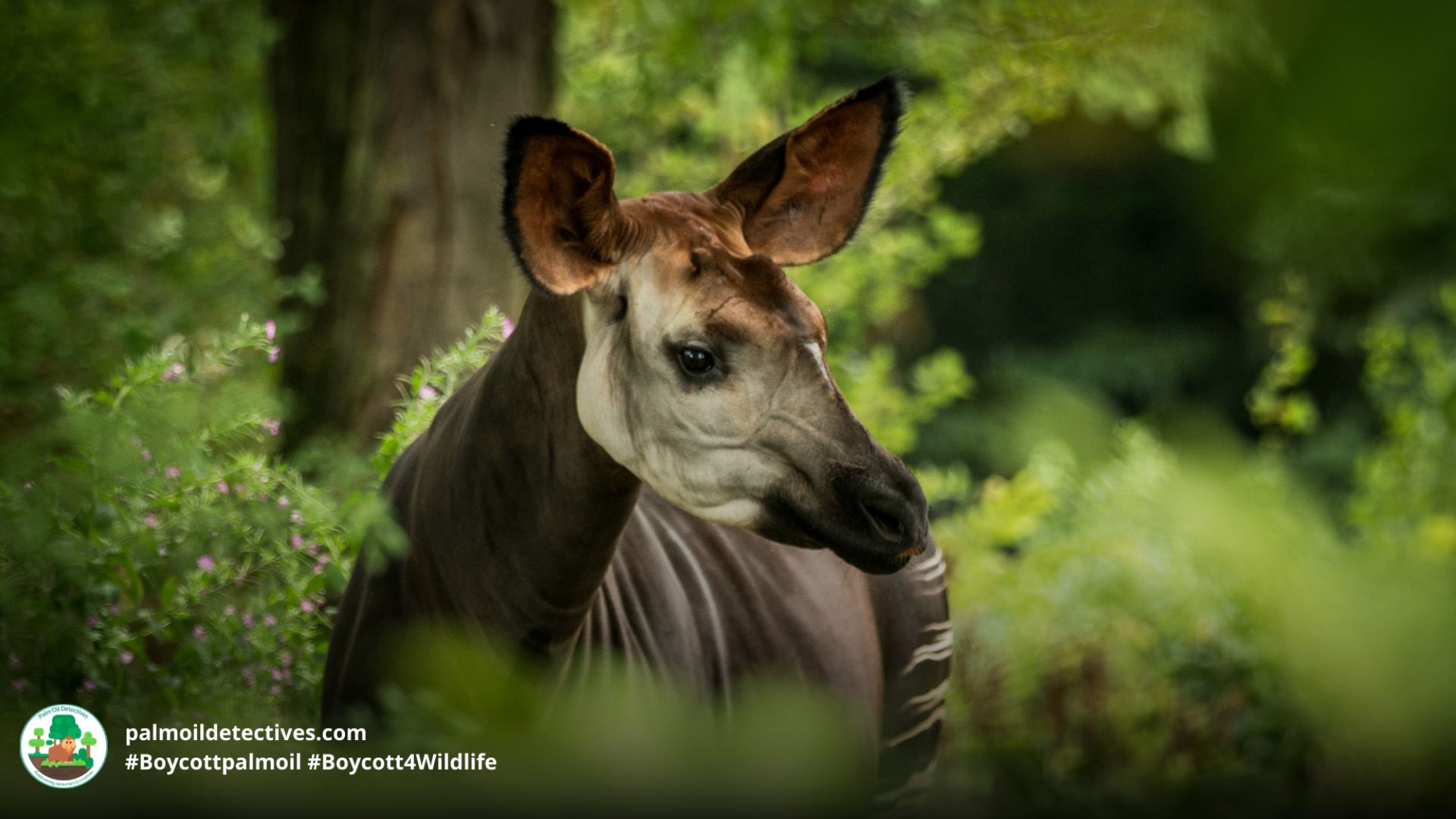

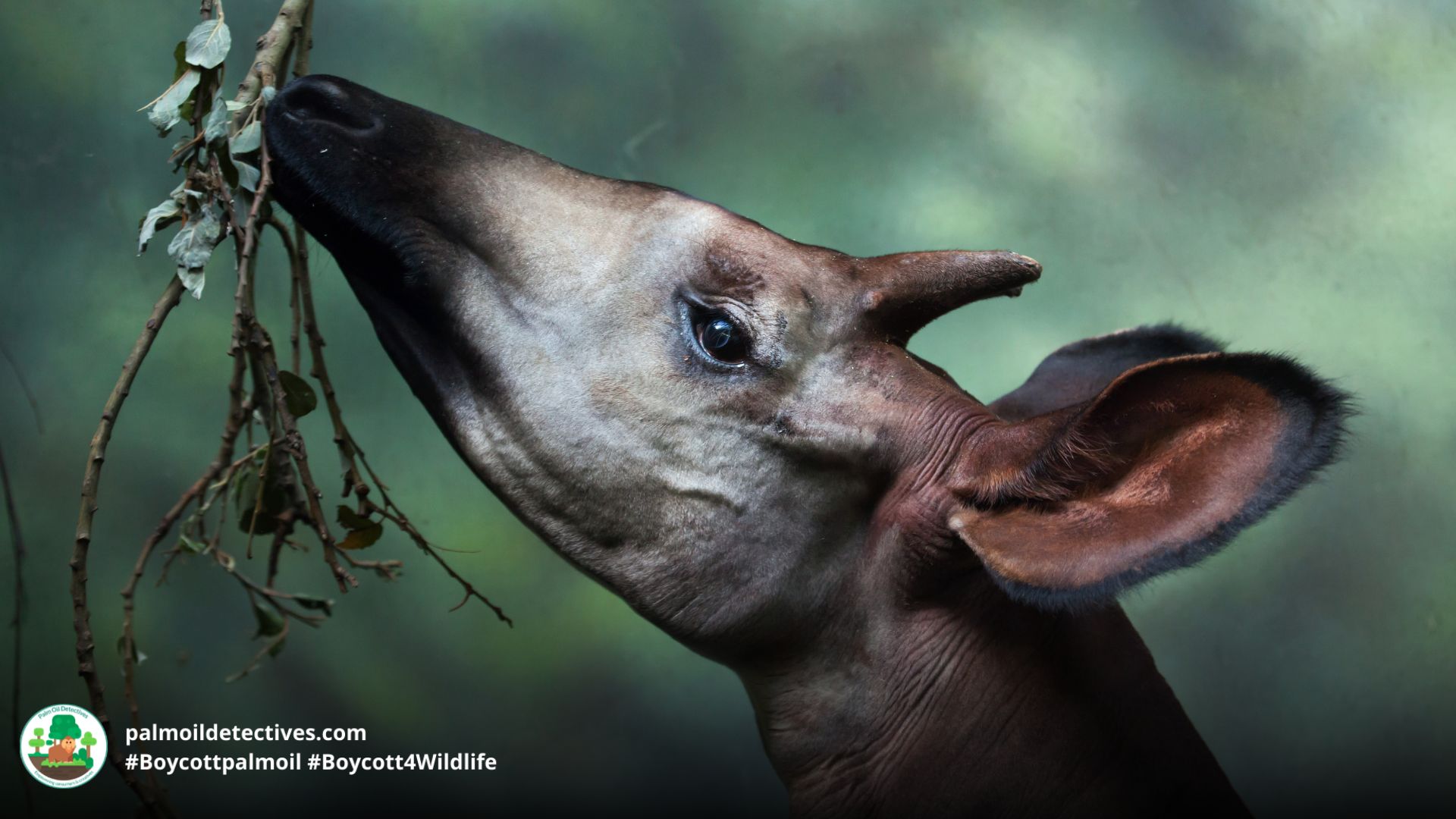
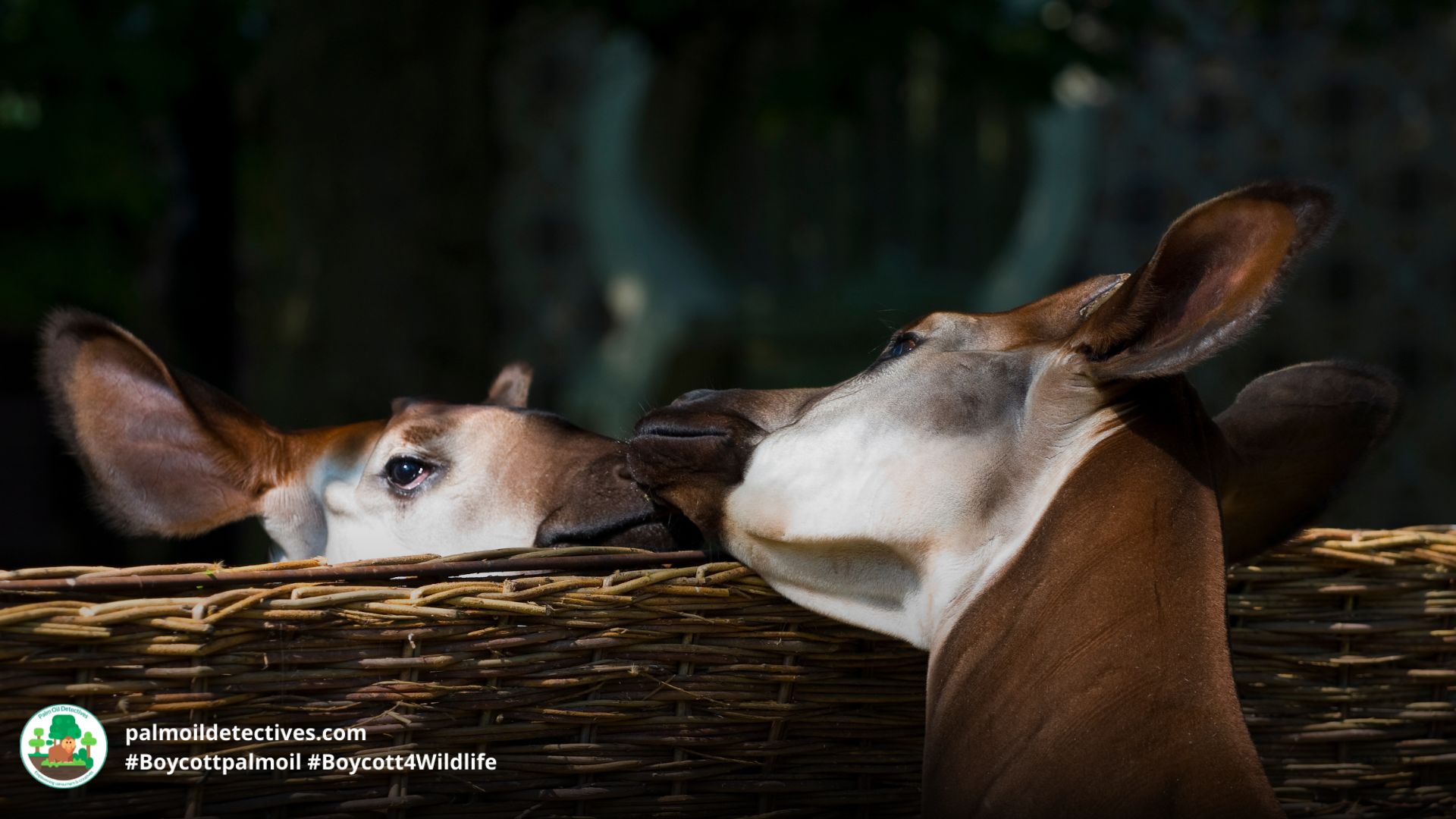
Their unique colouration serves them well as a camouflage in the dappled sunlight of their forest home. Okapi have a long neck and large, flexible ears, which help them detect predators. Okapis are solitary and elusive animals, mostly active during the day (diurnal), and known for their gentle, placid and quiet nature.
One of the most distinctive features of Okapis are their long, prehensile tongue, which can be over 30 centimeters (12 inches) long. This tongue is used to strip leaves from branches, to groom their fur, and even clean their eyes and ears.
Okapi mothers also use inaudible, low-frequency sounds to communicate with their young, a fascinating adaptation that helps keep their calves safe from predators. Additionally, okapis have scent glands on their feet that leave a sticky substance on the ground, marking their territory.
Geographic Range and Habitat
Okapi are endemic to the dense rainforests of the Democratic Republic of Congo (DRC), primarily within the Ituri Forest. They prefer dense, moist forests where they can forage for abundant vegetation and use the leafy forest canopy as a cover from predators, mainly leopards.
Threats
- Habitat loss due to gold and diamond mining, tobacco and palm oil deforestation
- Hunting and poaching for bushmeat.
- Political instability and armed conflict throughout their range.
- Mining and illegal logging activities.
Take action every time you shop and use your wallet as a weapon. When you shop learn how to find palm oil free alternatives to major brands and #BoycottPalmOil to help Okapi and 1000’s of other rainforest species.
Diet
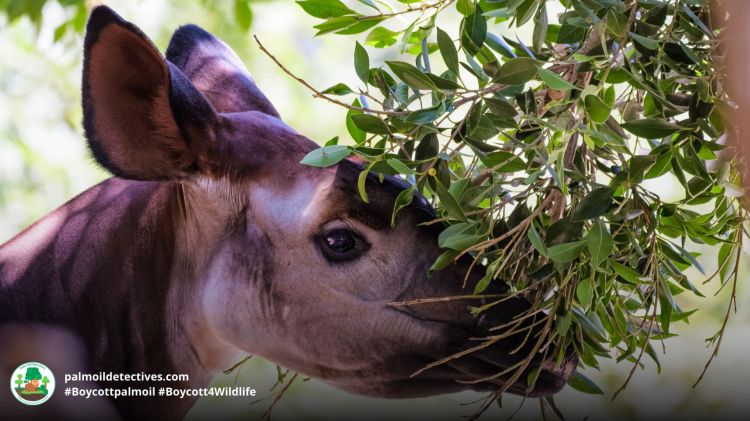
The okapi is an herbivore, feeding on a diverse diet of leaves, buds, grasses, ferns, fruits, and fungi. They use their long tongue to reach high branches and select the most nutritious parts of plants.
Mating and Reproduction
Okapis are solitary creatures except during mating. The mating season can vary, but females typically give birth to a single calf after a gestation period of around 14-16 months. Calves are hidden in dense vegetation to protect them from predators and are nursed for up to six months.
Support the conservation of this beautiful creature
Further Information

Mallon, D., Kümpel, N., Quinn, A., Shurter, S., Lukas, J., Hart, J.A., Mapilanga, J., Beyers, R. & Maisels, F. 2015. Okapia johnstoni. The IUCN Red List of Threatened Species 2015: e.T15188A51140517. https://dx.doi.org/10.2305/IUCN.UK.2015-4.RLTS.T15188A51140517.en. Downloaded on 28 January 2021.

How can I help the #Boycott4Wildlife?
Take Action in Five Ways
1. Join the #Boycott4Wildlife on social media and subscribe to stay in the loop: Share posts from this website to your own network on Twitter, Mastadon, Instagram, Facebook and Youtube using the hashtags #Boycottpalmoil #Boycott4Wildlife.
2. Contribute stories: Academics, conservationists, scientists, indigenous rights advocates and animal rights advocates working to expose the corruption of the palm oil industry or to save animals can contribute stories to the website.






3. Supermarket sleuthing: Next time you’re in the supermarket, take photos of products containing palm oil. Share these to social media along with the hashtags to call out the greenwashing and ecocide of the brands who use palm oil. You can also take photos of palm oil free products and congratulate brands when they go palm oil free.
4. Take to the streets: Get in touch with Palm Oil Detectives to find out more.
5. Donate: Make a one-off or monthly donation to Palm Oil Detectives as a way of saying thank you and to help pay for ongoing running costs of the website and social media campaigns. Donate here
Discover more from Palm Oil Detectives
Subscribe to get the latest posts sent to your email.
 Palm Oil Detectives
One thought on “Okapi Okapia johnstoni”