
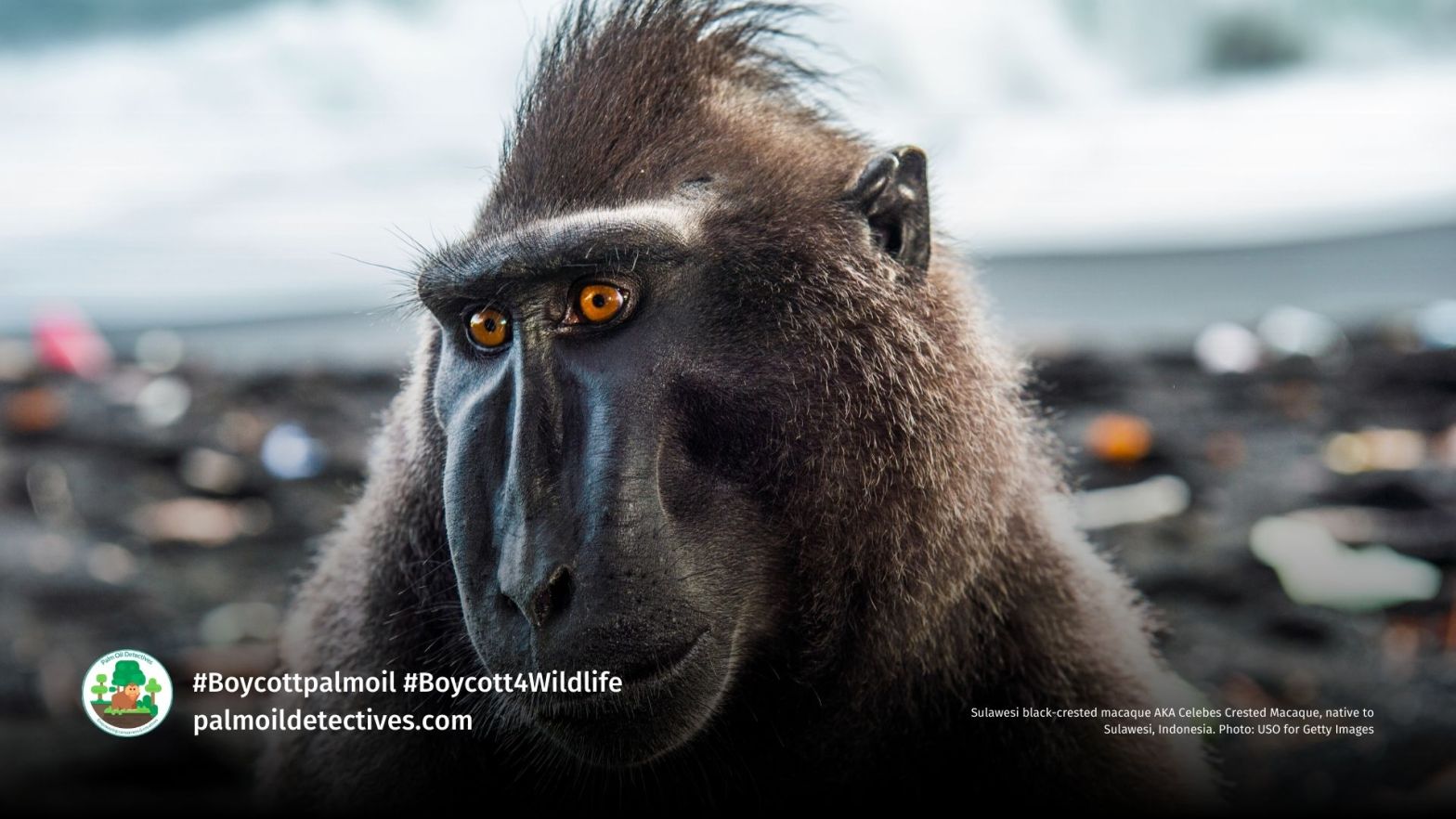
Sulawesi Crested Black Macaque Macaca nigra
Endangered
Location: Sulawesi, Indonesia.
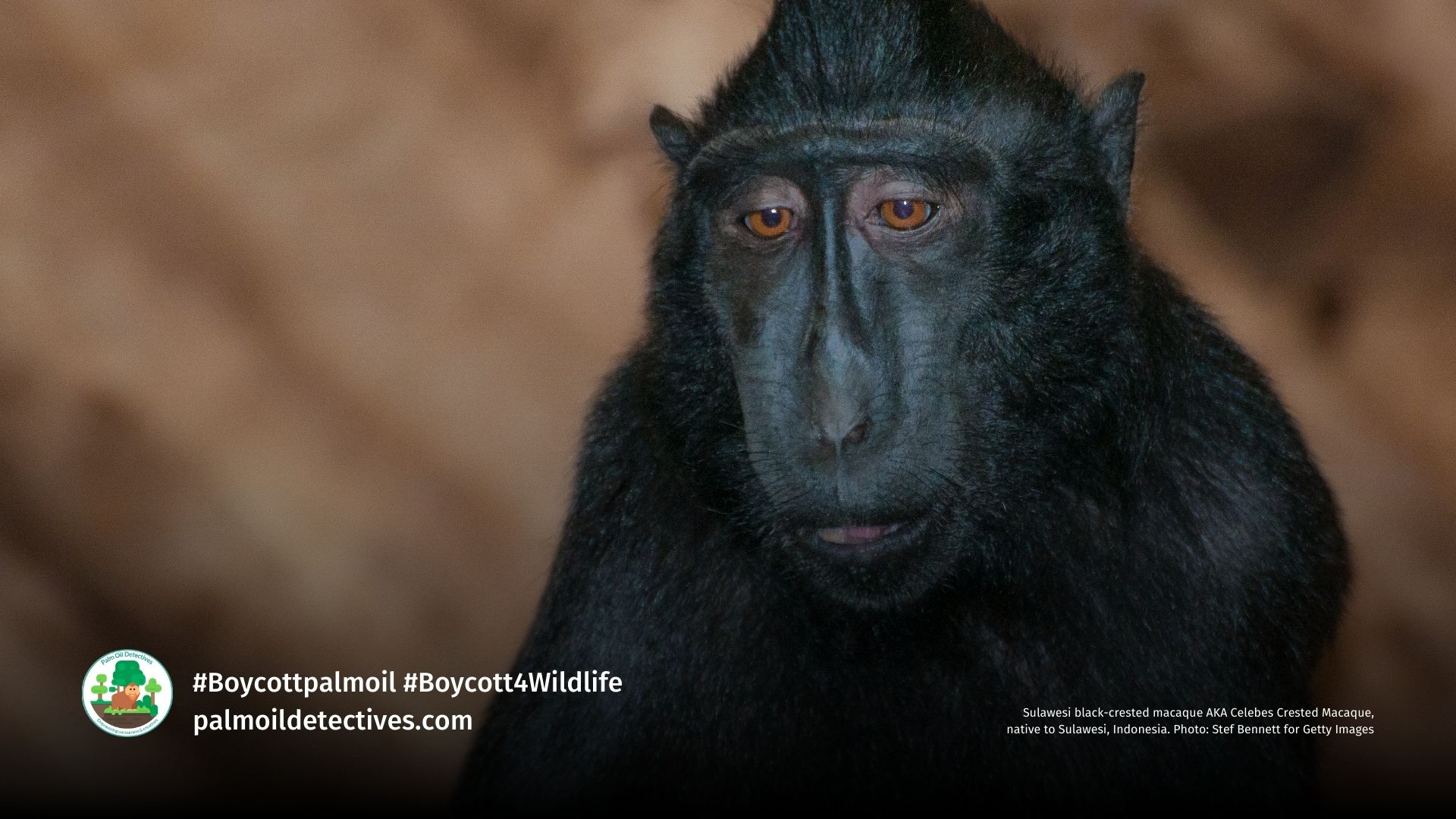
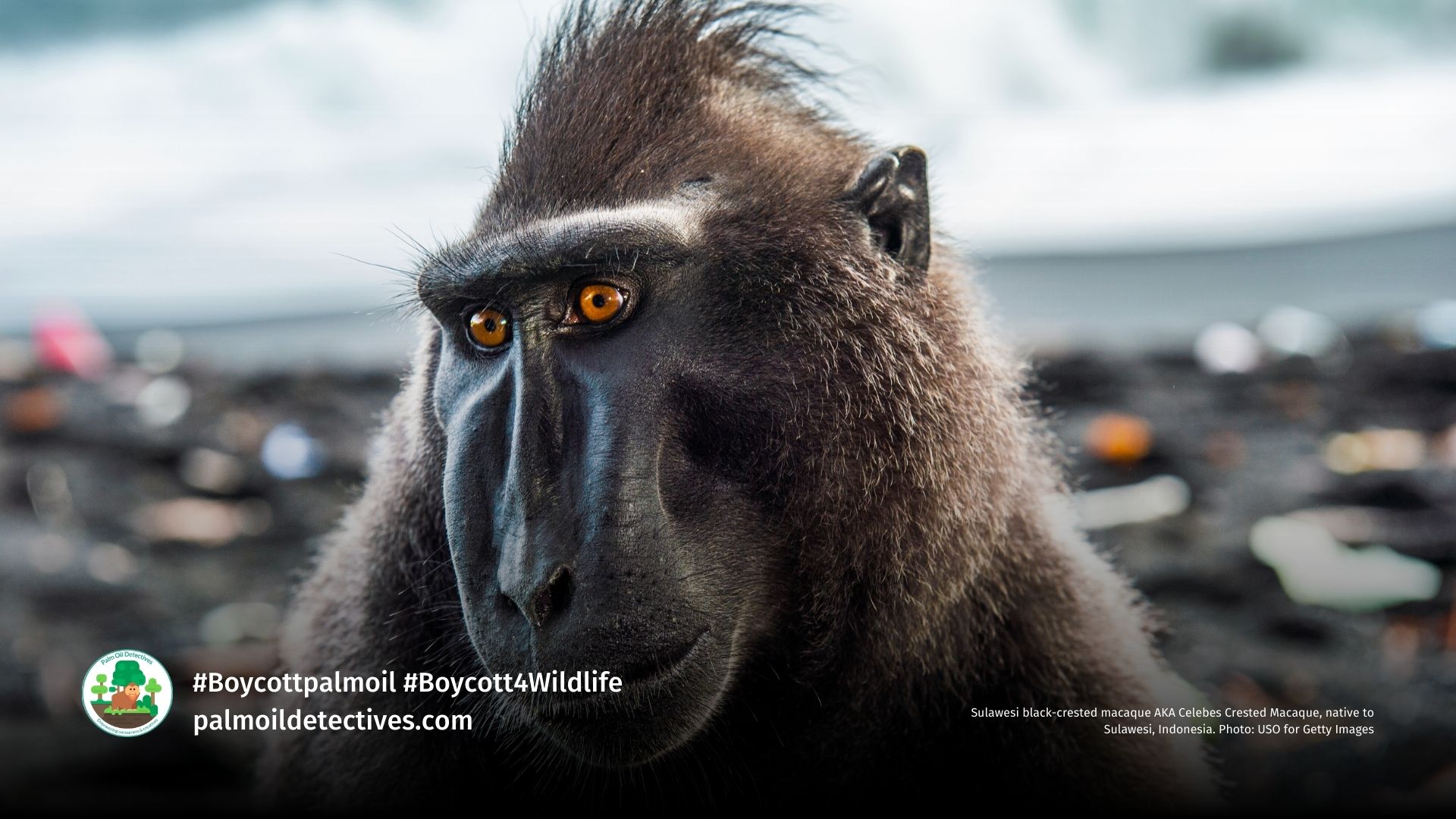
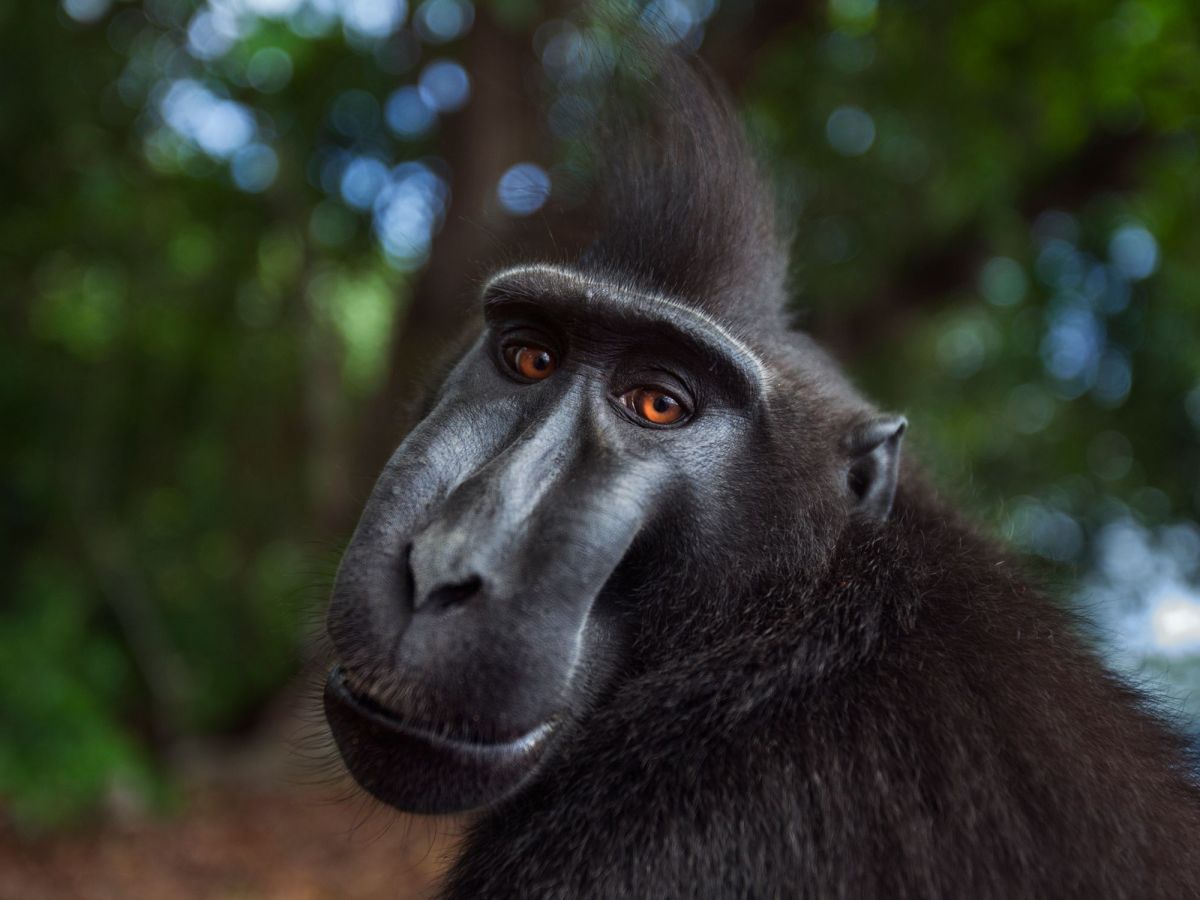
Lively, intelligent and social Sulawesi Crested Black Macaques live in large groups and are attentive and caring to those in their troupe. Also known as the Celebes Crested Macaque, the Sulawesi Crested Black Macaque Macaca nigra are Critically Endangered and face high risk of extinction due to palm oil and timber deforestation across the island of Sulawesi, along with illegal hunting for the bushmeat trade. You can help them every time you shop when you #Boycottpalmoil #Boycott4Wildlife
The expressive and ancient #Sulawesi Crested Black #Macaque is tragically critically endangered in #Sulawesi #Indonesia due to #palmoil #ecocide and #hunting. Help them survive #Boycottpalmoil #Boycott4Wildlife @palmoildetect.bsky.social 🐵🐒🤎 https://palmoildetectives.com/2021/01/29/sulawesi-crested-black-macaque-macaca-nigra/
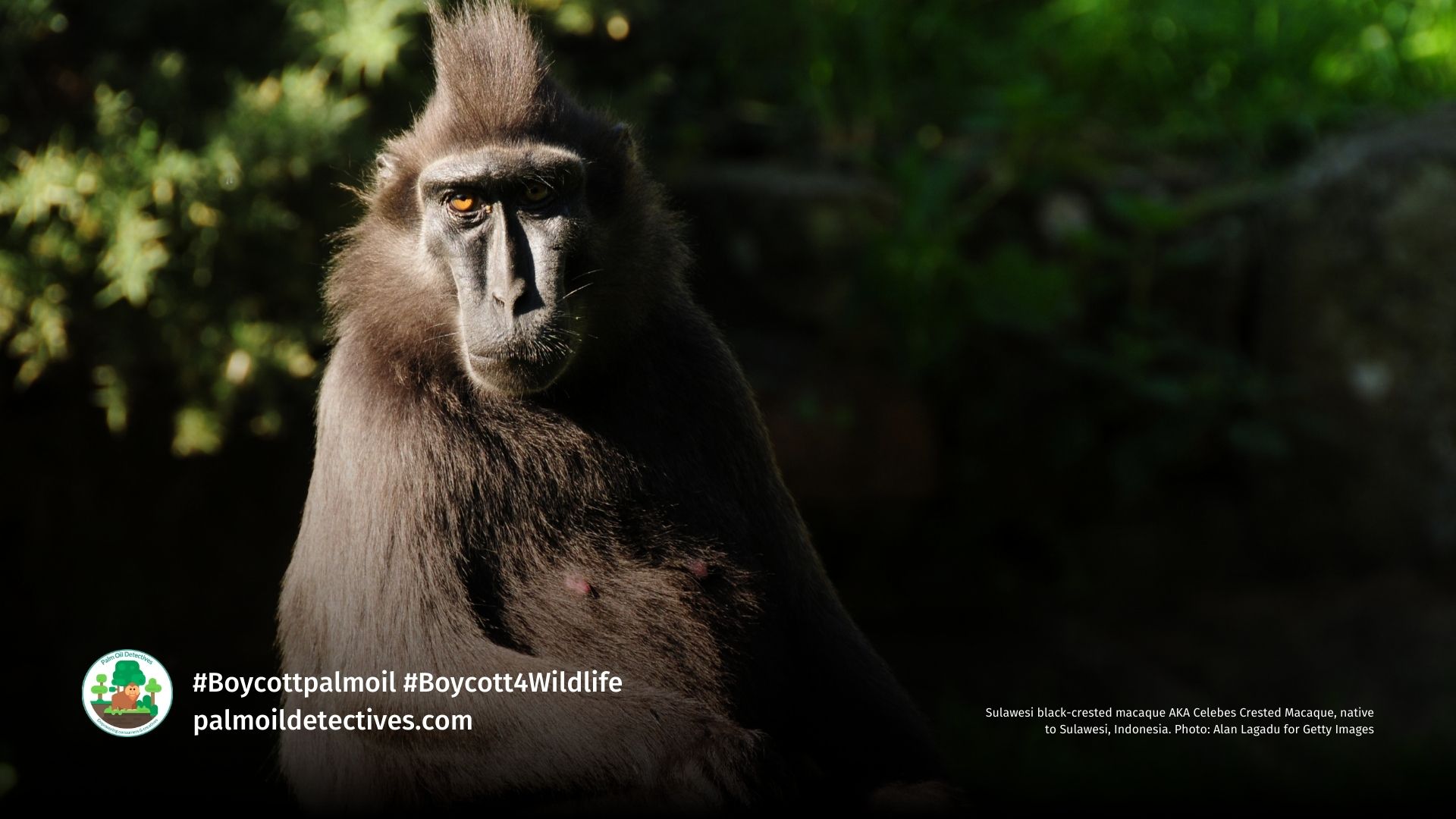
The Celebes Black Macaque possess jet-black fur, striking red eyes, and a regal crest of hair. They are gregarious and highly social preferring to live in communities of dozens of monkeys. They are known locally as “yaki” or “wolai,” and their number have declined by over 80% in under 40 years due to ubiquitous threats of habitat loss and fragmentation, but also from the bushmeat trade.
Threats
Tragically their meat is considered by local people to be a delicacy with the majority of hunting for ceremonial food rather than subsistence. Wildlife consumption is a popular tradition which has grown in parallel to human population expansion and is thus identified as the primary threat to the species’ survival. Another grave threat is palm oil and timber deforestation on the island of Sulawesi.
Behaviour
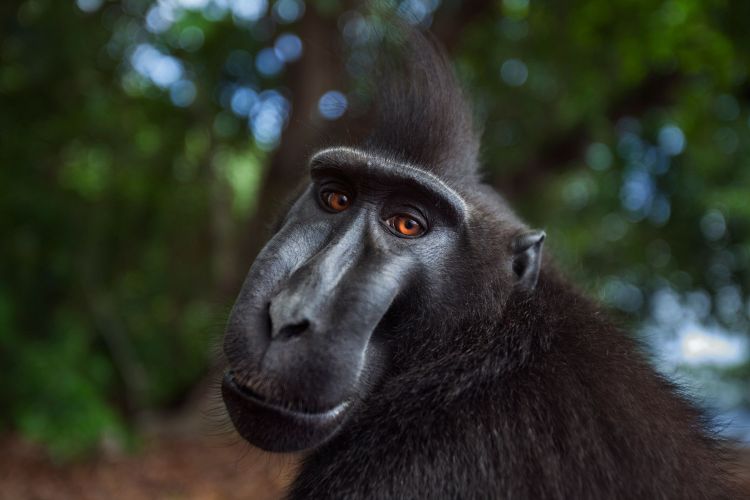
Black Crested Macaques are otherwise known as ‘social butterflies’ who live together in vibrant troops of 25 to 75 individuals, mostly within the Tangkoko Nature Reserve. Here, they are safeguarded from illegal hunting and poaching, although their existence is increasingly fragmented outside of the park.
They are adept tree climbers and alternate between the forest floor and the treetops, foraging, playing, and grooming each other. As night falls, they retreat to the safety of the trees to sleep. Their primary habitat is the tropical lowland and upland rainforests.
Diet
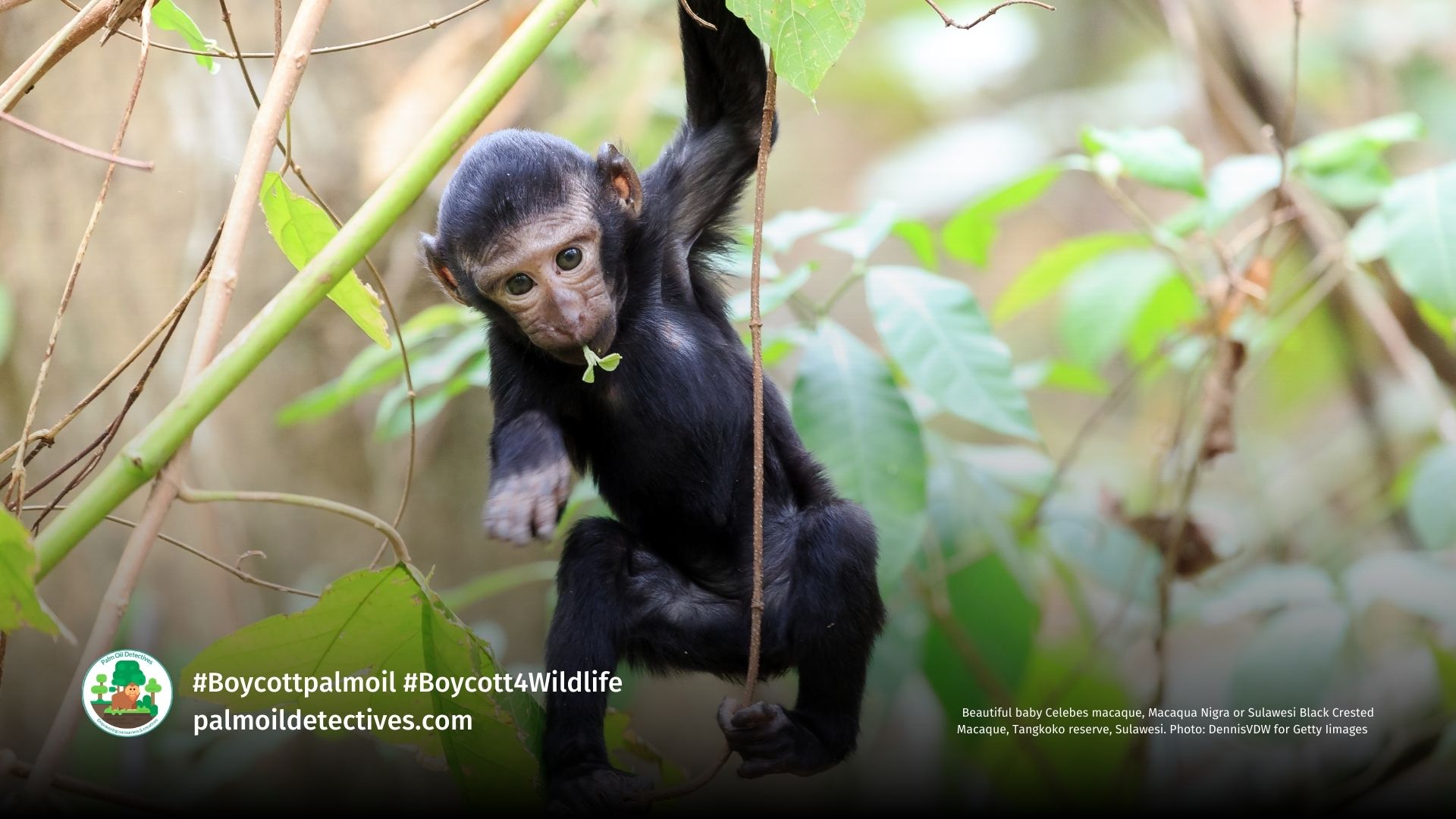
Sulawesi Black Crested Macaques primarily eats fruits, which make up 70% of their diet. They also consume leaves, buds, seeds, fungi, birds and their eggs, insects such as caterpillars, and occasionally small lizards or frogs. They are skilled foragers, feeding both on the ground and in the trees.
Mating and Reproduction
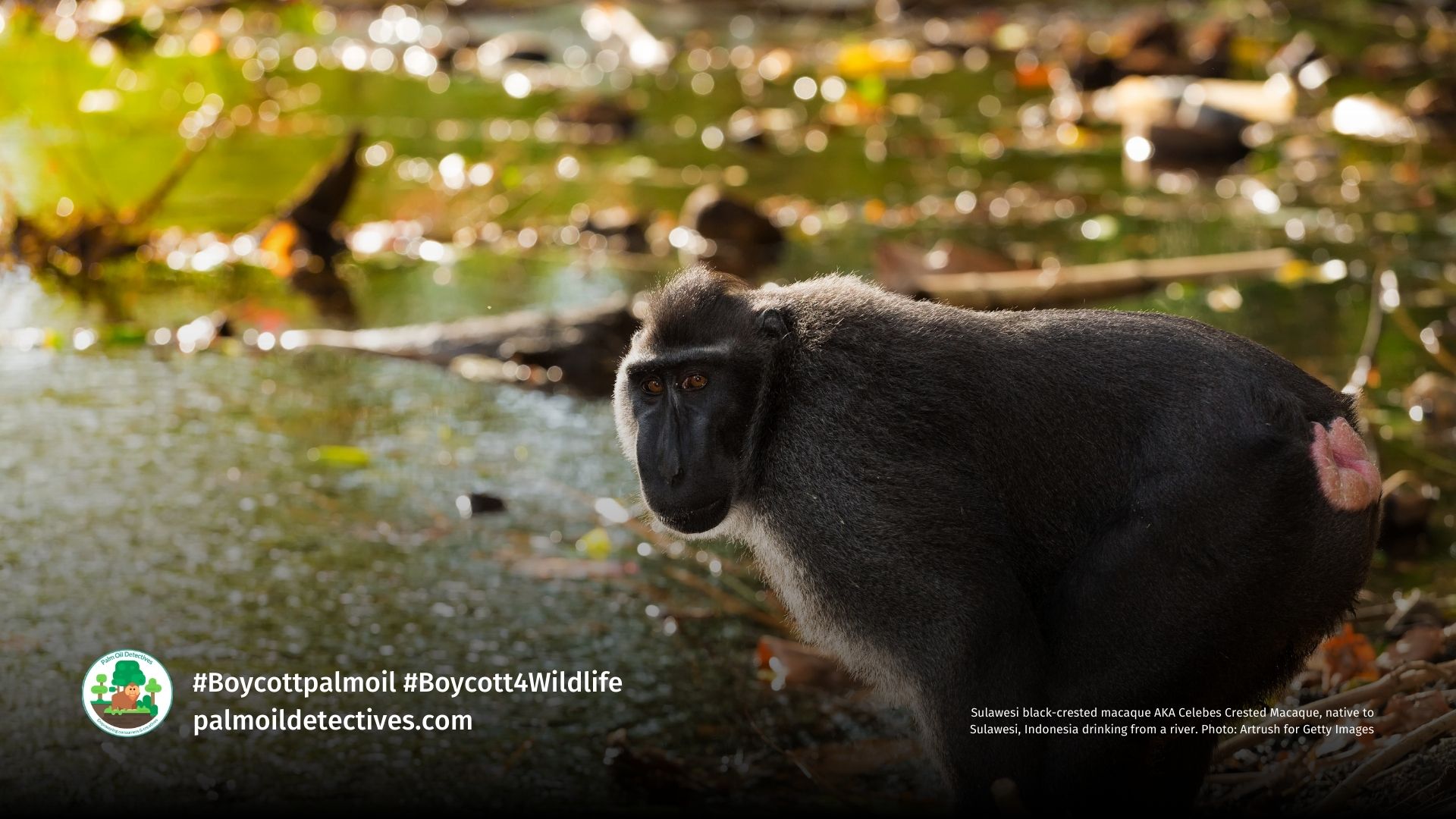
The Celebes crested macaque has a promiscuous mating system, with both males and females having multiple partners. Females signal their readiness to mate with bright red buttocks. After a gestation period of about 174 days, females give birth to a single infant and nurse them for around one year. These macaques have an estimated life expectancy of 15-20 years in the wild.
Take Action
You have the power to make a difference. Each choice you shop, choose palm oil free and #Boycottpalmoil for these beautiful monkeys and other wild animals.
Further Information
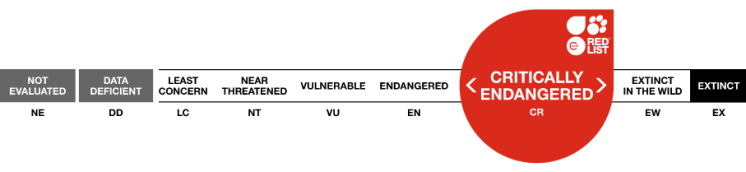
Lee, R., Riley, E., Sangermano, F., Cannon, C. & Shekelle, M. 2020. Macaca nigra. The IUCN Red List of Threatened Species 2020: e.T12556A17950422. https://dx.doi.org/10.2305/IUCN.UK.2020-3.RLTS.T12556A17950422.en. Downloaded on 28 January 2021.
Palm Oil Deforestation Threatens Sulawesi’s Macaques
Illegal logging and palm oil destroying rainforests of Sulawesi endangering the island’s critically endangered Sulawesi black-crested macaques. Fight back!


How can I help the #Boycott4Wildlife?
Take Action in Five Ways
1. Join the #Boycott4Wildlife on social media and subscribe to stay in the loop: Share posts from this website to your own network on Twitter, Mastadon, Instagram, Facebook and Youtube using the hashtags #Boycottpalmoil #Boycott4Wildlife.
2. Contribute stories: Academics, conservationists, scientists, indigenous rights advocates and animal rights advocates working to expose the corruption of the palm oil industry or to save animals can contribute stories to the website.



3. Supermarket sleuthing: Next time you’re in the supermarket, take photos of products containing palm oil. Share these to social media along with the hashtags to call out the greenwashing and ecocide of the brands who use palm oil. You can also take photos of palm oil free products and congratulate brands when they go palm oil free.
4. Take to the streets: Get in touch with Palm Oil Detectives to find out more.
5. Donate: Make a one-off or monthly donation to Palm Oil Detectives as a way of saying thank you and to help pay for ongoing running costs of the website and social media campaigns. Donate here
Discover more from Palm Oil Detectives
Subscribe to get the latest posts sent to your email.
 Palm Oil Detectives