
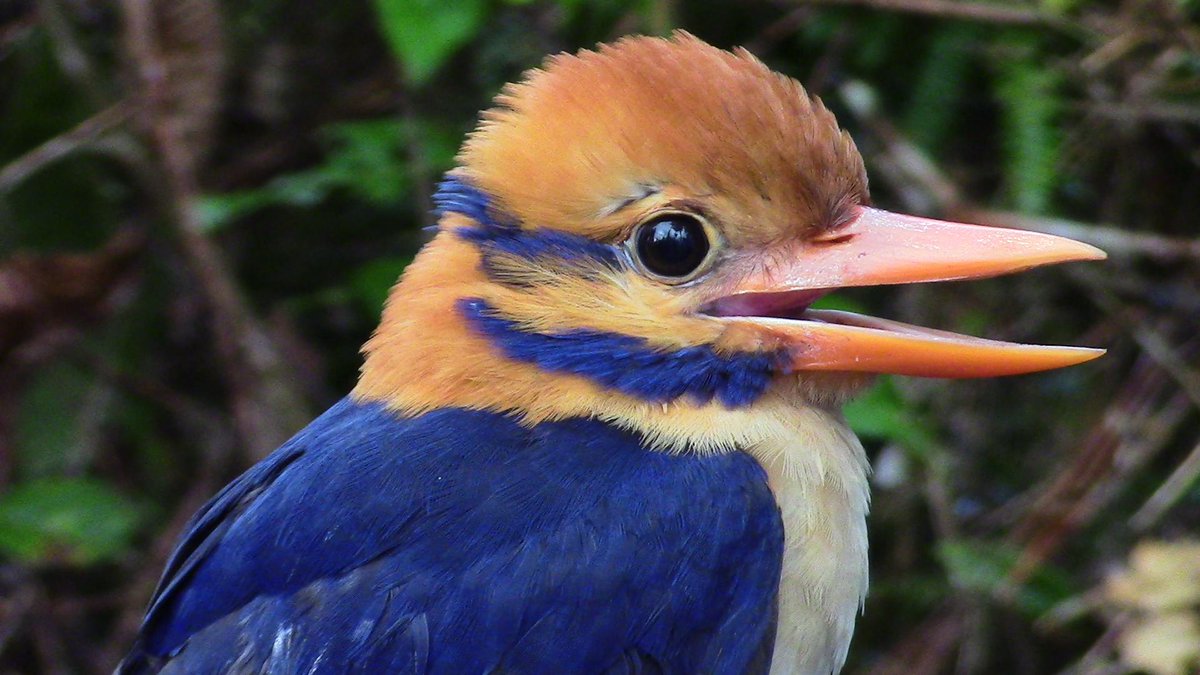
Bougainville Moustached Kingfisher Actenoides bougainvillei
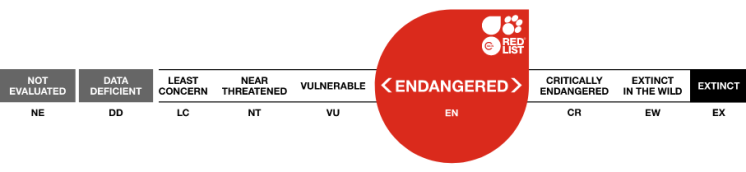
Endangered
Location: Endemic to Bougainville Island and nearby islets in Papua New Guinea
The Bougainville moustached kingfisher (Actenoides bougainvillei) is a striking and enigmatic bird found exclusively on Bougainville Island, Papua New Guinea. With their vibrant blue and orange plumage, handsome black moustached stripe, and striking beak, these birds are icons of the island’s biodiversity.
This species is classified as Endangered by the IUCN, with fewer than 2,500 mature individuals estimated to remain. Their population continues to decline due to habitat loss from logging, palm oil agriculture, and Indonesian colonial settlement. Fight for their survival by boycotting palm oil and supporting Papuan indigenous sovereignty. #BoycottPalmOil #Boycott4Wildlife
The cheeky colourful Bougainville Moustached Kingfisher 🦜🇵🇬 lives in #PapuaNewGuinea and #WestPapua #rainforest, endangered by #palmoil #deforestation. Boycott the brands destroying their home #BoycottPalmOil @palmoildetect #Boycott4Wildlife https://palmoildetectives.com/2021/01/31/bougainville-moustached-kingfisher-actenoides-bougainvillei/
Currently, the species’ montane forest habitat is above the altitude usually affected by logging or clearance for subsistence gardens.
IUCN Red List
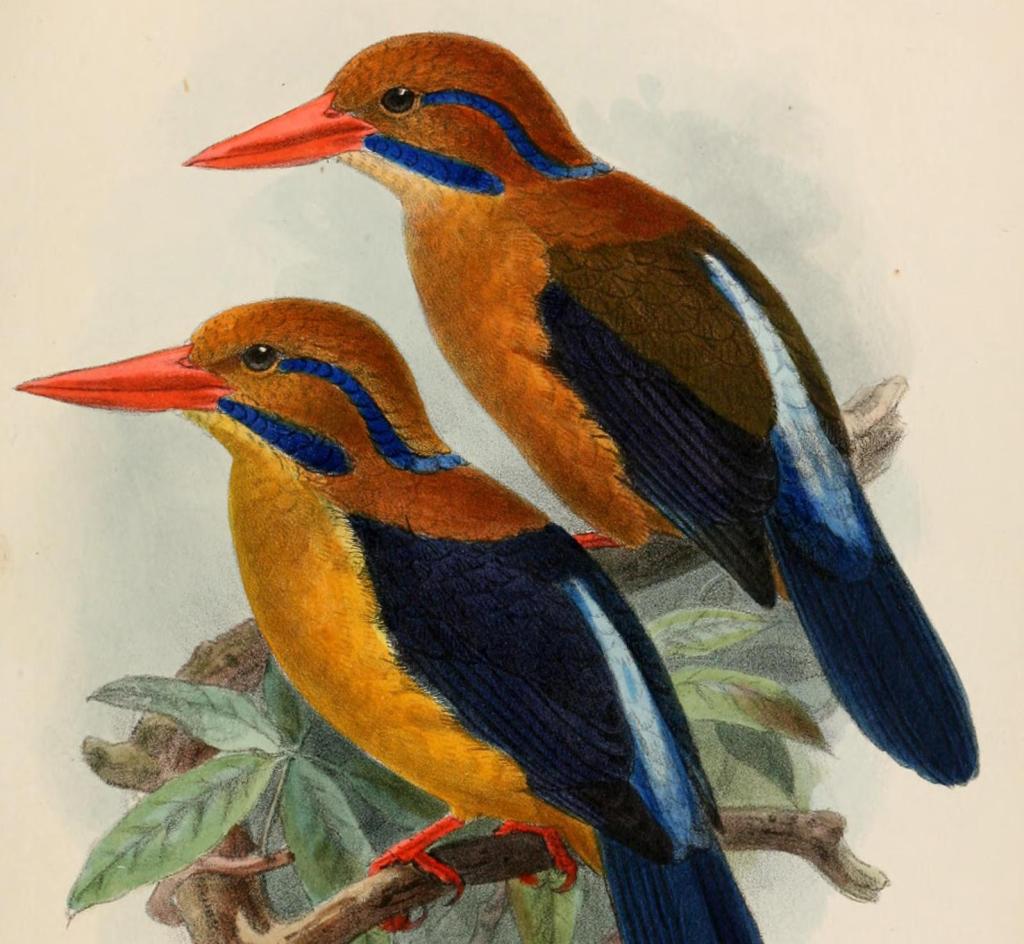
Appearance and Behaviour
The Bougainville moustached kingfisher is a medium-sized bird, measuring approximately 31 cm in length and weighing around 170–190 grams. Males are distinguished by their vibrant blue upperparts, orange underparts, and a striking black moustachial stripe extending from the base of the bill. Females are duller, with greenish plumage replacing the vibrant blue.
These kingfishers are secretive and solitary, typically perching in dense forest understories. They use their long, robust beak to hunt insects, small reptiles, and occasionally small birds. Their flight is swift but typically short, as they prefer moving between perches within their forest habitats.
Threats
IUCN Status: Endangered
Habitat Loss: Logging for timber and palm oil agriculture has led to significant deforestation on Bougainville Island, fragmenting the kingfisher’s already restricted range. Shifting agriculture practices further reduce the availability of suitable primary forest habitats.
Hunting and Trapping: Though not targeted specifically, these birds are sometimes caught in traps set for other animals, adding pressure to their declining population.
Climate Change: Changing weather patterns due to climate change may alter their habitat, reducing the availability of food sources and nesting sites.
Introduced pests: The Bougainville Moustached Kingfisher is potentially threatened by introduced rats and cats which are common even at high altitudes (Leary 1991).
Geographic Range
The Bougainville moustached kingfisher is endemic to Bougainville Island in Papua New Guinea and some adjacent islets. They are restricted to undisturbed lowland and montane forests, preferring primary forests between elevations of 300 and 1,000 metres.
Due to logging and habitat fragmentation, their range is shrinking, and they are increasingly confined to smaller, isolated forest patches.
Diet
These kingfishers are primarily carnivorous, feeding on a diet of insects, small reptiles, and amphibians. They have also been observed preying on small birds. Using their sharp beak, they perch silently before darting to capture their prey.
As habitat loss continues to diminish prey availability, their specialised diet places them at even greater risk.
Reproduction and Mating
Very little is known about the breeding habits of the Bougainville moustached kingfisher. Like other kingfishers, they are believed to nest in tree cavities or burrow into earthen banks. Clutch sizes are likely small, with only 2–3 eggs per season.
Habitat loss and fragmentation further reduce the availability of suitable nesting sites, making successful reproduction increasingly challenging.
Take Action!
The Bougainville moustached kingfisher is a symbol of the unique biodiversity of Bougainville Island. Protecting their forest habitat is vital for their survival. Support conservation efforts, boycott palm oil, and advocate for stronger protections against deforestation. Share their story to raise awareness of their plight. #BoycottPalmOil #Boycott4Wildlife
Further Information
BirdLife International. 2016. Actenoides bougainvillei. The IUCN Red List of Threatened Species 2016: e.T22726874A94934210. https://dx.doi.org/10.2305/IUCN.UK.2016-3.RLTS.T22726874A94934210.en. Downloaded on 31 January 2021.
BirdLife International. (2022). Bougainville Moustached Kingfisher. The IUCN Red List of Threatened Species.
Birds of the World. (2022). Bougainville Moustached Kingfisher. Birds of the World.
eBird. (2022). Bougainville Moustached Kingfisher. eBird.
Support the conservation of this species


How can I help the #Boycott4Wildlife?
Take Action in Five Ways
1. Join the #Boycott4Wildlife on social media and subscribe to stay in the loop: Share posts from this website to your own network on Twitter, Mastadon, Instagram, Facebook and Youtube using the hashtags #Boycottpalmoil #Boycott4Wildlife.
2. Contribute stories: Academics, conservationists, scientists, indigenous rights advocates and animal rights advocates working to expose the corruption of the palm oil industry or to save animals can contribute stories to the website.





3. Supermarket sleuthing: Next time you’re in the supermarket, take photos of products containing palm oil. Share these to social media along with the hashtags to call out the greenwashing and ecocide of the brands who use palm oil. You can also take photos of palm oil free products and congratulate brands when they go palm oil free.
4. Take to the streets: Get in touch with Palm Oil Detectives to find out more.
5. Donate: Make a one-off or monthly donation to Palm Oil Detectives as a way of saying thank you and to help pay for ongoing running costs of the website and social media campaigns. Donate here
Discover more from Palm Oil Detectives
Subscribe to get the latest posts sent to your email.
 Palm Oil Detectives