
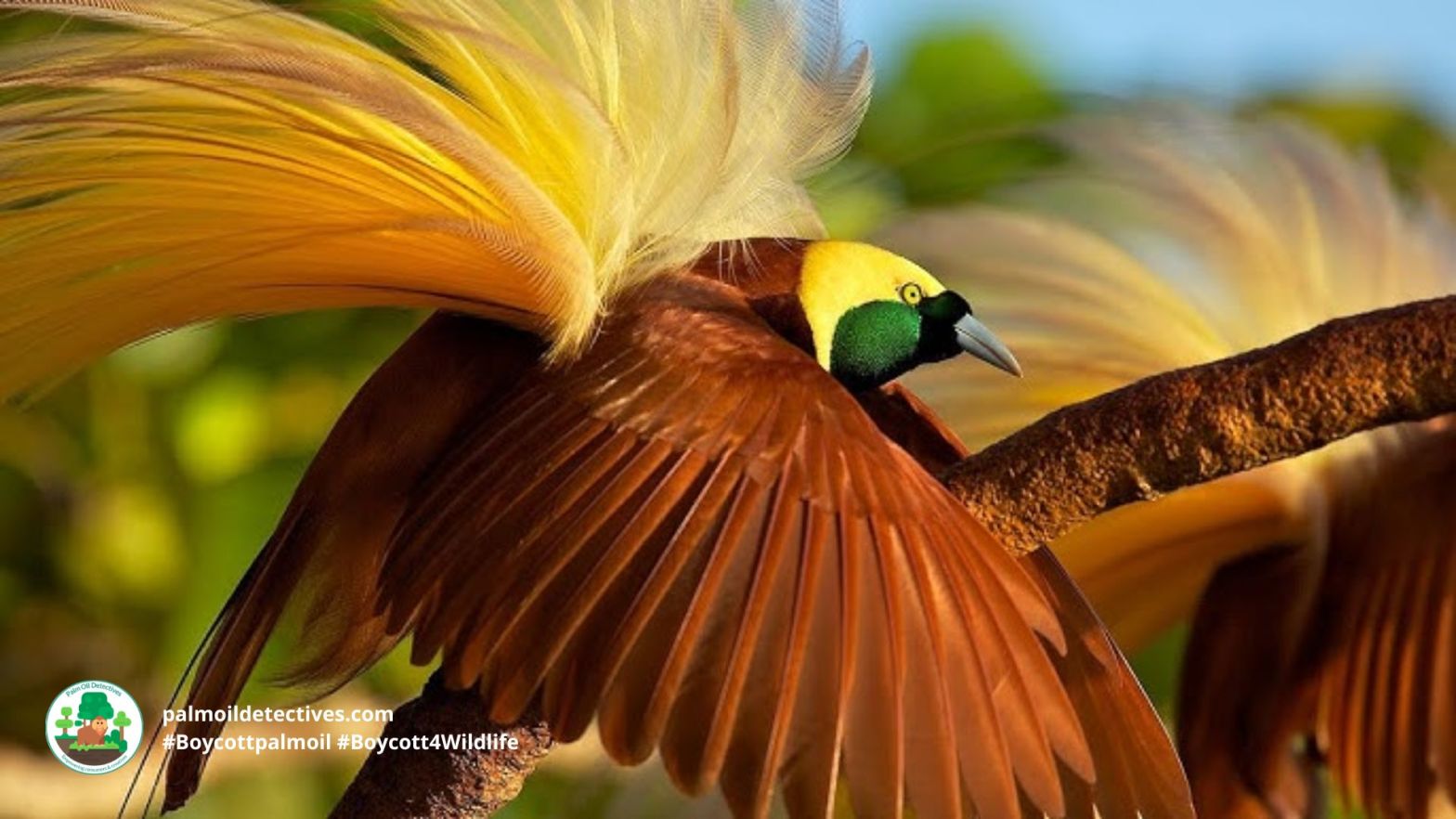
Goldie’s Bird-of-paradise Paradisaea decora
IUCN Status: Vulnerable
Location: Papua New Guinea – Fergusson Island and Normanby Island, D’Entrecasteaux Archipelago. Goldie’s Bird-of-paradise lives in the forests and foothills of the remote D’Entrecasteaux archipelago in east Papua New Guinea. It is found only on two islands – Fergusson and Normanby – and survives in small, fragmented populations.
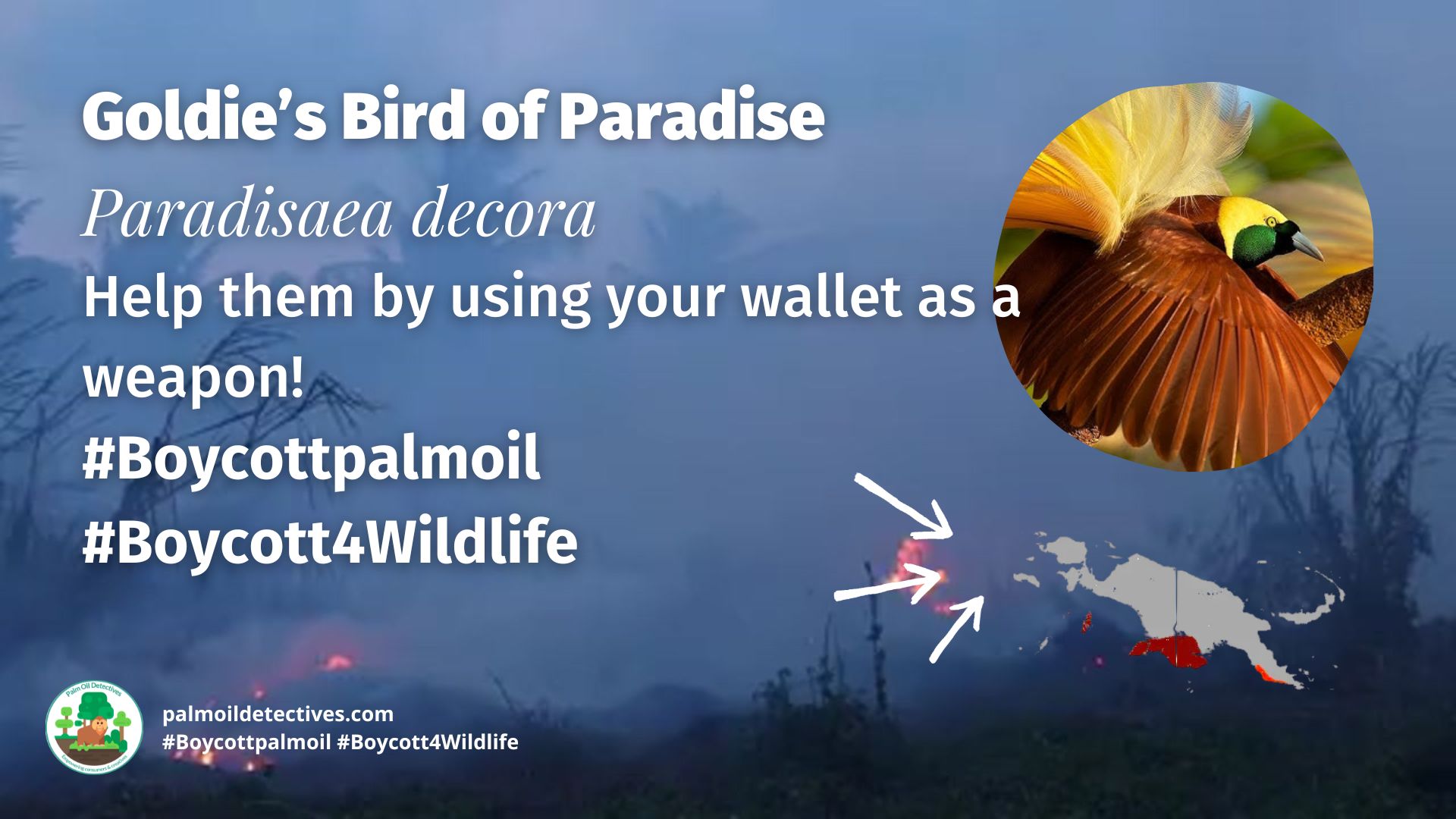
Goldie’s Bird-of-paradise Paradisaea decora is classified as #Vulnerable by the IUCN Red List, with an estimated population of just 650 individuals split across Fergusson and Normanby Islands in Papua New Guinea. This rare and radiant #bird is under siege from logging, gold mining, nickel mining, and slash-and-burn agriculture. Though it can return to forest regenerating after 20–30 years, it cannot survive in heavily degraded or permanently cleared habitats. If these threats are not stopped, this species may vanish forever. Use your voice and your wallet to protect this luminous and irreplacable treasure of New Guinea. #BoycottPalmOil #Boycott4Wildlife
The Goldie’s Bird of Paradise is a rustling rainbow 🦜🌈 They are #vulnerable in #rainforests of #WestPapua from #mining and #palmoil #deforestation. Fight for them and #Boycottpalmoil #Boycott4Wildlife 🌴🔥👎⛔ @palmoildetect.bsky.social https://palmoildetectives.com/2021/02/03/goldies-bird-of-paradise-paradisaea-decora/
The Goldie’s #Bird of Paradise is a shimmering bird of #Papua’s jungles putting on a rainbow performance. They’re #vulnerable due to #palmoil #deforestation and #hunting. Help them survive when you #BoycottPalmOil #Boycott4Wildlife 🌴🔥👎⛔ @palmoildetect.bsky.social https://palmoildetectives.com/2021/02/03/goldies-bird-of-paradise-paradisaea-decora/
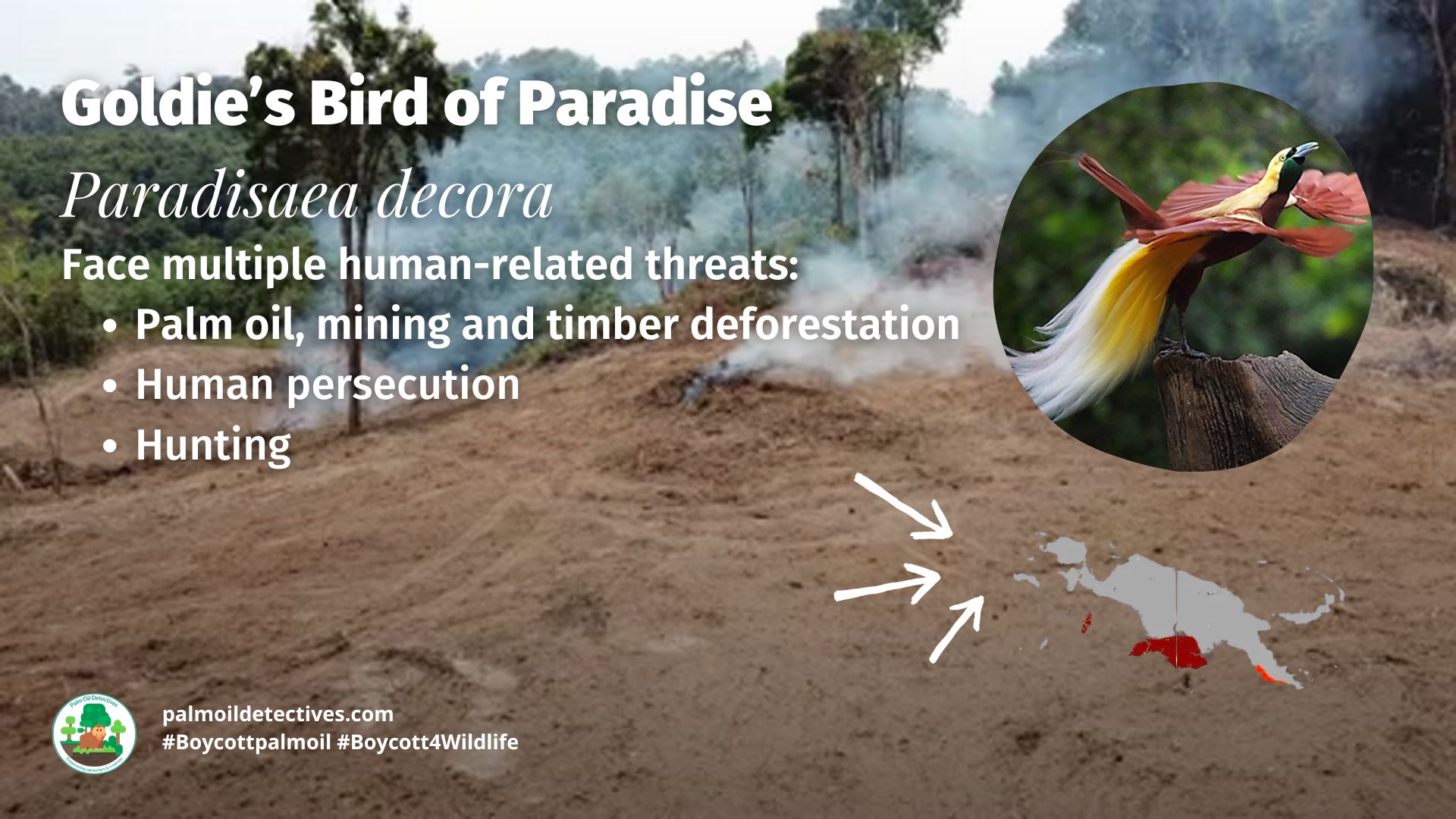
Habitat loss and degradation through commercial logging, mineral exploration and clearance for agriculture are on-going threats.
IUCN Red List
Appearance and Behaviour
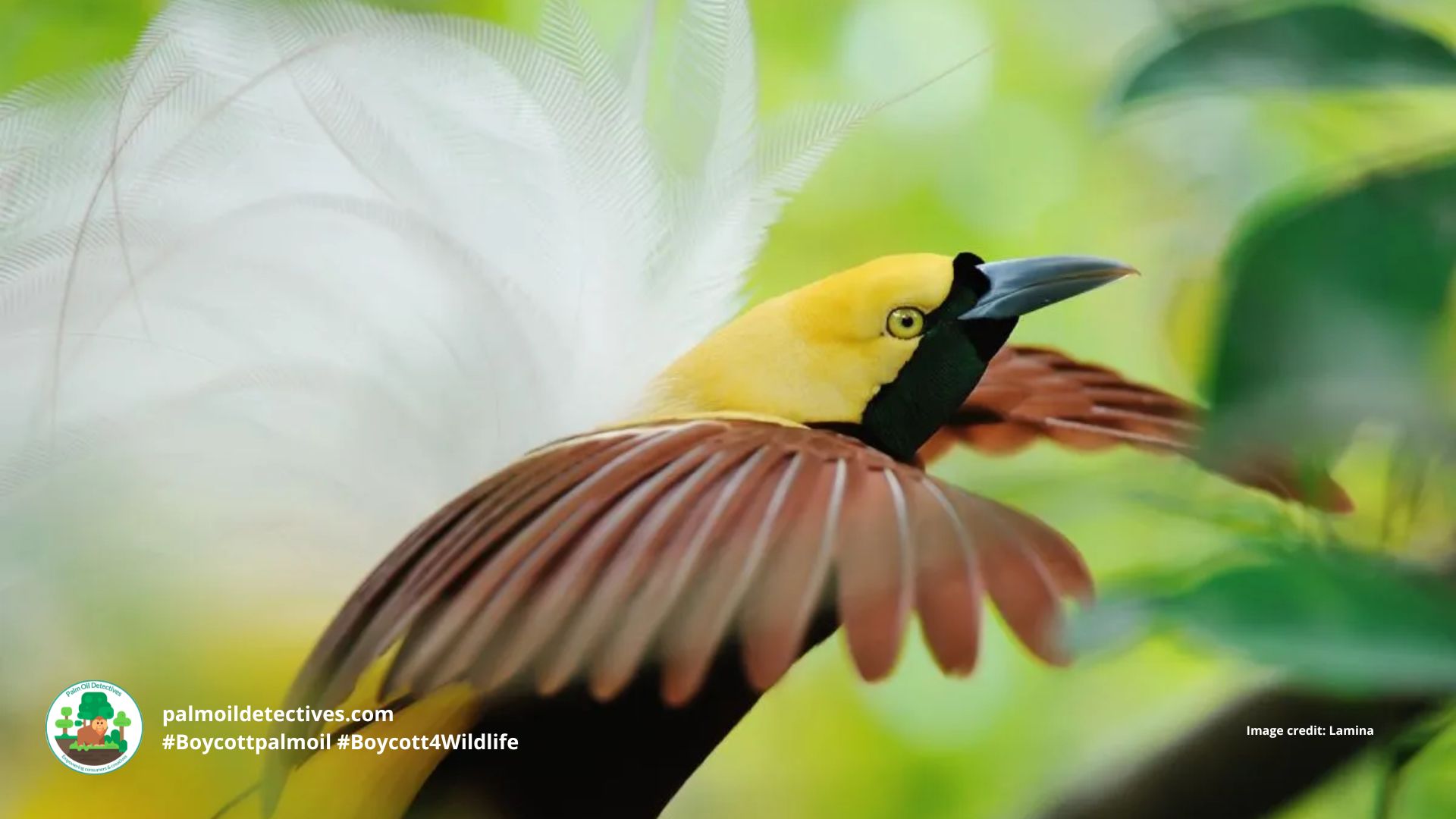
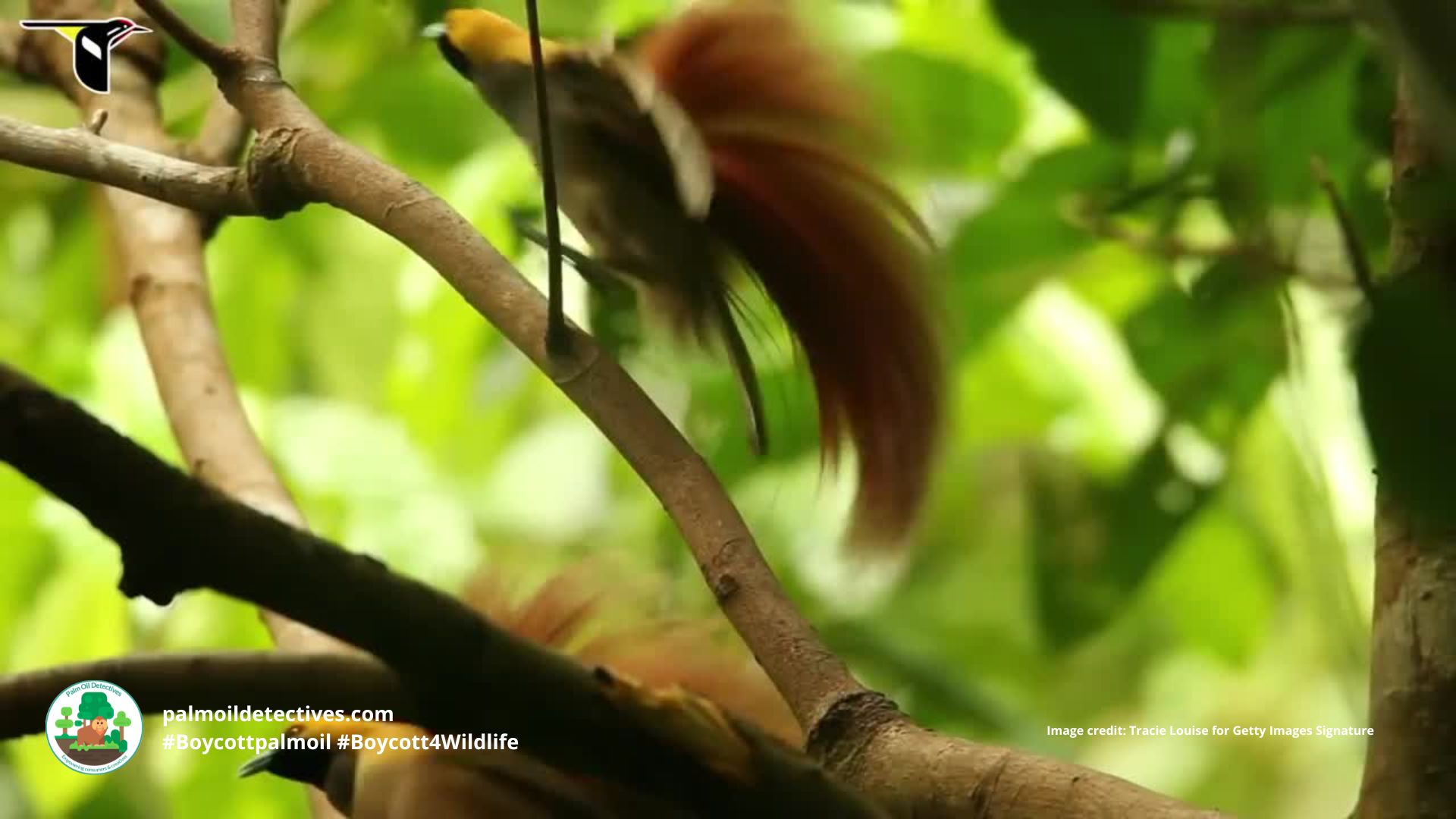
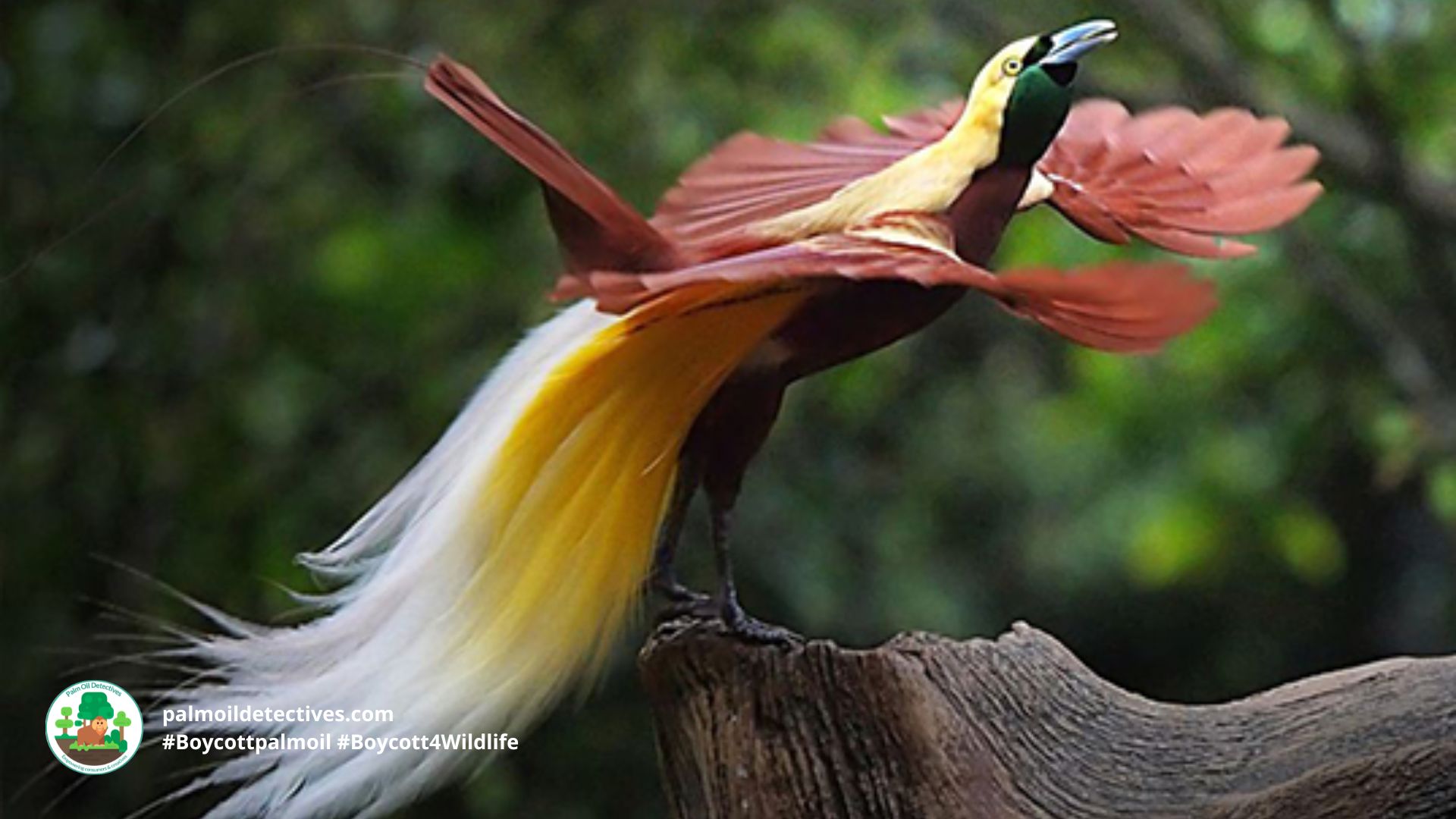
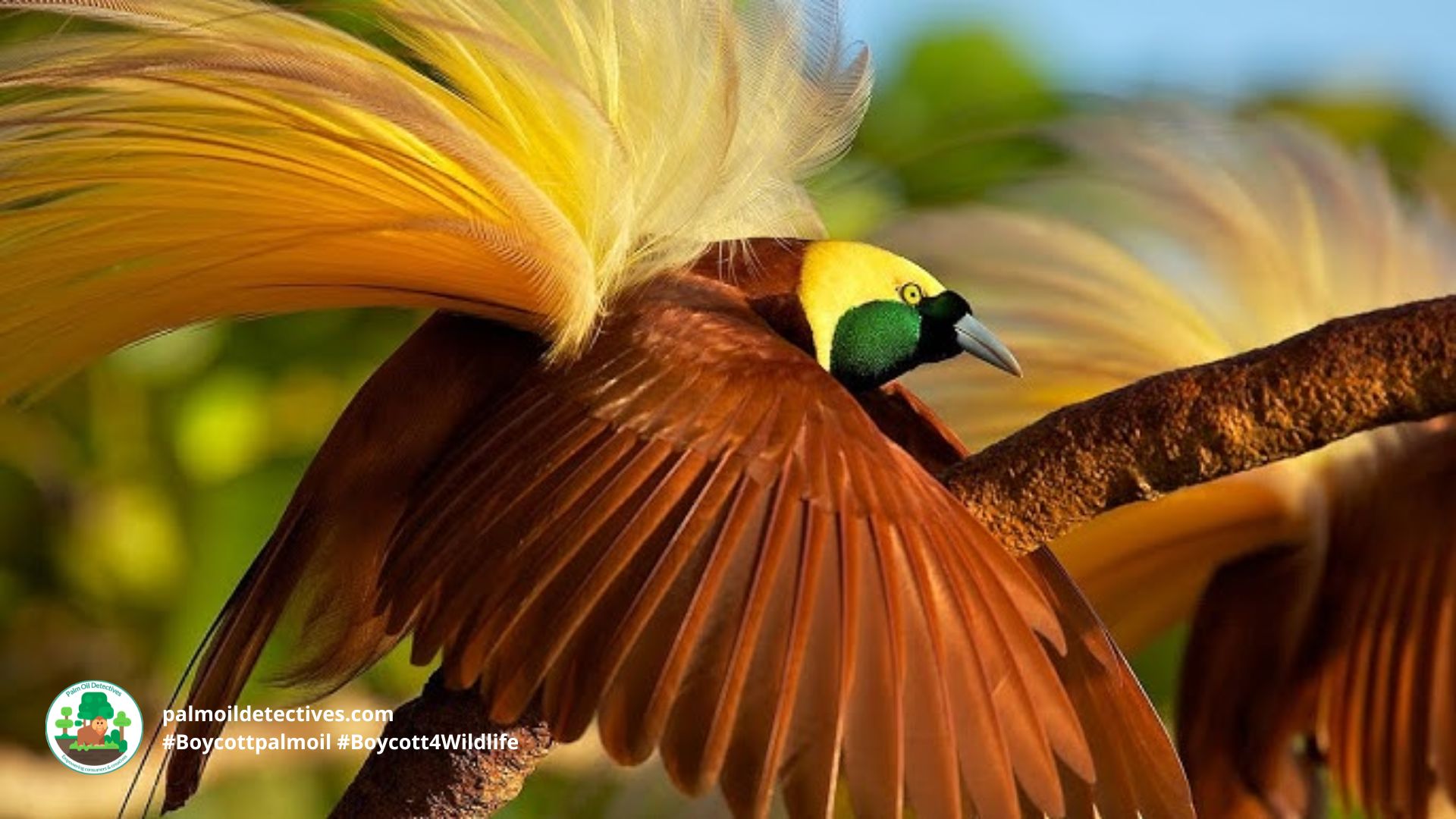
The Goldie’s Bird-of-paradise is a visual marvel. The adult male glows with crimson, golden-yellow, and iridescent green plumage, complete with a pair of long flank plumes and a green sheen across the head and back. Females and juveniles are duller in colour but still show elegant markings. Males are known for their flamboyant courtship displays, hanging upside down from vines and branches while fanning out their plumes, fluttering their wings, and calling loudly. These performances are critical for sexual selection, and the species has been observed engaging in lek-like display areas.
Recent behavioural observations suggest the presence of alternative mating tactics. Footage captured in the wild showed female-plumaged birds mounting others, an extremely rare behaviour that could be indicative of sneak copulations by immature males (MacGillavry et al., 2024). This complex mating dynamic points to an elaborate social structure and possible hidden hierarchies in these secretive birds.
Exciting new findings have shown that Goldie’s Bird-of-paradise, along with other species in the Paradisaeidae family, exhibits biofluorescence – a form of plumage-based signalling visible under ultraviolet light. The bright plumage, particularly in males, includes regions that fluoresce green or yellow under UV excitation, enhancing their courtship displays (Martin et al., 2025).
Diet
The diet of Goldie’s Bird-of-paradise consists primarily of fruits, figs, and various invertebrates, including insects and their larvae. As a frugivorous species, they play a role in seed dispersal within their forest ecosystems. They forage actively in the mid to upper canopy, using their sharp beaks to probe bark, epiphytes, and foliage for hidden invertebrates. Their specialised diet ties them closely to intact rainforest habitats, where fruiting trees and insect diversity are highest.
Reproduction and Mating
Males perform intricate display rituals to attract females, often returning to the same courtship sites each season. These courtship displays are highly energetic and involve not only visual displays but vocalisations and precise body movements. Copulation occurs following female selection of a display partner. Like most birds-of-paradise, Goldie’s Bird-of-paradise is polygynous, and males do not participate in rearing offspring.
Females build nests and raise chicks alone, typically constructing small, cup-shaped nests in the canopy. Clutch size is presumed to be one or two eggs, as is common in the family, though detailed nesting data for this species remains limited.
Geographic Range
Goldie’s Bird-of-paradise is endemic to the D’Entrecasteaux Islands of Papua New Guinea. On Fergusson Island, it occurs in several locations including Maybole Mountain, Oya Tabu Mountain, and the Edagwaba Mountain range. On Normanby Island, it has been recorded in areas such as Mount Solomonai, Lonana, and inland Sewa. Its current total range comprises just over 2,300 km² across both islands, but suitable habitat is fragmented and continues to shrink.
Most individuals are concentrated in mid-elevation forests between 300 and 750 metres above sea level. Although they can tolerate some secondary regrowth, they do not persist in heavily degraded or clear-cut areas.
Threats
- Timber Logging: Commercial logging has resumed on Fergusson Island in designated Timber Rights Purchase Areas. These operations are fragmenting the forests and displacing Goldie’s Bird-of-paradise from their mid-montane habitats (D. Mitchell in litt. 2016).
- Gold Mining and Nickel Mining: Mineral exploration and development pose a serious threat. Nickel mining on Fergusson and gold exploration on Normanby are intruding into known habitats. Forest clearing and road construction have already disturbed critical display and nesting areas.
- Slash-and-burn agriculture: Expansion of slash-and-burn agriculture is converting forest into gardens, especially on Normanby Island. These clearings displace birds and interrupt regrowth cycles critical to the species’ survival.
- Small Population Size: With fewer than 650 individuals remaining, the species is highly vulnerable to stochastic events, inbreeding depression, and local extinction. Its two isolated subpopulations exacerbate these risks.
Take Action!
Goldie’s Bird-of-paradise is one of the world’s most beautiful birds – but beauty alone cannot save them. You can make a difference:
- Boycott palm oil, gold, and nickel sourced from Papua New Guinea.
- Support indigenous-led conservation in the D’Entrecasteaux Islands.
- Raise awareness by sharing the story of this bird on social media and advocating for stronger protections.
- Demand an end to logging and mining in remaining primary forests.
- Every time you shop, boycott palm oil in the supermarket.
#BoycottPalmOil #Boycott4Wildlife
FAQs
How many Goldie’s Birds-of-paradise are left in the wild?
Recent surveys estimate fewer than 650 individuals remain, with approximately 500 on Fergusson Island and 150 on Normanby Island. This small population is fragmented and continues to decline due to logging, mining, and agricultural expansion (D. Mitchell in litt. 2008).
How do Goldie’s Birds-of-paradise reproduce?
Males perform elaborate visual and acoustic displays to attract mates. Only females build nests and raise the young. Each breeding cycle likely produces 1–2 eggs, and there is little to no male involvement in parental care. The reproductive success of the species is closely tied to the availability of undisturbed forest habitat.
What do Goldie’s Birds-of-paradise eat?
They are primarily frugivores, consuming a variety of native fruits and figs, along with arthropods for protein. Their role as seed dispersers is essential to maintaining the biodiversity of island forest ecosystems.
Are they affected by palm oil deforestation?
While the D’Entrecasteaux Islands are not yet a major palm oil hotspot, proposals for plantation development are spreading. The spread of mining, logging and palm oil could push Goldie’s Bird-of-paradise to the brink. Pre-emptive action is needed to prevent further encroachment by these extractive industries.
Support the conservation of this species
There are currently no conservation activities in place.
Create art to support this forgotten animal.
Further Information

Affleck, S., & McGeoch, M. A. (2024). Global avian functional diversity depends on the world’s most widespread and distinct birds. Ecology Letters, 27(11), 1683–1694. https://doi.org/10.1111/ele.14552
Boersma, J., Gregg, J., Nason, D., Malesa, E., Le Breton, C., Ketaloya, S., Iova, B., & Mittermeier, J. C. (2025). An ornithological survey of Fergusson Island, D’Entrecasteaux Archipelago, Papua New Guinea, reveals new island records and noteworthy natural history observations. Bulletin of the British Ornithologists’ Club, 145(1), Article a2. https://doi.org/10.25226/bboc.v145i1.2025.a2
BirdLife International. 2016. Paradisaea decora. The IUCN Red List of Threatened Species 2016: e.T22706257A94058564. https://dx.doi.org/10.2305/IUCN.UK.2016-3.RLTS.T22706257A94058564.en. Downloaded on 03 February 2021.
MacGillavry, T., Janiczek, C., & Fusani, L. (2024). Video evidence of mountings by female-plumaged birds of paradise. Ethology. https://doi.org/10.1111/eth.13451
Martin, R. P., Carr, E. M., & Sparks, J. S. (2025). Does biofluorescence enhance visual signals in birds-of-paradise? Royal Society Open Science, 12 February 2025. https://doi.org/10.1098/rsos.241905
Stelbrink, B., Von Rintelen, T., Richter, K., Finstermeier, K., Frahnert, S., Cracraft, J., & Hofreiter, M. (2022). Insights into the geographical origin and phylogeographical patterns of Paradisaea birds-of-paradise. Zoological Journal of the Linnean Society, 196(4), 1394–1407. https://doi.org/10.1093/zoolinnean/zlac010

How can I help the #Boycott4Wildlife?
Take Action in Five Ways
1. Join the #Boycott4Wildlife on social media and subscribe to stay in the loop: Share posts from this website to your own network on Twitter, Mastadon, Instagram, Facebook and Youtube using the hashtags #Boycottpalmoil #Boycott4Wildlife.
2. Contribute stories: Academics, conservationists, scientists, indigenous rights advocates and animal rights advocates working to expose the corruption of the palm oil industry or to save animals can contribute stories to the website.






3. Supermarket sleuthing: Next time you’re in the supermarket, take photos of products containing palm oil. Share these to social media along with the hashtags to call out the greenwashing and ecocide of the brands who use palm oil. You can also take photos of palm oil free products and congratulate brands when they go palm oil free.
4. Take to the streets: Get in touch with Palm Oil Detectives to find out more.
5. Donate: Make a one-off or monthly donation to Palm Oil Detectives as a way of saying thank you and to help pay for ongoing running costs of the website and social media campaigns. Donate here
Discover more from Palm Oil Detectives
Subscribe to get the latest posts sent to your email.
 Palm Oil Detectives