

#Sulawesi is part of a biodiversity hotspot – a region with at least 1,500 endemic #plants, specifically those with developed tissues. Less than 30% of the original primary vegetation cover remains.
Intensified illegal #timber logging and expansions of #palmoil plantations and farms have destroyed rainforests on Indonesia’s fourth-largest island, Sulawesi, threatening the biodiversity of a world-renowned epicentre of evolutionary biology. Help them to survive when you shop and #BoycottPalmOil #Boycott4Wildlife
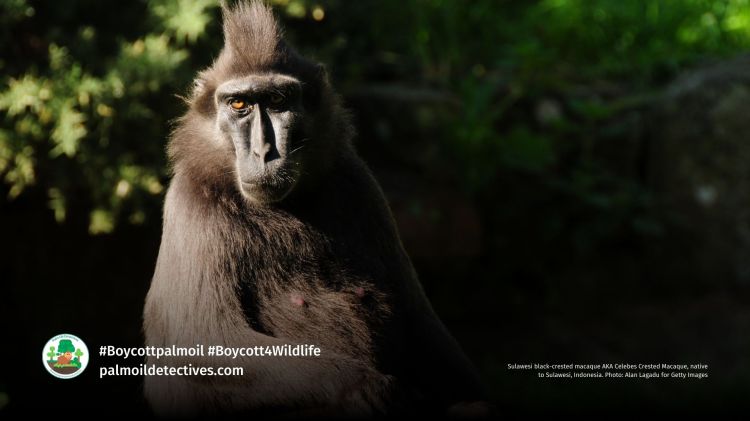
#PalmOil and #timber expansion on #Sulawesi #Indonesia 🇮🇩 threatens the home of one of the world’s oldest and most emotionally expressive #primates, the Sulawesi black crested #macaque 🐵🐒🤎Help them survive #Boycottpalmoil 🌴🩸☠️🔥🚜⛔️ #Boycott4Wildlife https://palmoildetectives.com/2021/02/14/deforestation-on-indonesian-island-of-sulawesi-destroys-habitat-of-endemic-primates/
The expressive and ancient #Sulawesi Crested Black #Macaque 🐒 is tragically critically #endangered in #Sulawesi #Indonesia 🇮🇩 due to #palmoil #ecocide and #hunting. Help them survive #Boycottpalmoil #Boycott4Wildlife @palmoildetect 🌴🪔🔥🙊🚫https://palmoildetectives.com/2021/02/14/deforestation-on-indonesian-island-of-sulawesi-destroys-habitat-of-endemic-primates/
Jatna Supriatna, Universitas Indonesia
The island is known as the Wallacea hotspot, referring to British naturalist Alfred Russel Wallace.
Although not yet as severe or dramatic as in the country’s larger islands of Sumatra/Sumatera and Kalimantan, my recent research reveals deforestation in Sulawesi has reached an alarming rate, destroying the habitats of endemic macaques and tarsiers.
My research finds Sulawesi lost 10.89% of its forest cover, or 2.07 million hectares, between 2000 and 2017, based on data from Global Forest Change Maps and the Indonesian Ministry of Environment and Forestry.
West Sulawesi and Southeast Sulawesi suffered the highest rates of deforestation, losing 13.41% and 13.37% of forest cover during that period.
The average rate of deforestation on the island’s provinces ranged from 0.42% to 0.85% each year, still lower than the national average rate of 1% per year.

The impact on endemic primates
The increasing rate of deforestation in Sulawesi has taken its toll on the local primates, which account for almost a third of all primates in Indonesia.
Sulawesi has only two primate genera, Tarsius and Macaques, but these have diversified into more species than those same genera on other islands of Indonesia.
Hybrids and back-crosses of Sulawesi macaques are also renowned, making Sulawesi an important field laboratory for the study of genetics and primate evolution.
Sulawesi is also a home for 17 endemic primates that are of particular interest to primatologists due to their importance for Sulawesi’s highly distinctive biota. The island is an important habitat for endemic primates that is similar in kind, though not in scale, to that of Madagascar.
These primates are very good umbrella indicators of change in other species because they disperse the seeds of many trees, helping to maintain diversity and healthy populations of those forest species.
The current extent and rates of deforestation in Sulawesi have impacted hybrid zones and contact zones of all primates.
Hybrid zones are areas where different species of macaques breed or hybridise. Contact zones are areas of interaction among different species, where hybrids may arise between macaques.
As forest loss has continued to proceed at a high rate, primate habitat is highly affected.
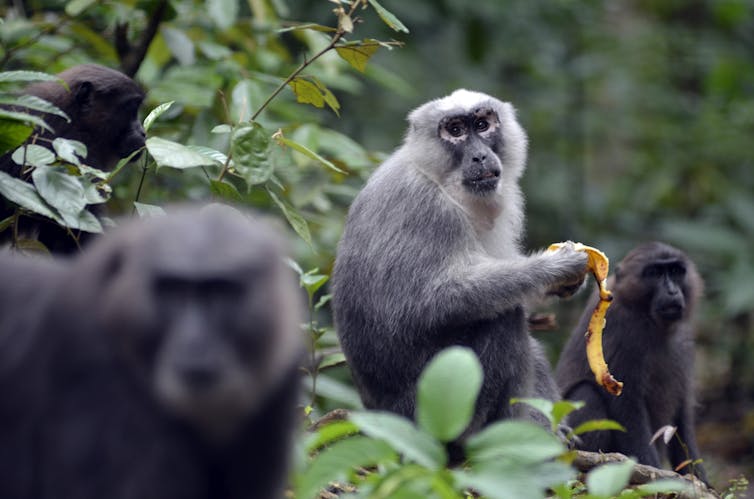
Macaques ochreata, or booted macaque, in Southeast Sulawesi and Tarsius pelengensis, or Peleng tarsier, in Central Sulawesi have lost the most habitat at 14%, followed by M. hecki, known as Heck’s macaque, and M.tonkeana, or Tonkeana macaque.
Forest loss has occurred in all macaque contact zones. Another newly described species, Tarsius supriatnai, known as Jatna’s tarsier, is also facing threats due to deforestation. The research results show the species has lost 12% of its habitat.
The extent of deforestation in the hybrid zones is alarming, with the greatest loss of forest occurring in the zones between M. tonkeana and M. ochreata.
In Central Sulawesi, road construction threatens the zone between M. tonkeana and M. hecki. Corn, cocoa and coffee plantations are replacing the forests of Enrekang region, which are in the hybrid zones between M. maura, or Moor macaque, and M. tonkeana.
Changes for human needs
Overall, we concluded that conflict between the need for human livelihoods and the need to protect primates would continue as deforestation rates have increased in the habitats of all Sulawesi primates.
The remaining habitat of the primates is not enough for them to survive unless the forest remnants become protected and carefully managed.
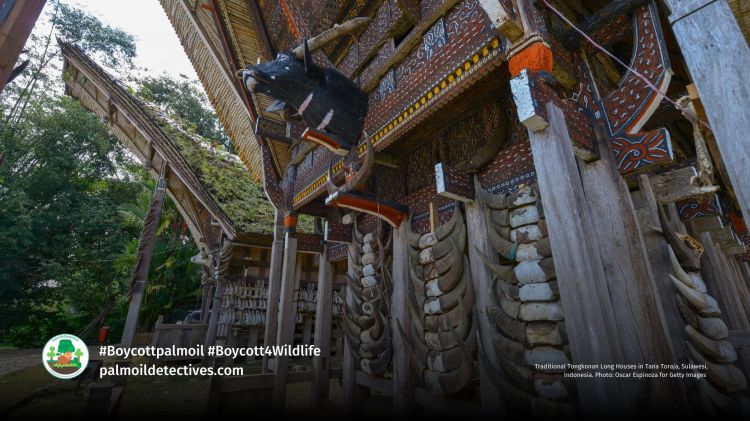
The two provinces with the highest rates of deforestation, West and Southeast Sulawesi, have had their forests turned into agricultural land for oil palm, maize and cocoa, as well as nickel mining.
Illegal logging also causes deforestation in the area, even in protected areas and national parks.
This problem is made worse by the fact that a significant proportion of the population relies on farming for survival. Population pressure and the lack of non-agricultural employment lead to demands for more agricultural land, which can only come at the cost of forests.
Jatna Supriatna, Professor of Conservation Biology, Universitas Indonesia This article is republished from The Conversation under a Creative Commons license. Read the original article.
Take Action in Five Ways
1. Join the #Boycott4Wildlife on social media and subscribe to stay in the loop: Share posts from this website to your own network on Twitter, Mastadon, Instagram, Facebook and Youtube using the hashtags #Boycottpalmoil #Boycott4Wildlife.
2. Contribute stories: Academics, conservationists, scientists, indigenous rights advocates and animal rights advocates working to expose the corruption of the palm oil industry or to save animals can contribute stories to the website.




3. Supermarket sleuthing: Next time you’re in the supermarket, take photos of products containing palm oil. Share these to social media along with the hashtags to call out the greenwashing and ecocide of the brands who use palm oil. You can also take photos of palm oil free products and congratulate brands when they go palm oil free.
4. Take to the streets: Get in touch with Palm Oil Detectives to find out more.
5. Donate: Make a one-off or monthly donation to Palm Oil Detectives as a way of saying thank you and to help pay for ongoing running costs of the website and social media campaigns. Donate here
Discover more from Palm Oil Detectives
Subscribe to get the latest posts sent to your email.
 Palm Oil Detectives
One thought on “Palm Oil Deforestation Threatens Sulawesi’s Macaques”