
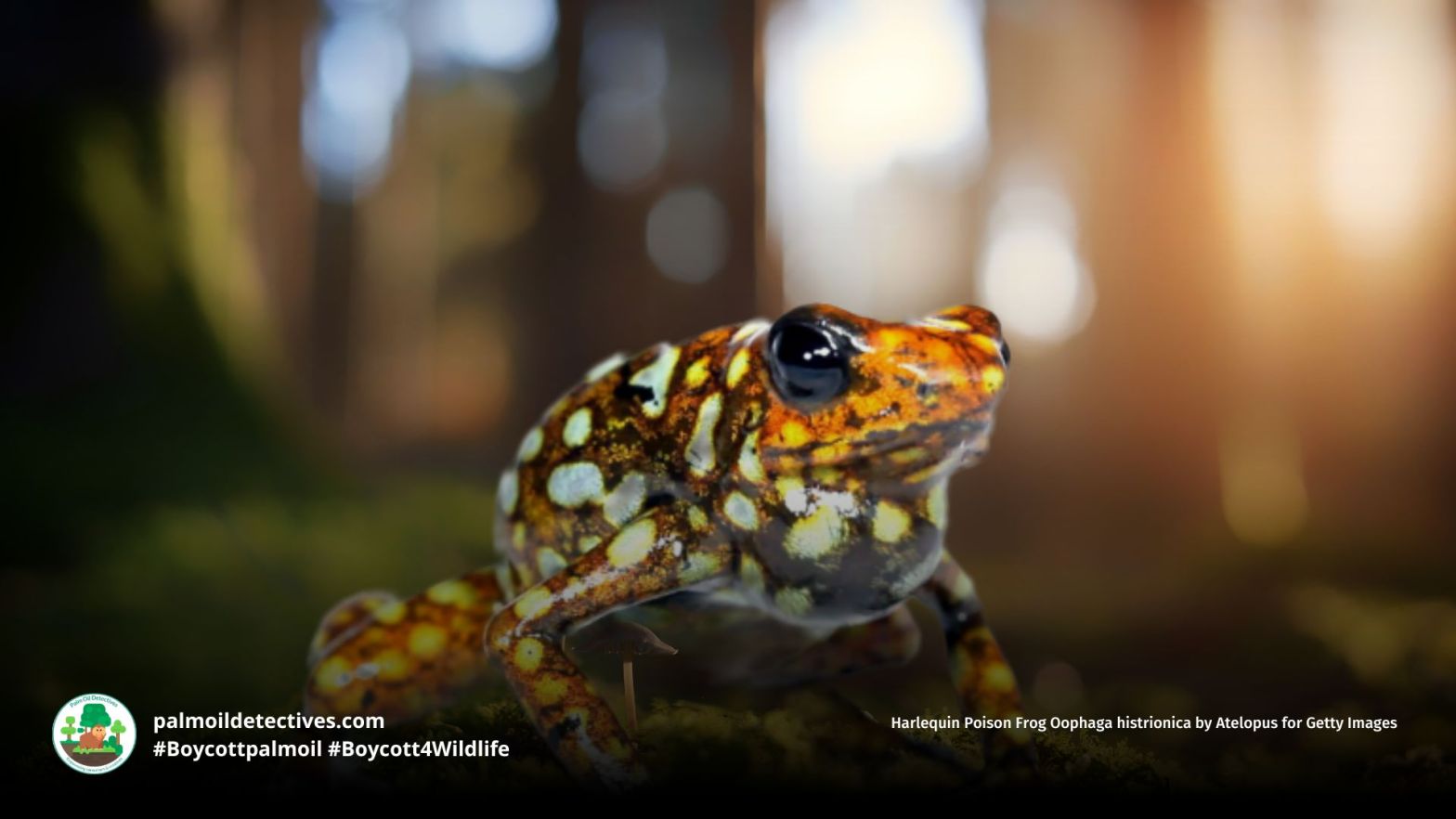
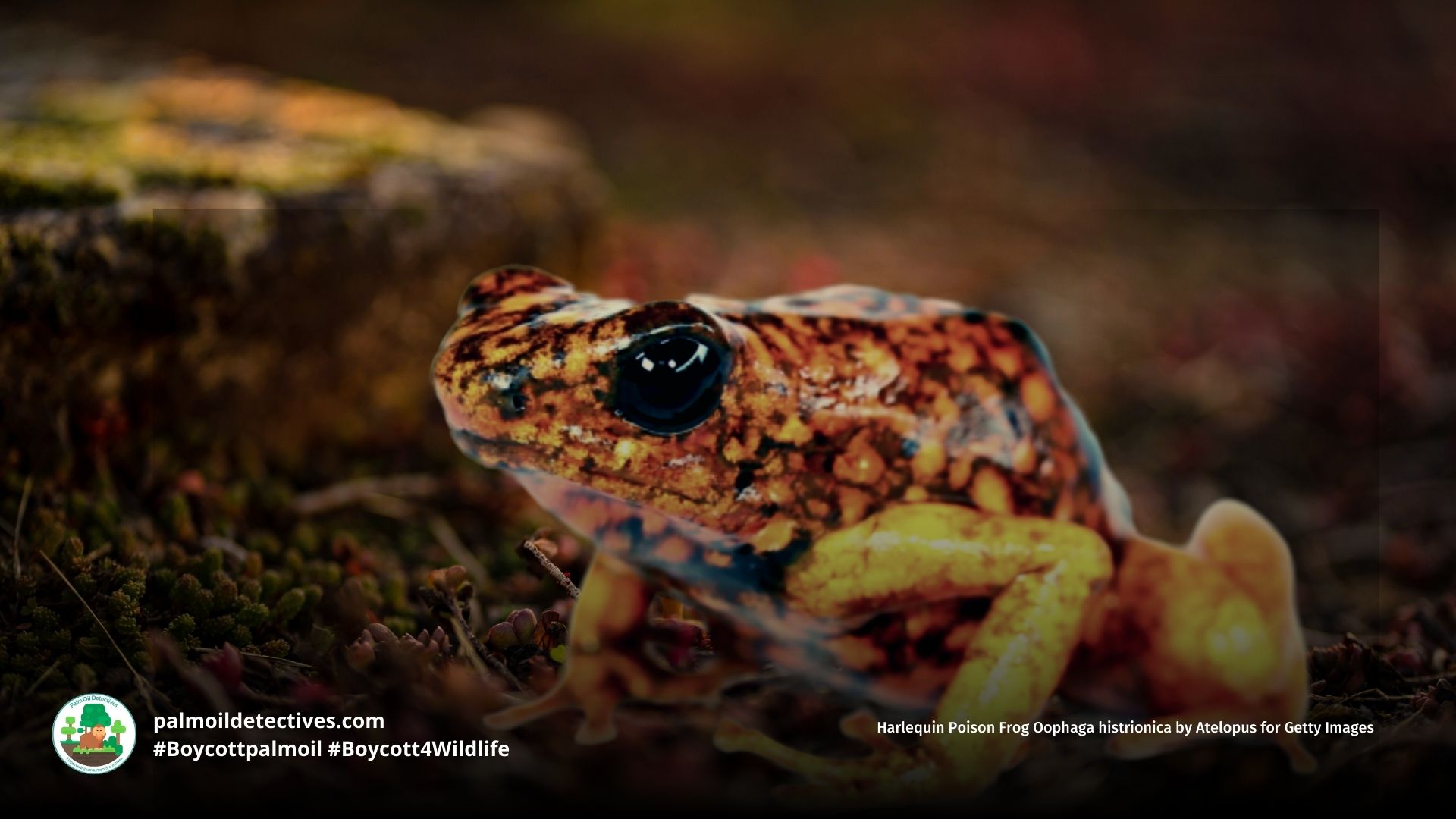
Harlequin Poison Frog Oophaga histrionica
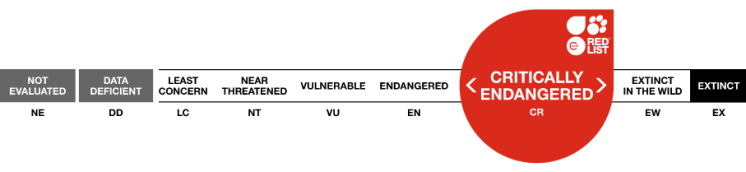
IUCN Status: Critically Endangered (IUCN SSC Amphibian Specialist Group, 2019)
Location: Colombia.
Endemic to the Chocó rainforest of Colombia, the Harlequin Poison Frog (Oophaga histrionica) inhabits humid lowland and foothill forests. These frogs thrive in leaf litter and near small water sources, where they reproduce and communicate using distinct vocalisations.
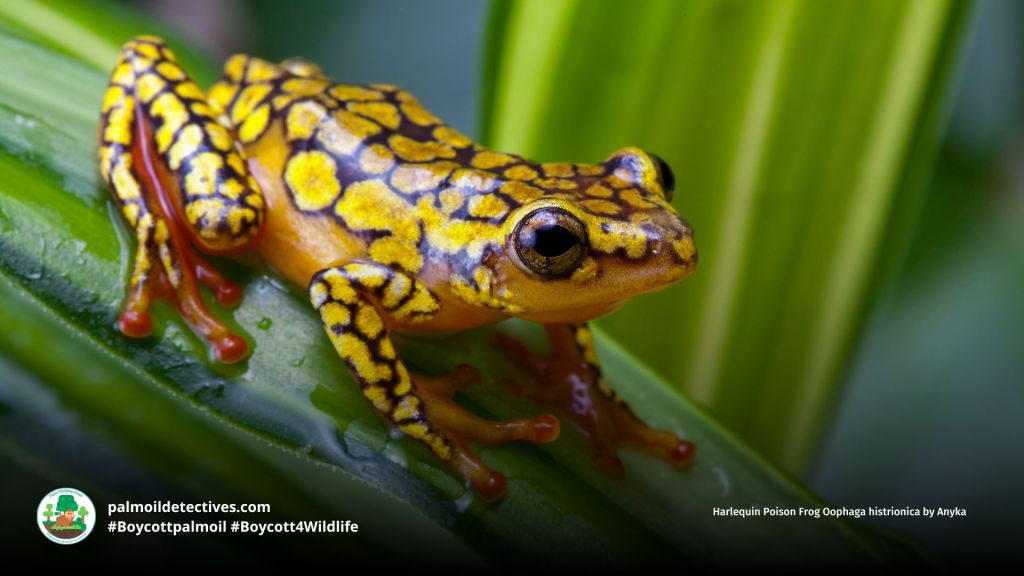
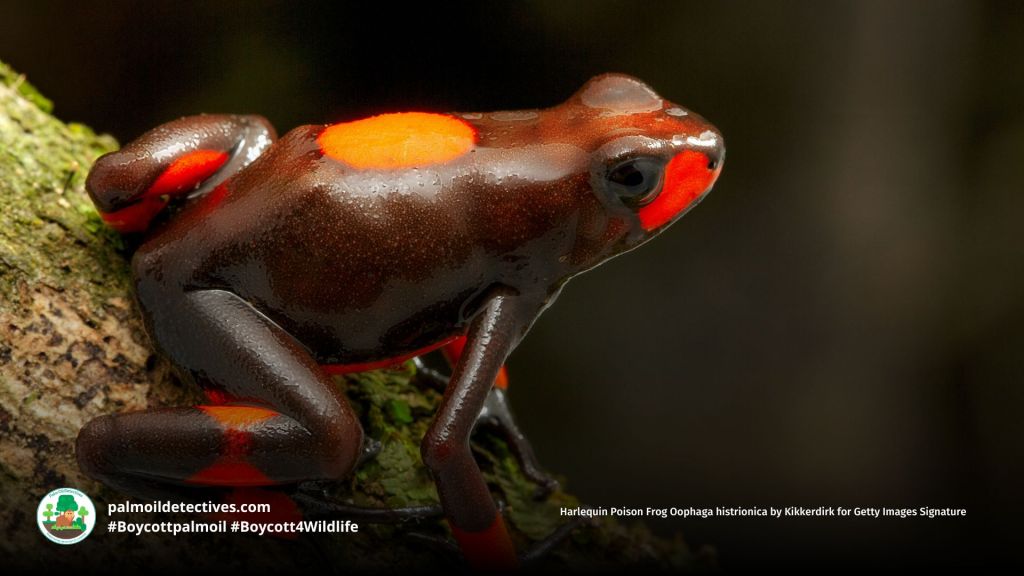
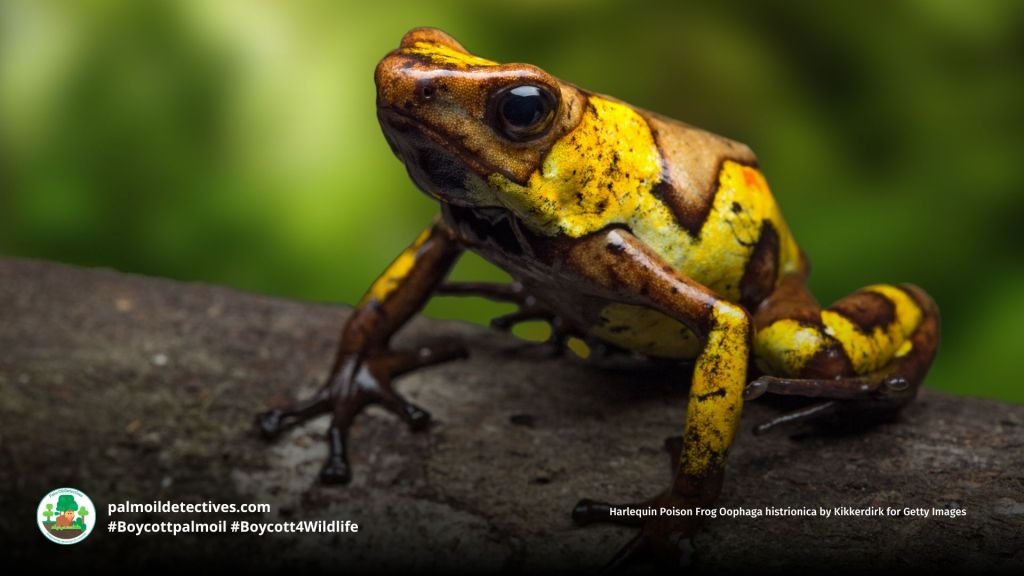
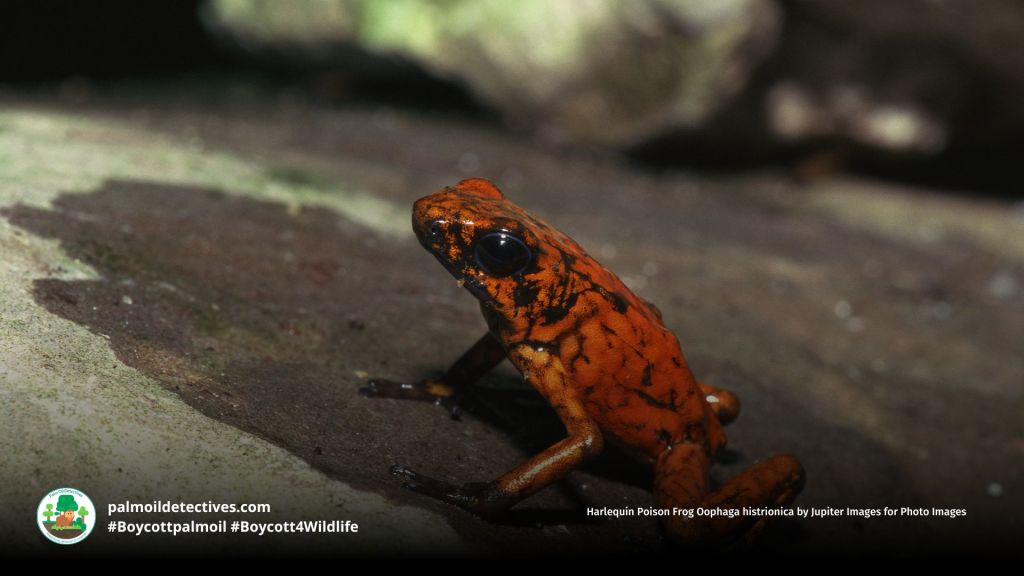
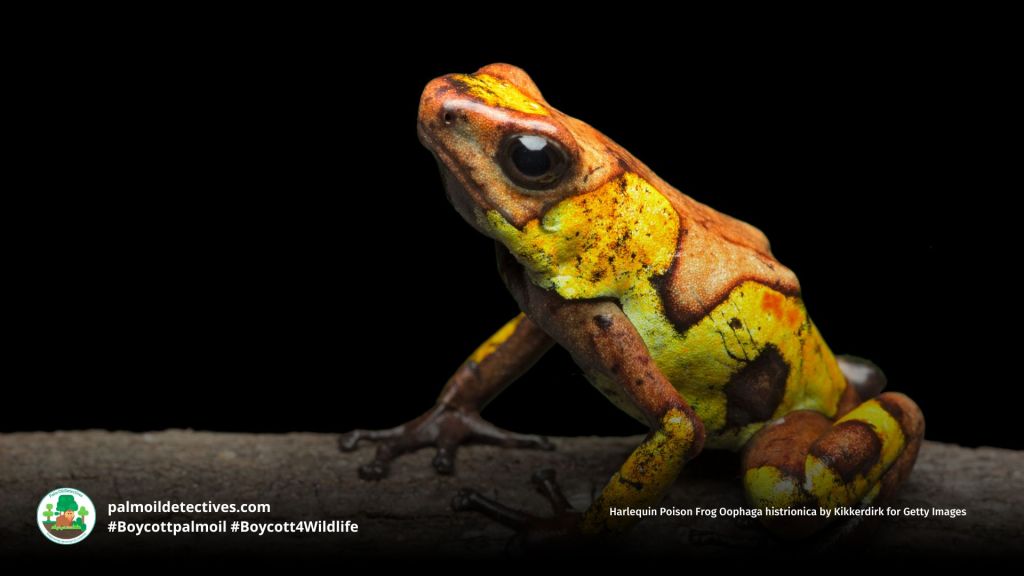
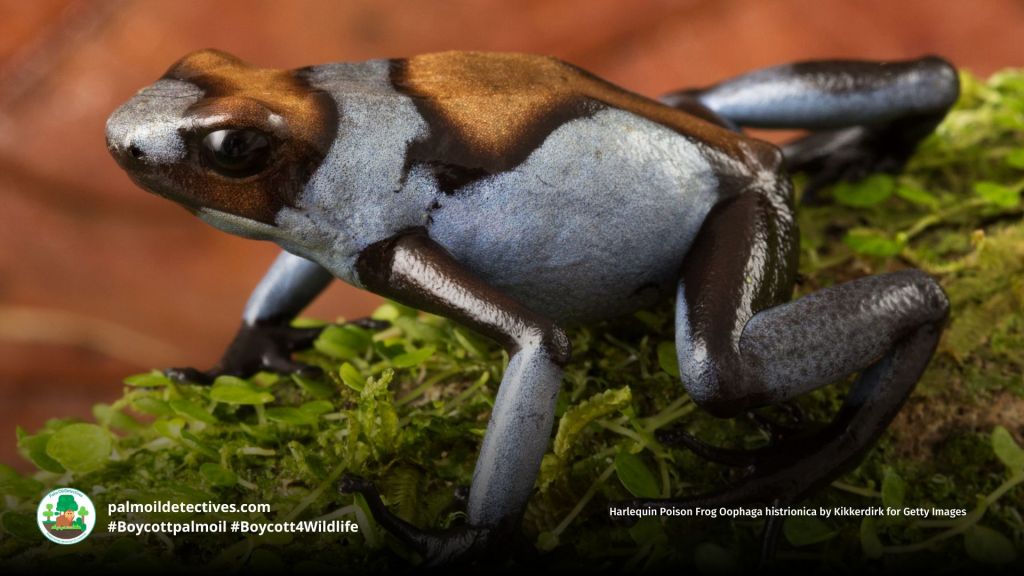
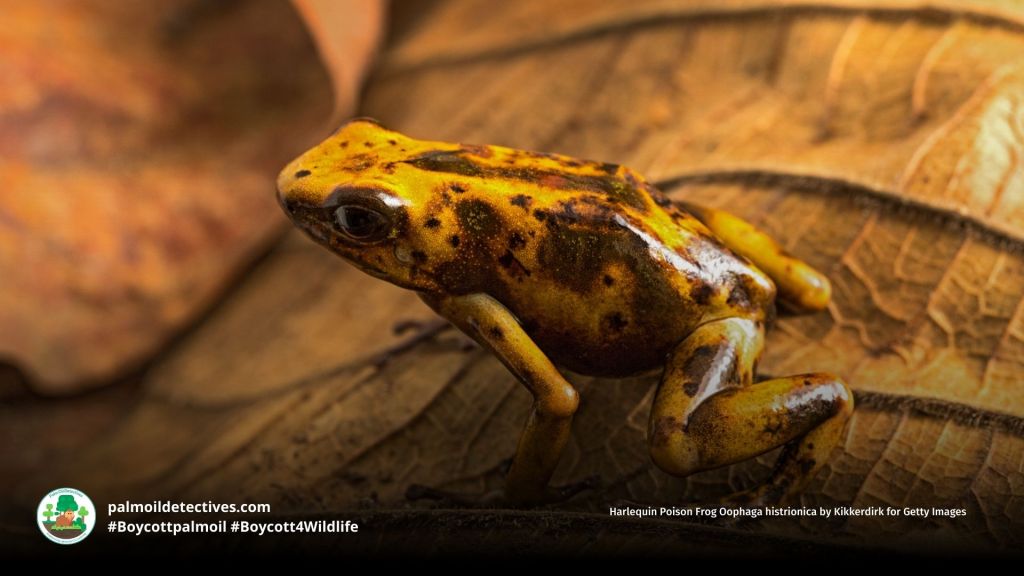
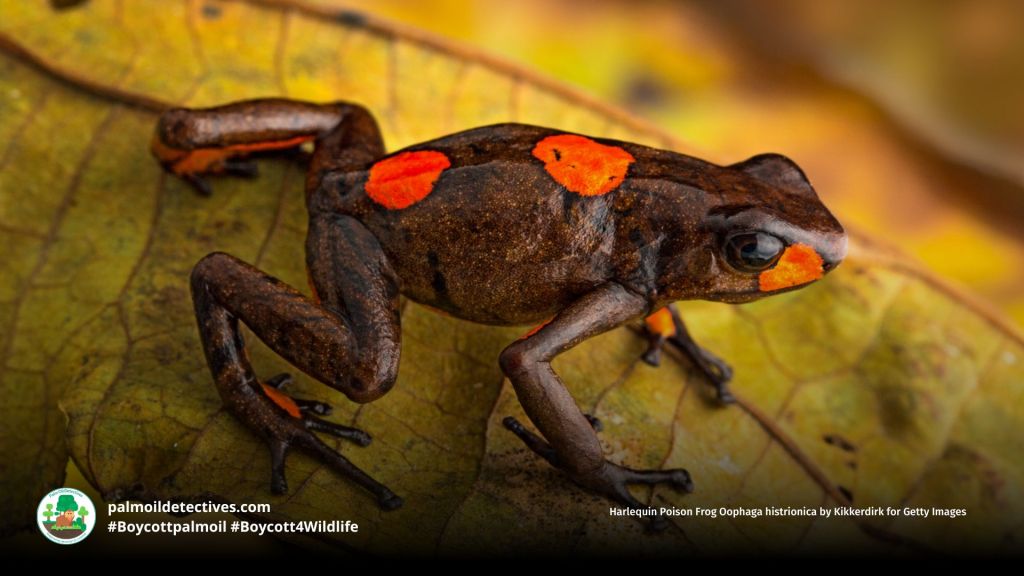
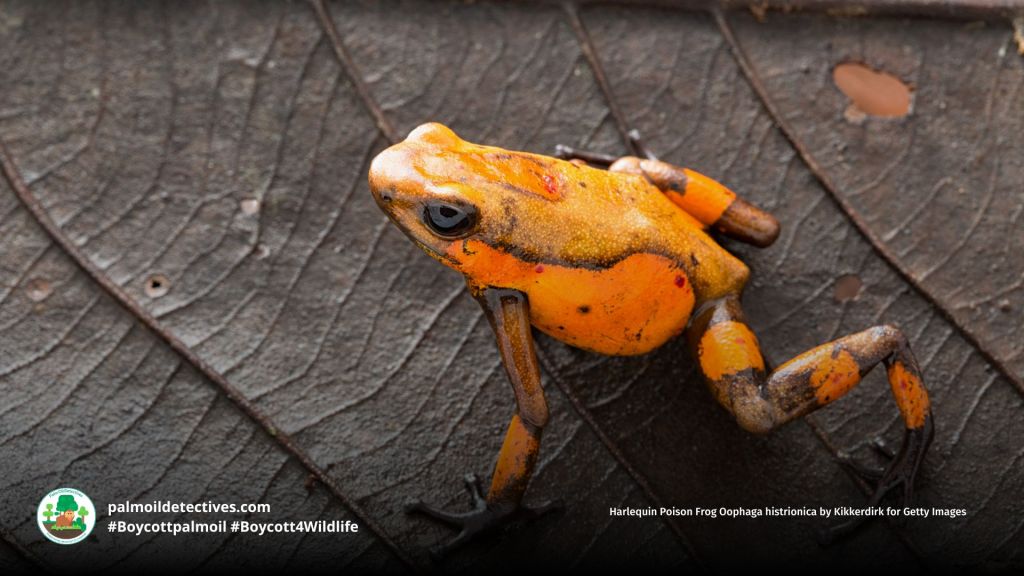
A dazzling splash of colour against the deep greens of Colombia’s Chocó rainforests, the harlequin poison frog is as deadly as it is beautiful. Cloaked in hypnotic shades of orange, yellow, green and black, this tiny amphibian is a master of chemical warfare—their skin is infused with powerful alkaloid toxins that can paralyse or kill predators. But despite their formidable defences, they are completely helpless against human destruction.
Once thriving in the dense, misty forests of western #Colombia, this critically endangered frog is now on the brink of extinction. Illegal mining, rampant deforestation for #palmoil plantations, and the relentless #wildlifetrade have devastated their fragile rainforest home. The same vibrant colours that warn predators away have made them a prime target for #poachers supplying the exotic #pettrade.
This extraordinary species is a vital part of its ecosystem, controlling insect populations and contributing to the rainforest’s delicate balance. But unless urgent action is taken, the harlequin poison frog could vanish forever.
Protect their rainforest home. Say no to palm oil, reject the illegal pet trade, and demand stronger protections for Colombia’s amphibians. #BoycottPalmOil #Boycott4Wildlife
Harlequin Poisonous #Frogs 🐸🐸have vivid shades of 💛💚🧡. Unlike other frogs both males and females fiercely guard eggs. #PalmOil #Soy #Meat and #GoldMining are threats in #Colombia. Help them when you #BoycottGold 🥇☠️⛔️ be #vegan #BoycottPalmOil 🌴☠️⛔️https://palmoildetectives.com/2021/03/20/harlequin-poison-frog-oophaga-histrionica/
Dazzling Harlequin Poisonous #Frogs 🐸💚 of #Colombia 🇨🇴 are sensitive to noise 🎶📢 Their rainbow colours 🌈 make them #rainforest works of art! ✨🎨Critically Endangered by #mining and #palmoil #BoycottGold 🥇🩸⛔️ #BoycottPalmOil 🌴☠️⛔️ @palmoildetect https://palmoildetectives.com/2021/03/20/harlequin-poison-frog-oophaga-histrionica/



Appearance and Behaviour
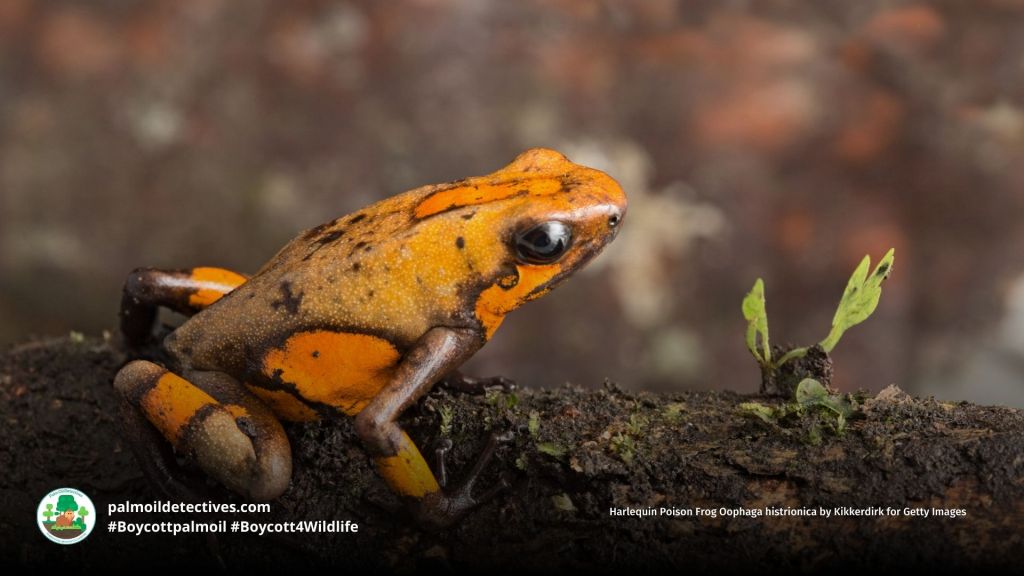
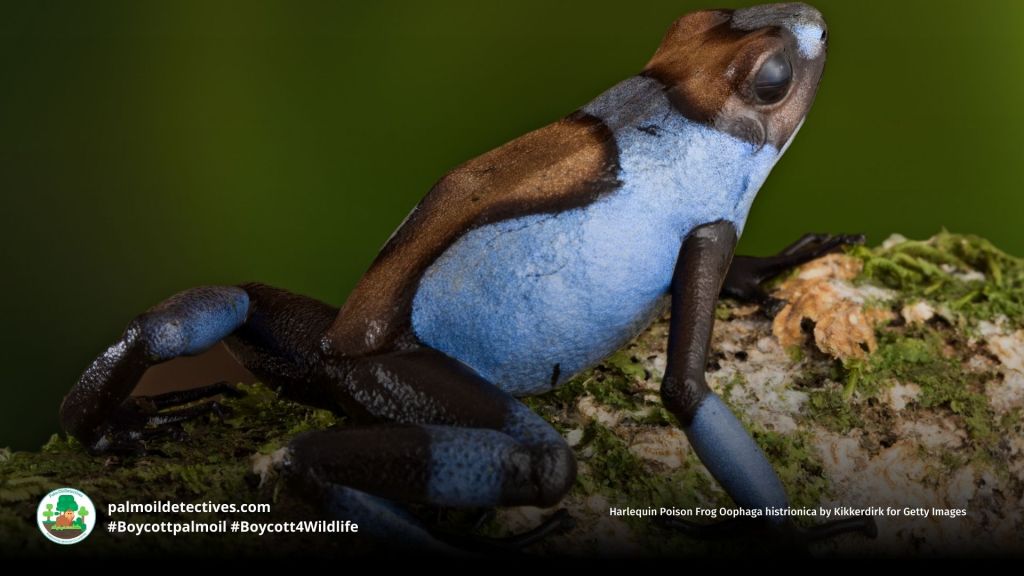
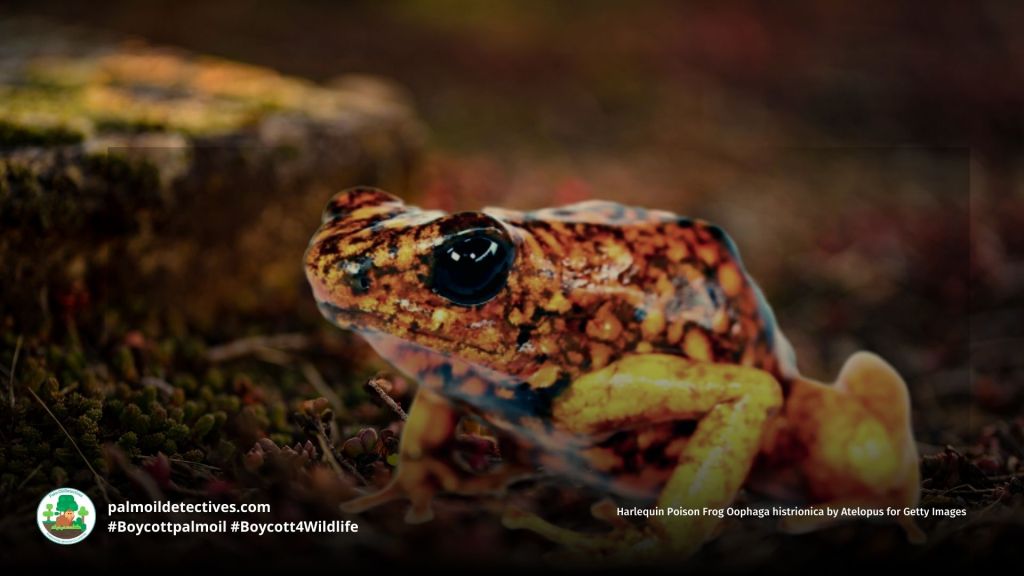
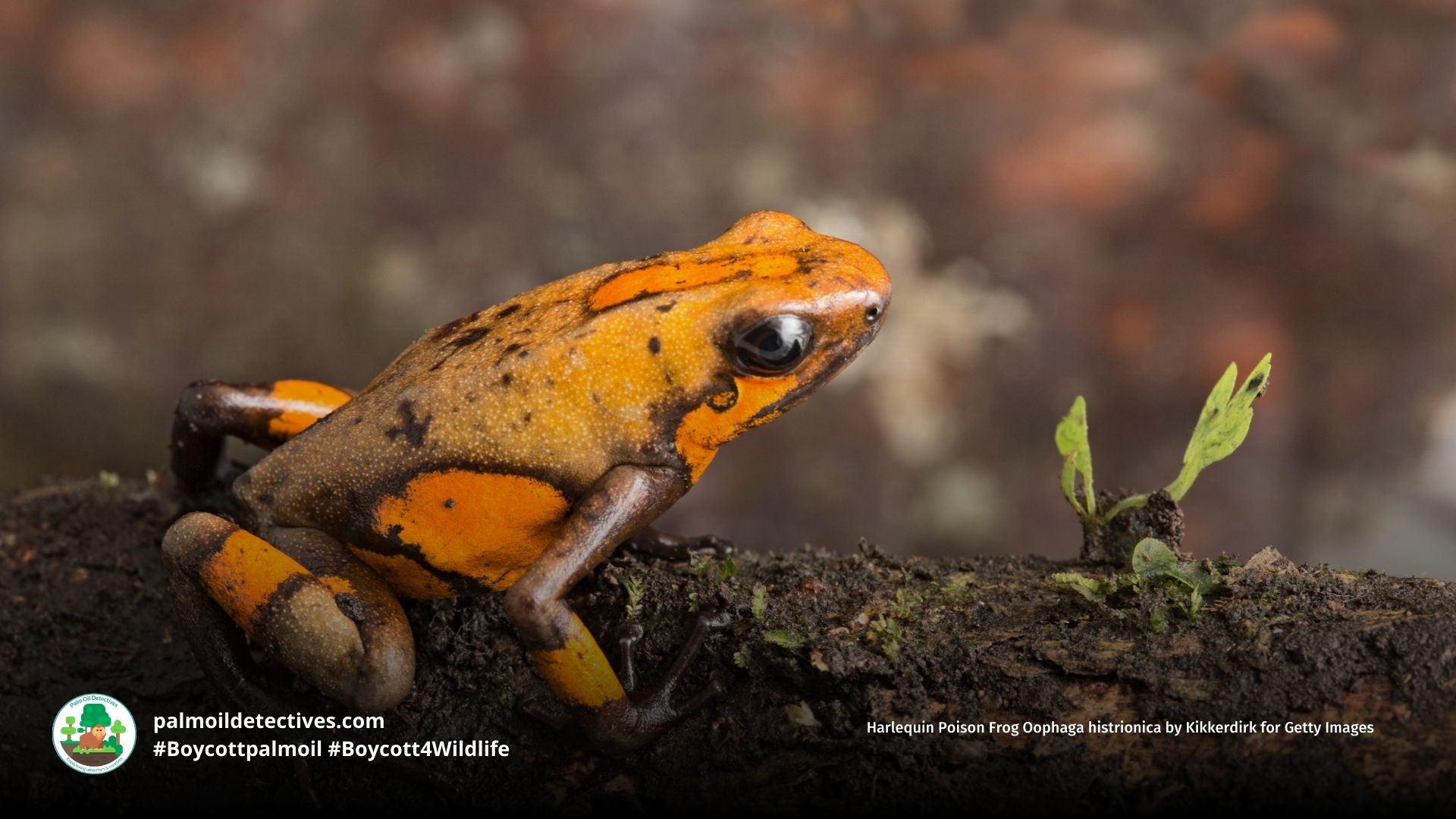
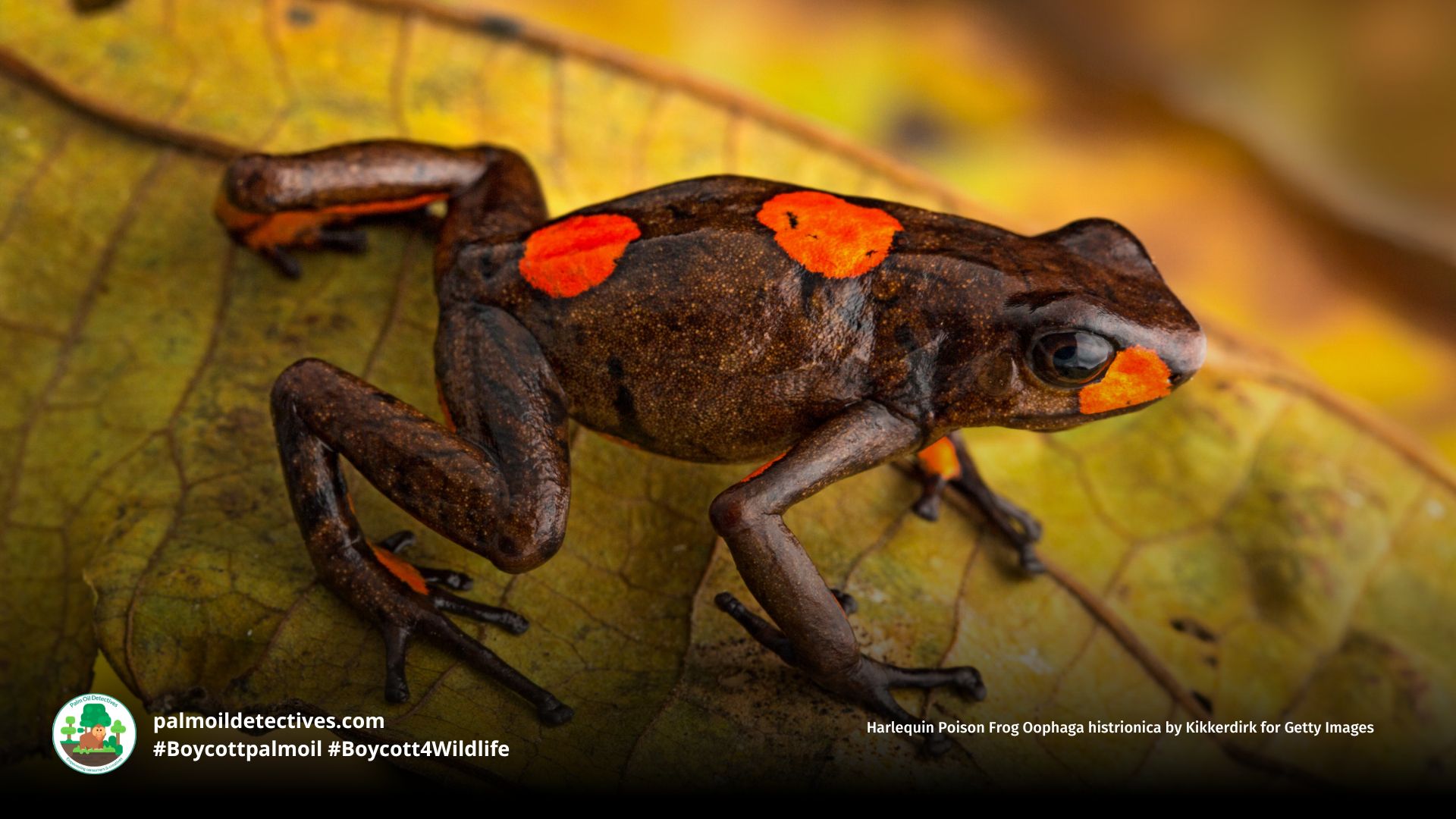
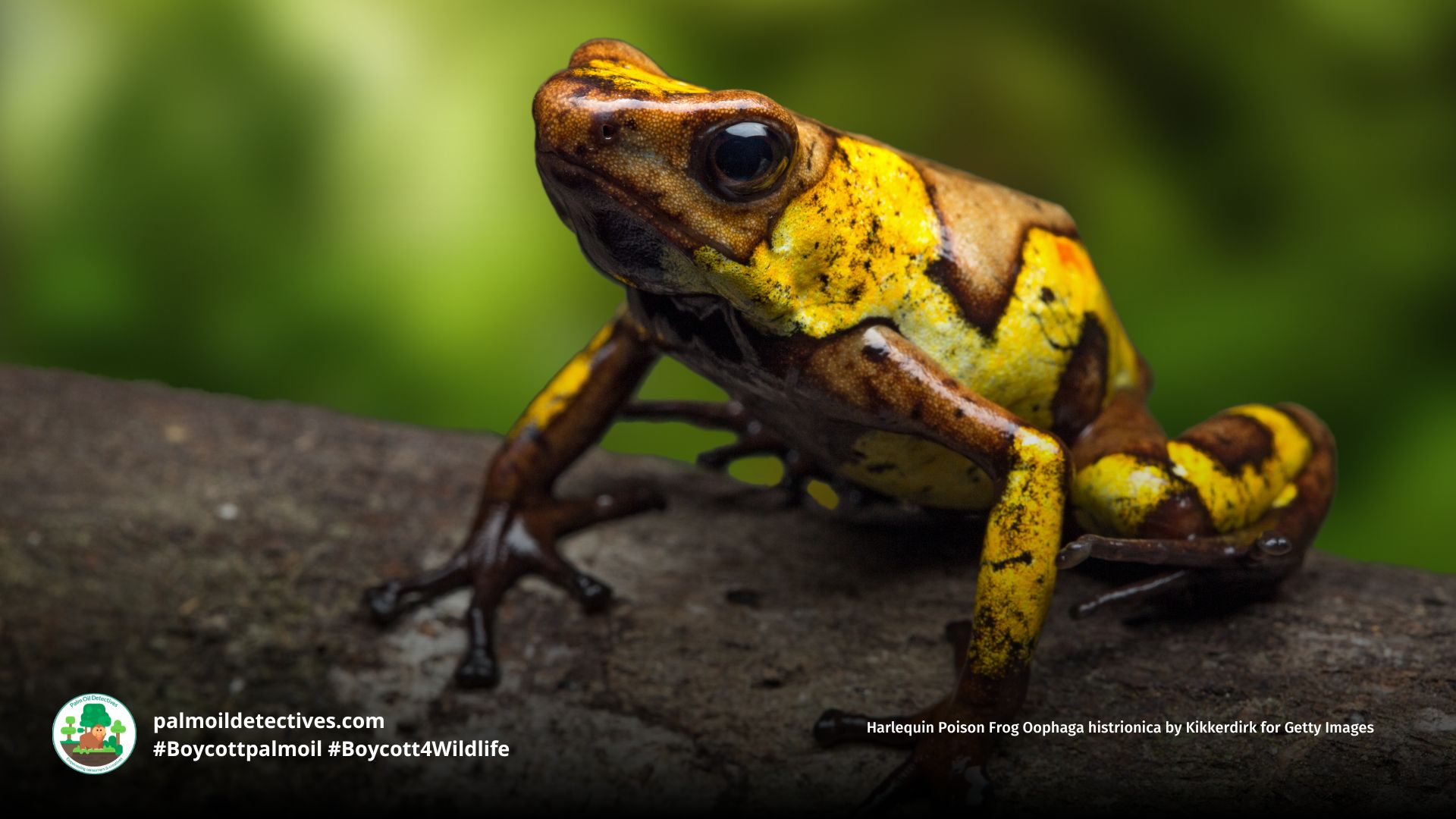
Few creatures rival the harlequin poison frog in sheer visual spectacle. No two individuals look alike—each frog sports a unique pattern of vivid colours, a living work of rainforest art. These colours serve as a bold warning to predators: “Eat me and regret it.” Unlike other frogs that rely on camouflage, this species flaunts their toxicity in the open.
Growing to just 32.9 mm in length, these frogs are tiny but fiercely territorial. Males perch on fallen logs or leaves, calling loudly to attract mates and defend their domain. Their vocalisations shift depending on their surroundings—frogs near noisy streams produce higher-pitched calls to cut through the background noise.
Unlike most #amphibians, they do not lay their eggs in water. Instead, the female carefully deposits them on the forest floor. Once the tadpoles hatch, she carries them one by one on her back, climbing high into the canopy to deposit them in the tiny water pools inside bromeliads. She returns regularly to feed them unfertilised eggs, ensuring they receive the nutrients needed to grow. Without this dedicated parental care, the tadpoles would not survive (Medina et al., 2013).
Geographic Range
The harlequin poison frog is found only in the Chocó region of western Colombia, a biodiversity hotspot teeming with rare and endemic species. But its habitat is shrinking fast. Once covering vast swathes of rainforest, this species is now confined to small, isolated patches between 300 and 730 metres above sea level. This extreme habitat fragmentation is pushing the species closer to extinction (IUCN SSC Amphibian Specialist Group, 2019).
Diet
Harlequin poison frogs are insectivores, feasting primarily on ants, mites, and termites. Their diet is directly linked to their toxicity—these frogs do not produce their own poison but instead absorb toxic alkaloids from the insects they consume. In captivity, where their diet is different, they lose their toxicity entirely, proving just how essential their rainforest ecosystem is to their survival.
Reproduction and Mating
This species’ reproductive strategy is one of the most fascinating in the animal kingdom. Unlike most frogs that lay hundreds of eggs in water, the harlequin poison frog invests heavily in just a few offspring. The Harlequin Poison Frog demonstrates remarkable parental care.
Males attract females through distinct vocal calls, often influenced by environmental factors such as stream noise. After the female lays her eggs on the forest floor, the male guards them until they hatch. Then, the mother carries each tadpole on her back, one at a time, up into the trees. She carefully places them in separate bromeliads—tiny pools of water trapped in the plant’s leaves. To ensure their survival, she periodically returns to each tadpole and lays unfertilised eggs for them to eat. Without this specialised care, they would not survive (Medina et al., 2013).
This highly specialised reproductive strategy ensures tadpole survival in an ecosystem with limited standing water.
Threats
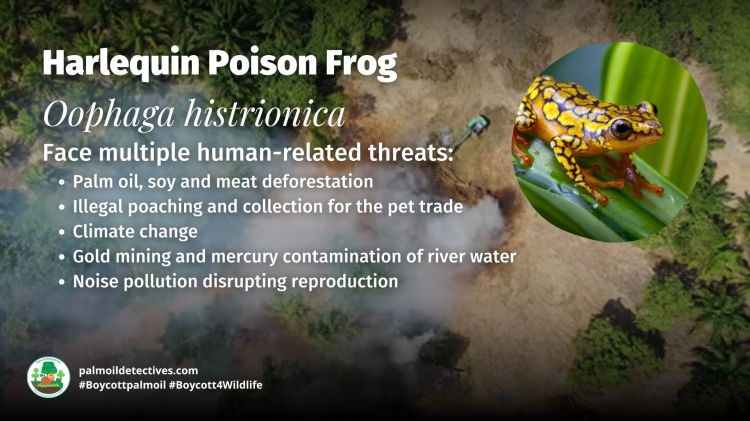
The major threats to the Harlequin Poison Frog are deforestation caused by small-scale agriculture, including livestock, mining activities, and logging, resulting in degraded and fragmented forest at the only known locality (M. Pareja pers. comm. February 2019). However, some patches are still in good condition (M. Pareja pers. comm. February 2019). Pollution associated with mining also represents a threat to the species.
IUCN RED LIST
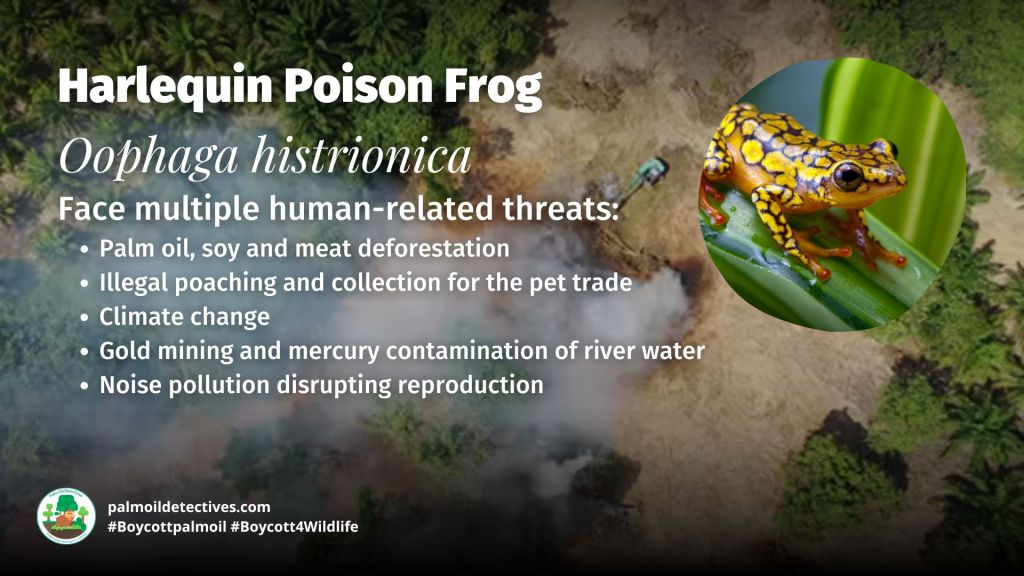
The harlequin poison frog is critically endangered due to a perfect storm of human-driven threats:
Illegal pet trade
These frogs are highly sought after in the exotic pet trade, with many dying in transit or being removed from wild populations at unsustainable rates.
Noise pollution
Increased human activity and deforestation near water sources are affecting their ability to communicate and reproduce.
Deforestation and Palm Oil Expansion
• Colombia’s rainforests are being rapidly cleared for palm oil plantations and cattle ranching. Illegal logging and land conversion have fragmented the frog’s habitat, leaving it nowhere to go.
Illegal Wildlife Trade
This species is highly sought after by collectors in the exotic pet trade. Despite international protections, poachers continue to smuggle these frogs out of Colombia.
Gold Mining and Mercury Contamination
Illegal gold mining pollutes water sources with mercury, poisoning amphibians at all life stages. Deforestation caused by mining activities is wiping out breeding and foraging habitats.
Climate Change
Rising temperatures and shifting rainfall patterns threaten the species’ delicate reproductive cycle. Extreme weather events may impact the availability of bromeliads for tadpole development.
Take Action!


The harlequin poison frog is on the edge of extinction, but there’s still time to help:
- Boycott palm oil. The destruction of rainforests for palm oil plantations is wiping out amphibian habitats. Choose products that are 100% palm oil-free.
- Reject the illegal pet trade. Never buy wild-caught poison frogs. Support only reputable captive breeding programs.
- Support rainforest conservation. Donate to organisations protecting Colombia’s rainforests and wildlife.
- Demand stronger protections. Contact policymakers to advocate for stricter enforcement against wildlife trafficking and habitat destruction.
Every action counts. Resist and fight back before it’s too late. #BoycottPalmOil #Boycott4Wildlife
FAQs
How toxic is the harlequin poison frog?
The harlequin poison frog produces powerful alkaloid toxins known as histrionicotoxins, which block neural receptors and can cause paralysis or death in predators. The toxins are acquired from their diet—frogs raised in captivity without their natural diet are completely non-toxic (Medina et al., 2013).
What makes Harlequin Poison Frogs toxic?
Their toxicity comes from consuming alkaloid-rich ants and mites. When deprived of this diet, such as in captivity, they lose their poison.
Why do Harlequin Poison Frogs have different calls?
Research by Vargas-Salinas and Amézquita (2013) found that their calls adapt to environmental noise levels. Frogs living near noisy streams produce higher-frequency calls to ensure their signals are heard, while those in quieter areas use lower-frequency calls. This shows how environmental conditions shape evolution in real time.
Why is the harlequin poison frog critically endangered?
Deforestation for palm oil, soy and meat, illegal wildlife trade, gold mining, and habitat fragmentation have driven this species to the brink. With an extremely limited range, any further habitat loss could mean extinction (IUCN SSC Amphibian Specialist Group, 2019).
What is unique about the harlequin poison frog’s reproduction?
This species exhibits exceptional parental care. Unlike most frogs, they do not lay eggs in water. Instead, females transport newly hatched tadpoles on their backs to water-filled bromeliads, where they are fed unfertilised eggs until they mature (Medina et al., 2013).
Do harlequin poison frogs make good pets?
No. While some poison dart frogs are legally bred in captivity, wild-caught harlequin poison frogs are often smuggled illegally, contributing to population decline. Captive frogs also lose their toxicity, making them less vibrant and potentially unhealthy (Zamora et al., 1999).
How many Harlequin Poison Frogs are left in the wild?
Exact numbers remain unknown, but population declines due to habitat loss and illegal trade are well-documented. Their Endangered status indicates a high risk of extinction if conservation efforts are not strengthened.
How long do Harlequin Poison Frogs live?
They typically live 5–8 years in the wild.
Are Harlequin Poison Frogs good pets?
No. Keeping these frogs as pets is a selfish act that contributes to their extinction. Many individuals in the pet trade are illegally captured, harming wild populations and destroying delicate ecosystems. If you care about these animals, advocate for their conservation instead of supporting the illegal pet trade.
How can I help protect Harlequin Poison Frogs?
Avoid and boycott palm oil, support conservation efforts, and speak out against the illegal pet trade. Protecting their rainforest home is the key to their survival.
Support the conservation of this species
Manchester Museum captive breeding programme
Further Information
IUCN SSC Amphibian Specialist Group. 2019. Oophaga histrionica. The IUCN Red List of Threatened Species 2019: e.T144231367A144443857. https://dx.doi.org/10.2305/IUCN.UK.2019-2.RLTS.T144231367A144443857.en. Downloaded on 16 February 2021.
Vargas-Salinas, F., & Amézquita, A. (2013). Stream noise, hybridization, and uncoupled evolution of call traits in two lineages of poison frogs: Oophaga histrionica and Oophaga lehmanni. PLoS ONE, 8(10), e77545. https://doi.org/10.1371/journal.pone.0077545
Wikipedia contributors. (n.d). Harlequin poison frog. Wikipedia, The Free Encyclopedia. https://en.wikipedia.org/wiki/Harlequin_poison_frog

How can I help the #Boycott4Wildlife?
Take Action in Five Ways
1. Join the #Boycott4Wildlife on social media and subscribe to stay in the loop: Share posts from this website to your own network on Twitter, Mastadon, Instagram, Facebook and Youtube using the hashtags #Boycottpalmoil #Boycott4Wildlife.
2. Contribute stories: Academics, conservationists, scientists, indigenous rights advocates and animal rights advocates working to expose the corruption of the palm oil industry or to save animals can contribute stories to the website.






3. Supermarket sleuthing: Next time you’re in the supermarket, take photos of products containing palm oil. Share these to social media along with the hashtags to call out the greenwashing and ecocide of the brands who use palm oil. You can also take photos of palm oil free products and congratulate brands when they go palm oil free.
4. Take to the streets: Get in touch with Palm Oil Detectives to find out more.
5. Donate: Make a one-off or monthly donation to Palm Oil Detectives as a way of saying thank you and to help pay for ongoing running costs of the website and social media campaigns. Donate here
Discover more from Palm Oil Detectives
Subscribe to get the latest posts sent to your email.
 Palm Oil Detectives