
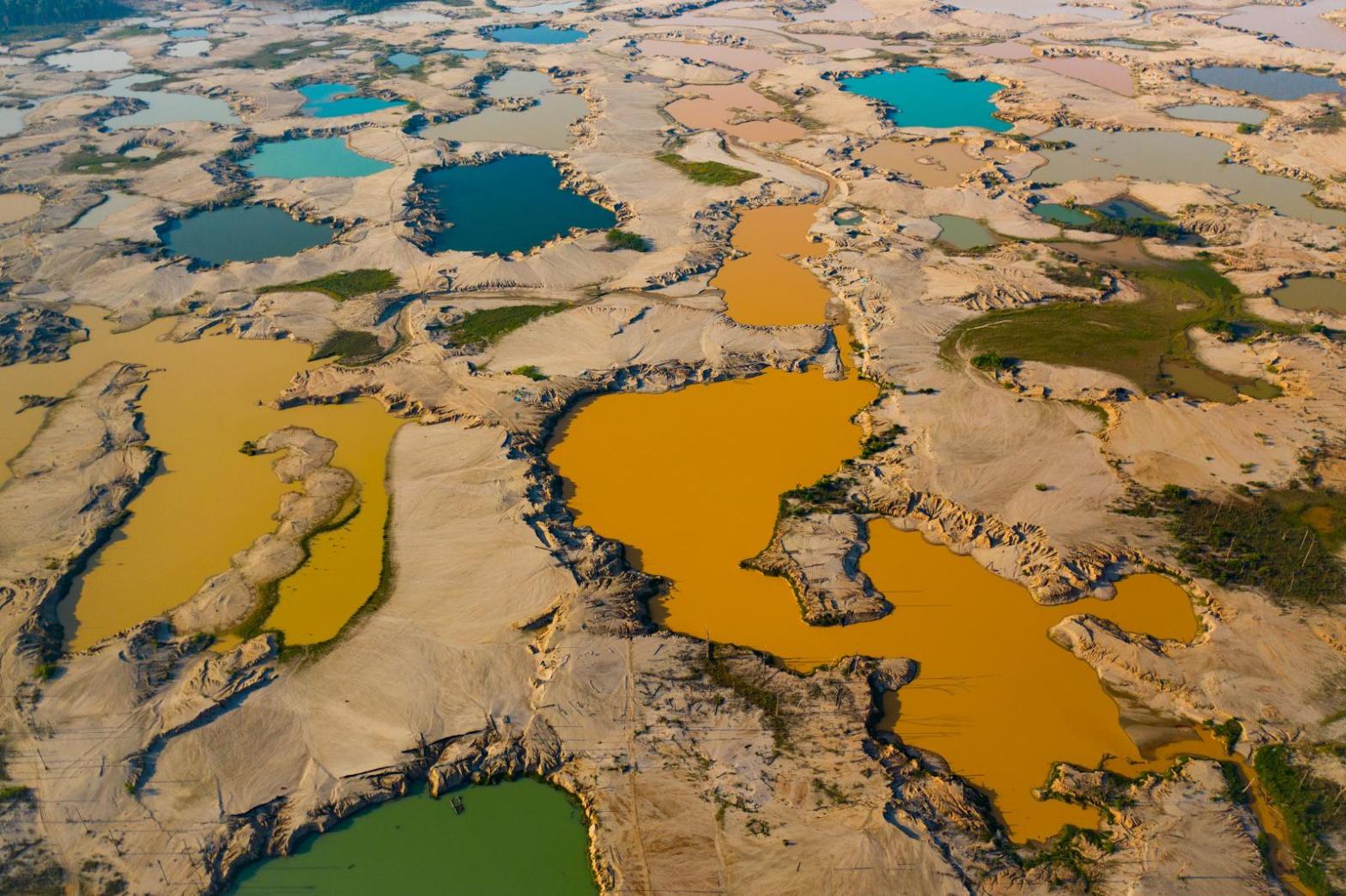
What would happen if we cut down the entire Amazon rainforest? Could it be replaced by an equal amount of reforestation elsewhere? Removing the entire Amazon rainforest would have myriad consequences, with the most obvious ones possibly not the worst. Most people will first think of the carbon currently stored in the Amazon, the world’s largest rainforest. But the consequences would be far-reaching for the climate as well as biodiversity and ecosystems — and, ultimately, people. Fight for animals, indigenous peoples and the planet itself #BoycottPalmOil #BoycottGold and #Boycott4Wildlife
What happens if we cut down the whole #Amazon rainforest? Mass death for #climate #animals #plants and people. Doing so is akin to severing our own arteries. Take action! Go #vegan 🥦🥕 and #BoycottPalmOil 🌴🚫 #BoycottGold 🥇🚫#Boycott4Wildlife https://palmoildetectives.com/2021/06/23/climate-explained-what-would-happen-if-we-cut-down-the-amazon-rainforest/
Storing carbon, distributing water
The Amazon rainforest is estimated to harbour about 76 billion tonnes of carbon. If all trees were cut down and burned, the forest’s carbon storage capacity would be lost to the atmosphere.
Some of this carbon would be taken up by the oceans, and some by other ecosystems (such as temperate or arctic forests), but no doubt this would exacerbate climate warming. For comparison, humans emit about 10 billion tonnes of carbon every year through the burning of fossil fuels.
But the Amazon forest does more than store carbon. It is also responsible for the circulation of huge quantities of water.
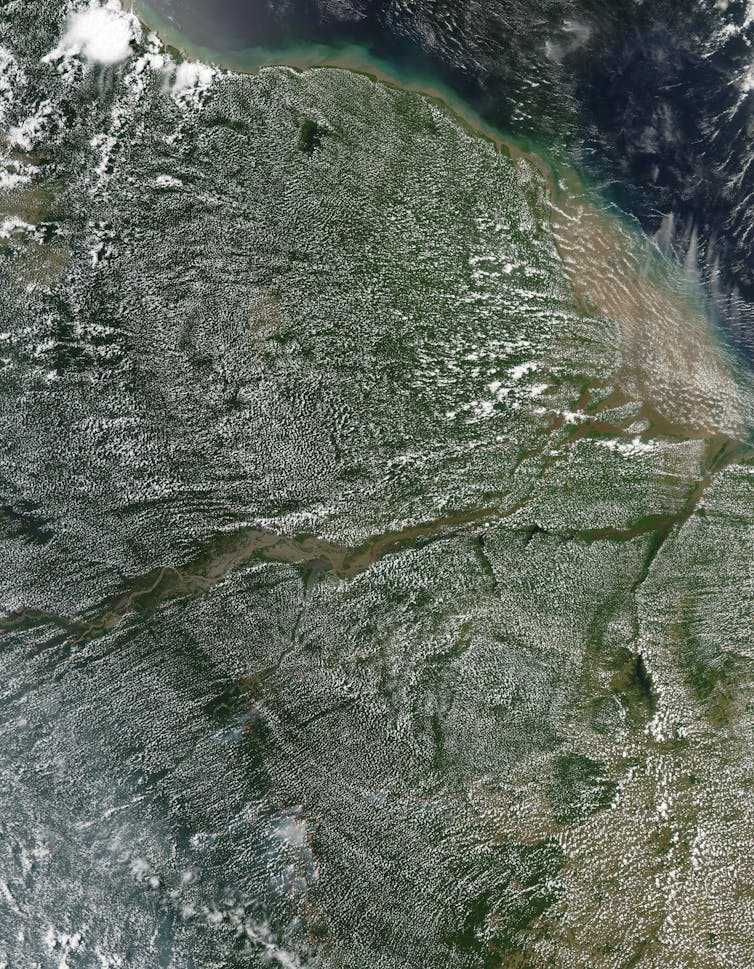
This image, captured by NASA’s Aqua satellite in 2009, shows how the forest and the atmosphere interact to create a uniform layer of “popcorn” clouds during the dry season. It is during this period, the time without rain, that the forest grows the most.
If the Amazon’s cloud systems and its capacity to recycle water were to be disrupted, the ecosystem would tip over and irreversibly turn into dry savannah very quickly. Estimates of where this tipping point could lie range from 40% deforestation to just 20% loss of forest cover from the Amazon.
Reforestation elsewhere to achieve the same amount of carbon storage is technically possible, but we have neither the time (several hundred years would be needed) nor the land (at least an equivalent surface area would be required).
Another reason why reforestation is not a remedy is that the water the rainforest circulates — and with it the availability of nutrients — would disappear.
Once you cut the circulation of water through (partial) deforestation, there is a point of no return. The water doesn’t disappear from the planet, but certainly from the forest ecosystems, with immediate and powerful consequences for the world’s climate.
Loss of life
Perhaps the most drastic, and least reversible, impact would be the loss of wildlife diversity.
The Amazon hosts an estimated 50,000 plant species — although more recent estimates cite a slightly lower number.
The number of animal species found in the Amazon is even higher, with the largest part made up by insects, representing around 10% of the known insect fauna, as well as a large but unknown number of fungi and microbes.
Once species are lost, they are lost forever, and this would ultimately be the most harmful consequence of cutting down the Amazon. It would possibly be worse than the loss of its role as a massive redistributor and storage of water and carbon.
Last but certainly not least, there are about 30 million people living in and near the Amazon rainforest.
The consequences of losing the forest as a provider of the ecosystem services mentioned above and as a source of food and habitat are unfathomable. The repercussions would reach far into global politics, the global economy, and societal issues.
Sebastian Leuzinger, Professor, Auckland University of Technology
This article is republished from The Conversation under a Creative Commons license. Read the original article.
Take Action in Five Ways
1. Join the #Boycott4Wildlife on social media and subscribe to stay in the loop: Share posts from this website to your own network on Twitter, Mastadon, Instagram, Facebook and Youtube using the hashtags #Boycottpalmoil #Boycott4Wildlife.
2. Contribute stories: Academics, conservationists, scientists, indigenous rights advocates and animal rights advocates working to expose the corruption of the palm oil industry or to save animals can contribute stories to the website.


3. Supermarket sleuthing: Next time you’re in the supermarket, take photos of products containing palm oil. Share these to social media along with the hashtags to call out the greenwashing and ecocide of the brands who use palm oil. You can also take photos of palm oil free products and congratulate brands when they go palm oil free.
4. Take to the streets: Get in touch with Palm Oil Detectives to find out more.
5. Donate: Make a one-off or monthly donation to Palm Oil Detectives as a way of saying thank you and to help pay for ongoing running costs of the website and social media campaigns. Donate here
Discover more from Palm Oil Detectives
Subscribe to get the latest posts sent to your email.
 Palm Oil Detectives
why Can’t they stop Deforestation in the Areas affected by this drought before it’s too late? We are destroying our planet 1 tree at a time for greed
LikeLiked by 1 person