
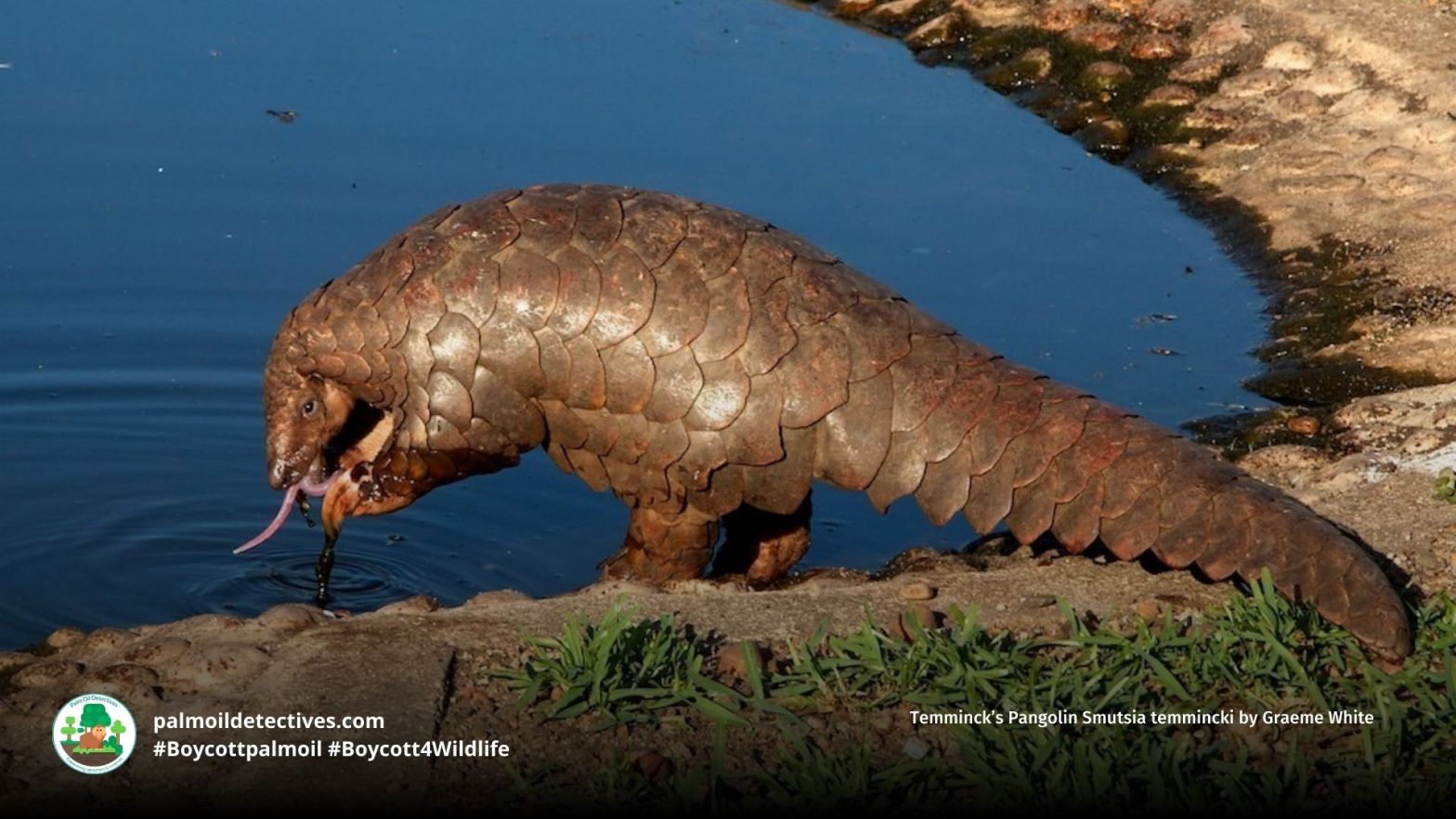
Temminck’s Pangolin Smutsia temminckii
Vulnerable
Extant (resident): Angola; Botswana; Burundi; Central African Republic; Chad; Ethiopia; Kenya; Malawi; Mozambique; Namibia; Rwanda; South Africa; South Sudan; Sudan; Tanzania, United Republic of; Uganda; Zambia; Zimbabwe
Possibly Extant (resident): Congo
Possibly Extinct: Eswatini
The Temminck’s pangolin Smutsia temminckii is remarkable mammal. They are the second largest of the pangolin species and are reported to weigh between 12.5kg and 21 kilograms. They’re famous for their armour-like keratinous scales and their unique ability to curl into a protective ball when threatened. These elusive creatures are found in the savannahs and woodlands of sub-Saharan Africa and are essential to their ecosystem, controlling insect populations. The word pangolin comes from the Malay word “pengguling” meaning something that rolls up. Owing to their secretive nature and low densities, little is known about the pangolin. The species is killed primarily for Chinese medicine, even though their keratin scales have no medicinal value. All pangolins face a grave threat from trafficking for their meat and scales. Tragically, they are one of the most illegally traded mammals in the world.
Despite their ecological and cultural importance, Temminck’s pangolins are increasingly threatened by habitat destruction and illegal wildlife trade. Habitat loss from palm oil, cocoa and coffee agricultural expansion and mining further compounds their decline. Protect these unique creatures by boycotting palm oil and supporting strong anti-trafficking initiatives. #BoycottPalmOil #Boycott4Wildlife
The Temminck’s #pangolin is #vulnerable in Tanzania 🇹🇿 #Congo 🇨🇩 #Uganda 🇺🇬 from #poaching for their scales and meat along with #palmoil 🌴🤮 #tobacco 🚬🚭#deforestation. Help them survive when you #BoycottPalmOil 🌴🔥⛔️#Boycott4Wildlife @palmoildetect https://palmoildetectives.com/2021/08/21/temmincks-pangolin-smutsia-temminckii/
Remarkable, secretive and gentle Temminck #Pangolins are living Poké Balls, who curl into a ball when threatened. They’re #vulnerable from the illegal #wildlife trade #palmoil and more. Help them #BoycottPalmOil 🌴🙊🔥☠️⛔️ #Boycott4Wildlife @palmoildetect https://palmoildetectives.com/2021/08/21/temmincks-pangolin-smutsia-temminckii/
Species of pangolin are the most trafficked species in the world. Although deforestation is another major threat. The range of the Temminck’s Pangolins are increasingly threatened by shifting agriculture, small-holder farming and agro-industry farming. These farming practices are directly impacting pangolins through habitat loss and alteration, while the increased human presence in these previously undisturbed areas is resulting in increased levels of poaching.
IUCN Red List
Appearance and Behaviour
Temminck’s pangolins are medium-sized mammals with an average weight of 7–12 kg and a total length of approximately 90 cm, including their tail. Their overlapping, golden-brown scales, made of keratin (the same material as human fingernails), are a defining feature. These scales provide formidable protection against predators, allowing pangolins to roll into an impenetrable ball when threatened.


They are primarily nocturnal, foraging at night for ants and termites using their acute sense of smell. Their long, sticky tongues can extend deep into termite mounds, while their sharp claws are used to tear open nests. They exhibit a distinctive bipedal gait, walking on their hind legs while keeping their forelimbs off the ground.
A 2014 study revealed that Temminck’s pangolins exhibit home ranges that vary significantly based on habitat type, with individuals travelling several kilometres in search of food. This makes habitat loss and fragmentation particularly detrimental to their survival.
Threats
IUCN Status: Vulnerable

Illegal Wildlife Trade:
Temminck’s pangolins are heavily trafficked for their scales and meat, particularly for use in traditional Chinese medicine. Research indicates that their scales are wrongly believed to have healing properties, fuelling a devastating global black market.
Palm oil, tobacco and mining deforestation:
Agricultural expansion for palm oil, meat, tobacco and other commodities as well as mining destroys the habitats pangolins rely on. The savannahs and woodlands they inhabit are increasingly converted for human use.
Bycatch and Accidental Capture:
The 2014 study on anthropogenic threats found that Temminck’s pangolins are frequently killed accidentally in snares set for other wildlife. This unintended bycatch adds to their declining populations.
Climate Change:
Altered rainfall patterns and rising temperatures due to climate change, disrupt termite and ant populations, leading to reduced food availability for pangolins.
Low Reproductive Rates:
With only one offspring per year, Temminck’s pangolins are particularly vulnerable to population declines, as they cannot replenish their population quickly.
Geographic Range
Temminck’s pangolins inhabit sub-Saharan Africa, with populations found in South Africa, Namibia, Angola, Botswana, Zimbabwe, Mozambique, and Zambia. They thrive in savannahs and woodlands, favouring areas with abundant ant and termite populations.
Studies indicate their preference for regions with sandy soils, which make burrowing easier, and their dependence on undisturbed habitats highlights the critical need for protected areas. However, human activities increasingly encroach on these regions, limiting their available range.
Diet
Temminck’s pangolins are specialised insectivores, feeding almost exclusively on ants and termites. They consume millions of insects annually, making them essential for regulating insect populations and maintaining ecological balance.
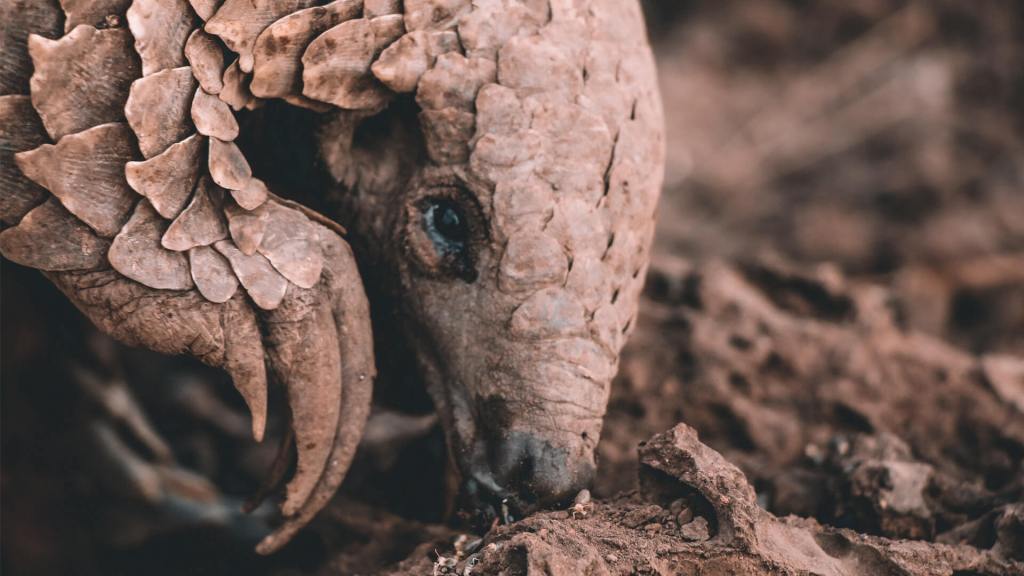


Their foraging behaviour is influenced by the availability of prey, with pangolins often targeting specific ant and termite species. The destruction of termite mounds through land clearing and agriculture severely impacts their food sources, leading to nutritional stress.
Reproduction and Mating
Reproductive rates in Temminck’s pangolins are low, with females typically giving birth to a single offspring per year. After a gestation period of approximately 140 days, mothers care for their young by carrying them on their tails or backs. They often use the burrows of other animals including aardvarks and aardwolves.
The young pangolins’ soft scales harden within a few days of birth, providing protection. Maternal care is critical during the early months, as juveniles depend on their mothers for food and safety. Males do not participate in rearing the young, and populations are highly sensitive to poaching due to their slow reproductive cycles.
Human Perceptions of Temminck’s Pangolins
Temminck’s pangolins hold mixed perceptions among humans. A 2014 review of anthropogenic threats highlighted cultural beliefs in southern Africa where pangolins are revered as symbols of luck and rain. In contrast, others view them as commodities, hunted for their scales and meat.
The study also revealed that many rural communities are unaware of pangolins’ ecological importance in controlling insect populations. Conservation efforts are increasingly focused on educating these communities about the role pangolins play in maintaining ecosystem balance, with the goal of fostering coexistence and reducing poaching and exploitation.
Take Action!
Help protect Temminck’s pangolins by supporting organisations working to combat illegal wildlife trade and habitat destruction. Boycott palm oil and raise awareness of their plight. Use your voice to fight for their survival and ensure future generations can marvel at these extraordinary creatures. #BoycottPalmOil #Boycott4Wildlife

Support this beautiful animal
Environmental Investigation Agency (EIA)
Further Information

Pangolin Specialist Group. (n.d.). Temminck’s Pangolin. IUCN Pangolin Specialist Group.
Pietersen, D., Jansen, R. & Connelly, E. 2019. Smutsia temminckii. The IUCN Red List of Threatened Species 2019: e.T12765A123585768. https://dx.doi.org/10.2305/IUCN.UK.2019-3.RLTS.T12765A123585768.en. Downloaded on 06 June 2021.
Pietersen, D., Jansen, R., Swart, J., Panaino, W., Kotze, A., Rankin, P., & Nebe, B. (2020). Temminck’s Pangolin (Smutsia temminckii). In Pangolins: Science, Society and Conservation. Biodiversity of the World: Conservation from Genes to Landscapes, 175–193.
Pietersen, D., McKechnie, A. E., & Jansen, R. (2014). A Review of the Anthropogenic Threats Faced by Temminck’s Ground Pangolin, Smutsia temminckii, in Southern Africa. South African Journal of Wildlife Research, 44(2), 167–178.
Sabashau, K., Utete, B., Madlamoto, D., Ngwenya, N., & Madamombe, H. (2024). Ecology, Status, and Distribution of Temminck’s Pangolin (Smutsia temminckii) in Hwange National Park. Wildlife Letters, 2(17–22).


How can I help the #Boycott4Wildlife?
Take Action in Five Ways
1. Join the #Boycott4Wildlife on social media and subscribe to stay in the loop: Share posts from this website to your own network on Twitter, Mastadon, Instagram, Facebook and Youtube using the hashtags #Boycottpalmoil #Boycott4Wildlife.
2. Contribute stories: Academics, conservationists, scientists, indigenous rights advocates and animal rights advocates working to expose the corruption of the palm oil industry or to save animals can contribute stories to the website.






3. Supermarket sleuthing: Next time you’re in the supermarket, take photos of products containing palm oil. Share these to social media along with the hashtags to call out the greenwashing and ecocide of the brands who use palm oil. You can also take photos of palm oil free products and congratulate brands when they go palm oil free.
4. Take to the streets: Get in touch with Palm Oil Detectives to find out more.
5. Donate: Make a one-off or monthly donation to Palm Oil Detectives as a way of saying thank you and to help pay for ongoing running costs of the website and social media campaigns. Donate here
Discover more from Palm Oil Detectives
Subscribe to get the latest posts sent to your email.
 Palm Oil Detectives