

Giant Anteater Myrmecophaga tridactyla
The Giant Anteater is classed as Vulnerable due to widespread deforestation and #palmoil, soy, meat, sugarcane and gold mining across their range. They are often victims to frequent deliberate and accidentally lit fires in the Amazon. These gentle creatures are becoming increasingly rare. But there’s a lot of actions you can take. Make sure you #Boycottpalmoil #BoycottGold #Boycottmeat and #Boycott4Wildlife to help them every time you shop.
DYK Giant Anteaters walk on their knuckles to preserve their razor-sharp digging claws for hunting ants? They’re #vulnerable in #Brazil 🇧🇷 due to #gold #soy #palmoil and #meat #deforestation. Help them when you #Boycottpalmoil #Boycott4Wildlife! 🌿💚 https://wp.me/pcFhgU-1Cd
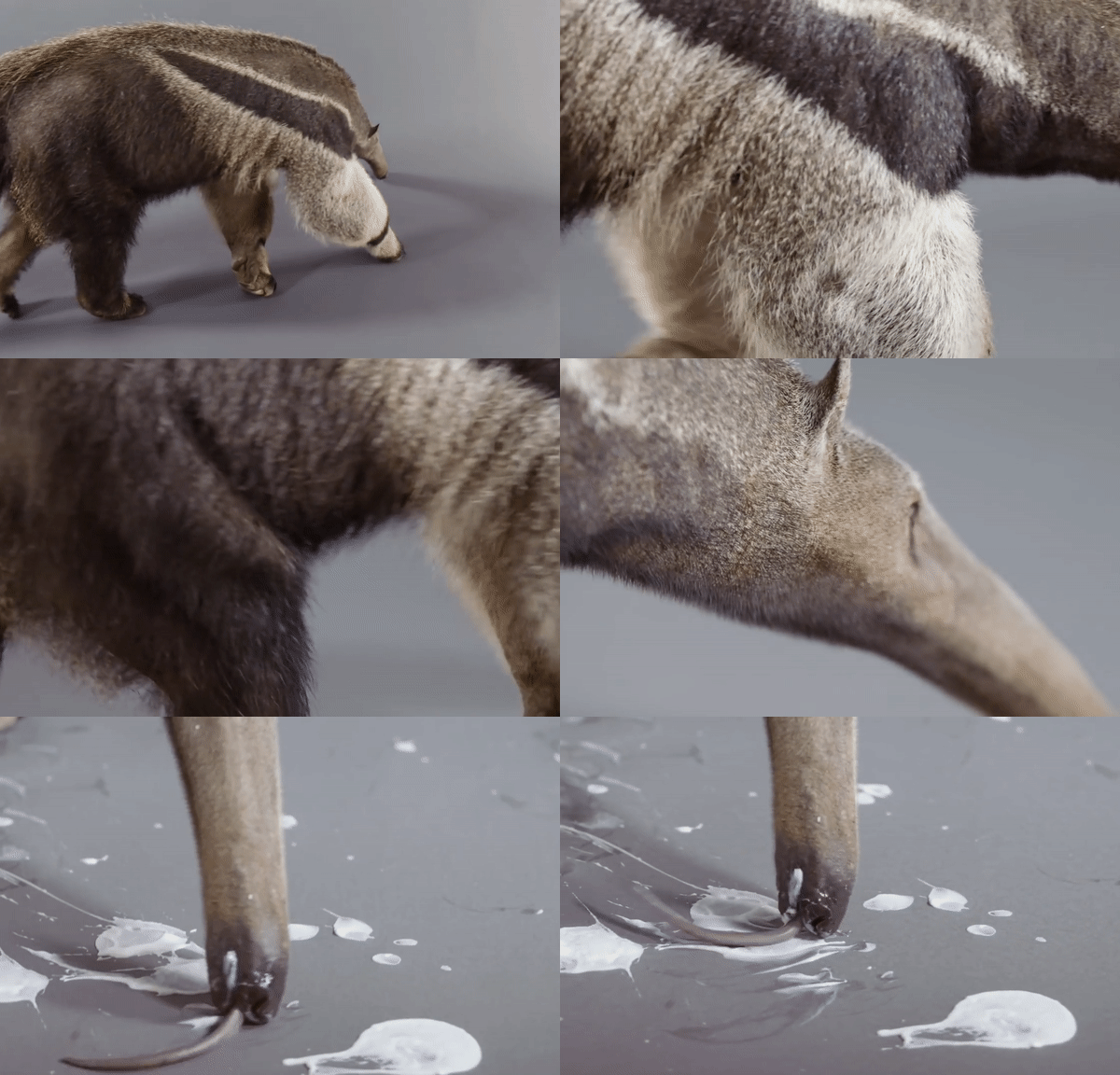
The Giant #Anteater looks like a Surrealist artist’s fever dream, but they are actually real and feature an ultra long tongue for suctioning #insects from #nests in #Brazil🇧🇷 Help them to survive when u #Boycottpalmoil #Boycott4Wildlife 😍 in supermarkets https://wp.me/pcFhgU-1Cd
Extant (resident): Argentina; Bolivia; Brazil; Colombia; Costa Rica; Ecuador; French Guiana; Guyana; Honduras; Nicaragua; Panama; Paraguay; Peru; Suriname; Venezuela
Possibly Extinct: Argentina; Belize; El Salvador; Guatemala; Uruguay
Vulnerable
Geographic Range
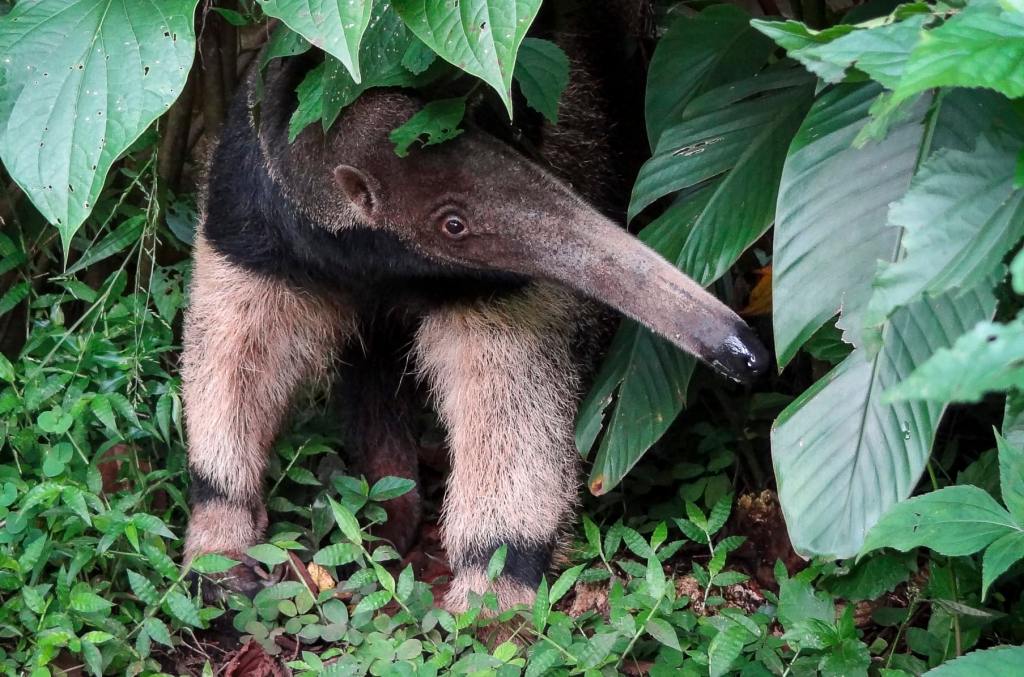
Giant Anteaters live in tropical moist forests, dry forests, savannas, and open grasslands. They’ve also been spotted in the Gran Chaco and timber plantations. Recent camera trap data suggest they might be more abundant in upland forests of the Brazilian Amazon than previously thought. These animals need large areas with forested patches to survive.
Appearance and unusual characteristics
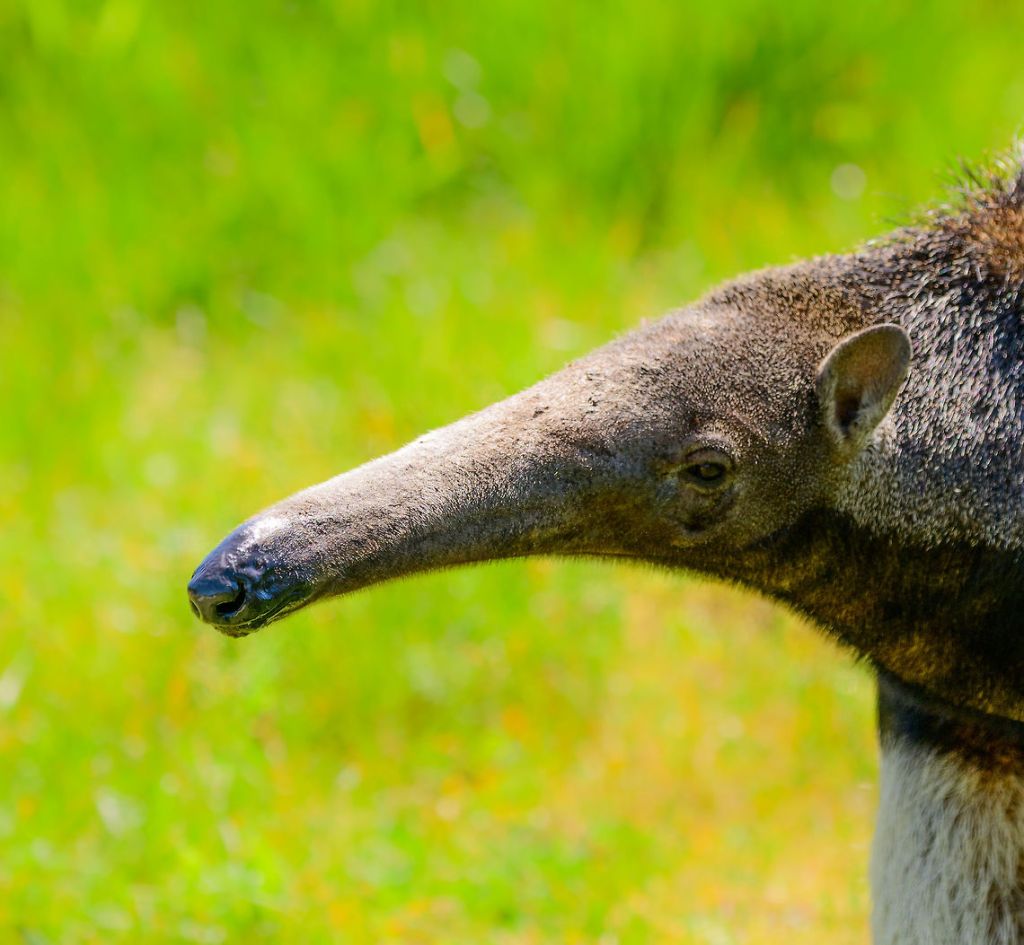
Giant Anteaters have a striking and unforgettable appearance. They are covered in wiry, grey and brown fur with a distinctive black and white stripe running along their bodies. Their elongated snouts and long, sticky tongues are perfectly adapted for feeding on ants and termites. With their bushy tails and long, curved claws, they are supremely strange looking creatures, making them captivating to behold.
- Sensitive Smell: Their sense of smell is about 40 times more sensitive than our own. This allows them to locate ants and termites, their primary food sources, which are often hidden underground or inside mounds. This also ensures that they can consume enough food to meet their dietary needs.
- Low Body Temperature: They have a lower body temperature (91°F/32°C) compared to most mammals. This is likely related to their low-calorie diet of insects, which provides less energy compared to other food sources. By maintaining a lower body temperature, this helps them to conserve energy.
- Walking on Knuckles: They walk on their knuckles in order to protect their large, sharp claws. These sharpened talons need to be kept razor sharp so that they can effectively break into ant and termite mounds.
- Sleeping Habits: They sleep in a ball and cover themselves with their tails for camouflage and cooling down on hot tropical nights.
Diet
Giant Anteaters primarily feed on ants and termites. They use their long, sticky tongues to extract insects from nests, consuming up to 30,000 insects in a single day. They can also enjoy tucking into super-ripe, soft fruit like mangos and avocados.
Mating and reproduction
Giant Anteaters have a polygynous mating system, where males may mate with multiple females. Breeding can occur throughout the year, but the exact timing may vary based on environmental conditions. Giant Anteaters are mostly solitary animals. Each year, females give birth to a single baby after a gestation period of 171-184 days. Mothers carry their babies on their backs for about six months. In captivity, females can start reproducing at 18-22 months, with the oldest known mothers being 20-24 years old. In the wild, females reach sexual maturity around 2 years old, but data on their longevity and survival rates are limited. The generation length in the wild is estimated to be around 7 years.
Threats
Giant Anteaters face a number of serious human-related threats to their existence including:
- Massive deforestation for palm oil, soy, gold mining and meat: The Giant Anteater is at risk from habitat loss in parts of their range, and this is a significant threat to Central American populations in particular.
- Fires across their range: Where this species inhabits grassland habitats, they are particularly susceptible to fires.
- Sugar plantations and wildfires: In Brazil, burning of sugar cane plantations prior to their harvest leads to the death of significant numbers of giant anteaters due to severe burn injuries (F. Miranda pers. comm. 2013).
- Road accidents and incidents with dogs: Animals are sometimes killed on roads or by dogs. Giant anteaters are hunted for food throughout their distribution
- Human persecution: They are seen as pests and are hunted.
- The illegal pet trade: Some are taken an exploited for the illegal pet trade in some parts of their range.
You can support this beautiful animal
There are no known conservation activities for this animal. Share out this post to social media and join the #BoycottPalmOil #Boycott4Wildlife on social media to raise awareness
Further Information

Miranda, F., Bertassoni, A. & Abba, A.M. 2014. Myrmecophaga tridactyla. The IUCN Red List of Threatened Species 2014: e.T14224A47441961. https://dx.doi.org/10.2305/IUCN.UK.2014-1.RLTS.T14224A47441961.en. Downloaded on 08 June 2021.

How can I help the #Boycott4Wildlife?
Take Action in Five Ways
1. Join the #Boycott4Wildlife on social media and subscribe to stay in the loop: Share posts from this website to your own network on Twitter, Mastadon, Instagram, Facebook and Youtube using the hashtags #Boycottpalmoil #Boycott4Wildlife.
2. Contribute stories: Academics, conservationists, scientists, indigenous rights advocates and animal rights advocates working to expose the corruption of the palm oil industry or to save animals can contribute stories to the website.



3. Supermarket sleuthing: Next time you’re in the supermarket, take photos of products containing palm oil. Share these to social media along with the hashtags to call out the greenwashing and ecocide of the brands who use palm oil. You can also take photos of palm oil free products and congratulate brands when they go palm oil free.
4. Take to the streets: Get in touch with Palm Oil Detectives to find out more.
5. Donate: Make a one-off or monthly donation to Palm Oil Detectives as a way of saying thank you and to help pay for ongoing running costs of the website and social media campaigns. Donate here
Discover more from Palm Oil Detectives
Subscribe to get the latest posts sent to your email.
 Palm Oil Detectives
One thought on “Giant Anteater Myrmecophaga tridactyla”