
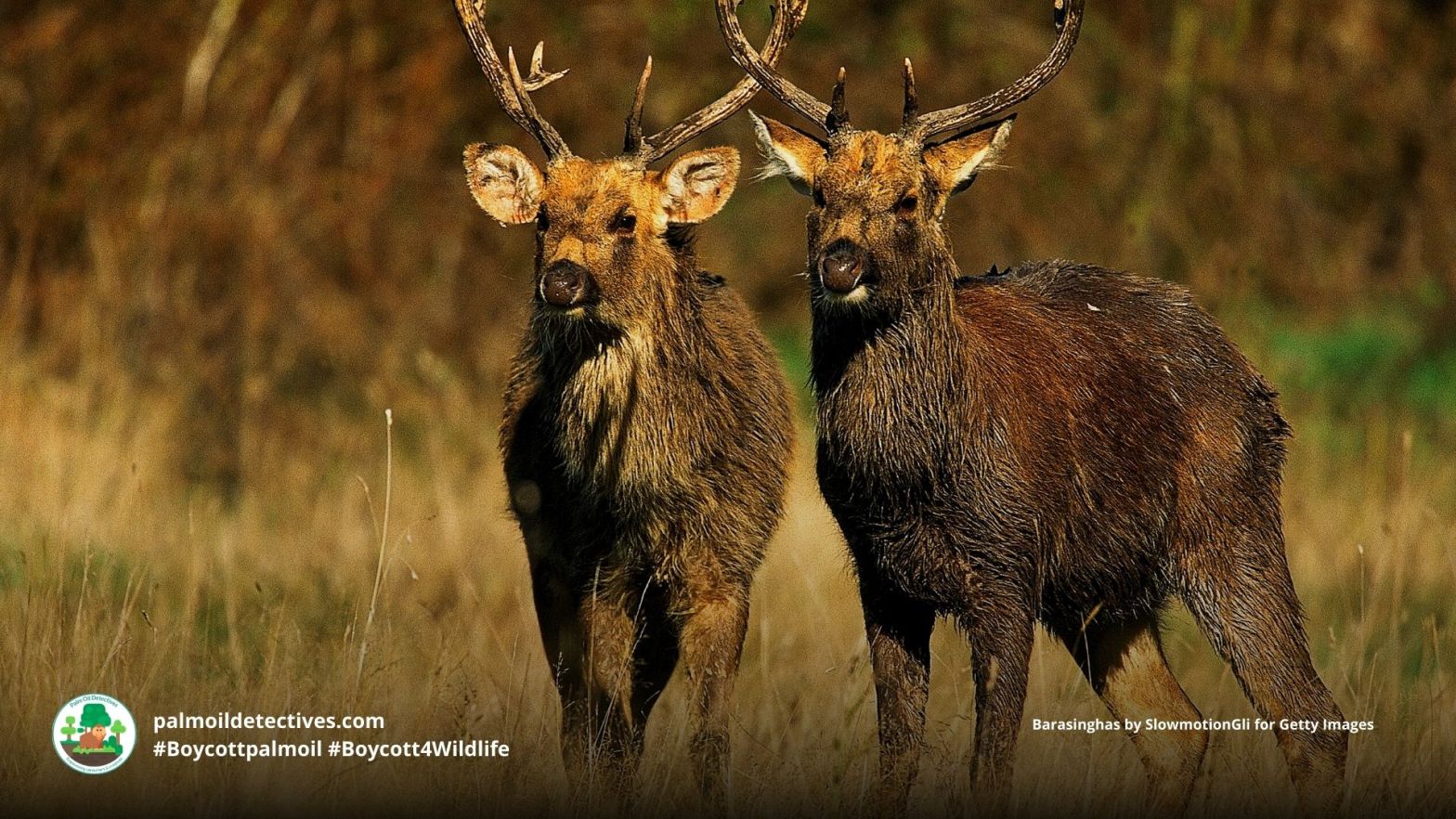
Barasingha (Swamp Deer) Cervus duvauceli
Red List Status: Vulnerable
Extant (resident): India; Nepal
Extinct: Bangladesh; Pakistan
Presence Uncertain: Bhutan
Barasinghas Cervus duvauceli also known as Swamp Deers, are instantly recognisable for their enormous handsome antlers. They can have as many as 12 antlers and their namesake Barasinghas means ’12 antlered deer’ in Hindi. They are now one of the most endangered deer species in the world due to habitat fragmentation for palm oil and beef, along with human persecution and hunting. The only remaining population live in protected sanctuaries in India and Nepal. The herd will be led by a single female and then followed by other females in a procession and then the males follow along at the rear of the group. Despite this, females are not dominant over the herd. These resilient, tough and majestic deer species are classified vulnerable on IUCN Red List. If you want to help them, adopt a #Vegan lifestyle and #BoycottPalmOil #Boycott4Wildlife in the supermarket!
Handsome #Barasinghas of #India 🇮🇳 #Nepal 🇳🇵 have huge antlers 🦌😻 They are one of the most endangered #deer species in the 🌎 due to #hunting and #palmoil #deforestation. Help save them! 🌴🪔🩸🚜🔥🧐🚫 #Boycottpalmoil #Boycott4Wildlife @palmoildetect https://palmoildetectives.com/2023/06/25/barasingha-cervus-duvauceli/
#Barasingha mean “12 Antlered #Deer” in #Hindi 🦌🤎 Major threats include #meat and #palmoil #ecocide in #India 🇮🇳 and #Nepal 🇳🇵 along with #poaching 🏹 Take action for them and be #vegan 🥦🍅 #Boycottpalmoil 🌴🩸🙊⛔️ #Boycott4Wildlife @palmoildetect https://palmoildetectives.com/2023/06/25/barasingha-cervus-duvauceli/
Appearance & Behaviour
Barasinghas are a highly social and strongly matriarchal deer species. They typically gather in herds of 10-2o individual deers.
Herds are mostly made up of deer of similar age. Although herds may sometimes be mixed in age and gender. The herd will be led by a single female and then followed by other females in a procession and then the males follow along at the rear of the group. Despite this, females are not dominant over other members of the herd. Males are known to move between herds, whereas females are more loyal to their own herd. Like many other deer species, males are generally referred to as ‘bucks’ and dominant males a ‘stags’.
They are naturally diurnal and active throughout the day. They will typically rest during the heat of midday and spend the dawn and dusk grazing.
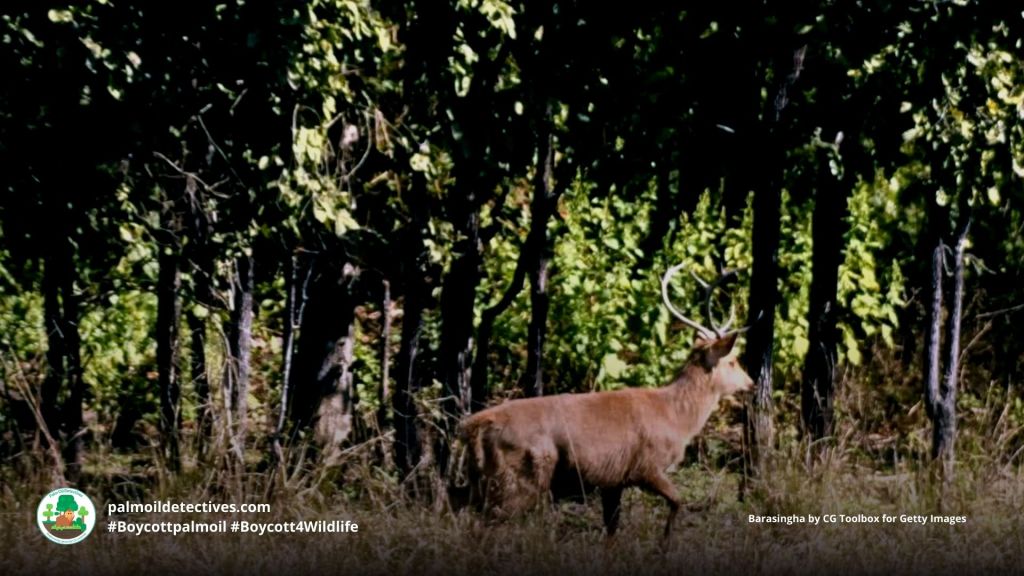
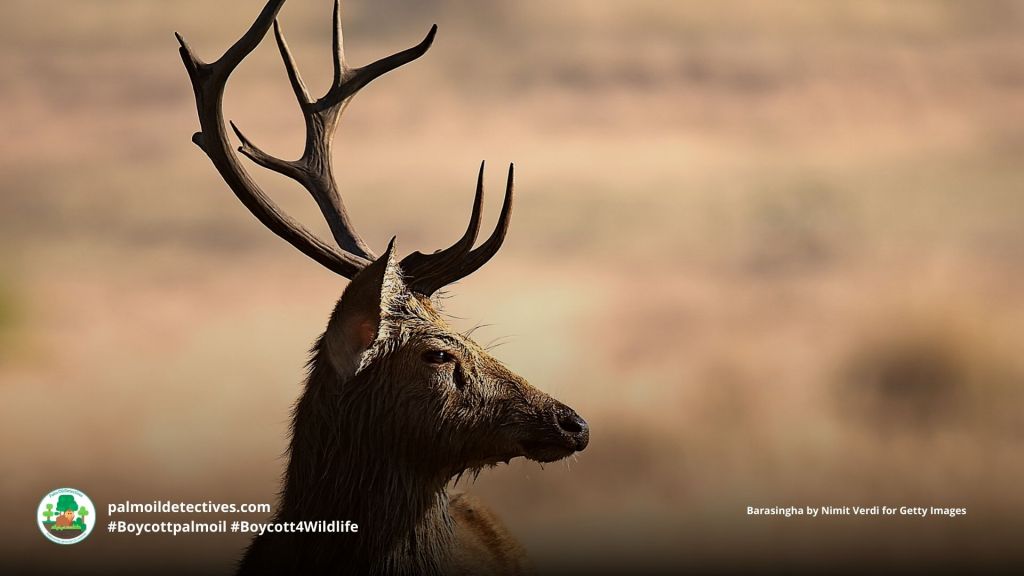
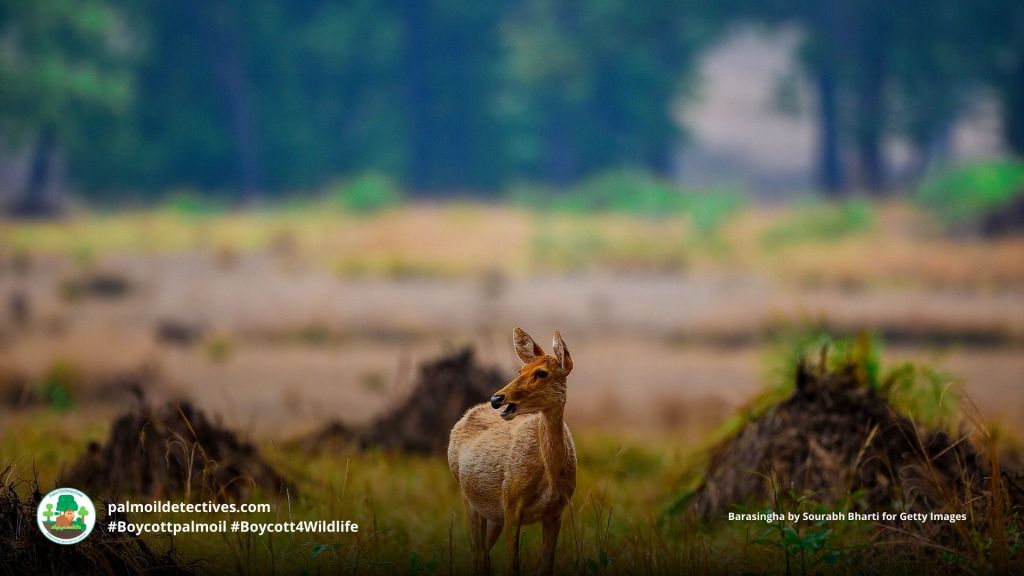
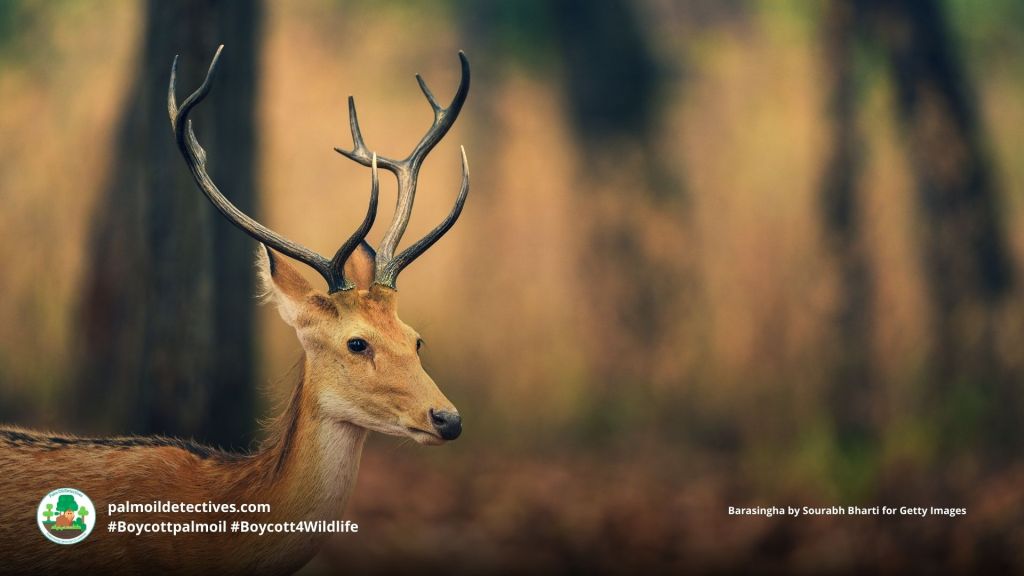
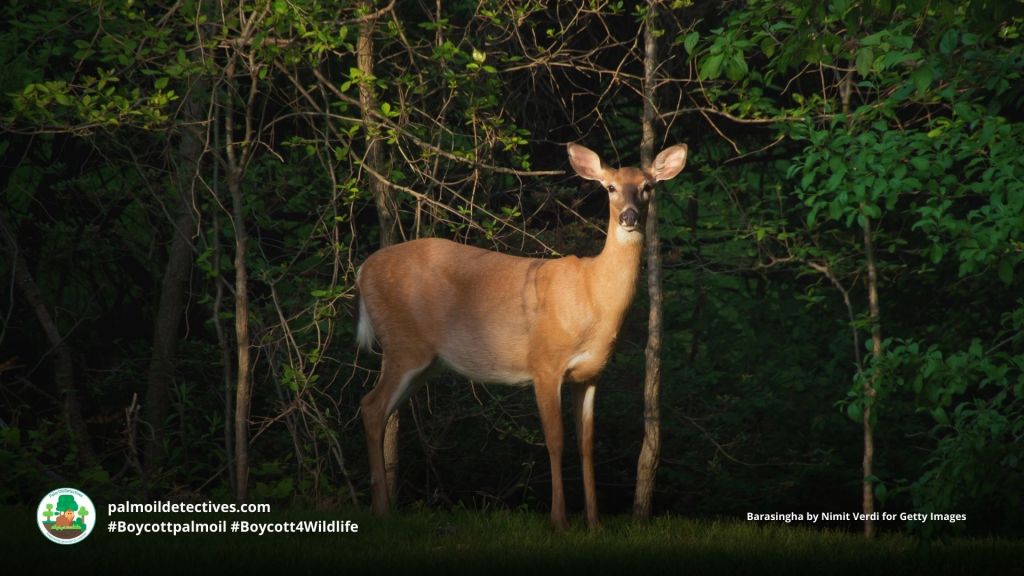
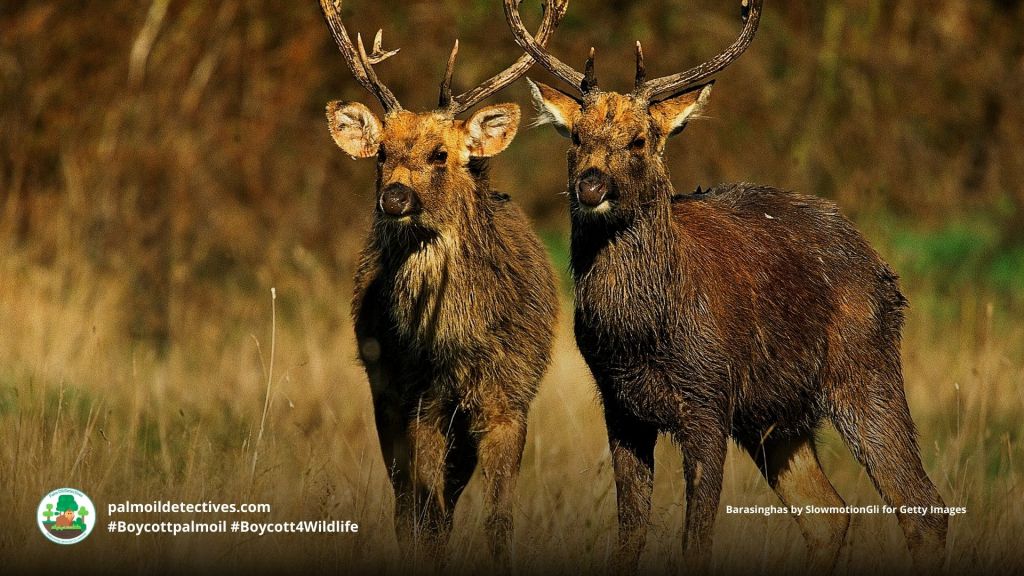
Juvenile males will sport smaller antlers that are an extension to their bones and have blood vessels inside of them. This coating of blood vessels or ‘felt’ is lost over time, as the young deers will rub the antlers against trees to toughen the antlers up.

Threats
There are three sub-species of Barasinghas and in total IUCN Red List estimates that there are only 3,500 to 5,100 left alive. They are classified as Vulnerable. Only a small number of Barasinghas live in protected zones, including:
- 350-500 animals in Kaziranga National Park
- 300-350 animals in Kanha National Park
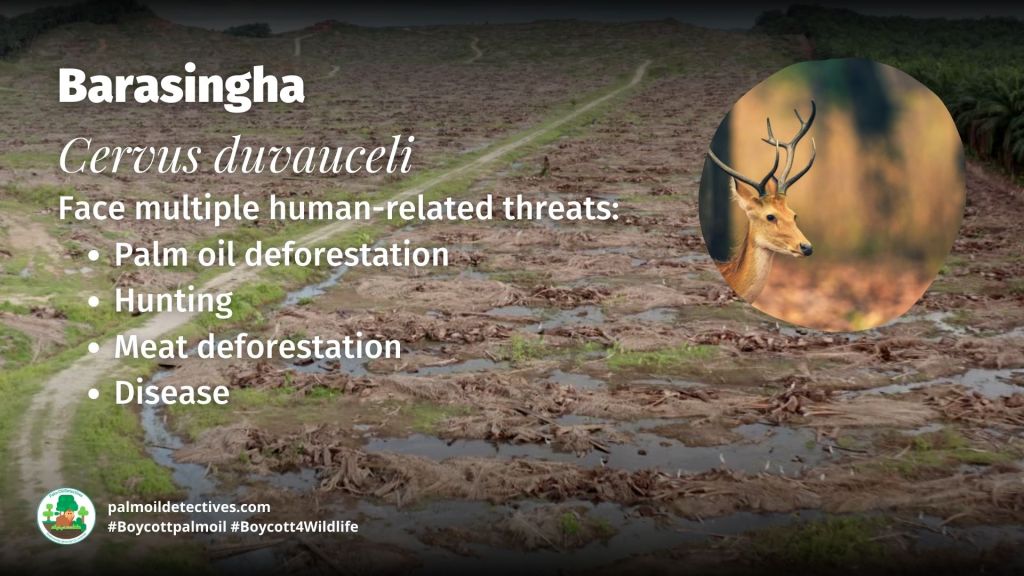
Barasinghas face multiple human-related threats:
- Palm oil deforestation: A significant part of their range is being destroyed for palm oil. They rely on mangroves and swamps and these are drained and destroyed to make way for palm oil.
- Hunting: Hunters often deliberately seek out these deer for their extraordinary antlers.
- Livestock deforestation: Livestock grazing and other agricultural expansion.
- Competition with other animals for food in a shrinking range.
- Diseases: passed on from domestic cattle to the deer.
Habitat
The Barasingha is faces multiple anthropogenic threats which has heavily fragmented their range in north and central India and south west Nepal. They prefer riparian and riverine habitats close to floodplains, wetlands, mangroves and swamps as well as riversides. They are also fund in woodlands and deciduous forests.
Diet
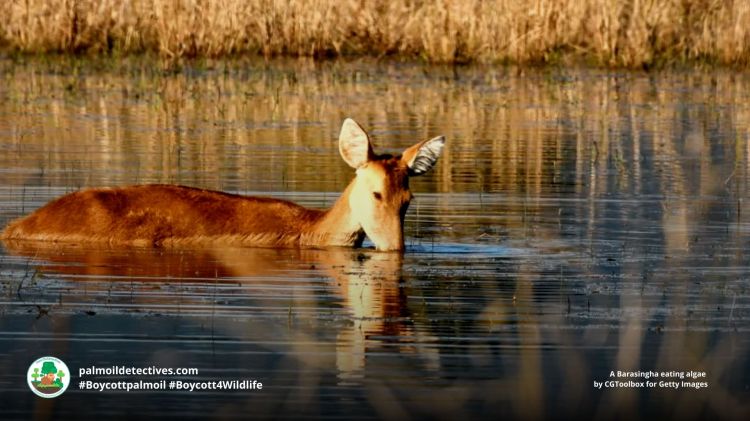
Barasinghas are herbivorous mammals and they provide a vital ecosystem service by ensuring that plants are kept under control with their grazing habits. They generally stick with a diet of foliage, leaves and grass. Some Barasinghas living in wetlands will supplement this diet with algae and aquatic vegetation.
Mating and breeding
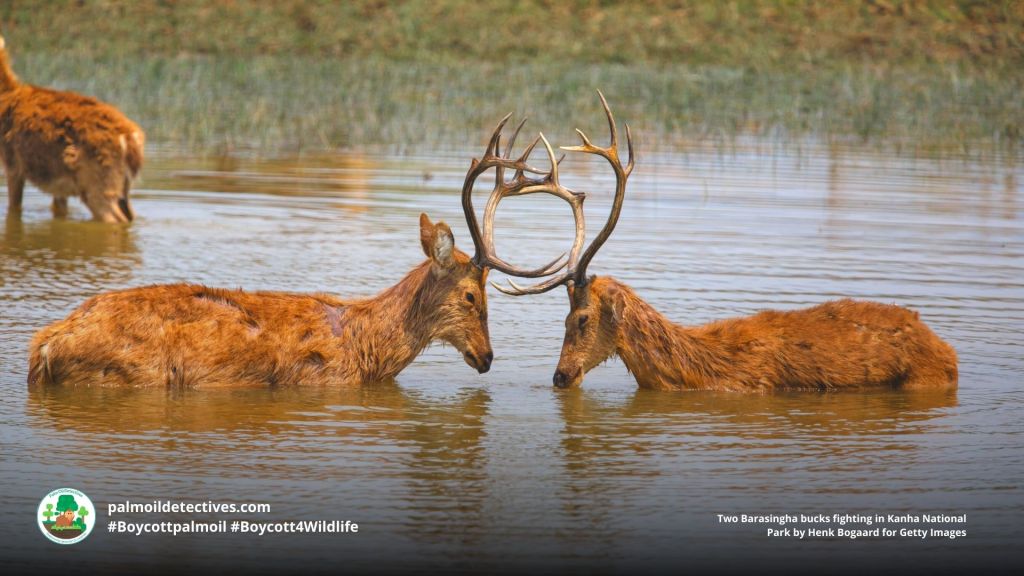
Dominant males in herds will mate with a group of females known as a harem. Males in herds will engage in bloody and violent conflicts with each other for mating rights during the rutting season. Male ‘bucks’ call for female ‘does’ using a series of bugling and barking sounds to indicate their readiness to mate. Mating season is between October and February.
Females give birth typically to only one fawn after around eight months of pregnancy. Occasionally twins occur. The fawn is weaned by six to eight months, and after two years, young females reach sexual maturity.
Support Barasinghas by going vegan and boycotting palm oil in the supermarket, it’s the #Boycott4Wildlife
Support the conservation of this species
This animal has no protections in place. Read about other forgotten species here. Create art to support this forgotten animal or raise awareness about them by sharing this post and using the #Boycottpalmoil #Boycott4Wildlife hashtags on social media. Also you can boycott palm oil in the supermarket.
Further Information
Duckworth, J.W., Kumar, N.S., Pokharel, C.P., Sagar Baral, H. & Timmins, R. 2015. Rucervus duvaucelii. The IUCN Red List of Threatened Species 2015: e.T4257A22167675. https://dx.doi.org/10.2305/IUCN.UK.2015-4.RLTS.T4257A22167675.en. Accessed on 12 November 2022.
Barasingha Cervus duvauceli on Wikipedia

How can I help the #Boycott4Wildlife?
Take Action in Five Ways
1. Join the #Boycott4Wildlife on social media and subscribe to stay in the loop: Share posts from this website to your own network on Twitter, Mastadon, Instagram, Facebook and Youtube using the hashtags #Boycottpalmoil #Boycott4Wildlife.
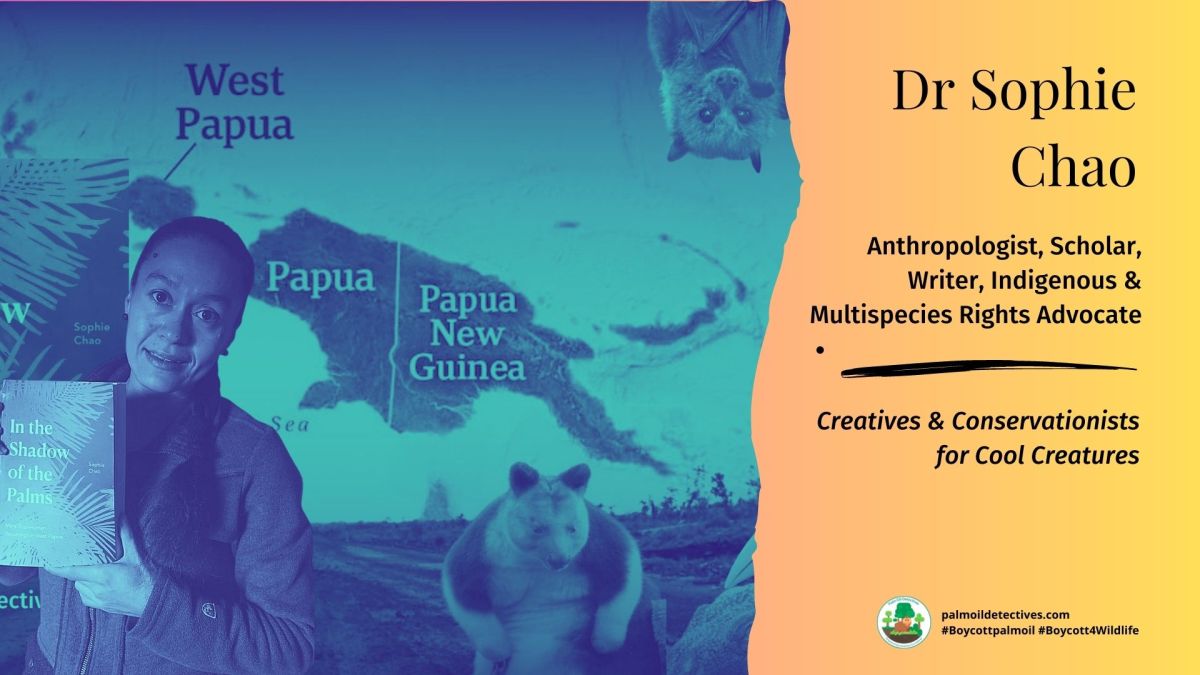
2. Contribute stories: Academics, conservationists, scientists, indigenous rights advocates and animal rights advocates working to expose the corruption of the palm oil industry or to save animals can contribute stories to the website.



3. Supermarket sleuthing: Next time you’re in the supermarket, take photos of products containing palm oil. Share these to social media along with the hashtags to call out the greenwashing and ecocide of the brands who use palm oil. You can also take photos of palm oil free products and congratulate brands when they go palm oil free.
4. Take to the streets: Get in touch with Palm Oil Detectives to find out more.
5. Donate: Make a one-off or monthly donation to Palm Oil Detectives as a way of saying thank you and to help pay for ongoing running costs of the website and social media campaigns. Donate here
Discover more from Palm Oil Detectives
Subscribe to get the latest posts sent to your email.
 Palm Oil Detectives
Reblogged this on Ned Hamson's Second Line View of the News.
LikeLiked by 2 people