
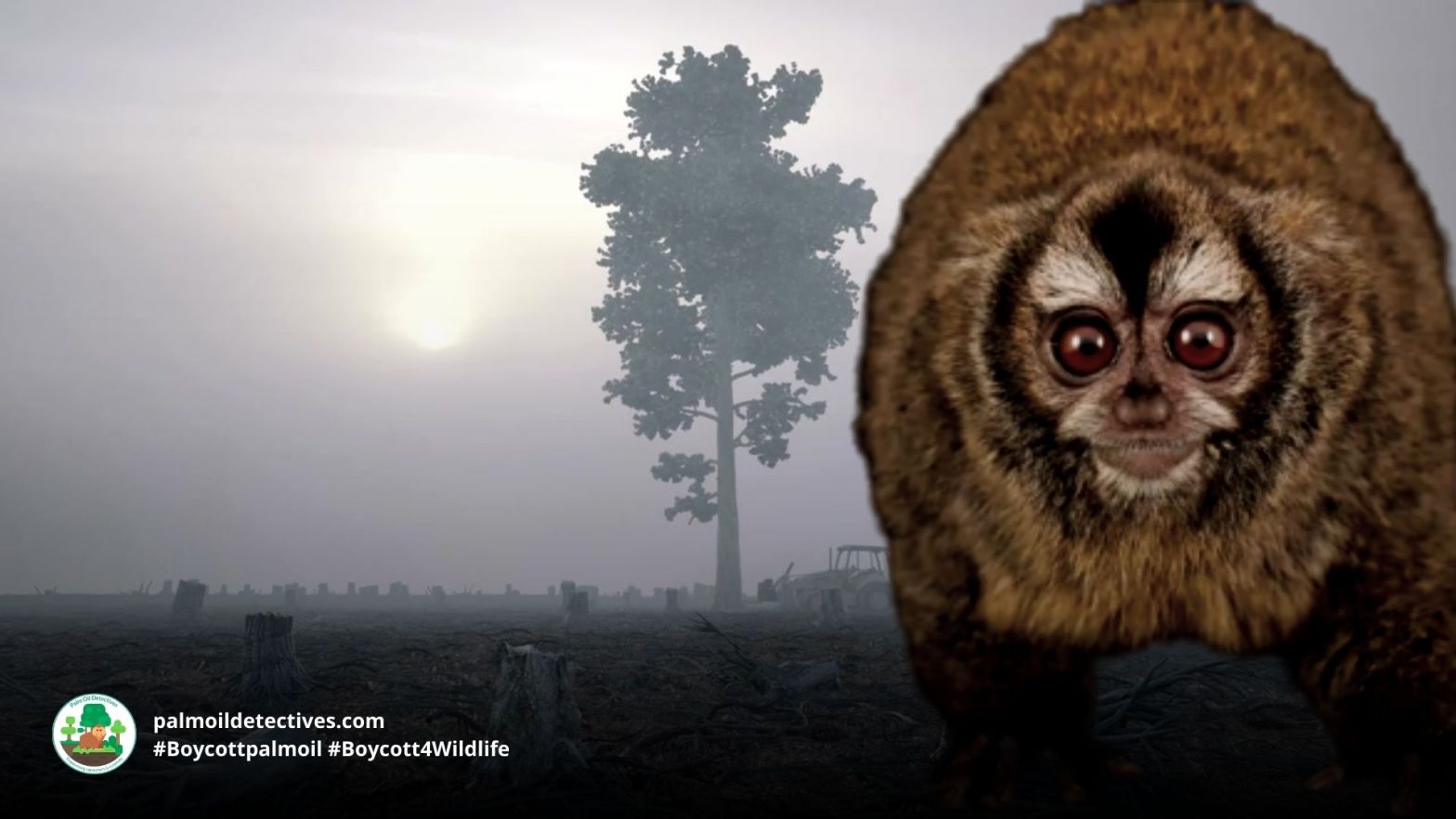
Andean Night Monkey Aotus miconax
Critically Endangered
Extant (resident)
Peru
Known for their expressive big eyes, Peruvian Night Monkeys are one of the rarest and most beautiful monkeys in the world. They are critically endangered by gold mining, palm oil and meat deforestation. Help them every time you shop and be vegan, #Boycottpalmoil #Boycott4Wildlife!
Known for their big emotive eyes, Peruvian Night Monkeys are one of the most beautiful #monkeys in the world 🐵🫶💝 They are critically #endangered by #palmoil and #meat #deforestation. Help them and #Boycottpalmoil #Boycott4Wildlife @palmoildetect https://palmoildetectives.com/2023/07/02/andean-night-monkey-aotus-miconax/
Fight for Andean Night Monkeys – they are critically endangered from #mining, #palmoil #meat deforestation in their rainforest home 🥺😨 Help them by being #vegan and #Boycottpalmoil 🌴⛔️🧐 #Boycott4Wildlife every time you shop! @palmoildetect https://palmoildetectives.com/2023/07/02/andean-night-monkey-aotus-miconax/
Andean Night Monkeys (also known as Peruvian Night Monkeys) are one of the rarest and least studied of all New World monkeys. They live in the cloud forests of northern Peru and are critically endangered.
Appearance & Behaviour
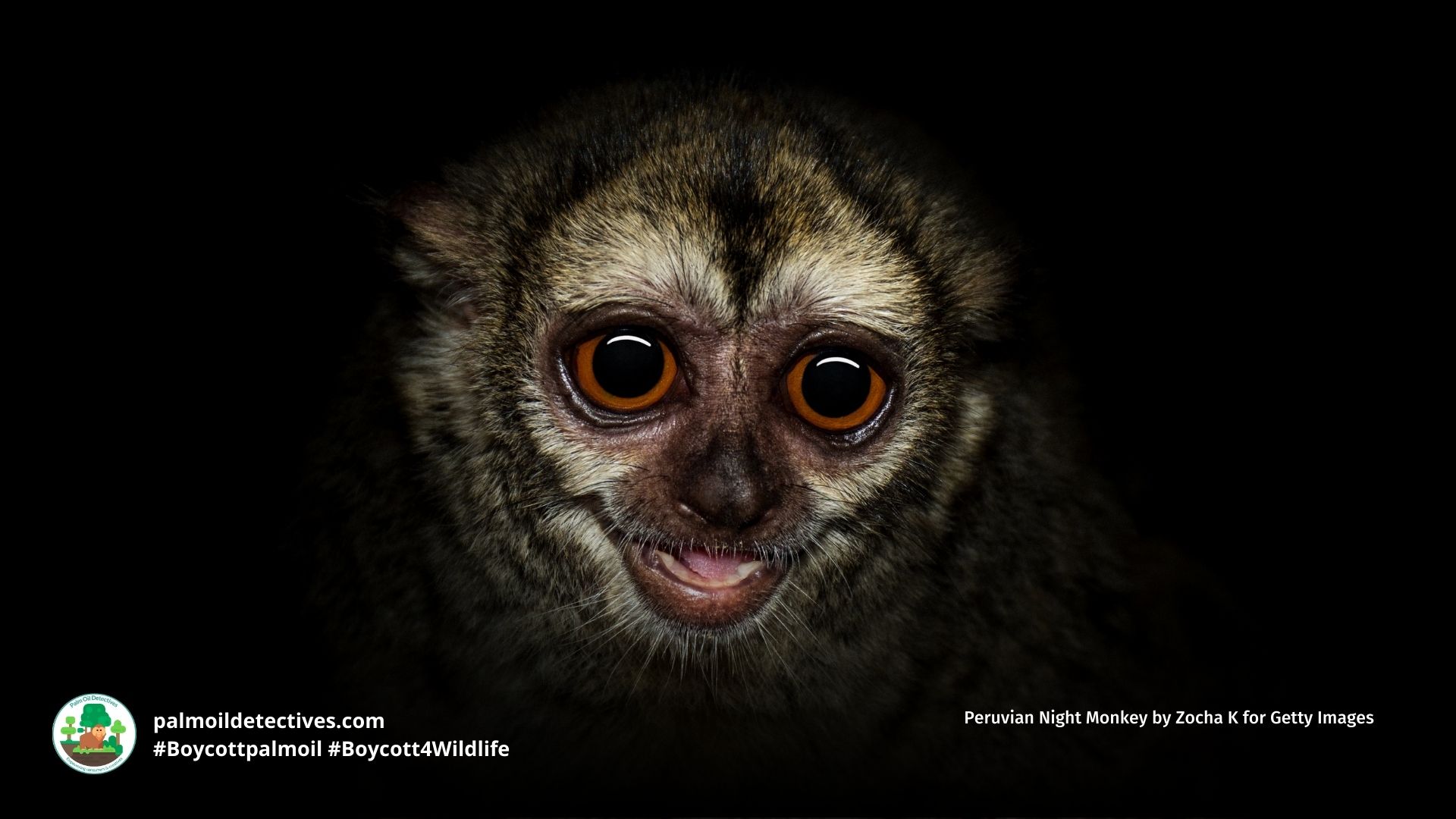
Andean Night Monkeys weigh around 1 kilo and range in colour between grey and light brown with distinctive black and white markings to the face.
Their chest and upper body are an orange hue and they are thought to live in the cloud forest at altitudes of 900-2,800 metres above sea level in the Amazonas, Huanuco and San Martin regions. They are known for their large expressive eyes which enable them to see well in the deeply shaded darkness of the cloud forest.


Threats
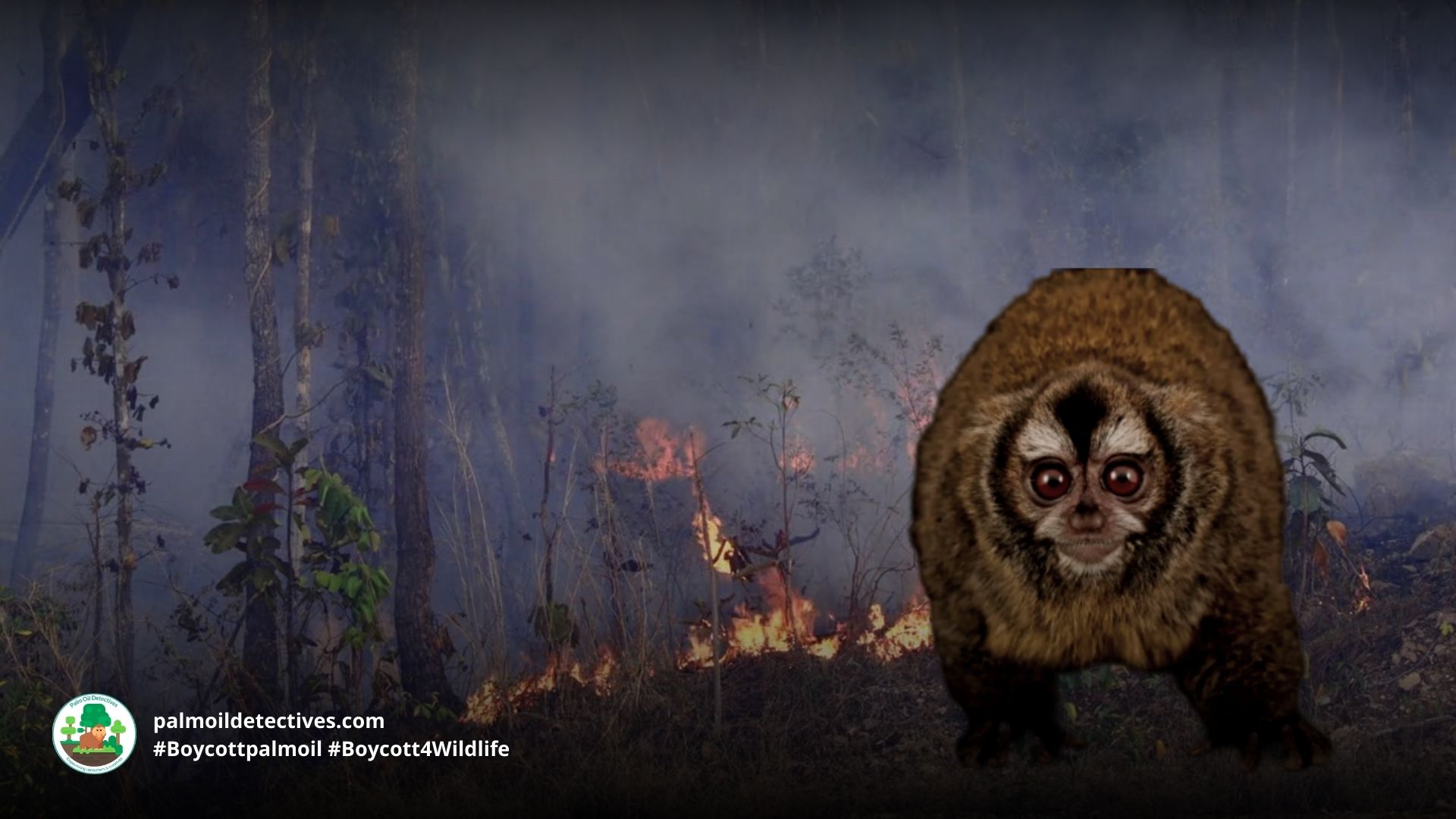
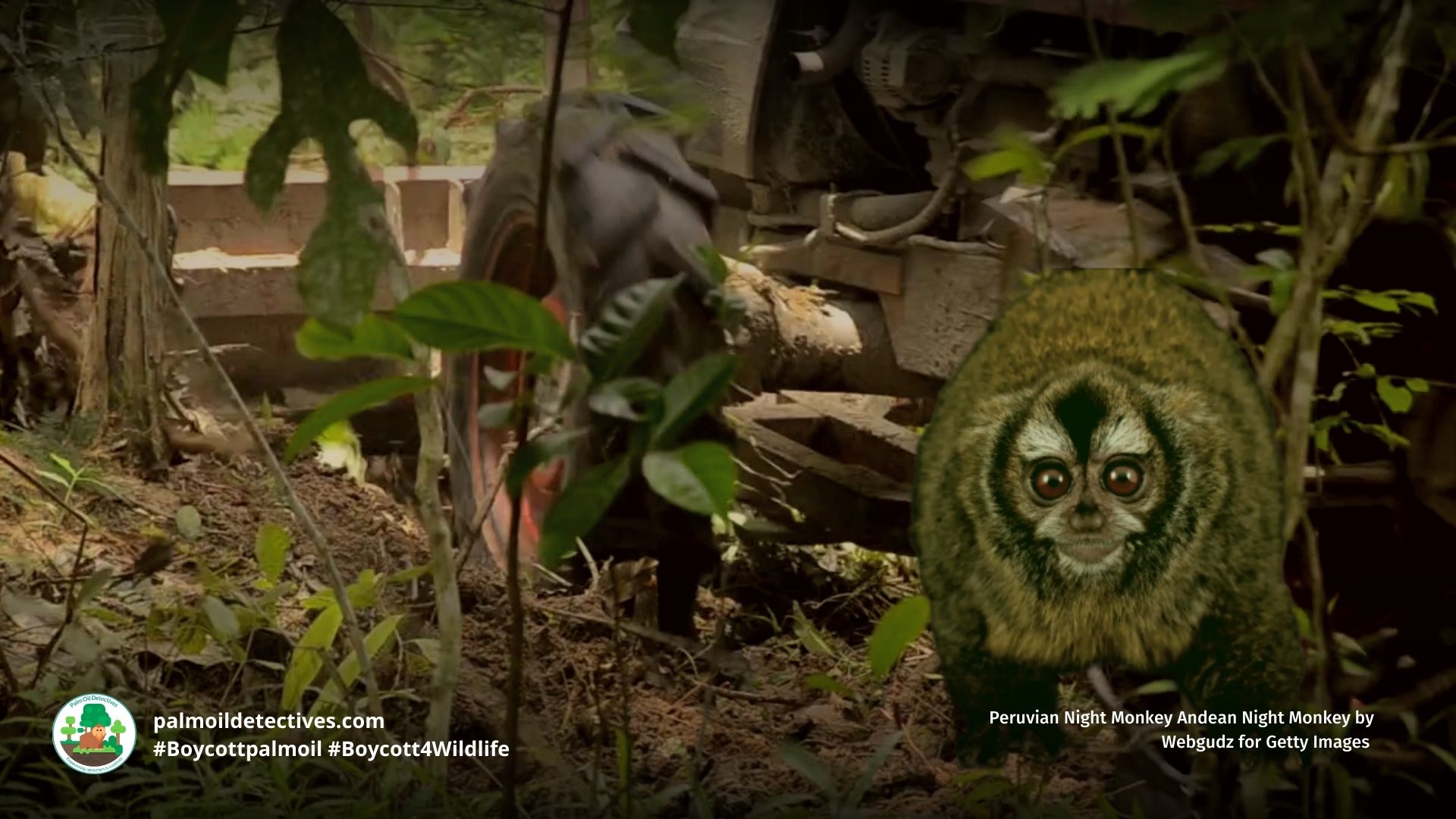
- They are mainly threatened by deforestation for palm oil and soy monoculture, mining and meat across their range.
- Collection for the pet trade is also an increasing threat.
- Illegal hunting for human consumption.
Andean Night Monkeys (Aotus miconax) are endemic to Peru, where they are threatened by deforestation, habitat disturbance and hunting. Shanee et al. (2015), conducting field surveys from 2009 to 2013 and using combined GIS and ecological niche modelling, estimated the species’ original extent of suitable habitat at close to 33,000 km², the third lowest of the 11 Aotus species. Of this, approximately 17,700 km² of suitable habitat remained at the completion of those surveys, representing a loss of close to 50% (up to 2013).
IUCN red list
Forest loss and fragmentation continue, especially within the peripheral areas of this species’ range, with an expansion of mining and large-scale monocultures reaching higher into the Andean foothills. Hunting for food follows immigration into new areas, with young night monkeys also routinely taken as pets in the process. Given that this species appears to adapt to shrinking habitats, their rate of decline may not be as precipitous, but this is still sufficiently significant to qualify them as threatened.

Habitat
They are found in primary and secondary forest and small forest patches in the humid montane cloud forests, and white sand forests.
Similar to other Night Monkeys of the Aotus Genus they are mostly nocturnal and spend the majority of the night time on the move. One study found that they spend 54% travelling, 13% resting and 33% of the time feeding during the night, with activity peaking at the beginning of each night.
Diet
Little is known of the diet of this species, however it is thought that their diet is mostly frugivorous with occasional buds and insects also consumed.
Mating and breeding
Peruvian Night Monkeys are highly gregarious and social, they form monogamous partnerships and live in small family groups of 2-6 individuals made up of young infants, sub-adults and solitary individuals of both sexes. Males are responsible for carrying and caring for infants.

Support Andean Night Monkeys by going vegan and boycotting palm oil in the supermarket, it’s the #Boycott4Wildlife
You can support this beautiful animal
There are no known conservation activities for this animal. Share out this post to social media and join the #BoycottPalmOil #Boycott4Wildlife on social media to raise awareness
Further Information
Shanee, S., Cornejo, F.M. & Mittermeier, R.A. 2020. Aotus miconax (amended version of 2019 assessment). The IUCN Red List of Threatened Species 2020: e.T1802A164046186. https://dx.doi.org/10.2305/IUCN.UK.2020-1.RLTS.T1802A164046186.en. Accessed on 06 February 2023.
Peruvian night monkey Wikipedia article: https://en.wikipedia.org/wiki/Peruvian_night_monkey
Peruvian night monkey on Animalia.bio: https://animalia.bio/peruvian-night-monkey


How can I help the #Boycott4Wildlife?
Take Action in Five Ways
1. Join the #Boycott4Wildlife on social media and subscribe to stay in the loop: Share posts from this website to your own network on Twitter, Mastadon, Instagram, Facebook and Youtube using the hashtags #Boycottpalmoil #Boycott4Wildlife.
2. Contribute stories: Academics, conservationists, scientists, indigenous rights advocates and animal rights advocates working to expose the corruption of the palm oil industry or to save animals can contribute stories to the website.






3. Supermarket sleuthing: Next time you’re in the supermarket, take photos of products containing palm oil. Share these to social media along with the hashtags to call out the greenwashing and ecocide of the brands who use palm oil. You can also take photos of palm oil free products and congratulate brands when they go palm oil free.
4. Take to the streets: Get in touch with Palm Oil Detectives to find out more.
5. Donate: Make a one-off or monthly donation to Palm Oil Detectives as a way of saying thank you and to help pay for ongoing running costs of the website and social media campaigns. Donate here
Discover more from Palm Oil Detectives
Subscribe to get the latest posts sent to your email.
 Palm Oil Detectives