
Renowned and prolific science communicator and author Julian Cribb writes this op-ed piece for Palm Oil Detectives. He addresses the world’s most pressing needs for survival as we descend into the pointy end of the Anthropocene era.
Julian outlines a dozen direct and actionable solutions for preserving a healthy and habitable earth. These are taken from his interviews with the world’s brightest minds. For a more in-depth analysis, be sure to grab a copy of his most recent book, published this year – ‘How to Fix a Broken Planet’
Australian #science #scicomms expert @JulianCribb tackles the most pressing needs for our survival on #Earth as we reach the pointy end of the #Anthropocene era #ClimateActionNow #BoycottGold4Yanomami #Boycott4Wildlife @palmoildetect https://palmoildetectives.com/2023/08/05/op-ed-a-plan-for-preserving-a-habitable-earth-by-julian-cribb/
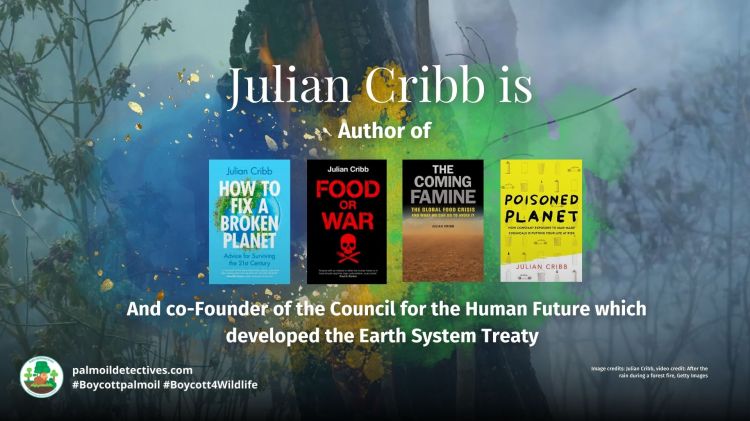
Julian Cribb AM FRSA FTSE is an Australian science writer and author of six books on the human existential emergency and its solutions. Find him on his website and Twitter: @JulianCribb
Among the world’s many pressing needs, the most urgent of all is a plan for human survival on a habitable Earth.
At present no country has one. What we currently have is a chaotic road to avoidable disaster, driven by ten vast, interconnected threats which are all the result of human activity.
This existential emergency in which all humanity now stands has been building steadily for over half a century. Our capacity to inflict mass harm on ourselves through our own actions has increased exponentially since the end of WWII.
The science is in. We’ve wiped out two thirds of the world’s large animals, we’re losing water, topsoil, fish and forests at appalling rates; we poison everyone and everything on the planet every day; we’re constructing weapons able to obliterate ourselves many times over.
We’re shaping a climate that can render the Earth largely uninhabitable within a few generations. We’re building dangerous technologies over which society has no control. We throw away half our food and wreck the planet trying to grow more. We unleash new plagues every few years and spread them worldwide. And we lie, constantly and obsessively, to ourselves about it all.
These are not the actions of a wise species. Or even, maybe, an intelligent one. Our governments and corporations seem paralysed, unable to grasp the magnitude of the overwhelming, interlinked threats that are engulfing us.
The ten mega threats are:
- Extinction and ecological destruction
- Resource scarcity
- Global poisoning
- A hothouse Earth
- The new nuclear arms race
- Pandemics and zoonotic diseases
- Food insecurity
- Overpopulation
- Uncontrolled technologies
- And the global deluge of misinformation about these threats
Because they are all connected, none of these threats can be tackled on their own. They must all be tackled together.
All are outcomes of the sheer scale of the human enterprise – overpopulation, overconsumption, over-pollution and money are the chief drivers. Mostly, they stem from the 101 billion tonnes of resources we now devour every year to support our ‘lifestyle’ – 12 tonnes for each of us – and the damage this process inflicts on the planet, its species and on ourselves.
The good news is that solutions to all these threats already exist
They can all be solved in ways that do not generate fresh perils or make other threats worse. We have the brains and we have the technology to save ourselves. The bad news is that we do not have the governments, the leadership or the will to do so.
No government on Earth has a plan for overcoming these risks and securing the human future, as the Council for the Human Future has often warned. Most are not even aware such a need exists, so poorly do they understand the message of science over the past half century – and so effectively have selfish interests managed to mislead, deceive and frustrate action.
In “How to Fix a Broken Planet” (Cambridge University Press 2023) I explain the scientific understanding of these risks but, more importantly, I list all the main solutions which governments, institutions and we, as individuals, can take in our work and our own lives to make this a safer, more sustainable world. This amounts to a first draft for a World Plan of Action for Human Survival.
It isn’t the complete answer. No short book could provide that
Yet it is an outline of what the world’s wisest minds now consider we must do in order to survive. It shows that thinking and acting our way out of the biggest crisis ever to face humanity is entirely possible. Furthermore, it is positive, encouraging hope, confidence and opportunity.
Among several hundred solutions proffered for policymakers and individual humans, here are the top dozen. They should not surprise anyone who has thought about our situation objectively.
1. An Earth System Treaty addressing all the catastrophic threats, open for all to sign
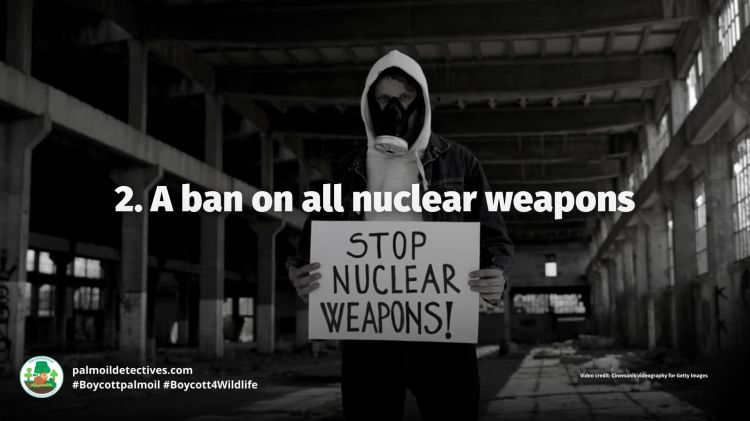
2. A ban on all nuclear weapons
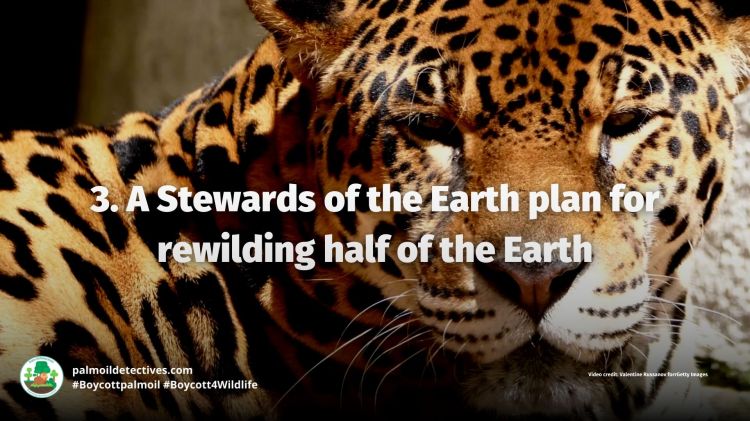
3. A Stewards of the Earth plan for rewilding half the Earth
4. An end to the use of fossil fuels, to stem both climate change and global poisoning

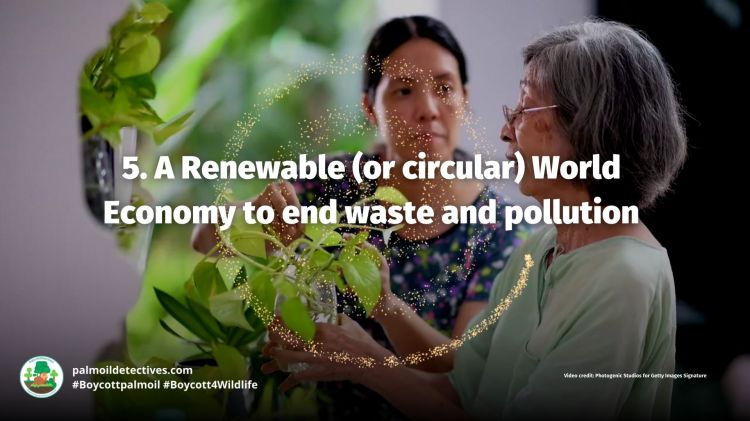
5. A Renewable (or circular) World Economy to end waste and pollution
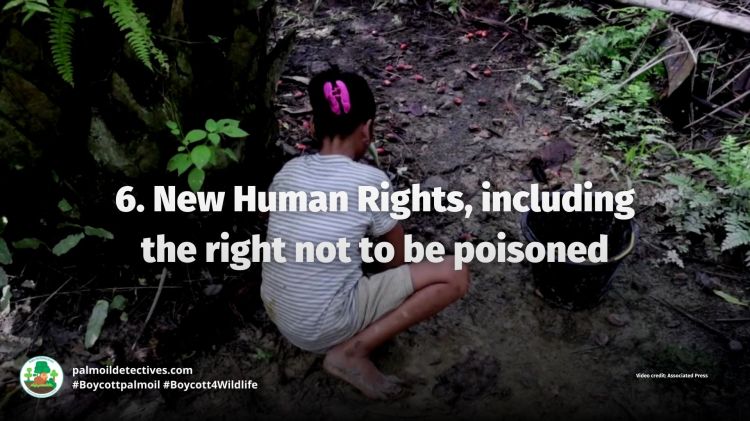
6. New Human Rights, including a Right Not to Be Poisoned
7. A Global Technology Convention to oversee all powerful new technologies before they are put to dangerous misuse

8. A World Truth Commission, to expose the liars and their lies to public shame
9. A Human Survival Index, to inform everyone how risky is our plight and the progress we are making towards making the world safer
10. Renewable Food for everyone, to sustain all humanity, restore the environment and reduce the threat of war
11. A World Population Plan, providing voluntary family planning for all
12. A world pandemic plan to prevent and arrest the uncontrolled spread of disease by human behaviour

There are many other actions that must be taken to mitigate the danger in which humans now stand, and most of them are outlined in ‘How to Fix a Broken Planet’.
The heart of all this is an Earth System Treaty, a legal agreement by the world’s people (not just its nations or governments, but all of us) which commits all those who sign it to working for a habitable Earth and a safer human future, by addressing all ten of the great threats.
An issue of great concern to Palm Oil Detectives is the wanton destruction of forests and wildlife by the gigantic machinery of the agroindustrial complex – the system that exploits the food supply for profit.
My books explain how this can be overcome, but developing a renewable food system consisting of regenerative farming, urban food production and deep ocean aquaculture. This will remove the pressures we now place on the wild world, enabling us to return half the world’s area to nature and to the creatures that naturally inhabit it.
Stewards of the Earth program led by indigenous peoples
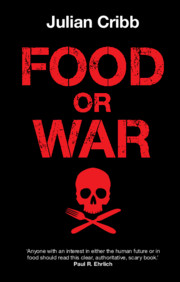
To make this happen we need a ‘Stewards of the Earth’ program, funded from the world’s $1.8 trillion weapons budget, and run by indigenous people and ex-farmers who want to repair the damage caused by industrial food. Renewable food is totally achievable, much healthier for us, for wild animals and for their environment. Details may be found in my book Food or War.
The answers to the human emergency do not lie in business-as-usual, in government procrastination, in the corruption of public discourse, the poisoning of an entire planet or the destruction of nature.
They lie in employing the attribute which has led human survival for over a million years: wisdom – the ability to read the future and take sensible action in time to achieve a better, safer outcome.
The world’s governments, intent on the rivalries of yesterday, are not interested in this, or able to achieve it. They must be driven by the wishes and concerns of eight billion humans who their grandchildren to survive on a world that hasn’t been reduced to a charred ruin by human negligence and greed.
This is, without a doubt, the greatest and most noble undertaking in the long ascent of human aspiration and achievement. It is a task worthy of us all – and which cannot be completed without the co-operation of all.
The Earth is a lifeboat, sinking under the pressures of overcrowding and demand. We either row it together – or we go down together. The choice is stark, and it is now before us.
Julian Cribb AM FRSA FTSE is an Australian science writer and author of six books on the human existential emergency and its solutions. Find him on his website and Twitter: @JulianCribb
Julian’s recent books…

Biography: Julian Cribb AM
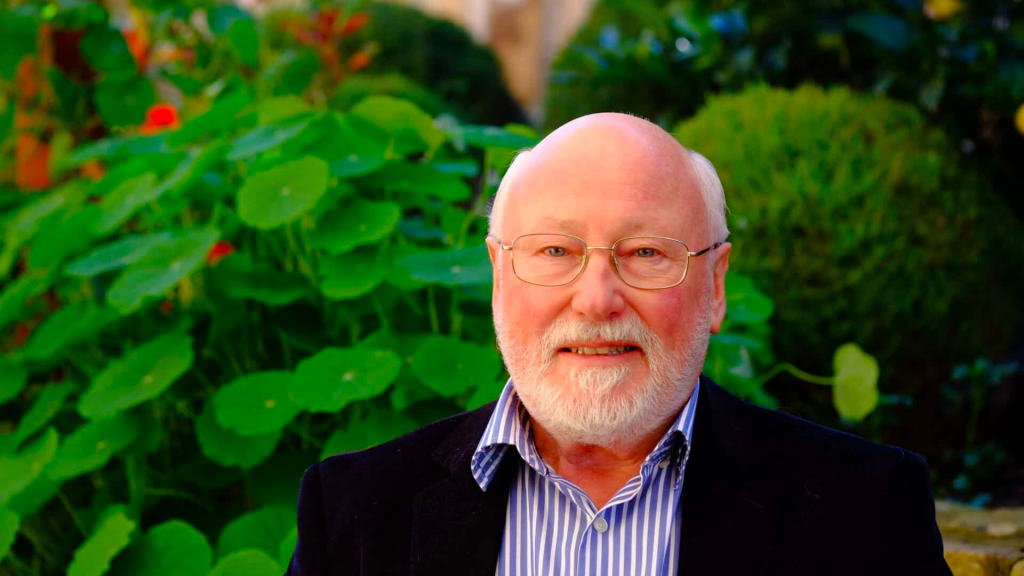
Julian Cribb AM is an Australian author and science communicator. He is a Fellow of the UK Royal Society for the Arts, the Australian Academy of Technological Science and Engineering (ATSE) and the Australian National University Emeritus Faculty.
His career includes appointments as scientific editor for The Australian newspaper, director of national awareness for CSIRO, editor of several newspapers including the National Farmer and Sunday Independent, member of numerous scientific boards and advisory panels, and president of national professional bodies for agricultural journalism and science communication.
His published work includes over 9000 articles, 3000 science media releases and 12 books. He has received 32 awards for journalism. He was nominated for ACT Senior Australian of the Year in 2019. He is a co-founder of the Council for the Human Future which developed the Earth System Treaty. He was appointed a Member of the General Division of the Order of Australia (AM) in 2021.
Julian is principal of Julian Cribb & Associates who for twenty years have provided international consultancy in the communication of science, agriculture, food, mining, energy and the environment for over a hundred scientific, government and private organisations.
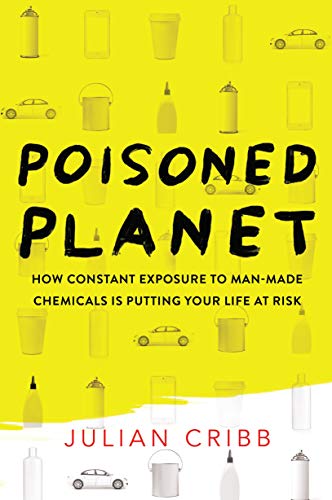
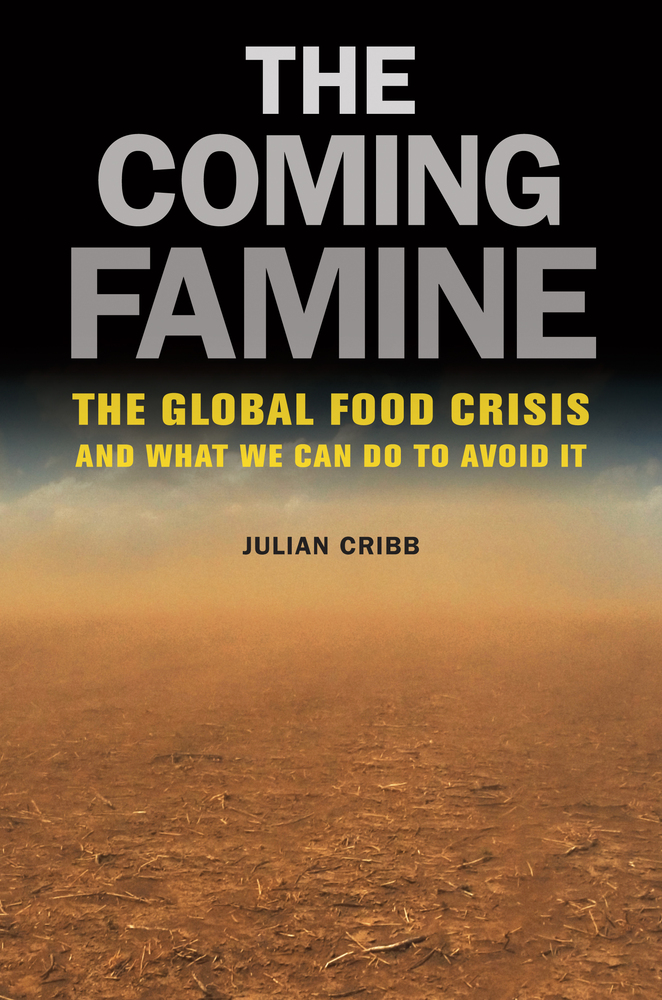
For the past two decades his main literary focus has been the self-inflicted existential emergency faced by humanity. This is dealt with in six books: The Coming Famine (UCP 2010) explored the question of how we can feed 10 billion humans this century; Poisoned Planet (A&U 2014) is his first book on global contamination by anthropogenic chemicals. Surviving the 21st Century (Springer 2017) tackles the existential crisis now facing humanity from a combination of ten megathreats – and what we can do about it. His book Food or War (Cambridge University Press 2019) explores how food can help prevent human conflict in the C21st. Earth Detox describes the vast question of human chemical emissions, their impact on us and how we can overcome it. His latest book ‘How to Fix a Broken Planet’ (Cambridge 2023) offers a plan to rescue humanity from the self-created threats that beset it.
As a grandfather, Julian is deeply concerned about the future our descendants will face unless humanity as a whole acts with urgency to overcome all the megarisks.
Radio interview with Alex Sloan, ABC
‘We need an Earth System Treaty to save civilisation. And we need it now’ by Julian Cribb
ENDS
Take Action in Five Ways
1. Join the #Boycott4Wildlife on social media and subscribe to stay in the loop: Share posts from this website to your own network on Twitter, Mastadon, Instagram, Facebook and Youtube using the hashtags #Boycottpalmoil #Boycott4Wildlife.
2. Contribute stories: Academics, conservationists, scientists, indigenous rights advocates and animal rights advocates working to expose the corruption of the palm oil industry or to save animals can contribute stories to the website.


3. Supermarket sleuthing: Next time you’re in the supermarket, take photos of products containing palm oil. Share these to social media along with the hashtags to call out the greenwashing and ecocide of the brands who use palm oil. You can also take photos of palm oil free products and congratulate brands when they go palm oil free.
4. Take to the streets: Get in touch with Palm Oil Detectives to find out more.
5. Donate: Make a one-off or monthly donation to Palm Oil Detectives as a way of saying thank you and to help pay for ongoing running costs of the website and social media campaigns. Donate here
Discover more from Palm Oil Detectives
Subscribe to get the latest posts sent to your email.
 Palm Oil Detectives