
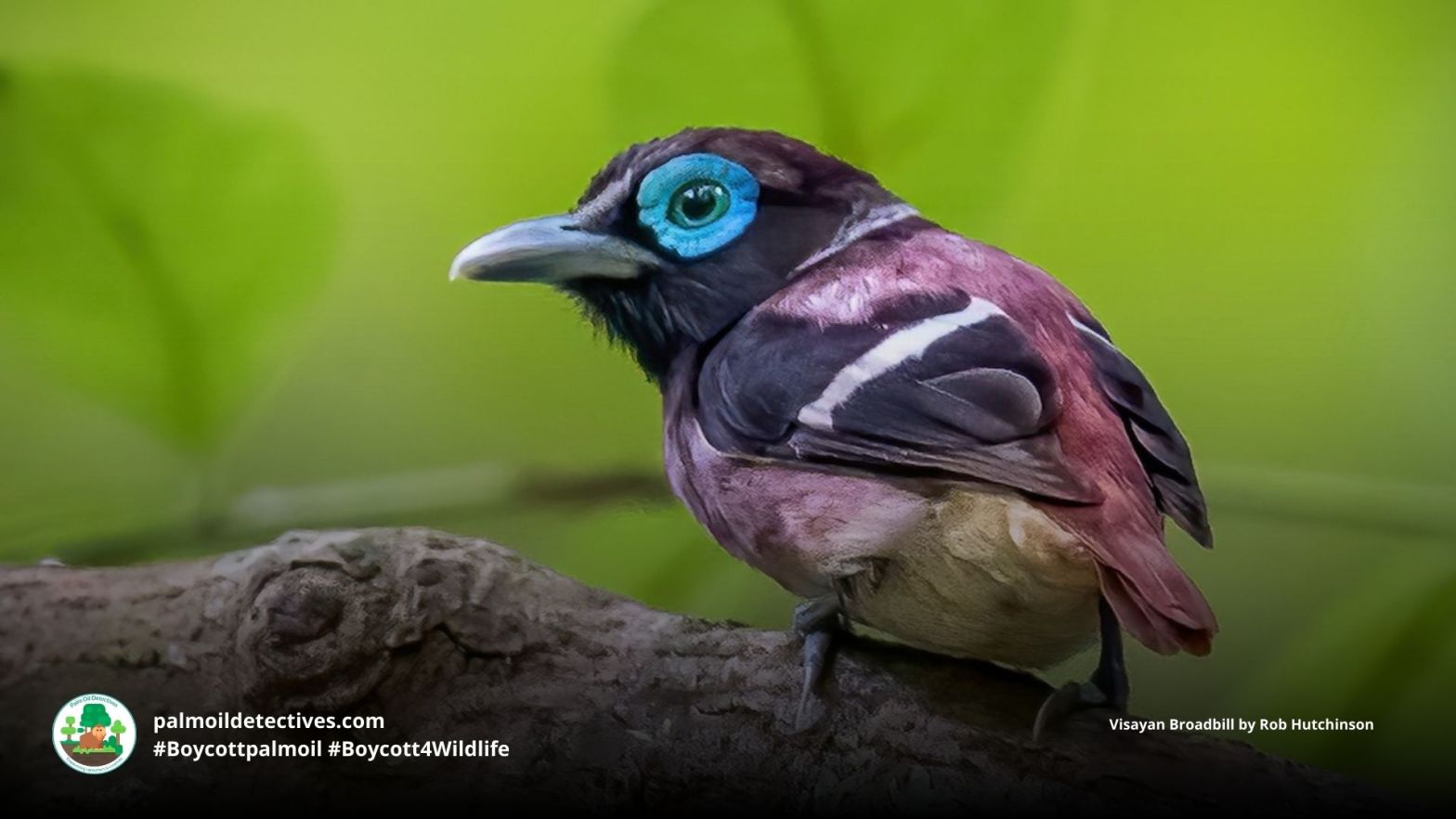
Visayan Broadbill Sarcophanops samarensis
Vulnerable
Extant (resident)
Philippines
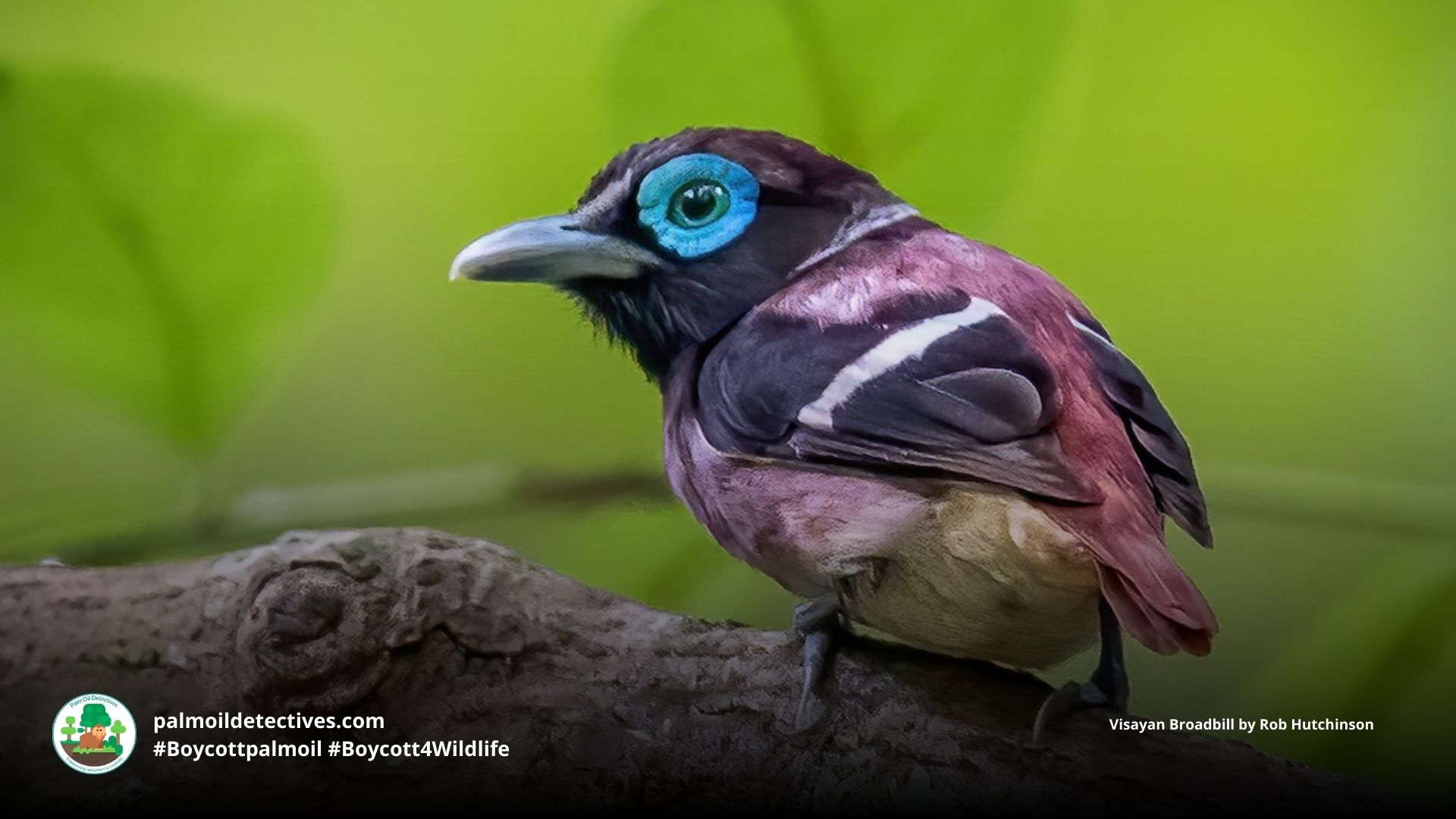
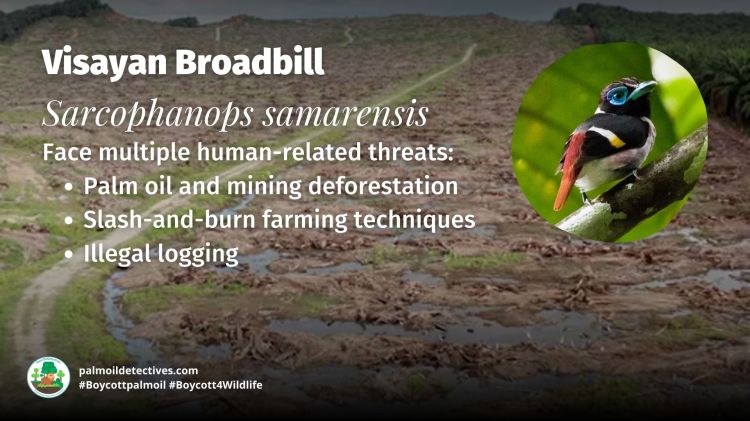
The Visayan Broadbill Sarcophanops samarensis is a brightly colored bird endemic to the islands of Samar, Leyte, and Bohol in the central Philippines. Males flaunt striking reddish-pink underparts, while females are marked by a distinctive white belly and collar. Sadly, due to extensive deforestation and habitat loss for palm oil and other commodities in the Philippines, the Visayan Broadbill is now classified as “Vulnerable” on the IUCN Red List. There is only an estimated population of 2,500 to 9,999 mature individuals left alive! Therefore urgent conservation measures are needed to protect this unique bird’s lowland forest habitat. Advocate for stricter protections, push back against illegal logging for palm oil #BoycottPalmOil #Boycott4Wildlife to make a difference.
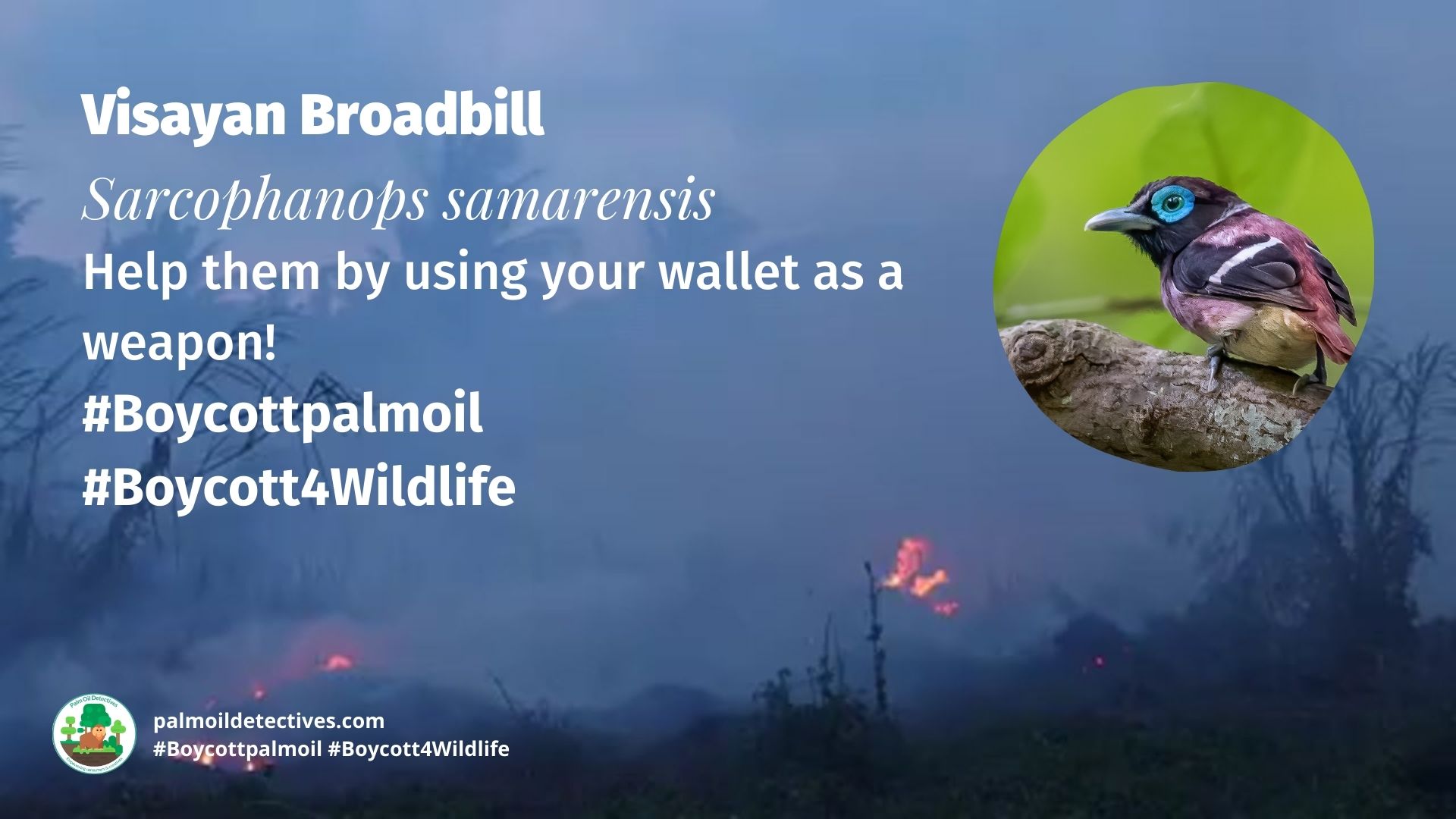
Striking and bright #bird of #Philippines 🇵🇭 the Visayan Broadbill 🌈✨🦜 is now #vulnerable from #palmoil and other #deforestation in their #rainforest home. Help them with your wallet and be #vegan #Boycottpalmoil #Boycott4Wildlife @palmoildetect https://wp.me/pcFhgU-6o1
Don’t let the #forests 💚🌳 of the #Philippines go silent to the Visayan Broadbill’s whistles and rainbow coloured fluttering. Now #vulnerable from #palmoil and other #deforestation help these birds 🦜🕊️🩷 #Boycottpalmoil #Boycott4Wildlife @palmoildetect https://wp.me/pcFhgU-6o1
Appearance & Behaviour
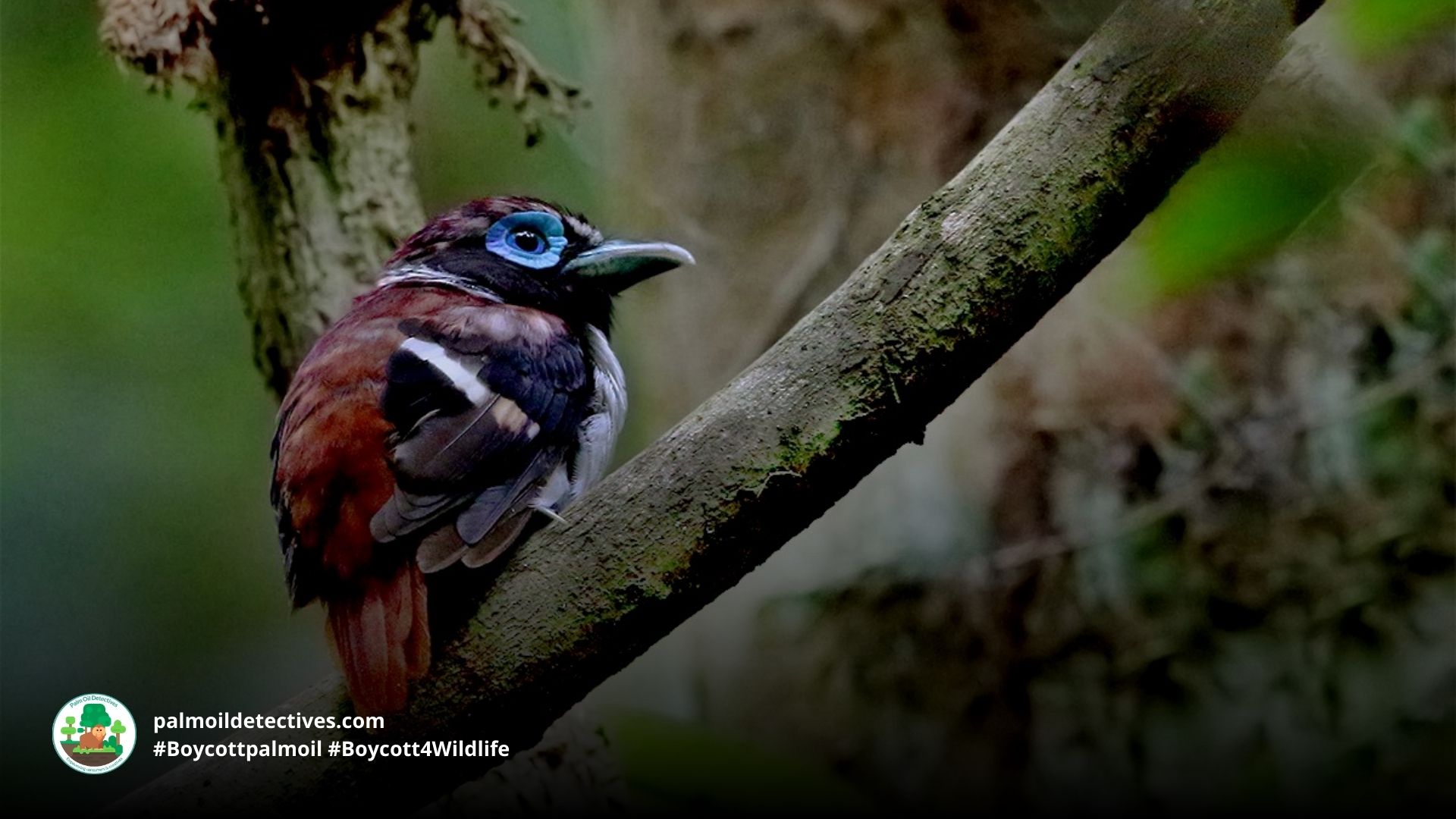
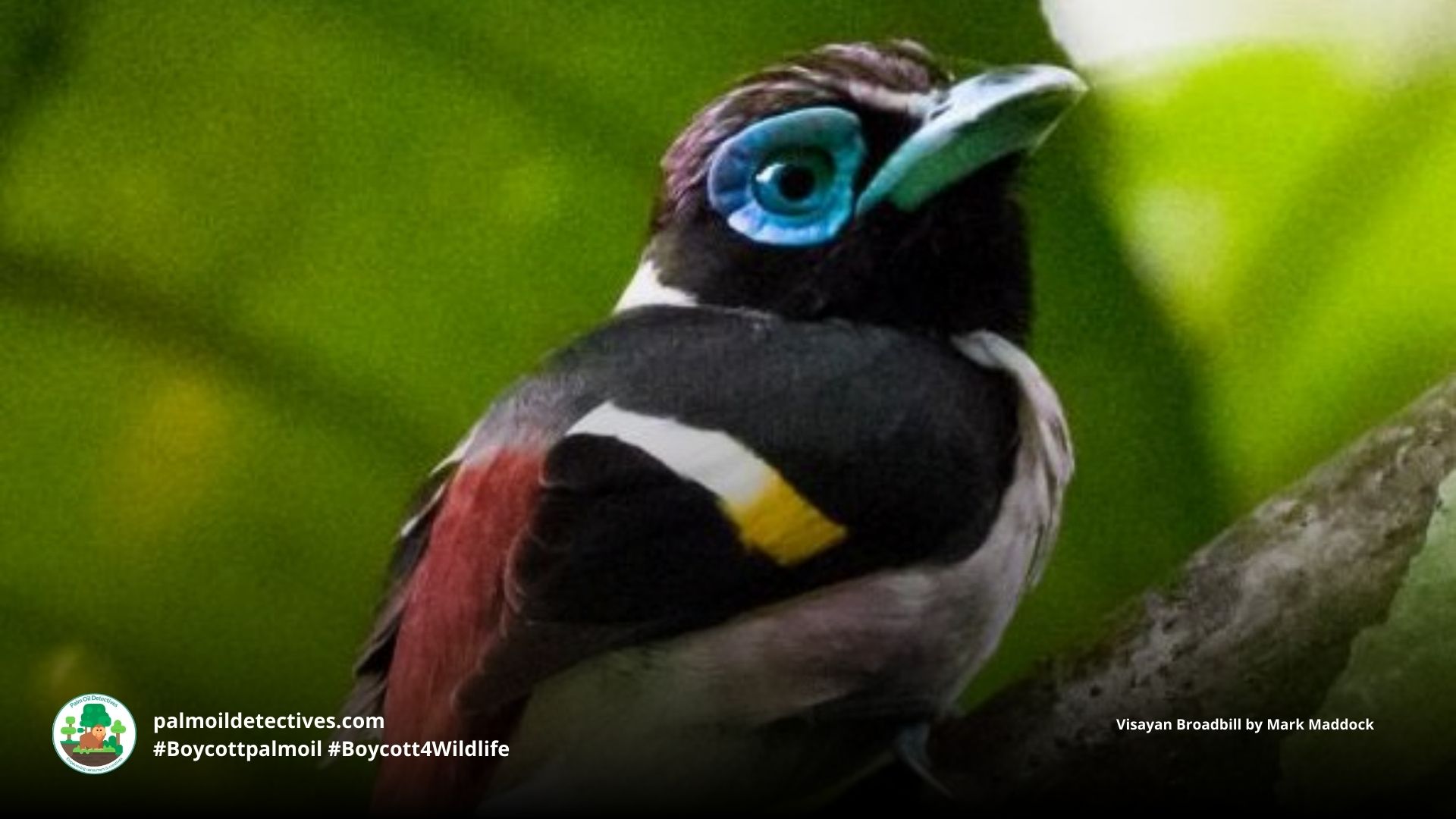
The Visayan Broadbill is a small passerine bird that measures between 14 to 15 cm. Their distinctive features include a pale blue bill and eye wattle, a black face, a streaked crown, and a reddish-brown back. While the male has a reddish-pink belly and collar, the female has a white belly and a black-and-white collar. Their unique vocalisations include whistles, rattles, and sharp calls.
These birds possess a wide mouth, allowing them to consume larger pieces of food than most other birds their size. Their distinctive vocalisations, such as whistles and rattles, are complemented by unique wing and head displays during territorial or mating behaviour. Despite these fascinating traits, they face critical threats from habitat loss due to extensive deforestation and land conversion for farming and mining, leaving only 4% of forest in Bohol and limited primary forest in Samar and Leyte. Their estimated population has declined to 2,500–9,999 mature individuals.
Threats
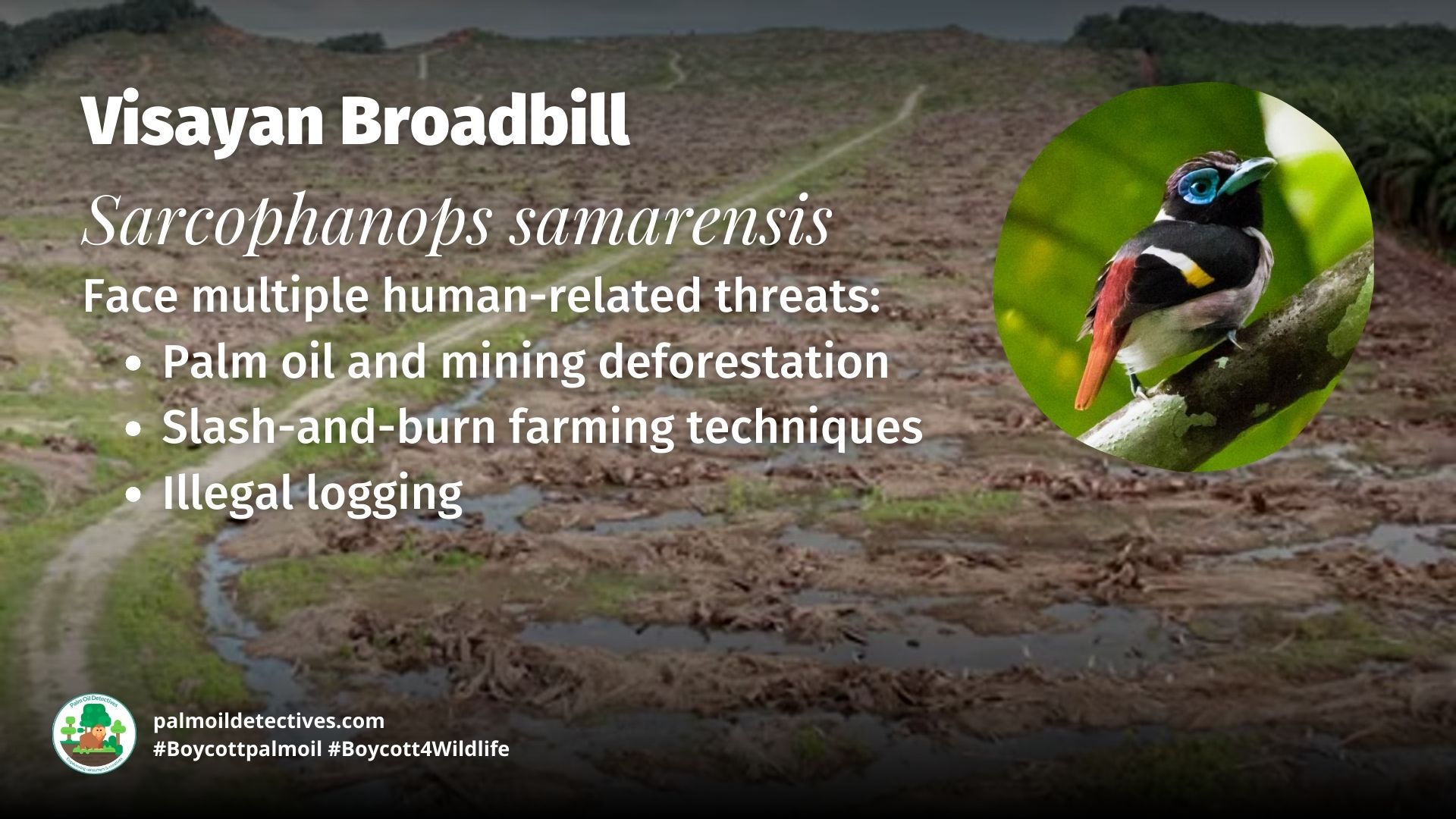
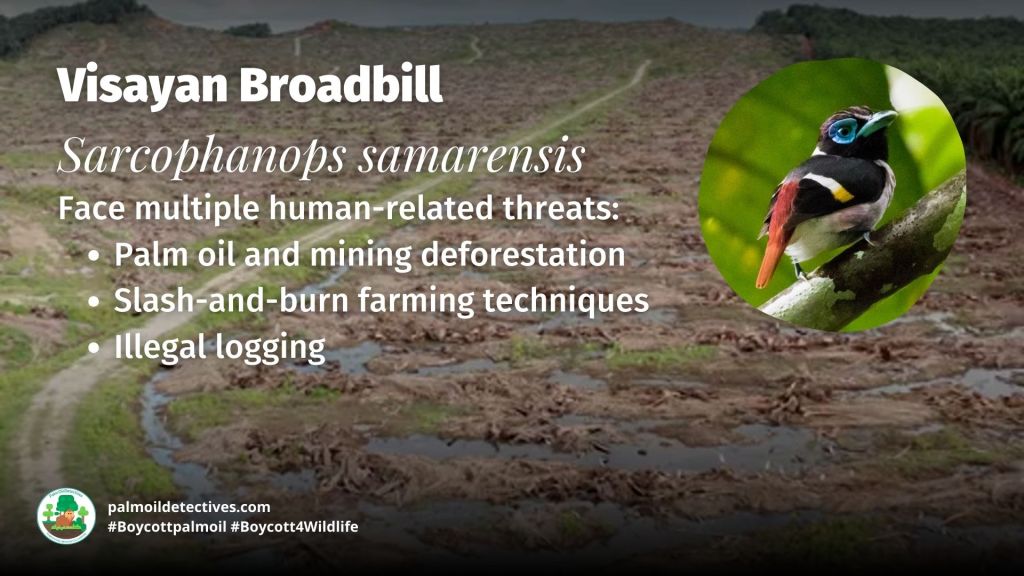
- Deforestation: Logging and land conversion for palm oil and other agriculture have decimated their natural lowland forest habitat.
- Mining: Mining concessions further exacerbate habitat destruction.
- Illegal Logging: Even within protected areas like the Rajah Sikatuna National Park, illegal logging persists.
- Agricultural Expansion: Slash-and-burn farming techniques and forest fires are common and degrade forest quality and threaten these birds and many other aniamls.
Habitat
This strikingly colourful species inhabits the lowland tropical forests of the central Philippines, primarily on the islands of Samar, Leyte, and Bohol. Their preferred habitats include moist lowland forests and shrublands, typically found below 1,000 meters.
Diet
The Visayan Broadbill feeds on insects, which they capture during short sallies, often foraging in pairs, groups, or mixed-species flocks in the understory and lower canopy.
Mating and breeding
They breed in tropical moist forests and engage in unique territorial and mating displays. Males perform wing flapping, head bobbing, and feather fluffing, while females often join in flights. They tend to stay in pairs or small groups during the breeding season.
Support Visayan Broadbill by going vegan and boycotting palm oil in the supermarket, it’s the #Boycott4Wildlife
Support the conservation of this species
This animal has no protections in place. Read about other forgotten species here. Create art to support this forgotten animal or raise awareness about them by sharing this post and using the #Boycottpalmoil #Boycott4Wildlife hashtags on social media. Also you can boycott palm oil in the supermarket.
Further Information
BirdLife International. (2017). Sarcophanops samarensis (amended version of 2016 assessment). The IUCN Red List of Threatened Species. https://dx.doi.org/10.2305/IUCN.UK.2017-1.RLTS.T22698727A110060626.en
Visayan Broadbill. Wikipedia. https://en.wikipedia.org/wiki/Visayan_broadbill
Visayan Broadbill. Animalia.bio. https://animalia.bio/visayan-broadbill
Collar, N.J. et al. (1999). Philippine Forest Birds.

How can I help the #Boycott4Wildlife?
Take Action in Five Ways
1. Join the #Boycott4Wildlife on social media and subscribe to stay in the loop: Share posts from this website to your own network on Twitter, Mastadon, Instagram, Facebook and Youtube using the hashtags #Boycottpalmoil #Boycott4Wildlife.
2. Contribute stories: Academics, conservationists, scientists, indigenous rights advocates and animal rights advocates working to expose the corruption of the palm oil industry or to save animals can contribute stories to the website.




3. Supermarket sleuthing: Next time you’re in the supermarket, take photos of products containing palm oil. Share these to social media along with the hashtags to call out the greenwashing and ecocide of the brands who use palm oil. You can also take photos of palm oil free products and congratulate brands when they go palm oil free.
4. Take to the streets: Get in touch with Palm Oil Detectives to find out more.
5. Donate: Make a one-off or monthly donation to Palm Oil Detectives as a way of saying thank you and to help pay for ongoing running costs of the website and social media campaigns. Donate here
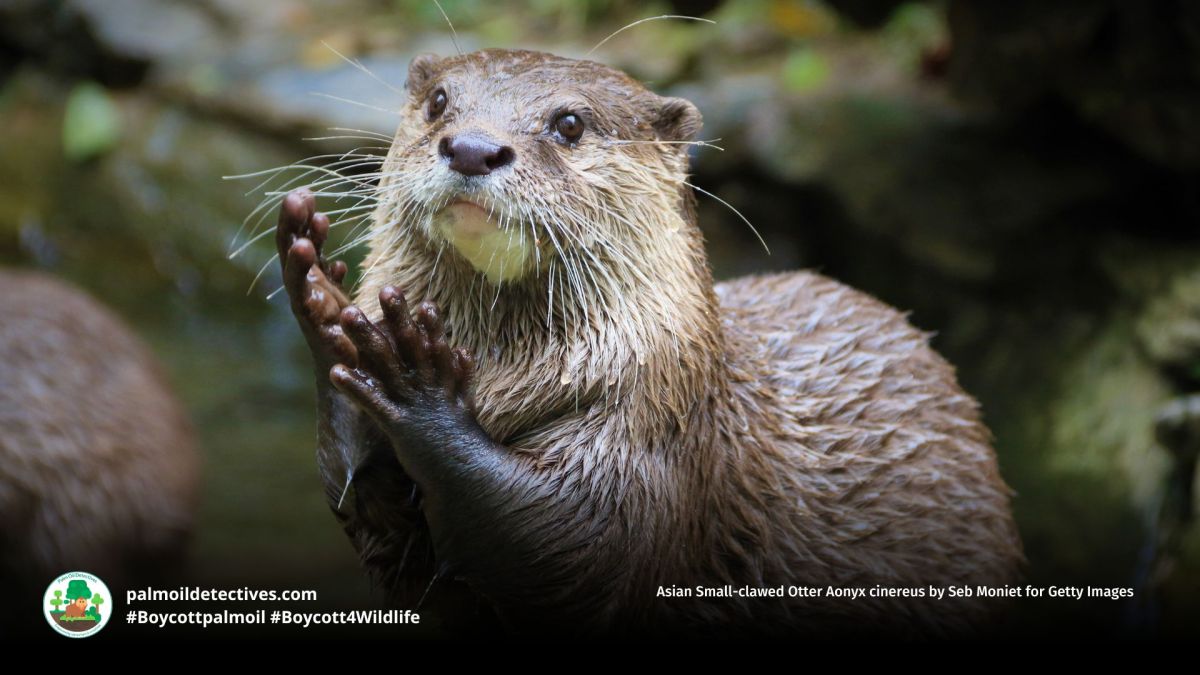
Learn about other animals endangered by palm oil and other agriculture
Learn about “sustainable” palm oil greenwashing
Read more about RSPO greenwashing
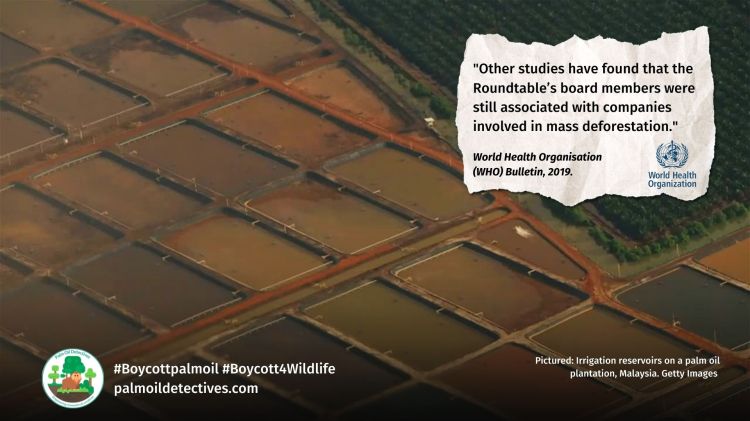
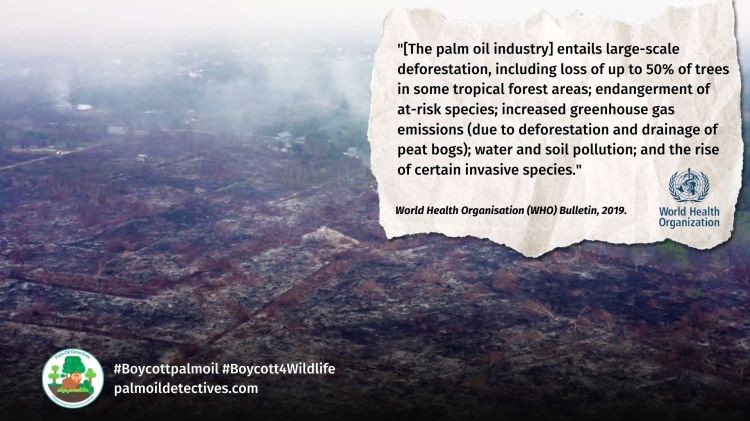
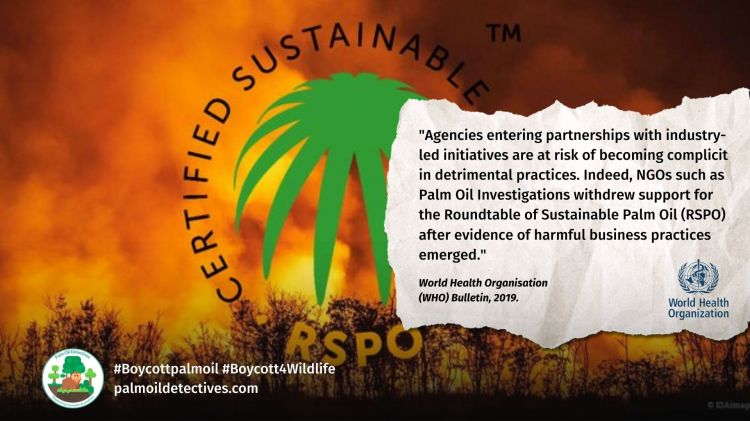
A 2019 World Health Organisation (WHO) report into the palm oil industry and RSPO finds extensive greenwashing of palm oil deforestation and the murder of endangered animals (i.e. biodiversity loss)


Discover more from Palm Oil Detectives
Subscribe to get the latest posts sent to your email.
 Palm Oil Detectives
One thought on “Visayan Broadbill Sarcophanops samarensis”