
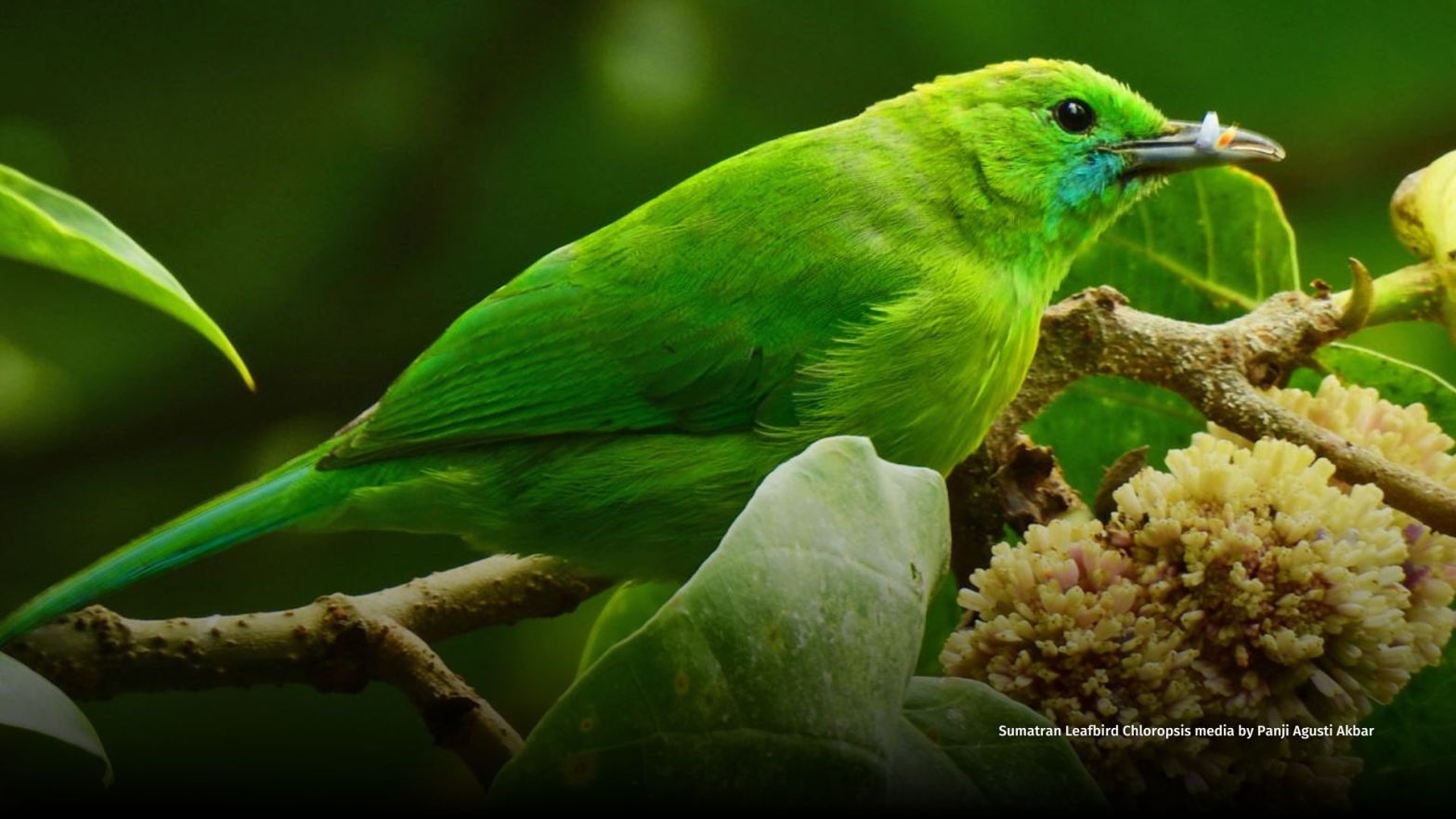
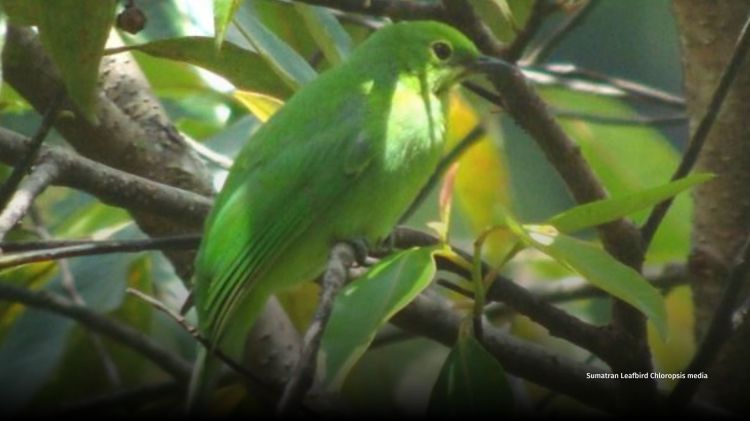
Sumatran Leafbird Chloropsis media
Endangered
Sumatra, Indonesia
The Sumatran Leafbird is a vibrant songbird native exclusively to the lush forests of Sumatra. Celebrated for their striking green plumage and melodious calls, these birds play a vital role in their ecosystem. However, rampant trapping for the cage bird trade and habitat loss for palm oil have led to a rapid decline in their population. To protect the Sumatran Leafbird, we urge you to boycott products linked to deforestation. Use your wallet as a weapon to fight for their survival each time you shop. #BoycottPalmOil #Boycott4Wildlife
With striking bright green plumage and melodious song, Sumatran Leaf Birds 🦜 💚are rarely heard in Sumatra’s #rainforests. #Palmoil #deforestation and the illegal #pet trade are threats. Take action #BoycottPalmOil 🌴☠️⛔️ #Boycott4Wildlife @palmoildetect https://wp.me/pcFhgU-g3
Appearance and Behaviour
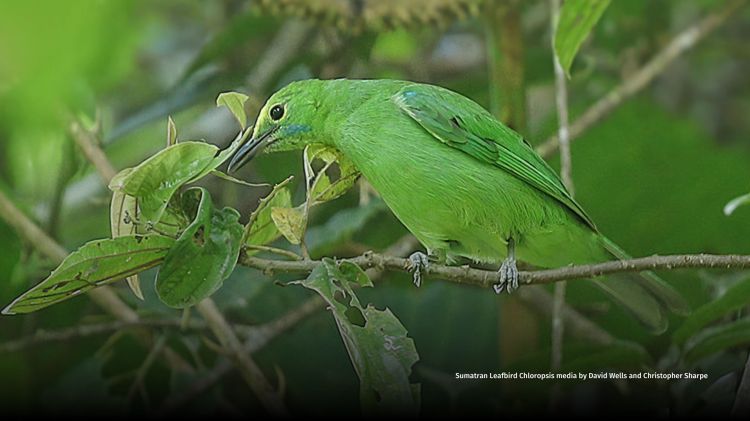
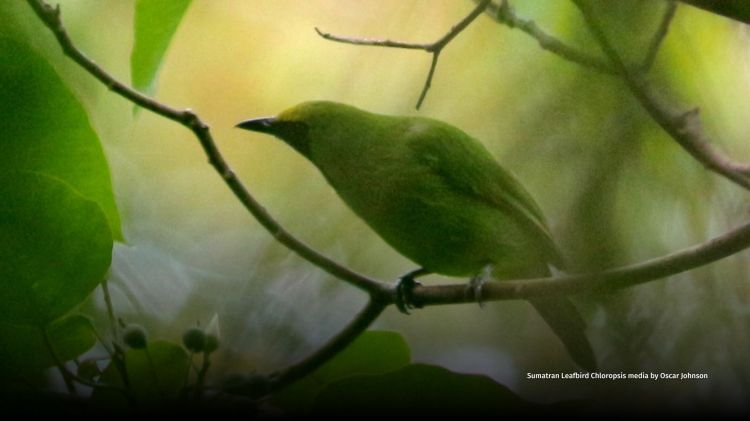
The Sumatran Leafbird boasts a dazzling green plumage that provides excellent camouflage among the foliage. Males feature a distinctive yellow forehead, while females have a yellowish forecrown, setting them apart from other leafbird species. These birds are known for their mimicking abilities, often imitating the calls of other bird species. They are typically found alone or in pairs, actively foraging in the upper canopy for insects and fruits.
Geographic Range
This species is endemic to Sumatra, Indonesia, inhabiting subtropical or tropical moist lowland forests and plantations. Their range is increasingly fragmented due to habitat destruction and the pressures of the illegal bird trade.
Diet
Sumatran Leafbirds primarily feed on insects, spiders, nectar, and fruits. Their foraging habits aid in pollination and seed dispersal, contributing to the health and regeneration of their forest environment.
Reproduction and Mating
Breeding pairs build cup-shaped nests in the fork of tree branches, where the female typically lays two to three eggs. Both parents participate in feeding the chicks. Detailed studies on their breeding season and success rates are limited, highlighting the need for further research.
Threats
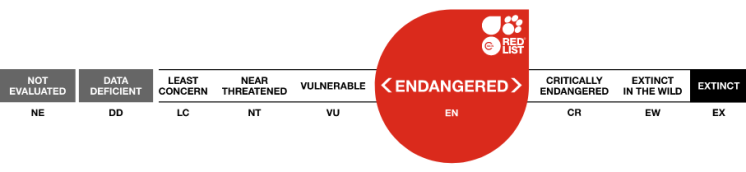
IUCN Status: Endangered
• Illegal Trapping: A surge in demand for leafbirds in the cage bird trade, especially since 2012, has led to extensive trapping, significantly reducing wild populations.
• Habitat Loss: Deforestation for agriculture and plantations, particularly for palm oil, has resulted in the loss and fragmentation of their natural habitat.
• Population Decline: The combination of trapping and habitat destruction has caused a rapid population decline, with the species now considered endangered.
Conservation Status
The Sumatran Leafbird is listed as Endangered on the IUCN Red List, with populations continuing to decline due to ongoing threats. Conservation efforts focusing on habitat protection and curbing illegal trade are crucial for their survival.
Take Action!
Protect the Sumatran Leafbird by boycotting products linked to deforestation, such as palm oil. Use your wallet as a weapon to support ethical and eco-friendly choices. Share their story and fight for their survival with #BoycottPalmOil and #Boycott4Wildlife
You can support this beautiful animal
There are no known conservation activities for this animal. Share out this post to social media and join the #BoycottPalmOil #Boycott4Wildlife on social media to raise awareness
Further Information
BirdLife International. 2019. Chloropsis media. The IUCN Red List of Threatened Species 2019: e.T22732267A156989848. https://dx.doi.org/10.2305/IUCN.UK.2019-3.RLTS.T22732267A156989848.en. Downloaded on 20 January 2021.
BirdLife International. (2024). Sumatran Leafbird. Retrieved from BirdLife International
Wikipedia contributors. (n.d.). Sumatran Leafbird. Retrieved from Wikipedia

How can I help the #Boycott4Wildlife?
Take Action in Five Ways
1. Join the #Boycott4Wildlife on social media and subscribe to stay in the loop: Share posts from this website to your own network on Twitter, Mastadon, Instagram, Facebook and Youtube using the hashtags #Boycottpalmoil #Boycott4Wildlife.
2. Contribute stories: Academics, conservationists, scientists, indigenous rights advocates and animal rights advocates working to expose the corruption of the palm oil industry or to save animals can contribute stories to the website.





3. Supermarket sleuthing: Next time you’re in the supermarket, take photos of products containing palm oil. Share these to social media along with the hashtags to call out the greenwashing and ecocide of the brands who use palm oil. You can also take photos of palm oil free products and congratulate brands when they go palm oil free.
4. Take to the streets: Get in touch with Palm Oil Detectives to find out more.
5. Donate: Make a one-off or monthly donation to Palm Oil Detectives as a way of saying thank you and to help pay for ongoing running costs of the website and social media campaigns. Donate here
Discover more from Palm Oil Detectives
Subscribe to get the latest posts sent to your email.
 Palm Oil Detectives