
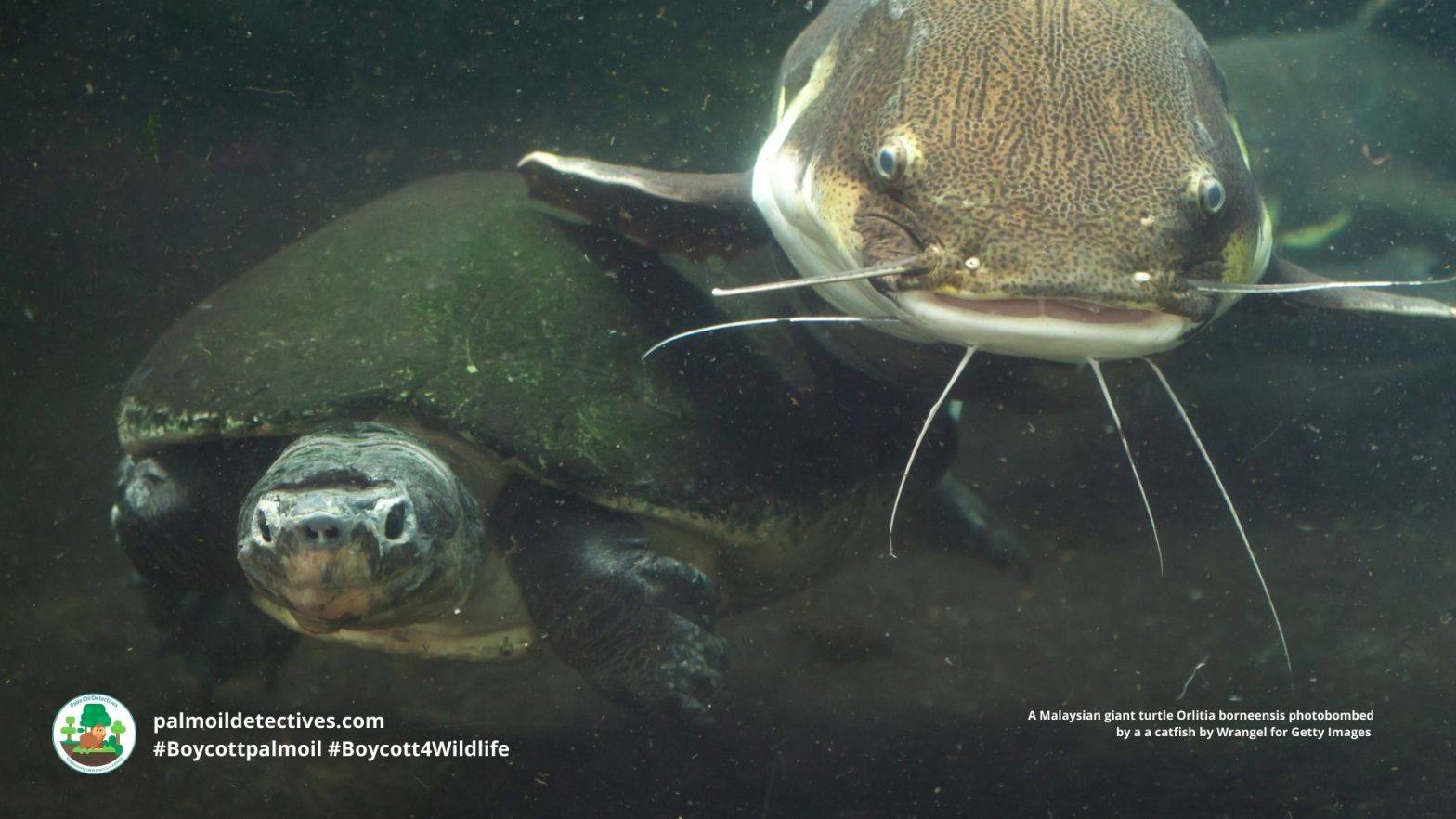
Malaysian Giant Turtle Orlitia borneensis
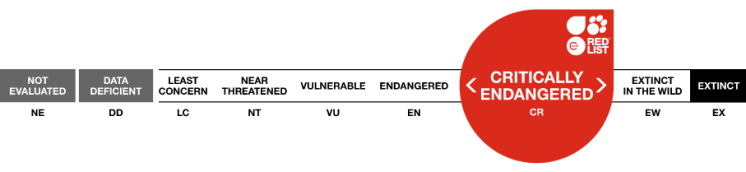
Critically Endangered
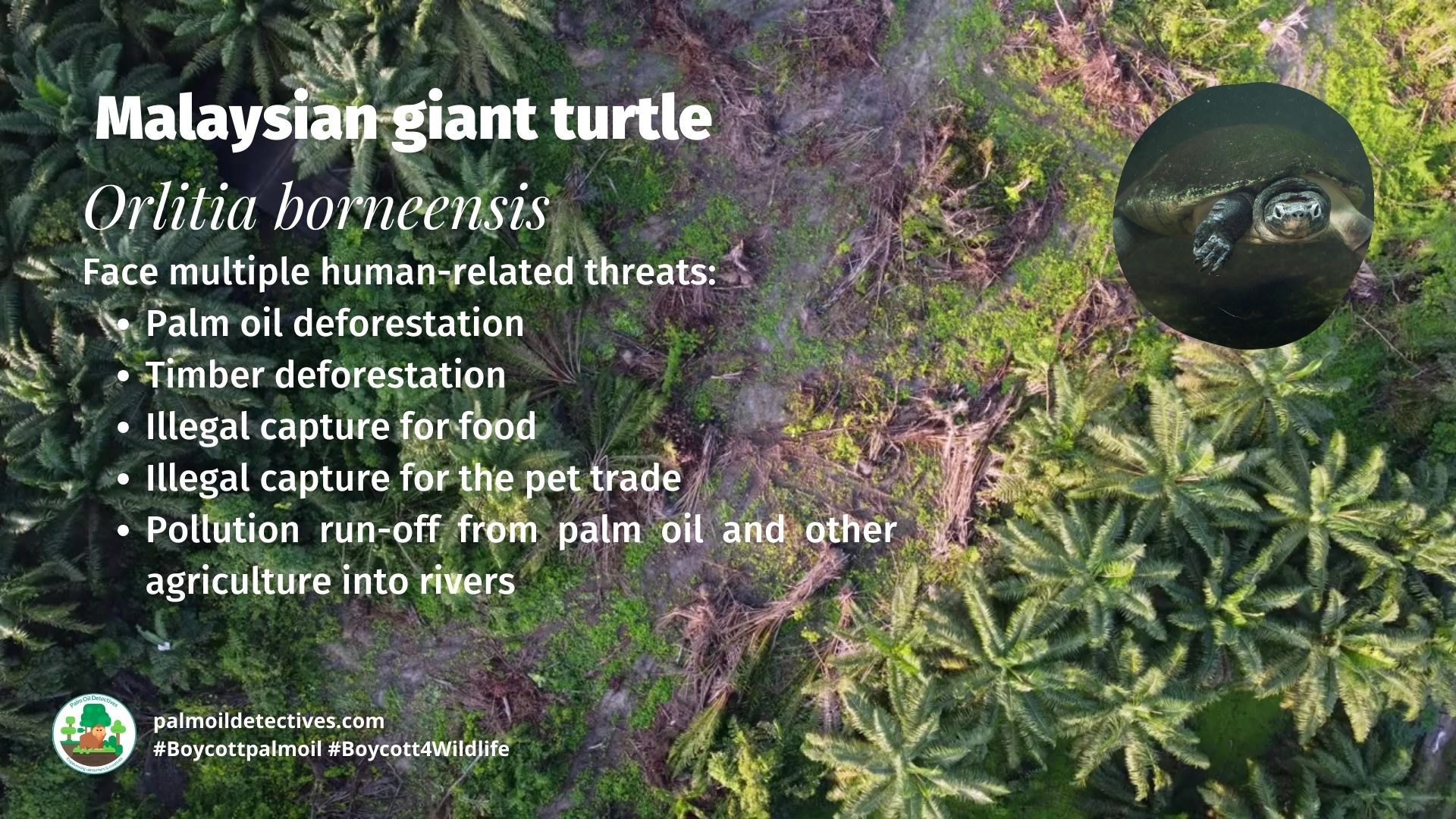
The Malaysian giant turtle, or Bornean river turtle, is Southeast Asia’s largest freshwater turtle. These gentle aquatic giants are critically important for maintaining the balance of their fragile river ecosystems. Their significant size and unique adaptations make them a marvel of evolution, yet they are on the brink of extinction.
Habitat loss driven by palm oil plantations, deforestation, and illegal wildlife trade has caused their population to plummet. Protect these critically endangered turtles by using your wallet as a weapon. Boycott palm oil and fight for their survival. #BoycottPalmOil #Boycott4Wildlife
Share to Twitter and BlueSky!
S.E #Asia’s largest freshwater #turtle are critically endangered #Malaysian Giant #Turtles 🐢💚 Threats include #palmoil #deforestation and illegal capture for food. Help them to survive when you #Boycottpalmoil 🌴🚫#Boycott4Wildlife 🙌 @palmoildetect https://palmoildetectives.com/2021/01/24/malaysian-giant-turtle-orlitia-borneensis/
Critically endangered #Malaysian Giant #Turtles 🐢💚 of #Borneo face serious threats from #palmoil #ecocide and illegal capture for the #pet trade. Fight for them when you #Boycottpalmoil 🌴🚫#Boycott4Wildlife every time you shop 🙌 @palmoildetect https://palmoildetectives.com/2021/01/24/malaysian-giant-turtle-orlitia-borneensis/
The Malaysian Giant Turtle is traded in East Asian food markets in huge numbers of animals of all sizes despite legal status. Previously they were exported in large quantities from Indonesia despite official protection. Conversion of surrounding habitat into palm oil plantations poses an additional threat.
IUCN Red list



Appearance and Behaviour
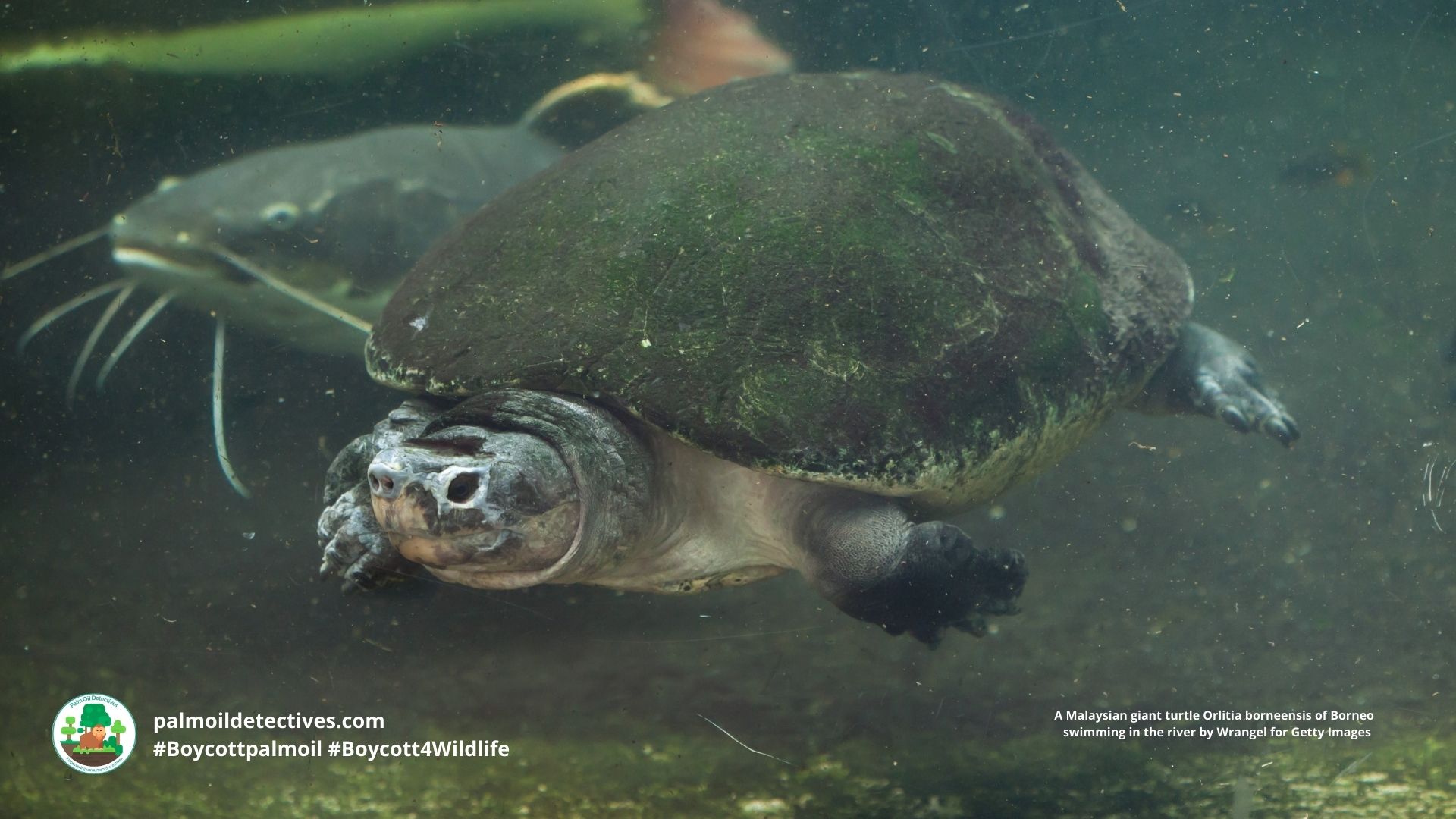
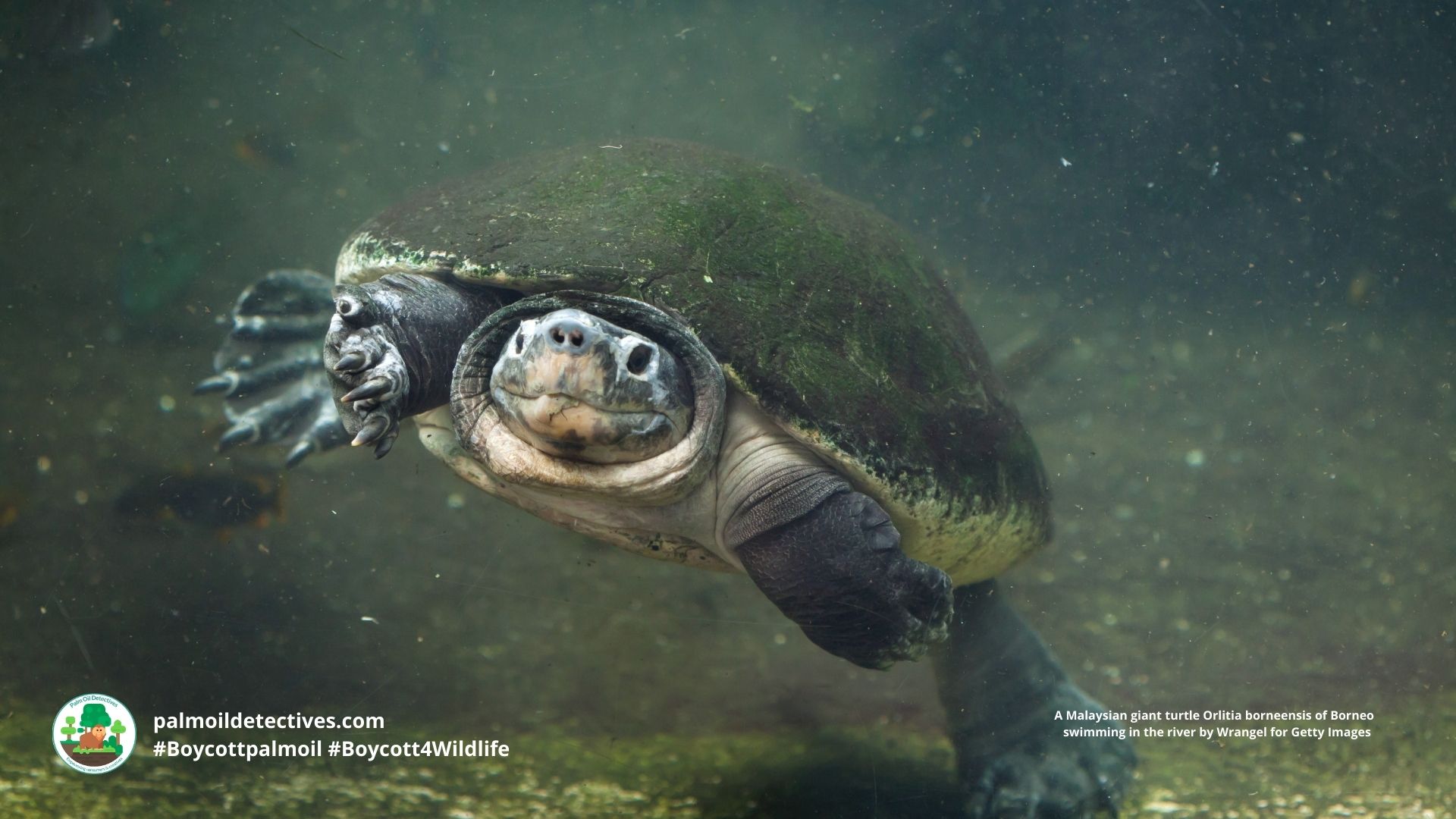
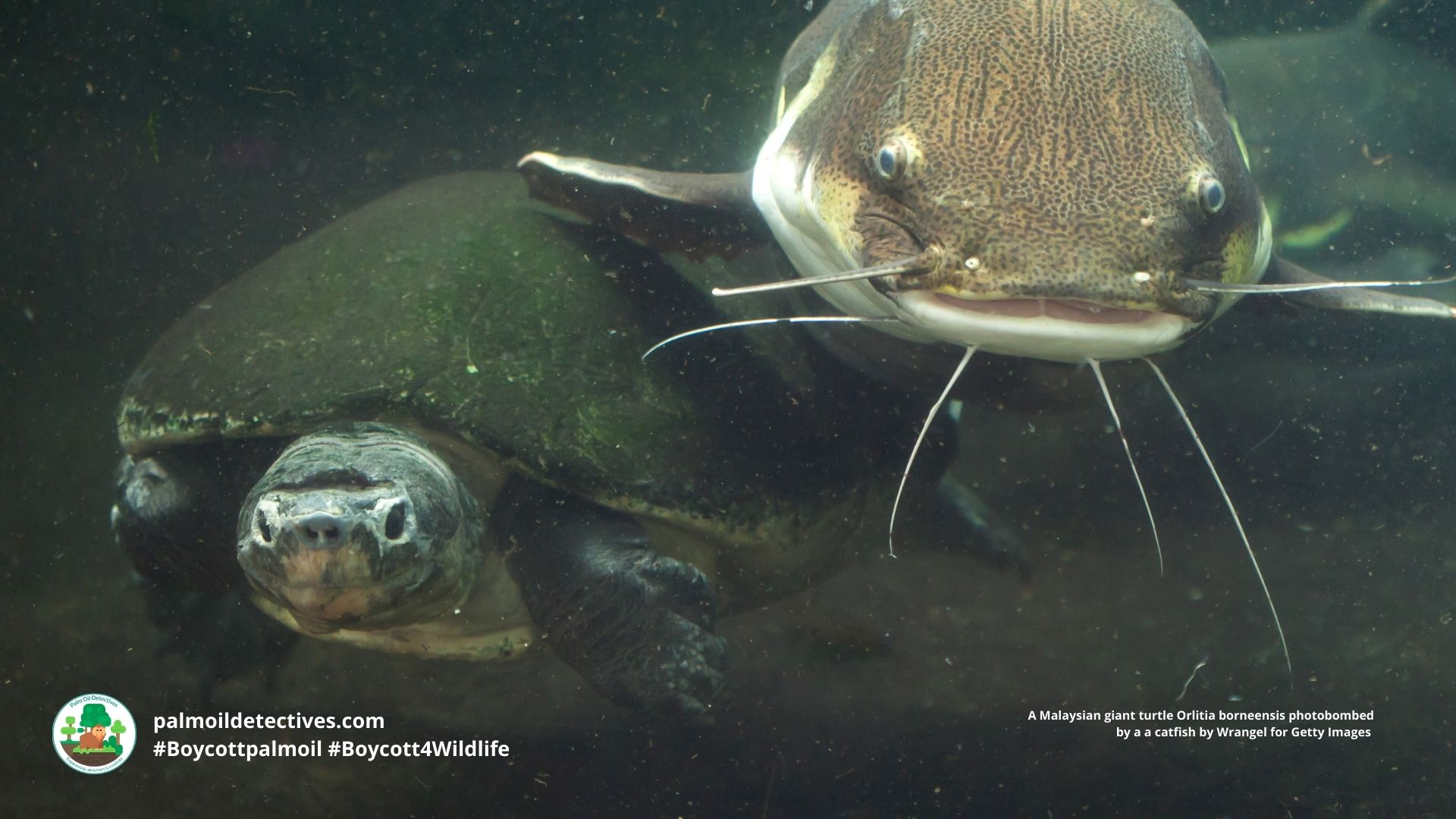
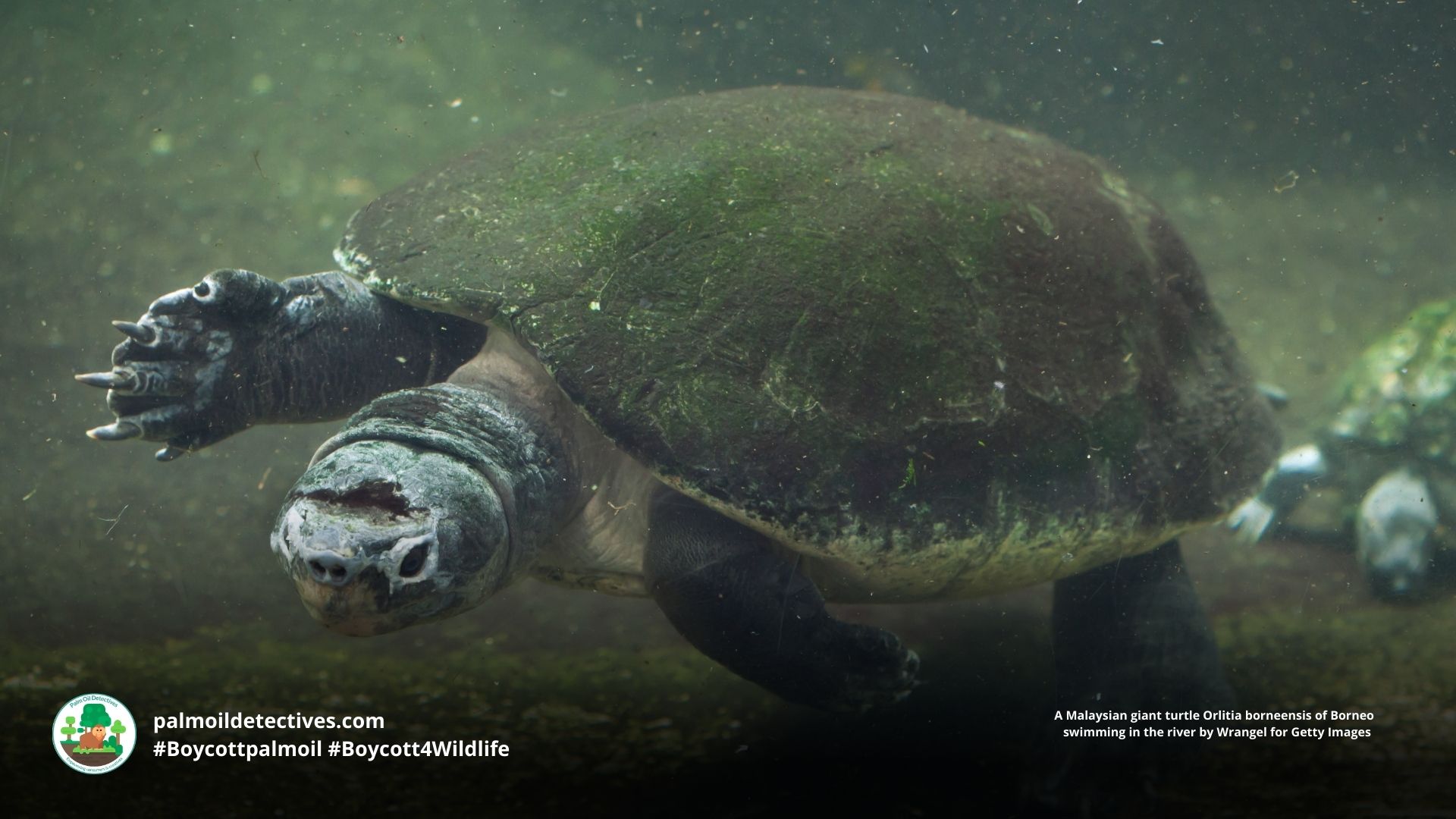
The Malaysian giant turtle is aptly named for its size, with adults reaching carapace lengths of up to 80 cm and weights of up to 50 kg (Auliya & Chen, 2024). Their smooth, oval carapace is black or dark brown, and their strong, paddle-like feet are perfectly adapted for an aquatic lifestyle. Males typically have longer, thicker tails than females, making them distinguishable (IUCN, 2000).
These turtles are primarily aquatic, spending most of their lives in rivers, swamps, and lakes. They feed opportunistically, consuming fish, crustaceans, fruit, and even small vertebrates (Ecology Asia, 2024). Their powerful jaws enable them to crush hard-shelled prey, and their feeding behaviours play a vital role in controlling fish populations.
Geographic Range
Malaysian giant turtles are found in Peninsular Malaysia, Borneo (Sabah, Sarawak, and Kalimantan), and Sumatra. They inhabit slow-flowing rivers, swamps, and large lakes within tropical lowland forests (Reko Forest, 2024). While their historical range was once much broader, habitat destruction has confined them to fragmented and isolated areas, reducing their ability to move between habitats and decreasing genetic diversity (IUCN, 2000).
Diet
Malaysian giant turtles are predominantly piscivorous, feeding on a variety of fish species. However, they are also opportunistic feeders, consuming fruits, aquatic plants, and small vertebrates when available (Ecology Asia, 2024). Their role as a top aquatic predator is crucial for maintaining the balance of river ecosystems.
Reproduction and Mating
Reproductive behaviours of the Malaysian giant turtle remain poorly studied. Females lay their eggs in sandy or muddy riverbanks, leaving the hatchlings to fend for themselves after hatching (Auliya & Chen, 2024). Hatchling survival rates are thought to be low due to predation and habitat disturbances. Conservationists stress the urgent need for more research on their breeding patterns to develop effective strategies for population recovery.
Threats
Listed as Endangered on the IUCN Red List, the Malaysian giant turtle is protected under Indonesian and Malaysian law. However, enforcement remains a challenge. Conservation initiatives, such as habitat restoration and rescue programs, have been established but require significant scaling to reverse population declines. Captive breeding programs may be a vital part of ensuring the species’ survival in the future (Reko Forest, 2024).
IUCN Status: Endangered
- Palm oil deforestation: Deforestation for palm oil plantations and agricultural expansion has destroyed much of the turtle’s natural habitat, leaving their populations increasingly isolated (IUCN, 2000).
- Illegal bushmeat trade: These turtles are heavily exploited for their meat and as exotic pets. The illegal trade has decimated wild populations (Reko Forest, 2024).
- Fishing bycatch: Incidental capture in fishing gear has further reduced their numbers.
- Weak and lax conservation protection: Enforcement of wildlife protection laws remains insufficient, allowing illegal activities to flourish. (Auliya & Chen, 2024).
Take Action! Help to save this species
Protect the Malaysian giant turtle by boycotting palm oil and supporting conservation programs focused on Southeast Asia’s freshwater ecosystems. Advocate for stronger enforcement of wildlife protection laws and raise awareness about the illegal trade that threatens this species. #BoycottPalmOil #Boycott4Wildlife
Further Information
Horne, B.D., Das, I., Hamidy, A., Kusrini, M.D., Guntoro, J. & As-singkily, M. 2020. Orlitia borneensis. The IUCN Red List of Threatened Species 2020: e.T15509A724972. https://dx.doi.org/10.2305/IUCN.UK.2020-2.RLTS.T15509A724972.en. Downloaded on 24 January 2021.
Auliya, M., & Chen, P.-N. (2024). A note on carapace size of the Malaysian giant turtle, Orlitia borneensis (Testudines: Geoemydidae) in Peninsular Malaysia, and the species’ conservation status. Retrieved from https://www.researchgate.net/publication/384444105
Ecology Asia. (2024). Malaysian giant turtle. Retrieved from https://www.ecologyasia.com/verts/turtles/malayan_giant_terrapin.htm
Reko Forest. (2024). Wildlife of RER: Malaysian giant turtle. Retrieved from https://www.rekoforest.org/field-stories/wildlife-of-rer-malaysian-giant-turtle/

How can I help the #Boycott4Wildlife?
Take Action in Five Ways
1. Join the #Boycott4Wildlife on social media and subscribe to stay in the loop: Share posts from this website to your own network on Twitter, Mastadon, Instagram, Facebook and Youtube using the hashtags #Boycottpalmoil #Boycott4Wildlife.
2. Contribute stories: Academics, conservationists, scientists, indigenous rights advocates and animal rights advocates working to expose the corruption of the palm oil industry or to save animals can contribute stories to the website.





3. Supermarket sleuthing: Next time you’re in the supermarket, take photos of products containing palm oil. Share these to social media along with the hashtags to call out the greenwashing and ecocide of the brands who use palm oil. You can also take photos of palm oil free products and congratulate brands when they go palm oil free.
4. Take to the streets: Get in touch with Palm Oil Detectives to find out more.
5. Donate: Make a one-off or monthly donation to Palm Oil Detectives as a way of saying thank you and to help pay for ongoing running costs of the website and social media campaigns. Donate here
Discover more from Palm Oil Detectives
Subscribe to get the latest posts sent to your email.
 Palm Oil Detectives