
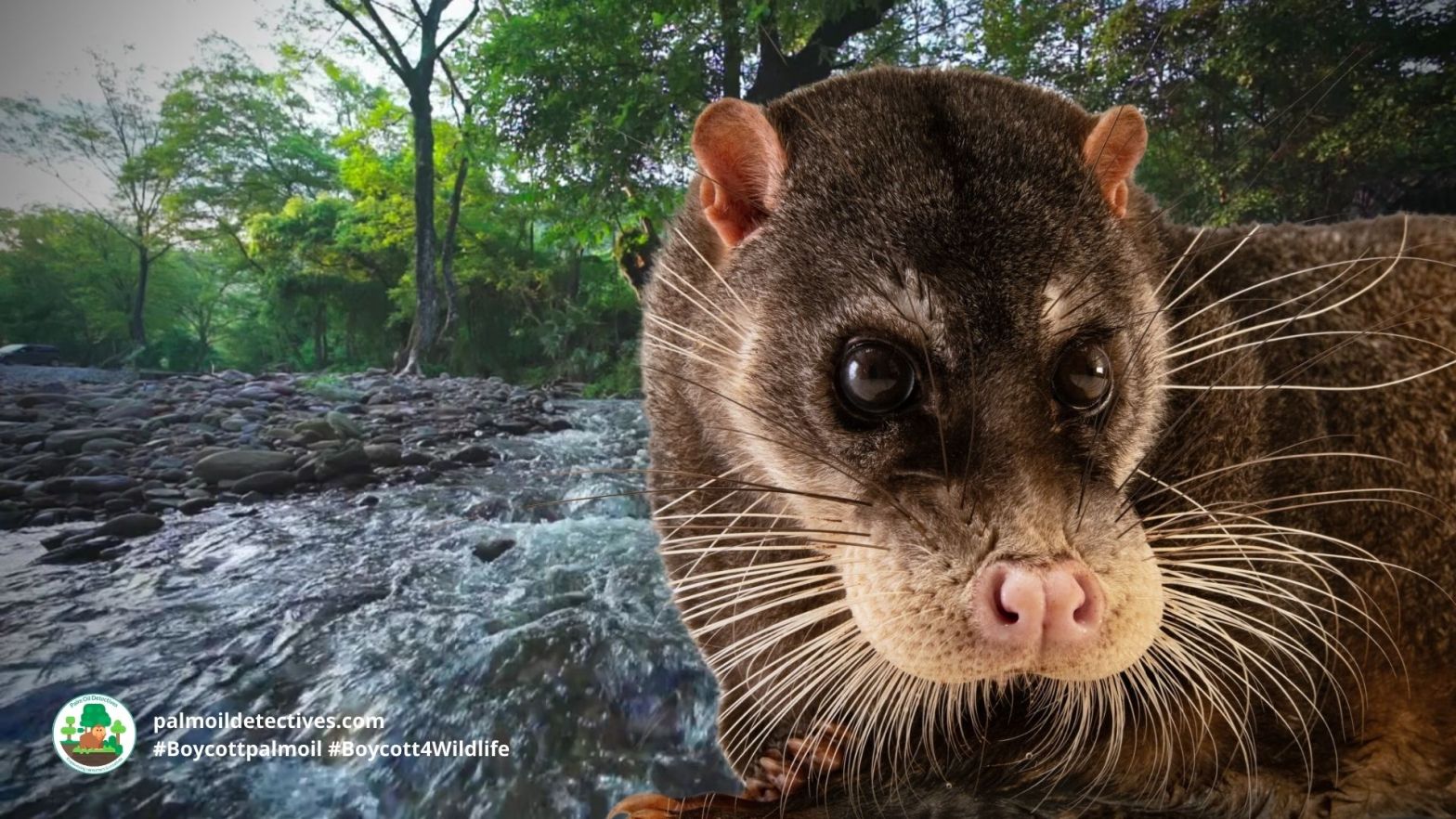
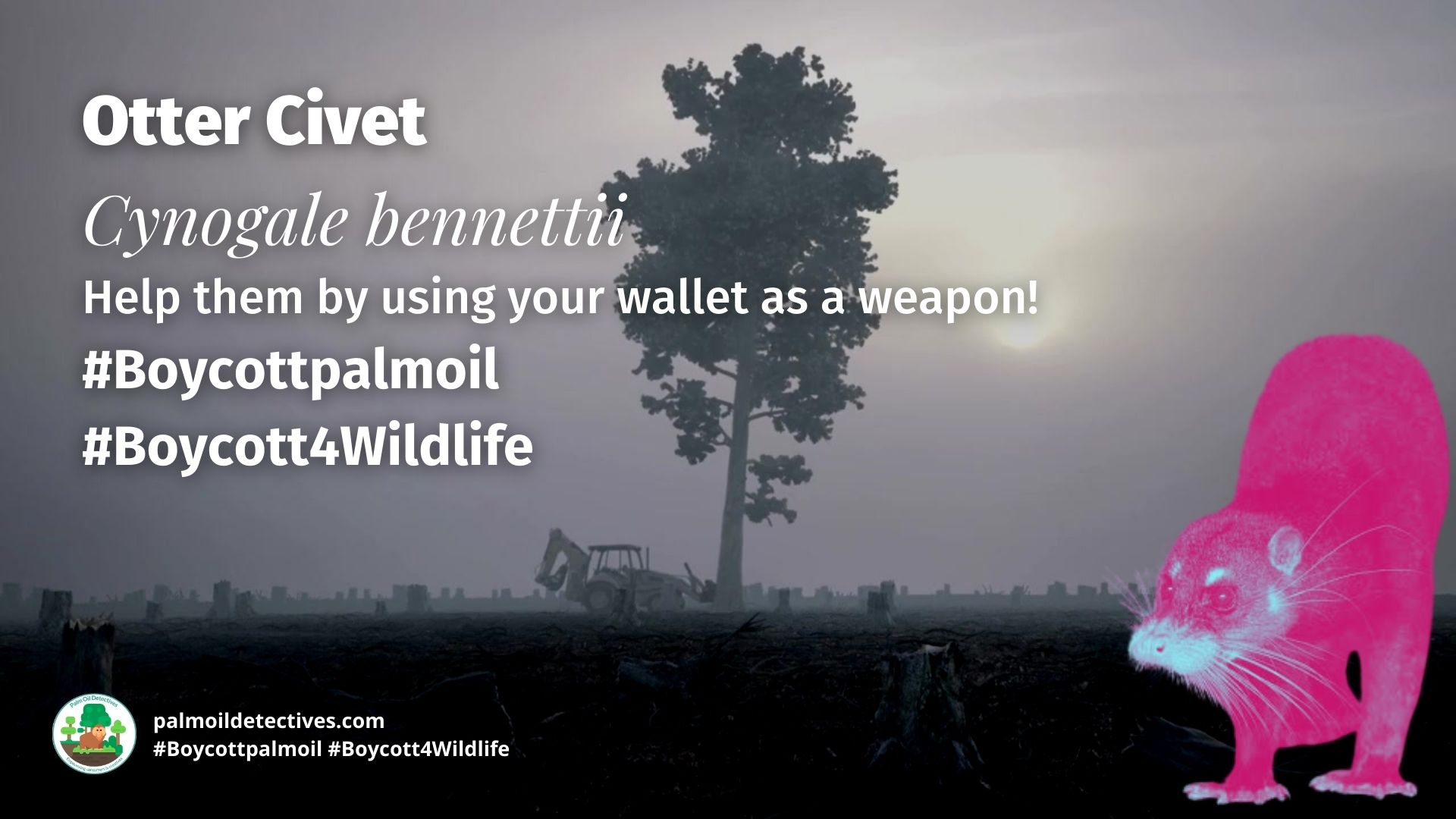
Otter Civet Cynogale bennettii
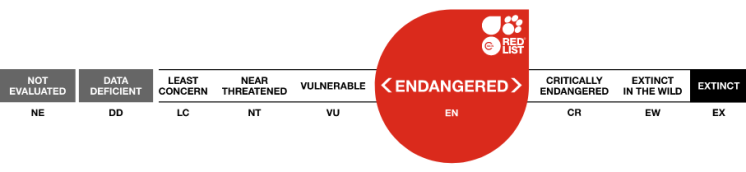
Endangered
Extant (resident): Brunei Darussalam; Indonesia (Kalimantan, Sumatera); Malaysia (Peninsular Malaysia, Sabah, Sarawak)
Presence Uncertain: Thailand
The beautiful and elusive Otter Civet lives primarily in peatland forests and riverine swamps. Their prominent snouts and long whiskers give them keen sensory understanding of their environment. They face serious ongoing threat to their survival in Borneo and are rapidly disappearing due to palm oil deforestation and gold mining pollution run-off into rivers. Help them to survive when you #BoycottPalmOil #Boycott4Wildlife.
The elusive and rare #Otter Civet 🦦🩶 lives in the swamps and forests of #Indonesia #Malaysia and #Brunei, now #endangered by #palmoil #deforestation. Support this species’ survival when u #BoycottPalmOIl #Boycott4Wildlife 🌴🪔⛔️ 🤮 @palmoildetect https://palmoildetectives.com/2021/01/24/otter-civet-cynogale-bennettii/
Resourceful with long sensing whiskers for swamp living, #Otter Civets 🦦 face unprecedented threats from #palmoil and #gold #mining #deforestation on #Borneo. Fight extinction! #BoycottPalmOil 🌴🪔⛔️ #BoycottGold 🥇⛔️ #Boycott4Wildlife @palmoildetect https://palmoildetectives.com/2021/01/24/otter-civet-cynogale-bennettii/
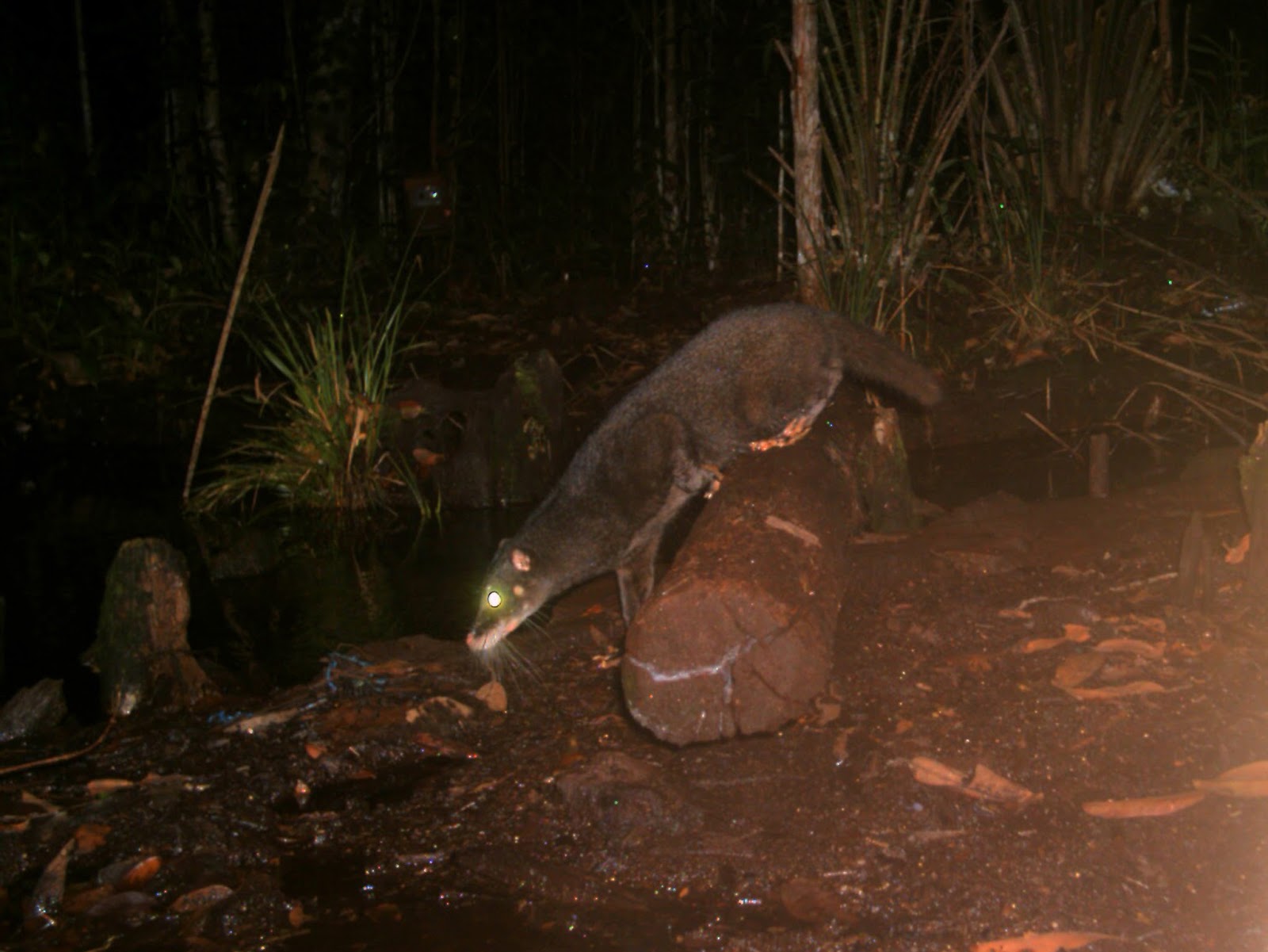
Little is known of Otter Civet habitat and ecology. This species was believed to be confined largely to peat swamp forests, but there are now also records from lowland dipterocarp forest (Sebastian 2005, Cheyne et al. in prep.). They seem to be most strongly associated with lowland primary forest, but they have been recorded in secondary forest, bamboo, and logged forest (Veron et al. 2006, Wilting et al. 2010, A.J. Hearn and J. Ross pers. comm. 2014); their long-term persistence in these habitats is unknown (Veron et al. 2006). The Otter Civet is listed as Endangered because of a presumed small and declining population. Based on data in Miettinen et al. (2011), the presumed primary habitat for Otter Civet has been greatly reduced historically and has declined by about 20% over the last two generations (presumed to be 10 years; Pacifici et al. 2013). The remaining habitat is discontinuous, often degraded; and water sources, presumed to be important for the species, are often polluted.
Threats
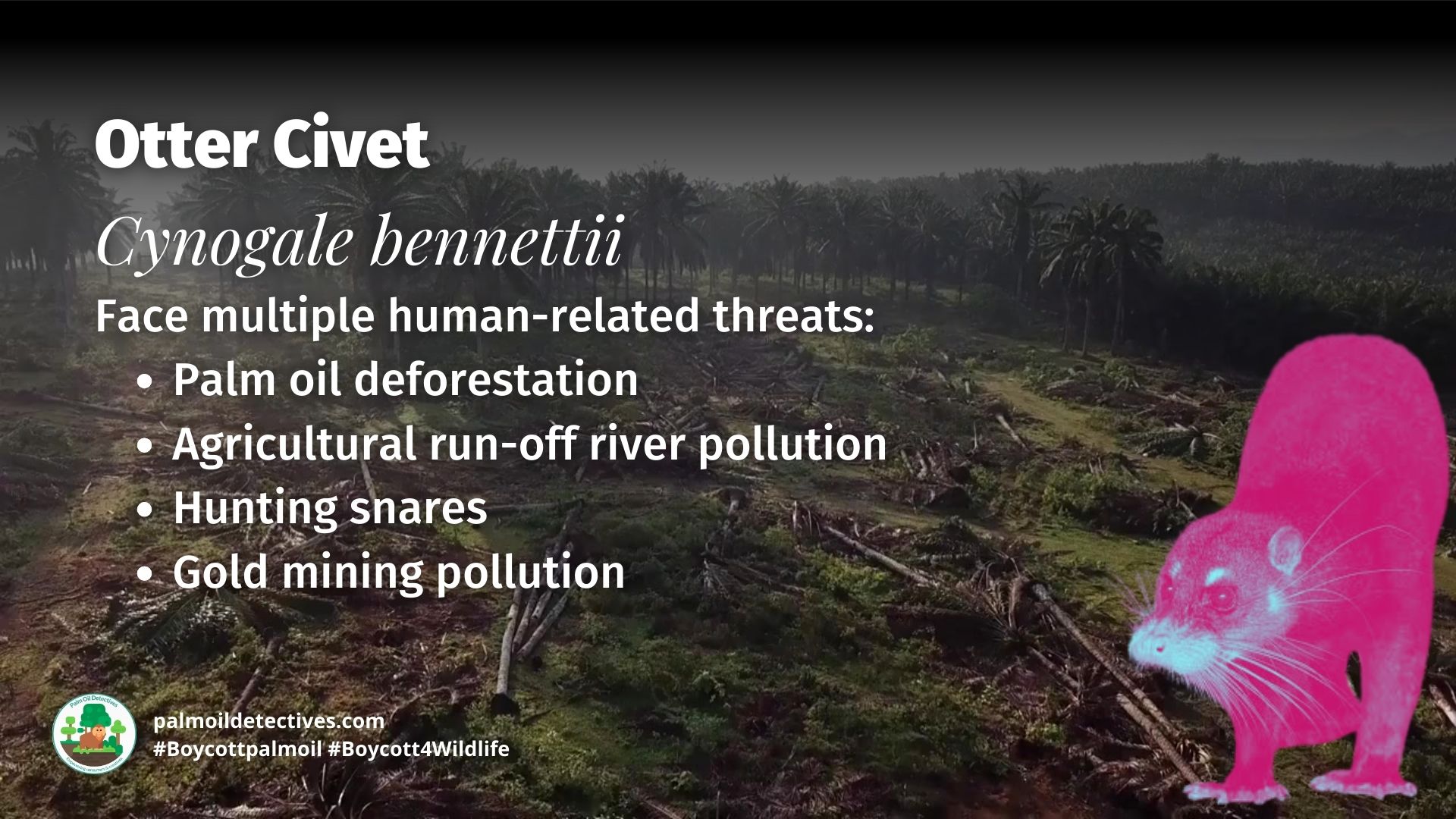
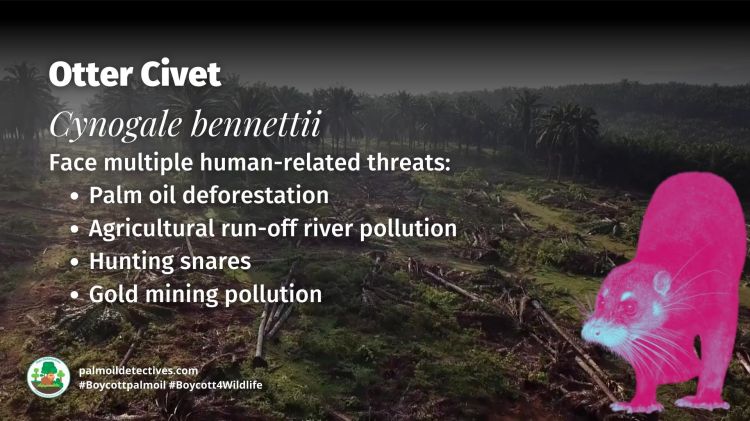
This species of Bornean viverid faces many human-related threats.
- Palm oil deforestation: A major threat to the Otter Civet.
- Gold mining: chemical pollution from gold mining is a threat.
- Agricultural pollution run-off into rivers
- Unintentional capture in hunting snares: Evidence does not suggest that this species is hunted directly but may unintentionally be killed in traps.



You can support this beautiful animal
There are no known conservation activities for this animal. Share out this post to social media and join the #BoycottPalmOil #Boycott4Wildlife on social media to raise awareness
Further Information
Ross, J., Wilting, A., Ngoprasert, D., Loken, B., Hedges, L., Duckworth, J.W., Cheyne, S., Brodie, J., Chutipong, W., Hearn, A., Linkie, M., McCarthy, J., Tantipisanuh, N. & Haidir, I.A. 2015. Cynogale bennettii. The IUCN Red List of Threatened Species 2015: e.T6082A45197343. https://dx.doi.org/10.2305/IUCN.UK.2015-4.RLTS.T6082A45197343.en. Downloaded on 24 January 2021.

How can I help the #Boycott4Wildlife?
Take Action in Five Ways
1. Join the #Boycott4Wildlife on social media and subscribe to stay in the loop: Share posts from this website to your own network on Twitter, Mastadon, Instagram, Facebook and Youtube using the hashtags #Boycottpalmoil #Boycott4Wildlife.
2. Contribute stories: Academics, conservationists, scientists, indigenous rights advocates and animal rights advocates working to expose the corruption of the palm oil industry or to save animals can contribute stories to the website.



3. Supermarket sleuthing: Next time you’re in the supermarket, take photos of products containing palm oil. Share these to social media along with the hashtags to call out the greenwashing and ecocide of the brands who use palm oil. You can also take photos of palm oil free products and congratulate brands when they go palm oil free.
4. Take to the streets: Get in touch with Palm Oil Detectives to find out more.
5. Donate: Make a one-off or monthly donation to Palm Oil Detectives as a way of saying thank you and to help pay for ongoing running costs of the website and social media campaigns. Donate here
Discover more from Palm Oil Detectives
Subscribe to get the latest posts sent to your email.
 Palm Oil Detectives