

Yellow-handed Mitered Langur Presbytis melalophos
Endangered
The vividly colourful and cheeky yellow-handed mitered langur Presbytis melalophos are native to Sumatra, Indonesia. They are severely threatened by deforestation and logging due to the palm oil, mining and timber industries. Agricultural expansion for palm oil plantations has caused massive habitat loss and fragmentation throughout their range, while illegal hunting further endangers their population. Take action and use your wallet as a weapon. Boycott all palm oil products to help protect them to survive and advocate for palm oil free alternatives. #BoycottPalmOil #Boycott4Wildlife
Yellow-handed Mitred #Langurs are adorable and vividly coloured small #monkeys. They’re endangered in #Sumatra #Indonesia from #palmoil #deforestation. 70% of their home has been lost in the past decade Help them and #Boycottpalmoil #Boycott4Wildlife @palmoildetect https://wp.me/pcFhgU-jP
Help to save vividly colourful and cheeky Yellow-handed mitred #langurs, #endangered by #palmoil #ecocide and destruction. 70% of their home is already gone! 🙈🔥🌳 😿 Fight for their survival, when u shop #Boycottpalmoil #Boycott4Wildlife @palmoildetect https://wp.me/pcFhgU-jP
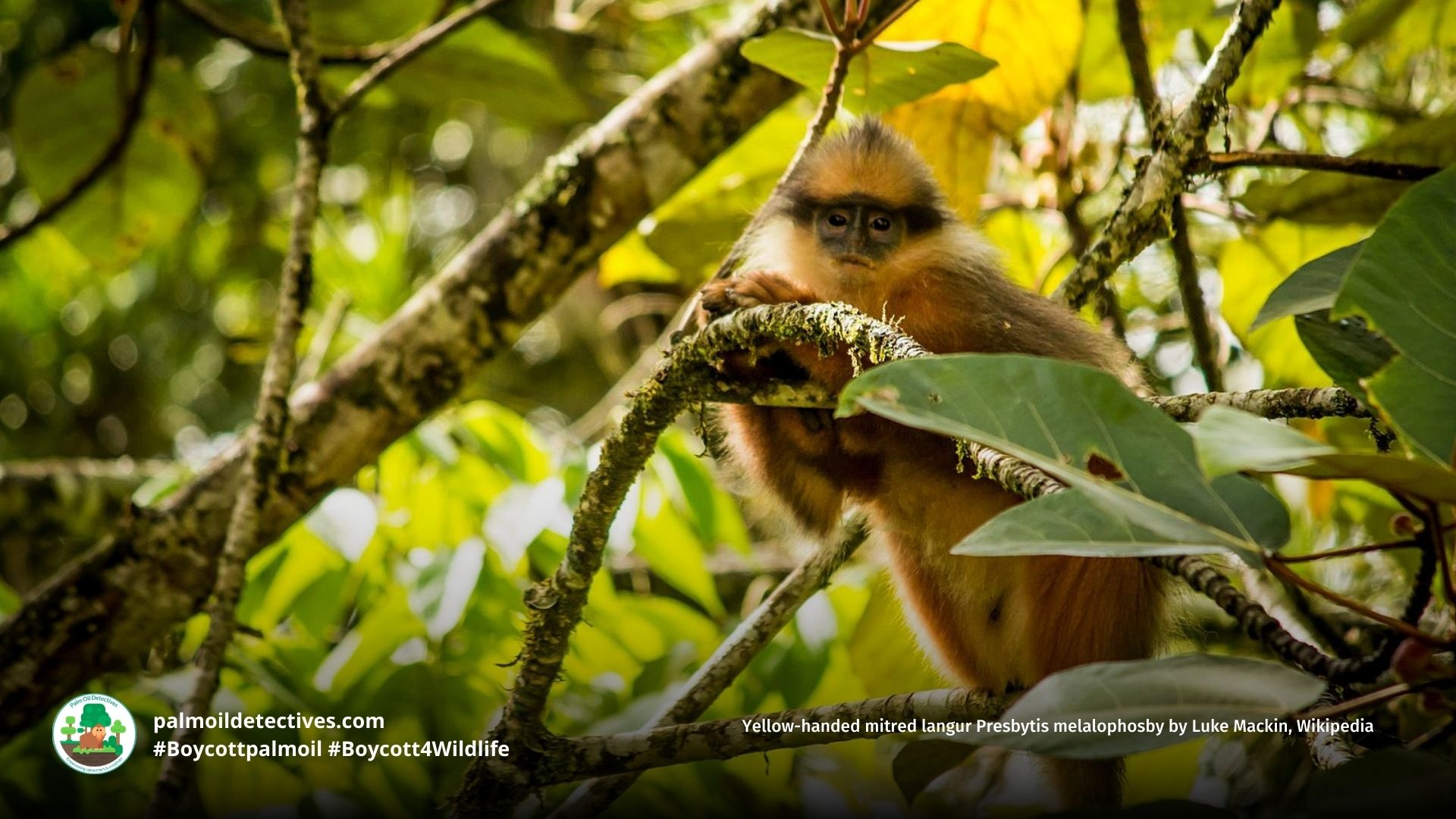
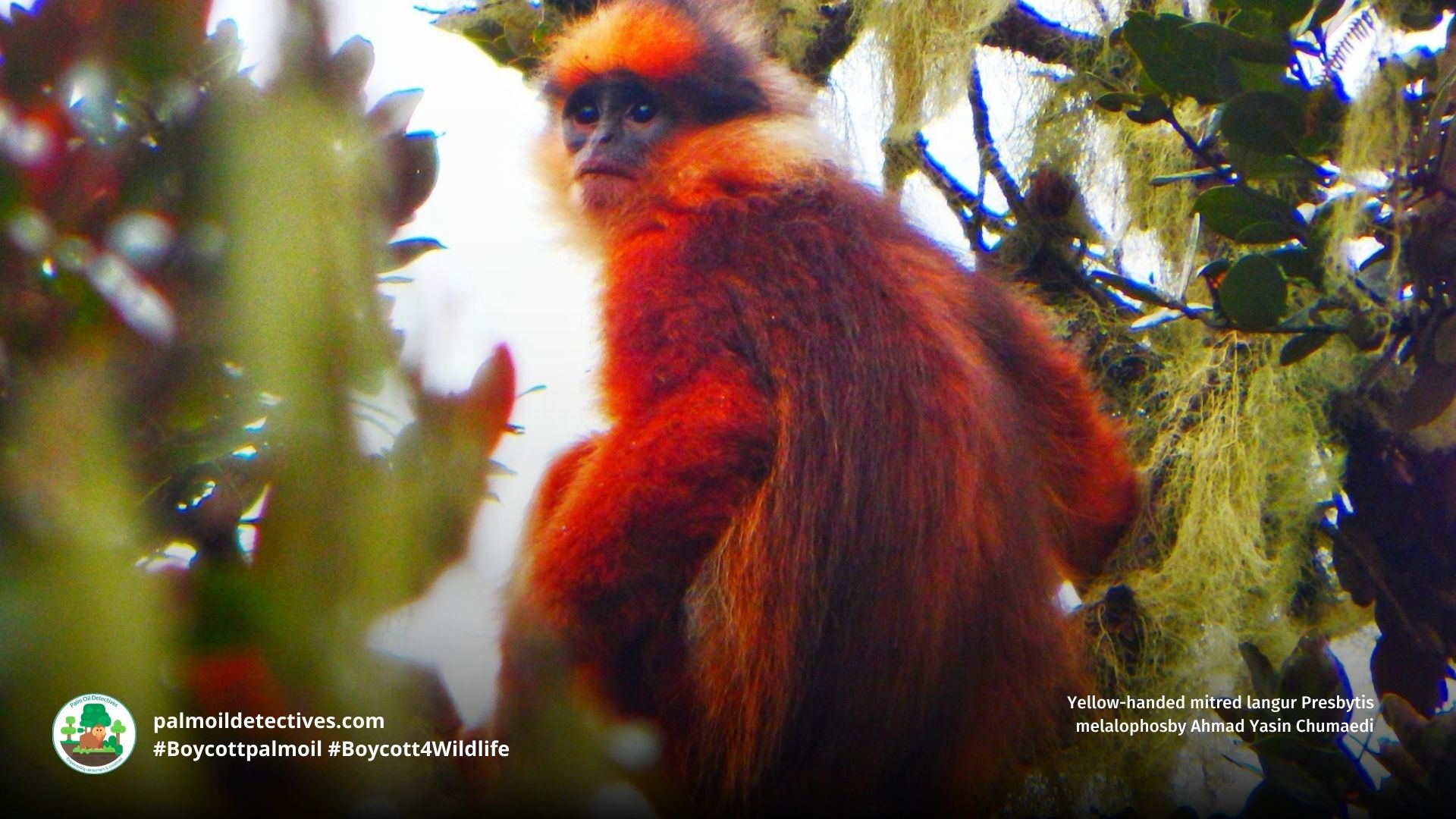
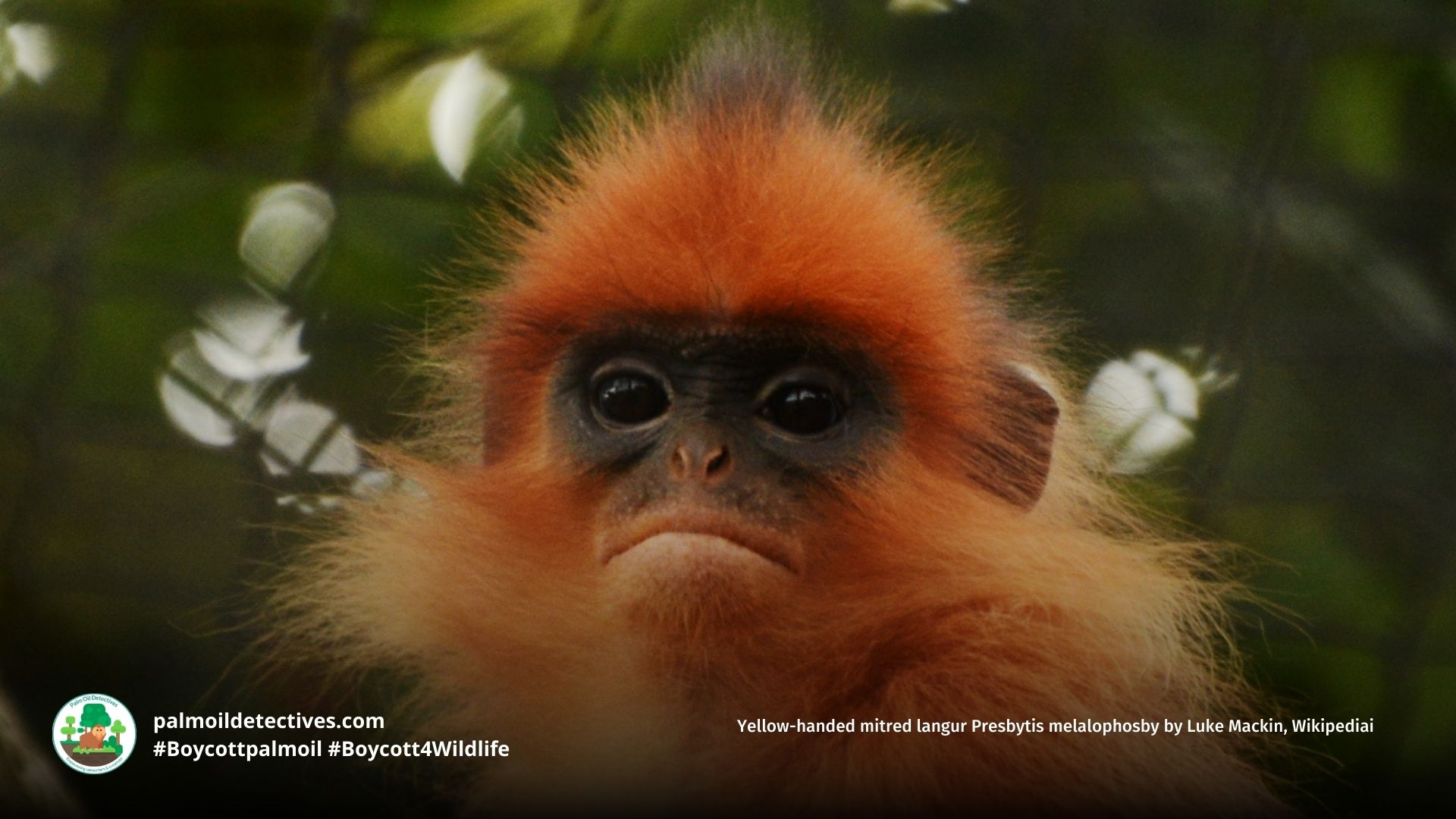
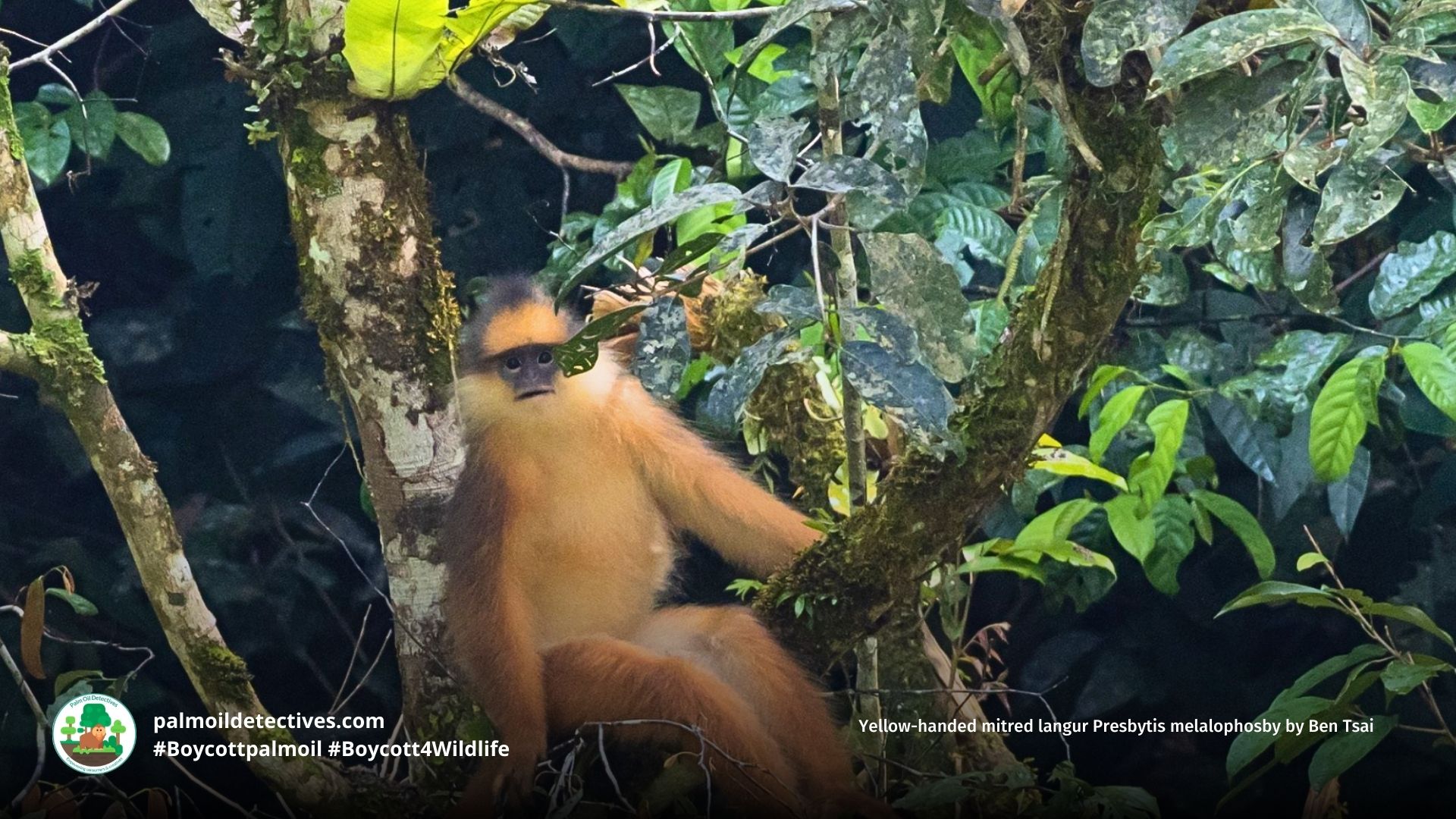
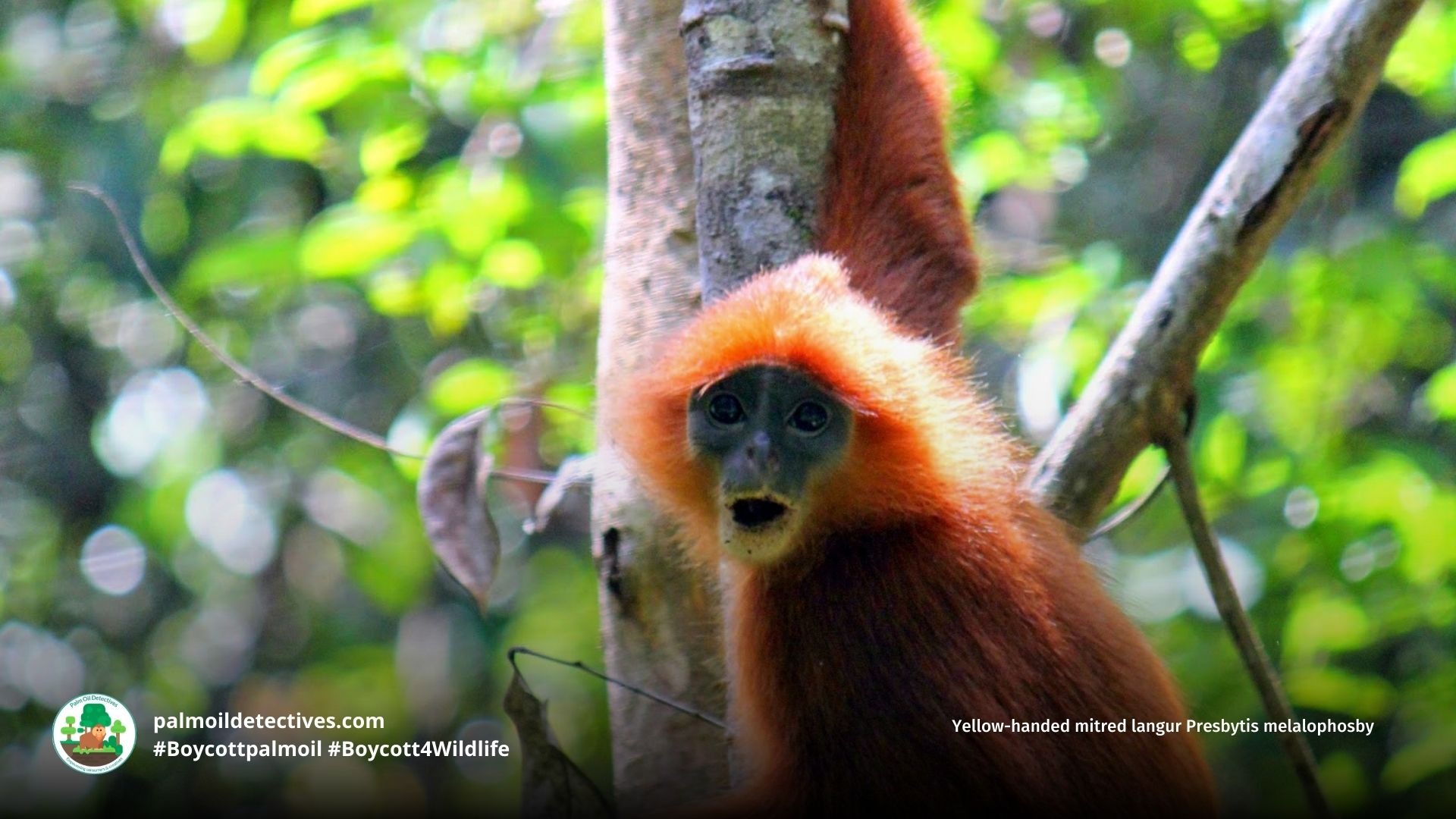
There has been extensive loss of habitat, especially for oil palm plantations, and this is a serious threat. However, the species has some tolerance to forest conversion, but not to complete replacement of forests. Although forest loss has probably exceeded 70% over 30 years approximately, the population is suspected to have declined by over 50% in 3 generations (36 years) and continues to decline.
IUCN Red List
- Social Structure: These small monkeys live in small groups led by a dominant male, typically including females and their offspring, with social bonds that involve grooming and communication through vocalizations.
- Communication: They use a variety of vocal calls and facial expressions to convey messages, warn of predators, or maintain group cohesion.
- Diet: Primarily folivorous, they feed on leaves, fruits, and flowers, often selecting new shoots and young leaves high in nutritional value.
- Locomotion: Agile and swift in trees, they leap and brachiate among branches, exhibiting impressive acrobatic skills.
- Distinctive Appearance: Their bright yellow hands contrast with their grayish fur, making them easily distinguishable from other langurs.
Threats
- Deforestation: Large-scale logging and conversion of forests to palm oil and timber agriculture has massively reduced their range.
- Agricultural Expansion: Plantations, particularly for palm oil have replaced native forests, leading to habitat fragmentation.
- Hunting: They are hunted for bushmeat or to be kept as pets.
- Human-Wildlife Conflict: As human activities encroach on their habitat, conflicts can arise, leading to their injury or death.
- Infrastructure Development: Roads and infrastructure projects fragment habitats, isolating populations and reducing genetic diversity.
Further Information

Nijman, V., Setiawan, A., Traeholt, C. & Manullang, B. 2020. Presbytis melalophos. The IUCN Red List of Threatened Species 2020: e.T39811A17954271. https://dx.doi.org/10.2305/IUCN.UK.2020-2.RLTS.T39811A17954271.en. Downloaded on 24 January 2021.

How can I help the #Boycott4Wildlife?
Take Action in Five Ways
1. Join the #Boycott4Wildlife on social media and subscribe to stay in the loop: Share posts from this website to your own network on Twitter, Mastadon, Instagram, Facebook and Youtube using the hashtags #Boycottpalmoil #Boycott4Wildlife.
2. Contribute stories: Academics, conservationists, scientists, indigenous rights advocates and animal rights advocates working to expose the corruption of the palm oil industry or to save animals can contribute stories to the website.



3. Supermarket sleuthing: Next time you’re in the supermarket, take photos of products containing palm oil. Share these to social media along with the hashtags to call out the greenwashing and ecocide of the brands who use palm oil. You can also take photos of palm oil free products and congratulate brands when they go palm oil free.
4. Take to the streets: Get in touch with Palm Oil Detectives to find out more.
5. Donate: Make a one-off or monthly donation to Palm Oil Detectives as a way of saying thank you and to help pay for ongoing running costs of the website and social media campaigns. Donate here
Discover more from Palm Oil Detectives
Subscribe to get the latest posts sent to your email.
 Palm Oil Detectives