
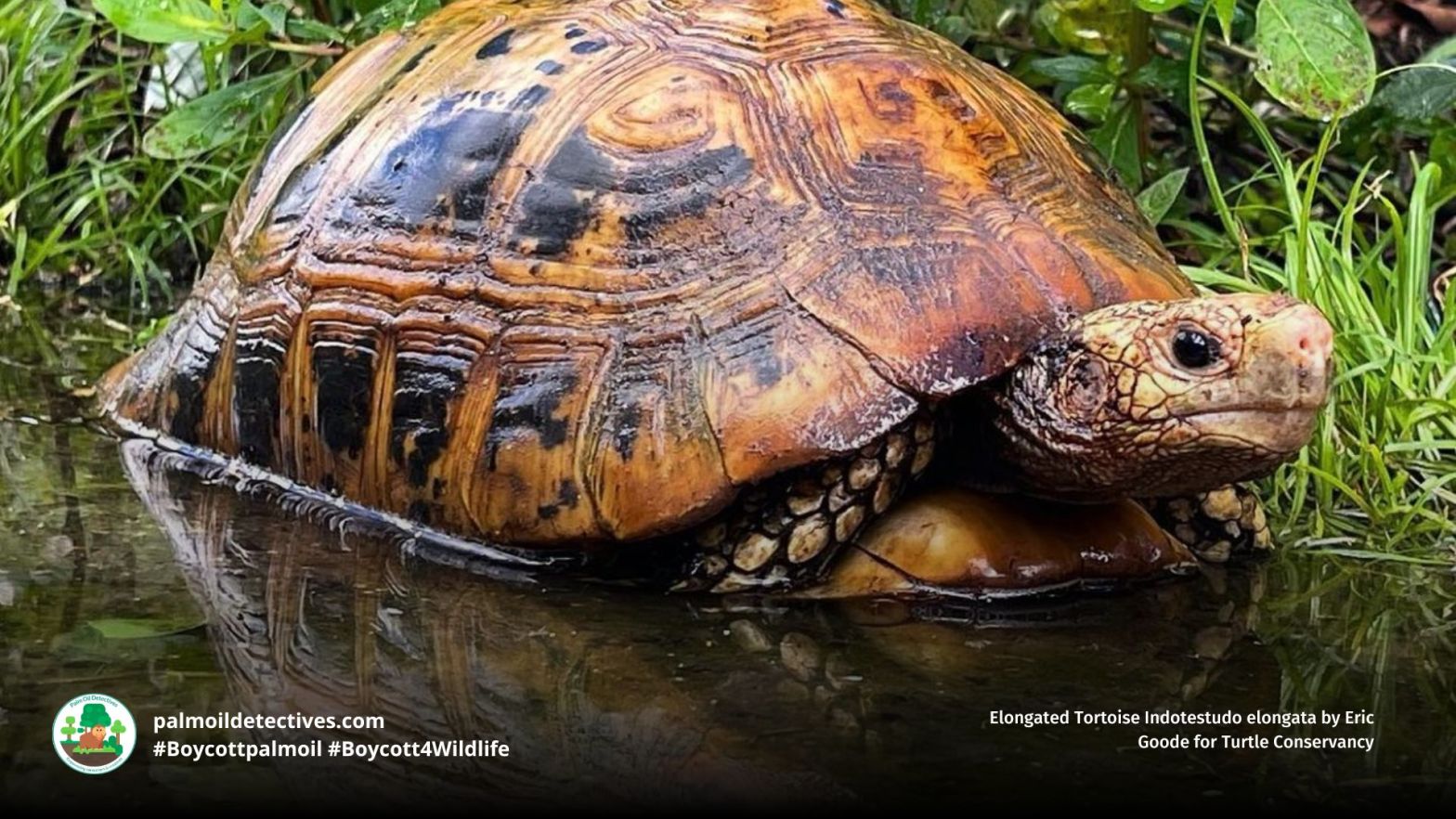
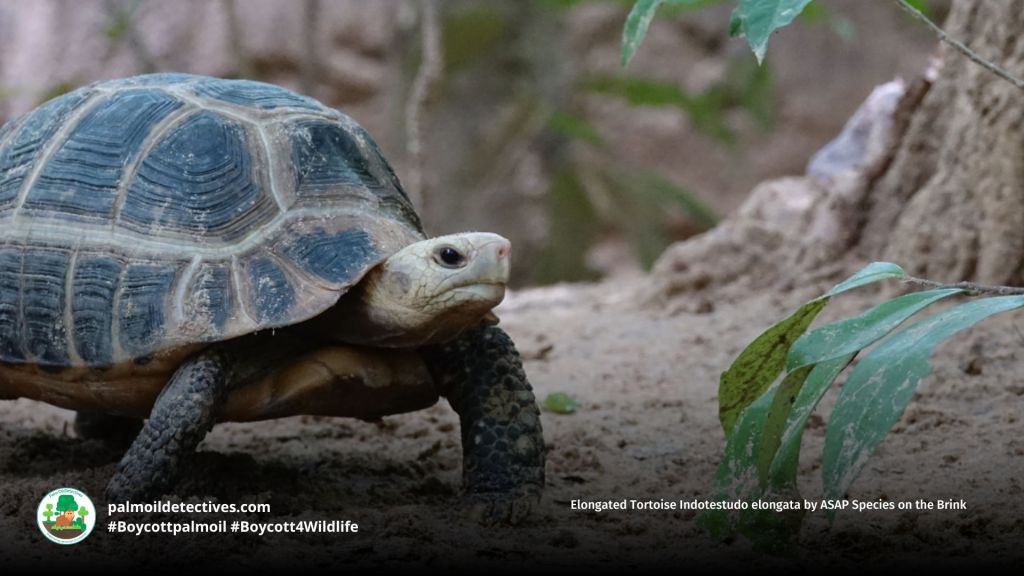
Elongated Tortoise Indotestudo elongata
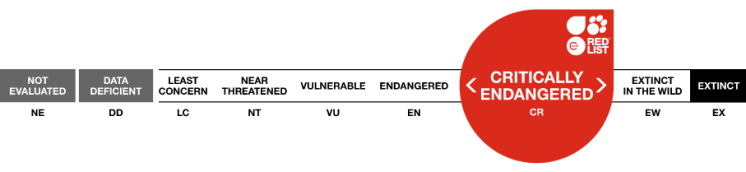
Critically Endangered
Location: South and Southeast Asia, including India, Nepal, Bhutan, Bangladesh, Myanmar, Thailand, Laos, Cambodia, Vietnam, Malaysia, and southern China
The elongated tortoise Indotestudo elongata is a Critically Endangered species native to South Asia and Southeast Asia. They are renowned for their uniquely patterned and elongated shells and have vital roles as seed dispersers in tropical forests. However, their numbers have declined alarmingly due to palm oil deforestation, hunting, and the illegal wildlife trade.
Fewer than 20,000 mature individuals are estimated to remain in fragmented populations across their range, with significant declines reported in most countries. Deforestation for agriculture, including palm oil plantations and urbanisation has devastated their habitats, while poaching continues unabated. Fight for them every time you shop and boycott palm oil! #BoycottPalmOil #Boycott4Wildlife
Solitary and shy #reptile the Elongated #Tortoise 🐢 shuffles in the forest floor of #India #Malaysia #Vietnam. They’re critically #endangered by #palmoil and illegal #poaching Fight for them #BoycottPalmOil 🌴🔥💀🤮⛔️ #Boycott4Wildlife @palmoildetect https://palmoildetectives.com/2021/01/25/elongated-tortoise-indotestudo-elongata/
Appearance and Behaviour
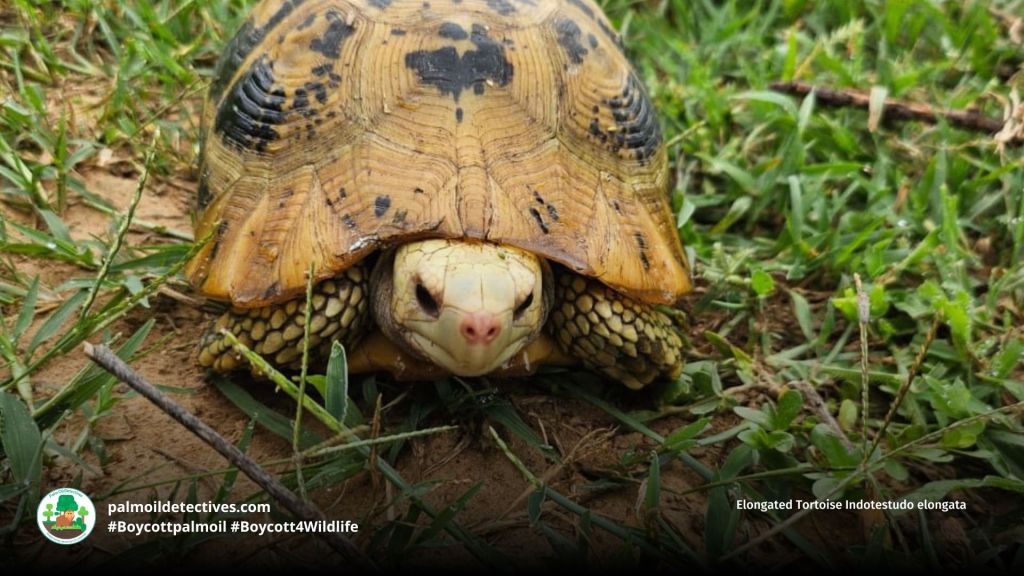
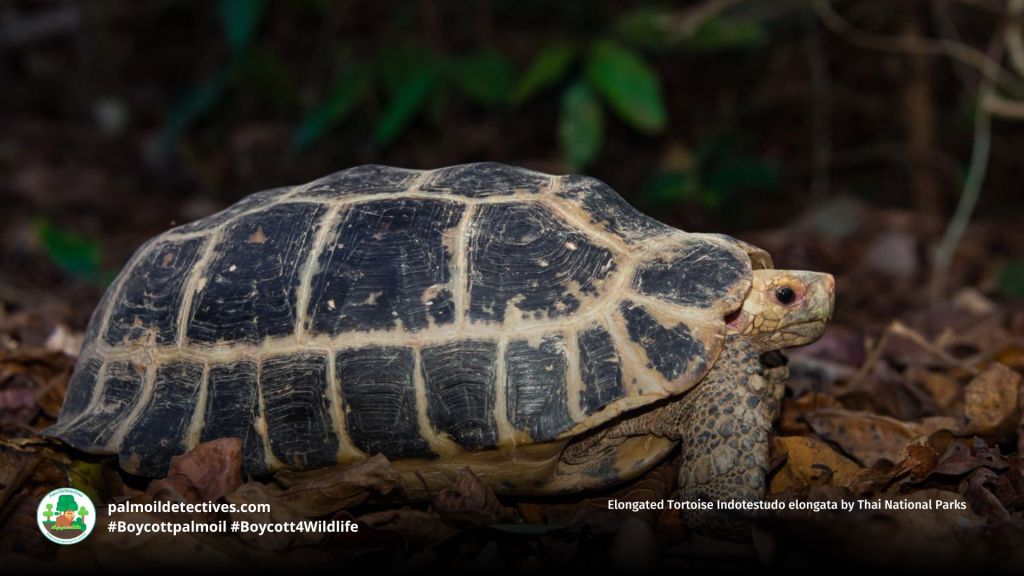
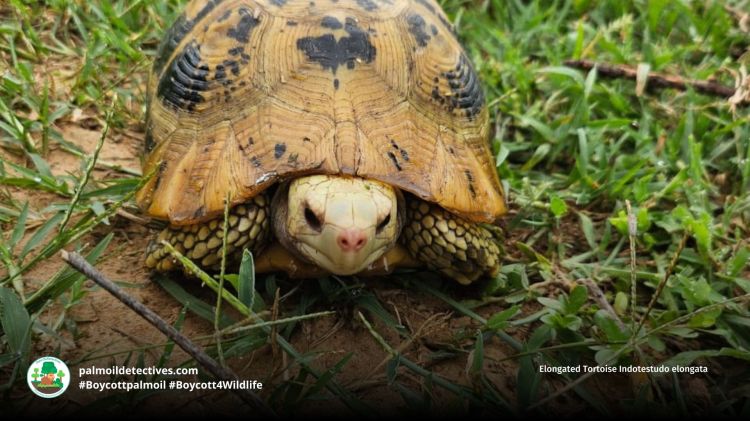
Elongated tortoises are medium-sized terrestrial reptiles, with adults reaching up to 38 cm in length and weighing between 3–6 kg. Their distinctive golden-brown or yellowish shells are elongated and slightly domed, often adorned with intricate darker blotches. Their head, neck, and limbs are pale yellow, providing them with effective camouflage in forest environments.
These tortoises are solitary and crepuscular, meaning they are most active during the early morning and late evening. They spend much of the day sheltering under dense vegetation or burrowing into leaf litter. Slow-moving and shy, they rely on their shell for protection from predators. Their diet primarily consists of fallen fruits, flowers, leaves, and small invertebrates.
Indotestudo elongata has declined across their range by at least 80% in the last 90 years (three generations) for habitat loss reasons alone, and has additionally been extensively and intensively exploited for consumption and export trade.
IUCN Red List



Threats
IUCN Status: Critically Endangered
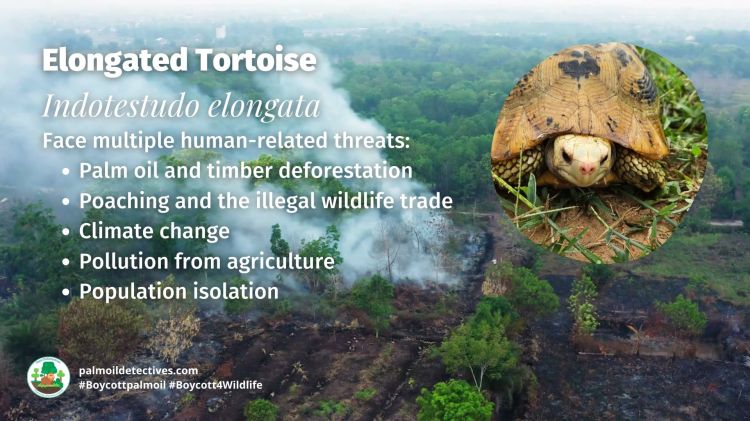
Habitat Destruction for palm oil: Deforestation for palm oil plantations has wiped out vast areas of their tropical forest habitats. Forest conversion in countries like Cambodia, Vietnam, and Malaysia has left populations isolated in shrinking forest fragments.
Illegal Wildlife Trade: Elongated tortoises are highly sought after in the illegal pet trade and for traditional medicine. In Thailand and Vietnam, they are openly sold in markets despite their critically endangered status.
Hunting and Poaching: In many regions, elongated tortoises are hunted for food, with local communities and markets driving demand for their meat and shells. This exploitation has severely depleted populations.
Climate Change: Changes to rainfall patterns, rising temperatures, and extreme weather events due to climate change has further threatened their survival by impacting their habitats and food availability.
Geographic Range: The elongated tortoise inhabits tropical and subtropical forests, grasslands, and bamboo thickets across a broad but fragmented range:
- South Asia: India (Corbett Tiger Reserve), Nepal, Bhutan, and Bangladesh
- Southeast Asia: Myanmar, Thailand, Laos, Cambodia, Vietnam, and Malaysia
- China: Southern regions, including Yunnan Province
Populations are highly fragmented due to habitat loss and are now primarily found within protected areas, such as Corbett Tiger Reserve in India and various wildlife sanctuaries in Cambodia and Thailand. However, even within these refuges, they face threats from illegal activities.
Diet
Elongated tortoises are primarily herbivorous but exhibit opportunistic feeding behaviour. Their diet includes fallen fruits, leaves, flowers, and grasses, with occasional consumption of small invertebrates like snails and worms. They forage on the forest floor and are crucial seed dispersers, contributing to the regeneration of their ecosystems.
However, habitat destruction has significantly reduced the availability of their natural food sources, adding further stress to dwindling populations.
Reproduction and Mating
Breeding typically occurs during the rainy season. Females lay 2–6 eggs per clutch in shallow nests covered with vegetation for protection. Incubation lasts around 100–120 days.
Hatchlings are small and vulnerable, with soft shells that harden over time. Survival rates are low due to predation and habitat destruction. Conservation efforts, such as reintroduction programs in Cambodia, aim to boost wild populations by addressing these challenges.
Take Action!
The elongated tortoise is teetering on the brink of extinction. Protect their habitats, support conservation initiatives, and fight for their survival by boycotting palm oil. Share their story to raise awareness and advocate for stronger wildlife protections. Every action counts in saving this remarkable species. #BoycottPalmOil #Boycott4Wildlife
Further Information
Rahman, S., Platt, K., Das, I., Choudhury, B.C., Ahmed, M.F., Cota, M., McCormack, T., Timmins, R.J. & Singh, S. 2019. Indotestudo elongata (errata version published in 2019). The IUCN Red List of Threatened Species 2019: e.T10824A152051190. https://dx.doi.org/10.2305/IUCN.UK.2019-1.RLTS.T10824A152051190.en. Downloaded on 25 January 2021.
Reptiles Magazine. (2021). Elongated Tortoise Information and Care. Reptiles Magazine.
Sharma, R., et al. (2021). Adult Elongated Tortoise (Indotestudo elongata) from Corbett Tiger Reserve, India. ResearchGate.
Species on the Brink. (2021). Pilot Reintroduction of Elongated Tortoise in Cambodia. Species on the Brink.
Thai National Parks. (2021). Indotestudo elongata. Thai National Parks.

How can I help the #Boycott4Wildlife?
Take Action in Five Ways
1. Join the #Boycott4Wildlife on social media and subscribe to stay in the loop: Share posts from this website to your own network on Twitter, Mastadon, Instagram, Facebook and Youtube using the hashtags #Boycottpalmoil #Boycott4Wildlife.
2. Contribute stories: Academics, conservationists, scientists, indigenous rights advocates and animal rights advocates working to expose the corruption of the palm oil industry or to save animals can contribute stories to the website.





3. Supermarket sleuthing: Next time you’re in the supermarket, take photos of products containing palm oil. Share these to social media along with the hashtags to call out the greenwashing and ecocide of the brands who use palm oil. You can also take photos of palm oil free products and congratulate brands when they go palm oil free.
4. Take to the streets: Get in touch with Palm Oil Detectives to find out more.
5. Donate: Make a one-off or monthly donation to Palm Oil Detectives as a way of saying thank you and to help pay for ongoing running costs of the website and social media campaigns. Donate here
Discover more from Palm Oil Detectives
Subscribe to get the latest posts sent to your email.
 Palm Oil Detectives