
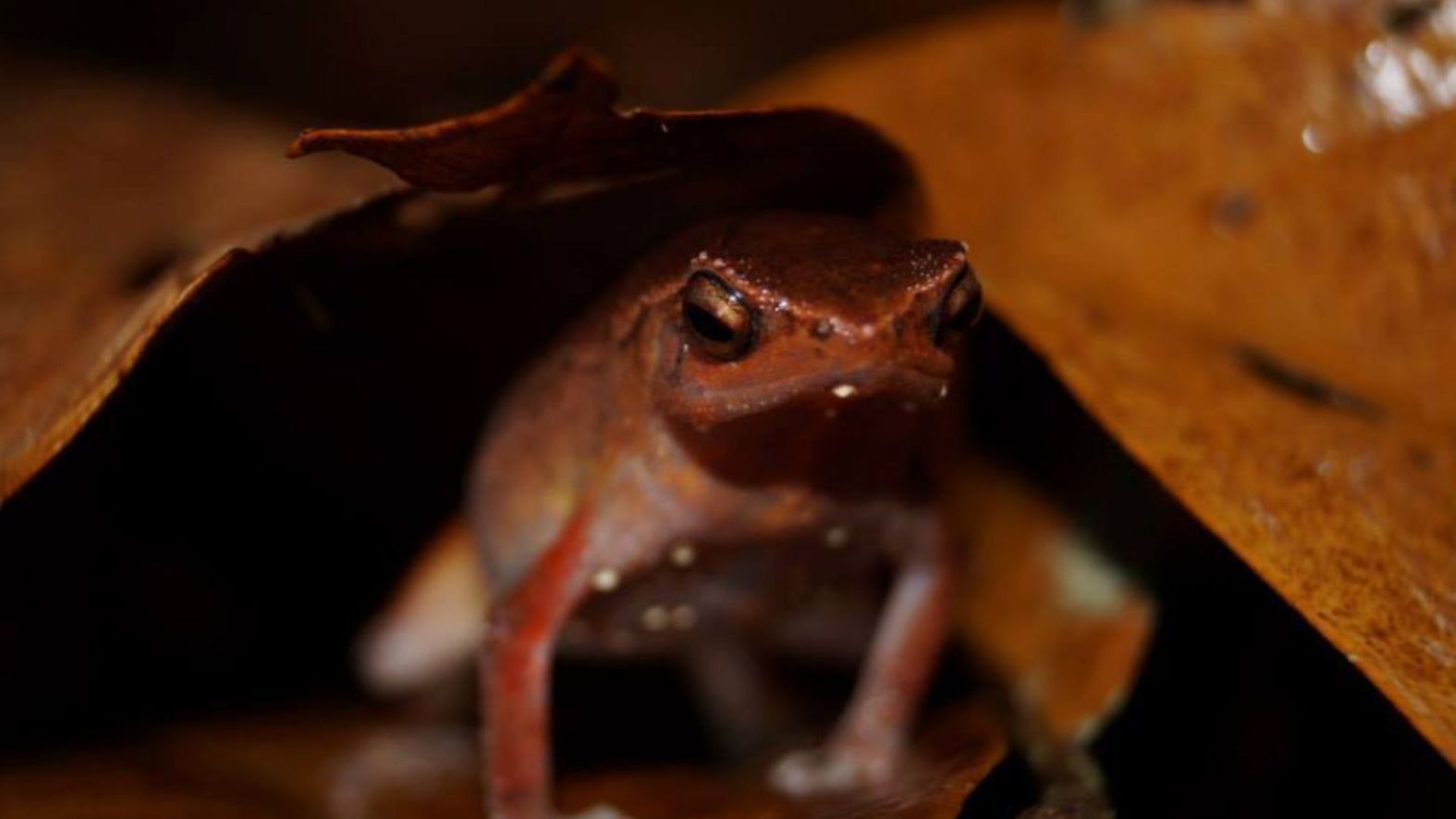
Lowland Grainy Frog Kalophrynus palmatissimus
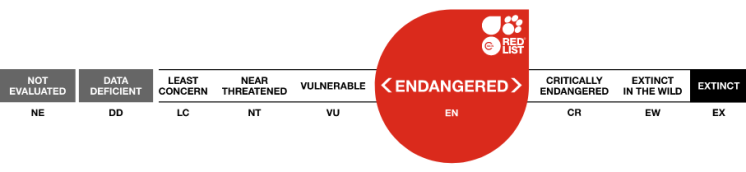
IUCN Status: Endangered
Location: Peninsular Malaysia
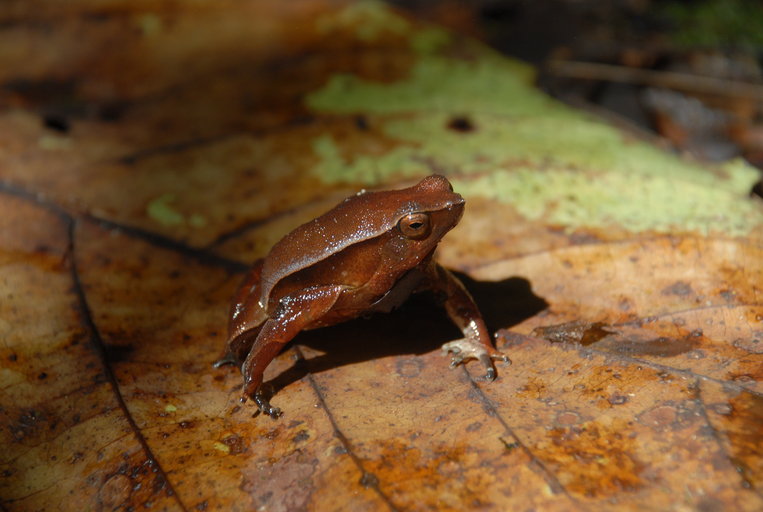
The Lowland Grainy #Frog Kalophrynus palmatissimus is an elusive leaf litter #amphibian found in the rainforests of Peninsular #Malaysia. Their survival is under dire threat from rampant #palmoil-driven #deforestation, as well as infrastructure expansion and quarrying. The widespread clearing of forests for monoculture plantations has stripped away the rich, damp habitats they rely on for shelter, breeding, and foraging. As forest fragments become smaller, their populations are increasingly isolated and vulnerable. Without urgent action to curb deforestation, this species could vanish forever. Every time you shop, fight for their survival and #BoycottPalmOil #Boycott4Wildlife.
Rough skinned Lowland Grainy #Frogs look like leaves 🐸🌿making them invisible to predators. Yet the expansion of #palmoil #deforestation is a formidable threat to these #amphibians. Fight for them and #BoycottPalmOil 🌴⛔️ #Boycott4Wildlife @palmoildetect https://palmoildetectives.com/2021/01/25/lowland-grainy-frog-kalophrynus-palmatissimus/
Habitat within this species’ range has been converted to non-timber plantations, such as oil palm.
IUCN Red List
Appearance and Behaviour
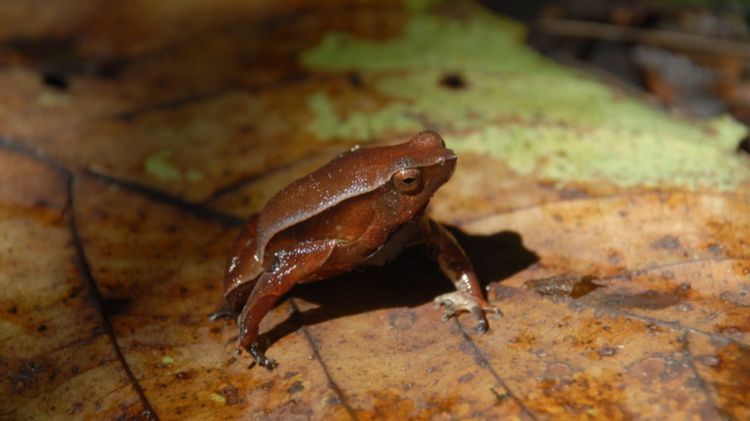
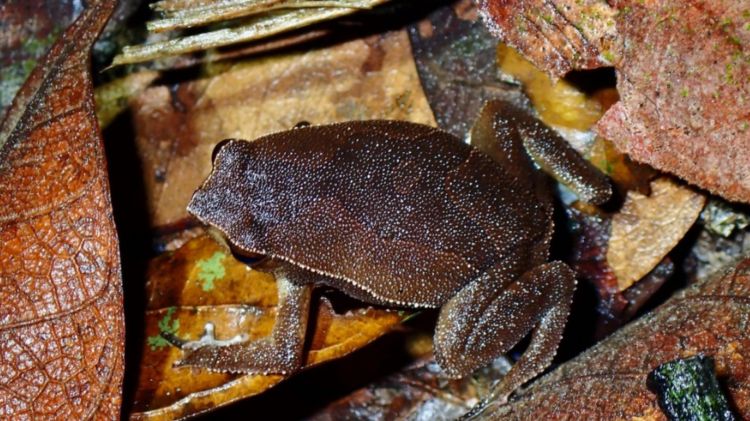
The Lowland Grainy Frog is a master of disguise, with a rough-textured, grainy skin that mimics the damp leaf litter of the rainforest floor. Their muted brown and orange colouration allows them to remain nearly invisible, blending into the undergrowth to avoid predators. They are a terrestrial species, relying on the moisture of the rainforest to prevent desiccation. Primarily nocturnal, they emerge at night to forage, moving stealthily through the thick leaf litter. Their dependence on undisturbed, humid environments makes them highly susceptible to habitat loss.
Threats
Palm Oil and Rubber Monoculture Expansion
The primary threat to this species of frog is large-scale deforestation for palm oil and rubber plantations. This relentless destruction of Malaysia’s lowland rainforests has led to widespread loss of their habitat, leaving them with fewer places to breed and forage. As palm oil plantations expand, forested land continues to disappear at an alarming rate.
Infrastructure Development
Road construction, commercial and industrial development, and the expansion of human settlements have fragmented their remaining habitat. As forests are cut into smaller patches, populations become isolated, reducing their genetic diversity and increasing their risk of extinction.
Quarrying for Granite
In Panti Forest Reserve, the threat of granite quarrying looms over the last remaining strongholds of this species. The destruction of forested land for quarrying operations eliminates critical breeding grounds and disrupts entire ecosystems.
Diet
The Lowland Grainy Frog is an insectivore, feeding primarily on small invertebrates that thrive within the leaf litter. Studies have shown that they prefer areas with smooth, non-hairy leaves, which provide shelter and support a higher abundance of invertebrate prey. The loss of rainforest leaf litter due to logging and palm oil monoculture plantations directly impacts their ability to find food.
Reproduction and Mating
These frogs breed in temporary pools and damp forest areas, where males produce high-pitched calls at night to attract mates. Their eggs are laid on moist surfaces, and tadpoles develop in small water bodies. The destruction of rainforest habitats and pollution of water sources place their breeding success at significant risk. Without protected environments, their ability to reproduce is severely compromised.
Geographic Range
This species is endemic to Peninsular Malaysia, where they have been recorded in Ayer Hitam Forest Reserve, Pasoh Forest Reserve, and Panti Forest Reserve. Although they has shown some adaptability to disturbed habitats, its reliance on intact, humid forests makes deforestation the greatest threat to its survival.
FAQ
Do Lowland Grainy Frogs Make Good Pets?
No. These frogs require undisturbed rainforest conditions to survive. Capturing them for the pet trade disrupts wild populations and contributes to their decline. If you care about their future, the best way to help is by protecting their natural habitat and advocating for rainforest conservation.
How does palm oil deforestation threaten the Lowland Grainy Frog?
Palm oil plantations replace biodiverse rainforests with monocultures, destroying the leaf litter environment that these frogs depend on for shelter and food. Without this protective cover, they are more exposed to predators, extreme temperatures, and habitat fragmentation. The chemicals used in palm oil plantations also pollute nearby water sources, making it even harder for them to breed and survive.
How does habitat fragmentation affect the Lowland Grainy Frog?
When forests are cleared for agriculture, roads, and infrastructure, populations of the Lowland Grainy Frog become isolated in small, disconnected patches of land. This limits their ability to move, find mates, and maintain genetic diversity. Inbreeding and reduced genetic variation make them more vulnerable to disease and environmental changes.
How does quarrying impact the Lowland Grainy Frog?
Granite quarrying in places like Panti Forest Reserve threatens one of their last strongholds. Quarrying removes forest cover, eliminates breeding sites, and disrupts entire ecosystems. Dust and chemical runoff from quarrying can also contaminate the soil and water sources, making them uninhabitable for frogs and their prey.
Take Action!
The Lowland Grainy Frog is vanishing due to palm oil-driven deforestation, habitat destruction, and quarrying. You can help by:
• Refusing to buy products containing palm oil, which fuels rainforest destruction.
• Supporting indigenous-led conservation efforts in Malaysia.
• Raising awareness about the devastating impacts of palm oil on wildlife.
Every time you shop, fight for their survival when you #BoycottPalmOil #Boycott4Wildlife.
You can support this beautiful animal
There are no known conservation activities for this animal. Share out this post to social media and join the #BoycottPalmOil #Boycott4Wildlife on social media to raise awareness
Further Information
Aziz, M. A., Mohd. Top, M. T., Shohaimi, S., Ab Ghani, I., & Fletcher, C. (2020). Morphometric study of Kalophrynus palmatissimus at two forest reserves: Ayer Hitam Forest Reserve, Selangor vs. Pasoh Forest Reserve, Negeri Sembilan. Authorea. Retrieved from https://www.authorea.com/users/322896/articles/452166-morphometric-study-of-kalophrynus-palmatissimus-at-two-forest-reserves-ayer-hitam-forest-reserve-selangor-vs-pasoh-forest-reserve-negeri-sembilan
Muhammad, F. A., Marina, M. T., Shamarina, S., Ab Ghani, N. I., & Fletcher, C. (2019). Types of leaves preference by Kalophrynus palmatissimus in two forest reserves. International Journal of Scientific and Research Publications, 9(10), 319. https://doi.org/10.29322/IJSRP.9.10.2019.p9443
IUCN SSC Amphibian Specialist Group. 2018. Kalophrynus palmatissimus. The IUCN Red List of Threatened Species 2018: e.T57843A90961057. https://dx.doi.org/10.2305/IUCN.UK.2018-2.RLTS.T57843A90961057.en. Downloaded on 25 January 2021.
Wikipedia contributors. (n.d.). Kalophrynus palmatissimus. Wikipedia, The Free Encyclopedia. https://en.wikipedia.org/wiki/Kalophrynus_palmatissimus

How can I help the #Boycott4Wildlife?
Take Action in Five Ways
1. Join the #Boycott4Wildlife on social media and subscribe to stay in the loop: Share posts from this website to your own network on Twitter, Mastadon, Instagram, Facebook and Youtube using the hashtags #Boycottpalmoil #Boycott4Wildlife.
2. Contribute stories: Academics, conservationists, scientists, indigenous rights advocates and animal rights advocates working to expose the corruption of the palm oil industry or to save animals can contribute stories to the website.



3. Supermarket sleuthing: Next time you’re in the supermarket, take photos of products containing palm oil. Share these to social media along with the hashtags to call out the greenwashing and ecocide of the brands who use palm oil. You can also take photos of palm oil free products and congratulate brands when they go palm oil free.
4. Take to the streets: Get in touch with Palm Oil Detectives to find out more.
5. Donate: Make a one-off or monthly donation to Palm Oil Detectives as a way of saying thank you and to help pay for ongoing running costs of the website and social media campaigns. Donate here
Discover more from Palm Oil Detectives
Subscribe to get the latest posts sent to your email.
 Palm Oil Detectives