
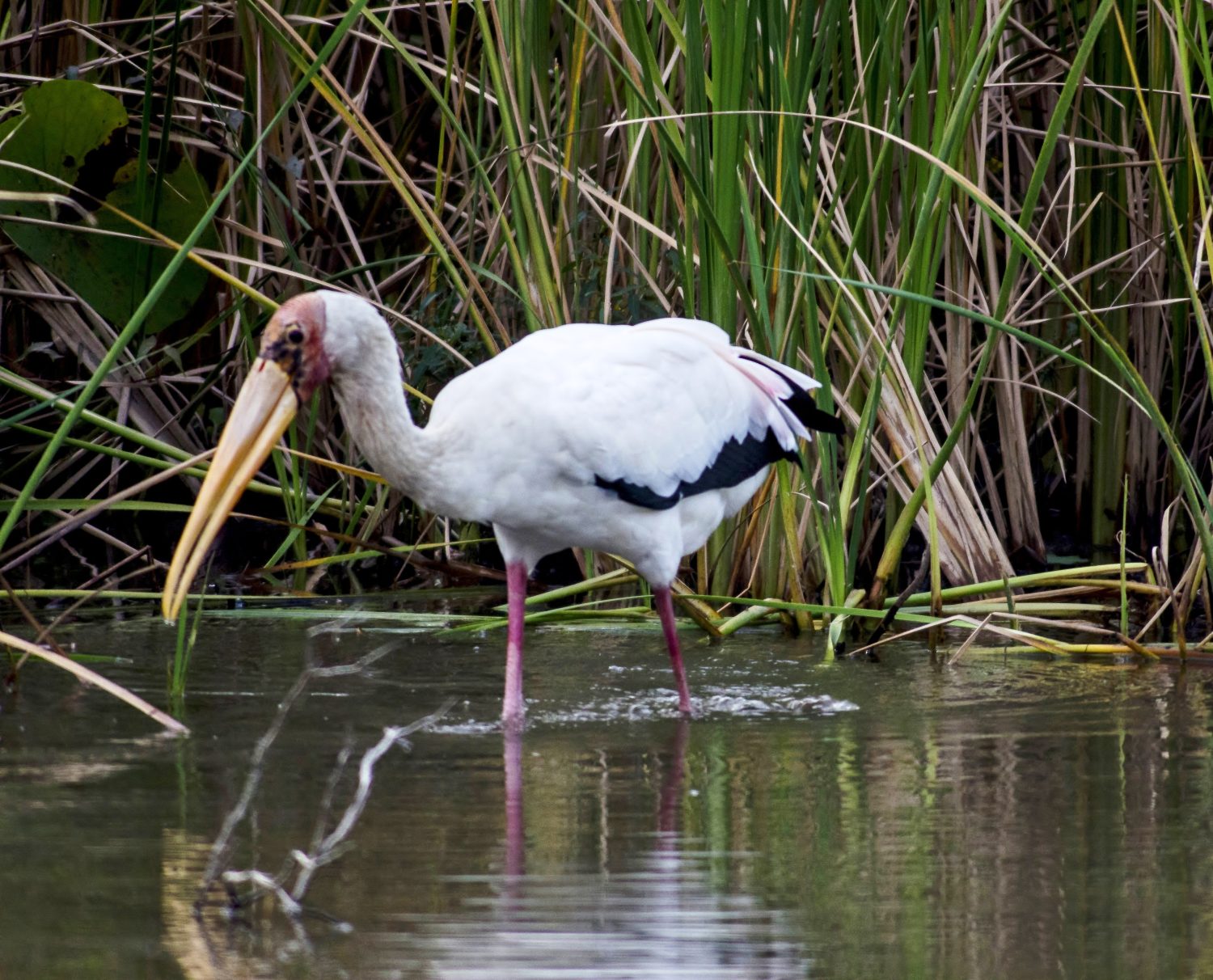
Milky Stork Mycteria cinerea
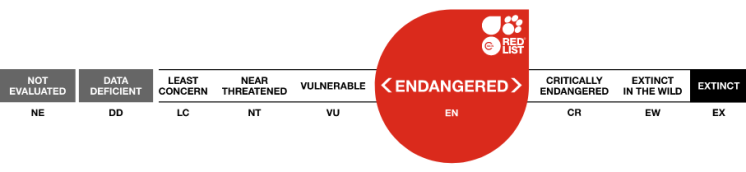
Endangered
Locations: Cambodia, Vietnam, Malaysia, Indonesia (Sumatra, Java)
The Milky Stork is a striking wading bird native to Southeast Asia’s coastal mangroves and wetlands. Recognisable by their predominantly white plumage and contrasting black flight feathers, they play a vital role in their ecosystem by controlling fish and insect populations. Unfortunately, habitat destruction for palm oil and timber, pollution, and the illegal wildlife trade have led to significant population declines. To protect the Milky Stork use your wallet as a weapon to fight for their survival each time you shop. #BoycottPalmOil #Boycott4Wildlife
Milky Storks are wetlands-dwelling #birds of #Indonesia #Malaysia 🦢🪶🩷 They’re #endangered by #deforestation #pollution and #agriculture. Boycott the brands destroying their home #BoycottPalmOil 🌴🤮🩸🔥☠️⛔️ #Boycott4Wildlife @palmoildetect https://palmoildetectives.com/2021/01/25/milky-stork-mycteria-cinerea/
In Indonesia, the Milky Stork lives in tidal forests including mangroves are these ecosystems are threatened by agricultural conversion and development schemes.
IUCN Red List


Appearance and Behaviour
Milky Storks are medium-sized birds, standing approximately 91–97 cm tall. Their plumage is predominantly white, with black flight feathers and tail that exhibit a greenish gloss. During the breeding season, their white feathers may take on a pale creamy-yellow tint, giving them their “milky” appearance. They have a long, yellow bill and bare facial skin that varies in colour from greyish to deep wine-red during breeding. These storks are social birds, often found in flocks, and are known for their graceful foraging behaviour in shallow waters, where they use their sensitive bills to detect and catch prey.
Geographic Range
The Milky Stork is native to parts of Cambodia, Vietnam, Malaysia, and Indonesia, particularly Sumatra and Java. They inhabit coastal mangroves, estuaries, mudflats, and freshwater wetlands. However, their range has become increasingly fragmented due to habitat loss and human activities.
Diet
Primarily carnivorous, Milky Storks feed on a variety of aquatic prey, including fish, crustaceans, insects, and amphibians. They forage by wading through shallow waters, using their long bills to probe the mud and water for food. Their feeding habits help control populations of their prey, maintaining ecological balance in their habitats.
Reproduction and Mating
Milky Storks breed in colonies, often alongside other waterbird species. Nesting sites are typically located in tall trees within mangrove forests or on coastal islands. A recent study reported the rediscovery of a breeding colony in South Sumatra, Indonesia, highlighting the importance of preserving these critical habitats. The breeding season varies by region but generally coincides with the dry season. Females lay 2–3 eggs, which are incubated by both parents. Chicks fledge approximately two months after hatching.
Threats
The Milky Stork is listed as Endangered on the IUCN Red List, with an estimated population of around 1,500 mature individuals. Conservation efforts include habitat protection, restoration of mangroves, anti-poaching measures, and captive breeding programmes aimed at bolstering wild populations. Public awareness and community engagement are also crucial in mitigating threats and promoting coexistence.
IUCN Status: Endangered
- Habitat Loss: Destruction of mangroves and wetlands for palm oil agriculture, fishing aquaculture, and urban development has led to significant declines in suitable habitats for this stork.
- Pollution: Industrial and agricultural pollutants contaminate waterways, affecting the health and reproductive success of Milky Storks.
- Illegal Wildlife Trade: On occasion these birds are collected for the pet trade or local consumption, further reducing wild populations.
- Species Hybridisation: Interbreeding with the Painted Stork (Mycteria leucocephala) poses a genetic threat to the species’ population.
Take Action!
Protect the Milky Stork by boycotting products linked to deforestation, such as palm oil. Use your wallet as a weapon to support ethical and eco-friendly choices. Share their story and fight for their survival with #BoycottPalmOil and #Boycott4Wildlife.
You can support this beautiful animal
There are no known conservation activities for this animal. Share out this post to social media and join the #BoycottPalmOil #Boycott4Wildlife on social media to raise awareness
Further Information
BirdLife International. 2016. Mycteria cinerea. The IUCN Red List of Threatened Species 2016: e.T22697651A93627701. https://dx.doi.org/10.2305/IUCN.UK.2016-3.RLTS.T22697651A93627701.en. Downloaded on 25 January 2021.
eBird. (n.d.). Milky Stork. Retrieved from eBird
Iqbal, M., Ridwan, A., Takari, F., & Mulyono, H. (2008). Rediscovery of a Milky Stork (Mycteria cinerea) breeding colony in South Sumatra province, Indonesia. BirdingASIA, 10, 62–66. Retrieved from ResearchGate
Thai National Parks. (n.d.). Milky Stork. Retrieved from Thai National Parks
Wikipedia contributors. (n.d.). Milky Stork. Retrieved from Wikipedia


How can I help the #Boycott4Wildlife?
Take Action in Five Ways
1. Join the #Boycott4Wildlife on social media and subscribe to stay in the loop: Share posts from this website to your own network on Twitter, Mastadon, Instagram, Facebook and Youtube using the hashtags #Boycottpalmoil #Boycott4Wildlife.
2. Contribute stories: Academics, conservationists, scientists, indigenous rights advocates and animal rights advocates working to expose the corruption of the palm oil industry or to save animals can contribute stories to the website.



3. Supermarket sleuthing: Next time you’re in the supermarket, take photos of products containing palm oil. Share these to social media along with the hashtags to call out the greenwashing and ecocide of the brands who use palm oil. You can also take photos of palm oil free products and congratulate brands when they go palm oil free.
4. Take to the streets: Get in touch with Palm Oil Detectives to find out more.
5. Donate: Make a one-off or monthly donation to Palm Oil Detectives as a way of saying thank you and to help pay for ongoing running costs of the website and social media campaigns. Donate here
Discover more from Palm Oil Detectives
Subscribe to get the latest posts sent to your email.
 Palm Oil Detectives