
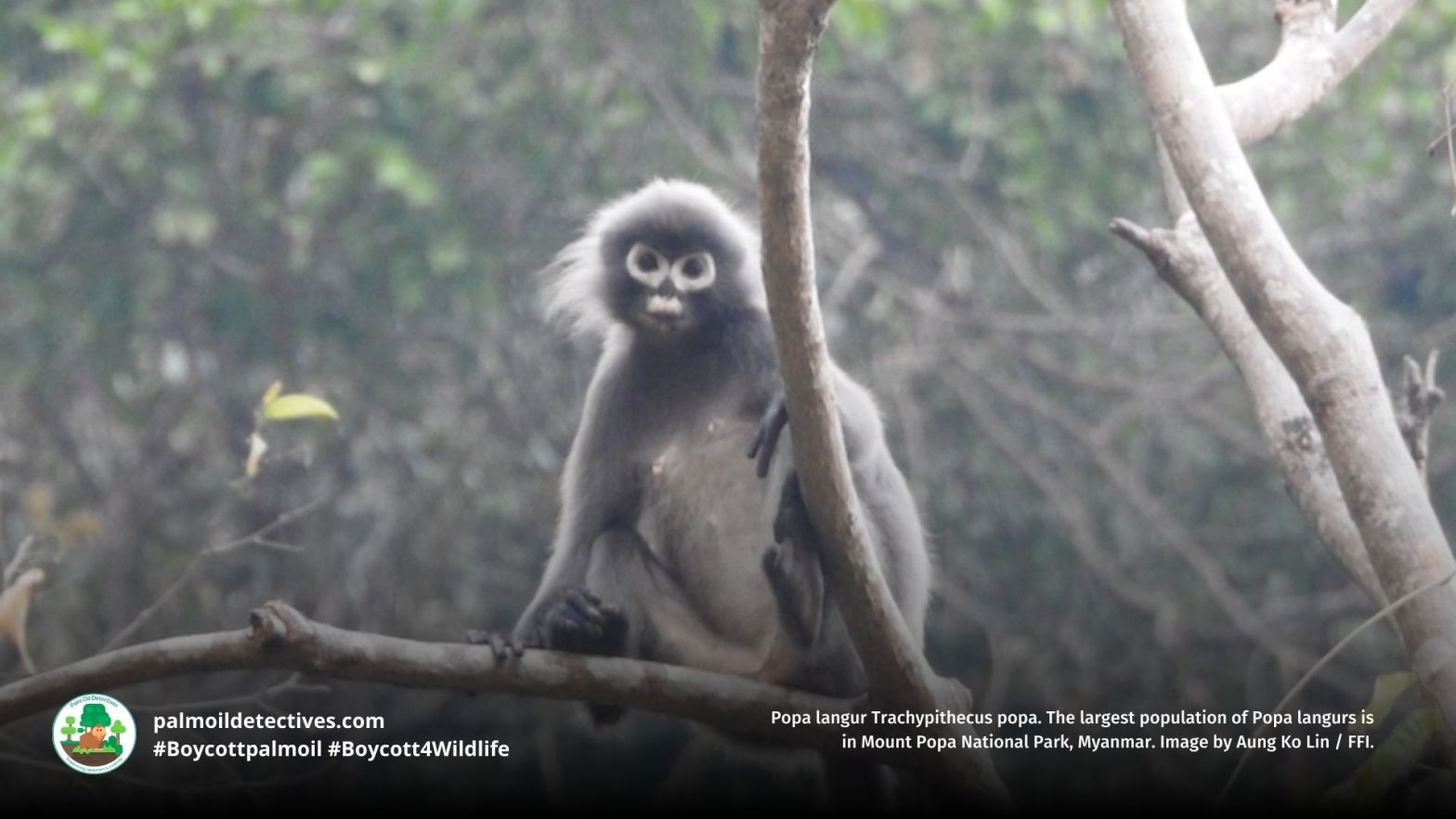
Popa Langur Trachypithecus popa
Critically Endangered
Locations: Myanmar, primarily Mount Popa and nearby dry forests
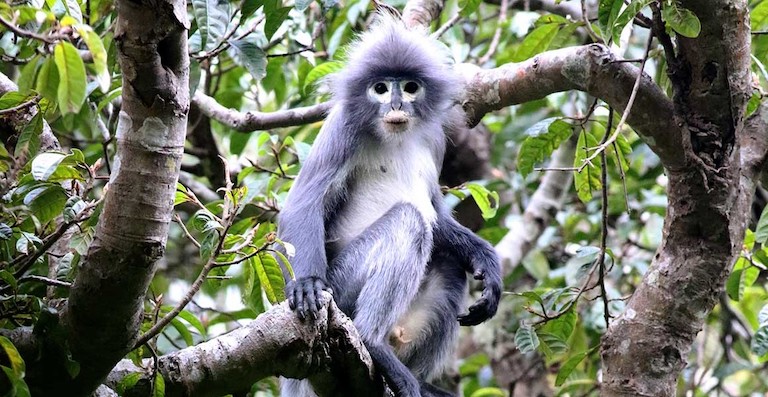
The world’s most endangered #langur, the Popa Langur has striking lilac coloured fur 🐒💜🪻 and white rimmed expressive eyes. Discovered in 2020 now critically #endangered 😿 Fight for them and #BoycottPalmOil 🌴🪔🙊🔥🤮⛔️#Boycott4Wildlife @palmoildetect https://palmoildetectives.com/2021/01/25/popa-langur-trachypithecus-popa/
Stunning lilac #monkeys are also the most endangered in the world. Popa #Langurs 💜🐒💜 were discovered in 2020 and classed as critically #endangered in #Myanmar. Help them survive when you #BoycottPalmOil 🌴🪔🙊🔥🤮⛔️#Boycott4Wildlife @palmoildetect https://palmoildetectives.com/2021/01/25/popa-langur-trachypithecus-popa/
The Popa langur Trachypithecus popa is the most endangered langur species in the world. Discovered in 2020, they are immediately considered critically endangered. These primates are known for their striking lilac-grey fur, expressive white-ringed eyes, and long tails. Named after Mount Popa, an extinct volcano in central Myanmar, they are a living testament to the region’s rich biodiversity.
Sadly, fewer than 300 individuals are still alive in the wild. Habitat destruction caused by palm oil deforestation, logging, and infrastructure development has pushed this species to the brink of extinction.
Protect their future by supporting indigenous-led conservation efforts, boycotting palm oil, and sharing their story. #BoycottPalmOil #Boycott4Wildlife
Appearance and Behaviour
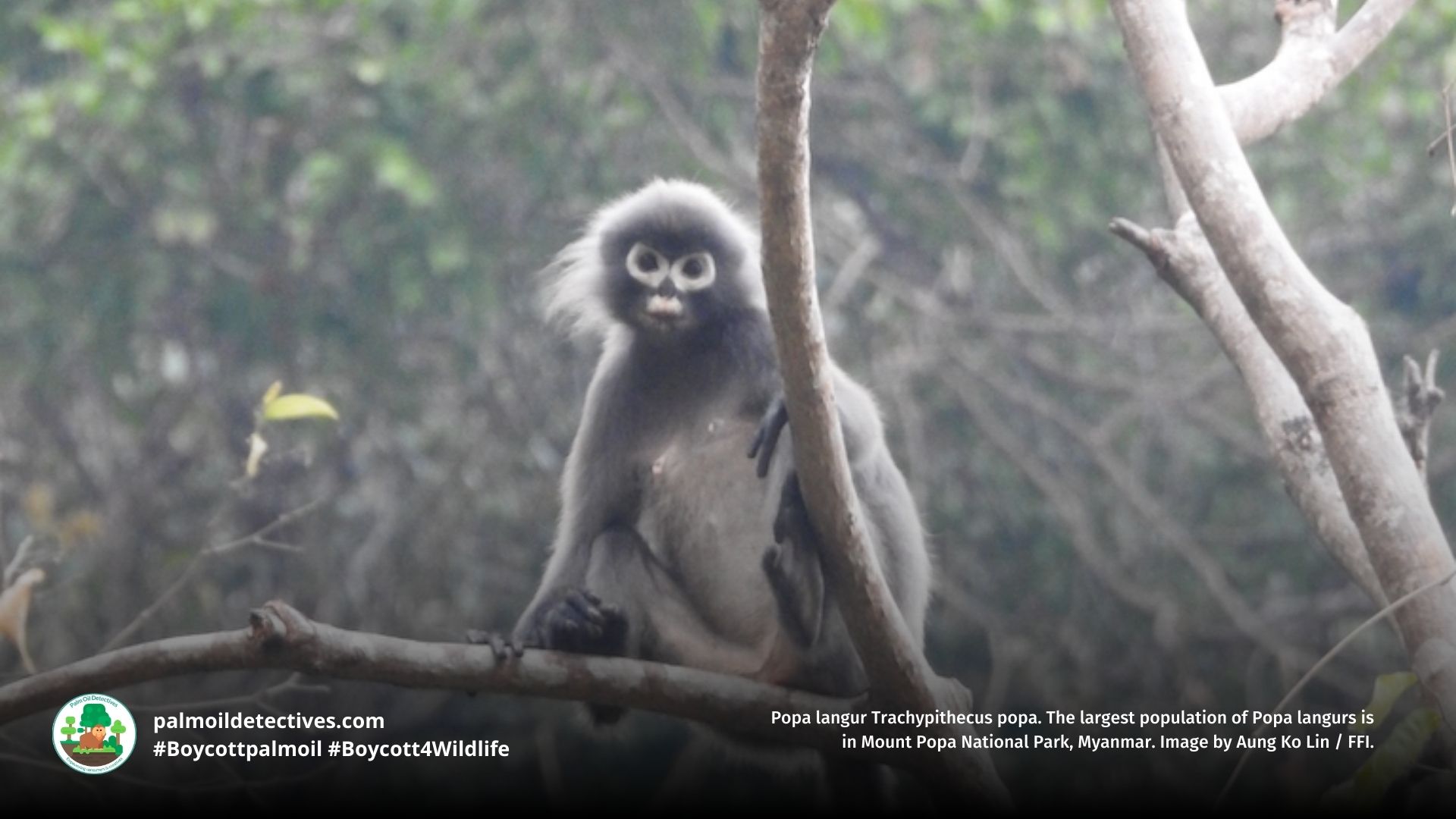
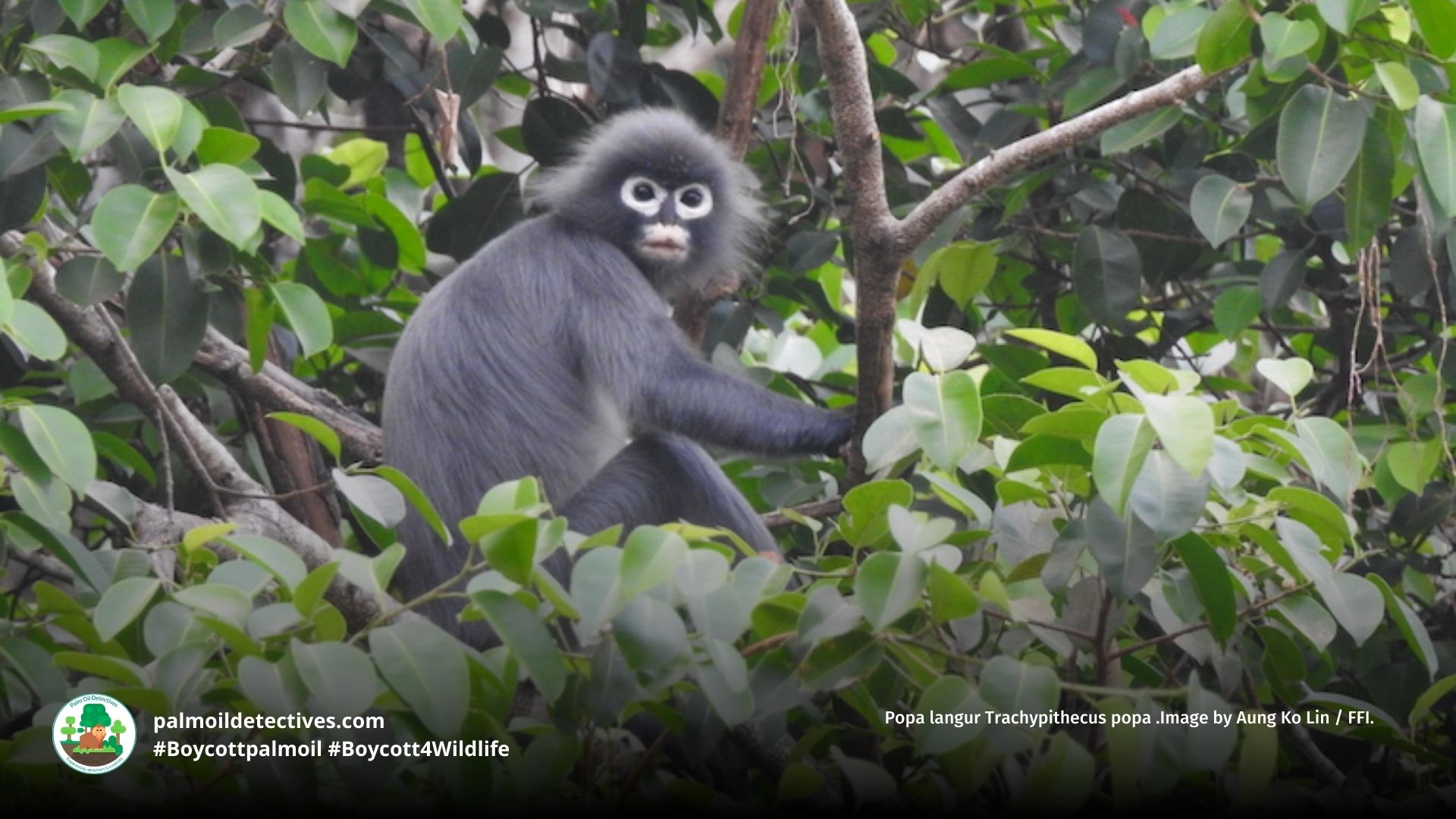
Popa langurs are medium-sized monkeys, measuring about 50–60 cm in length with tails reaching up to 90 cm. Their lilac-grey coats are soft and sleek, with lighter underbellies, and their faces are framed by striking white rings around their eyes. These features make them one of the most visually captivating of langurs.
These arboreal primates are diurnal and prefer the safety of tree canopies, where they forage for fruits, flowers, seeds, and young leaves. Popa langurs are highly social, living in small groups led by a dominant male. Despite their expressive appearance, they are shy and elusive, avoiding human presence whenever possible.
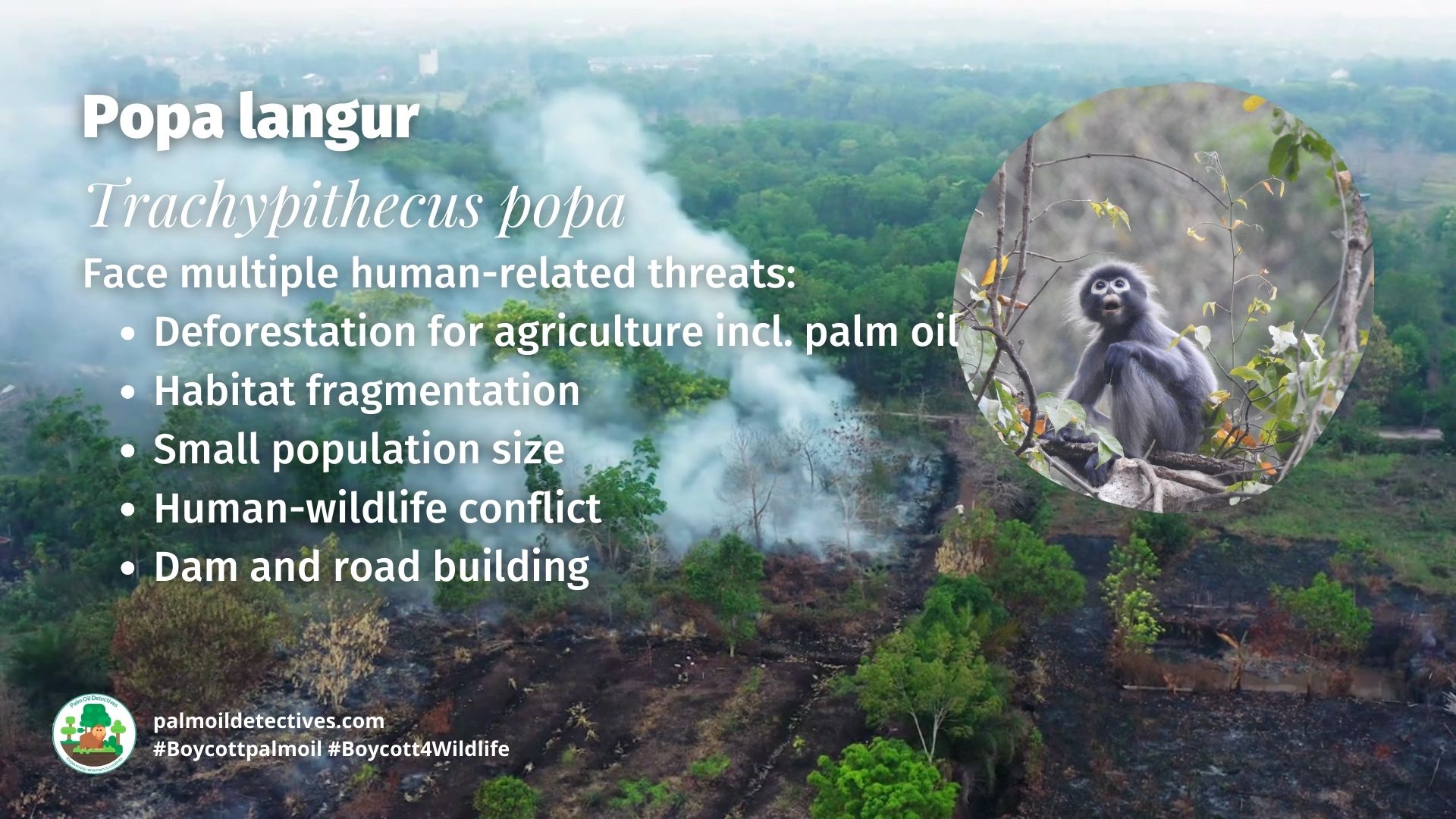
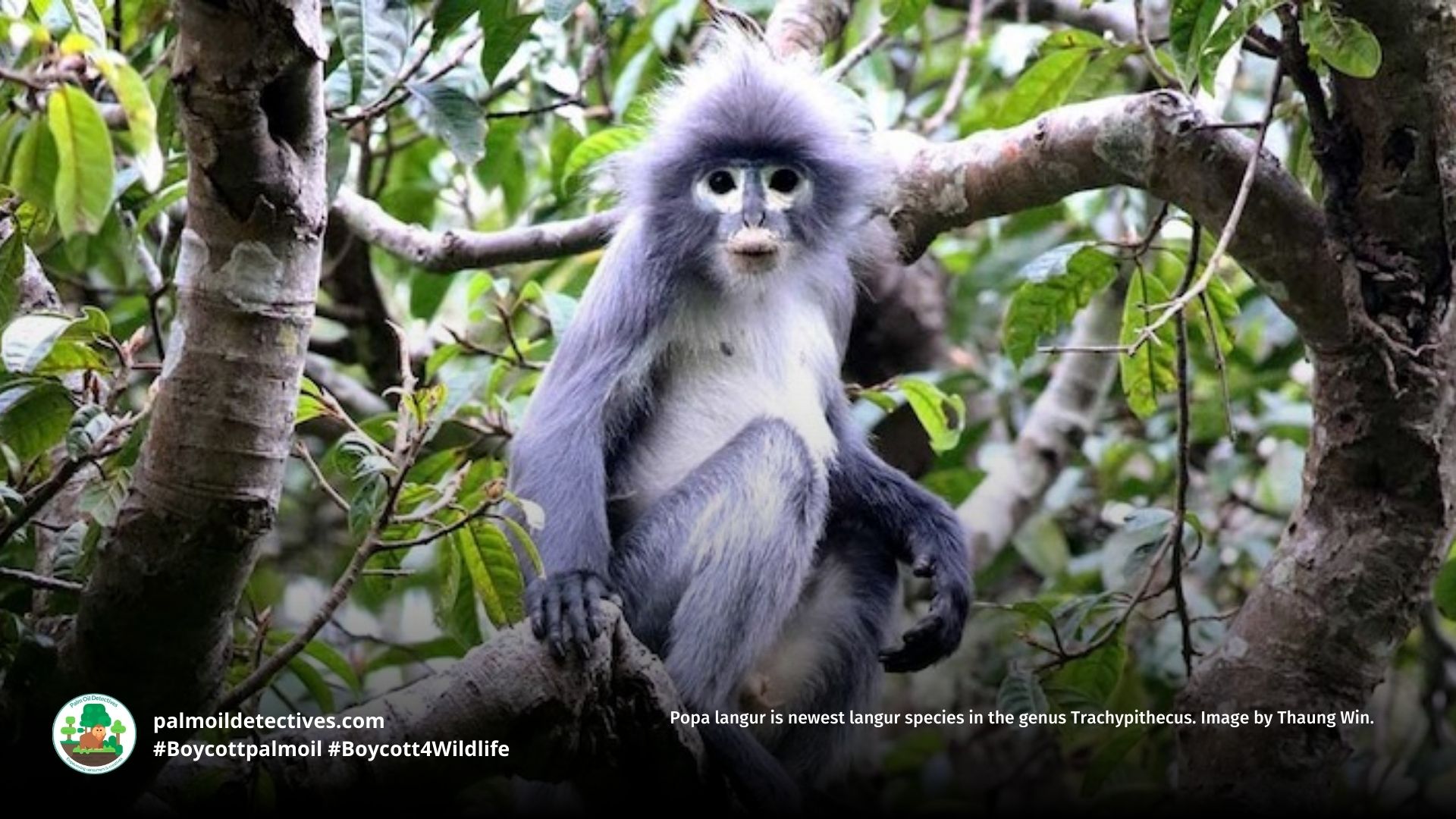
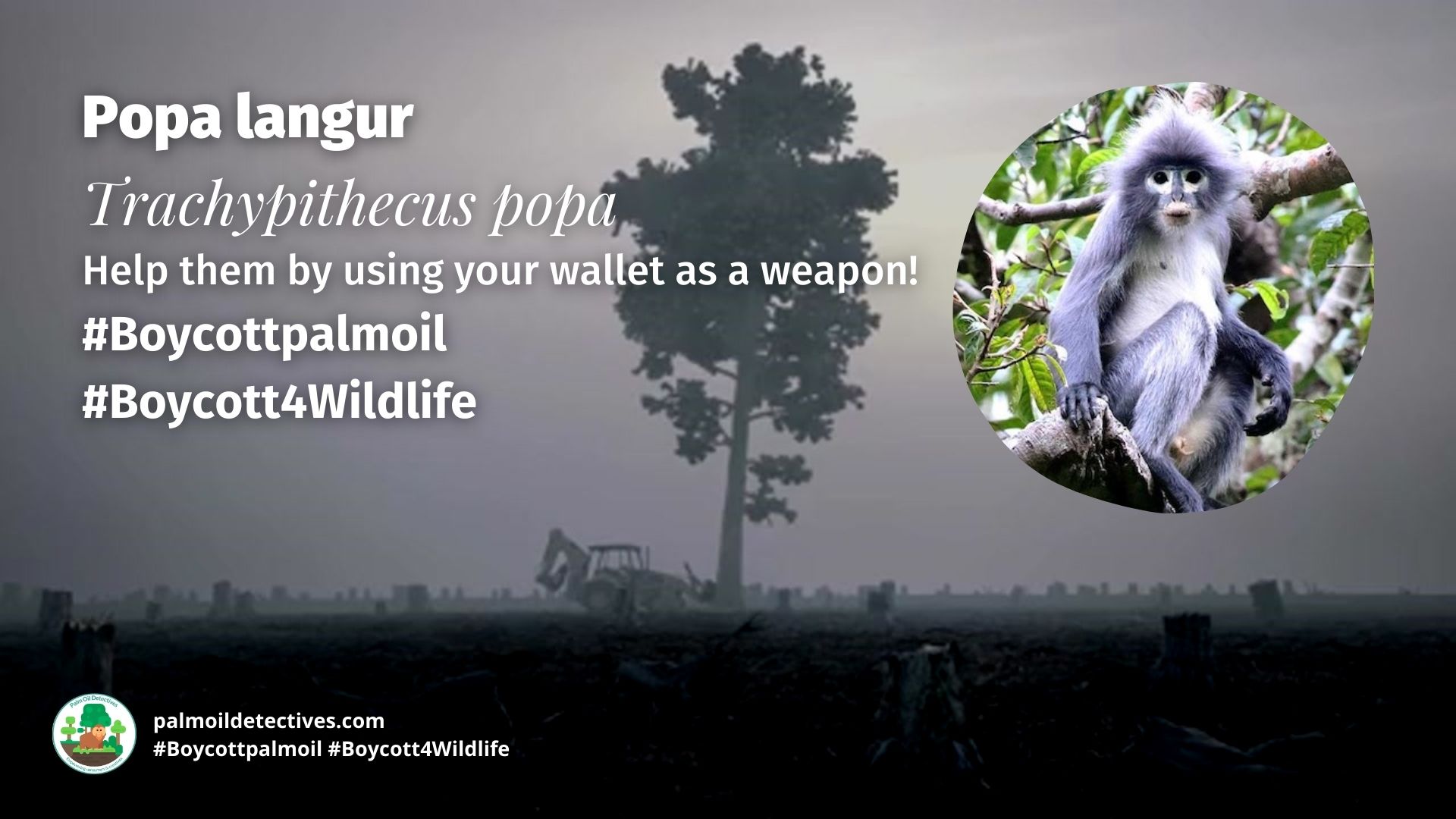
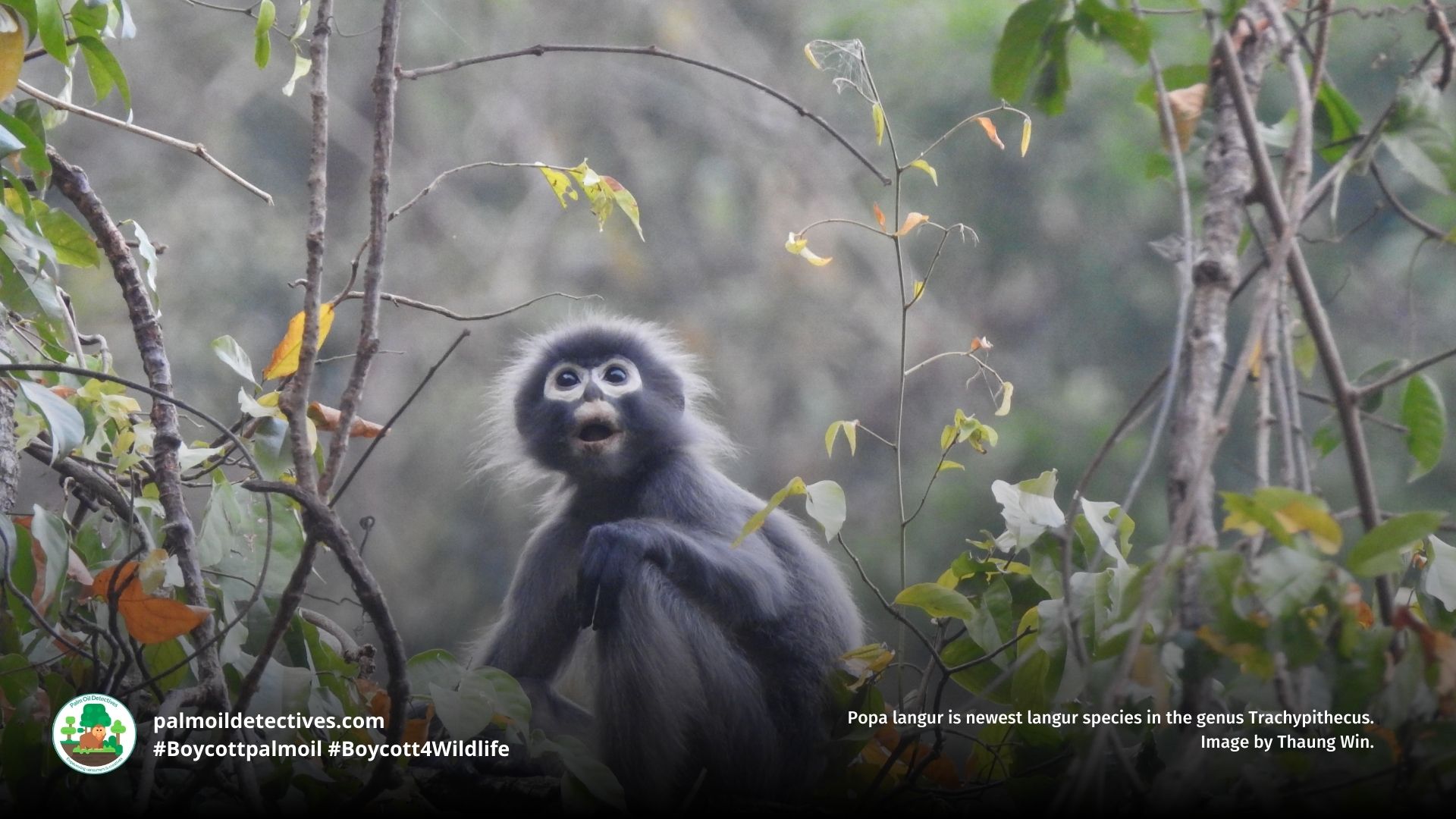
Threats include palm oil plantations and habitat destruction. Although their status has not been formally assessed, they qualify for a “critically endangered” designation under the IUCN Red List criteria.
Threats
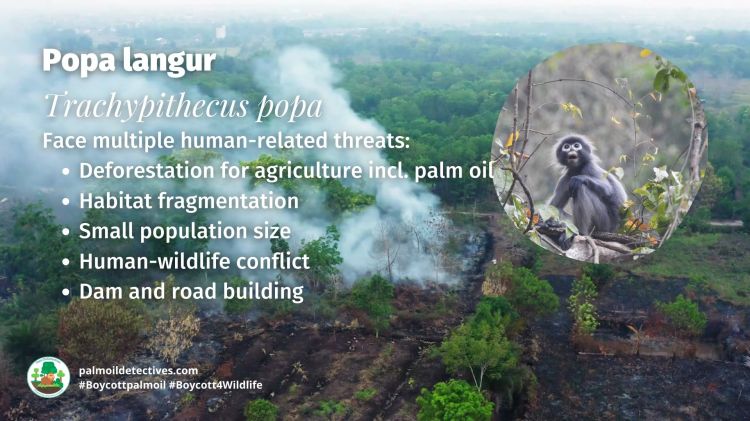
Deforestation:
Myanmar’s dry forests are rapidly disappearing due to timber logging, palm oil agriculture, and infrastructure development. The langur’s habitat has been reduced to fragmented patches around Mount Popa and nearby areas.
Genetic isolation due to forest fragmentation:
Fragmented forests isolate populations, leading to genetic bottlenecks that weaken the species’ resilience to disease and environmental changes.
Human Encroachment:
Expanding human settlements and agricultural practices are encroaching on the langur’s already limited range. This puts them at further risk from habitat destruction and human-wildlife conflict.
Small Population Size:
With fewer than 300 individuals left, their critically small population faces a high risk of extinction due to environmental and demographic factors.
Geographic Range
The Popa langur is endemic to central Myanmar, with their primary range centred around Mount Popa, an extinct volcano. They inhabit the dry deciduous forests and rocky outcrops of this region, which provide vital shelter and food resources. However, habitat destruction has confined them to increasingly fragmented areas, further endangering their survival.
Diet
Popa langurs are herbivorous, primarily feeding on fruits, flowers, seeds, and leaves. They forage in the upper canopy, relying on diverse forest ecosystems to meet their dietary needs. This specialised diet makes them highly dependent on intact, biodiverse habitats.
Reproduction and Mating
Little is known about the reproductive habits of the Popa langur. However, similar to other langur species, they likely have a social structure centred around a dominant male with multiple females and their offspring. Females give birth to a single infant, and the group collectively participates in raising the young.
Habitat fragmentation and reduced population size severely limit their opportunities to mate and reproduce, posing an additional challenge to the species’ survival.
Take Action!
Support indigenous sovereignty and the safeguarding of ecosystems to protect the Popa langur and their fragile habitats. Share their story, advocate for stronger protections, and boycott palm oil to reduce deforestation. Every action counts to ensure their survival. #BoycottPalmOil #Boycott4Wildlife
FAQS
How was the Popa Langur discovered?
A new primate species has been found in Myanmar, the Popa Langur Trachypithecus popa, was identified in the lab, using samples of tissues from museum specimens, captive species, and fecal samples from wild animals collected in the forests of Myanmar. Only around 200 to 260 Popa Langur individuals are known to exist, spread across four separate populations.
Where does the Popa Langur live?
The safest population, according to researchers, lives in an area of forest only about 26 square kilomitres in size. Tragically this small area may not give them room to sustain a growing population.
How many Popa langurs are left in the world?
There are fewer than 300 Popa langurs left in the wild, making them one of the most critically endangered primates in the world. Their already limited range in central Myanmar has been drastically reduced by habitat destruction due to deforestation, agricultural expansion, and human encroachment. This critically small population faces severe risks, including genetic bottlenecks and reduced reproductive success, which further threaten their survival. Conservation efforts are urgently needed to protect the remaining populations and their fragile habitats.
What is one of the newest discovered species of monkey?
The Popa langur (Trachypithecus popa) is the most recently discovered monkey species, officially described in 2020. Scientists identified this species through genetic analysis of museum specimens and modern samples, as well as detailed field observations. The discovery highlights the importance of studying and preserving overlooked and remote ecosystems, as many species like the Popa langur remain unknown or poorly understood, even as their habitats disappear.
Where would you find the Popa langur?
Popa langurs are endemic to central Myanmar, with their range centred around Mount Popa, an extinct volcano. They inhabit dry deciduous forests and rocky outcrops, relying on the dense tree canopies for food and shelter. These forests are increasingly fragmented due to palm oil and other deforestation and agricultural development, further restricting the langurs to isolated patches. Their survival depends on the protection of these critical habitats, which are essential for their foraging and social behaviours.
What are the characteristics of the Popa langur?
Popa langurs are medium-sized primates known for their lilac-grey fur, lighter underbellies, and distinct white rings around their eyes, giving them a striking and expressive appearance. They have long tails, often exceeding the length of their bodies, which aid in balance as they leap through the treetops. These langurs are social animals, living in groups led by a dominant male. They are herbivorous, feeding on fruits, flowers, seeds, and leaves, and they depend heavily on intact forest ecosystems for their survival.
Further Information

BBC News. (2020). Popa langur: 100-year-old monkey faeces reveals new species in Myanmar. BBC News.
Neprimate Conservancy. (2020). Popa langur. Neprimate Conservancy.
Mongabay. (2020). Photos: Top 15 species discoveries from 2020. Mongabay.
Sci.News. (2020). Popa Langur Discovered. Sci.News.
The Guardian. (2020). Popa scoop: 100-year-old monkey faeces reveals new species in Myanmar. The Guardian.
Wikipedia contributors. (n.d). Popa langur. Wikipedia.

How can I help the #Boycott4Wildlife?
Take Action in Five Ways
1. Join the #Boycott4Wildlife on social media and subscribe to stay in the loop: Share posts from this website to your own network on Twitter, Mastadon, Instagram, Facebook and Youtube using the hashtags #Boycottpalmoil #Boycott4Wildlife.
2. Contribute stories: Academics, conservationists, scientists, indigenous rights advocates and animal rights advocates working to expose the corruption of the palm oil industry or to save animals can contribute stories to the website.





3. Supermarket sleuthing: Next time you’re in the supermarket, take photos of products containing palm oil. Share these to social media along with the hashtags to call out the greenwashing and ecocide of the brands who use palm oil. You can also take photos of palm oil free products and congratulate brands when they go palm oil free.
4. Take to the streets: Get in touch with Palm Oil Detectives to find out more.
5. Donate: Make a one-off or monthly donation to Palm Oil Detectives as a way of saying thank you and to help pay for ongoing running costs of the website and social media campaigns. Donate here
Discover more from Palm Oil Detectives
Subscribe to get the latest posts sent to your email.
 Palm Oil Detectives