
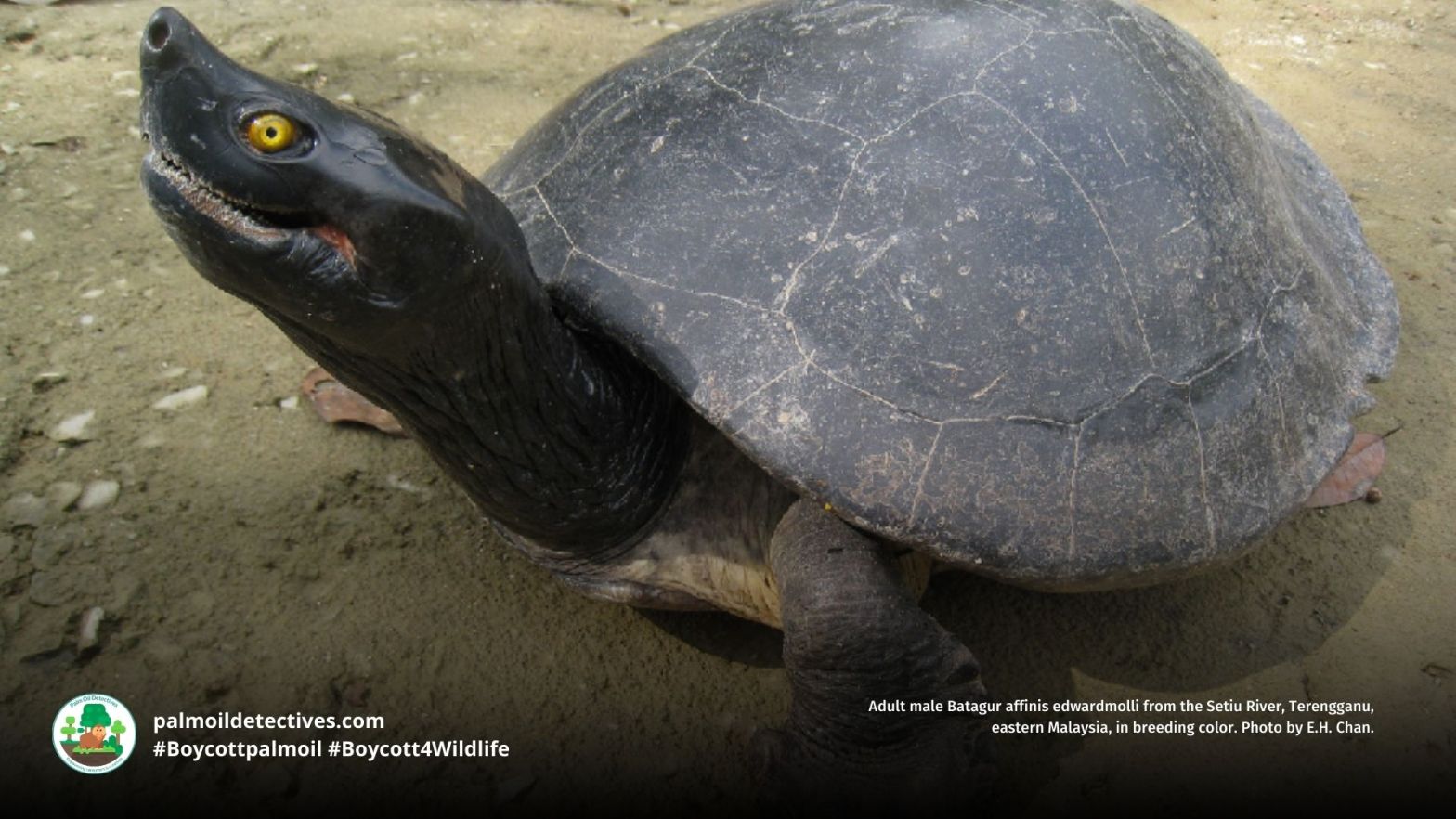
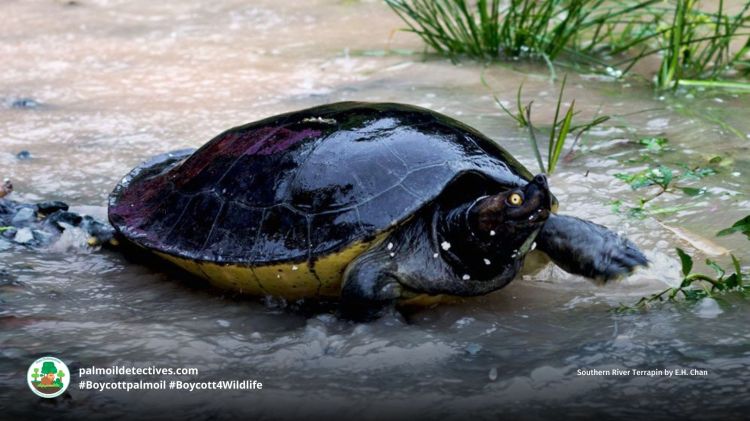
Southern River Terrapin Batagur affinis
Critically Endangered
Extant (resident): Cambodia; Indonesia (Sumatera); Malaysia (Peninsular Malaysia); Thailand
Extinct: Singapore
Presence Uncertain: Vietnam
Southern River Terrapins are critically endangered due to #palmoil #deforestation and other human threats. They live in rivers in #Indonesia #Malaysia. Take action and #Boycottpalmoil #Boycott4Wildlife https://wp.me/pcFhgU-lY @palmoildetect
With their blazing yellow eyes, southern river terrapins cut a striking figure. They are critically endangered from #palmoil and #mining #deforestation in Indonesia and Malaysia. Fight for them and #Boycottpalmoil #Boycott4Wildlife @palmoildetect https://wp.me/pcFhgU-lY
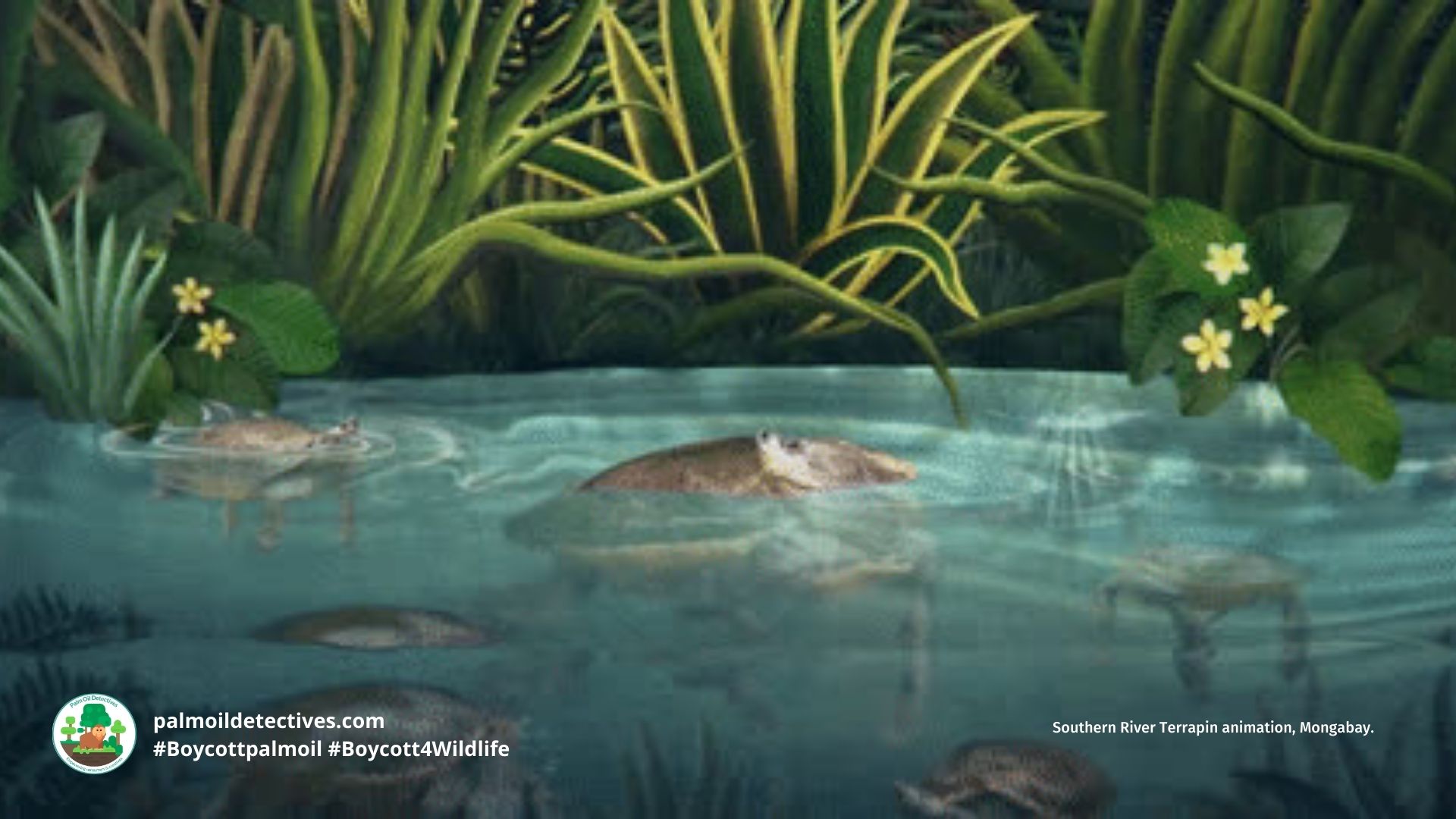
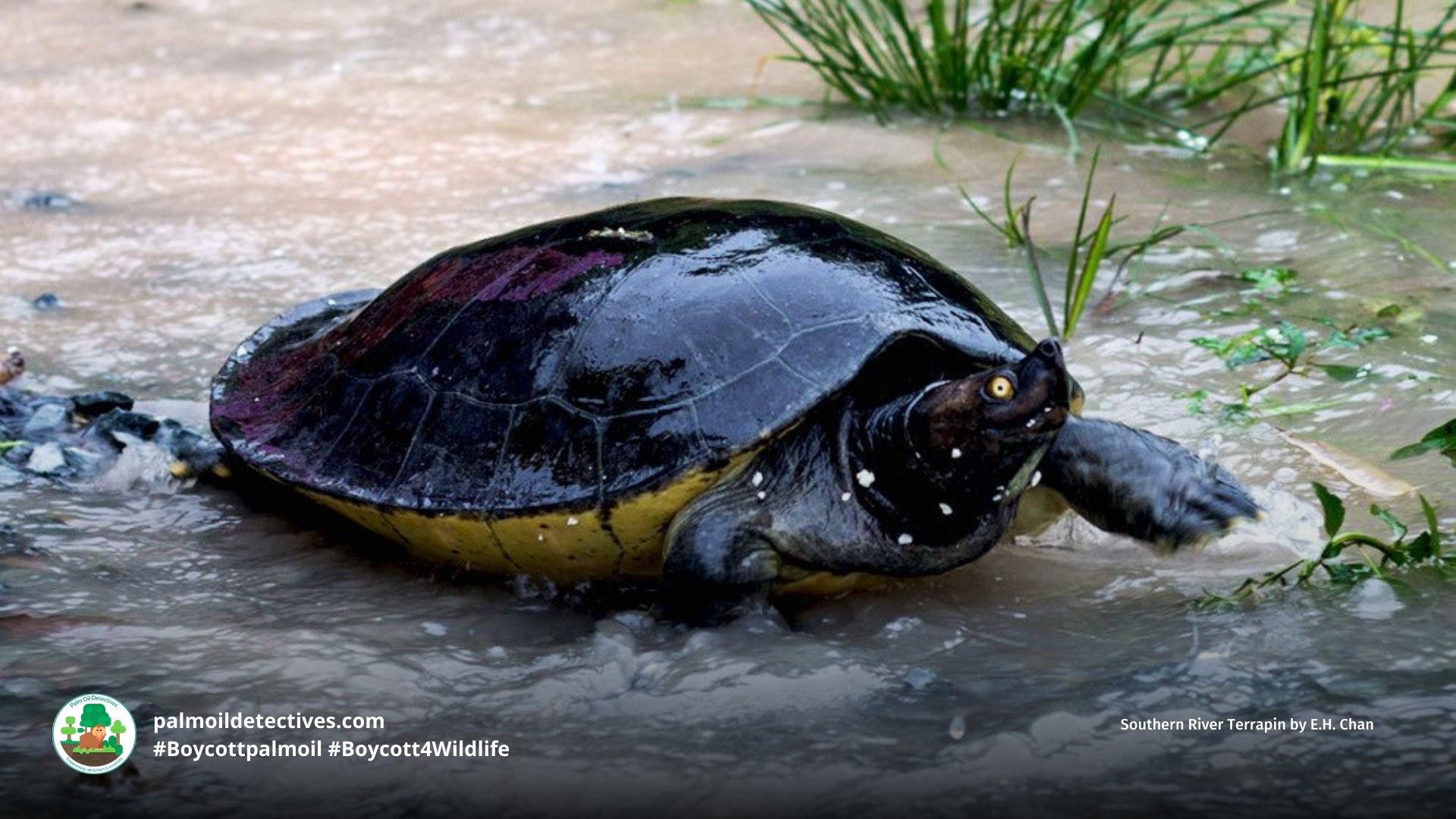
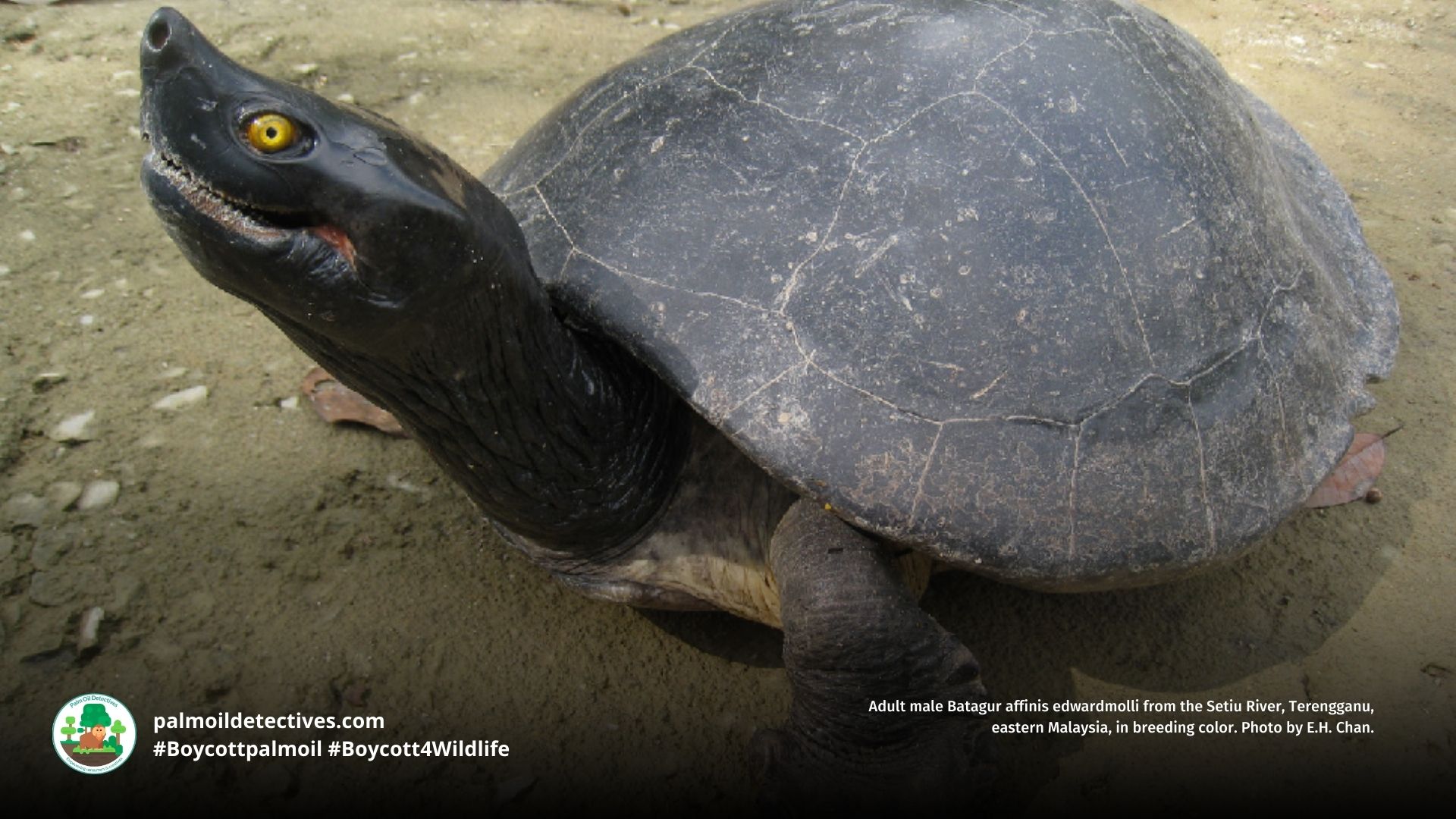
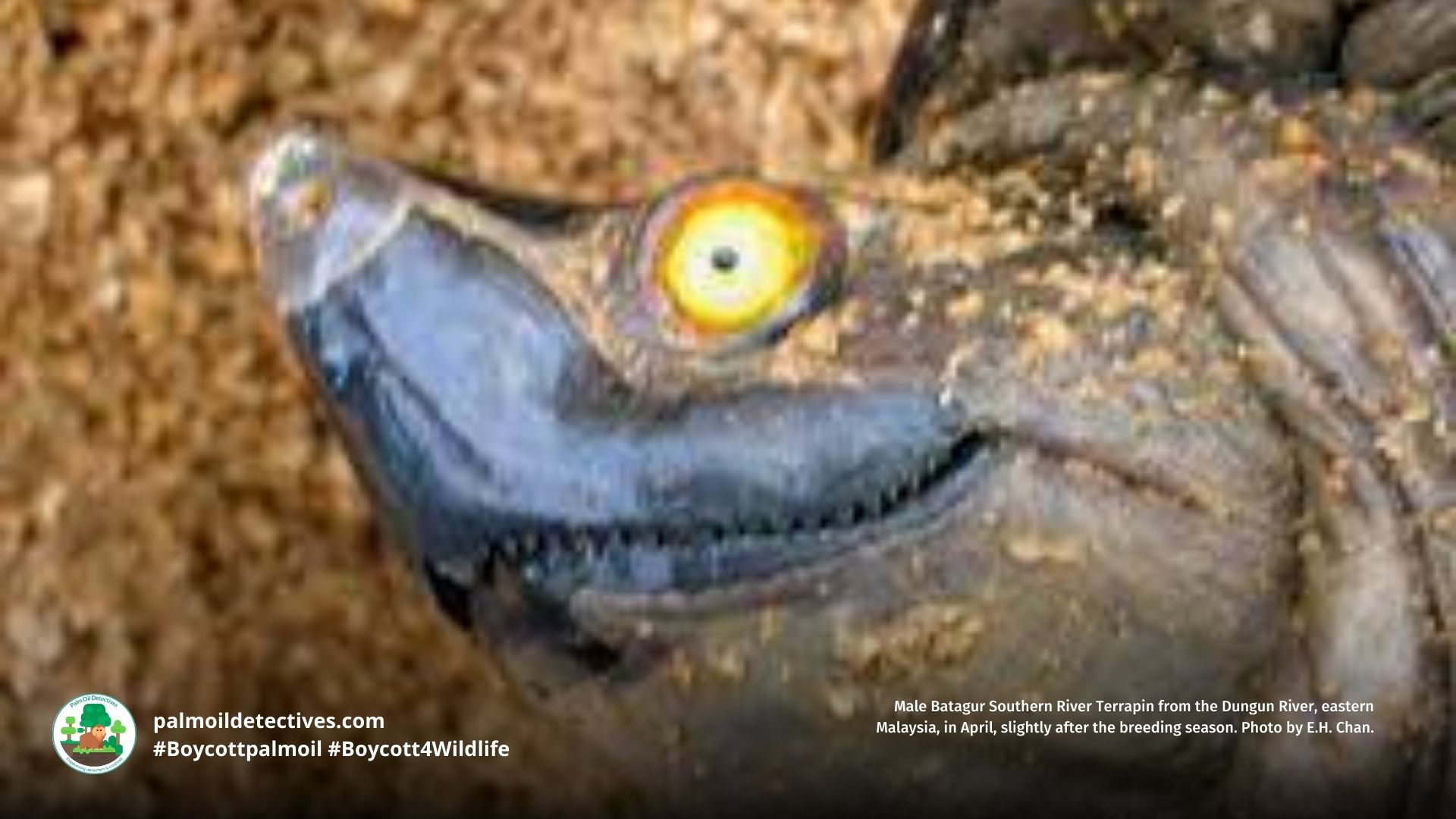
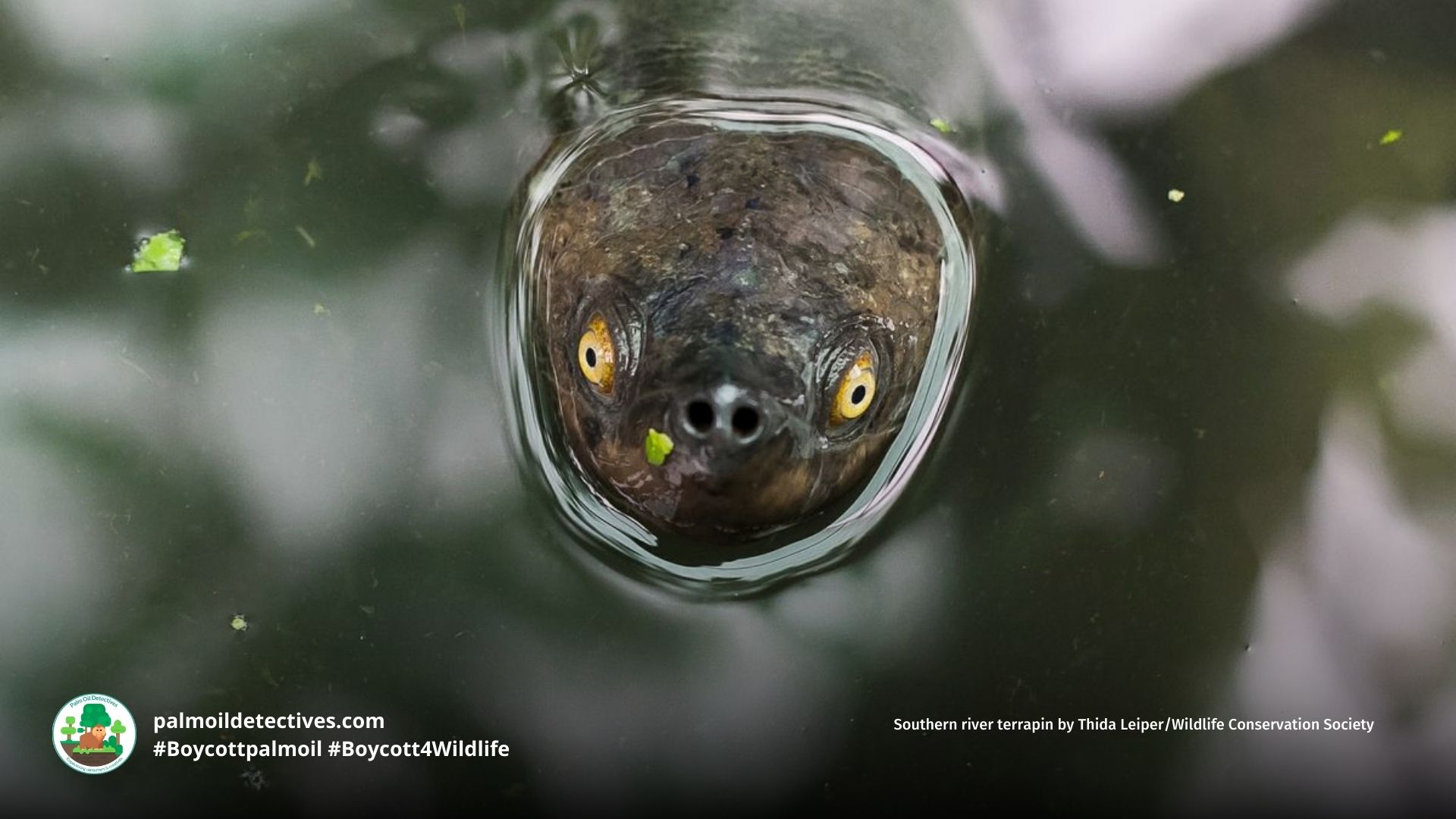
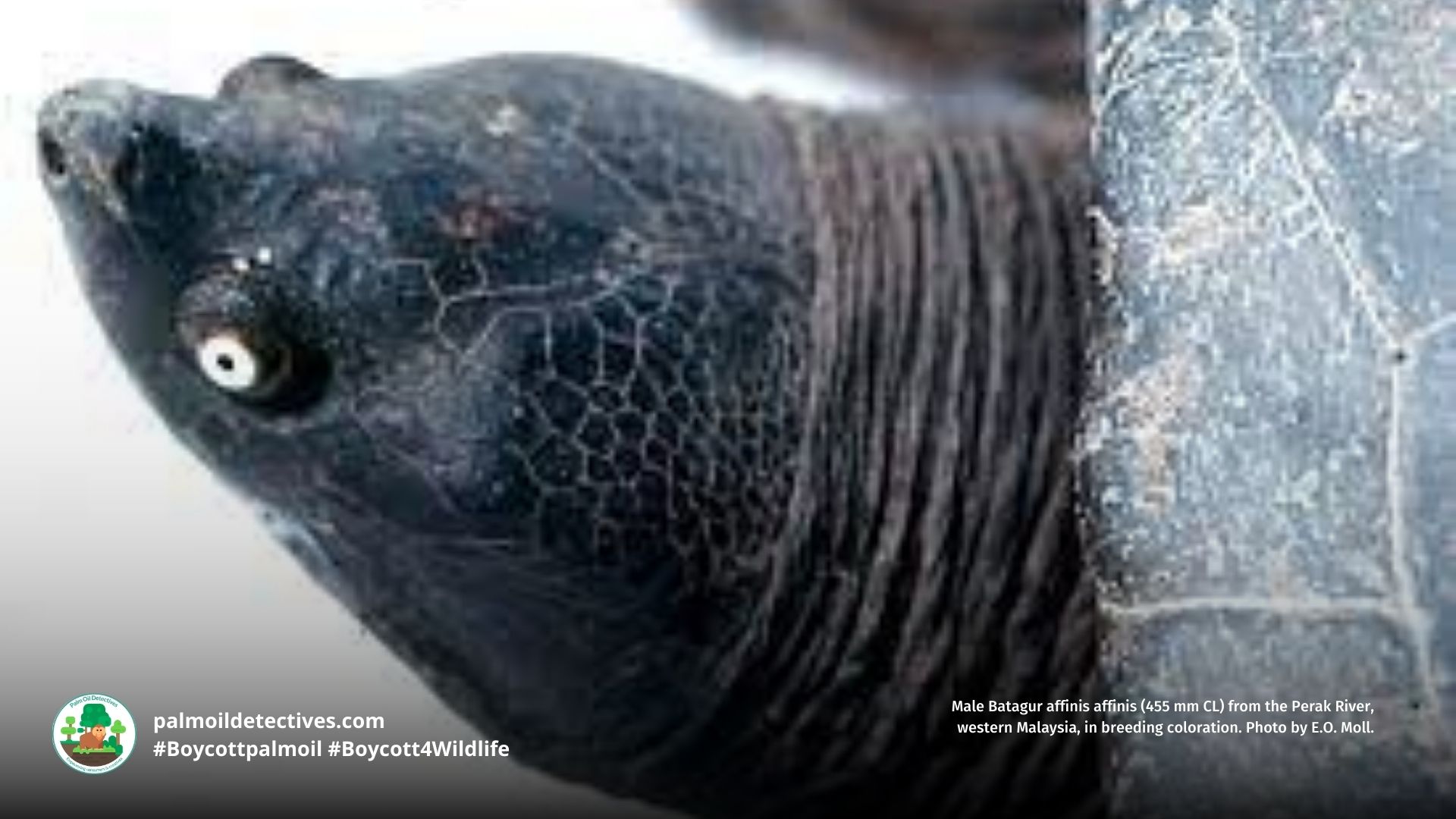
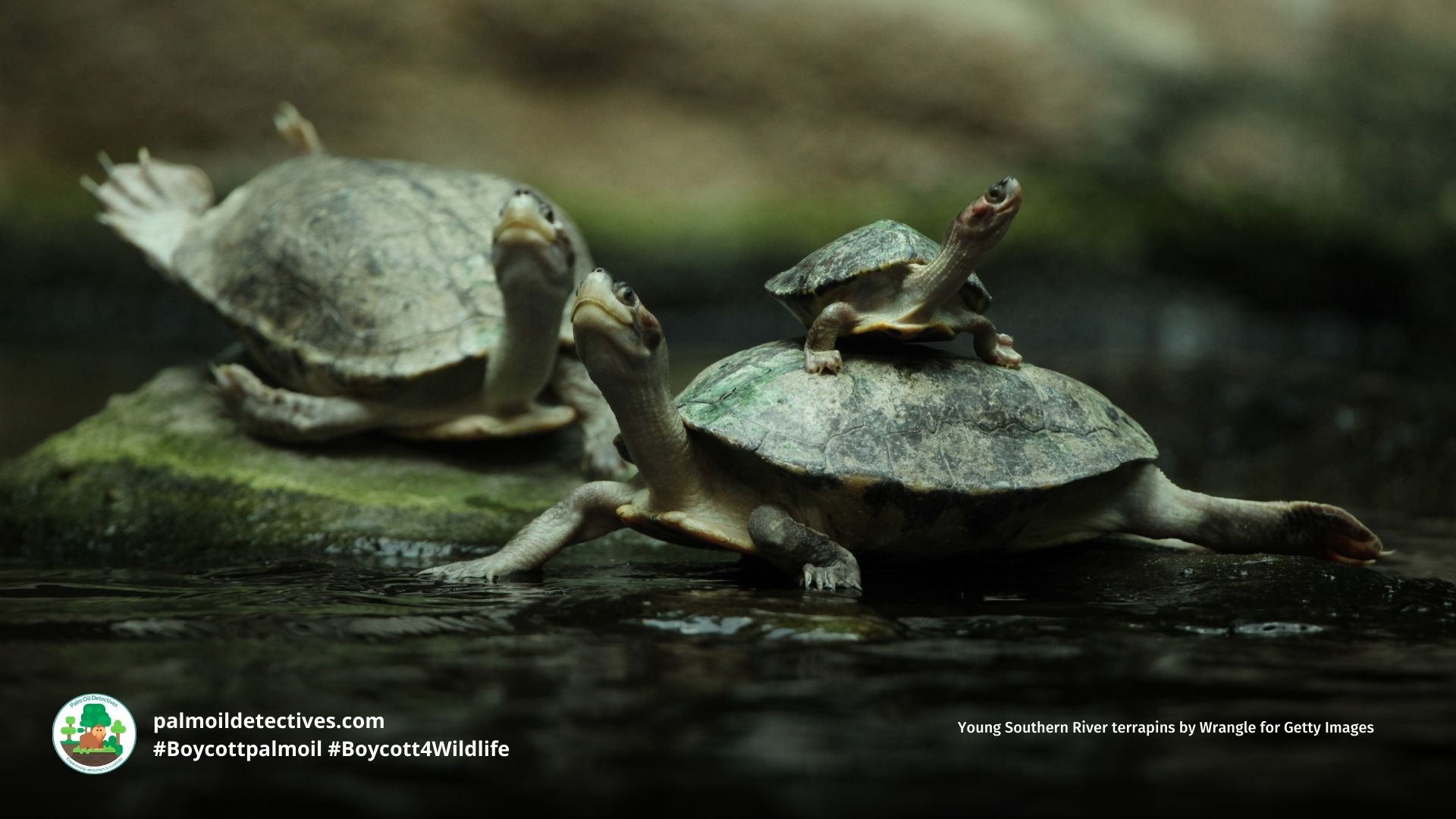
The Southern river terrapin is one of the rarest freshwater turtles in the world, found in the river systems of Southeast Asia. Known for their striking sexual dimorphism, males develop vibrant colours on their heads during the breeding season, creating a spectacle rarely seen in other turtles. These critically endangered turtles are vital for maintaining healthy river ecosystems, as they control aquatic vegetation and distribute nutrients.
However, their populations have plummeted due to habitat destruction, illegal poaching, and pollution. With fewer than 500 mature individuals remaining in the wild, they are on the brink of extinction. Take a stand against their decline—boycott palm oil and use your voice to demand conservation action. Fight for their survival with #BoycottPalmOil and #Boycott4Wildlife.
Sand mining and dams are among the worst threats. Other important indirect factors include deforestation and siltation of rivers.
IUCN Red List
Appearance and Behaviour
The Southern river terrapin is a large and distinctive turtle, with adults exhibiting dramatic differences between the sexes. Males measure up to 48 cm in carapace length and develop bluish-grey or pink markings on their heads during the breeding season, which fade afterwards. Females are slightly larger, reaching up to 56 cm, and maintain a muted olive-brown coloration year-round.
Their smooth, streamlined shells are complemented by webbed feet and strong limbs, allowing them to navigate strong river currents efficiently. Unlike many other turtles, their sharp claws and muscular build make them agile swimmers. These terrapins are mostly diurnal, spending daylight hours basking on sandy riverbanks or submerged in water. During the dry season, they exhibit remarkable migratory behaviour, travelling upstream to lay eggs.
One of their most striking behaviours is their ability to return to the same nesting sites year after year, a behaviour known as natal homing. This remarkable precision demonstrates their advanced navigation abilities.
Geographic Range
The Southern river terrapin historically thrived across Southeast Asia, but their range has shrunk dramatically. They are now found in isolated river systems in Malaysia (Perak and Terengganu Rivers), Cambodia (Sre Ambel River system), and parts of Indonesia (Riau Archipelago). Their habitats include sandy riverbanks, deep freshwater rivers, and mangrove estuaries, areas that are increasingly under threat from human activity (Turtle Conservation Society, 2024).
Diet
These terrapins are primarily herbivorous, feeding on a wide variety of aquatic plants, fallen fruit, and algae. However, they are opportunistic feeders and will consume molluscs, crustaceans, and small fish when available. Their diet helps regulate aquatic vegetation, preventing overgrowth that can choke waterways. By foraging on the riverbed, they also contribute to nutrient cycling, supporting the broader health of their ecosystems (Turtle Survival Alliance, 2024).
Reproduction and Mating
During the dry season, females travel long distances to find sandy or muddy riverbanks for nesting. They dig shallow nests and lay clutches of 15–30 eggs, which incubate for approximately 70–80 days. The eggs’ incubation temperature determines the sex of the hatchlings, a feature shared by many reptiles.
Hatchlings are particularly vulnerable to predation by birds, fish, and monitor lizards, resulting in very low survival rates. The reproductive cycle is slow, with females nesting only every two to three years, making population recovery an immense challenge (Schoppe, 2019). Conservation programs often focus on “head-starting,” a technique where hatchlings are raised in captivity until they are large enough to avoid predation before being released back into the wild.
Threats
IUCN Status: Critically Endangered
- Palm oil and timber deforestation: The conversion of natural habitats into palm oil plantations and agricultural land has destroyed critical nesting sites and feeding grounds. Deforestation and sand mining further degrade river systems.
- Illegal poaching and pet trade: The terrapins are heavily exploited for their meat, eggs, and shells, which are considered delicacies or used in traditional medicine. They are also captured for the exotic pet trade, despite legal protections (Turtle Conservation Society, 2024).
- Pollution run-off from palm oil plantations: Rivers are contaminated with industrial waste, pesticides, and agricultural runoff, leading to the degradation of water quality and the loss of aquatic food sources.
- Climate Change: Rising temperatures and altered rainfall patterns threaten their nesting sites and impact hatchling sex ratios, skewing populations and further hindering reproduction.
- Population Fragmentation: Habitat destruction has isolated populations, limiting gene flow and increasing the risk of inbreeding.
Support conservation for this creature
The Southern river terrapin is listed as Critically Endangered on the IUCN Red List. Conservation efforts include habitat restoration, community engagement to reduce poaching, and captive breeding programs. Organisations such as the Turtle Survival Alliance and the Turtle Conservation Society have spearheaded initiatives to monitor populations, protect nests, and raise public awareness.
Despite these efforts, habitat destruction continues to outpace conservation progress. Without stronger enforcement of wildlife protection laws and sustainable land-use practices, the survival of the Southern river terrapin remains uncertain.
Take Action!
Protect the Southern river terrapin by boycotting palm oil and supporting conservation organisations working to preserve Southeast Asia’s freshwater habitats. Share their story and advocate for stronger legal protections. Together, we can fight for their survival. #BoycottPalmOil #Boycott4Wildlife
Further Information
Horne, B.D., Chan, E.H., Platt, S.G. & Moll, E.O. 2019. Batagur affinis (errata version published in 2019). The IUCN Red List of Threatened Species 2019: e.T170501A152041284. https://dx.doi.org/10.2305/IUCN.UK.2019-1.RLTS.T170501A152041284.en. Downloaded on 25 January 2021.
Platt, S. G., & Sovannara, H. (2018). Disease screening in southern river terrapins (Batagur affinis) in Cambodia.
Rafanan, E. M., et al. (2023). Climate impact on Batagur affinis nesting in riverine systems.
Schoppe, S. (2019). Batagur affinis: Southern River Terrapin.
Turtle Conservation Society. (2024). Introduction to Southern river terrapin in Malaysia.
Turtle Survival Alliance. (2024). Southern river terrapin.

How can I help the #Boycott4Wildlife?
Take Action in Five Ways
1. Join the #Boycott4Wildlife on social media and subscribe to stay in the loop: Share posts from this website to your own network on Twitter, Mastadon, Instagram, Facebook and Youtube using the hashtags #Boycottpalmoil #Boycott4Wildlife.
2. Contribute stories: Academics, conservationists, scientists, indigenous rights advocates and animal rights advocates working to expose the corruption of the palm oil industry or to save animals can contribute stories to the website.



3. Supermarket sleuthing: Next time you’re in the supermarket, take photos of products containing palm oil. Share these to social media along with the hashtags to call out the greenwashing and ecocide of the brands who use palm oil. You can also take photos of palm oil free products and congratulate brands when they go palm oil free.
4. Take to the streets: Get in touch with Palm Oil Detectives to find out more.
5. Donate: Make a one-off or monthly donation to Palm Oil Detectives as a way of saying thank you and to help pay for ongoing running costs of the website and social media campaigns. Donate here
Discover more from Palm Oil Detectives
Subscribe to get the latest posts sent to your email.
 Palm Oil Detectives