Black-spotted Cuscus Spilocuscus rufoniger
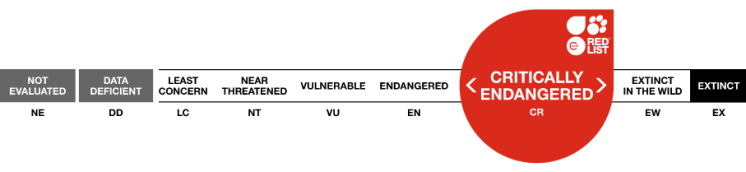
IUCN Status: Critically Endangered
Locations: Endemic to lowland and montane forests of New Guinea, specifically in the north of Papua New Guinea and (Indonesian occupied) West Papua.
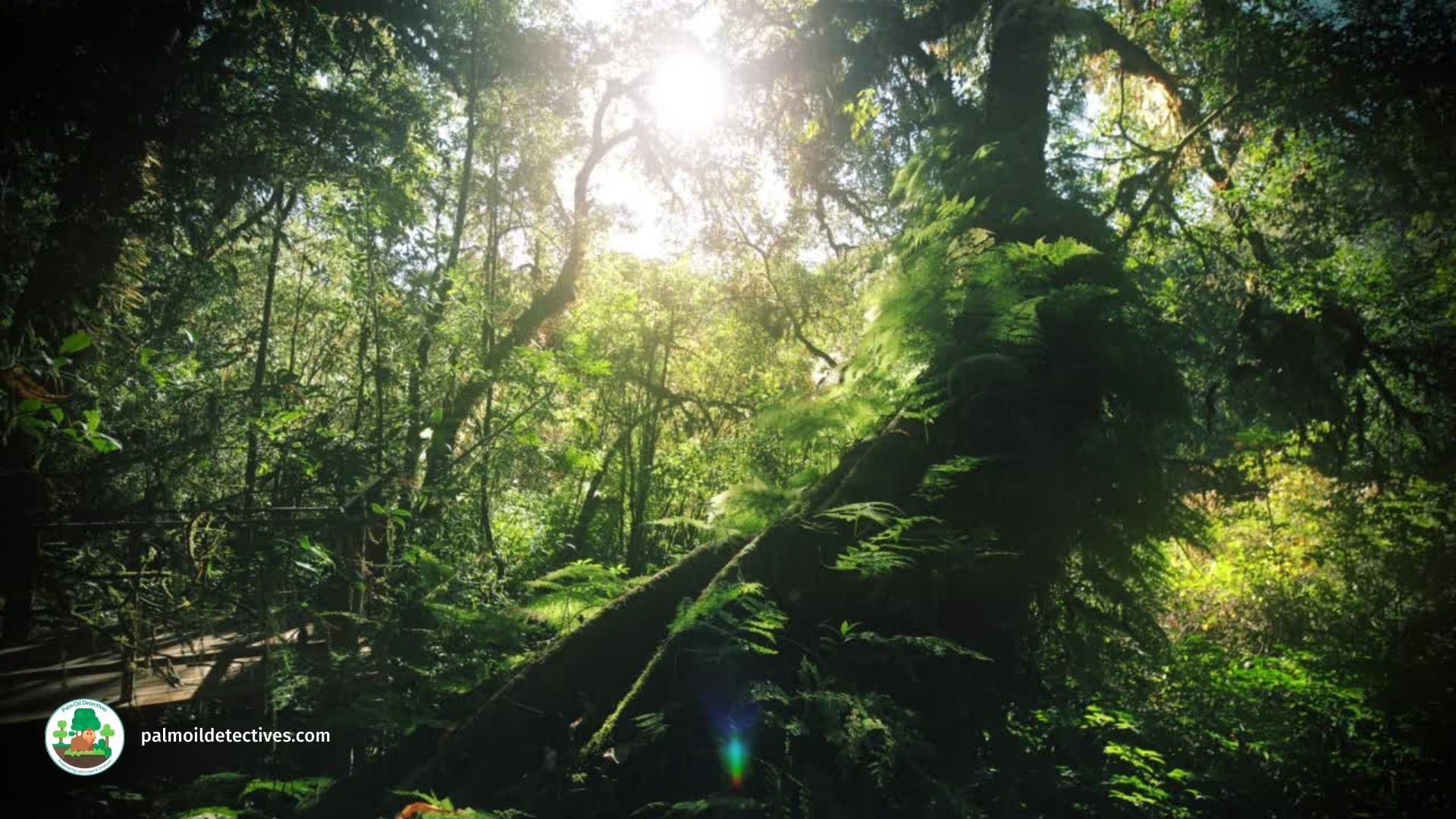
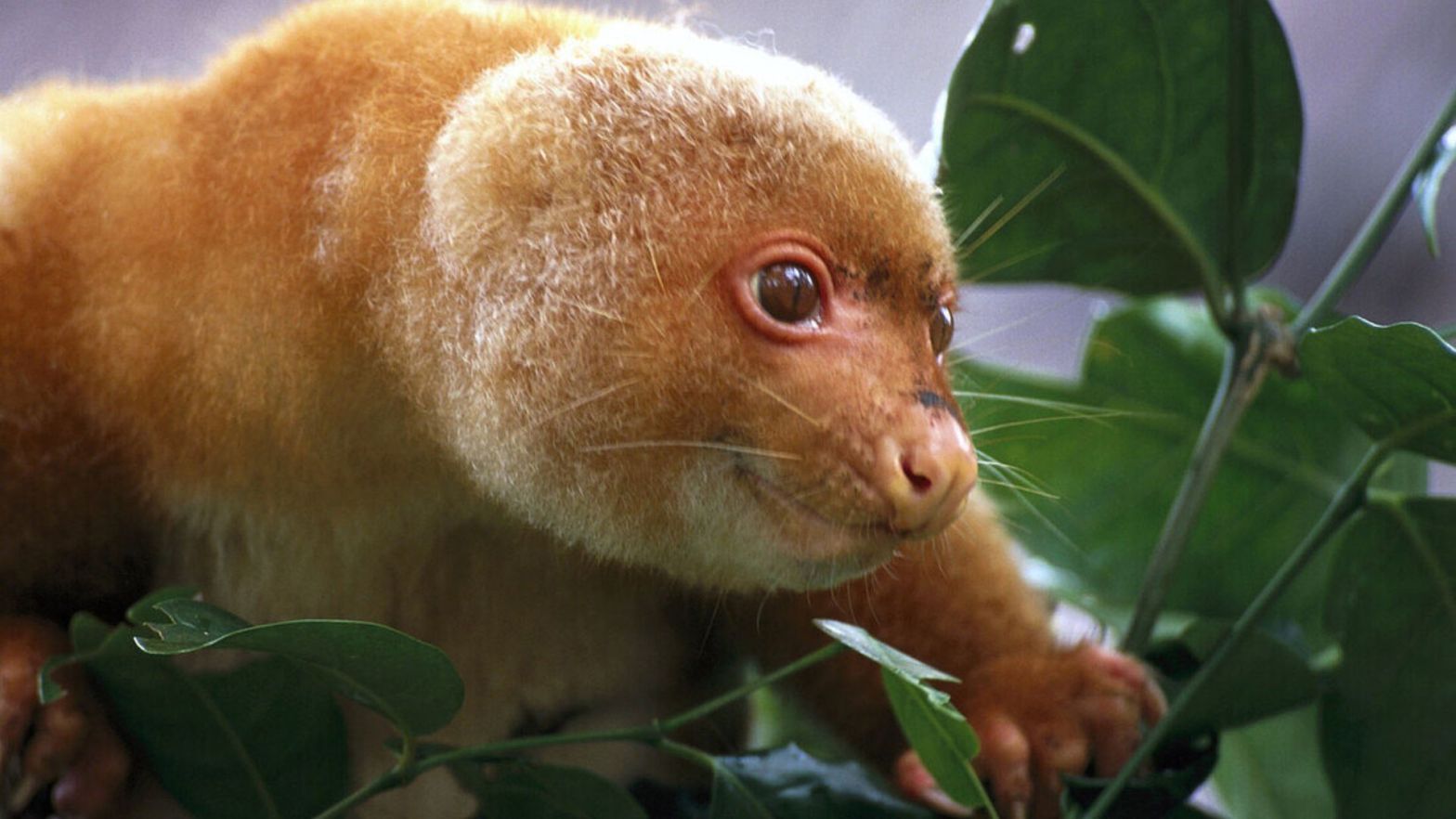
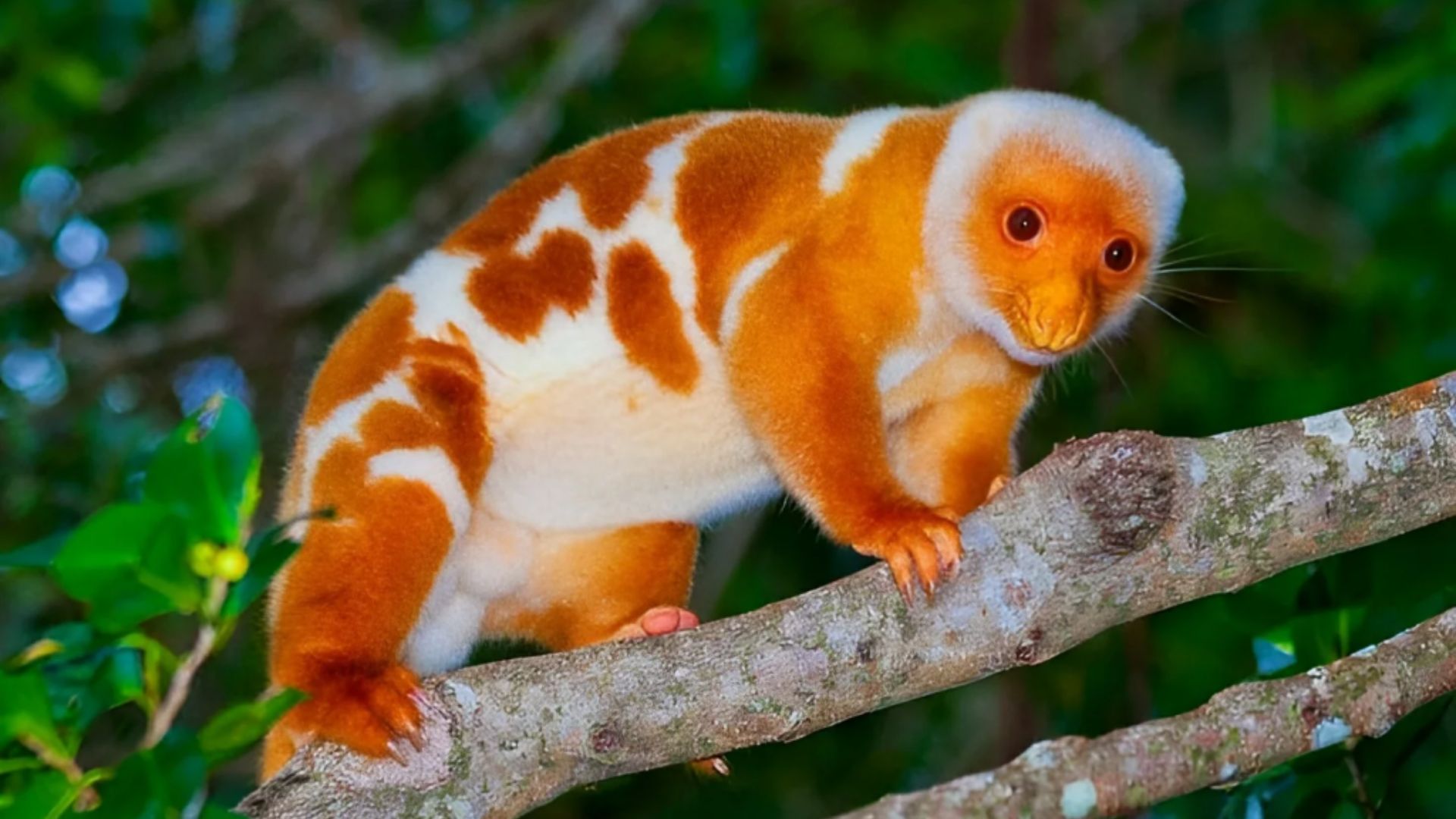
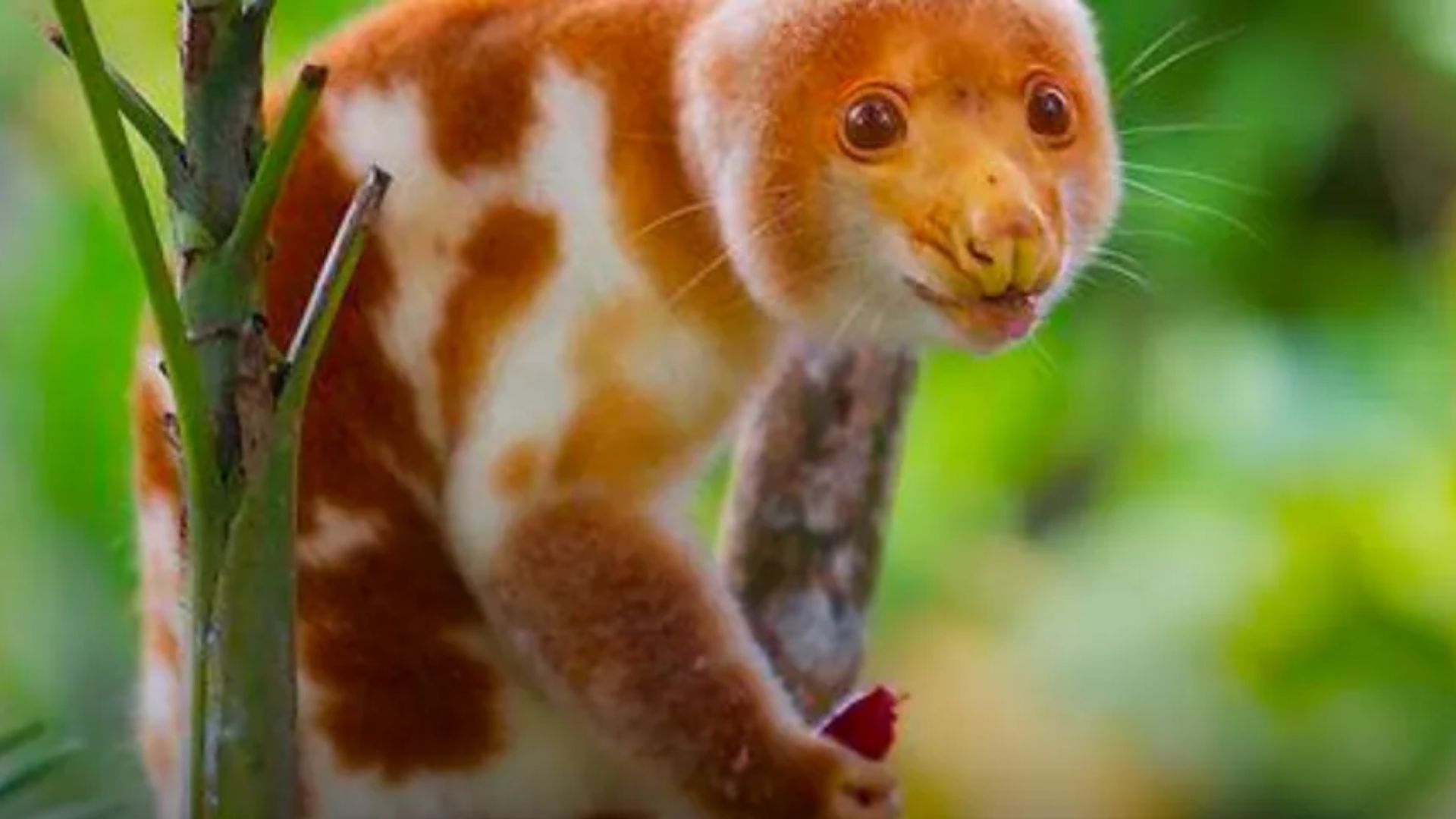
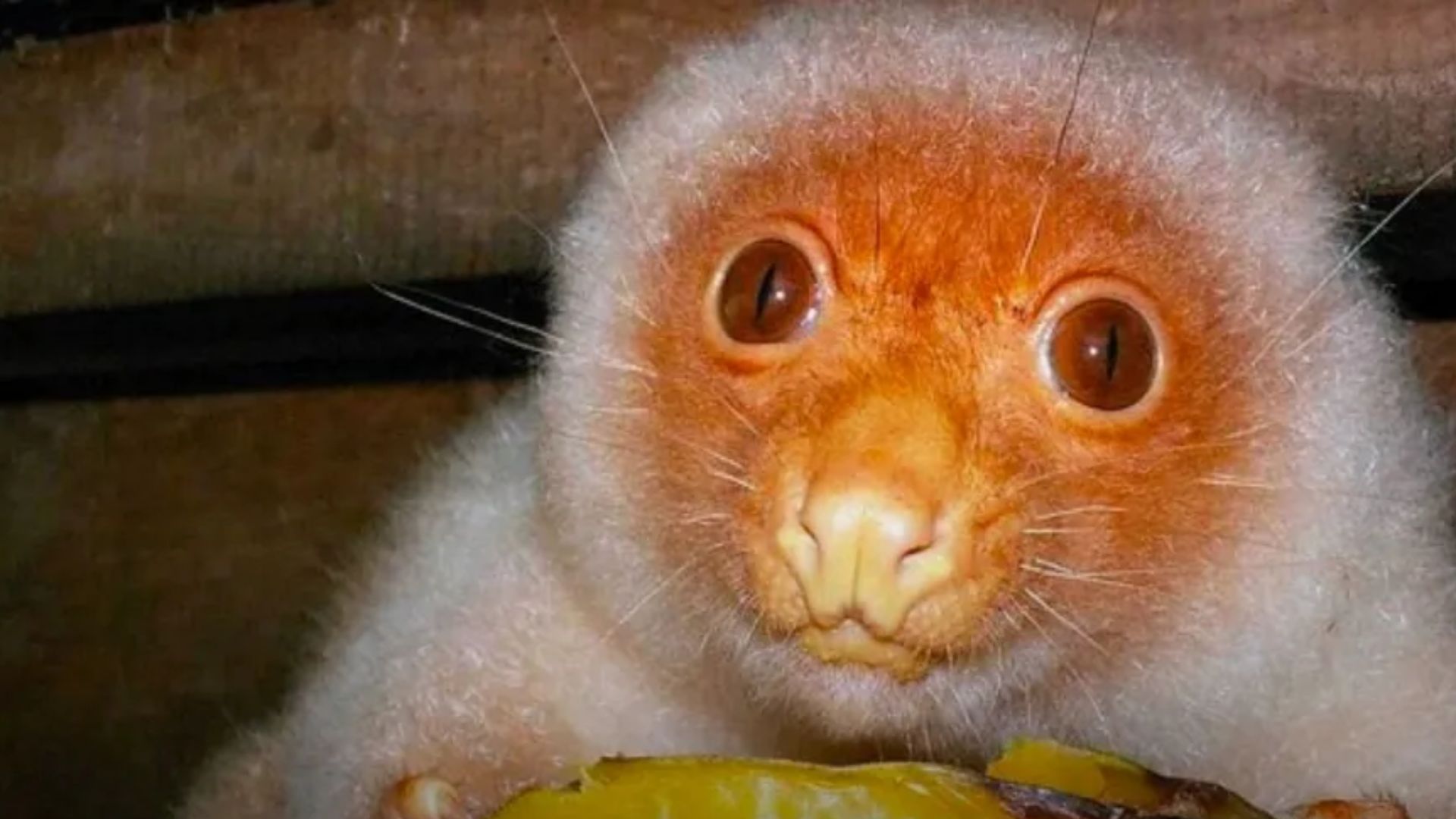
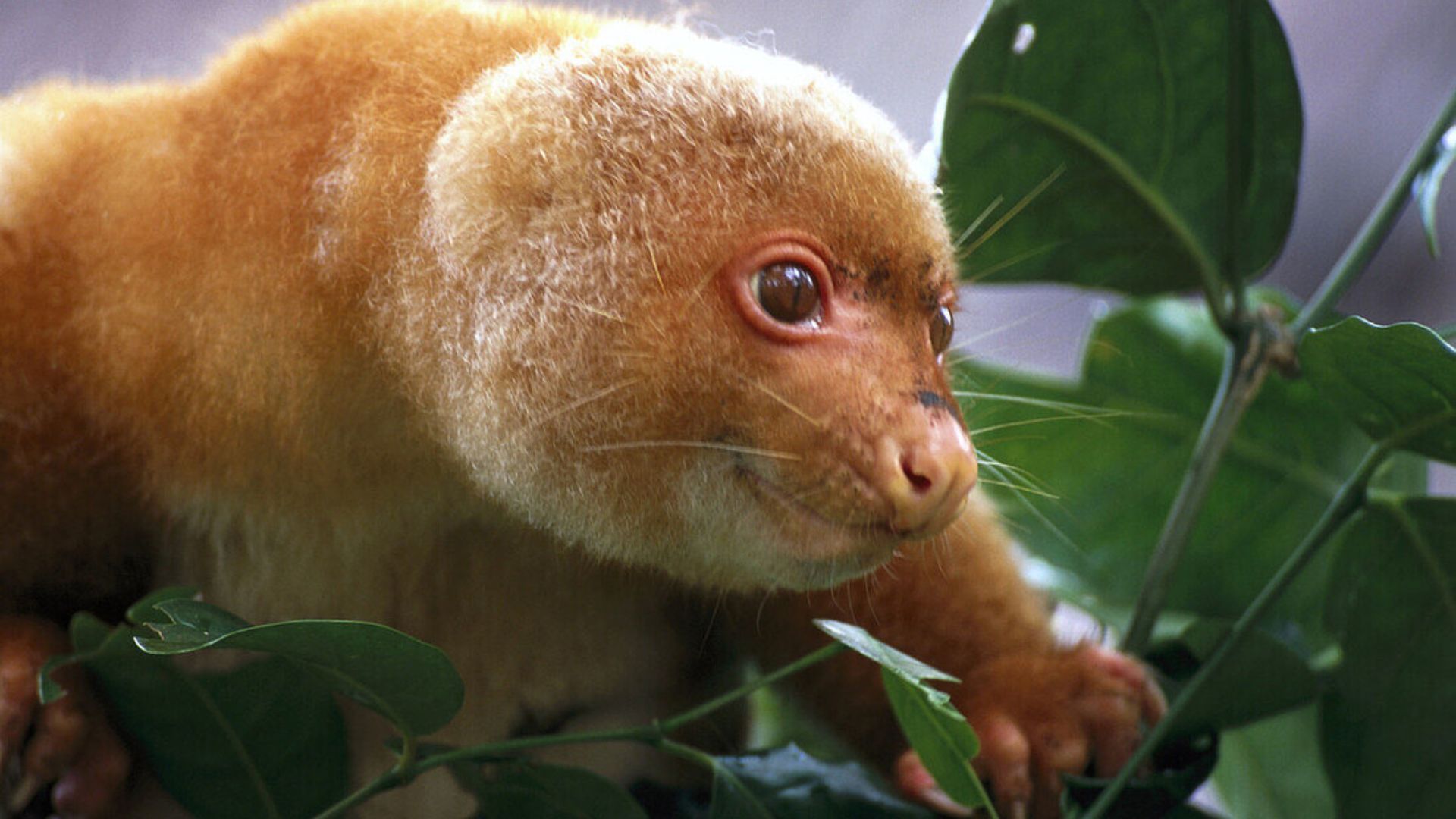
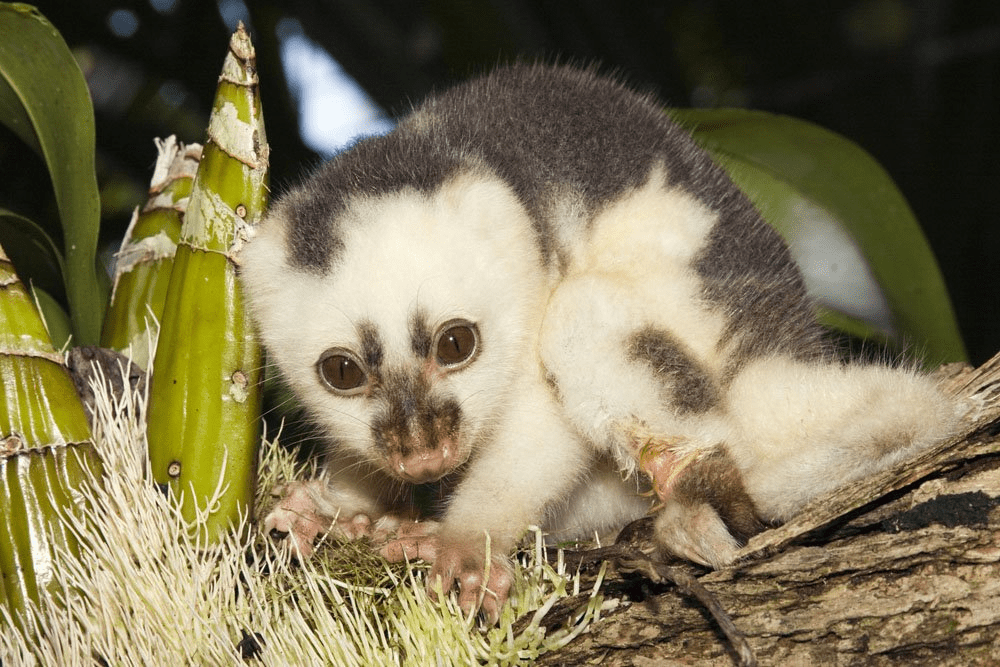
The black-spotted cuscus Spilocuscus rufoniger is one of the most striking and rare marsupials in the world. Known for their soft fur with irregular black spots on a reddish or cream background, they exemplify the biodiversity of West Papua and Papua New Guinea’s rainforests. Endemic to the island, they are incredibly elusive, primarily inhabiting dense forests.
Sadly, this arboreal species is on the brink of extinction, primarily due to habitat loss from logging and palm oil plantations. Additionally, they are hunted for bushmeat and their striking pelts, which are valued in local traditions. With their population in severe decline, urgent action is needed to save this remarkable species from disappearing. Fight for their survival and #BoycottPalmOil #Boycott4Wildlife.
The gentle Black-spotted #cuscus just wants to be left alone in the forests of #Papua. They are critically endangered by #hunting and #palmoil #deforestation in #PapuaNewGuinea. Help them survive and #BoycottPalmOil #Boycott4Wildlife @palmoildetect.bsky.social https://wp.me/pcFhgU-n7
Critically endangered by #hunting and #palmoil #deforestation in #Papua, sweet-faced #marsupials black spotted #cuscus need your help. Every time you visit the supermarket, make sure you #BoycottPalmOil #Boycott4Wildlife @palmoildetect.bsky.social learn more https://wp.me/pcFhgU-n7
The west Papuan area has been impacted by the influx of Javan people, and large areas of habitat have been transformed by agriculture. There are also logging concessions and oil palm activities planned for parts of the area.
IUCN Red List

Appearance and Behaviour
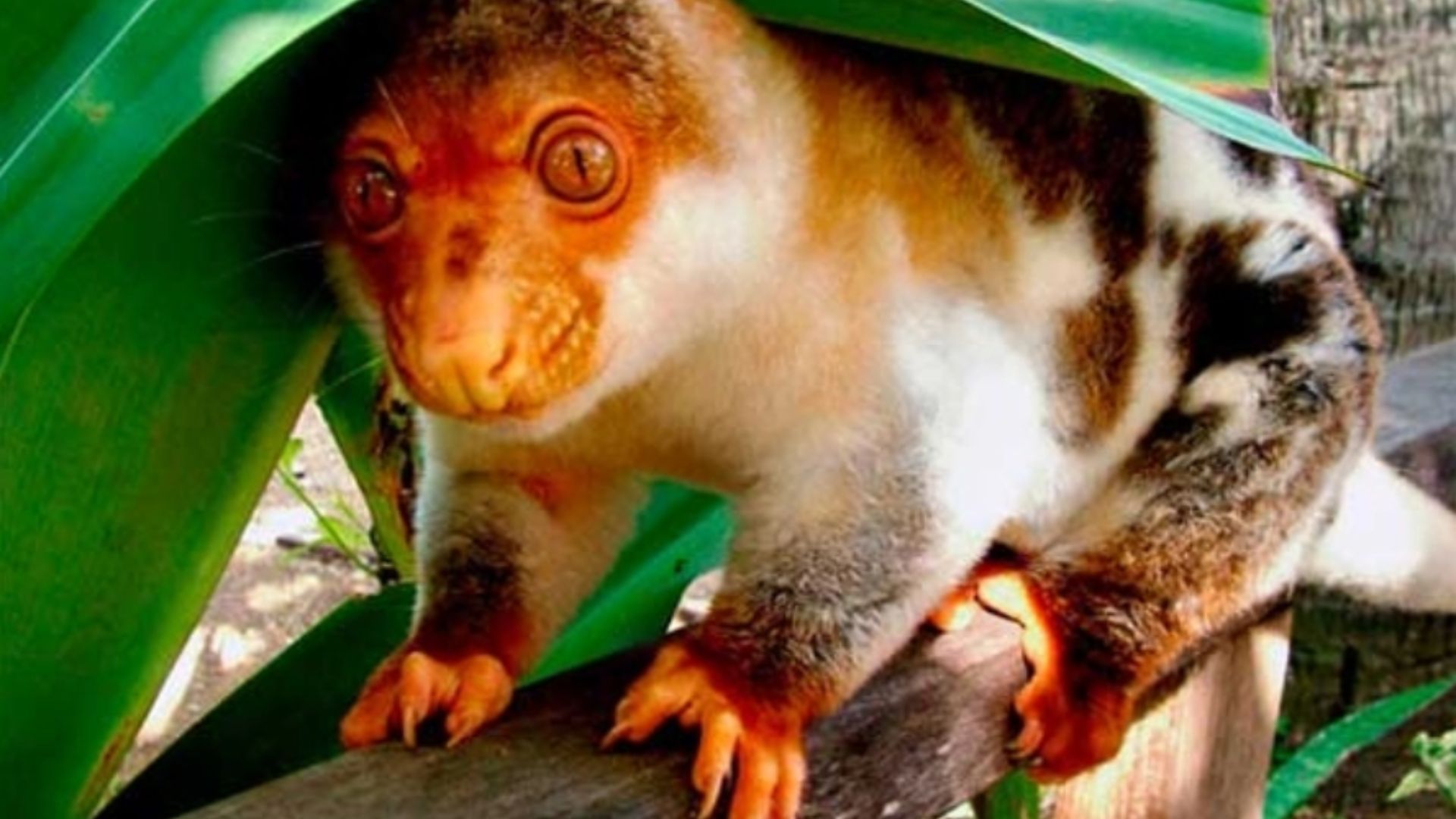
Black-spotted cuscuses are medium-sized marsupials, weighing up to 7 kilograms and measuring between 50 and 70 centimetres in length, excluding their long, prehensile tails. Their luxuriant fur is marked by irregular black spots over a reddish or cream-coloured background, a pattern that varies between individuals.
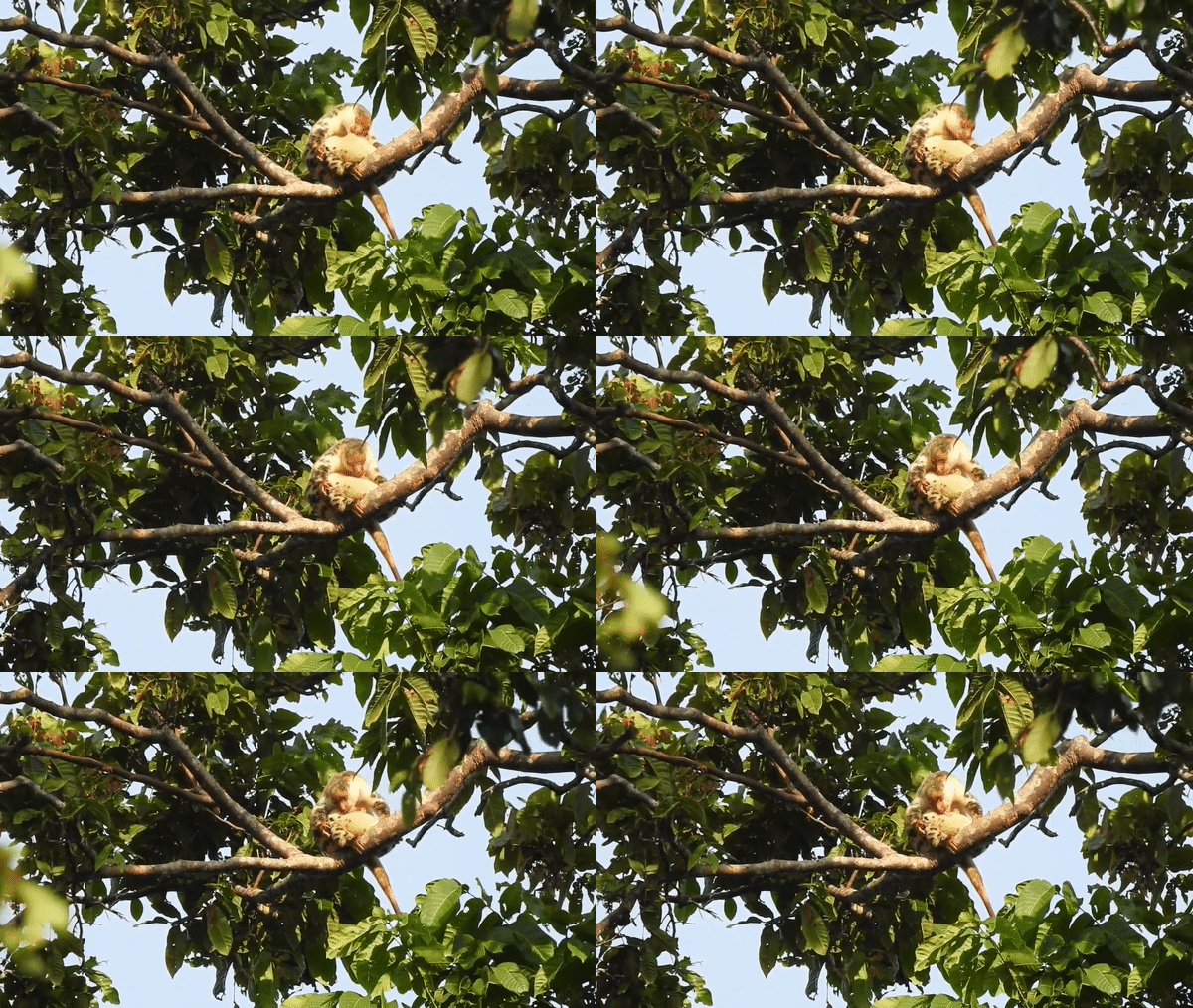
These nocturnal and arboreal animals are equipped with large eyes for enhanced night vision and sharp claws for climbing and gripping high in the tree canopies. Their prehensile tails act as a fifth limb, enabling them to navigate the canopy with ease. Despite their size, they move stealthily, often going unnoticed in their dense forest homes.
Threats
IUCN Status: Critically Endangered
The black-spotted cuscus faces a multitude of threats:
- Palm Oil and Timber Deforestation: Logging for timber, agricultural expansion, and palm oil plantations have drastically reduced their forest habitats, particularly in lowland areas. This habitat destruction continues at an alarming rate.
- Hunting: The cuscus is heavily hunted for bushmeat and their distinctive pelts, which are used in local ceremonial garments and sold in markets.
- Infrastructure Development: Expanding settlements and infrastructure development further fragment their habitats, isolating populations.
- Climate Change: Altered rainfall patterns and temperature fluctuations disrupt their delicate rainforest ecosystems, impacting their food sources and habitat stability.
Without immediate intervention, the survival of this species remains uncertain.

Diet
The black-spotted cuscus primarily feeds on leaves, fruits, and flowers found in the rainforest canopy. Their diet includes a wide variety of plant species, and they play a vital ecological role as seed dispersers. Seasonal shifts in food availability often dictate their foraging behaviours, with some reports suggesting preferences for certain fruits during specific times of the year.
Reproduction and Mating
Little is known about the reproductive behaviour of the black-spotted cuscus due to their elusive nature. Like other marsupials, females likely carry their young in a pouch until they are developed enough to cling to their fur. They may produce one to two offspring per breeding season, a low reproductive rate that further endangers their survival.
Geographic Range
The black-spotted cuscus is endemic to the rainforests of New Guinea, specifically in the northern regions of Papua New Guinea and (Indonesian occupied) West Papua. They inhabit both lowland and montane forests up to 1,500 metres above sea level. Habitat fragmentation has confined populations to increasingly isolated patches, making conservation of these forest areas critical to their survival.
FAQ
What is the black-spotted cuscus?
The black-spotted cuscus is a Critically Endangered marsupial found only in New Guinea. They are known for their striking spotted fur and arboreal lifestyle.
Why is the black-spotted cuscus endangered?
The species is threatened by palm oil and timber deforestation, hunting for bushmeat and pelts, and human encroachment on their habitats.
Where do black-spotted cuscuses live?
They are native to the forests of New Guinea, specifically in northern Papua New Guinea and (Indonesian occupied) West Papua.
What do black-spotted cuscuses eat?
They primarily feed on leaves, fruits, and flowers, contributing significantly to seed dispersal within their ecosystems.
Take Action!
Help save the black-spotted cuscus by supporting indigenous-led conservation efforts and rejecting products tied to deforestation. Use your wallet as a weapon and #BoycottPalmOil #Boycott4Wildlife.
Further Information
Leary, T., Singadan, R., Menzies, J., Helgen, K., Allison, A., James, R., Flannery, T., Aplin, K., Dickman, C. & Salas, L. 2016. Spilocuscus rufoniger. The IUCN Red List of Threatened Species 2016: e.T20639A21949788. https://dx.doi.org/10.2305/IUCN.UK.2016-2.RLTS.T20639A21949788.en. Downloaded on 26 January 2021.
GBIF. (2021). Black-spotted cuscus species profile. Retrieved from GBIF
Woinarski, J., & Fisher, D. O. (2023). Conservation biogeography of modern species of Australasian marsupials. In American and Australasian Marsupials (pp. 1–48). Springer. https://doi.org/10.1007/978-3-030-88800-8_44-1
Wikipedia contributors; n.d.. Black-spotted cuscus. Retrieved from Wikipedia

How can I help the #Boycott4Wildlife?
Take Action in Five Ways
1. Join the #Boycott4Wildlife on social media and subscribe to stay in the loop: Share posts from this website to your own network on Twitter, Mastadon, Instagram, Facebook and Youtube using the hashtags #Boycottpalmoil #Boycott4Wildlife.
2. Contribute stories: Academics, conservationists, scientists, indigenous rights advocates and animal rights advocates working to expose the corruption of the palm oil industry or to save animals can contribute stories to the website.





3. Supermarket sleuthing: Next time you’re in the supermarket, take photos of products containing palm oil. Share these to social media along with the hashtags to call out the greenwashing and ecocide of the brands who use palm oil. You can also take photos of palm oil free products and congratulate brands when they go palm oil free.
4. Take to the streets: Get in touch with Palm Oil Detectives to find out more.
5. Donate: Make a one-off or monthly donation to Palm Oil Detectives as a way of saying thank you and to help pay for ongoing running costs of the website and social media campaigns. Donate here
Discover more from Palm Oil Detectives
Subscribe to get the latest posts sent to your email.
 Palm Oil Detectives