
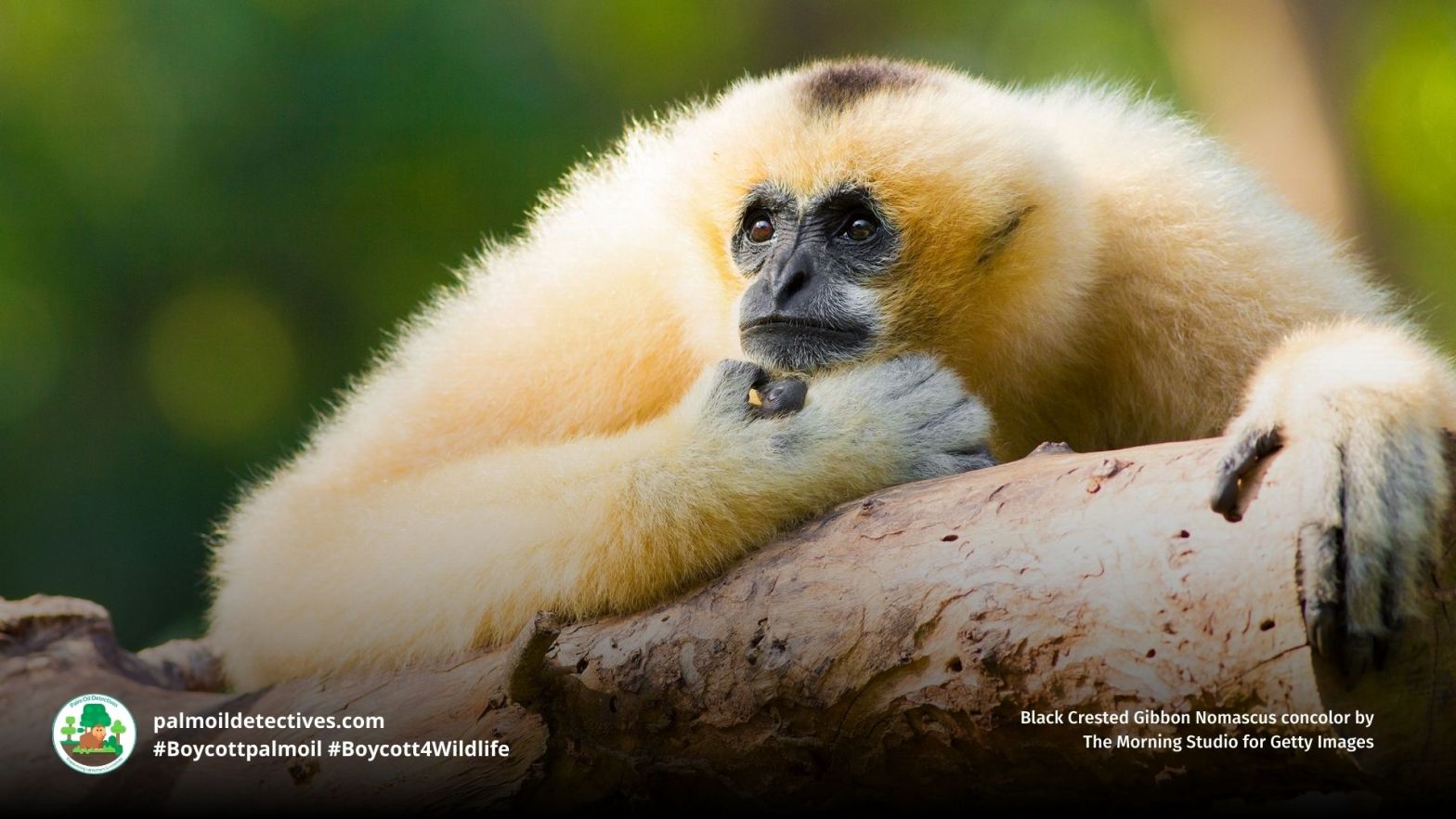
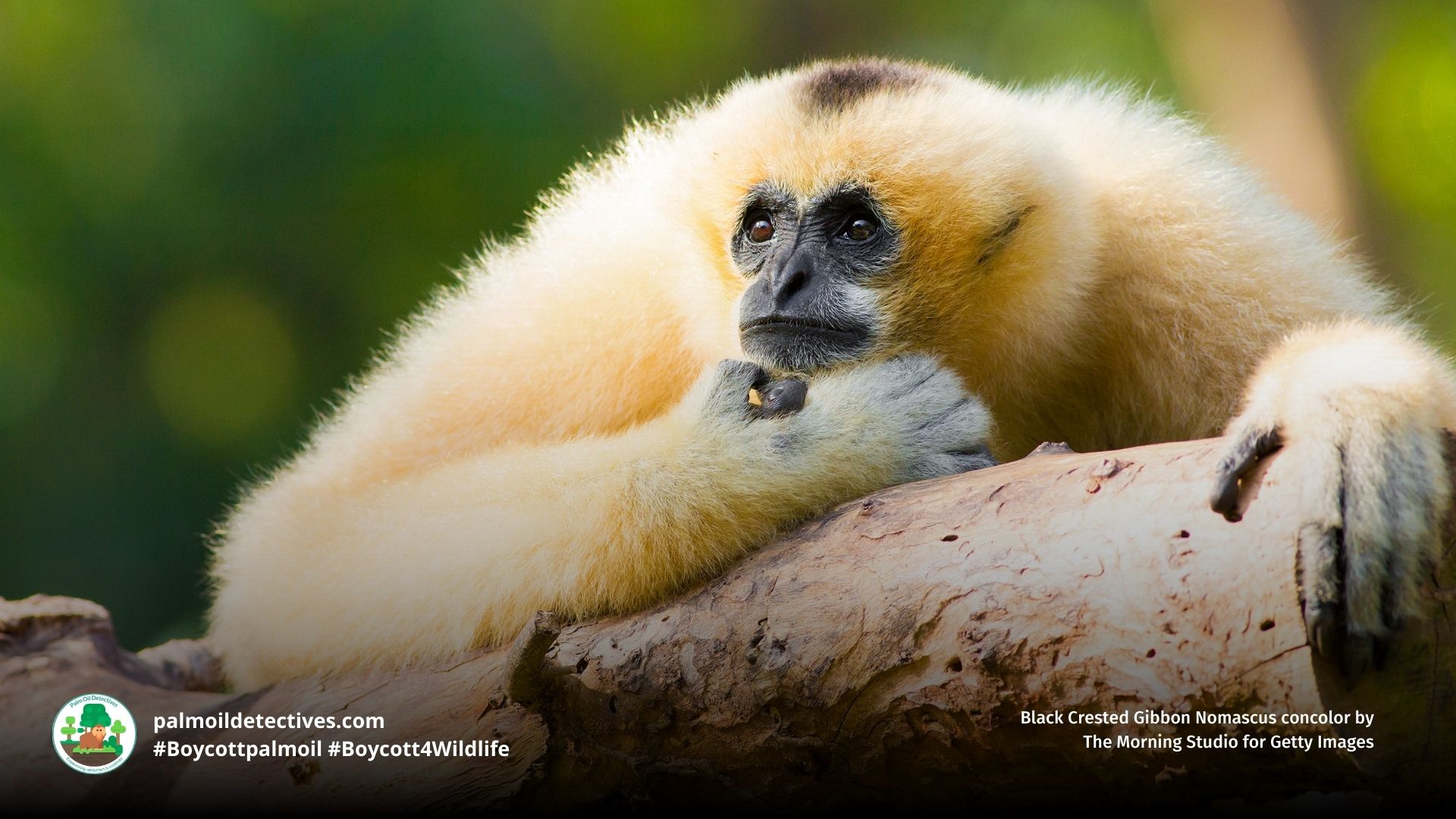
Black Crested Gibbon Nomascus concolor
IUCN Red List Status: Endangered
Location: Black-Crested Gibbons are found in the montane and tropical forests of southern China, northern Vietnam, and northern Laos, primarily at elevations between 200 and 2,800 metres.
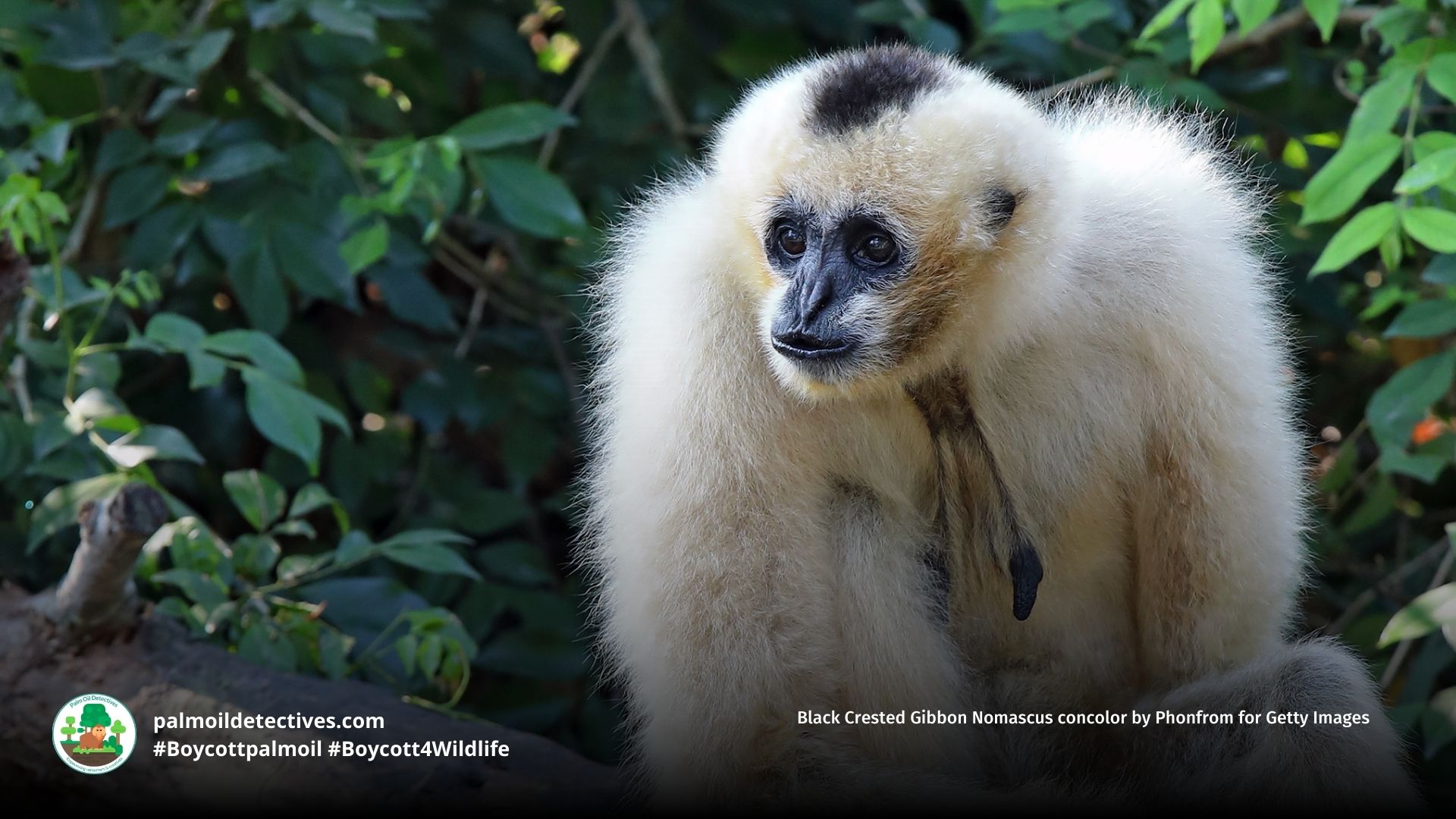
The Black-Crested Gibbon of the genus Nomascus is a truly enchanting primate, renowned for their melodic morning duets that echo through the forests of southern China, Vietnam, and Laos. What makes these calls even more remarkable is their regional variation—these gibbons sing with distinct “accents,” unique to their local populations. These complex songs not only strengthen bonds between mates but also serve as territorial markers, ensuring harmony within their fragmented forest homes.
Despite their beauty and ecological importance, Black-Crested Gibbons are at risk of extinction. Habitat destruction for agriculture, and logging, coupled with hunting for the bushmeat trade and the illegal pet trade, is rapidly shrinking their population. Protecting their future is vital for the health of their ecosystems. Take action now: Boycott the illegal wildlife trade, be #vegan and #Boycott4Wildlife.
Black-Crested #Gibbon communities are very close 😻🩷🐒🐵 They sing to each other in regional accents 🔊🎶 they recognise. #Poaching and hunting are a major threat along with #deforestation in #Vietnam 🇻🇳 help them when u #Boycott4Wildlife @palmoildetect https://palmoildetectives.com/2021/01/29/black-crested-gibbon-nomascus-concolor/
Family-minded with a long-limbed and a vivacious energy ✨🎇 Black-crested #gibbons 🐒🐵are #endangered in #China 🇨🇳and #Vietnam 🇻🇳 due to #poaching and the bushmeat trade along with #deforestation. Help them survive #Boycott4Wildlife 🌴☠️🚫 @palmoildetect https://palmoildetectives.com/2021/01/29/black-crested-gibbon-nomascus-concolor/
Appearance and Behaviour
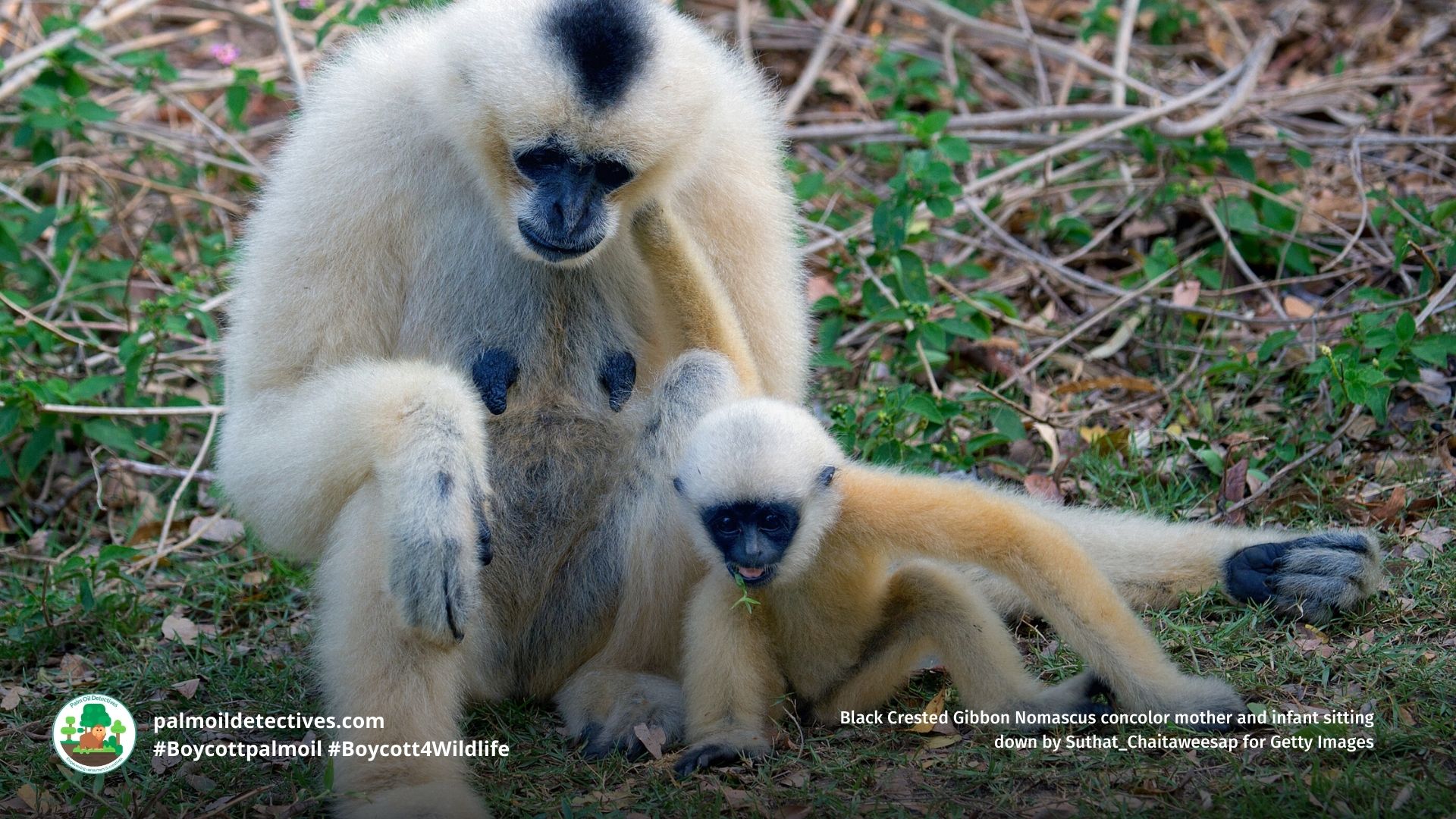
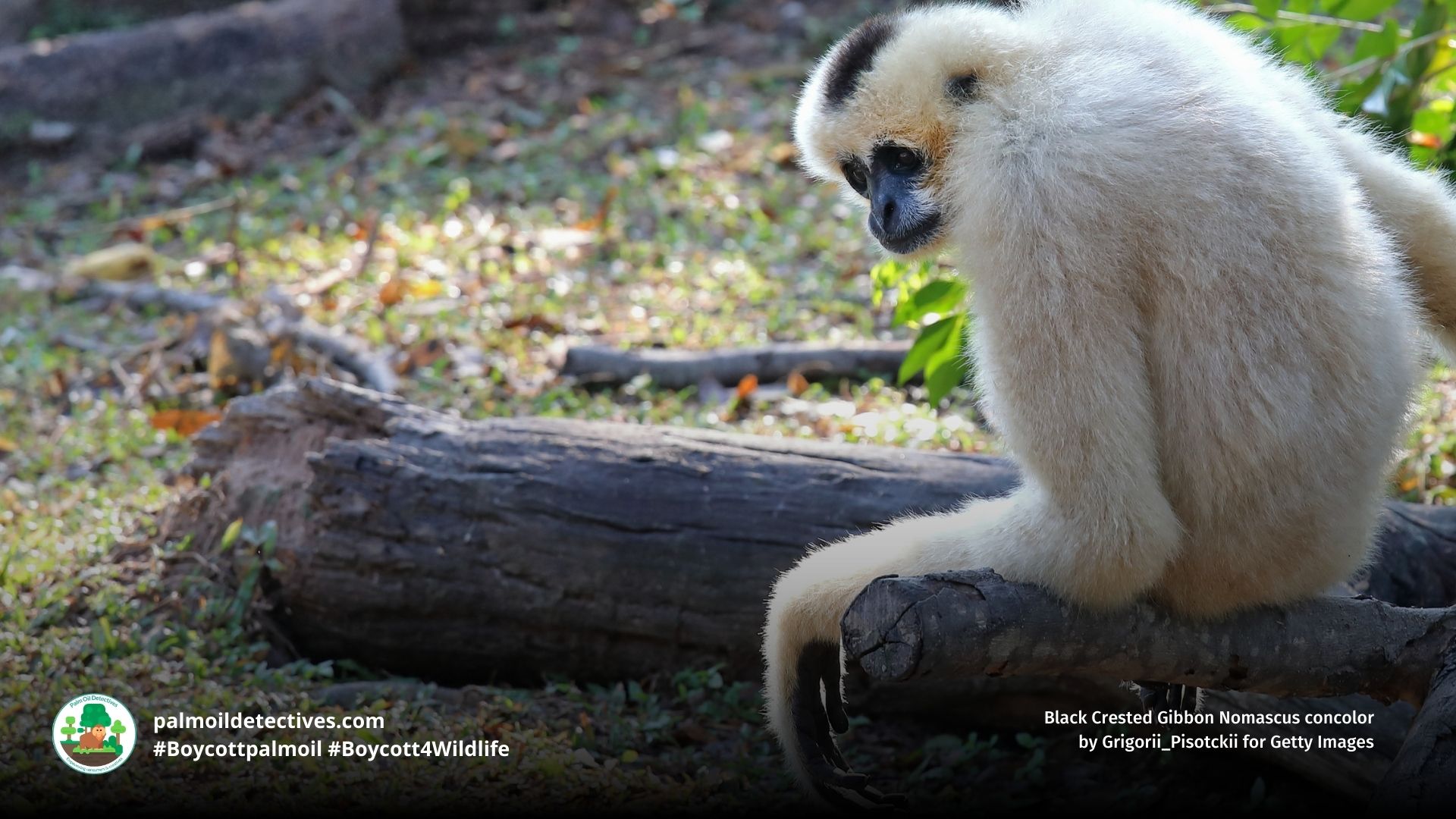
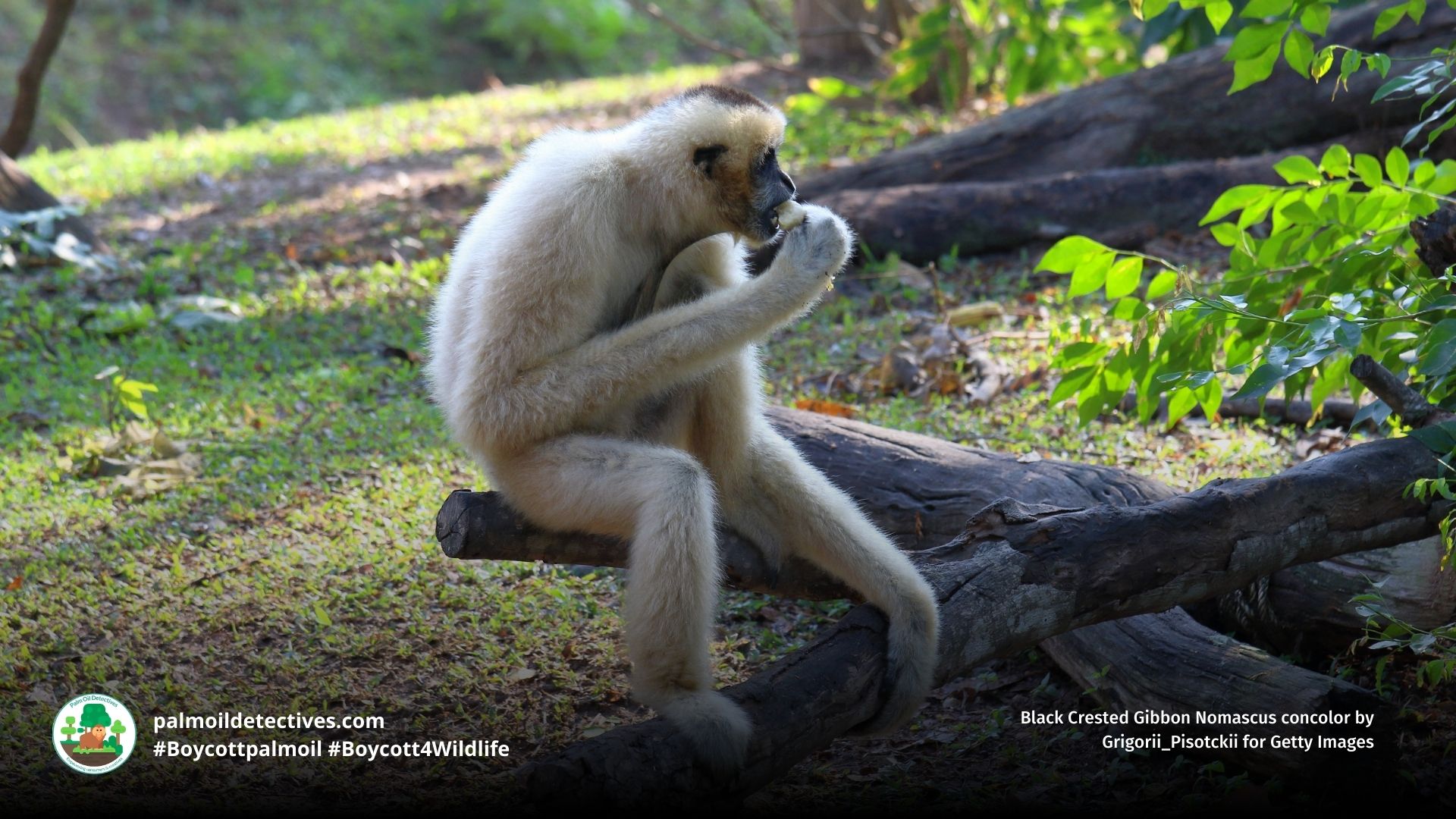
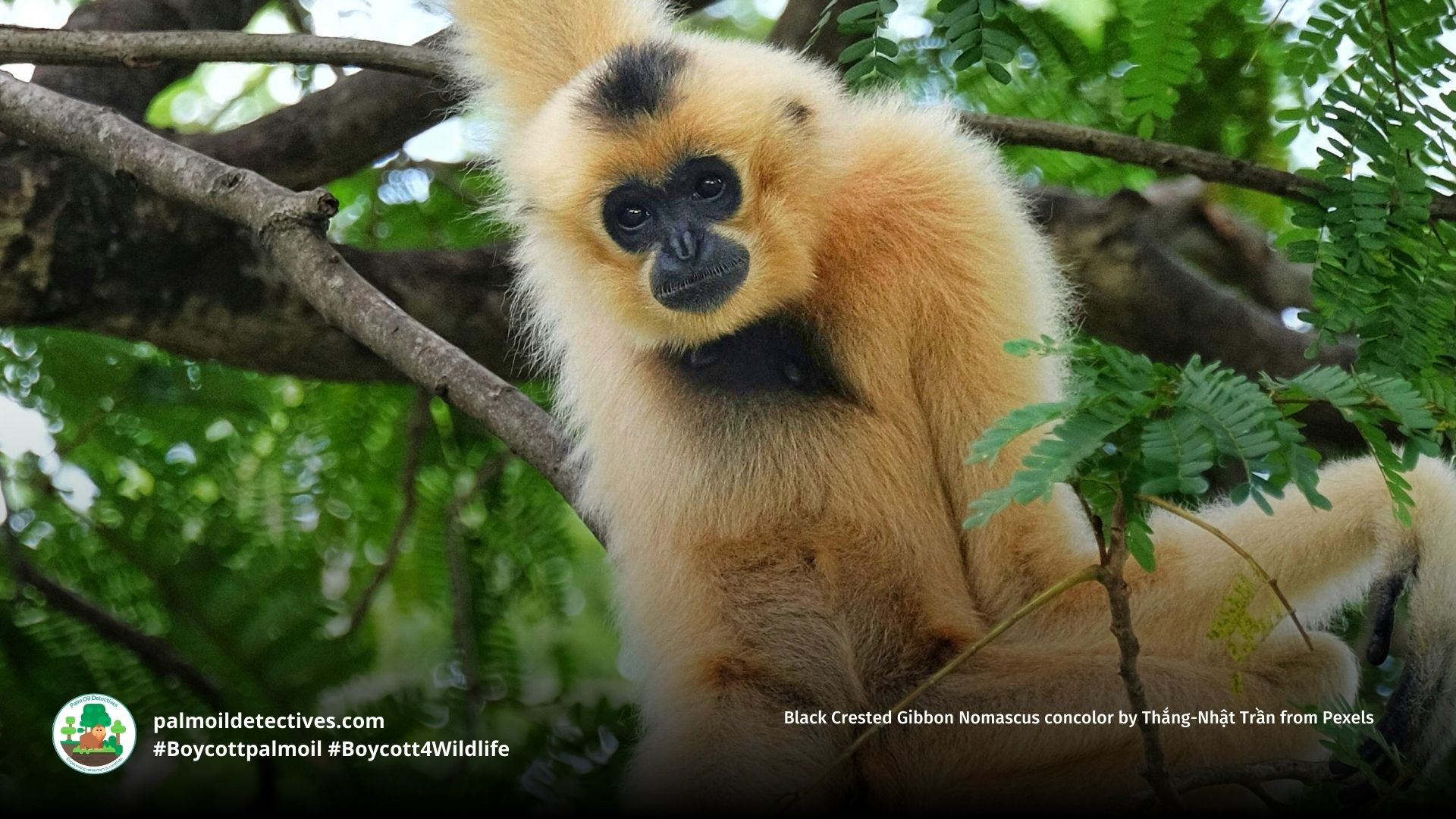
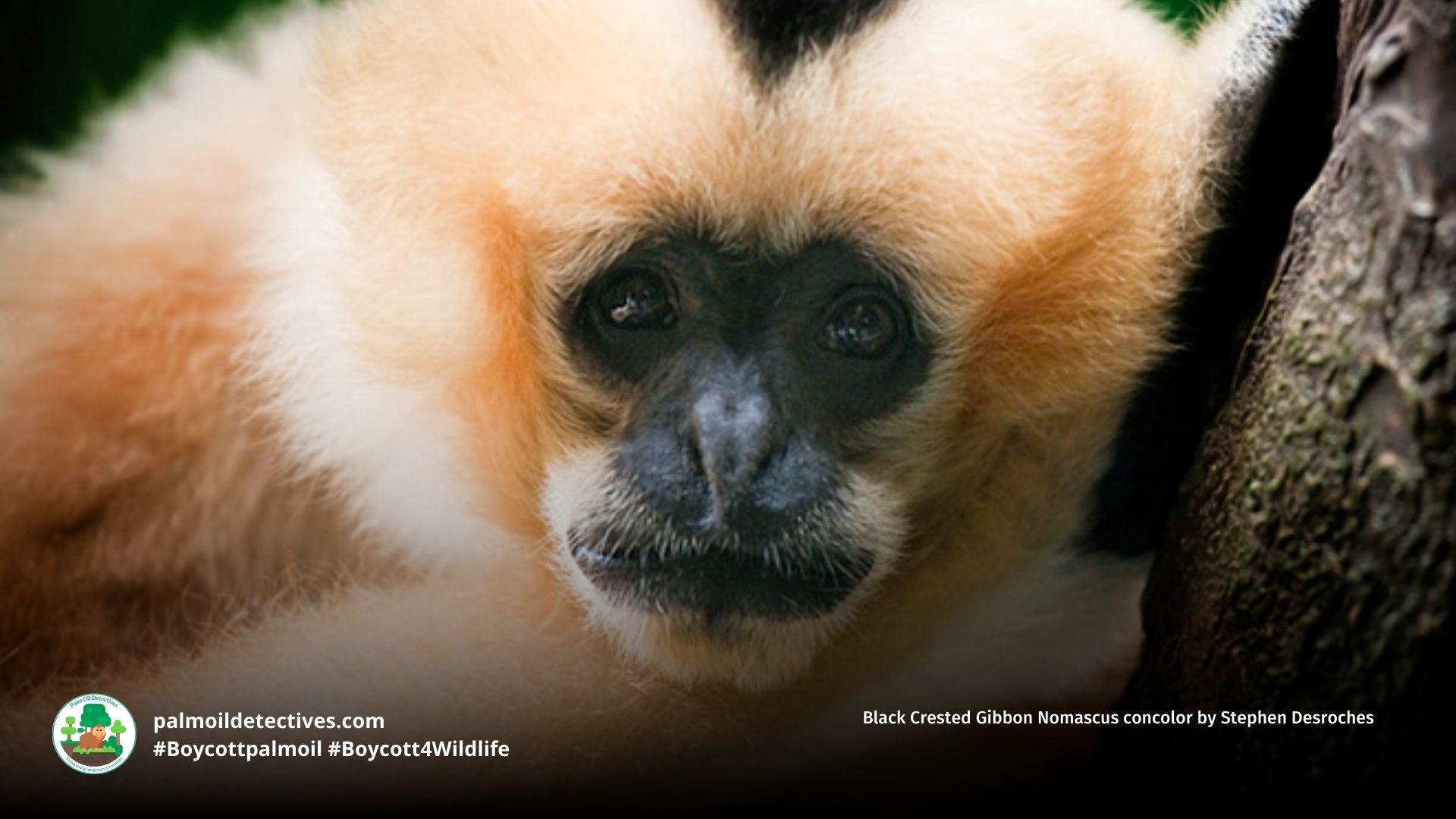
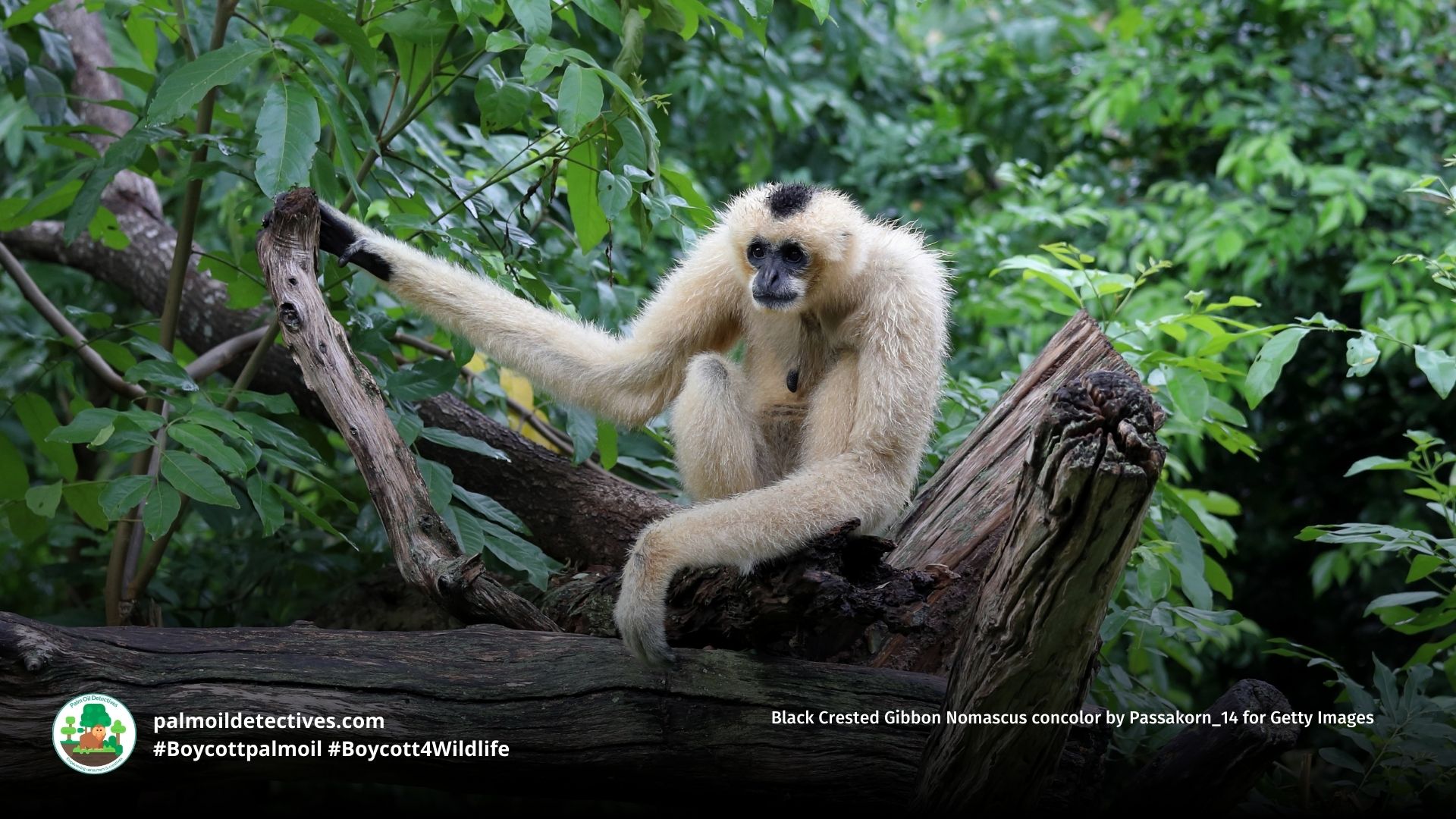
Black-Crested Gibbons are medium-sized primates with long limbs and powerful shoulders, perfectly adapted for their signature brachiation—swinging gracefully through the forest canopy. Males are jet-black with a tufted crest, while females display golden-yellow fur with dark facial masks. These striking differences make them one of the most visually distinctive gibbon species.
However, it is their haunting morning duets that set them apart. These songs are intricate, with each pair singing in perfect harmony, their voices weaving complex patterns to reaffirm bonds and mark territory. Fascinatingly, research shows that these songs vary between regions, akin to local dialects or accents, showcasing a cultural aspect of their communication rarely observed in non-human species (Wired, 2011). These accents reflect the gibbons’ unique adaptation to their environment, deepening the mystery and wonder of their lives.
Threats
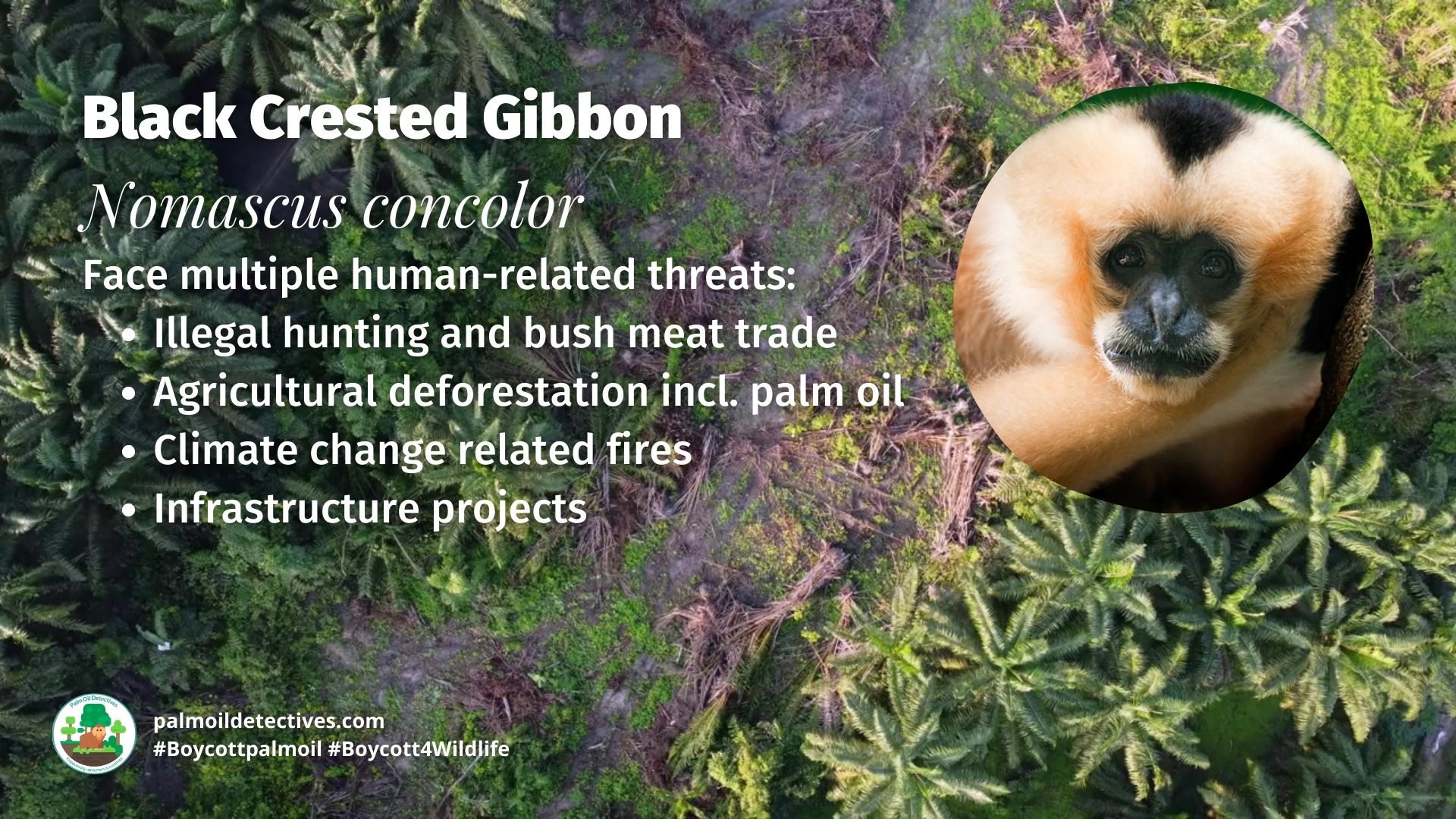
The Black-Crested Gibbon (Nomascus concolor) is endangered, with populations across their range severely impacted by a combination of habitat destruction and hunting.
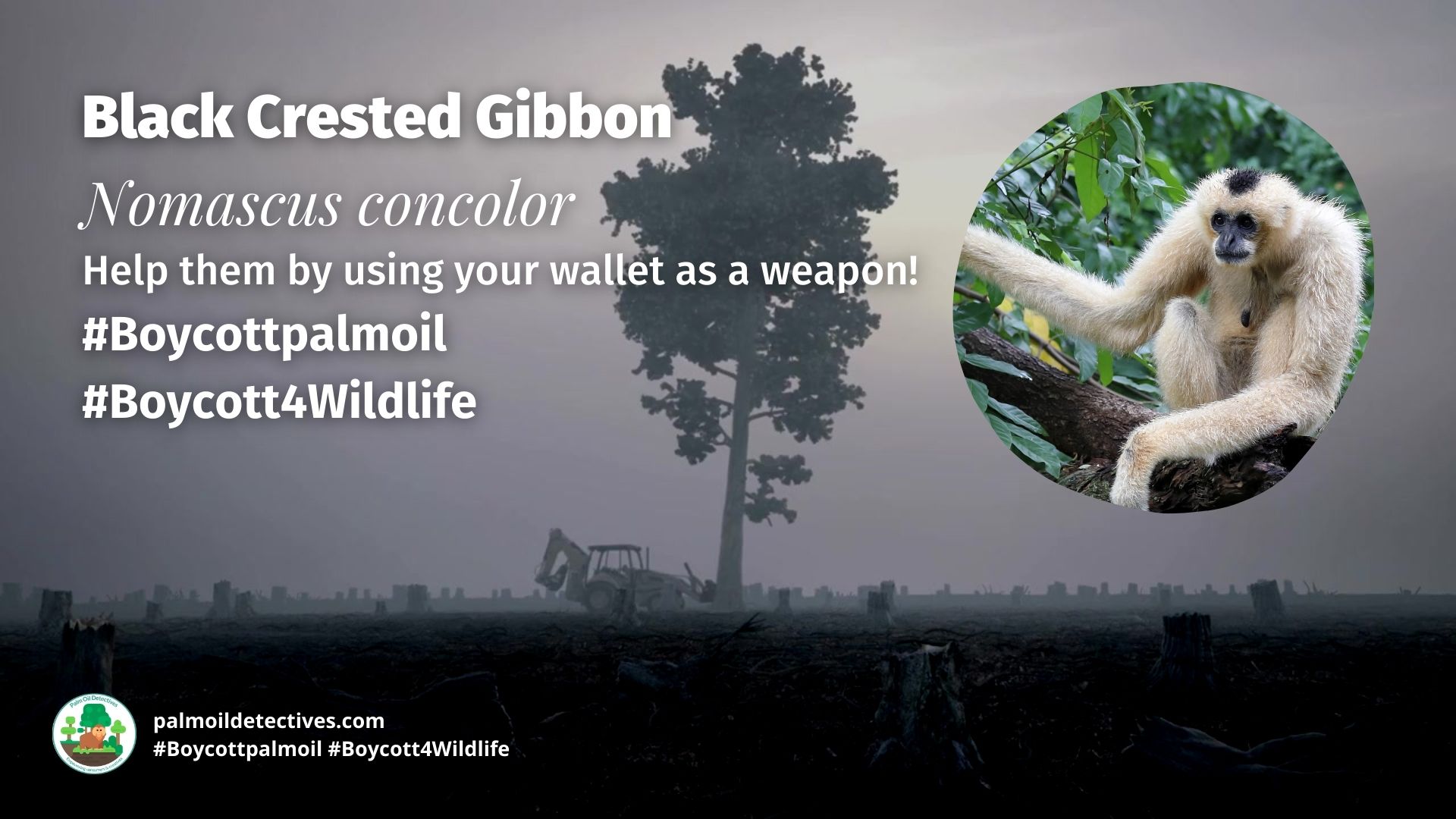
Agricultural expansion for logging and palm oil
Throughout their range, local forest use practices such as selective logging and agricultural encroachment are key drivers of habitat degradation. These activities fragment the gibbons’ forest homes, making it increasingly difficult for populations to thrive and maintain genetic diversity (Geissmann et al., 2000; Jiang et al., 2006; Wei et al., 2017).
Illegal hunting and bushmeat trade
Hunting is one of the most pervasive threats to these gibbons. In Lao PDR, despite the existence of local taboos against hunting gibbons in some areas, these animals are still captured and killed for subsistence, the illegal pet trade, and traditional medicine (Geissmann, 2007; Rawson et al., 2011). Poachers often target adult gibbons, devastating family groups and leaving juveniles traumatised and vulnerable.
Infrastructure development
Infrastructure projects like Road No. 3 in Lao PDR, funded by the Asian Development Bank, have worsened habitat fragmentation and made once-remote areas more accessible to hunters (Fan et al., 2009a; Peng-Fei et al., 2013). This road has cut through critical forest areas, placing even protected populations at risk.
Forest fires, hydropower construction, climate change
In Vietnam, gibbons are threatened by a combination of human activities, including habitat destruction from agriculture, logging, and settlement. Hunting pressure remains high in some areas, further decimating populations. Additionally, environmental factors such as forest fires and hydropower construction disrupt their already shrinking habitats (Rawson et al., 2011).
Diet
The Black-Crested Gibbon primarily feeds on fruit, making them crucial seed dispersers in their ecosystems. They also consume leaves, flowers, and insects when fruit is scarce, helping to maintain the balance and biodiversity of their forest habitat.
Reproduction and Mating
These gibbons form monogamous pairs that bond for life, raising their offspring together in close-knit family groups. Females give birth to a single infant every 2–3 years after a gestation period of about 7 months. The infant clings to their mother for the first year, learning essential survival skills before becoming independent.
Habitat destruction and the scarcity of mature trees suitable for nesting are significant barriers to successful reproduction.
Geographic Range
The Black-Crested Gibbon is native to southern China (Yunnan Province), northern Vietnam, and northern Laos. They inhabit elevations ranging from 200 to 2,800 metres, favouring dense, undisturbed forests. Deforestation has severely reduced their range, confining populations to isolated patches of forest.
FAQ
What is the Black-Crested Gibbon?
The Black-Crested Gibbon (Nomascus concolor) is an endangered primate native to the forests of southern China, Vietnam, and Laos. Known for their beautiful morning duets and striking fur patterns, they are essential to their ecosystems as seed dispersers.
Why are Black-Crested Gibbons endangered?
Habitat destruction for logging, palm oil plantations, and agriculture is a secondary threat. Hunting for bushmeat and the illegal pet trade is a primary threat and has also decimated populations, with poachers often killing adults to capture infants.
Do Black-Crested Gibbons really sing with accents?
Yes! Black-Crested Gibbons sing in unique regional accents, with their songs varying between populations. These duets strengthen pair bonds, mark territory, and reflect the cultural richness of their communication.
Are Black-Crested Gibbons good pets?
Keeping Black-Crested Gibbons as pets is an incredibly selfish and cruel act that directly contributes to their extinction. Poachers kill adults to capture infants, destroying families and traumatising whole populations. If you care about these animals, you must instead boycott the trade in exotic pets and support their protection in the wild.
Take Action!
The Black-Crested Gibbon is an irreplaceable part of their forest ecosystem, but they are at risk of vanishing forever. Refuse to support products linked to deforestation, speak out against the exotic pet trade, and advocate for conservation efforts. Every action counts: #BoycottPalmOil #Boycott4Wildlife.
Support conservation for this beautiful animal
Kadoorie Farm and Botanic Garden in Hong Kong
Further Information

Orkin, J. D., He, K., Hu, N. Q., Guan, Z. H., Huang, B., Yang, C., Fan, P. F., & Jiang, X. (2025). Landscape and conservation genetics of western black crested gibbons (Nomascus concolor) in China. American Journal of Primatology, 87(1), e23662. https://doi.org/10.1002/ajp.23662
Pengfei, F., Nguyen, M.H., Phiaphalath, P., Roos, C., Coudrat, C.N.Z. & Rawson, B.M. 2020. Nomascus concolor. The IUCN Red List of Threatened Species 2020: e.T39775A17968556. https://dx.doi.org/10.2305/IUCN.UK.2020-2.RLTS.T39775A17968556.en. Downloaded on 28 January 2021.
Sun, G. Z., Huang, B., Guan, Z. H., Geissmann, T., & Jiang, X. L. (2010). Individuality in male songs of wild black crested gibbons (Nomascus concolor). American Journal of Primatology, 73(5), 431–439. https://doi.org/10.1002/ajp.20917
Wired. (2011). Gibbons sing with accents. Retrieved from https://www.wired.com/2011/02/gibbon-singing-accent/

How can I help the #Boycott4Wildlife?
Take Action in Five Ways
1. Join the #Boycott4Wildlife on social media and subscribe to stay in the loop: Share posts from this website to your own network on Twitter, Mastadon, Instagram, Facebook and Youtube using the hashtags #Boycottpalmoil #Boycott4Wildlife.
2. Contribute stories: Academics, conservationists, scientists, indigenous rights advocates and animal rights advocates working to expose the corruption of the palm oil industry or to save animals can contribute stories to the website.






3. Supermarket sleuthing: Next time you’re in the supermarket, take photos of products containing palm oil. Share these to social media along with the hashtags to call out the greenwashing and ecocide of the brands who use palm oil. You can also take photos of palm oil free products and congratulate brands when they go palm oil free.
4. Take to the streets: Get in touch with Palm Oil Detectives to find out more.
5. Donate: Make a one-off or monthly donation to Palm Oil Detectives as a way of saying thank you and to help pay for ongoing running costs of the website and social media campaigns. Donate here
Discover more from Palm Oil Detectives
Subscribe to get the latest posts sent to your email.
 Palm Oil Detectives