
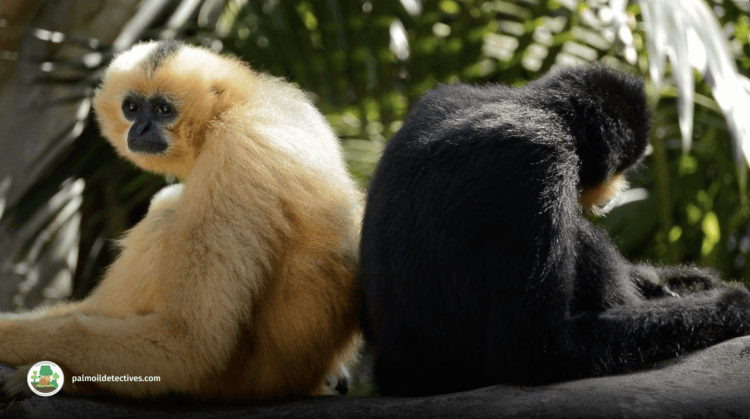
Northern Yellow-cheeked Crested Gibbon Nomascus annamensis
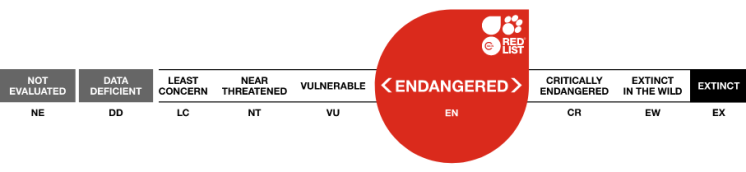
Endangered
Location: Cambodia, Laos, Vietnam
The Northern Yellow-cheeked Crested Gibbon lives in broadleaf evergreen and semi-evergreen forests, at elevations of between 100-1,200 m asl. These gibbons are frugivorous but also consumes significant proportions of leaves, young shoots and flowers. They are also known to feed on Finlayson’s Squirrel (single record by an adult female) and lizards. Food sharing has been observed (Geissmann 1995, Duc et al. 2016).
Northern Yellow-cheeked Crested Gibbons sing in local accents to attract mates and form monogamous pairs and close families. Endangered in #Cambodia #Laos #Vietnam by #deforestation for #agriculture #timber #palmoil Join the brand #Boycott4Wildlife
Tweet
Listed as Endangered based on a suspected population reduction of at least 50% over the past 45 years (three generations), primarily due to logging, agricultural encroachment, and hunting, and a suspected continuing decline over at least 15 years (one generation) into the future. In Cambodia’s Virachey National Park, large areas have been cleared for rubber plantations in recent years, particularly on its eastern side, and the area is also subjected to illegal logging for luxury timber.
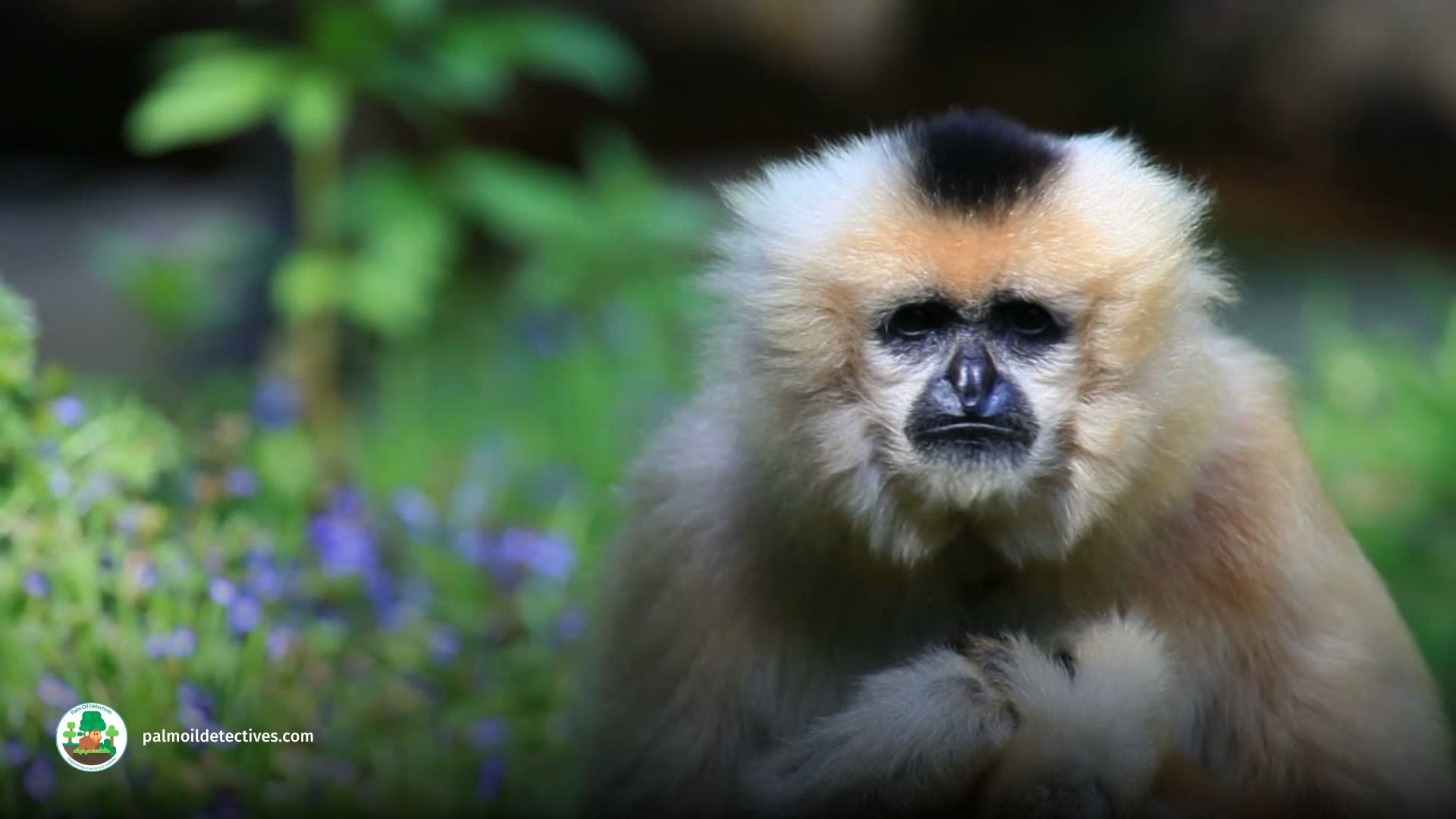

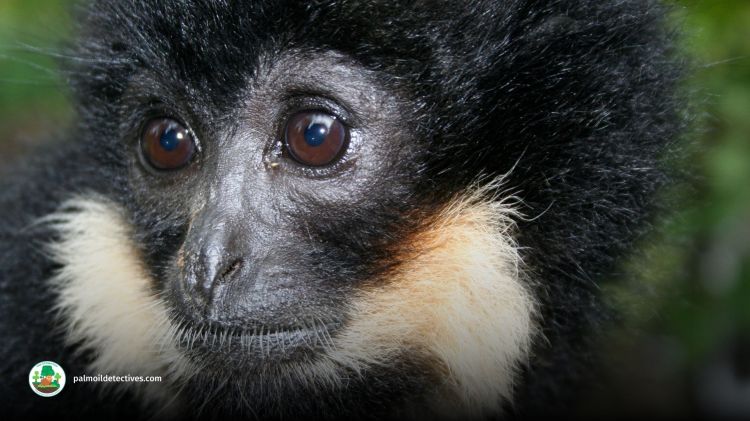
These gibbons belong to genus Nomascus. They are known to communicate in species-specific song when defining territory or attracting mates. They sing in regional accents to each other and form monogamous breeding pairs. Males and females have different coloured fur.
Numerous conservation efforts of these rarest of small primates are ongoing. Sponsor a gibbon at a rescue centre here.
Further Information
Endangered Primate Rescue Centre
Rawson, B.M., Hoang, M.D., Roos, C., Van, N.T. & Nguyen, M.H. 2020. Nomascus gabriellae. The IUCN Red List of Threatened Species 2020: e.T128073282A17968950. https://dx.doi.org/10.2305/IUCN.UK.2020-2.RLTS.T128073282A17968950.en. Downloaded on 28 January 2021.

How can I help the #Boycott4Wildlife?
Take Action in Five Ways
1. Join the #Boycott4Wildlife on social media and subscribe to stay in the loop: Share posts from this website to your own network on Twitter, Mastadon, Instagram, Facebook and Youtube using the hashtags #Boycottpalmoil #Boycott4Wildlife.
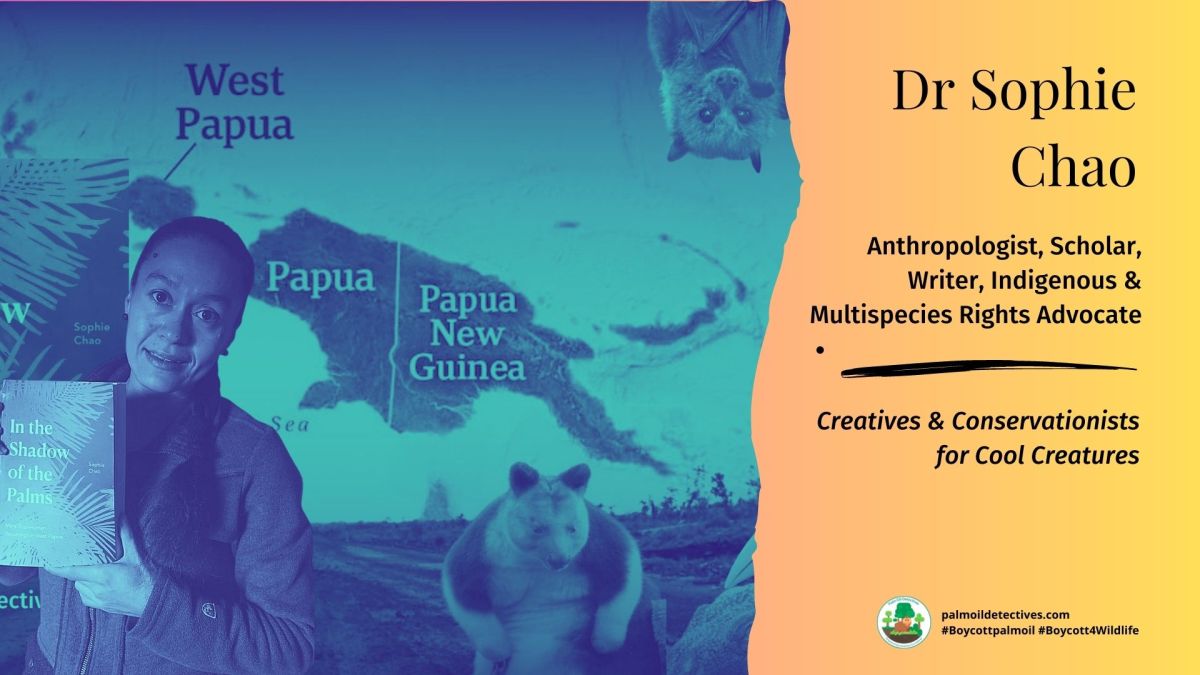
2. Contribute stories: Academics, conservationists, scientists, indigenous rights advocates and animal rights advocates working to expose the corruption of the palm oil industry or to save animals can contribute stories to the website.



3. Supermarket sleuthing: Next time you’re in the supermarket, take photos of products containing palm oil. Share these to social media along with the hashtags to call out the greenwashing and ecocide of the brands who use palm oil. You can also take photos of palm oil free products and congratulate brands when they go palm oil free.
4. Take to the streets: Get in touch with Palm Oil Detectives to find out more.
5. Donate: Make a one-off or monthly donation to Palm Oil Detectives as a way of saying thank you and to help pay for ongoing running costs of the website and social media campaigns. Donate here
Discover more from Palm Oil Detectives
Subscribe to get the latest posts sent to your email.
 Palm Oil Detectives