

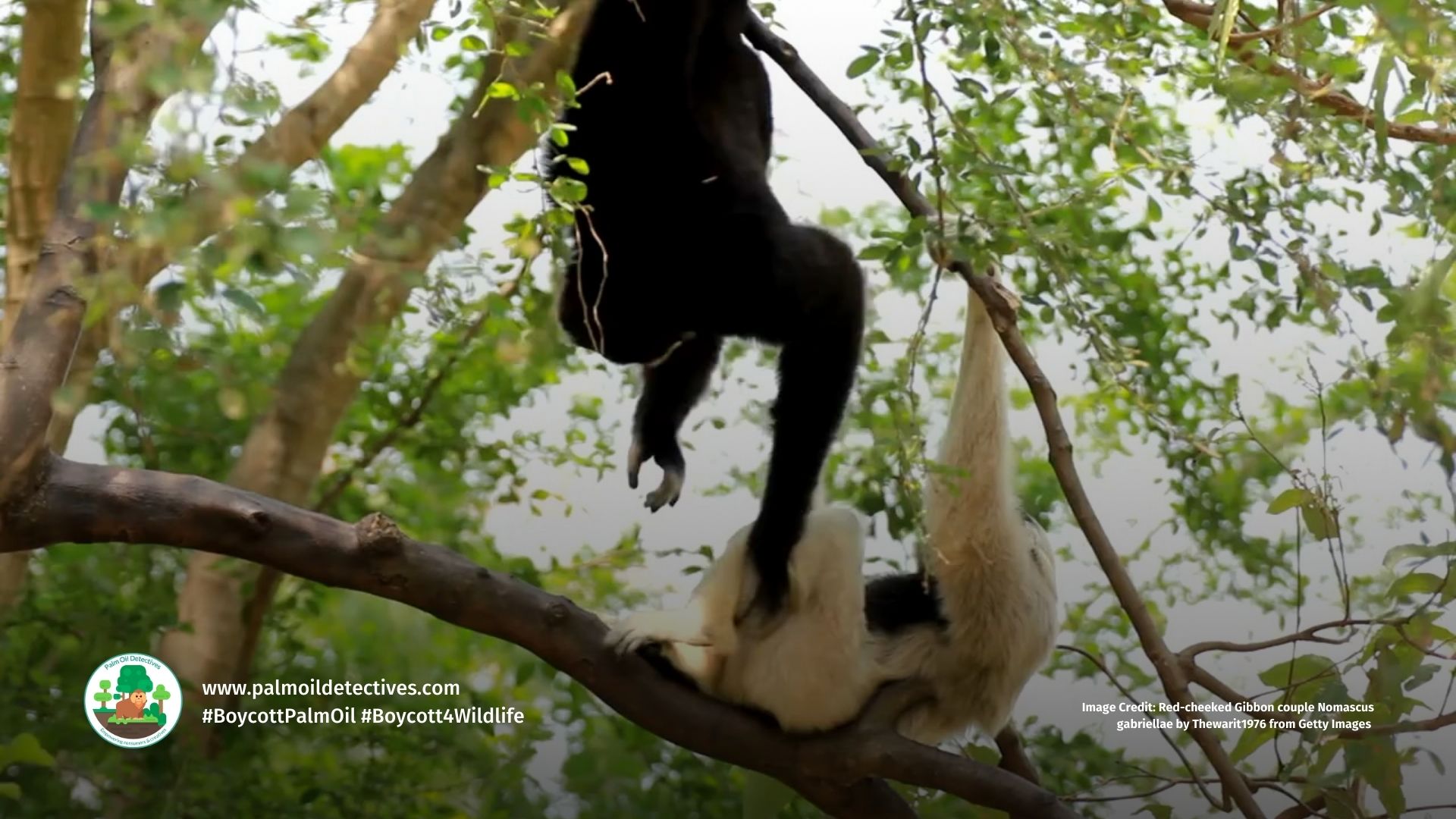
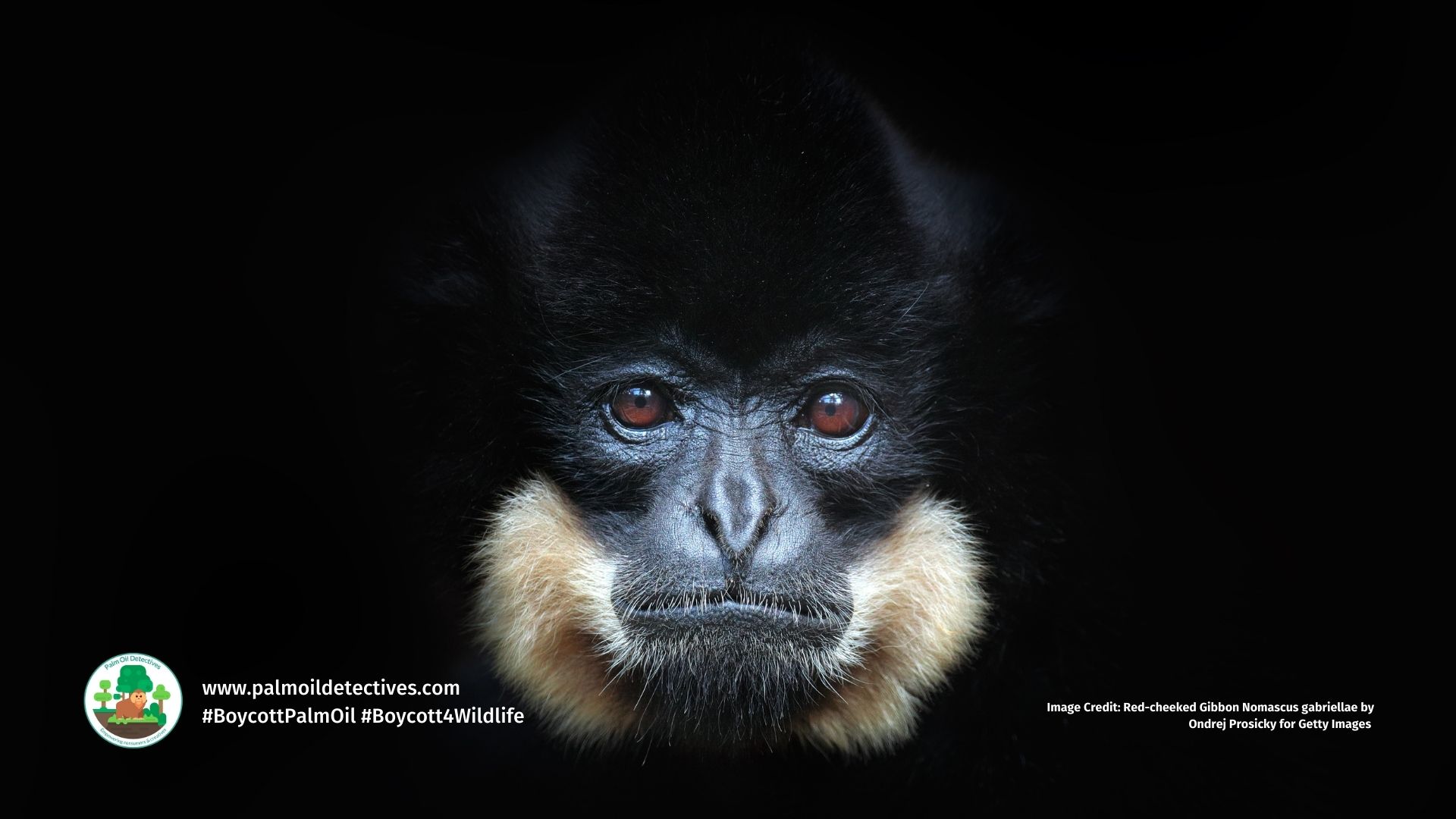
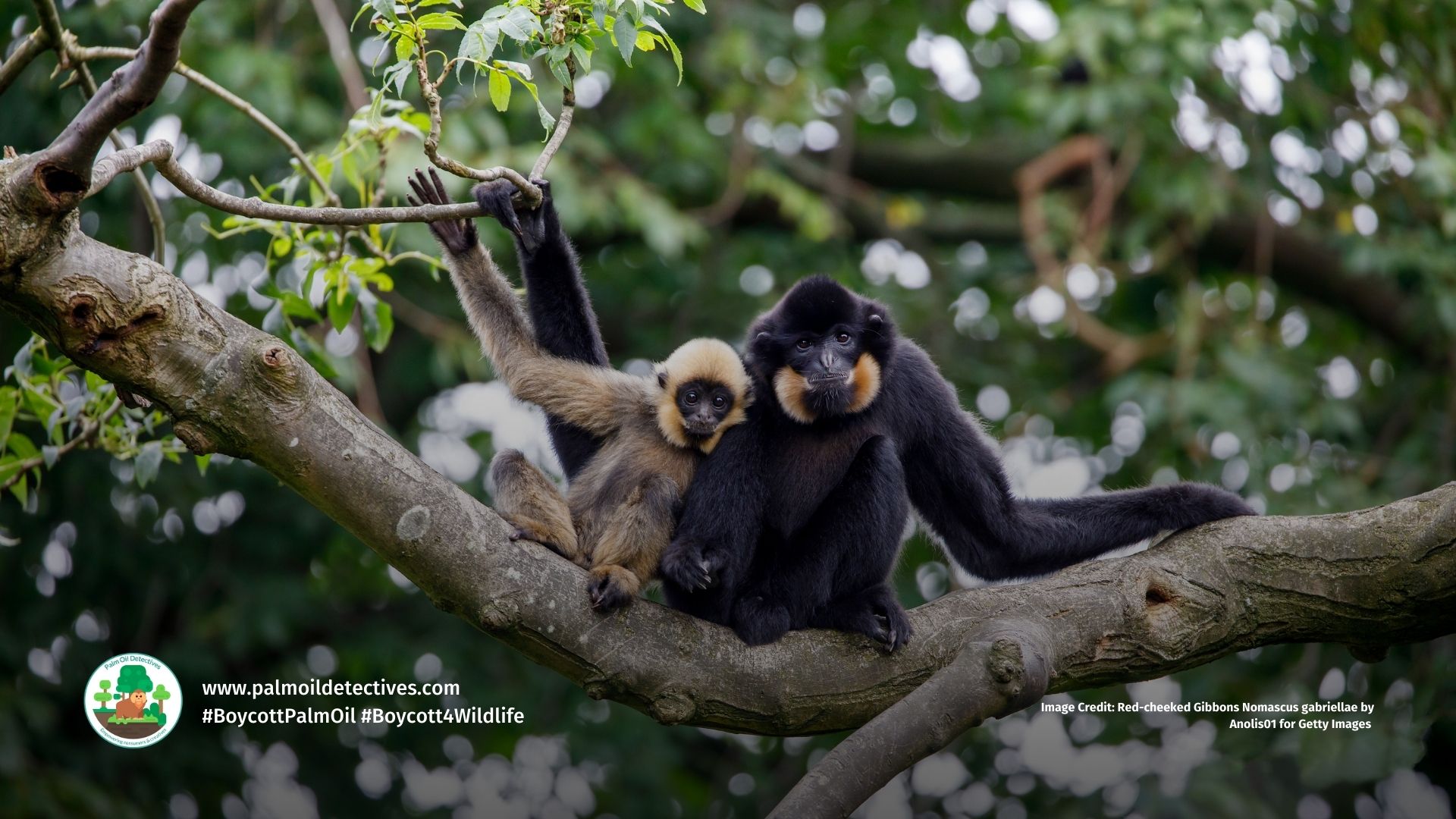
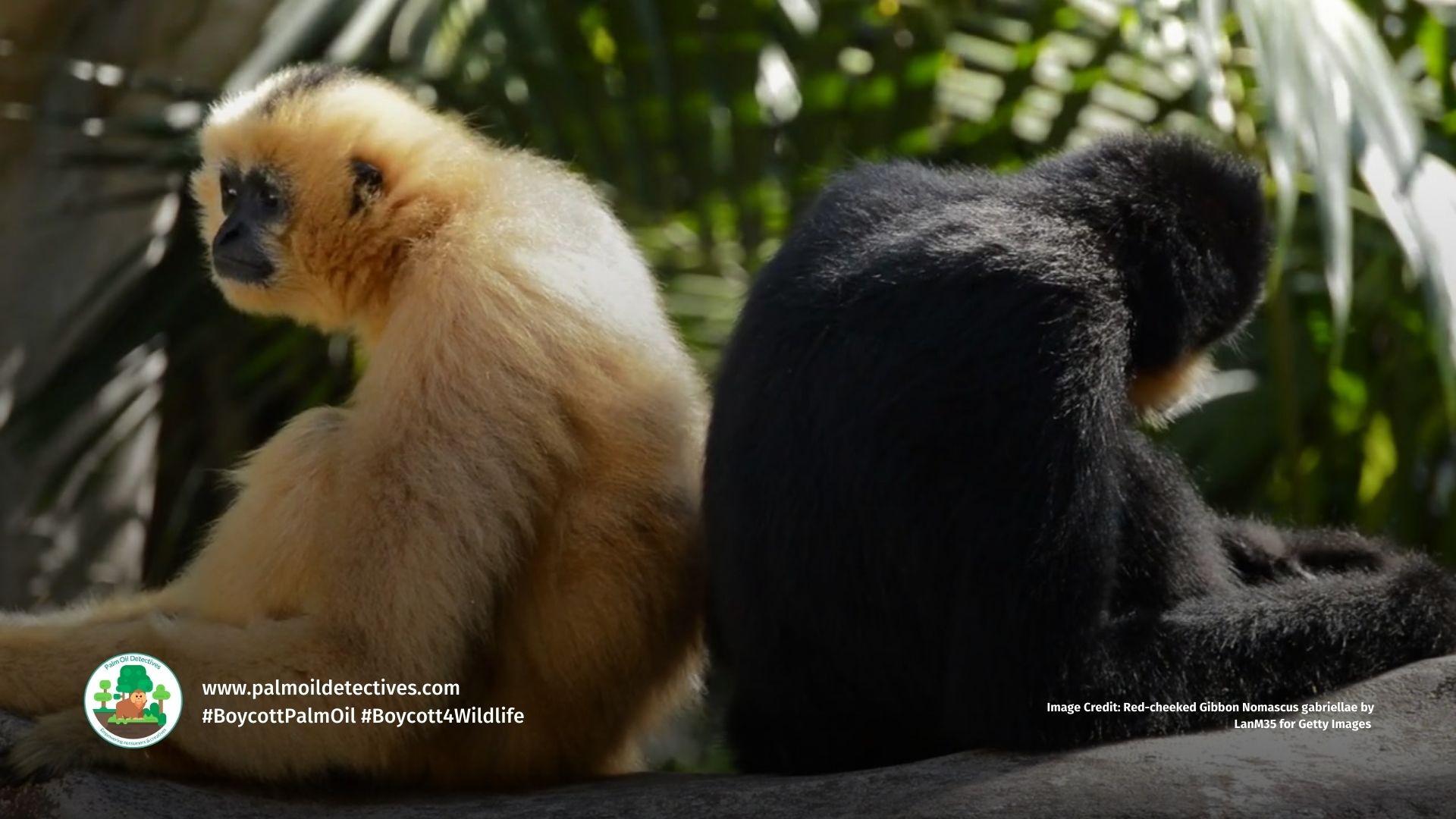
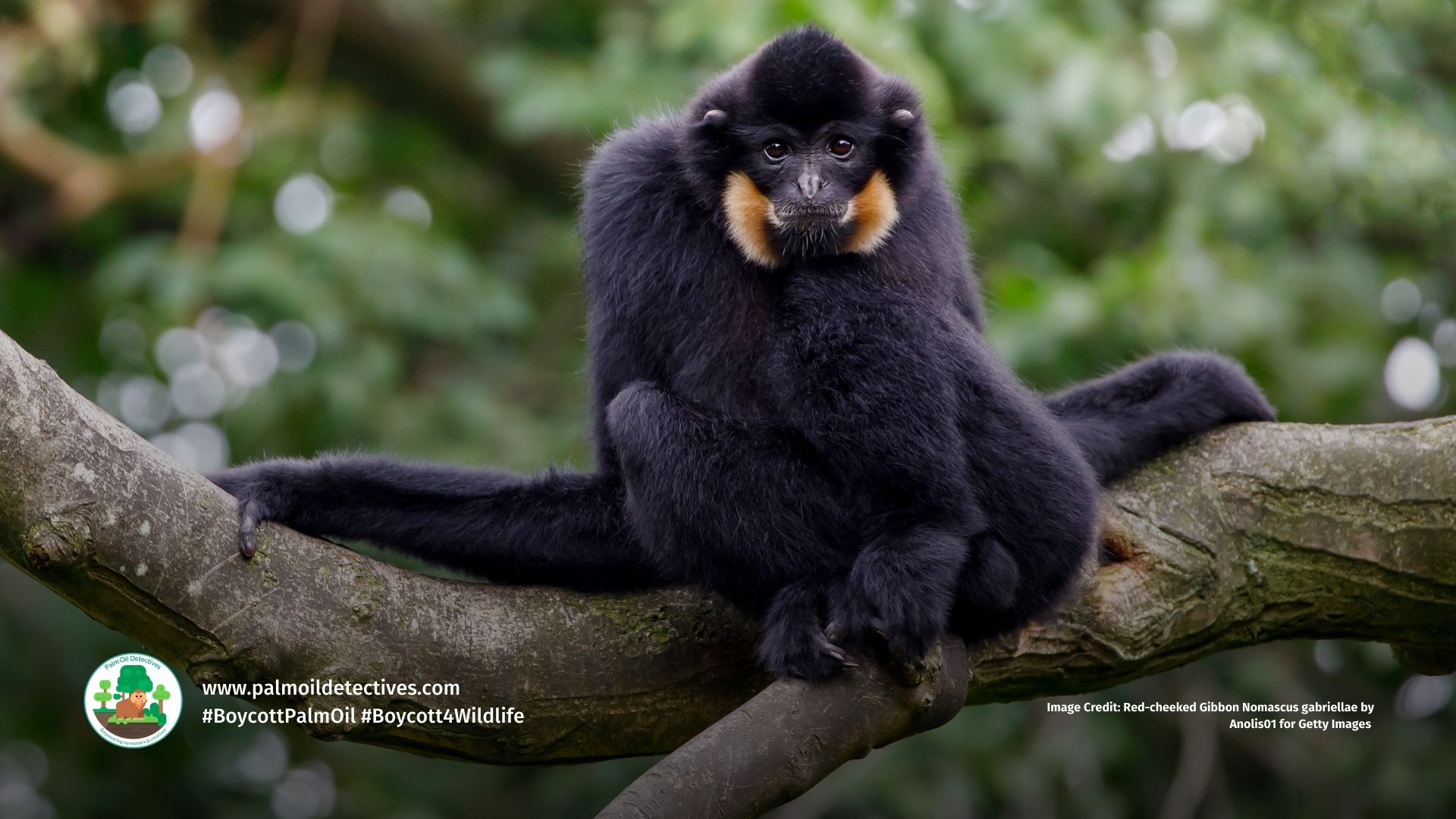
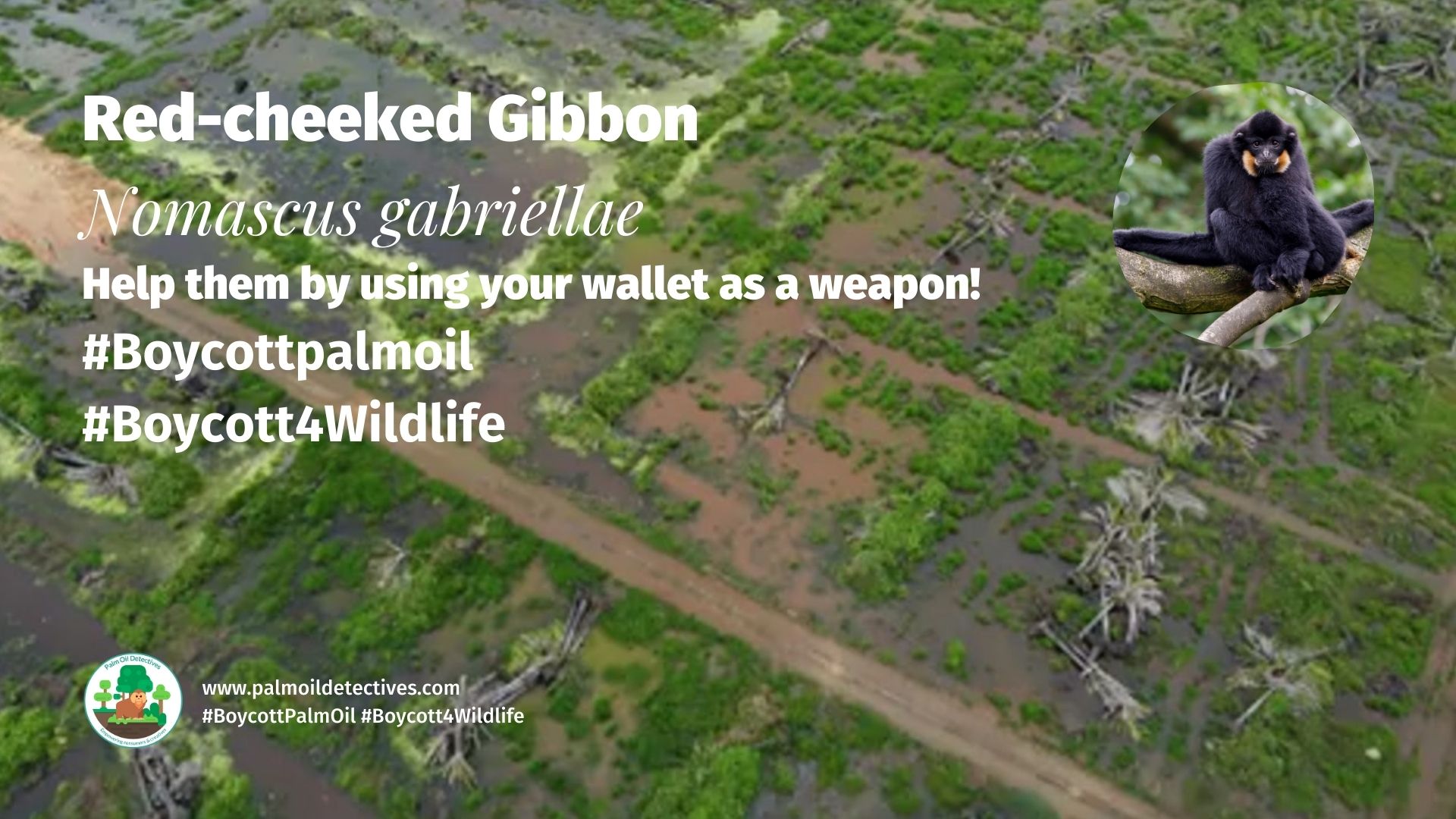
Red-cheeked Gibbon Nomascus gabriellae
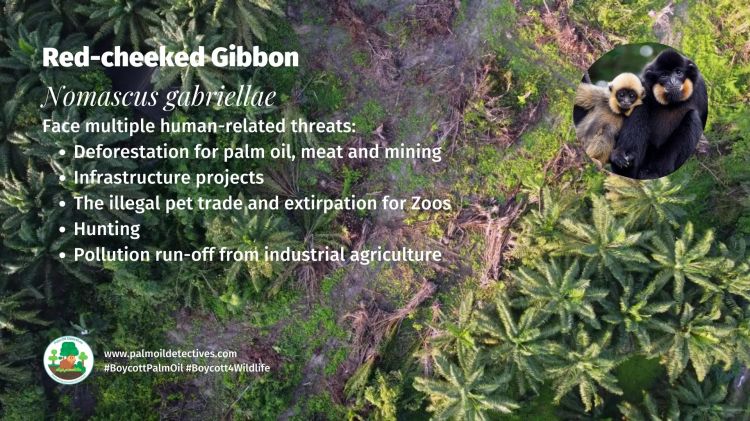
Endangered
Location: Cambodia, Laos, Vietnam
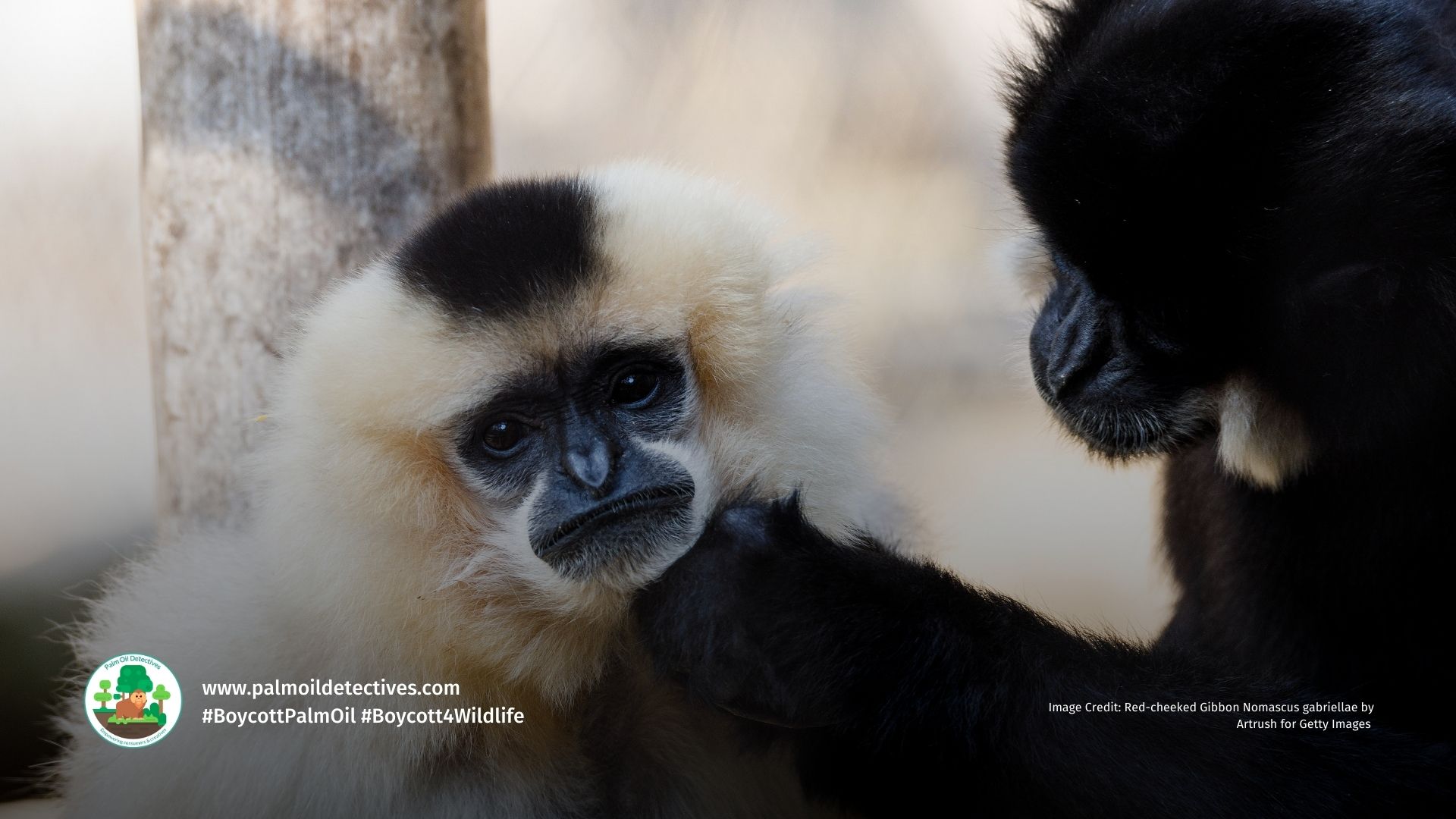
Like other gibbons, Red-cheeked Gibbons are arboreal and diurnal, with singing bouts averaging 12 minutes and lower calling frequencies in the wet season (Rawson 2004, Kenyon 2007). The species displays a monogamous social structure of adult pair and offspring. Average group size is estimated at 3-5 individuals. Females emigrate near, in and around their natal territories, but males emigrate farther and wider. Female give birth to single offspring at 17-22 month intervals. Nomascus gabriellae is considered Endangeredb ased on a suspected population reduction of 50% or more due to hunting for food, live capture for the pet trade, and the loss of suitable habitat.
Beautiful and endangered Red-cheeked #gibbons 🙉🐒🐵 are devoted partners and known for their melodic cacophony in #Laos 🇱🇦 #Vietnam 🇻🇳 #rainforests. They face many threats. Help to survive when you #Boycottpalmoil #Boycott4Wildlife @palmoildetect https://wp.me/pcFhgU-rK
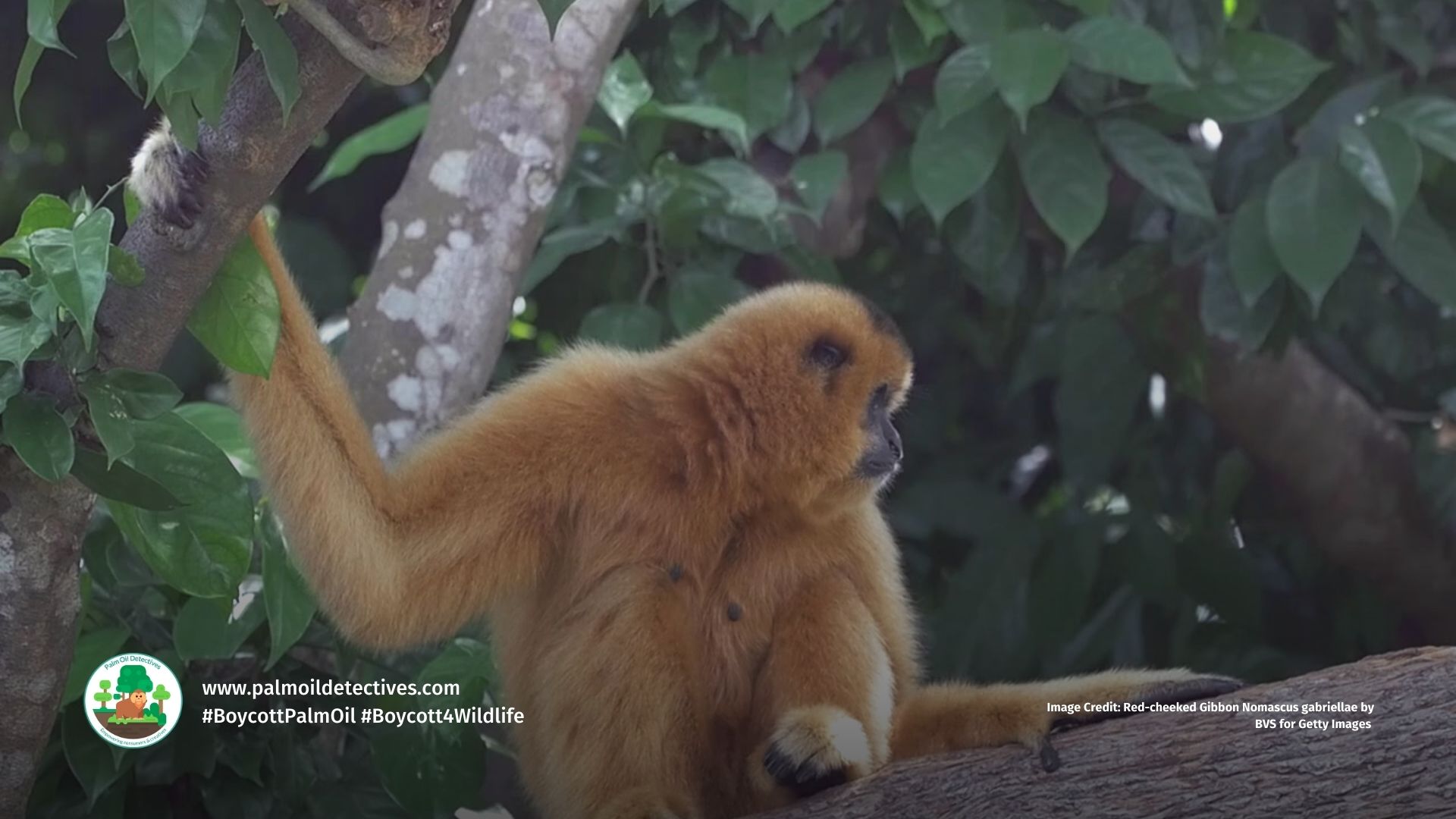
These gibbons belong to genus Nomascus. They are known to communicate in species-specific song when defining territory or attracting mates. They sing in regional accents to each other and form monogamous breeding pairs. Males and females have different coloured fur.
Numerous conservation efforts of these rarest of small primates are ongoing. Sponsor a gibbon at a rescue centre here.
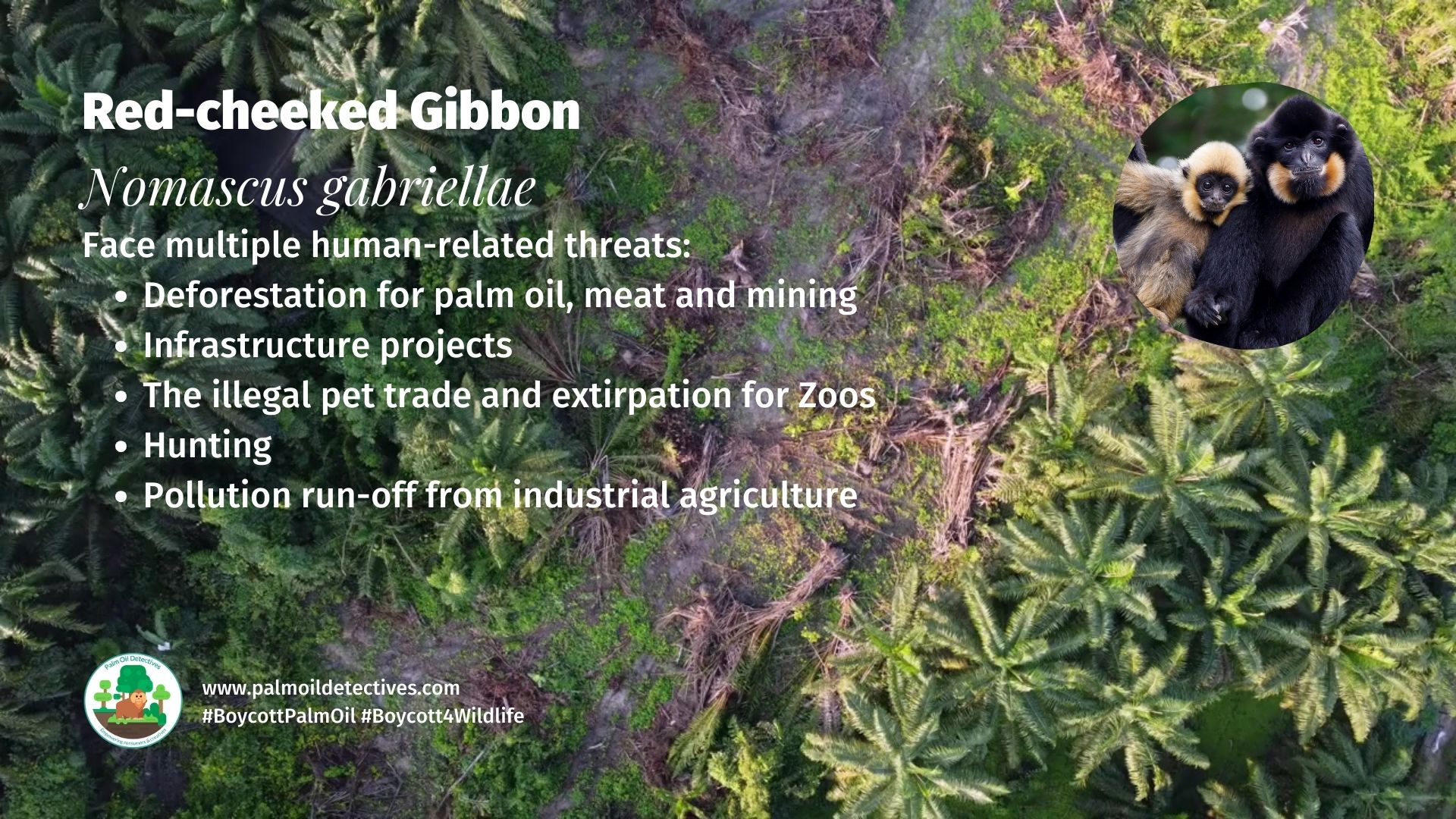
Threats to the Red-cheeked Gibbon
- Hunting for the pet trade
- Capture of young gibbons by killing the mother
- Capture for zoos and private collections
- Females and infants held as pets in hotels and private areas
- Habitat loss and degradation
- Planned or unplanned forest conversion
- Developmental activities such as infrastructure development
- Encroachment and illegal logging
- Economic land concession designation in Cambodia
- Small and fragmented population
- Reduced genetic diversity and increased vulnerability
- Trade and possession
- At least 24-26 gibbons traded in southern provinces of Viet Nam
- 32 out of 41 cases of gibbon possession reported in southern provinces (2005-2009)
- Timber logging and palm oil deforestation
- A contributor to habitat loss in both Viet Nam and Cambodia
- Forest cover loss
- Viet Nam has lost 16% of its forest cover since the turn of the century
- Projected loss of up to 60% of forests in Viet Nam by 2045 if current rates continue
- Cambodia has lost 25% of its forest cover since the turn of the century
- Projected loss of up to 70% of forests in Cambodia by 2045 if current rates continue
Further Information
Endangered Primate Rescue Centre
Rawson, B.M., Hoang, M.D., Roos, C., Van, N.T. & Nguyen, M.H. 2020. Nomascus gabriellae. The IUCN Red List of Threatened Species 2020: e.T128073282A17968950. https://dx.doi.org/10.2305/IUCN.UK.2020-2.RLTS.T128073282A17968950.en. Downloaded on 29 January 2021.


How can I help the #Boycott4Wildlife?
Take Action in Five Ways
1. Join the #Boycott4Wildlife on social media and subscribe to stay in the loop: Share posts from this website to your own network on Twitter, Mastadon, Instagram, Facebook and Youtube using the hashtags #Boycottpalmoil #Boycott4Wildlife.
2. Contribute stories: Academics, conservationists, scientists, indigenous rights advocates and animal rights advocates working to expose the corruption of the palm oil industry or to save animals can contribute stories to the website.



3. Supermarket sleuthing: Next time you’re in the supermarket, take photos of products containing palm oil. Share these to social media along with the hashtags to call out the greenwashing and ecocide of the brands who use palm oil. You can also take photos of palm oil free products and congratulate brands when they go palm oil free.
4. Take to the streets: Get in touch with Palm Oil Detectives to find out more.
5. Donate: Make a one-off or monthly donation to Palm Oil Detectives as a way of saying thank you and to help pay for ongoing running costs of the website and social media campaigns. Donate here
Discover more from Palm Oil Detectives
Subscribe to get the latest posts sent to your email.
 Palm Oil Detectives