
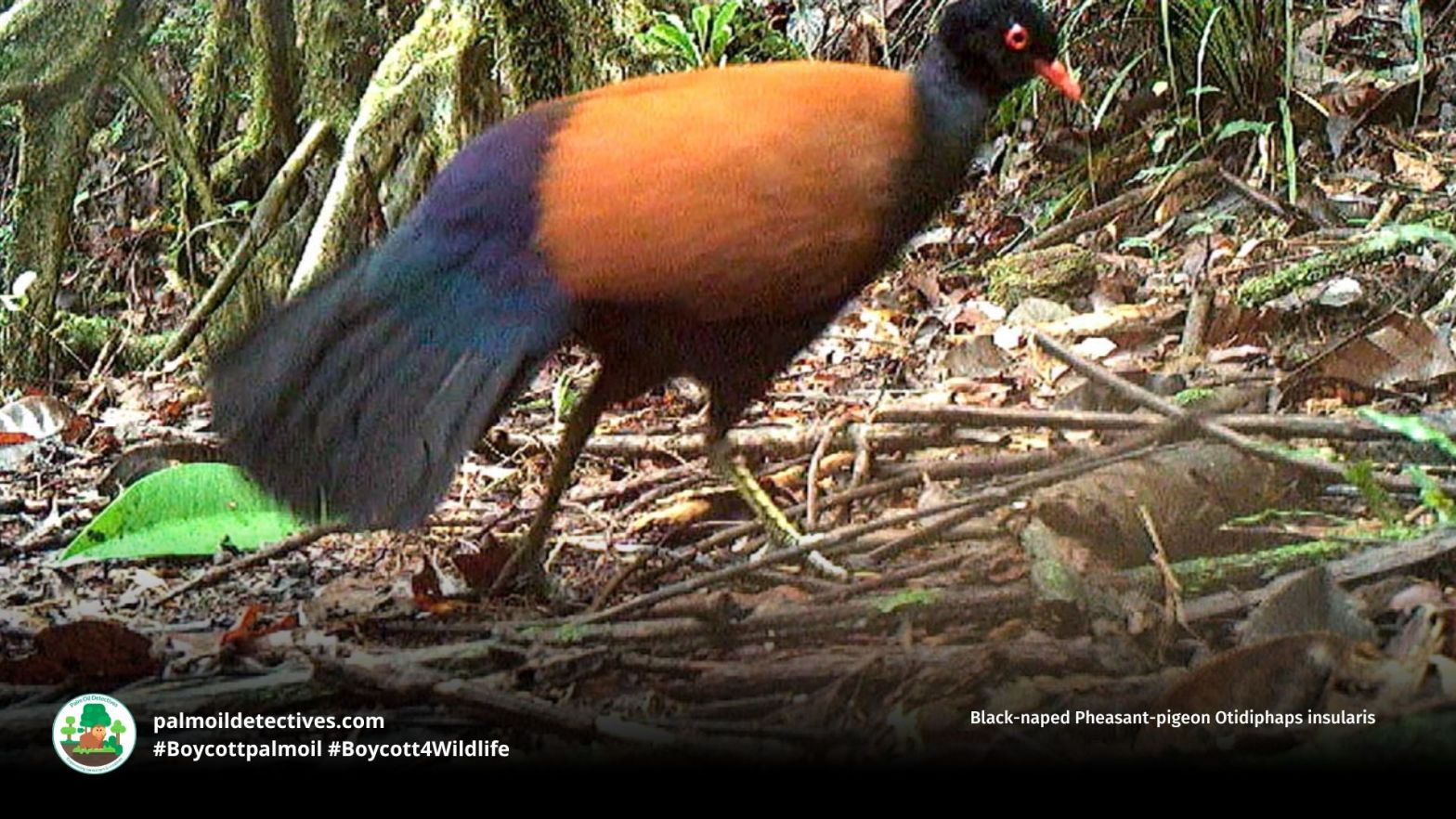
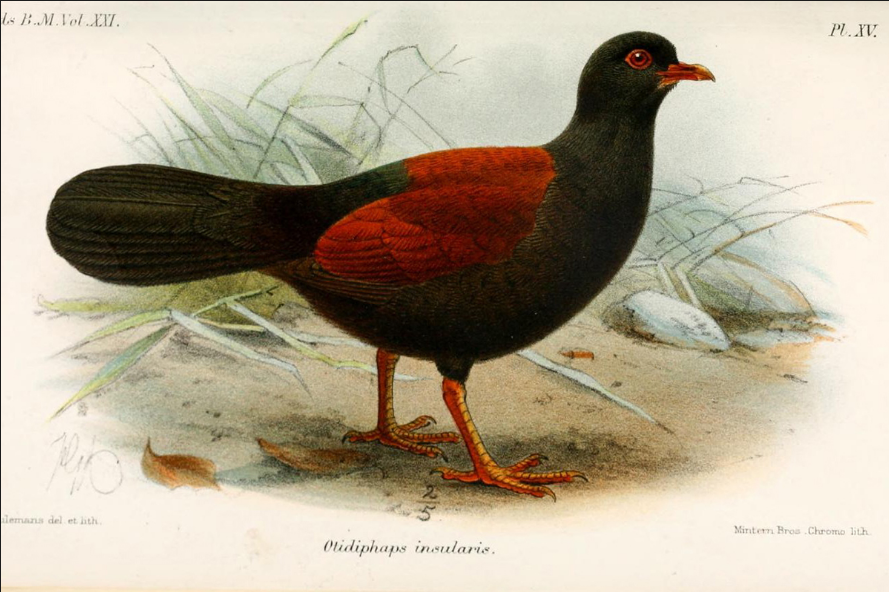
Black-naped Pheasant-pigeon Otidiphaps insularis
Red List Status: Critically Endangered
Location: Papua New Guinea
Region: Endemic to Fergusson Island in the D’Entrecasteaux Archipelago
Once thought to be extinct since its last sighting in 1882, the elusive Black-naped Pheasant-Pigeon was rediscovered in 2022 thanks to the collaboration of researchers and local communities. This large, ground-dwelling pigeon is now listed as Critically Endangered, with fewer than 250 mature individuals believed to remain. It lives exclusively in the hill and montane rainforests of Fergusson Island, which are under increasing pressure from logging, subsistence agriculture, and introduced predators such as rats, pigs, and potentially domestic cats. The species is also hunted by locals for food. Protecting this remarkable bird and its habitat is urgent. Use your voice and your wallet to help save them. #BoycottPalmOil #Boycott4Wildlife and be #Vegan
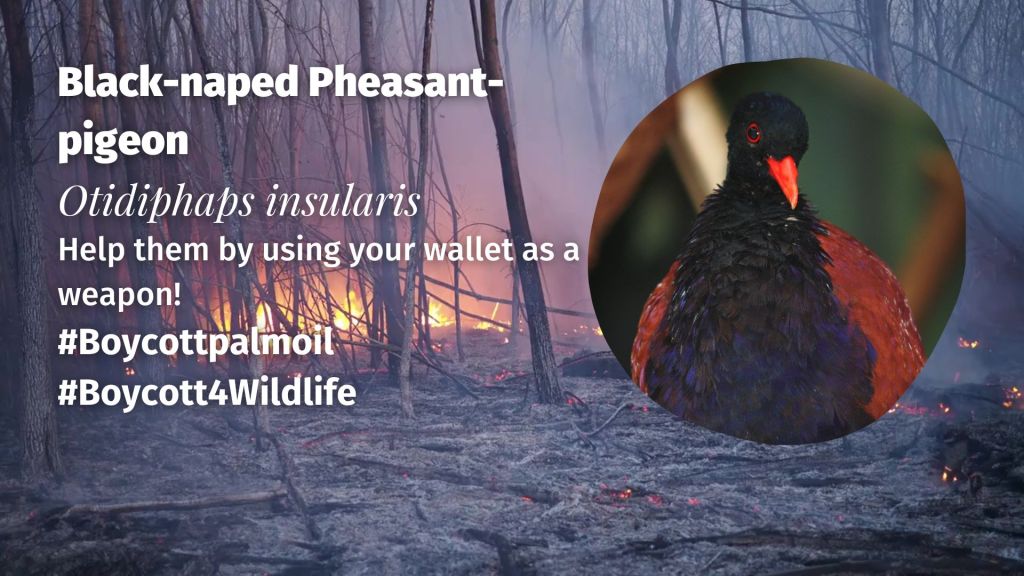
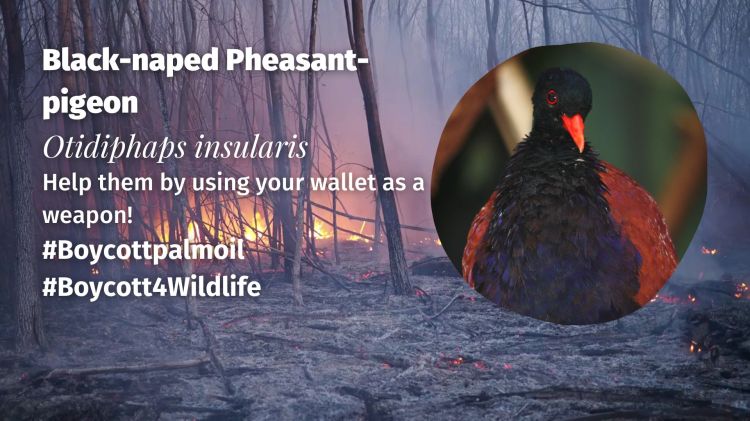
Thought #extinct but dramatically rediscovered in 2022 Black-naped Pheasant-pigeons are #endangered #birds 🐦 A threat is #palmoil #deforestation in #PapuaNewGuinea 🇵🇬 Help them when you shop #BoycottPalmOil 🌴🩸☠️⛔️ #Boycott4Wildlife @palmoildetect https://palmoildetectives.com/2021/01/31/black-naped-pheasant-pigeon-otidiphaps-insularis/
Known locally as ‘Auwo’, Black-naped Pheasant-pigeons 🪿🐦 are #endangered #birds. A big threat is #palmoil #deforestation in #PapuaNewGuinea 🇵🇬 Fight back against their #extinction! #BoycottPalmOil #Boycott4Wildlife 🌴🩸☠️🧐🚫 @palmoildetect https://palmoildetectives.com/2021/01/31/black-naped-pheasant-pigeon-otidiphaps-insularis/
Appearance and Behaviour
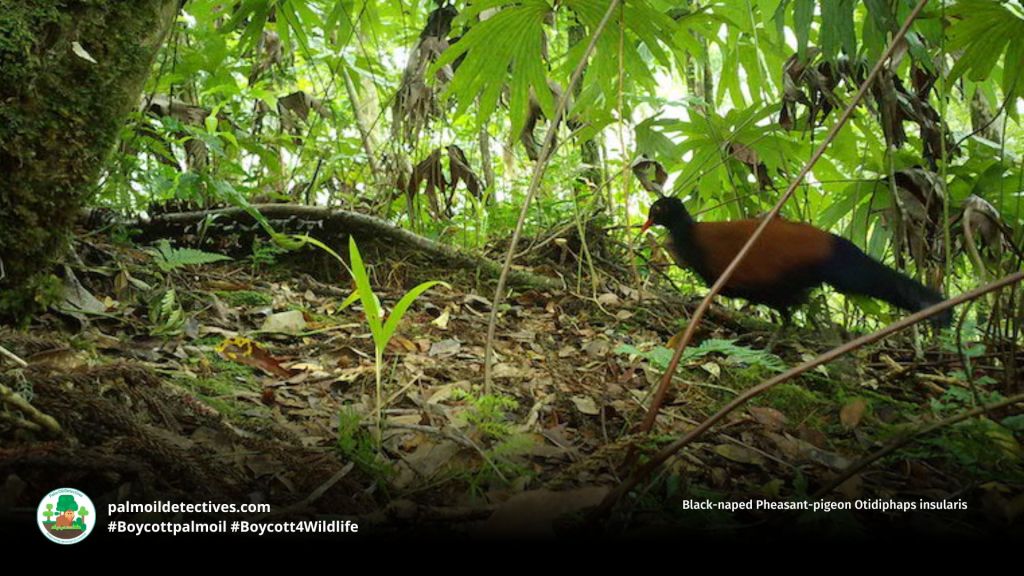
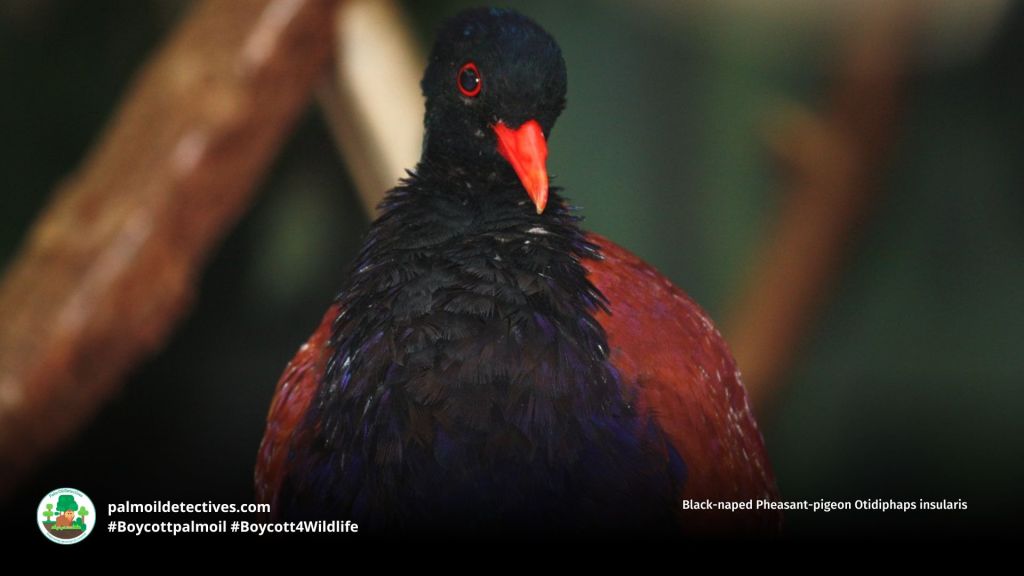
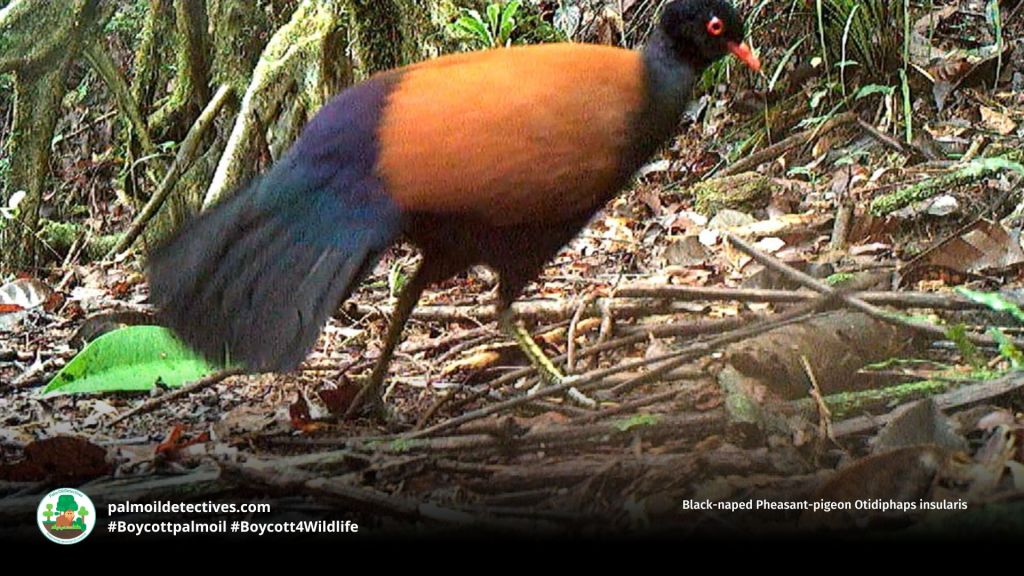
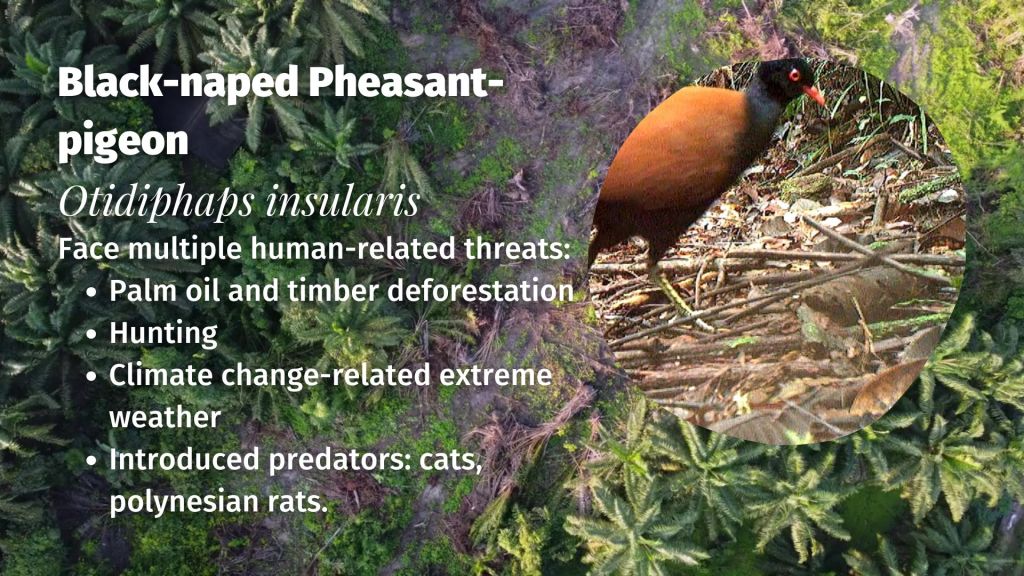
Also known locally as “Auwo”, the Black-naped Pheasant-Pigeon resembles a glossy pheasant in body shape, with a flattened tail and long legs adapted to a ground-dwelling lifestyle. Their plumage is a mix of iridescent green, bronze, and black, with a distinctive black nape from which they get their name. These shy birds move quietly through the undergrowth, foraging for seeds and fallen fruit. Unlike arboreal pigeons, they spend nearly all their time on the forest floor.
They are highly elusive and have only recently been captured on camera traps in remote highland forests. The behaviour of these illusive pheasant-pigeons is still not well studied, but they are presumed to be solitary or occur in low densities, making them extremely difficult to detect.
Diet
Black-naped Pheasant-Pigeons forage for fallen fruit and seeds on the forest floor. Their diet includes a wide variety of native fruiting plants, contributing to seed dispersal across fragmented montane habitats. While they can tolerate some disturbance, they disappear from forests where hunting is prevalent.
Reproduction and Mating
Little is known about their breeding behaviour of these birds, but like other Otidiphaps species, they are believed to nest on the ground. Recent local accounts suggest that active nests have been discovered in dense forest understories. Ground nesting makes them especially vulnerable to predation by invasive rats and pigs. Pheasant-pigeons lay one or two eggs, which are incubated on the forest floor under dense cover.
Geographic Range
The Black-naped Pheasant-Pigeon is endemic to Fergusson Island, part of the D’Entrecasteaux Archipelago of Papua New Guinea. Their known range includes the steep, rugged slopes of Mt Kilkerran and surrounding highland rainforest above 1,000 metres. No populations are known outside this single island. Despite recent rediscovery, the species is feared to be extremely rare and severely fragmented.
Threats
Logging of primary forest
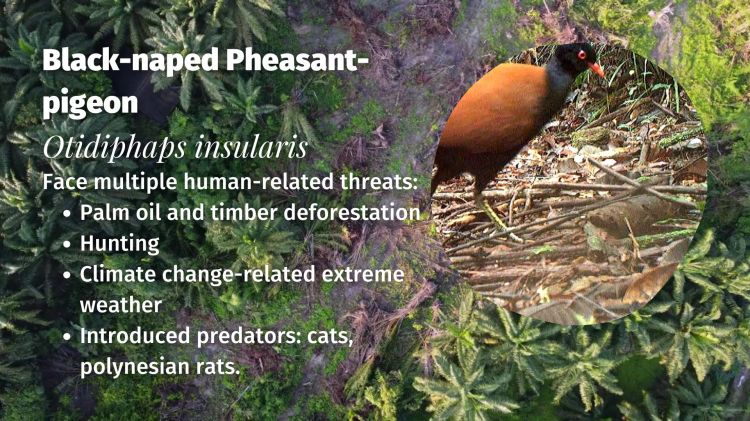
Timber logging continues in central and eastern Fergusson Island, especially in the East Fergusson Timber Rights Purchase area, which resumed operations in 2012. Industrial logging threatens the bird’s entire remaining habitat (Gregg et al., 2020).
Hunting pressures
The species was historically hunted by local communities, but following the bird’s rediscovery in 2021 and increased awareness of their rarity, Indigenous peoples on Fergusson Island are beginning to recognise its cultural and ecological importance. There is now hope that local knowledge and stewardship will empower communities to take a leading role in protecting the species.
Introduced predators
Including Polynesian Rats (Rattus exulans) and pigs, are already established and may prey on ground nests. Cats and Black Rats (Rattus rattus) may already be present and pose a serious threat if widespread (Atkinson & Atkinson, 2000; Dutson, pers. comm. 2021). Shipping and trade introduce high risk invasive species being transported to the island via large cargo vessels, increasing the threat of ecological disruption.
Climate change-related extreme weather
This alters rainfall patterns and temperatures which further threaten the already-fragile montane ecosystems of Fergusson Island.
Take Action!
The rediscovery of the Black-naped Pheasant-Pigeon is a once-in-a-lifetime opportunity to save a species from extinction. We must support local communities and indigenous-led conservation on Fergusson Island to protect this bird’s remaining habitat. Reject palm oil and logging products that drive deforestation. Choose vegan, animal-free alternatives and raise your voice for wildlife. #BoycottPalmOil #Boycott4Wildlife #Vegan #BoycottMeat
FAQs
Do Black-naped Pheasant-Pigeons make good pets?
Absolutely not. Keeping these Critically Endangered birds as pets is illegal and contributes directly to their extinction. Every individual removed from the wild represents a significant loss for a species with fewer than 250 mature individuals left. Indigenous communities are working hard to protect their native wildlife – we must support their efforts by opposing wildlife trafficking and the exotic pet trade.
How many Black-naped Pheasant-Pigeons are left?
Estimates suggest there are fewer than 250 mature individuals left in the wild, based on limited sightings and habitat assessments (Gregg et al., 2020). Their range is restricted to Fergusson Island and even there they occur in extremely low densities.
Why are Black-naped Pheasant-Pigeons endangered?
Their habitat is shrinking due to logging and agriculture, and they are also hunted by local communities. Introduced predators like pigs and rats eat their eggs, and cats may be an additional future threat (Gregg et al., 2020; del Hoyo et al., 2020).
Where exactly do Black-naped Pheasant-Pigeons live?
They are found only on Fergusson Island, part of the D’Entrecasteaux Archipelago of Papua New Guinea, mostly in montane forest habitats above 1,000 metres near Mt Kilkerran.
How were Black-naped Pheasant-Pigeons rediscovered?
After 140 years, the species was rediscovered in 2022 through a month-long expedition using camera traps and the guidance of local hunters who knew the bird’s calls and habits. The effort was part of the Search for Lost Birds program led by Re:wild, BirdLife International, and the American Bird Conservancy (Kimbrough, 2022).

Empowering creatives and consumers
Further Information
Audubon. (2022, November 17). ‘Like Finding a Unicorn’: Researchers Rediscover the Black-Naped Pheasant-Pigeon. Audubon Magazine. https://www.audubon.org/news/like-finding-unicorn-researchers-rediscover-black-naped-pheasant-pigeon-bird
BirdLife International. 2016. Otidiphaps insularis. The IUCN Red List of Threatened Species 2016: e.T22726273A94916466. https://dx.doi.org/10.2305/IUCN.UK.2016-3.RLTS.T22726273A94916466.en. Downloaded on 31 January 2021.
Kimbrough, L. (2022, November 21). In PNG, researchers find a large pigeon lost to science for 140 years. Mongabay. https://news.mongabay.com/2022/11/in-png-researchers-find-a-large-pigeon-lost-to-science-for-140-years/
Sci.News Staff. (2022, November 21). Ornithologists capture first-ever photos, video of long-lost ground-dwelling pigeon. Sci.News. Retrieved March 25, 2025, from https://www.sci.news/biology/otidiphaps-insularis-11411.html
Zoological Society of London. (n.d.). Black-naped pheasant-pigeon (Otidiphaps insularis). EDGE of Existence. Retrieved March 25, 2025, from https://www.edgeofexistence.org/species/black-naped-pheasant-pigeon/
Support the conservation of this species

How can I help the #Boycott4Wildlife?
Take Action in Five Ways
1. Join the #Boycott4Wildlife on social media and subscribe to stay in the loop: Share posts from this website to your own network on Twitter, Mastadon, Instagram, Facebook and Youtube using the hashtags #Boycottpalmoil #Boycott4Wildlife.
2. Contribute stories: Academics, conservationists, scientists, indigenous rights advocates and animal rights advocates working to expose the corruption of the palm oil industry or to save animals can contribute stories to the website.




3. Supermarket sleuthing: Next time you’re in the supermarket, take photos of products containing palm oil. Share these to social media along with the hashtags to call out the greenwashing and ecocide of the brands who use palm oil. You can also take photos of palm oil free products and congratulate brands when they go palm oil free.
4. Take to the streets: Get in touch with Palm Oil Detectives to find out more.
5. Donate: Make a one-off or monthly donation to Palm Oil Detectives as a way of saying thank you and to help pay for ongoing running costs of the website and social media campaigns. Donate here
Discover more from Palm Oil Detectives
Subscribe to get the latest posts sent to your email.
 Palm Oil Detectives