
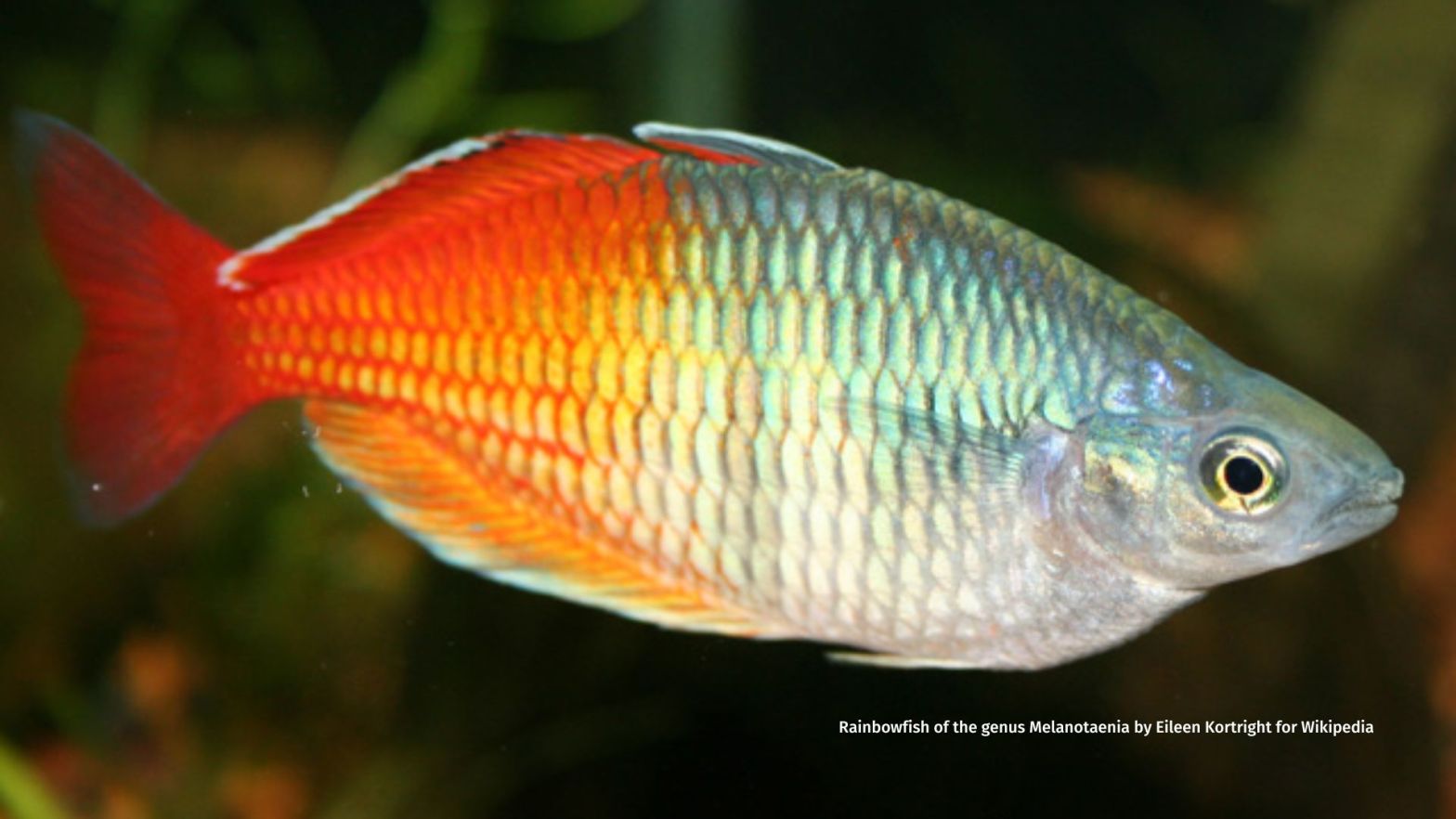
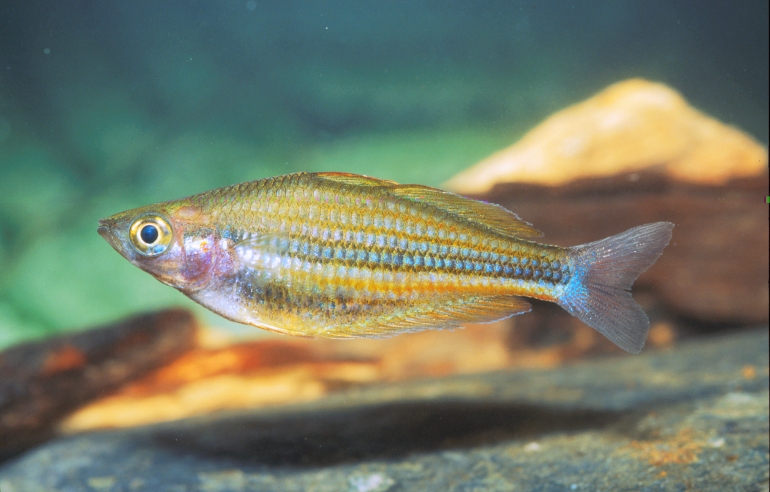
Forest Rainbowfish Melanotaenia sylvatica
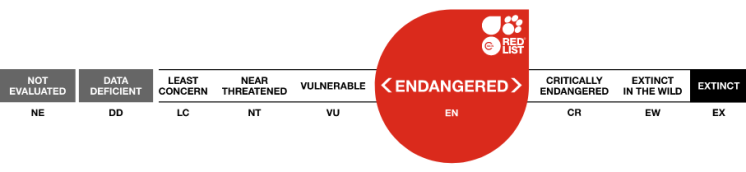
IUCN Red List Status: Endangered
Location: The Forest Rainbowfish is endemic to the Upper Lakekamu Basin in south-eastern Papua New Guinea, at elevations between 35 and 120 metres. This area lies approximately 190 km north-west of Port Moresby.
The Forest Rainbowfish is a radiant freshwater species found only in the remote streams of Papua New Guinea’s Upper Lakekamu Basin. With their shimmering, iridescent scales, these fish bring flashes of colour to their rainforest habitat. However, their survival is under severe threat from deforestation for timber logging, out-of-control palm oil plantations, and agricultural encroachment.
The degradation of these pristine streams is pushing the Forest Rainbowfish toward extinction. Protecting their habitat is crucial for their survival and the preservation of Papua New Guinea’s unique biodiversity. Use your voice to demand action: #BoycottPalmOil #Boycott4Wildlife.
Here’s a stunning #rainbow #fish 🐠🐟🌈 in #PapuaNewGuinea’s forest #rivers 🇵🇬. Forest Rainbowfish are #endangered due to #river #pollution as a result of #palmoil plantations. Help them survive and #BoycottPalmOil 🌴☠️⛔️#Boycott4Wildlife @palmoildetect https://palmoildetectives.com/2021/01/31/forest-rainbowfish-melanotaenia-sylvatica/
This species of fish is threatened by commercial logging and oil palm plantations in the region (A. Mungkaje and U. Kolkolo pers. comm. 2019). Oil palm plantations are primarily found in the coastal plain and so logging is likely to be the more signficant threat.
IUCN Red List
Appearance and Behaviour
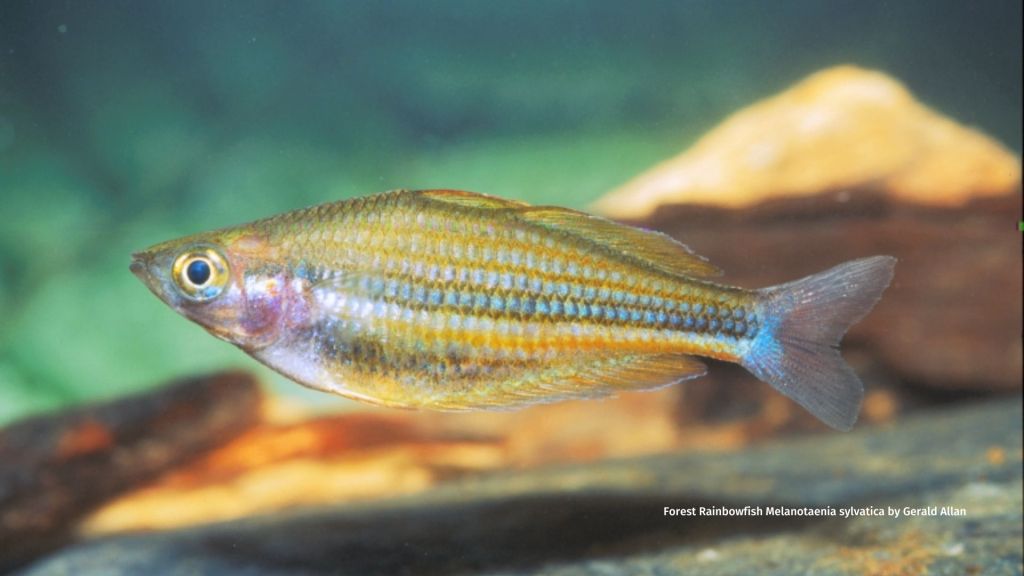
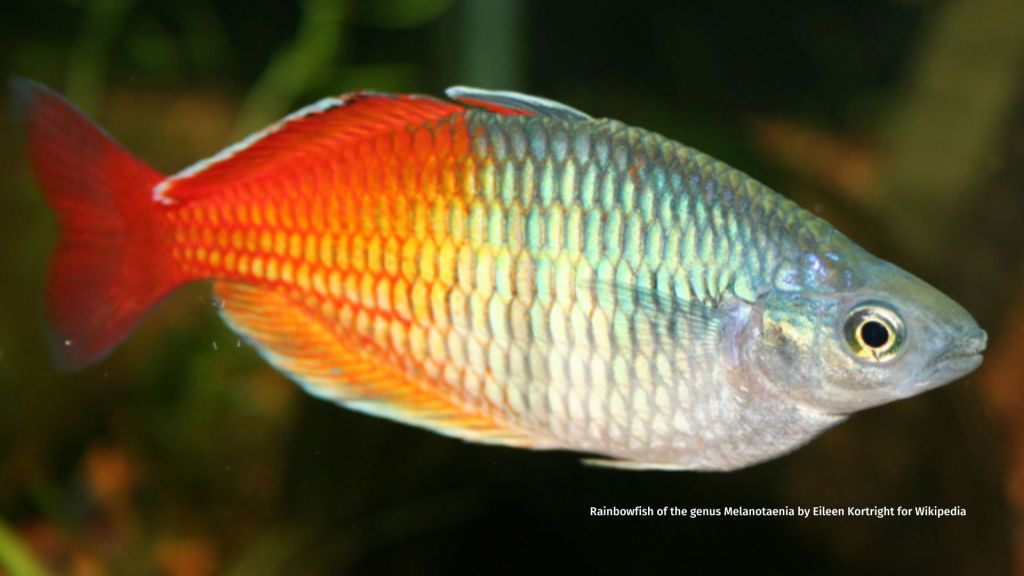
The Forest Rainbowfish is a medium-sized fish, reaching lengths of 8–10 cm. Their body is elongated and slightly compressed, covered in scales that reflect a spectrum of colours, giving them a rainbow-like sheen in sunlight. Males are particularly vivid, displaying more intense colours and larger, more ornate dorsal and anal fins compared to females.
These fish are diurnal, schooling actively in clear, fast-flowing streams. Their iridescence allows them to blend with their shimmering aquatic surroundings, offering some protection from predators.
Threats
Palm Oil Deforestation
Logging, the expansion of out-of-control palm oil plantations, and agricultural activities are rapidly destroying the rainforest streams that the Forest Rainbowfish relies on. These activities increase sedimentation, degrade water quality, and fragment their already limited range.
Gold Mining and Water Pollution Run-Off:
Gold mining operations in Papua New Guinea contribute to heavy metal contamination and other pollutants, which seep into waterways, further jeopardising the delicate ecosystem of the Upper Lakekamu Basin.
Climate Change:
Rising temperatures and changes in rainfall patterns due to climate change threaten the flow and quality of the streams where this species thrives. These changes can make their habitats uninhabitable.
Diet
The Forest Rainbowfish is an omnivorous species. Their diet consists primarily of small aquatic invertebrates, algae, and detritus. By feeding on these resources, they help maintain the ecological balance of their environment, controlling insect populations and recycling nutrients in the ecosystem.
Reproduction and Mating
Forest Rainbowfish are oviparous, with females laying adhesive eggs on submerged vegetation or rocky substrates. Males court females with vibrant displays, spreading their fins and flashing their colours to attract a mate.
The eggs hatch within a week, and the fry are free-swimming soon after. Juveniles grow rapidly, feeding on tiny planktonic organisms. The presence of clean, undisturbed streams is essential for their reproductive success, making habitat degradation a critical threat.
Geographic Range
The Forest Rainbowfish is restricted to the Upper Lakekamu Basin in south-eastern Papua New Guinea. Their range spans elevations of 35 to 120 metres and is approximately 190 km north-west of Port Moresby. These fish inhabit clear, fast-flowing streams surrounded by dense lowland rainforest. As deforestation and human activity encroach on this region, their range becomes increasingly fragmented and vulnerable.
The Forest Rainbow fish lives in small, 1-3 m wide, clear, slow-flowing creeks in closed-canopy rainforest on relatively flat terrain. These typically have a mud or gravel bottom littered with leaves and log debris. The maximum size of this species is at least 5.5 cm SL (Allen 1997, G.R. Allen pers. comm. 2019).
FAQ
What is the Forest Rainbowfish?
The Forest Rainbowfish (Melanotaenia sylvatica) is an endangered freshwater fish found only in Papua New Guinea’s Upper Lakekamu Basin. Known for their iridescent scales, they are a striking example of the unique biodiversity of the region.
Why is the Forest Rainbowfish endangered?
Habitat loss from logging, out-of-control palm oil plantations, agricultural expansion, and pollution are the primary threats. Climate change and water contamination from mining activities further exacerbate their decline.
What do Forest Rainbowfish eat?
They are omnivores, feeding on aquatic insects, algae, and organic detritus. Their feeding habits contribute to the health of their ecosystem by regulating insect populations and recycling nutrients.
Can Forest Rainbowfish be kept in aquariums?
While some rainbowfish are popular in the aquarium trade, wild-caught Forest Rainbowfish should never be kept as pets. Capturing them contributes to population declines. It is far better to support habitat conservation efforts to protect them in the wild.
Take Action!
The Forest Rainbowfish’s survival depends on preserving Papua New Guinea’s pristine rainforests. Fight for their future by boycotting palm oil, supporting conservation efforts, and demanding sustainable forestry practices. Every action matters: #BoycottPalmOil #Boycott4Wildlife.
Further Information
Allen, G.R. 2020. Melanotaenia sylvatica. The IUCN Red List of Threatened Species 2020: e.T161111293A161111315. https://dx.doi.org/10.2305/IUCN.UK.2020-3.RLTS.T161111293A161111315.en. Downloaded on 31 January 2021.
Allen, G. R. (1997). Melanotaenia sylvatica, a new species of rainbowfish (Melanotaeniidae) from Irian Jaya, Indonesia. Retrieved from Regenbogenfische.com
Support the conservation of this species

How can I help the #Boycott4Wildlife?
Take Action in Five Ways
1. Join the #Boycott4Wildlife on social media and subscribe to stay in the loop: Share posts from this website to your own network on Twitter, Mastadon, Instagram, Facebook and Youtube using the hashtags #Boycottpalmoil #Boycott4Wildlife.
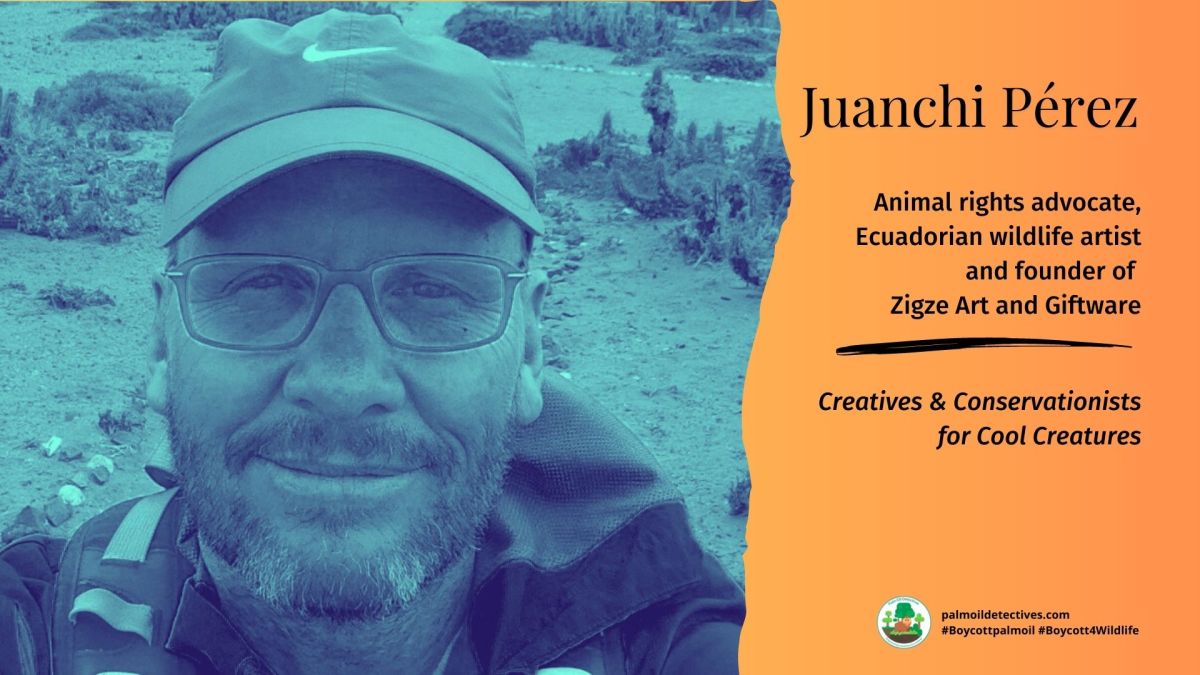
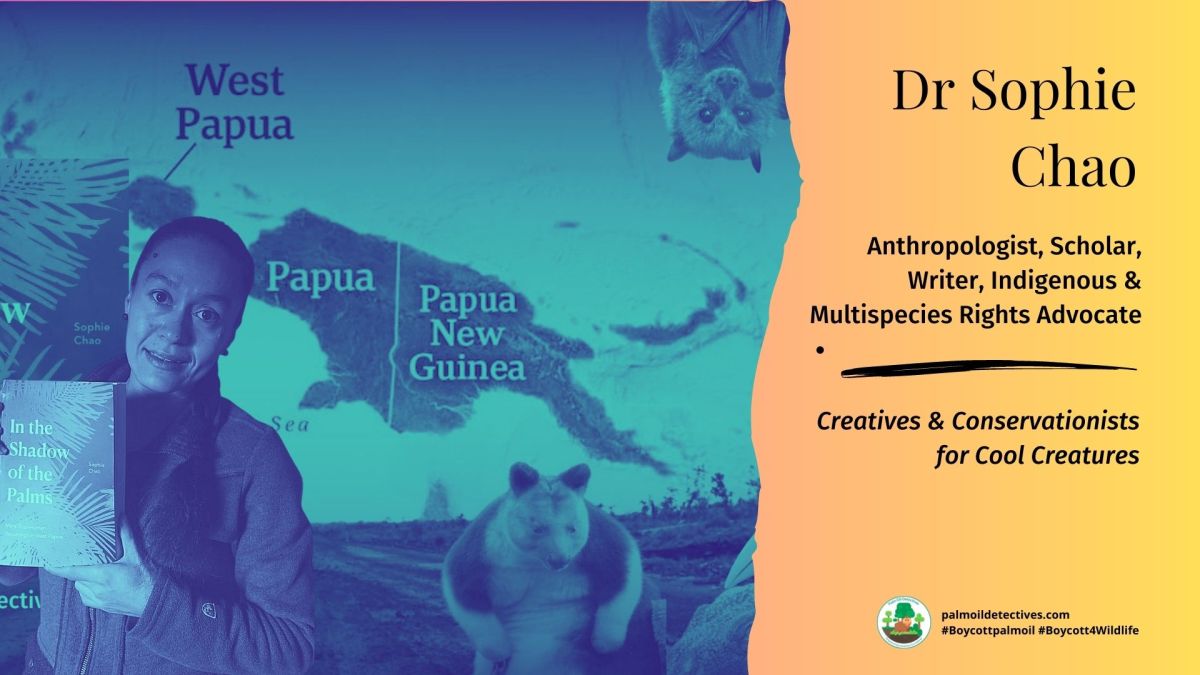
2. Contribute stories: Academics, conservationists, scientists, indigenous rights advocates and animal rights advocates working to expose the corruption of the palm oil industry or to save animals can contribute stories to the website.




3. Supermarket sleuthing: Next time you’re in the supermarket, take photos of products containing palm oil. Share these to social media along with the hashtags to call out the greenwashing and ecocide of the brands who use palm oil. You can also take photos of palm oil free products and congratulate brands when they go palm oil free.
4. Take to the streets: Get in touch with Palm Oil Detectives to find out more.
5. Donate: Make a one-off or monthly donation to Palm Oil Detectives as a way of saying thank you and to help pay for ongoing running costs of the website and social media campaigns. Donate here
Discover more from Palm Oil Detectives
Subscribe to get the latest posts sent to your email.
 Palm Oil Detectives