
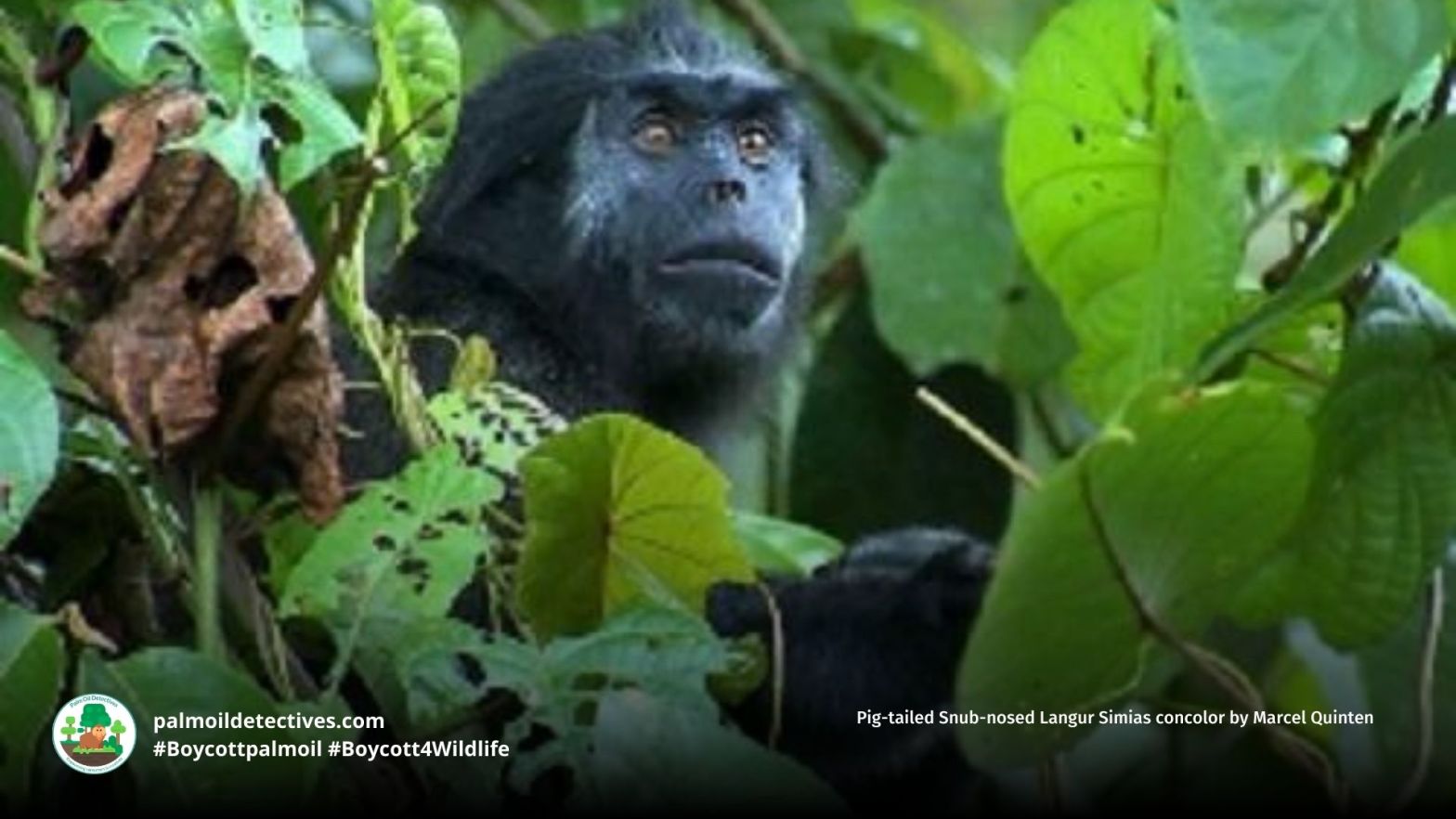
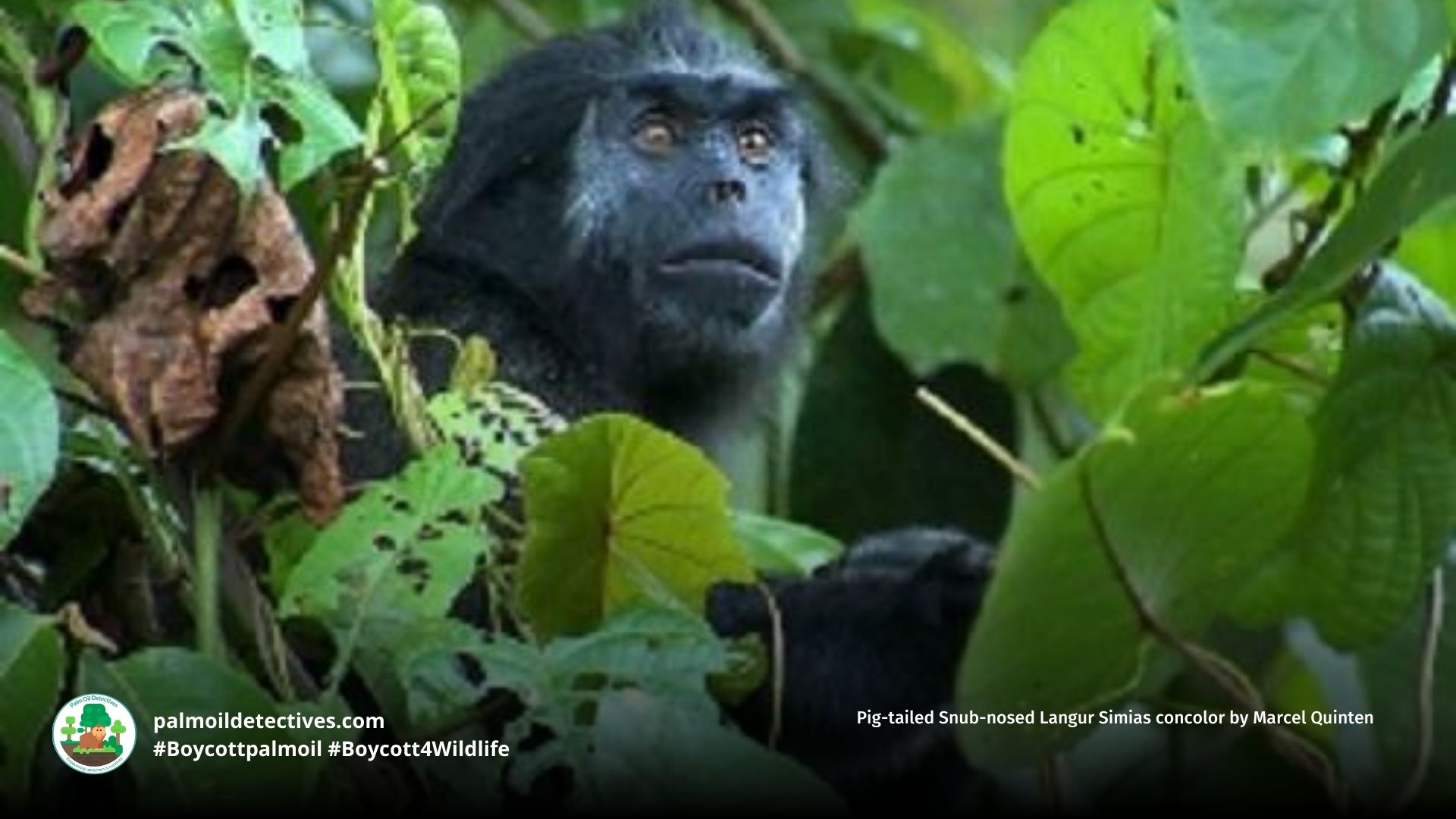
Pig-tailed Snub-nosed Langur Simias concolor
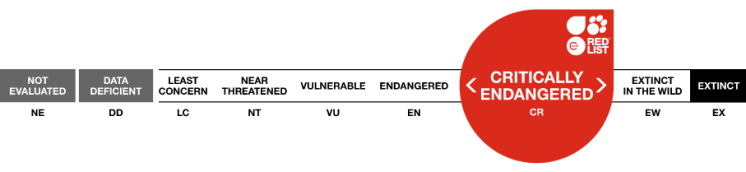
IUCN Red List Status: Critically Endangered
Location: This rare primate is endemic to the Mentawai Islands off the west coast of Sumatra, Indonesia. They are found on Siberut, Sipora, and North and South Pagai, where they inhabit lowland and hill forests in these isolated and fragile ecosystems.
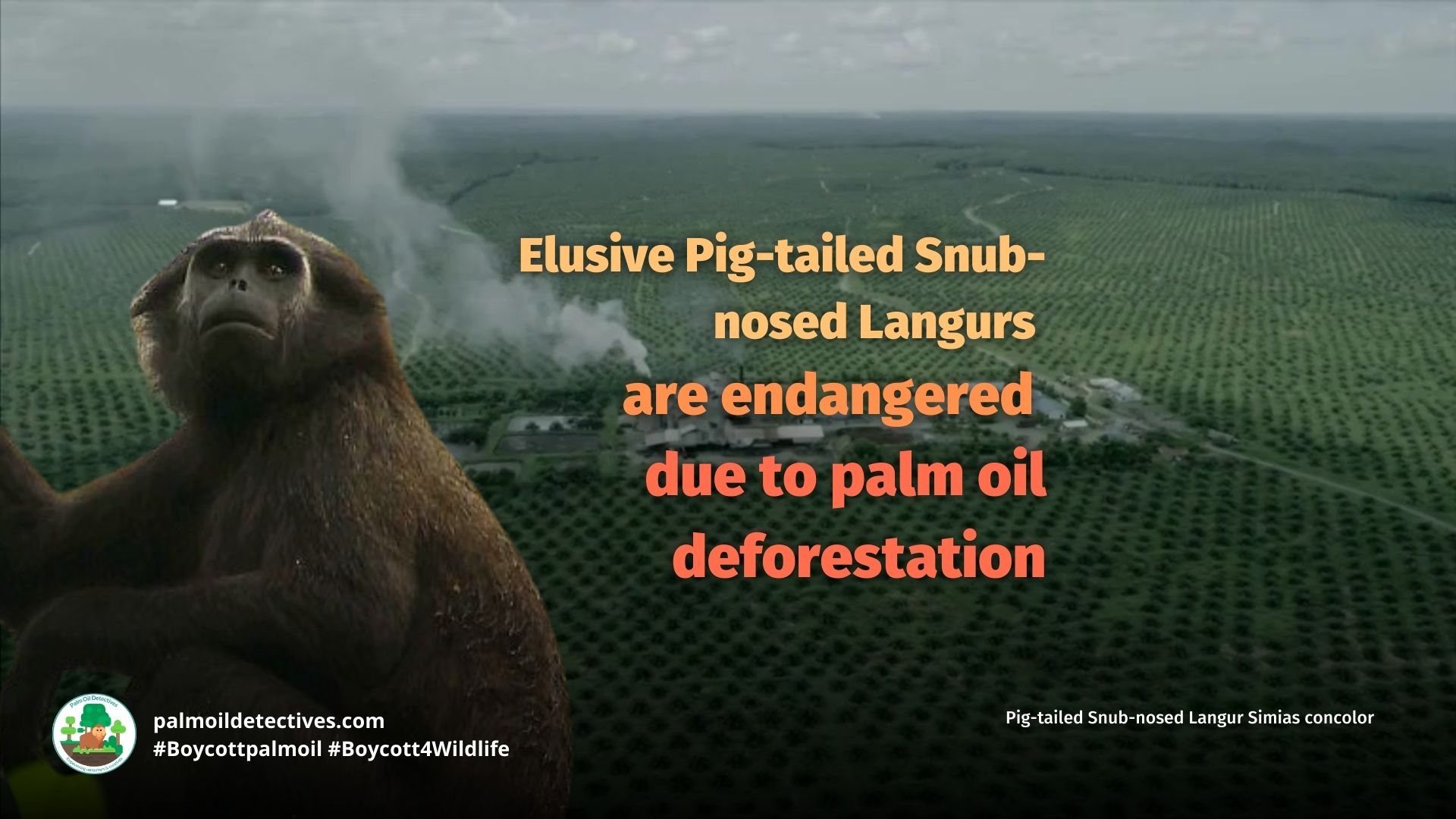
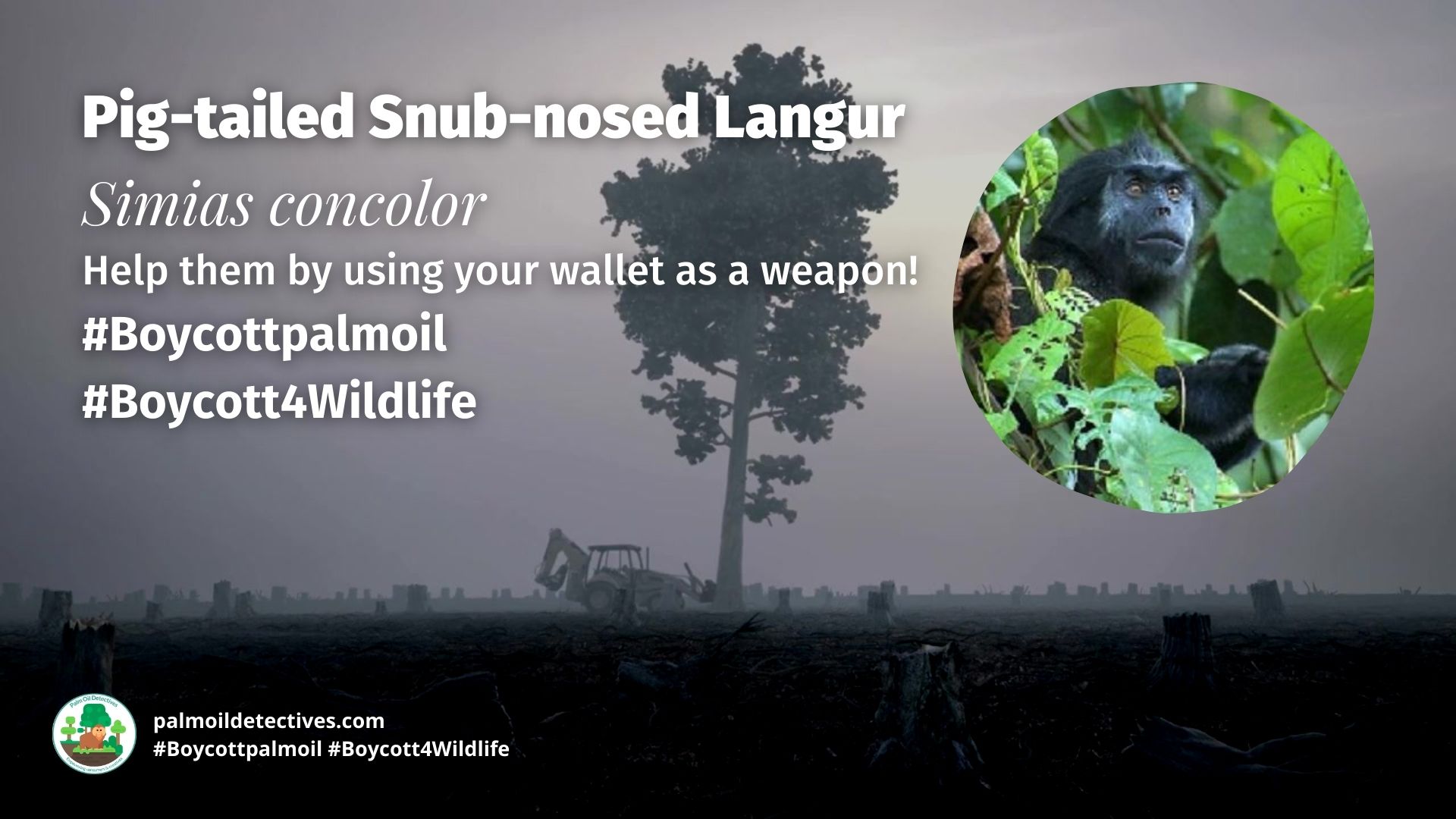
The Pig-tailed Snub-nosed Langur, also known as the Pig-tailed Langur, is one of the most distinctive and endangered monkeys in the world. These ultra rare and critically endangered small primates are known for their short, upturned noses and unique pig-like tails. Pig-tailed Snub-nosed Langurs are critically endangered due to palm oil and timber deforestation, hunting, and habitat fragmentation in their tiny island homes of Siberut, Sipora, and North and South Pagai, Indonesia. Immediate conservation action is necessary to protect the remaining population and their delicate ecosystem from disappearing forever. Fight for them every time you shop and #BoycottPalmOil #Boycott4Wildlife
Forgotten #primate 🙊🐒 Pig-tailed Snub-nosed #Langur is now critically endangered on tiny islands near #Sumatra #Indonesia 🇮🇩 from #palmoil #deforestation and hunting pressures. Help them survive #BoycottPalmOil 🌴☠️⛔️ #Boycott4Wildlife @palmoildetect https://palmoildetectives.com/2021/01/31/pig-tailed-snub-nosed-langur-simias-concolor/
Pig-tailed Snub-nosed #langurs have a cute upturned nose and a pig-like tail. They’re critically #endangered by #palmoil #deforestation and hunting in #Indonesia 🇮🇩🐒 Resist their #extinction! #BoycottPalmOil 🌴☠️⛔️ #Boycott4Wildlife @palmoildetect https://palmoildetectives.com/2021/01/31/pig-tailed-snub-nosed-langur-simias-concolor/
Appearance and Behaviour
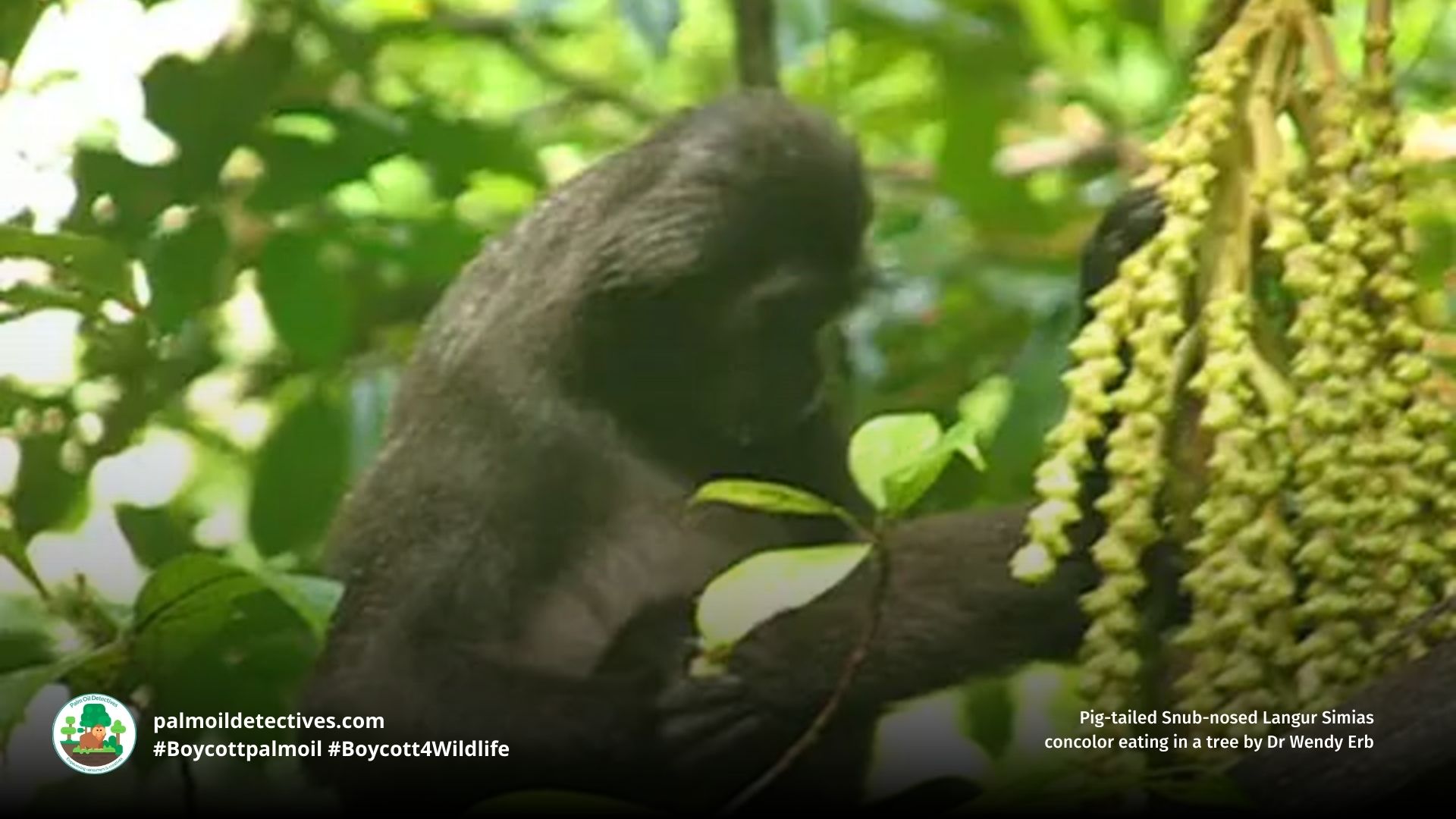
The Pig-tailed Snub-nosed Langur is a medium-sized primate with a striking appearance. Their dense, greyish-brown fur contrasts with lighter underparts, and their small, upturned nose gives them a unique and endearing look. Their short, thick tail, resembling that of a pig, is another defining feature (IUCN, 2020).
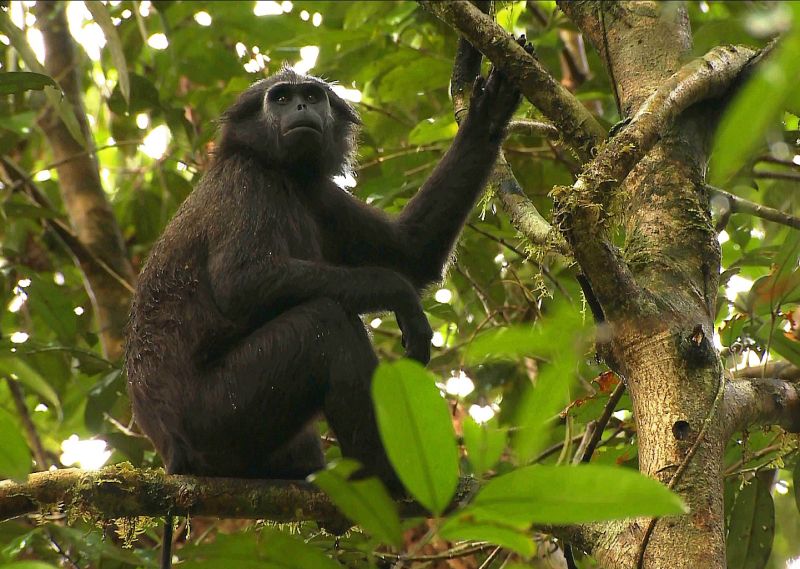
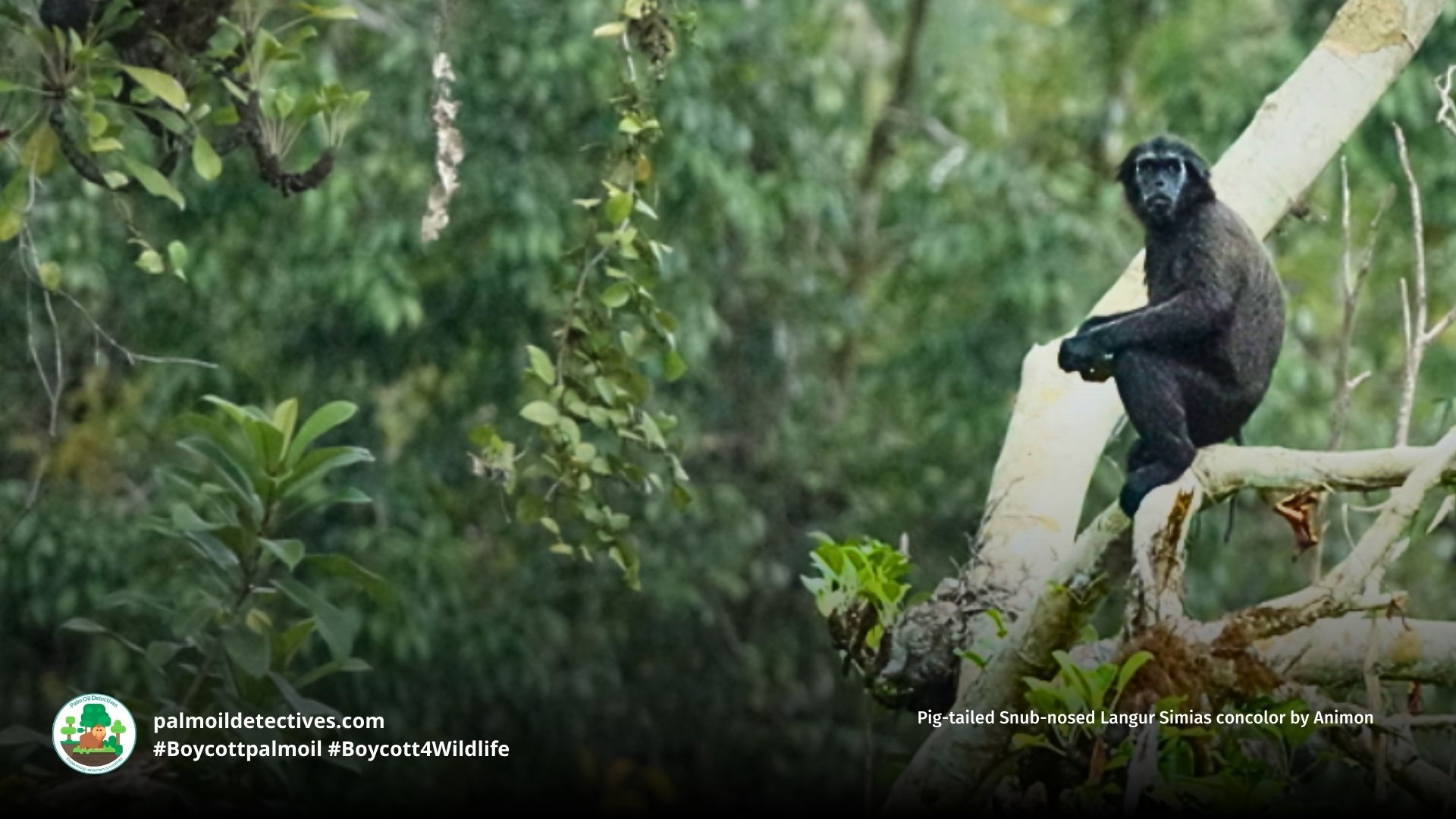
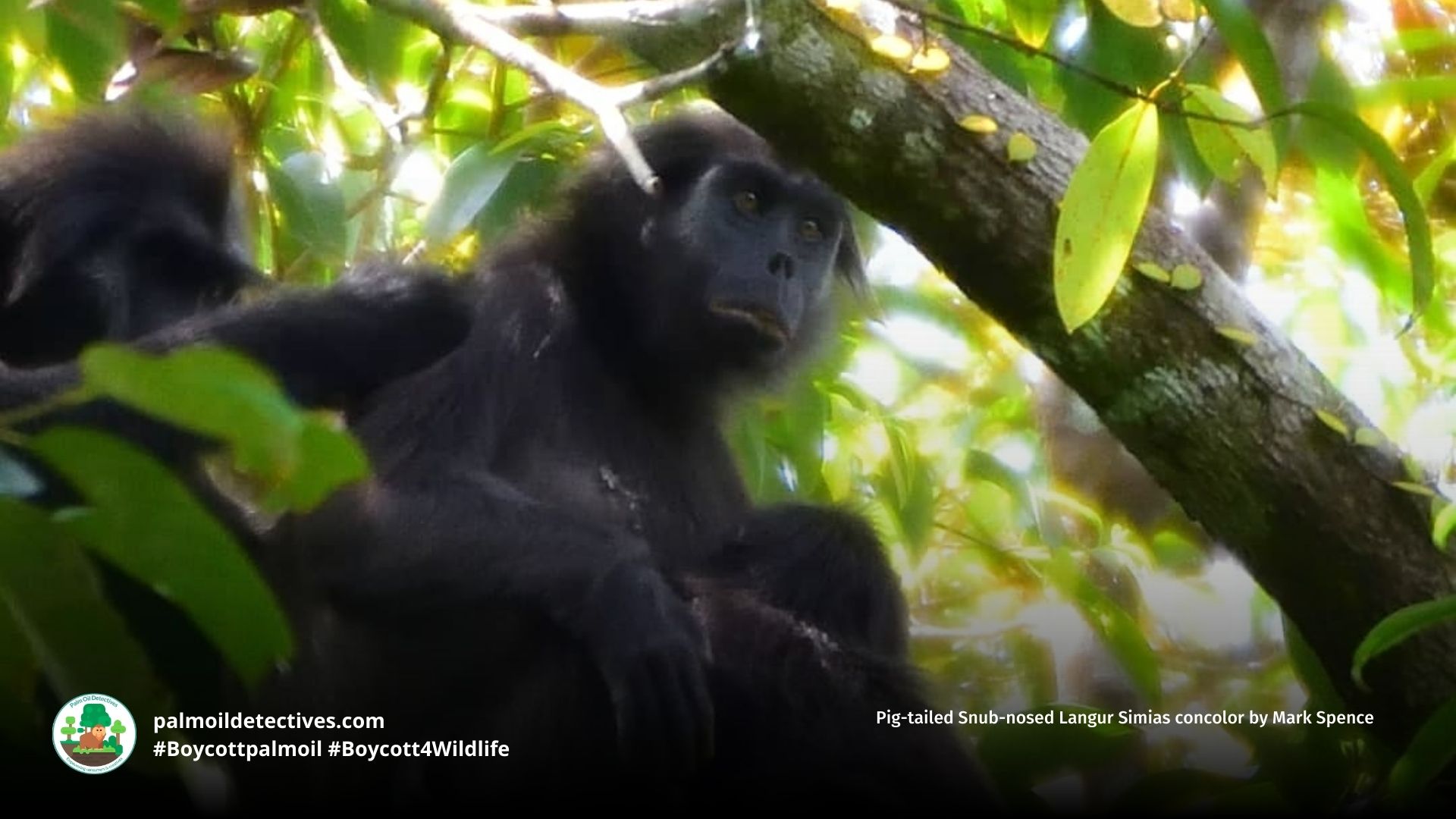
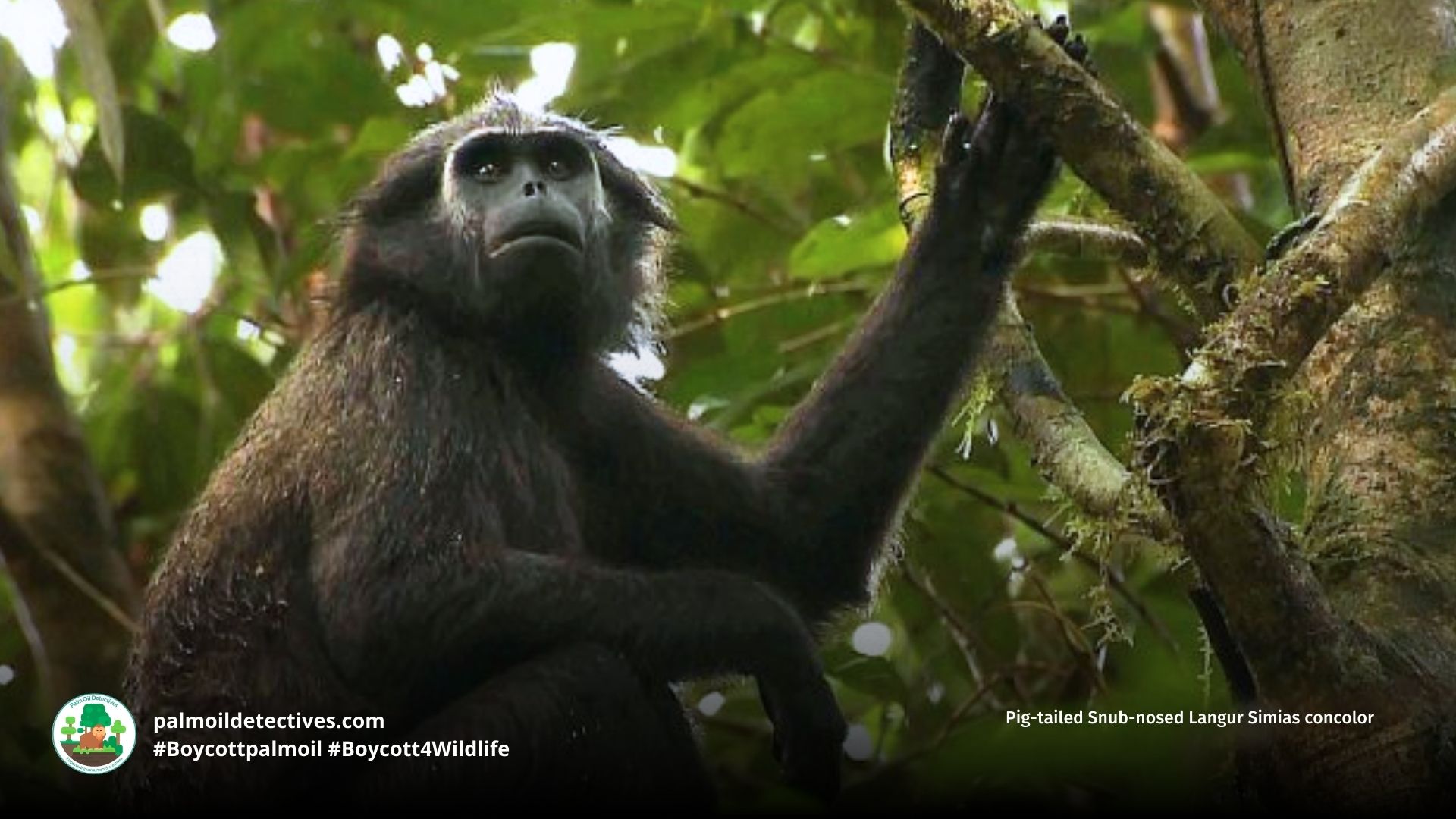
These langurs are diurnal and arboreal, spending most of their time in the forest canopy. They live in social groups of up to 20 individuals, where they engage in complex communication and social bonding. Their dynamic foraging strategies allow them to adapt to the heterogeneous environments of the Mentawai Islands.
This species is listed as Critically Endangered because a population decline of 80-90% over the last 36 years (three generations) is estimated due to heavy hunting pressure and extensive habitat loss (especially on southern islands but quite significant throughout species range). The Pig-tailed Snub-nosed Langur is threatened mainly by heavy hunting and commercial logging (Whittaker 2006, Quinten et al. 2014).
IUCN Red List
Diet
The Pig-tailed Snub-nosed Langur is primarily folivorous, feeding on a variety of leaves, but they also consume fruits, seeds, and flowers when available. This specialised diet ties them closely to their forest environment, making them highly vulnerable to habitat destruction and fragmentation (IUCN, 2020).
Reproduction and Mating
As with many langurs, this species is believed to have a low reproductive rate. Females give birth to a single infant after a long gestation period, and young langurs are raised with the support of the social group. This cooperative behaviour is vital for ensuring the survival of the next generation in their challenging environment.
Geographic Range
The Pig-tailed Snub-nosed Langur is restricted to the Mentawai Islands, including Siberut, Sipora, and North and South Pagai. These islands are home to diverse but fragile ecosystems, where this species relies on primary and secondary forests for survival. Their limited geographic range makes them highly vulnerable to localised threats (IUCN, 2020).
Threats
They are also threatened by the conversion of rainforest into oil palm plantations, as well as forest clearing and product extraction by local people. Sometimes, animals are taken for the pet trade (Whittaker 2006).
IUCN Red LIST
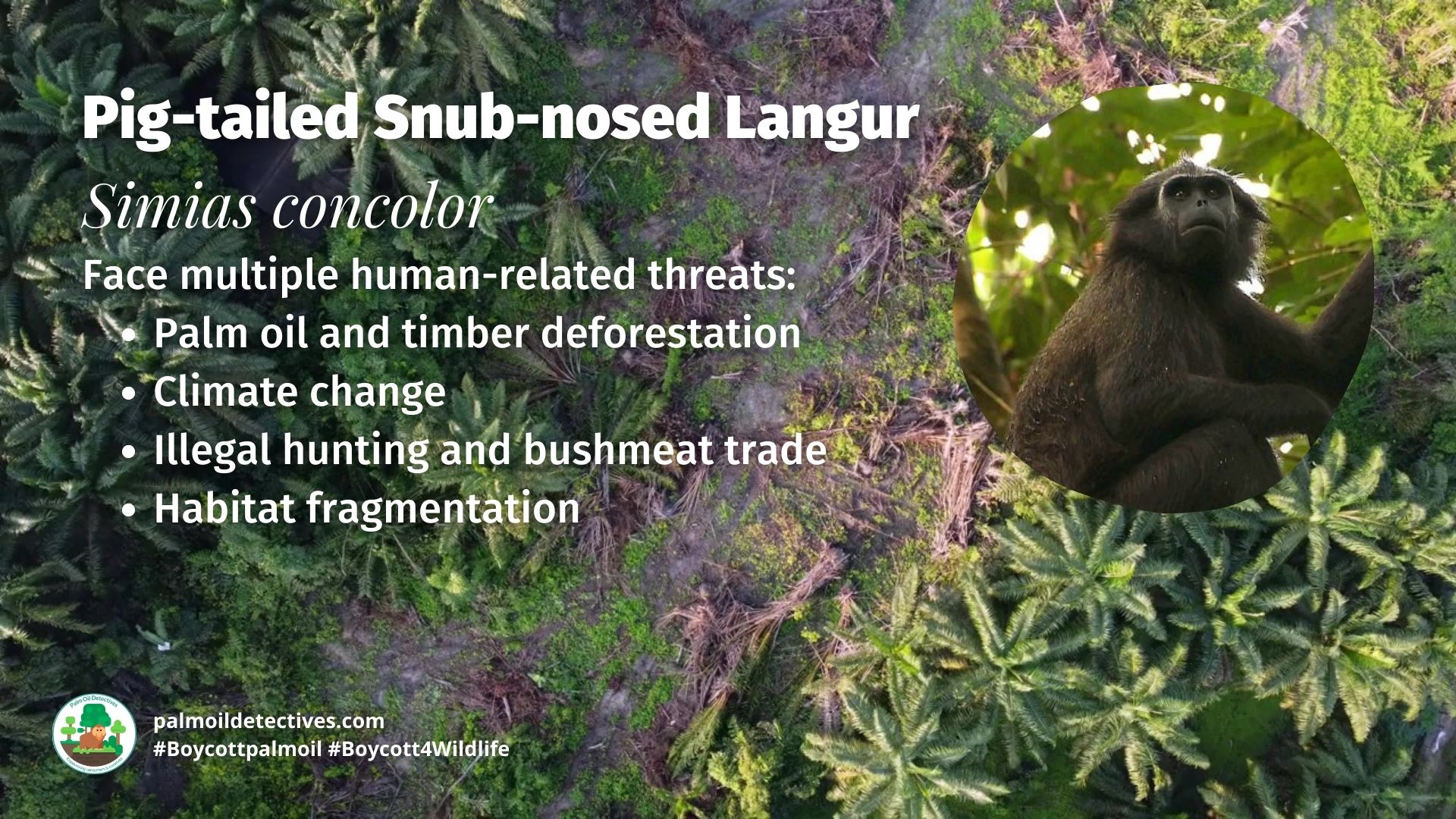
- Palm oil and timber deforestation: The rapid expansion of out-of-control palm oil plantations, logging, and agricultural activities has resulted in the widespread destruction of the Mentawai Islands’ forests.
- Illegal hunting for bushmeat: The langur is heavily hunted for bushmeat, a significant threat in local communities.
- Habitat Fragmentation: Infrastructure development and forest clearing have fragmented their habitats, isolating populations and reducing genetic diversity.
Take Action!
Protecting the Pig-tailed Snub-nosed Langur requires urgent conservation measures to halt deforestation and hunting. By boycotting products containing palm oil, supporting indigenous-led conservation initiatives, and advocating for forest preservation, you can help safeguard this critically endangered primate. #BoycottPalmOil #Boycott4Wildlife #Vegan
Conservation
Conservation efforts for these critically endangered small primates is underway. Read more about Asian Species Action Partnership (ASAP) in Indonesia.
Further Information
Quinten, M, Setiawan, A., Cheyne, S., Traeholt, C. & Whittaker, D. 2020. Simias concolor. The IUCN Red List of Threatened Species 2020: e.T20229A17953422. https://dx.doi.org/10.2305/IUCN.UK.2020-2.RLTS.T20229A17953422.en. Downloaded on 31 January 2021.
Zhao, L., et al. (2024). Dynamic foraging strategy adaptation to heterogeneous environments contributes to social aggregation in snub-nosed monkeys. Zoological Research, 45(1), 39–54. https://doi.org/10.24272/j.issn.2095-8137.2023.047
Wikipedia. (n.d.). Pig-tailed Langur. Retrieved from https://en.wikipedia.org/wiki/Pig-tailed_langur
GBIF. (n.d.). Simias concolor. Retrieved from https://www.gbif.org/species/4267130

How can I help the #Boycott4Wildlife?
Take Action in Five Ways
1. Join the #Boycott4Wildlife on social media and subscribe to stay in the loop: Share posts from this website to your own network on Twitter, Mastadon, Instagram, Facebook and Youtube using the hashtags #Boycottpalmoil #Boycott4Wildlife.
2. Contribute stories: Academics, conservationists, scientists, indigenous rights advocates and animal rights advocates working to expose the corruption of the palm oil industry or to save animals can contribute stories to the website.



3. Supermarket sleuthing: Next time you’re in the supermarket, take photos of products containing palm oil. Share these to social media along with the hashtags to call out the greenwashing and ecocide of the brands who use palm oil. You can also take photos of palm oil free products and congratulate brands when they go palm oil free.
4. Take to the streets: Get in touch with Palm Oil Detectives to find out more.
5. Donate: Make a one-off or monthly donation to Palm Oil Detectives as a way of saying thank you and to help pay for ongoing running costs of the website and social media campaigns. Donate here
Discover more from Palm Oil Detectives
Subscribe to get the latest posts sent to your email.
 Palm Oil Detectives