
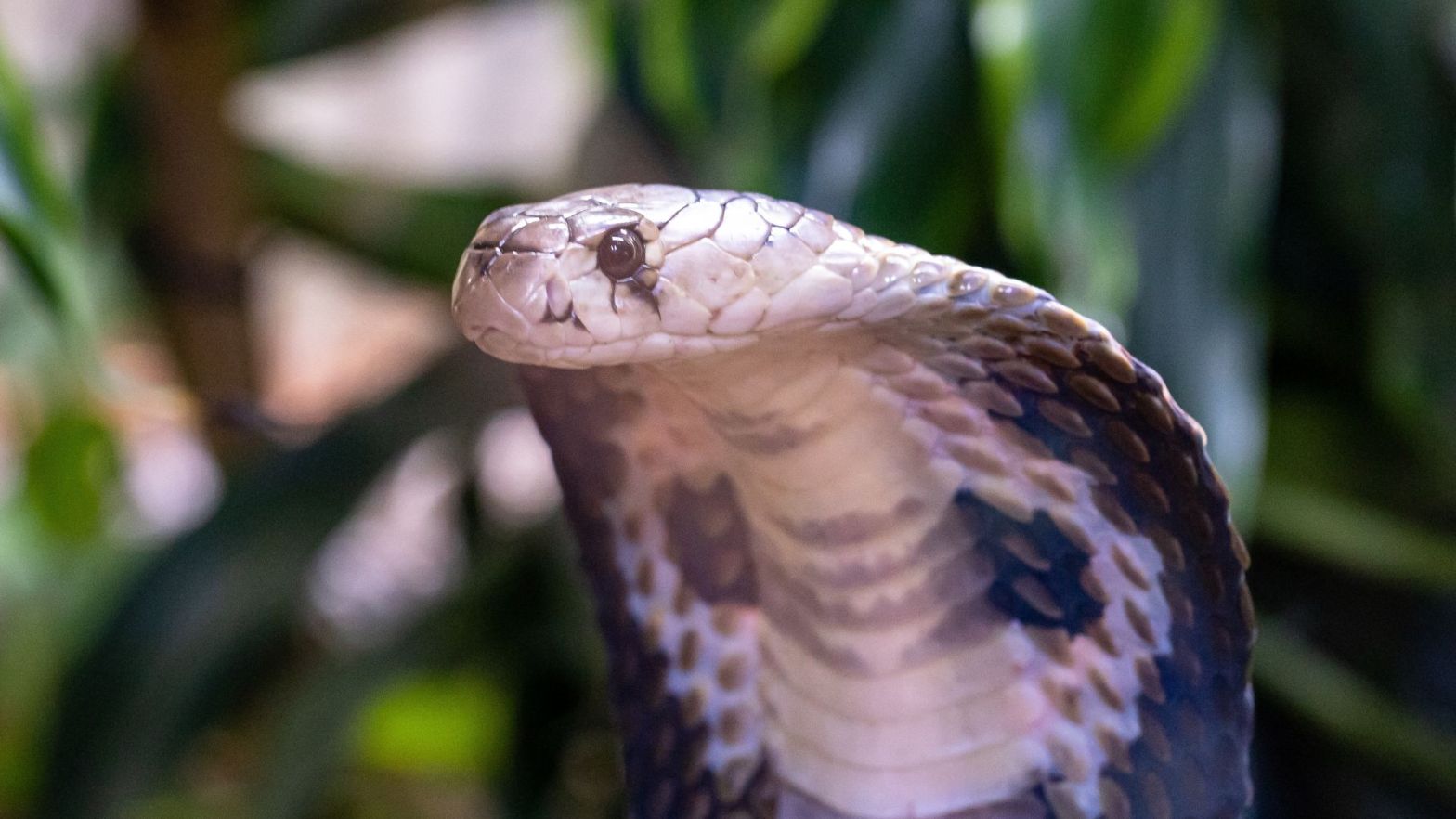
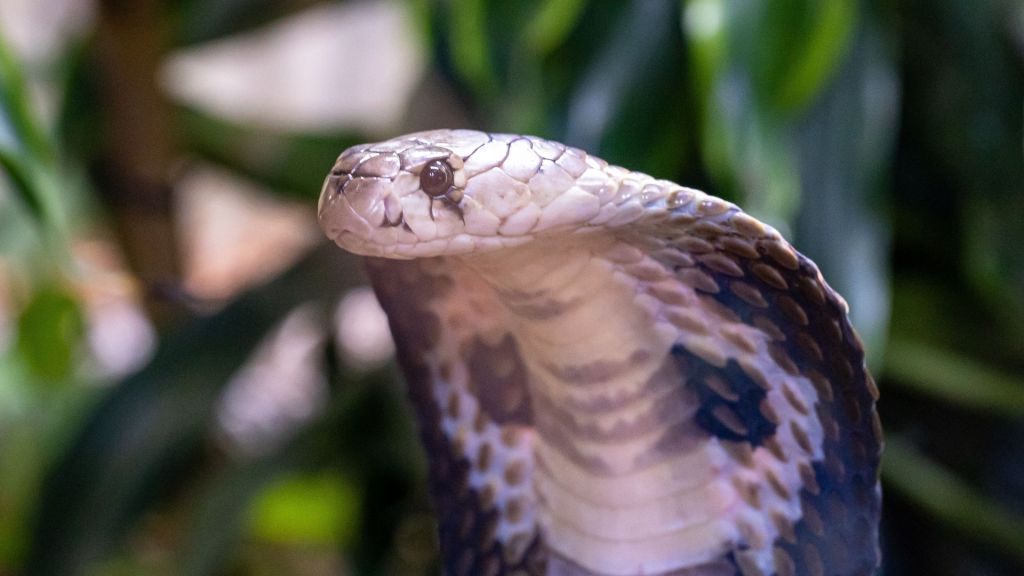
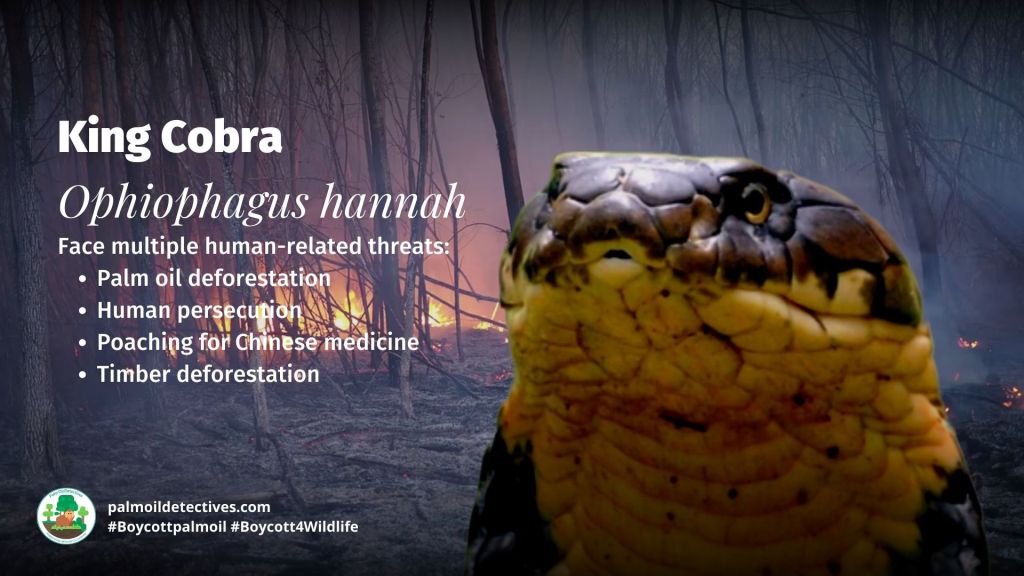
King Cobra Ophiophagus hannah
IUCN Status: Vulnerable
Locations: Malaysia, Cambodia, Thailand, Laos, Vietnam, Bangladesh, India
The King #Cobra 🐍 is the serpentine king 👑🌳 of the jungle in #Thailand #India #Cambodia 🇮🇳 🇹🇭🇰🇭 they’re #vulnerable due to #palmoil #deforestation and human persecution 😿 Protect them when you #Boycottpalmoil 🌴🔥⛔️ #Boycott4Wildlife @palmoildetect https://palmoildetectives.com/2021/02/17/king-cobra-ophiophagus-hannah/
Like #Kaa from #JungleBook, King #Cobras have a hypnotic demeanor of lethal beauty. The largest venomous snake is also the most persecuted 😿🐍💚 #Vulnerable from #palmoil and other #deforestation. #Boycottpalmoil 🌴🔥⛔️ #Boycott4Wildlife @palmoildetect https://palmoildetectives.com/2021/02/17/king-cobra-ophiophagus-hannah/
Known as the serpentine king of the jungle in South East Asia, and inspiration for the villain Kaa in the Jungle Book, the King Cobra lives in many different environments, including pristine forests, degraded forests, mangroves, swamps and woodlands of #Thailand, #Cambodia, #Malaysia, #Laos, #Vietnam, #Bangladesh and #India. Their main threat is human-wildlife conflict and ongoing persecution. Palm oil deforestation and other agricultural expansion is also a big threat throughout their range. The world’s largest venomous #snake has a neurotoxic bite powerful enough to kill twenty people or an adult elephant. Sadly, these majestic creatures are persecuted for this reason and do not have adequate protection. Help them every time you shop and #Boycottpalmoil #Boycott4Wildlife
The King Cobra lives in a variety of habitats, primarily in pristine forests, but they can also be found in degraded forest, mangrove swamps and even agricultural areas with remnants of woodland.
Threats
This species is threatened by destruction of habitat due to logging and agricultural expansion for palm oil, as Southeast Asia is experiencing one of the highest rates of deforestation in the tropics (Sodhi et al. 2009) and this species appears to be most abundant in forested habitats. This species is harvested for skin, food, and especially medicinal purposes in China. They are heavily harvested for the medicinal trade in many parts of their range, particularly Vietnam, Lao PDR, Cambodia and Myanmar, both for domestic purposes and for export to China.
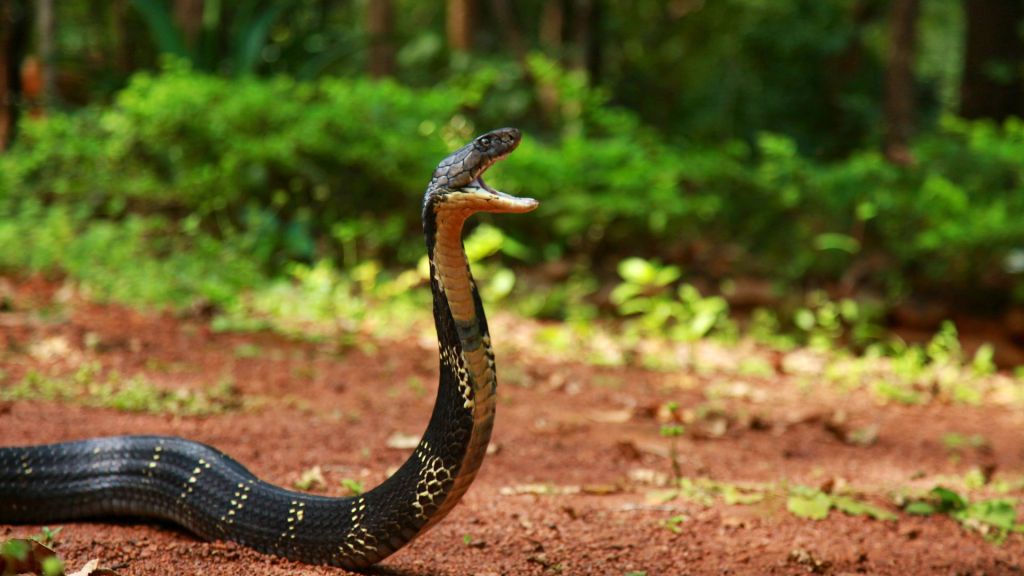
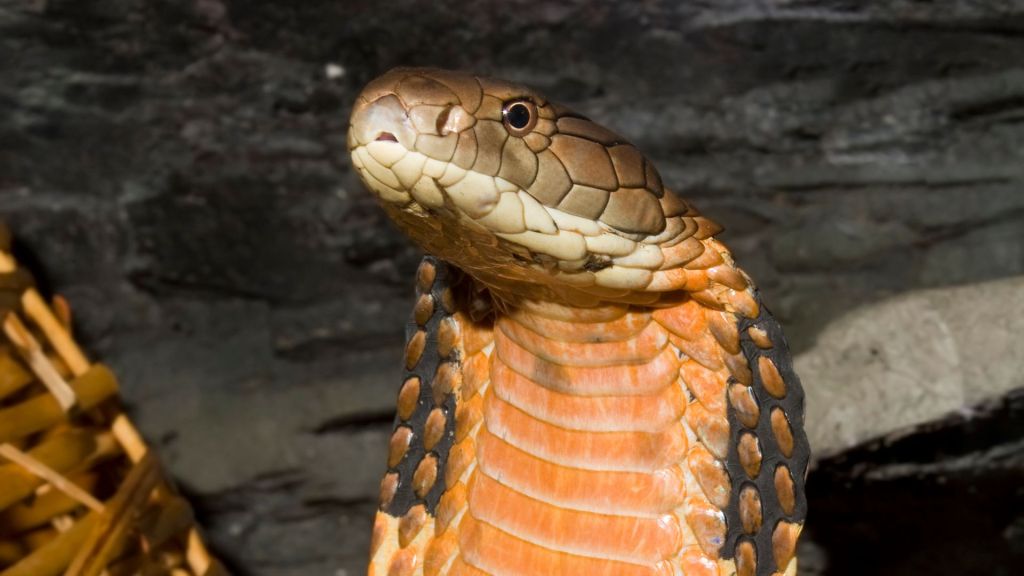
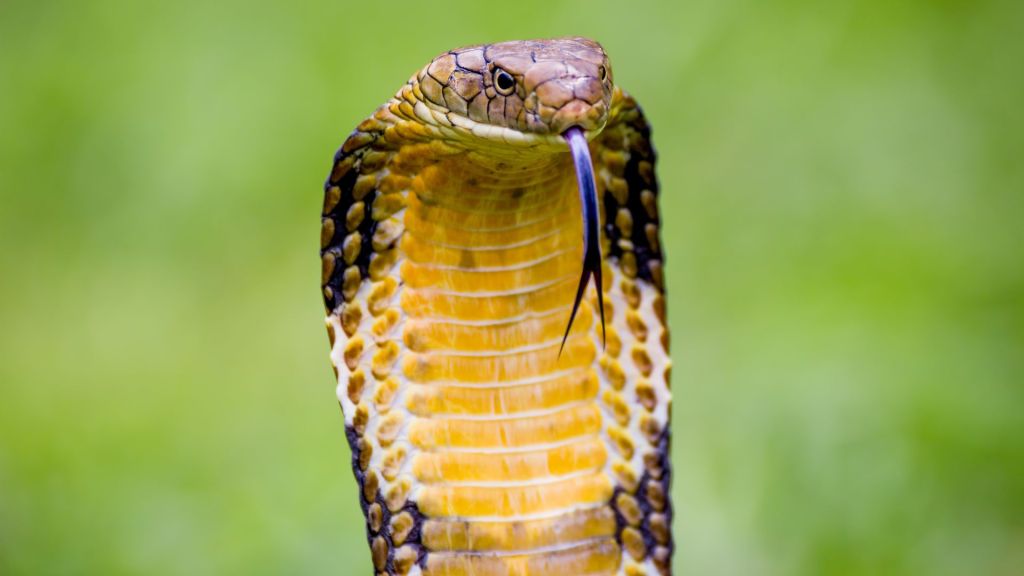
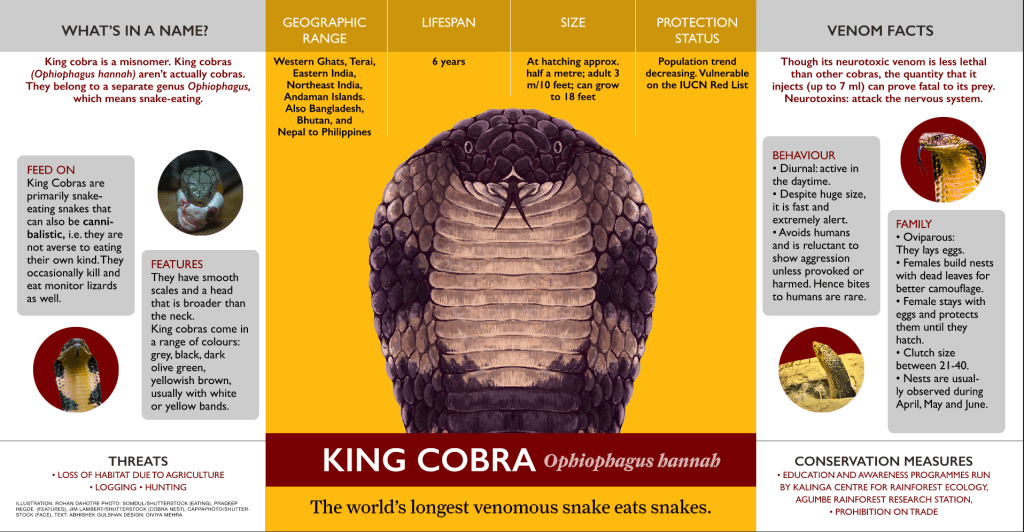
These snakes have also been found swimming in rivers in non-forested land and probably occurs in palm oil plantations (R. Inger pers. comm. 2010), however it is not yet clear whether oil palm plantations can support viable populations of this species (M. Auliya pers. Comm. 2011). This species is threatened by destruction of habitat due to logging and agricultural expansion
Further Information

Stuart, B., Wogan, G., Grismer, L., Auliya, M., Inger, R.F., Lilley, R., Chan-Ard, T., Thy, N., Nguyen, T.Q., Srinivasulu, C. & Jelić, D. 2012. Ophiophagus hannah. The IUCN Red List of Threatened Species 2012: e.T177540A1491874. https://dx.doi.org/10.2305/IUCN.UK.2012-1.RLTS.T177540A1491874.en. Downloaded on 16 February 2021.
King Cobra: Round Glass Sustain

How can I help the #Boycott4Wildlife?
Take Action in Five Ways
1. Join the #Boycott4Wildlife on social media and subscribe to stay in the loop: Share posts from this website to your own network on Twitter, Mastadon, Instagram, Facebook and Youtube using the hashtags #Boycottpalmoil #Boycott4Wildlife.
2. Contribute stories: Academics, conservationists, scientists, indigenous rights advocates and animal rights advocates working to expose the corruption of the palm oil industry or to save animals can contribute stories to the website.






3. Supermarket sleuthing: Next time you’re in the supermarket, take photos of products containing palm oil. Share these to social media along with the hashtags to call out the greenwashing and ecocide of the brands who use palm oil. You can also take photos of palm oil free products and congratulate brands when they go palm oil free.
4. Take to the streets: Get in touch with Palm Oil Detectives to find out more.
5. Donate: Make a one-off or monthly donation to Palm Oil Detectives as a way of saying thank you and to help pay for ongoing running costs of the website and social media campaigns. Donate here
Discover more from Palm Oil Detectives
Subscribe to get the latest posts sent to your email.
 Palm Oil Detectives