
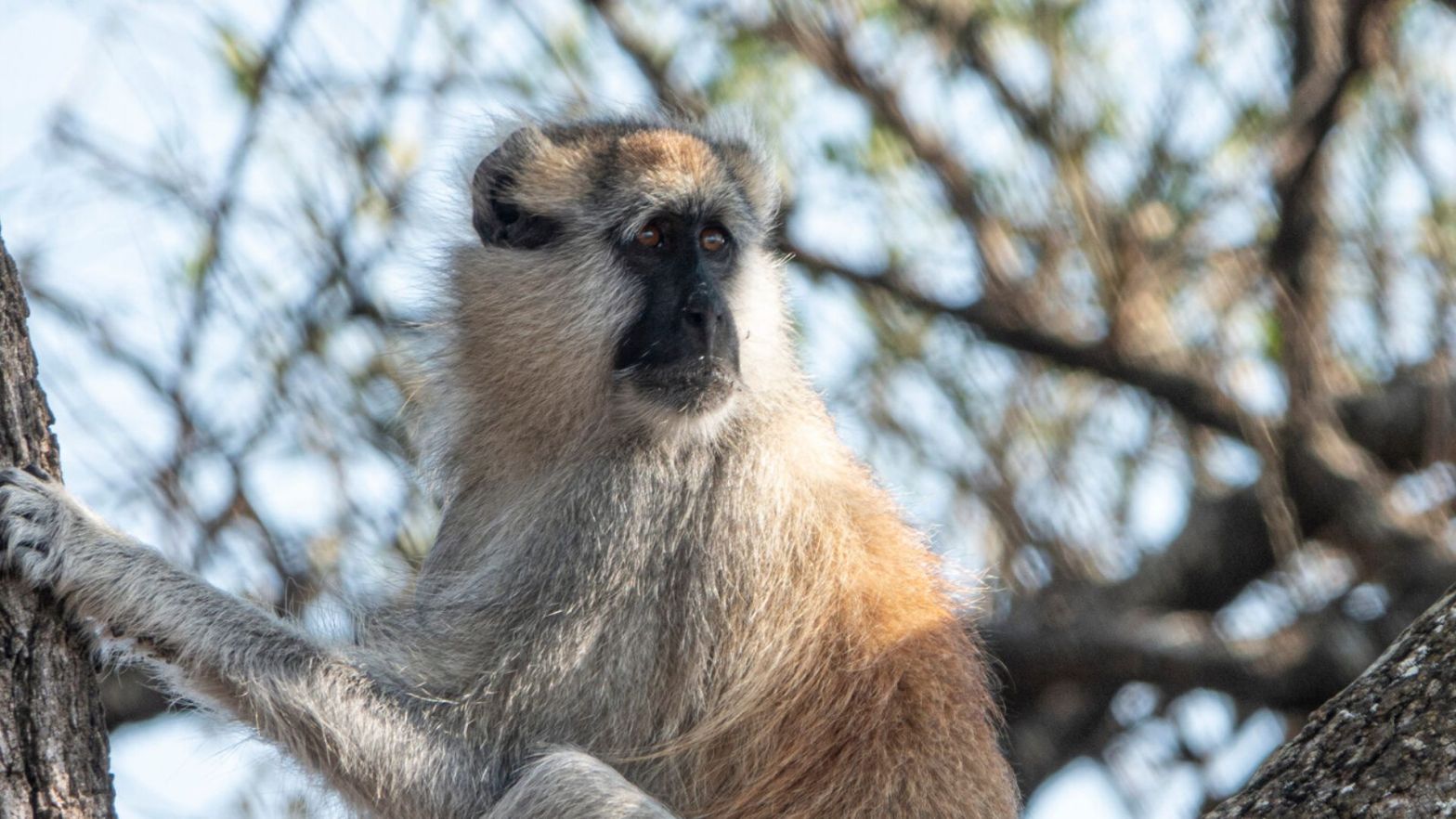
Southern Patas Monkey Erythrocebus baumstarki
Location: Tanzania (extinct in Kenya)
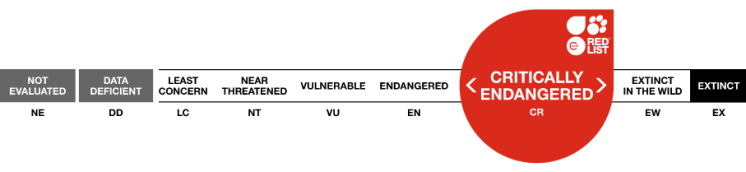
IUCN Status: Critically Endangered
The Southern Patas Monkey Erythrocebus baumstarki is an imperiled rare primate of East Africa’s savannahs. They are critically endangered due to multiple human-related threats including habitat loss from agriculture and hunting for bushmeat. These long-limbed beauties are vital seed disperser throughout their home. Take action every time you shop 🌴🐒 #BoycottPalmOil #Boycott4Wildlife 🌴🔥⛔️
Long-limbed and remarkable Southern Patas #Monkeys are critically endangered in #Tanzania 🇹🇿 and extinct in #Kenya 🇰🇪due to #agriculture and #bushmeat. The fastest #primate in the world deserves better protection! Take action and #Boycott4Wildlife 🧐💪👇 https://palmoildetectives.com/2021/05/01/southern-patas-monkey-erythrocebus-baumstarki/
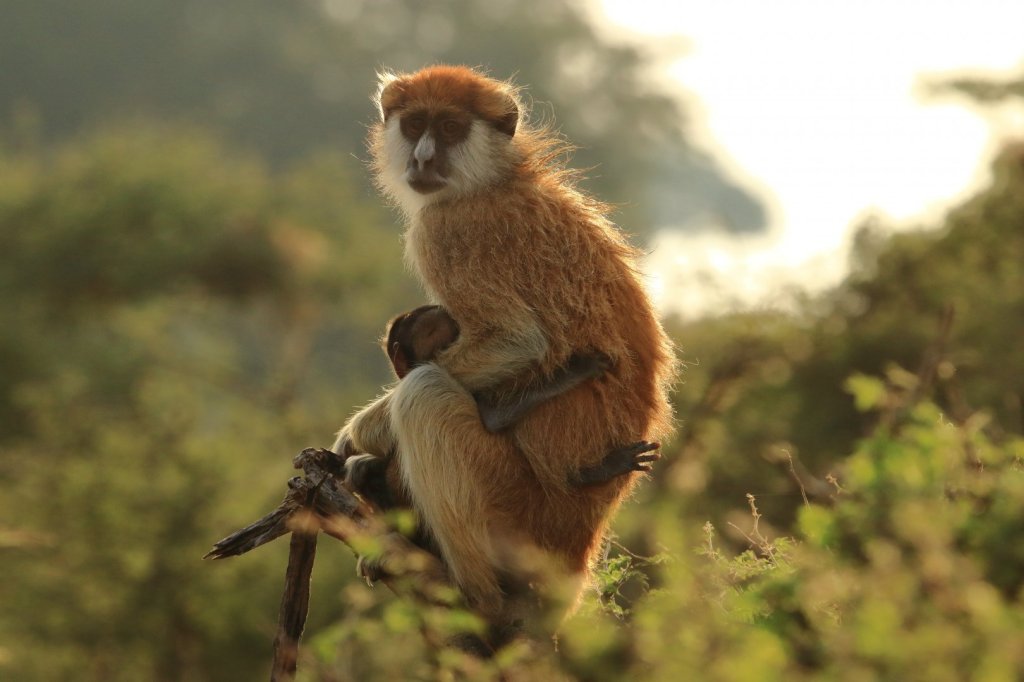
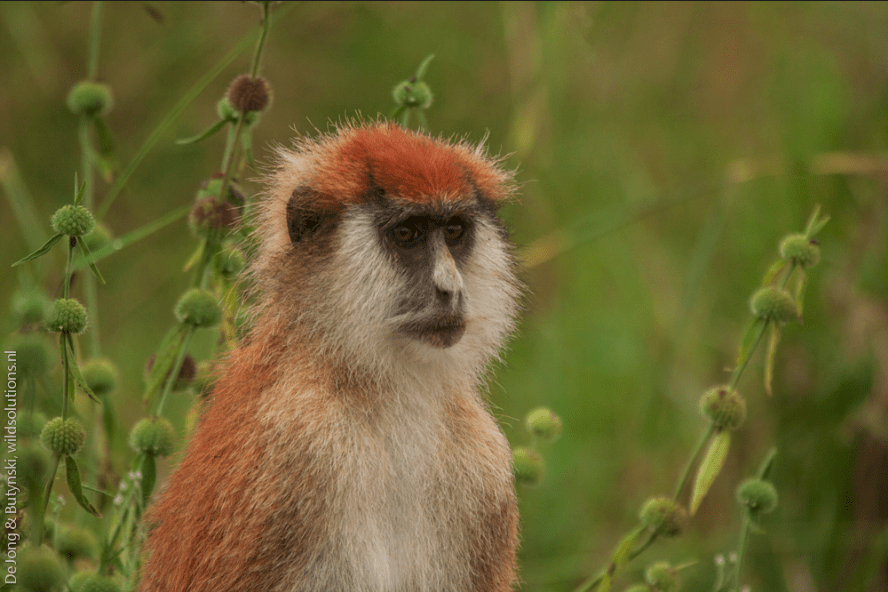
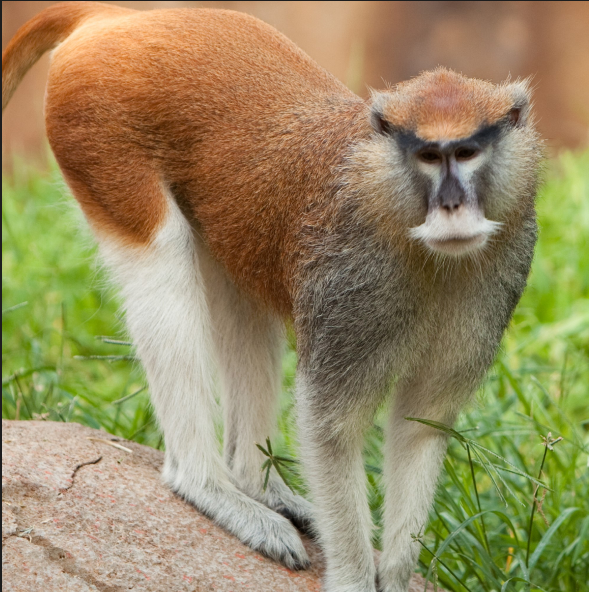
The Southern Patas #Monkey (Erythrocebus baumstarki) is an elusive, long-limbed #primate once common across northern #Tanzania and parts of #Kenya and now on the very edge of #extinction. With a lean, agile body built for speed, they are among the fastest-running primates in the world, capable of reaching speeds up to 55 km/h. Once ranging over approximately 66,000 km², their habitat has been decimated by agriculture, human settlements, and bushmeat hunting, reducing their known range by over 85% in recent decades. By 2021, estimates suggested fewer than 200 individuals remained in the wild, restricted to small populations in western Serengeti National Park and its surroundings (de Jong & Butynski, 2021).
Without urgent intervention, this striking species could be the next primate extinction in Africa. Help them every time you shop and campaign for these rare primates, every time you shop go #vegan and #Boycott4Wildlife!
Appearance and Behaviour
The main threat to the Southern Patas Monkey is habitat degradation,fragmentation, and loss due primarily to agricultural expansion and intensification (both crops and livestock).
IUCN red list
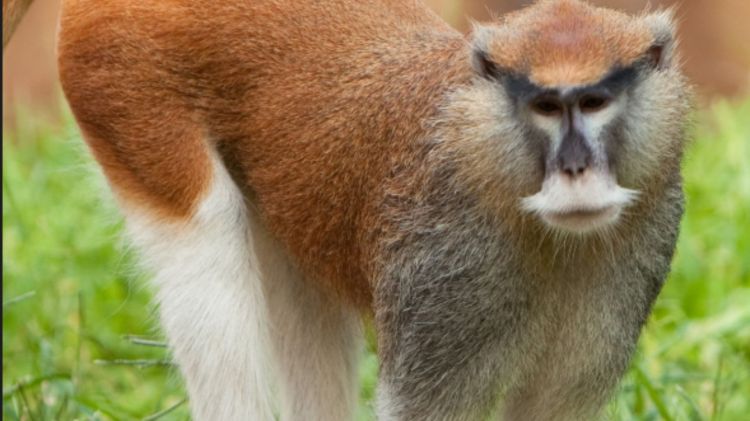
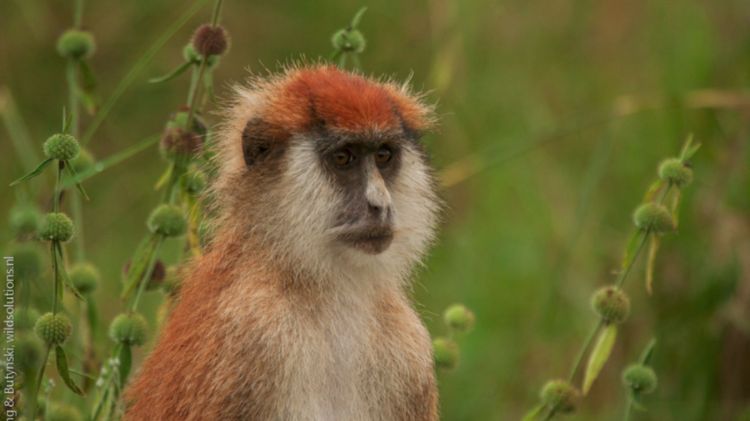
Southern Patas Monkeys have a lanky and long-limbed appearance. Juveniles possess a reddish-brown crown which may become grey in adults.
Southern Patas Monkeys are slender and long-limbed, designed for high-speed sprints across the open savannahs and dry forests of #EastAfrica. Their fur is a striking reddish-gold, contrasting with a white underbelly and black facial markings. Their back and flanks are covered with shaggy reddish fur with their bellies are white or cream. There are sex differences and males are on average twice as larger (4-7 kilos) than females, with more pronounced facial features. Unlike many other primates, they are largely terrestrial and prefer running over climbing, using their speed to evade predators rather than seeking refuge in trees.
Highly social, they live in small, female-led groups, with a dominant male providing protection. Their diet primarily consists of gum, fruit, seeds, and insects, making them vital to their ecosystems as seed dispersers. However, habitat loss and increasing human activity have forced them into shrinking territories, leading to a sharp population decline (de Jong & Butynski, 2021).
Diet
Southern Patas Monkeys are predominantly omnivores and feed on pods, seeds, gall, gum, flowers and young leaves acacia trees. Acacia gums are defended by ants, these monkeys will continue to eat the gum while being attacked by the ants until the ant bites become too painful to bear. Acacia gum is supplemented with grasses, berries, seeds and fruits. Most of the meat portion of their diet comes from ants and crickets, however they sometimes supplement this with eggs, lizards and small birds when these foods become available.
Threats
The Southern Patas Monkey faces a multitude of existential threats, primarily driven by human activity:
• Habitat Destruction: Agricultural expansion, cattle grazing, charcoal production, and human settlements are rapidly eroding their already limited range. The increasing human population along the Serengeti boundary has intensified habitat fragmentation (Veldhuis et al., 2019).
• Hunting and Bushmeat Trade: These monkeys are frequently killed for bushmeat, with their pelts also used in traditional ceremonies and witchcraft. Retaliatory killings occur when they raid crops in search of food (Loishooki et al., 2016).
• Competition with Livestock: Grazing by livestock in protected areas like the Grumeti Game Reserve has significantly degraded their habitat, leaving little space or food for the species (G. Tolchard, pers. comm. 2019).
• Human Encroachment and Water Scarcity: Rapid human expansion in the Ngorongoro Conservation Area and Serengeti region has led to a severe reduction in available water sources, forcing monkeys to compete with livestock (IUCN, 2014).
• Local Extinctions: The species has already been extirpated from Kenya and from parts of Tanzania, including the Kilimanjaro region, since 2011. Only a handful of individuals remain in protected areas (de Jong & Butynski, 2021).
The main threat to the Southern Patas Monkey is habitat degradation, fragmentation, and loss due primarily to agricultural expansion and intensification (both crops and livestock), charcoal production, fire, and ‘development’ activities (e.g., settlements, roads; De Jong et al. 2009, Loishooki et al. 2016), but also hunting and loss of access to water. In Grumeti Game Reserve, western Serengeti, Whistling Thorn Acacia woodlands are disappearing due to over-stocking by livestock (G. Tolchard pers. comm. 2019).
Habitat and Range
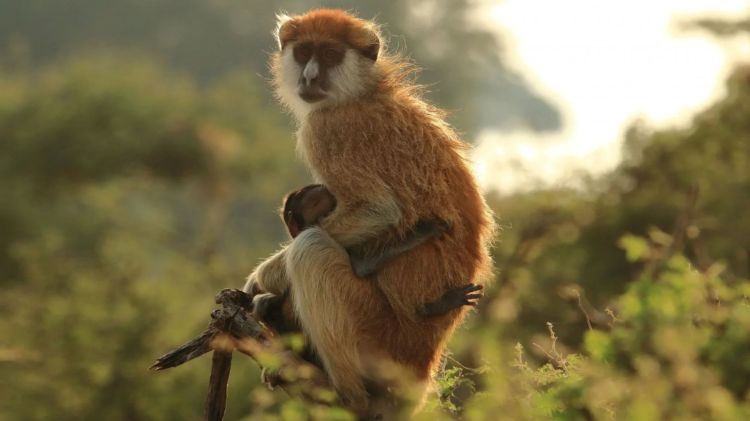
Historically, the Southern Patas Monkey ranged across open grasslands and acacia woodlands in northern Tanzania and Kenya. However, their range has been dramatically reduced, and today they are believed to exist only within the western Serengeti ecosystem, primarily in protected areas such as Serengeti National Park, Maswa Game Reserve, and Grumeti Game Reserve.
Their habitat consists of dry savannahs, acacia woodlands, and open grasslands, where they forage for gum, fruits, seeds, and insects. Unlike their close relatives, they rely less on trees and more on speed to evade predators (de Jong & Butynski, 2021).
Conservation Efforts
• Legal Protection: The species is protected under Tanzanian law, but enforcement is weak, and poaching remains a major threat.
• Habitat Conservation: Conservation efforts focus on protected areas like Serengeti National Park and Grumeti Game Reserve, where the last populations persist.
• Community Awareness: Conservation programs are working to engage local communities in protecting these monkeys by promoting alternative livelihoods and discouraging hunting (Mongabay, 2024).
Take Action!
This is the most critically endangered primate in East Africa, and without urgent intervention, they could be extinct within a decade. Use your voice and your choices to fight for them! Resist and fight for their survival each time you shop! #BoycottPalmOil #Boycott4Wildlife
• Support conservation organisations that protect habitats in Tanzania.
• Boycott deforestation-linked products like palm oil, tobacco and meat which contributes to habitat loss.
• Spread awareness—share this information and encourage sustainable travel in East Africa.
• Advocate for stronger legal protection against bushmeat hunting.
You can support this beautiful animal
There are no known conservation activities for this animal. Share out this post to social media and join the #BoycottPalmOil #Boycott4Wildlife on social media to raise awareness
Further Information
de Jong, Y.A. & Butynski, T.M. 2020. Erythrocebus baumstarki. The IUCN Red List of Threatened Species 2020: e.T92252436A92252442. https://dx.doi.org/10.2305/IUCN.UK.2020-2.RLTS.T92252436A92252442.en. Downloaded on 12 March 2021.
de Jong, Y. A., & Butynski, T. M. (2021). Is the Southern Patas Monkey Africa’s Next Primate Extinction? Reassessing taxonomy, distribution, abundance, and conservation. American Journal of Primatology, 83(8), 1-15. https://doi.org/10.1002/ajp.23316
de Jong, Y. A., Butynski, T. M., Isbell, L. A., & Lewis, C. (2009). Decline in the geographical range of the southern patas monkey Erythrocebus patas baumstarki in Tanzania. Oryx, 43(2), 267–274.
Truscott, R. (2024, December 9). Gum-eating Tanzanian monkey is AWOL, fueling extinction fears. Mongabay. Retrieved from https://news.mongabay.com/2024/12/gum-eating-tanzanian-monkey-is-awol-fueling-extinction-fears/

How can I help the #Boycott4Wildlife?
Take Action in Five Ways
1. Join the #Boycott4Wildlife on social media and subscribe to stay in the loop: Share posts from this website to your own network on Twitter, Mastadon, Instagram, Facebook and Youtube using the hashtags #Boycottpalmoil #Boycott4Wildlife.
2. Contribute stories: Academics, conservationists, scientists, indigenous rights advocates and animal rights advocates working to expose the corruption of the palm oil industry or to save animals can contribute stories to the website.





3. Supermarket sleuthing: Next time you’re in the supermarket, take photos of products containing palm oil. Share these to social media along with the hashtags to call out the greenwashing and ecocide of the brands who use palm oil. You can also take photos of palm oil free products and congratulate brands when they go palm oil free.
4. Take to the streets: Get in touch with Palm Oil Detectives to find out more.
5. Donate: Make a one-off or monthly donation to Palm Oil Detectives as a way of saying thank you and to help pay for ongoing running costs of the website and social media campaigns. Donate here
Discover more from Palm Oil Detectives
Subscribe to get the latest posts sent to your email.
 Palm Oil Detectives