
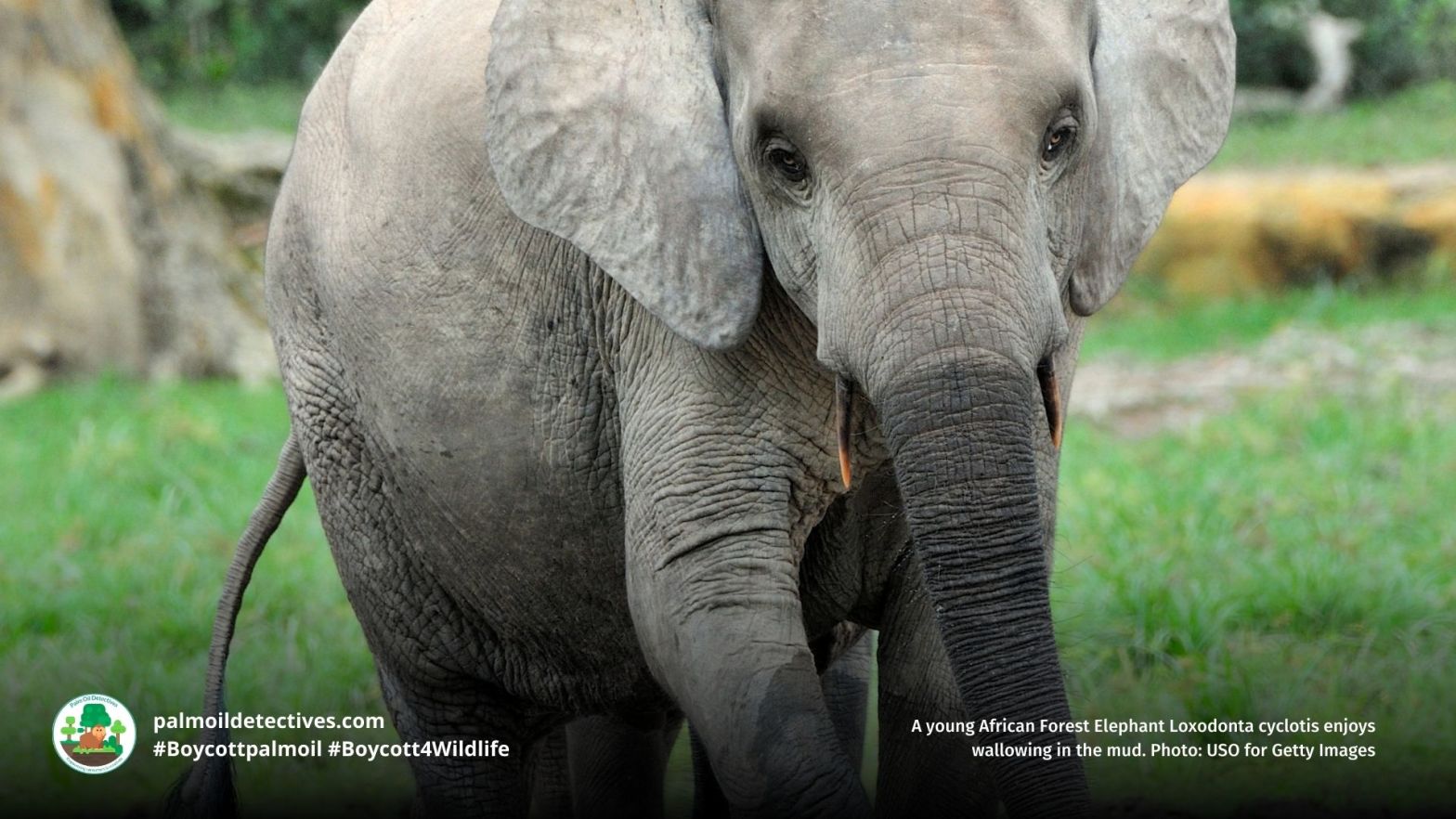
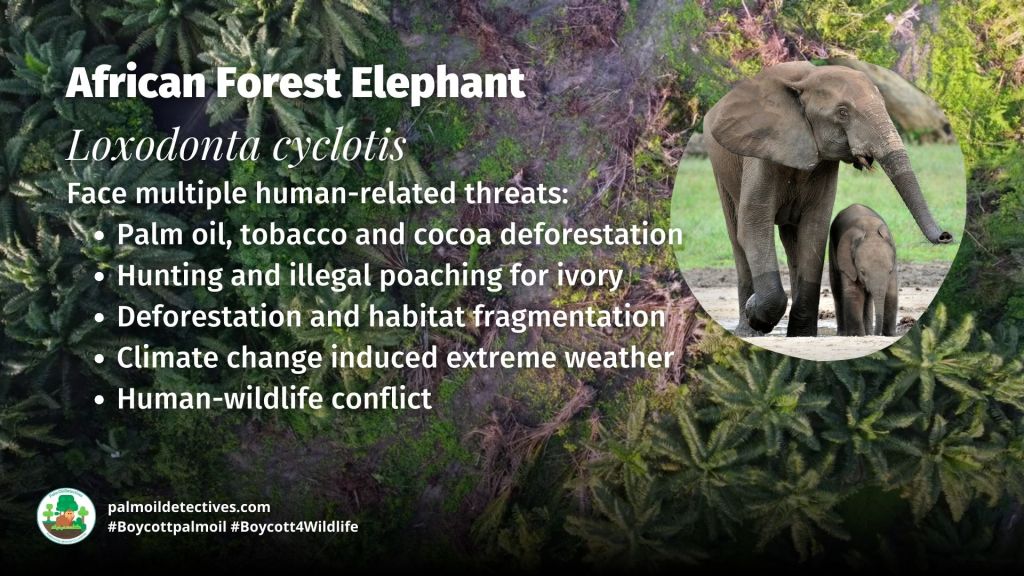
African Forest Elephant Loxodonta cyclotis
Location: Central and West Africa – Guineo-Congolian tropical forests, including Cameroon, Gabon, Republic of Congo, Democratic Republic of Congo, and surrounding regions.
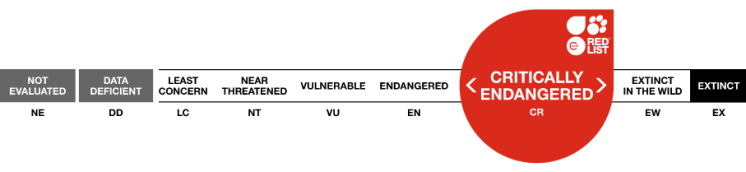
IUCN Status: Critically Endangered
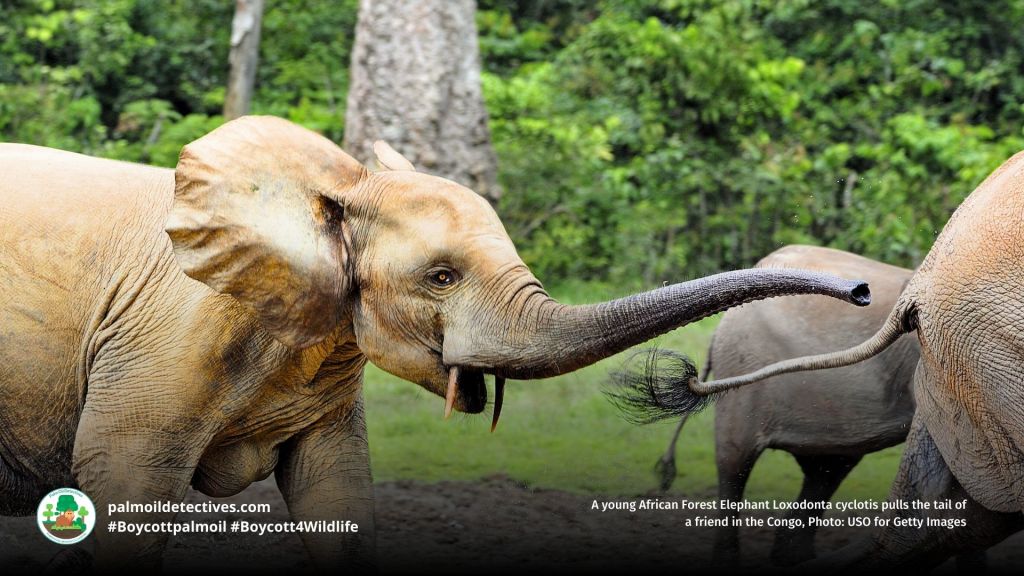
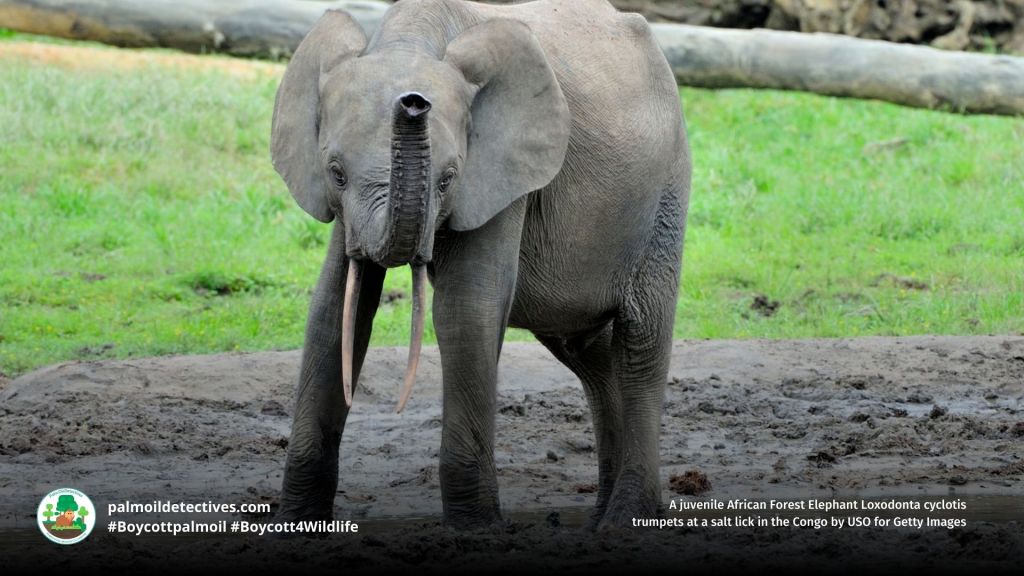
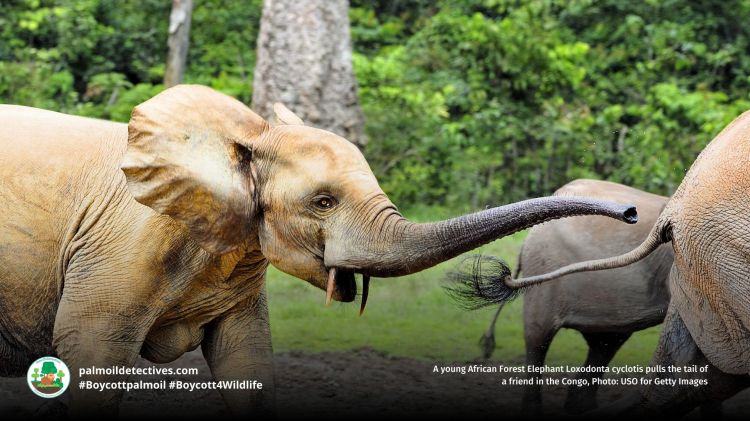
The African Forest #Elephant is a Critically Endangered species found in the dense #rainforests of Central and #WestAfrica. They are smaller than their savanna relatives, with straighter tusks and rounder ears, uniquely adapted to their forested habitat. As ecosystem engineers, these elephants play a crucial role in maintaining Afrotropical forests by dispersing seeds and mitigating against climate change by shaping forest composition. However, relentless #poaching for ivory, habitat destruction due to #palmoil, #cocoa and #tobacco agriculture, and human-elephant conflict have decimated their population. Recent studies have shown that African Forest Elephants’ movement patterns vary significantly between individuals, with some elephants exploring vast distances while others remain in small home ranges. This variation poses unique challenges for conservation efforts. Resist and fight for their survival each time you shop, be #vegan and #BoycottPalmOil #Boycott4Wildlife.
African Forest #Elephants are ecosystem engineers fighting #ClimateChange in #WestAfrica. Yet #poaching and #palmoil #deforestation have rendered them critically endangered 😿🐘 Help them and be #vegan #BoycottPalmOil 🌴⛔️ #Boycott4Wildlife @palmoildetect https://palmoildetectives.com/2021/09/11/african-forest-elephant-loxodonta-cyclotis/
Supremely intelligent and sensitive African Forest #Elephants 🐘🩶 face several grave threats, incl. #PalmOil #Deforestation and #poaching in #Gabon 🇬🇦 #Congo 🇨🇩 #WestAfrica. Fight for them when you #BoycottPalmOil 🌴🔥🧐⛔️ #Boycott4Wildlife @palmoildetect https://palmoildetectives.com/2021/09/11/african-forest-elephant-loxodonta-cyclotis/
Rapid land use change, including palm oil plantations across their range is driving the direct loss and fragmentation of habitat, is an increasing threat to African elephants across their range.
IUCN red list







Appearance and Behaviour
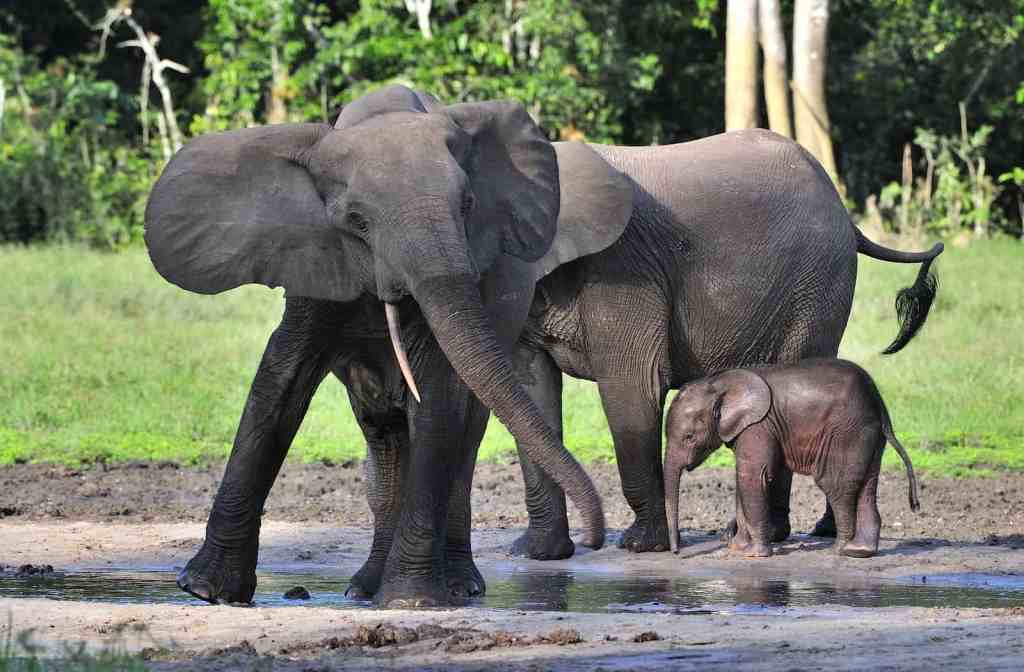
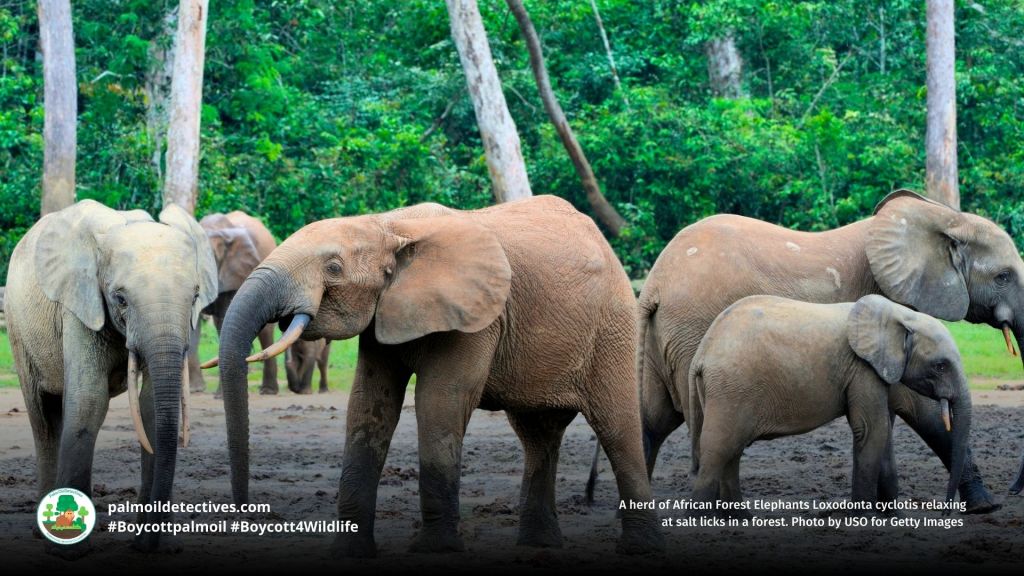
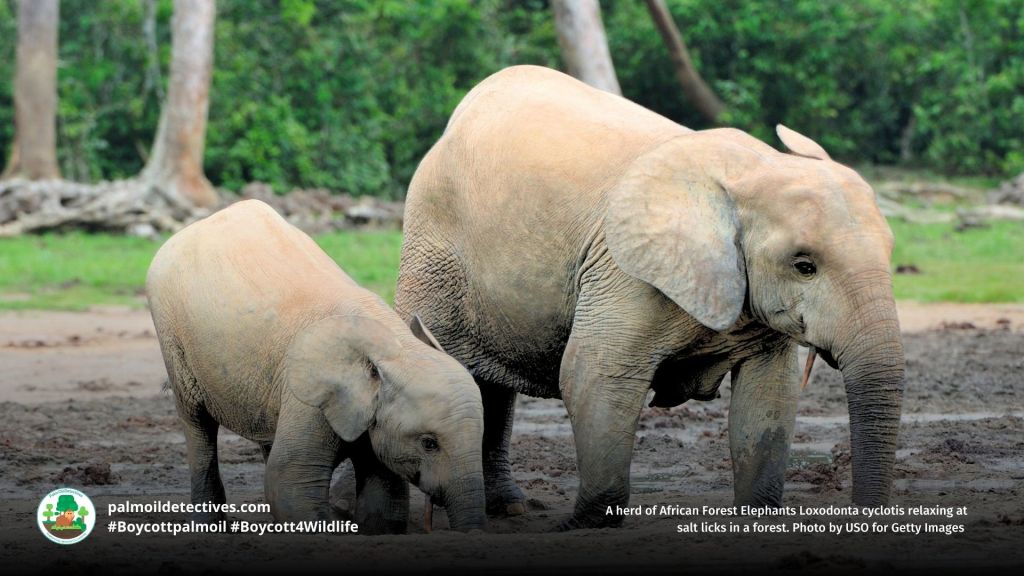
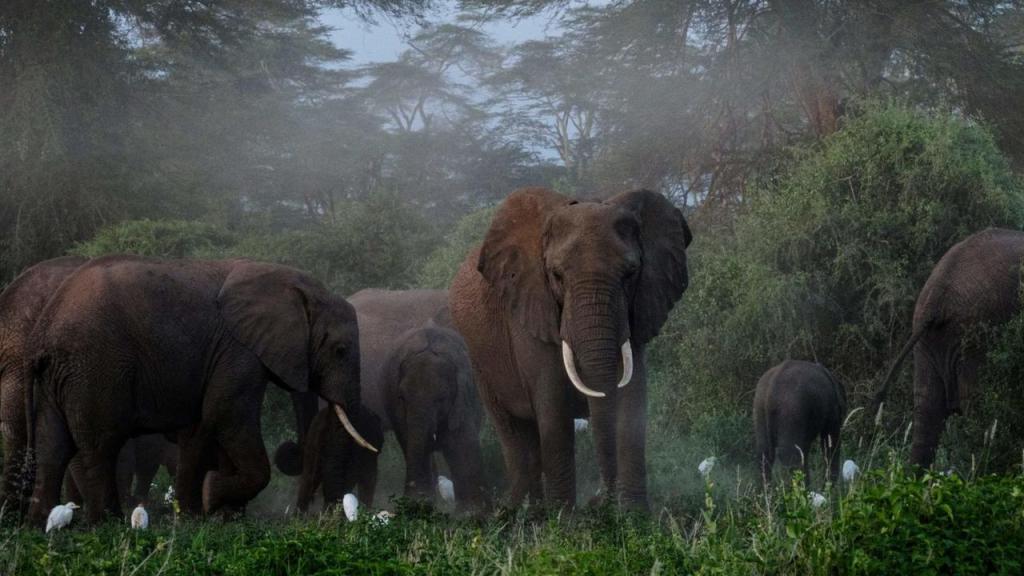
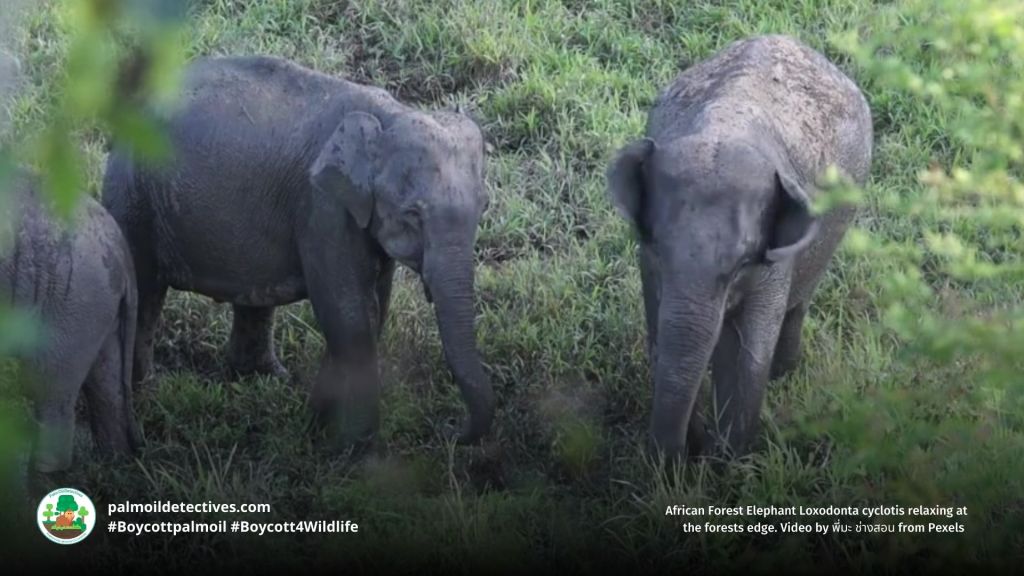
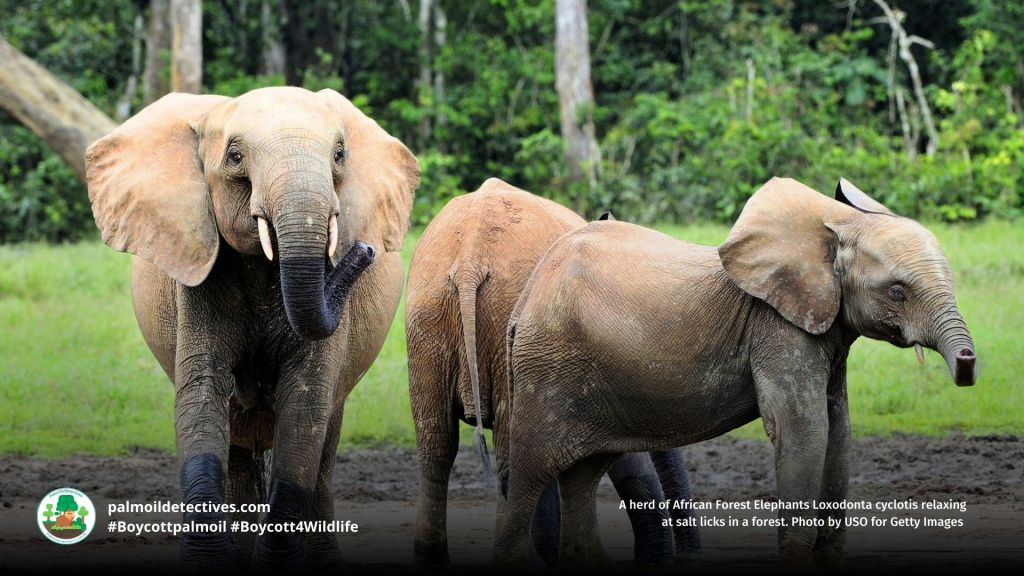
African Forest Elephants are smaller than their savanna counterparts, with a shoulder height of 2 to 3 metres. They have a more compact build, rounded ears, and long, narrow tusks that point downward, (Gobush et al., 2021). Their grey skin is often darker due to the humid rainforest environment. They live in small, matriarchal family groups and display remarkable individual variation in movement behaviours. Some elephants, known as “explorers,” travel vast distances, while others, the “idlers,” remain within confined home ranges. These behavioural differences complicate conservation efforts, as strategies must account for their diverse space-use needs.
These elephants are highly intelligent and social, living in small, matriarchal family groups that navigate the rainforest together. Their deep infrasonic rumbles travel through the ground, allowing communication over vast distances, even in the thickest jungle. Recent research has revealed that their vocalisations have a structure akin to human syntax—complex combinations of calls used to convey intricate meanings (Hedwig & Kohlberg, 2024).
Other research has found that the foraging, seed dispersal and exploration of African Forest Elephants helps to mitigate African forests against climate change. A 2019 study from the Ndoki Forest in the Republic of Congo (ROC) and LuiKotale in the Democratic Republic of Congo (DRC) estimated that if elephants were removed from these sites, the loss of their forest-shaping food preferences would reduce the forest’s carbon capture by 7%.
Diet
Forest Elephants are frugivorous and play an irreplaceable role as seed dispersers, particularly for large fruiting trees. They are responsible for spreading the seeds of over 41 timber species, including Bobgunnia fistuloides (pao rosa), a tree prized for its high-value wood (Blake et al., 2009; Campos-Arceiz & Blake, 2011). Without these elephants, the rainforest’s ability to regenerate and store carbon would be drastically diminished.
Reproduction and Mating
With a gestation period of 22 months—the longest of any land mammal—female African Forest elephants give birth only once every four to six years (Gobush et al., 2021). Due to their slow reproductive rate, population recovery is incredibly difficult, making conservation efforts even more urgent. Calves remain under their mother’s care for over a decade, learning crucial survival skills in the rainforest.
Geographic Range
African Forest Elephants roam vast home ranges, some spanning over 2,000 km² (Beirne et al., 2021). Their movements are largely dictated by fruiting cycles, water availability, and human encroachment. A recent study found that they exhibit remarkable individual variation in movement patterns—some acting as ‘explorers,’ roaming far and wide, while others remain within familiar territories (Beirne et al., 2021). Roads and logging concessions disrupt these traditional routes, forcing elephants into human settlements and escalating conflict.
Threats
- Illegal Wildlife Trade and Poaching: The illegal and criminal trade in elephant ivory continues to drive rampant poaching. Despite international bans, demand remains high in black markets (Wittemyer et al., 2014; Maisels et al., 2013).
- Palm Oil Agriculture Expansion: Forests are being obliterated for palm oil, cocoa, tobacco and rubber plantations, erasing habitat at an alarming rate (Scalbert et al., 2022).
- Logging, Mining, and Infrastructure Expansion: The development of roads and infrastructure for timber and mining grants poachers greater access to once-inaccessible forest areas (Beirne et al., 2021).
- Human-Elephant Conflict: Shrinking forests push elephants into farmland, leading to fatal clashes with farmers trying to protect their crops (Ngama et al., 2016).
- Climate Change: Disruptions in rainfall patterns and fruiting cycles impact the food supply of African Forest Elephants, forcing them into riskier migration routes where they can come into contact with poachers or conflict with farmers.
- Slow Reproduction Rate: African Forest Elephants have a long gestation periods and high calf mortality, their populations cannot recover quickly from losses.
Elephants and Language: Call Combinations and Syntax
Groundbreaking research has revealed that African Forest Elephants use complex call combinations, akin to human syntax, to communicate in high-stakes situations (Hedwig & Kohlberg, 2024). Their vocal repertoire includes:
- Low-frequency rumbles: Used to coordinate movements and social interactions. These deep sounds can travel several kilometres through dense rainforest.
- Broadband roars: Express distress, urgency, or aggression, particularly in response to predators or conflict.
- Combined calls: When rumbles and roars are merged, they create new meanings. These combinations are more frequently used in competitive situations, suggesting that elephants alter their vocal signals to convey specific messages in dangerous or high-emotion contexts.
The ability to combine calls strategically may help elephants navigate social disputes, secure access to resources, or reunite with separated family members. This discovery sheds light on the cognitive abilities of these animals and their sophisticated social lives.
Large herbivores such as elephants contribute to tree diversity
A recent study using satellite data has highlighted the critical role that large herbivores play in promoting tree diversity in forest ecosystems. The…
Keep reading
Echoes of the Ancients: The Wisdom and Power of Elephants
World Elephant Day, celebrated on August 12th, honours the gentle and nurturing giants of Asia and Africa, who are revered for their deep…
Keep reading
African Forest Elephants Help Fight Climate Change
Discover the awe-inspiring role of African forest elephants in the Congo Basin—nature’s master gardeners who literally shape the world around them! These gentle…
Keep readingAfrican Forest Elephants and Timber Concessions
Timber and palm oil concessions now cover vast portions of forest elephant habitat, with little understanding of how these logging operations impact elephant populations (Scalbert et al., 2022). While elephants can persist in selectively logged forests, they require large, undisturbed areas to sustain viable populations. Key findings include:
- African Forest Elephants regenerate forests: By dispersing seeds of high-carbon tree species, they facilitate the regrowth of timber species, making their role essential for maintaining the economic value of these forests.
- Logging alters movement patterns: While some elephants adapt to fragmented landscapes, others are displaced, forced into human-dominated areas where they are at greater risk of poaching and conflict.
- Forest loss drives ecological collapse: Without elephants maintaining seed dispersal, many commercially valuable trees may struggle to regenerate, ultimately degrading the timber industry’s long-term viability.
You can support this beautiful animal
Africa Conservation Foundation
Further Information
Beirne, C., Houslay, T. M., Morkel, P., Clark, C. J., Fay, M., Okouyi, J., White, L. J. T., & Poulsen, J. R. (2021). African forest elephant movements depend on time scale and individual behavior. Scientific Reports, 11, 12634. https://www.nature.com/articles/s41598-021-91627-z
Gobush, K.S., Edwards, C.T.T, Maisels, F., Wittemyer, G., Balfour, D. & Taylor, R.D. 2021. Loxodonta cyclotis. The IUCN Red List of Threatened Species 2021: e.T181007989A181019888. https://dx.doi.org/10.2305/IUCN.UK.2021-1.RLTS.T181007989A181019888.en. Downloaded on 08 June 2021.
Hedwig, D., & Kohlberg, A. (2024). Call combination in African forest elephants Loxodonta cyclotis. PLOS ONE. https://doi.org/10.1371/journal.pone.0299656
Scalbert, M., Vermeulen, C., Breuer, T., & Doucet, J. L. (2022). The challenging coexistence of forest elephants Loxodonta cyclotis and timber concessions in central Africa. Mammal Review, 52(3), 501–518. https://doi.org/10.1111/mam.12305

How can I help the #Boycott4Wildlife?
Take Action in Five Ways
1. Join the #Boycott4Wildlife on social media and subscribe to stay in the loop: Share posts from this website to your own network on Twitter, Mastadon, Instagram, Facebook and Youtube using the hashtags #Boycottpalmoil #Boycott4Wildlife.
2. Contribute stories: Academics, conservationists, scientists, indigenous rights advocates and animal rights advocates working to expose the corruption of the palm oil industry or to save animals can contribute stories to the website.





3. Supermarket sleuthing: Next time you’re in the supermarket, take photos of products containing palm oil. Share these to social media along with the hashtags to call out the greenwashing and ecocide of the brands who use palm oil. You can also take photos of palm oil free products and congratulate brands when they go palm oil free.
4. Take to the streets: Get in touch with Palm Oil Detectives to find out more.
5. Donate: Make a one-off or monthly donation to Palm Oil Detectives as a way of saying thank you and to help pay for ongoing running costs of the website and social media campaigns. Donate here
Discover more from Palm Oil Detectives
Subscribe to get the latest posts sent to your email.
 Palm Oil Detectives
One thought on “African Forest Elephant Loxodonta cyclotis”