
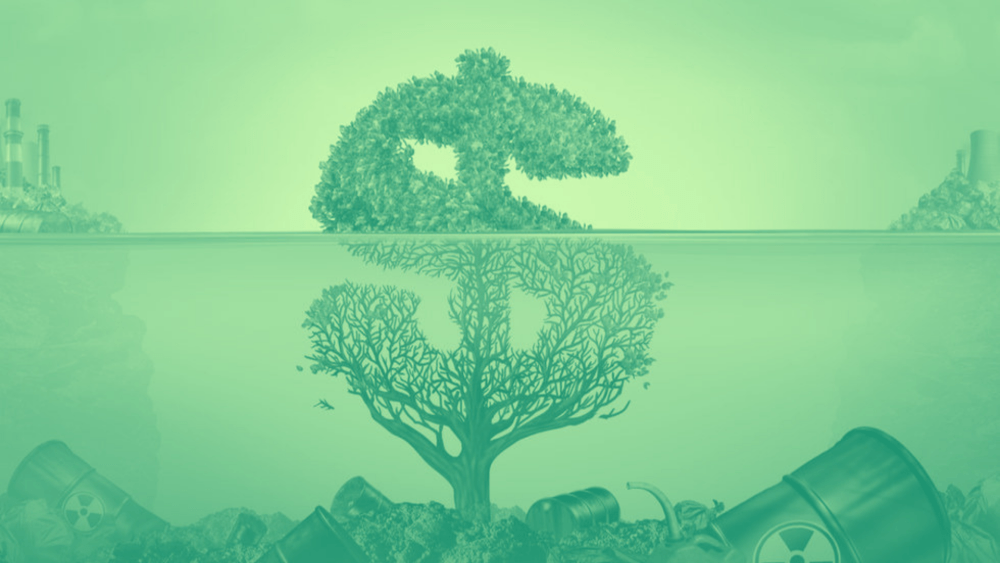
What is greenwashing?
At the end of the 20th century, environmental problems began to arise from unchecked capitalist growth. Out of-control global corporates needed strong storytelling and PR to support their continued exponential growth.
The marketing and PR tactics employed to justify the continued growth of these brands and products despite their destruction, is known as:
Greenwashing
There has never been a more urgent time for consumers to wake up to the devastation wrought by global supermarket brands for palm oil
Here’s 10 different ways #consumers are deceived by so-called ‘sustainable’ #palmoil which is a multi-billion $ lie. #Fightgreenwashing with your wallet! #deforestation #extinction #Boycottpalmoil
Tweet
Here is a ten-part series abt #greenwashing by ‘sustainable’ #palmoil lobbyists, certified #palmoil is a greenwashing lie according to @greenpeaceUK @EIA_News @foeint @sumofus @mightyearth @NZZ @AP #Boycottpalmoil
Tweet

Jump to section
1. Greenwashing with Hidden Trade-Off
2. Greenwashing with No Proof
3. Greenwashing with Vagueness
4. Greenwashing with Fake Labels
5. Greenwashing with Irrelevance & Deflection
6. Greenwashing by Lesser of Two Evils
7. Greenwashing by Lying
8. Greenwashing with Design & Words
9. Greenwashing with Partnerships, Sponsorships & Research Funding
10. Greenwashing by Gaslighting, Stalking, Harassment & Attempting to Discredit Critics
Explore the Series
Further Reading on Palm oil Greenwashing and Deceptive Marketing
Send in examples to me
Say thanks for this guide by donating to my Ko-Fi
1. Greenwashing with a Hidden Trade Off
Claiming a brand or commodity is ‘green’ using a narrow definition or series of characteristics
For example, when a brand talks about satellite monitoring to stop palm oil deforestation, however deforestation continues to take place or perhaps even accelerate in spite of this, that’s ‘Hidden Trade-Off’
Share this insight on Twitter…
Greenwashing Tactic #1: Hidden Trade Off: Claiming a brand or commodity is ‘green’ using a narrow definition or set of characteristics. #Boycott4Wildlife #Boycottpalmoil #FightGreenwashing
Tweet
2. Greenwashing with No Proof
Claiming a brand or commodity is ‘green’ without any supporting evidence
Making baseless claims is one of the easiest greenwashing tactics. For example when an advertisement claims that a product has several environmental benefits, but the company can’t back up these claims with any scientific data or evidence.
Share this insight on Twitter…
Greenwashing Tactic #2: No Proof: Claiming a #brand or #commodity is sustainable without any evidence. We’ve had enough of #greenwashing lies to sell so-called ‘sustainable’ #palmoil #Boycottpalmoil #FightGreenwashing #Boycott4Wildlife
Tweet
3. Greenwashing with Vagueness
Claiming a brand or commodity is ‘green’ or ‘sustainable’ based on broad generalisations, unclear language or vague statements
For example having vague requirements for certification schemes like the RSPO that are easily manipulated or where loopholes or vagueness in certification standards can be exploited by RSPO members.
Share this insight on Twitter…
Greenwashing Tactic #3: Vagueness: Claiming a brand or commodity is green by using vague generalisations or by having vague guiding principles which are subject to #corruption. We #Boycott4Wildlife #Boycottpalmoil #FightGreenwashing
Tweet
4. Greenwashing with Fake Labels
Claiming a brand or commodity is green based on unreliable, ineffective endorsements or eco-labels such as the RSPO, Forest Stewardship Council (FSC) or FairTrade coffee and cocoa.
Most certifications and eco-labels add a ‘green sheen’ to brands. Yet according to Greenpeace – even the most respected certifications in the world rarely have a positive environmental and social impact.
Share this insight on Twitter…
Greenwashing Tactic #4: Fake Labels: Claiming a brand or commodity is green by using fake certifications such as @RSPOtweets that do not stop #deforestation #landgrabbing. We #Boycottpalmoil #Boycott4Wildlife #FightGreenwashing
Tweet
5. Greenwashing with Irrelevance & Deflection
Claiming a brand, commodity or industry is green based on irrelevant information
A common greenwashing tactic is to shift the conversation towards a an irrelevant issue that deflects from the environmental issue at hand.
For example, palm oil lobbyists steer online conversations away from criticising ‘sustainable’ palm oil or calling for a boycott of palm oil, towards other topics that are irrelevant.

Share this insight on Twitter…
#Greenwashing Tactic #5: Irrelevance and Deflection: A common greenwashing tactic is to shift the conversation away from criticising sustainable #palmoil towards an irrelevant topic. #FightGreenwashing #Boycott4Wildlife #Boycottpalmoil
Tweet
6. Greenwashing by Lesser of Two Evils
Claiming that brand, commodity or industry is greener than others in the same category in order to excuse ecocide, deforestation, human rights and animal rights abuses
For example, the main justification for using palm oil over other oil crops by palm oil lobbyists is: “Palm oil uses less land than other oil crops. Therefore, even though this crop is causing indigenous land-grabbing, ecocide, deforestation, fires, species extinction and causing air and water pollution – it’s still better than other oils”
Share this insight on Twitter…
#Greenwashing Tactic #6: Lesser of Two Evils: Claiming a commodity or industry is #greener than others in the same category, to excuse #ecocide #humanrights #animalrights abuses #Boycott4Wildlife #Boycottpalmoil #FightGreenwashing
Tweet
7. Greenwashing by Lying
Telling outright lies over and over to consumers, or skillfully omitting the truth in statements, until the lies are believed as truth
Brands and food agriculture lobbyists generate blatant lies that appear in advertising or on social media. The lie could be falsifying support from respected authorities or individuals on environmental issues. The lie could also be a turn of phrase which ‘massages the truth’ for consumers.
‘Deforestation by fire is prohibited for RSPO members’
Yet in reality, deforestation is allowed to continue by palm oil traders, manufacturers within that certification scheme.
Share this insight on Twitter…
#Greenwashing Tactic #7 Lying: Telling outright lies over again to #consumers until they are believed as truth. This is commonly done by #palmoil lobbyists and global food companies #Boycott4Wildlife #Boycottpalmoil #FightGreenwashing
Tweet
8. Greenwashing with Design & Words
Using design principles and greenwashing language in order to trigger emotional and unconscious responses in consumers
Some examples of greenwashing design include:
- Hand-drawn typography and fonts.
- Pastel colours or blue and green hues.
- Hand-drawn or vintage and nostalgic animals and children illustrations in packaging and advertising design that bring to mind children’s books.
- Happy, uplifting and nostalgic music.
- Visual storytelling involving nature.

Share this insight on Twitter…
Greenwashing Tactic #8: #Design and #Words: Using subliminal design principles and #greenwashing #language to convey ‘greenness’ to #consumers. We #Boycott4Wildlife #Boycottpalmoil #FightGreenwashing
Tweet
9. Greenwashing with Partnerships, Sponsorships & Research Funding
Using corporate partnerships, sponsorships and research funding to give a commodity, an industry, certification scheme or supermarket brand a ‘greener’ reputation
Global supermarket brands that are members of the RSPO provide sponsorship money to Zoos, city councils in the UK and small businesses in order to push the lie of sustainable palm oil to school children and unaware consumers.
Corporate partnerships, sponsorships and research funding are easy ways to gain legitimacy and win consumer trust.
Share this insight on Twitter…
#Greenwashing Tactic #9: Using #corporate #partnerships, #sponsorships and #research #funding to give a #commodity, #industry or
Tweet
a #brand a ‘greener’ reputation. #Boycottpalmoil #FightGreenwashing #Boycott4Wildlife
10. Greenwashing by Gaslighting, Harassment, Stalking and Attempting to Discredit Critics
Attempting to humiliate, gaslight, discredit, harass and stalk any vocal critics of a brand, commodity or industry certification in order to scare individuals into silence.
Greenwashing’s most insidious and darkest form is the attempt to discredit, humiliate, harass, abuse and stalk individuals in order to stop them from sharing information with others about corporate corruption.
Targets of this kind of greenwashing could be researchers, conservationists, activists, investigative journalists, whistle-blowers or concerned and aware consumers who delve too deeply into issues, such as corruption in the palm oil industry.
Share this insight on Twitter…
#Greenwashing Tactic #10: #Gaslighting #harassment #stalking attempting to discredit critics of an industry, certification scheme or commodity. We #Boycott4Wildlife #Boycottpalmoil #FightGreenwashing
Tweet

Explore the series
#Fightgreenwashing in the products and brands you buy!
We concerned consumers of the #Boycott4Wildlife movement says NO to the bloated, toxic industrial complex that underlies all of our consumer goods.
Further reading on palm oil ecocide, greenwashing and deceptive marketing
- A Brief History of Consumer Culture, Dr. Kerryn Higgs, The MIT Press Reader. https://thereader.mitpress.mit.edu/a-brief-history-of-consumer-culture/
- A Deluge of Double-Speak (2017), Jason Bagley. Truth in Advertising. https://truthinadvertising.org/blog/a-deluge-of-doublespeak/
- Aggarwal, P. (2011). Greenwashing: The darker side of CSR. Indian Journal of Applied Research, 4(3), 61-66. https://www.worldwidejournals.com/indian-journal-of-applied-research-(IJAR)/article/greenwashing-the-darker-side-of-csr/MzMxMQ==/?is=1
- Anti-Corporate Activism and Collusion: The Contentious Politics of Palm Oil Expansion in Indonesia, (2022). Ward Berenschot, et. al., Geoforum, Volume 131, 2022, https://doi.org/10.1016/j.geoforum.2022.03.002
- Armour, C. (2021). Green Clean. Company Director Magazine. https://www.aicd.com.au/regulatory-compliance/regulations/investigation/green-clean.html
- Balanced Growth (2020), In: Leal Filho W., Azul A.M., Brandli L., özuyar P.G., Wall T. (eds) Responsible Consumption and Production. Encyclopedia of the UN Sustainable Development Goals. Springer, Cham
- Berenschot, W., Hospes, O., & Afrizal, A. (2023). Unequal access to justice: An evaluation of RSPO’s capacity to resolve palm oil conflicts in Indonesia. Agriculture and Human Values, 40, 291-304. https://doi.org/10.1007/s10460-022-10360-z
- Carlson, K. M., Heilmayr, R., Gibbs, H. K., Noojipady, P., et al. (2018). Effect of oil palm sustainability certification on deforestation and fire in Indonesia. PNAS, 115(1), 121-126. https://doi.org/10.1073/pnas.1704728114
- Cazzolla Gatti, R., Liang, J., Velichevskaya, A., & Zhou, M. (2018). Sustainable palm oil may not be so sustainable. Science of The Total Environment, 652, 48-51. https://pubmed.ncbi.nlm.nih.gov/30359800/
- Changing Times Media. (2019). Roundtable on Sustainable Palm Oil is ‘greenwashing’ labelled products, environmental investigation agency says. Changing Times Media. https://changingtimes.media/2019/11/03/roundtable-on-sustainable-palm-oil-is-greenwashing-labelled-products-environmental-protection-agency-says/
- Client Earth: The Greenwashing Files. https://www.clientearth.org/projects/the-greenwashing-files/
- Commodifying sustainability: Development, nature and politics in the palm oil industry (2019). World Development, Volume 121, September 2019, Pages 218-228. https://ideas.repec.org/a/eee/wdevel/v121y2019icp218-228.html
- Contrasting communications of sustainability science in the media coverage of palm oil agriculture on tropical peatlands in Indonesia, Malaysia and Singapore (2020). Liu, F. H. M., Ganesan, V., Smith, T. E. L. Environmental Science & Policy, 114. https://www.researchgate.net/publication/343772443_Contrasting_communications_of_sustainability_science_in_the_media_coverage_of_palm_oil_agriculture_on_tropical_peatlands_in_Indonesia_Malaysia_and_Singapore
- Cosimo, L. H. E., Masiero, M., Mammadova, A., & Pettenella, D. (2024). Voluntary sustainability standards to cope with the new European Union regulation on deforestation-free products: A gap analysis. Forest Policy and Economics, 164, 103235. https://doi.org/10.1016/j.forpol.2024.103235
- Dalton, J. (2018). No such thing as sustainable palm oil – ‘certified’ can destroy even more wildlife, say scientists. The Independent. https://www.independent.co.uk/climate-change/news/palm-oil-sustainable-certified-plantations-orangutans-indonesia-southeast-asia-greenwashing-purdue-a8674681.html
- Davis, S. J., Alexander, K., Moreno-Cruz, J., et al. (2023). Food without agriculture. Nature Sustainability. https://www.nature.com/articles/s41893-023-01241-2
- EIA International. (2022). Will palm oil watchdog rid itself of deforestation or continue to pretend its products are sustainable? EIA International. https://eia-international.org/news/will-palm-oil-watchdog-rid-itself-of-deforestation-or-continue-to-pretend-its-products-are-sustainable/
- Environmental Investigation Agency. (2019). Palm oil watchdog’s sustainability guarantee is still a destructive con. EIA International. https://eia-international.org/news/palm-oil-watchdogs-sustainability-guarantee-is-still-a-destructive-con/
- Federal Trade Commission. (n.d.). Green Guides. https://www.ftc.gov/news-events/topics/truth-advertising/green-guides
- Fifteen environmental NGOs demand that sustainable palm oil watchdog does its job (2019). Rainforest Action Network. https://www.ran.org/press-releases/fifteen-environmental-ngos-demand-that-sustainable-palm-oil-watchdog-does-its-job/
- Friends of the Earth International. (2018). RSPO: 14 years of failure to eliminate violence and destruction from the industrial palm oil sector. Friends of the Earth International. https://www.foei.org/rspo-14-years-of-failure-to-eliminate-violence-and-destruction-from-the-industrial-palm-oil-sector/
- Lang, Chris and REDD Monitor. Sustainable palm oil? RSPO’s greenwashing and fraudulent audits exposed. The Ecologist. https://theecologist.org/2015/nov/19/sustainable-palm-oil-rspos-greenwashing-and-fraudulent-audits-exposed
- Gatti, L., Pizzetti, M., & Seele, P. (2021). Green lies and their effect on intention to invest. Journal of Business Research, 127, 376-387. https://doi.org/10.1016/j.jbusres.2021.01.028
- Global Witness. (2023). Amazon palm: Ecocide and human rights abuses. Global Witness. https://www.globalwitness.org/en/campaigns/environmental-activists/amazon-palm/
- Global Witness. (2021). The True Price of Palm Oil. Global Witness. https://www.globalwitness.org/en/campaigns/forests/true-price-palm-oil/
- Grain. (2021). Ten reasons why certification should not be promoted in the EU anti-deforestation regulation. Grain. https://grain.org/en/article/6856-ten-reasons-why-certification-should-not-be-promoted-in-the-eu-anti-deforestation-regulation
- Green Clean (2021). Armour, C. Company Director Magazine.
- Green marketing and the Australian Consumer Law (2011). Australian Competition and Consumer Commission. https://www.accc.gov.au/system/files/Green%20marketing%20and%20the%20ACL.pdf
- Greenwash and spin: palm oil lobby targets its critics (2011). Helan, A. Ecologist: Informed by Nature. https://theecologist.org/2011/jul/08/greenwash-and-spin-palm-oil-lobby-targets-its-critics
- Greenwashing: definition and examples. Selectra https://climate.selectra.com/en/environment/greenwashing#:~:text=Greenwashing%20is%20the%20practice%20of,its%20activities%20pollute%20the%20environment.
- Greenwashing of the Palm Oil Industry (2007). Mongabay. https://news.mongabay.com/2007/11/greenwashing-the-palm-oil-industry/
- Group Challenges Rainforest Alliance Earth-Friendly Seal of Approval (2015). Truth in Advertising. https://www.truthinadvertising.org/group-challenges-rainforest-alliance-earth-friendly-seal-of-approval
- Helan, A. (2011). Greenwash and spin: palm oil lobby targets its critics. Ecologist: Informed by Nature. https://theecologist.org/2011/feb/15/greenwash-and-spin-palm-oil-lobby-targets-its-critics
- Hewlett Packard. (2021). What is Greenwashing and How to Tell Which Companies are Truly Environmentally Responsible. Hewlett Packard. https://www.hp.com/us-en/shop/tech-takes/what-is-greenwashing-environmentally-responsible-companies
- Holzner, A., Rameli, N. I. A. M., Ruppert, N., & Widdig, A. (2024). Agricultural habitat use affects infant survivorship in an endangered macaque species. Current Biology. https://pubmed.ncbi.nlm.nih.gov/38194972/
- How Cause-washing Deceives Consumers (2021). Truth in Advertising. https://truthinadvertising.org/resource/how-causewashing-deceives-consumers/
- International Labour Organization. (2020). Forced labor in the palm oil industry. ILO. https://www.ilo.org/topics/forced-labour-modern-slavery-and-human-trafficking
- Jauernig, J., Uhl, M., & Valentinov, V. (2021). The ethics of corporate hypocrisy: An experimental approach. Futures, 129, 102757. https://doi.org/10.1016/j.futures.2021.102757
- Kirby, D. (2015). Sustainable Palm Oil? Who Knows, Thanks to Derelict Auditors. Take Part. https://www.yahoo.com/news/sustainable-palm-oil-knows-thanks-derelict-auditors-200643980.html
- Li, T. M., & Semedi, P. (2021). Plantation life: Corporate occupation in Indonesia’s oil palm zone. Duke University Press. https://www.dukeupress.edu/plantation-life
- Liu, F. H. M., Ganesan, V., & Smith, T. E. L. (2020). Contrasting communications of sustainability science in the media coverage of palm oil agriculture on tropical peatlands in Indonesia, Malaysia, and Singapore. Environmental Science & Policy, 114. https://www.researchgate.net/publication/343772443_Contrasting_communications_of_sustainability_science_in_the_media_coverage_of_palm_oil_agriculture_on_tropical_peatlands_in_Indonesia_Malaysia_and_Singapore
- Meemken, E. M., Barrett, C. B., Michelson, H. C., et al. (2021). Sustainability standards in global agrifood supply chains. Nature Food. https://doi.org/10.1038/s43016-021-00299-2
- Miles, T. (2019). Study in WHO journal likens palm oil lobbying to tobacco and alcohol industries. Reuters. https://www.reuters.com/article/idUSKCN1P21ZR/
- Nygaard, A. (2023). Is sustainable certification’s ability to combat greenwashing trustworthy? Frontiers in Sustainability, 4, Article 1188069. https://doi.org/10.3389/frsus.2023.1188069
- Oppong-Tawiah D, Webster J. Corporate Sustainability Communication as ‘Fake News’: Firms’ Greenwashing on Twitter. Sustainability. 2023; 15(8):6683. https://www.mdpi.com/2071-1050/15/8/6683
- Pabon, J. (2024). The great greenwashing: How brands, governments, and influencers are lying to you. Anansi International. https://www.vitalsource.com/products/the-great-greenwashing-john-pabon-v9781487012878
- Podnar, K., & Golob, U. (2024). Brands and activism: Ecosystem and paradoxes. Journal of Brand Management, 31, 95–107. https://link.springer.com/article/10.1057/s41262-024-00355-y
- Rainforest Action Network. (2019). Fifteen environmental NGOs demand that sustainable palm oil watchdog does its job. RAN. https://www.ran.org/press-releases/fifteen-environmental-ngos-demand-that-sustainable-palm-oil-watchdog-does-its-job/
- Renner, A., Zellweger, C., & Skinner, B. (2021). ‘Is there such a thing as sustainable palm oil? Satellite images show protected rainforest on fire’. Neue Zürcher Zeitung. https://www.nzz.ch/english/palm-oil-boom-threatens-protected-rainforest-in-indonesia-ld.1625490
- Saager, E. S., Iwamura, T., Jucker, T., & Murray, K. A. (2023). Deforestation for oil palm increases microclimate suitability for the development of the disease vector Aedes albopictus. Scientific Reports, 13(1), 9514. https://www.nature.com/articles/s41598-023-35452-6
- Southey, F. (2021). What do Millennials think of palm oil? Nestlé investigates. Food Navigator. https://www.foodnavigator.com/Article/2021/08/12/What-do-Millennials-think-of-palm-oil-Nestle-investigates
- Transparency International. (2023). Transparency international report: Corruption and corporate capture in Indonesia’s top 50 palm oil companies. Transparency International. https://palmoildetectives.com/2023/05/14/transparency-international-report-corruption-and-corporate-capture-in-indonesias-top-50-palm-oil-companies/
- Truth in Advertising. (2022). Companies accused of greenwashing. https://truthinadvertising.org/articles/companies-accused-greenwashing/
- Truth in Advertising. (n.d.). How causewashing deceives consumers. https://truthinadvertising.org/resource/how-causewashing-deceives-consumers/
- Tybout, A. M., & Calkins, T. (Eds.). (2019). Kellogg on Branding in a Hyper-Connected World. Kellogg School of Management, Northwestern University. https://www.wiley.com/en-au/Kellogg+on+Branding+in+a+Hyper-Connected+World-p-9781119533184
- Wicke, J. (2019). Sustainable palm oil or certified dispossession? NGOs within scalar struggles over the RSPO private governance standard. Bioeconomy & Inequalities: Working Paper No. 8. https://www.bioinequalities.uni-jena.de/sozbemedia/WorkingPaper8.pdf
- World Health Organisation. (2019). The palm oil industry and noncommunicable diseases. World Health Organisation Bulletin, 97, 118-128. https://pubmed.ncbi.nlm.nih.gov/30728618/
- World Rainforest Movement. (2021, November 22). Why the RSPO facilitates land grabs for palm oil. https://wrm.org.uy/articles-from-the-wrm-bulletin/section1/why-the-rspo-facilitates-land-grabs-for-palm-oil/
- Zuckerman, J. (2021). The Time Has Come to Rein In the Global Scourge of Palm Oil. Yale Environment 360, Yale School of Environment. https://e360.yale.edu/features/the-time-has-come-to-rein-in-the-global-scourge-of-palm-oil
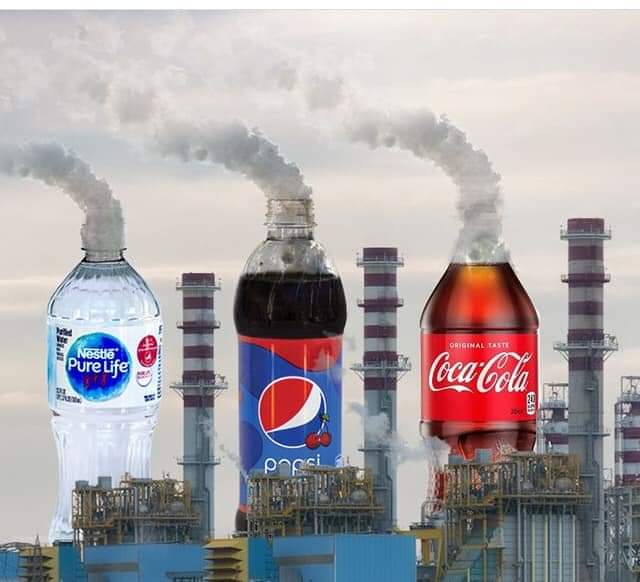
Have you come across greenwashing like this online or in person?
Send me a message below…
Message Sent
Contribute to my Ko-Fi
Did you enjoy visiting this website?

Palm Oil Detectives is 100% self-funded
Palm Oil Detectives is completely self-funded by its creator. All hosting and website fees and investigations into brands are self-funded by the creator of this online movement. If you like what I am doing, you and would like me to help meet costs, please send Palm Oil Detectives a thanks on Ko-Fi.




Discover more from Palm Oil Detectives
Subscribe to get the latest posts sent to your email.
 Palm Oil Detectives
Hi
You are doing a perfect job we are much inspired to your great work.
LikeLiked by 1 person
Thank you so much Clinton and good luck with what you are doing too 🙂
LikeLike