
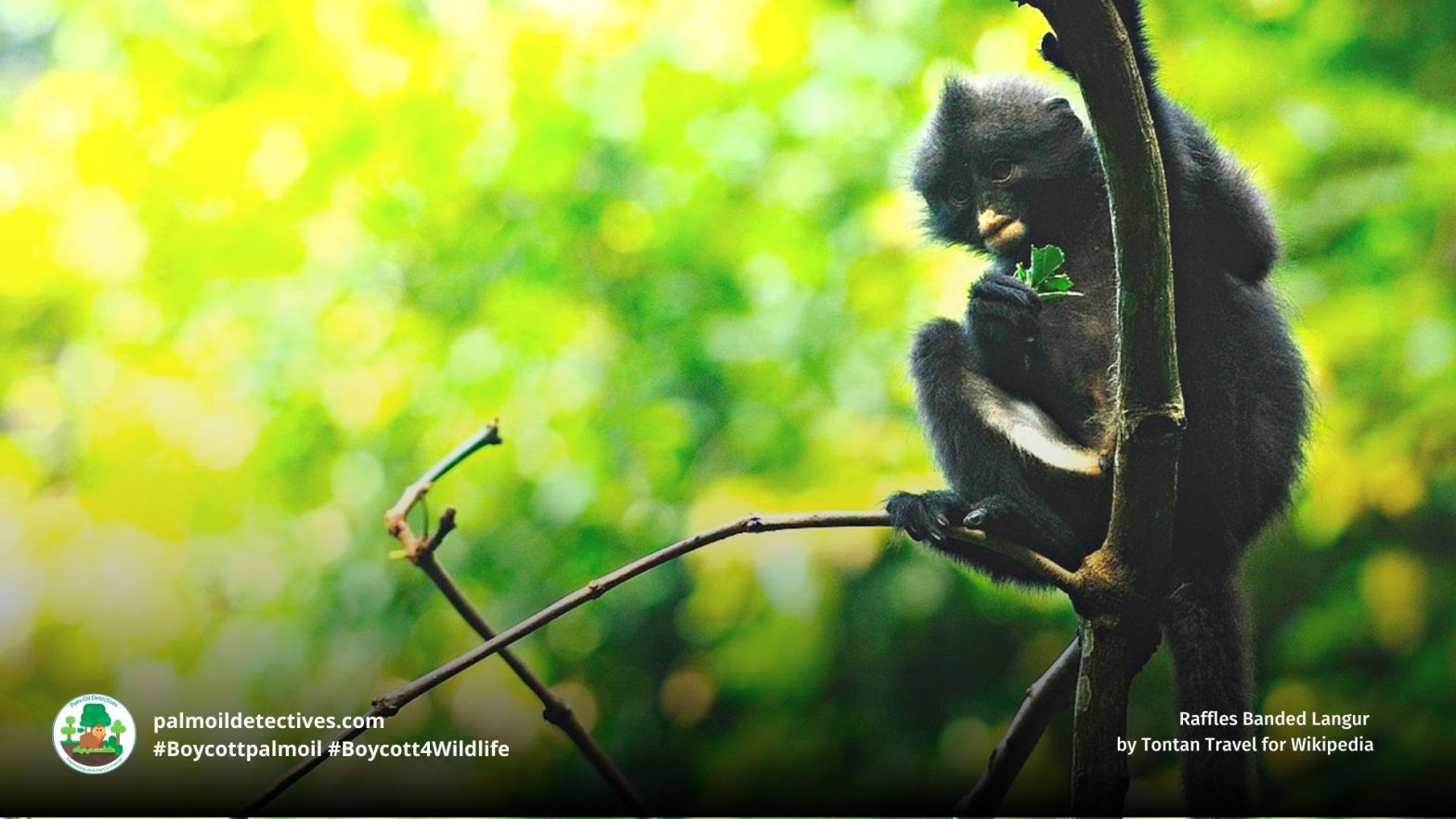
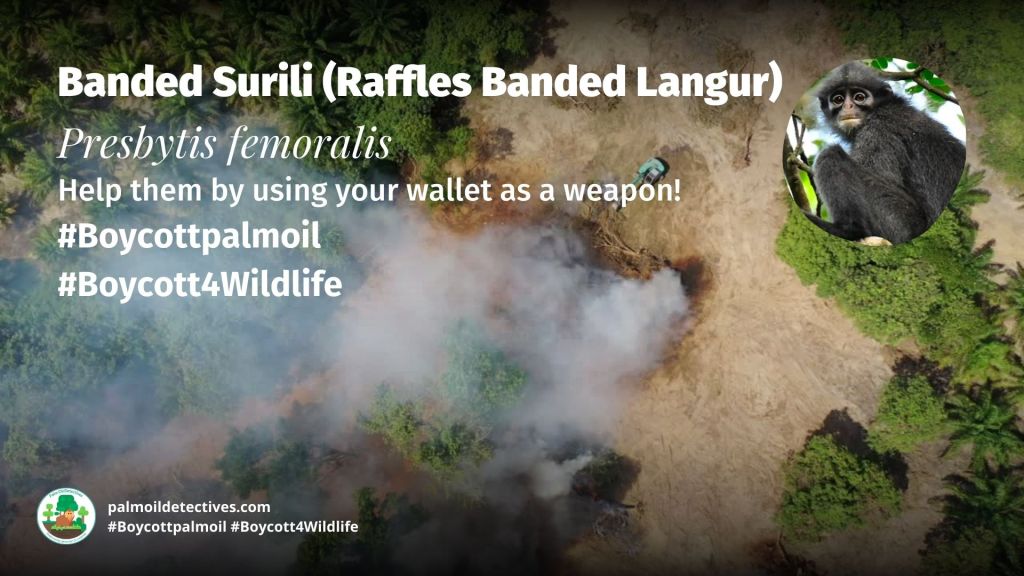
Banded Surili (Raffles Banded Langur) Presbytis femoralis
Red List Status: Critically Endangered
Locations: Indonesia; Malaysia; Myanmar; Singapore; Thailand
A curious and intelligent small monkey species, Raffles’ Banded Langurs are also known by their other common names: Banded Leaf Monkey or Banded Surili. Endemic to the southern Malay Peninsula and Singapore, this critically endangered monkey is now found in only a few fragmented pockets of primary and secondary forest, swamps, mangroves, and rubber plantations. Once widespread across Indonesia, Malaysia, Myanmar, Singapore, and Thailand, the banded surili’s population has plummeted—fewer than 60 individuals survive in Malaysia, with Singapore’s last wild group clinging to existence in the Central Catchment Nature Reserve. Palm oil deforestation and habitat destruction continue to erase their world. Help them survive and #BoycottPalmOil and #Boycott4Wildlife every time you shop.
Only 60 Banded Surilis AKA Raffles Banded #Langurs 🐒🙈 hang on to survival in #Malaysia 🇲🇾 due to rampant #palmoil #deforestation. Help these #monkeys and use your wallet as a weapon! #Boycottpalmoil 🌴🪔🚜🔥💀❌ #Boycott4Wildlife @palmoildetect https://palmoildetectives.com/2023/04/30/banded-surili-raffles-banded-langur-presbytis-femoralis/
Banded Leaf #Monkeys 🐒🙈🐵 AKA Raffles Banded Langurs are #critically endangered from #palmoil #deforestation in #Malaysia 🇲🇾 Fight for their survival each time you shop #Boycottpalmoil 🌴🩸☠️🔥🧐⛔️ #Boycott4Wildlife @palmoildetect https://palmoildetectives.com/2023/04/30/banded-surili-raffles-banded-langur-presbytis-femoralis/
Deforestation and conversion of habitat continue to be the major threats to this species. They particularly affected by oil palm plantations, which are expanding very rapidly within their range.
IUCN RED LIST
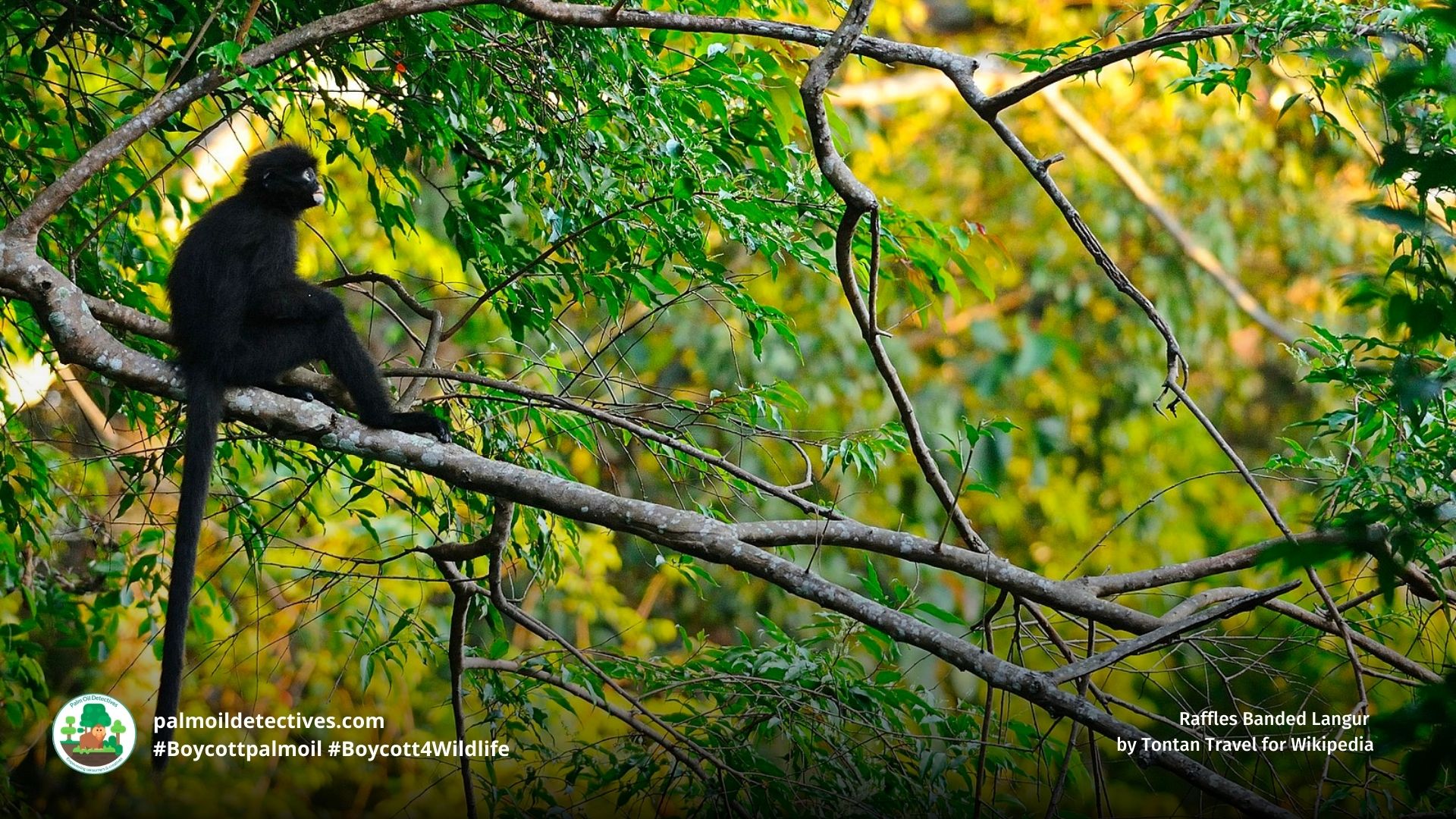
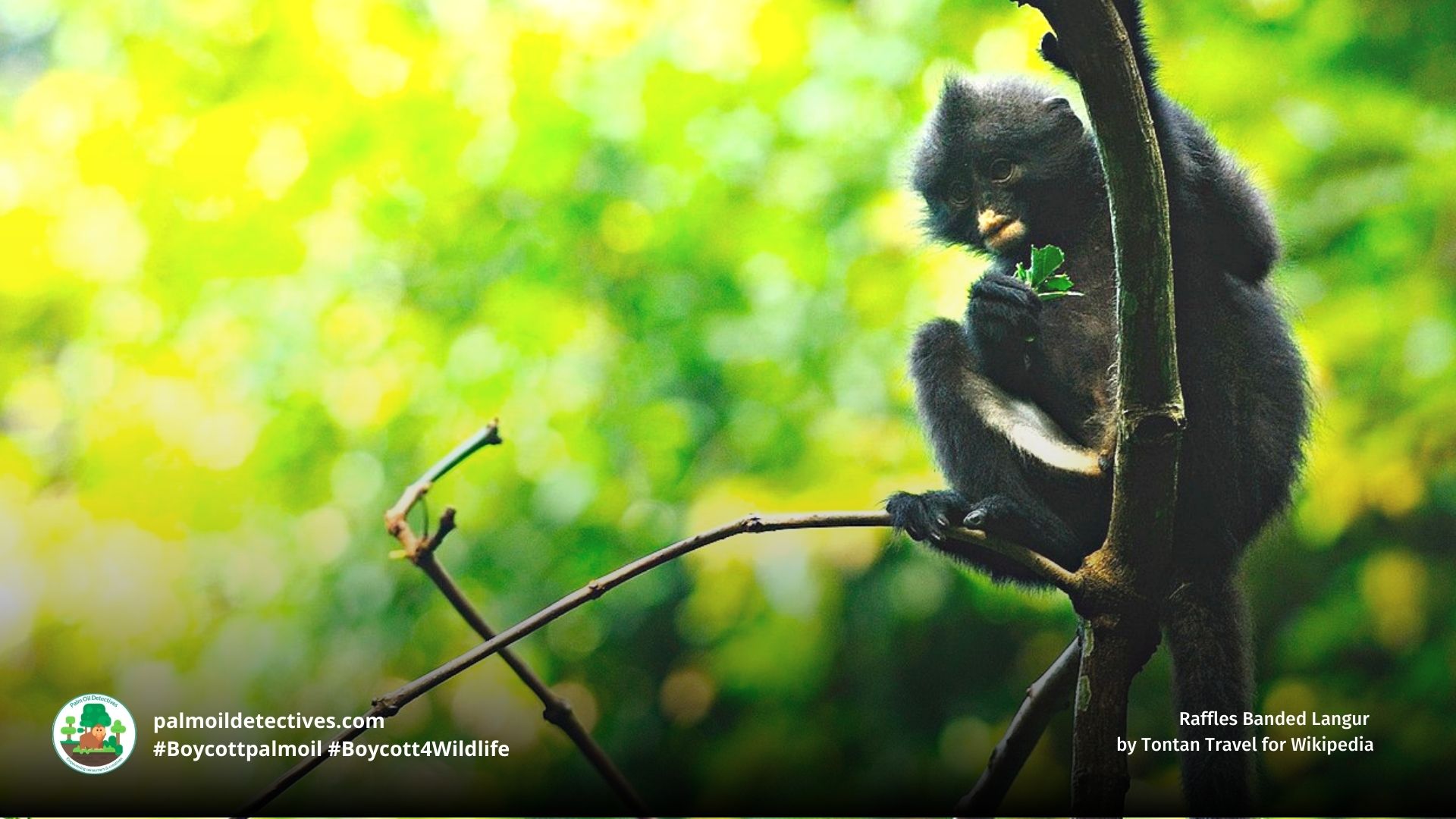
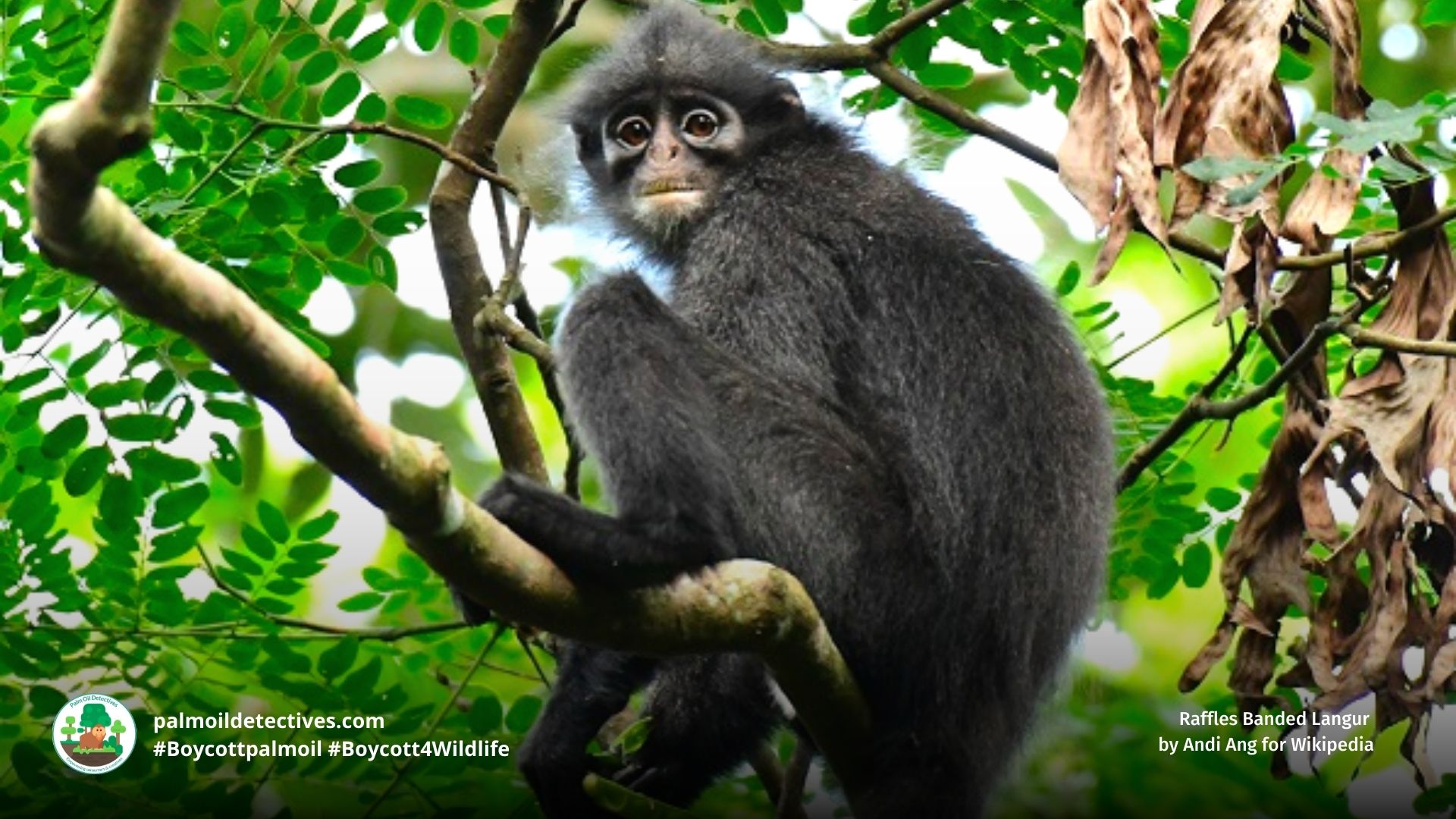
Appearance & Behaviour
Banded Surili’s are around 40-60 cm long and with their tails this can extend to up to 83cm in length. They weigh between 5 – 8 kg and possess dark fur with a a white coloured band across their chest and inner thighs and a shock of white fur on their face giving them a startled and morose appearance. Males have white fur with a black stripe down their back from head to tail. Males will leave their natal group before they reach sexual maturity – at about 4 years old.
Male langurs make a ke-ke-ke alarm call sound which is like a harsh rattle. In the wild, these langurs have been observed being groomed by long tailed macaques.
Threats
Deforestation and conversion of habitat continue to be the major threats to this species. They are particularly affected by oil palm plantations, which are expanding very rapidly within its range.
IUCN RED LIST
The Raffles Banded Langur was once a common sight throughout Singapore however their number has dwindled to only 60 individuals in the wild – they are critically endangered in the Central Catchment Nature Reserve. They have now increased to 70 individuals in 2022 however their ongoing existence is extremely fragile.
They are fussy fruit eaters and will travel great distances to obtain their chosen food sources: an estimated 27 plant species, including Hevea brasiliensis leaves, Adinandra dumosa flowers and Nephelium lappaceum fruits.
The Raffles’ Banded Langur faces numerous anthropogenic threats:
- Palm oil deforestation: Large swathes of their home range have been destroyed for timber and palm oil.
- Infrastructure projects: Roads and rail links cutting through their range further reduces their access to the forest.
- Hunting: Humans have been known to hunt them for food.
- Collection for the illegal pet trade.

Habitat
These langurs are mostly active during the day and spend the majority of their lives in the tree canopy. They prefer rainforest trees of the family Dipterocarpaceae and have historically been found in Indonesia, Malaysia, Myanmar, Singapore and Thailand. Although almost the entirety of their rainforest has been destroyed – mostly for palm oil in Malaysia and Indonesia. They are the most dependent on trees compared to other leaf monkeys. Raffles’ banded langurs can be found in primary and secondary forests, swamps, mangroves and rubber plantations.
Diet
Banded Surilis are mostly herbivorous with a diet mainly consisting of fruits, seeds and leaves. Their stomachs contain specialised bacteria to help break down plant matter.
Mating and breeding
They are highly social and gregarious and typically live in groups of 3 to 6 individuals. There’s normally 4 or more females for every one adult male in a troop. Banded Surilis appear to have two birth seasons: July/July and December/January.
Support Banded Surilis by going vegan and boycotting palm oil in the supermarket, it’s the #Boycott4Wildlife
Support the conservation of this species
This animal has no protections in place. Read about other forgotten species here. Create art to support this forgotten animal or raise awareness about them by sharing this post and using the #Boycottpalmoil #Boycott4Wildlife hashtags on social media. Also you can boycott palm oil in the supermarket.
Further Information
Ang, A., Boonratana, R. & Nijman, V. 2022. Presbytis femoralis. The IUCN Red List of Threatened Species 2022: e.T39801A215090780. https://dx.doi.org/10.2305/IUCN.UK.2022-1.RLTS.T39801A215090780.en. Accessed on 31 October 2022.
Banded Surili (Raffles Banded Langur) Presbytis femoralis on Wikipedia


How can I help the #Boycott4Wildlife?
Take Action in Five Ways
1. Join the #Boycott4Wildlife on social media and subscribe to stay in the loop: Share posts from this website to your own network on Twitter, Mastadon, Instagram, Facebook and Youtube using the hashtags #Boycottpalmoil #Boycott4Wildlife.
2. Contribute stories: Academics, conservationists, scientists, indigenous rights advocates and animal rights advocates working to expose the corruption of the palm oil industry or to save animals can contribute stories to the website.





3. Supermarket sleuthing: Next time you’re in the supermarket, take photos of products containing palm oil. Share these to social media along with the hashtags to call out the greenwashing and ecocide of the brands who use palm oil. You can also take photos of palm oil free products and congratulate brands when they go palm oil free.
4. Take to the streets: Get in touch with Palm Oil Detectives to find out more.
5. Donate: Make a one-off or monthly donation to Palm Oil Detectives as a way of saying thank you and to help pay for ongoing running costs of the website and social media campaigns. Donate here
Discover more from Palm Oil Detectives
Subscribe to get the latest posts sent to your email.
 Palm Oil Detectives