
Assam Rabbit (Hispid Hare) Caprolagus hispidus
Red List Status: Endangered
Locations: Bhutan; India (West Bengal, Uttar Pradesh, Assam); Nepal. Presence Uncertain: Bangladesh; India (Madhya Pradesh, Bihar)
Shy, solitary and wary Hispid hares are most active during dawn and dusk. They often take shelter from predation in tall grasses and the burrows of other animals. They are endangered by multiple human-related threats including palm oil deforestation in the #Assam region of #India and they also hold to survival in #Bhutan and #Nepal. Help them to survive and #BoycottPalmOil #Boycott4Wildlife
#Assam Rabbits 🐰🐇 AKA Hispid Hares are regal and rare, they’re endangered by many threats incl. #palmoil #deforestation in #Assam, #India 🇮🇳🪷 Help them and #Boycottpalmoil 🌴🚜🔥🧐🙊⛔️ #Boycott4Wildlife in the supermarket @palmoildetect https://palmoildetectives.com/2023/05/21/assam-rabbit-hispid-hare-caprolagus-hispidus/
Hispid #Hares 🐇🐰🩶 hang on to survival, facing multiple human-related threats including #palmoil expansion in #Assam #India 🇮🇳 Fight for their survival and #Boycottpalmoil 🌴🪔🤮☠️❌ #Boycott4Wildlife @palmoildetect https://palmoildetectives.com/2023/05/21/assam-rabbit-hispid-hare-caprolagus-hispidus/
Appearance & Behaviour
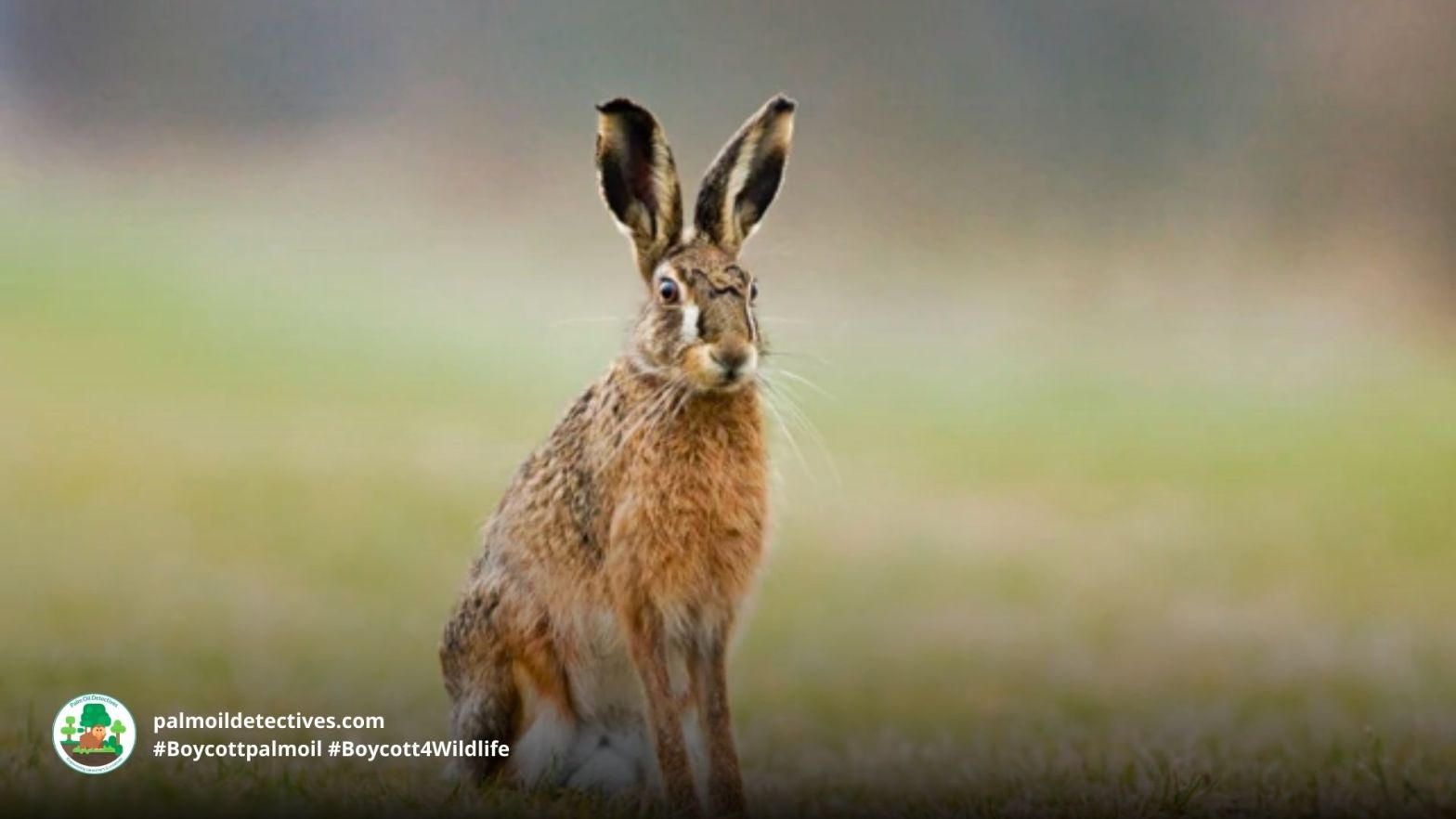
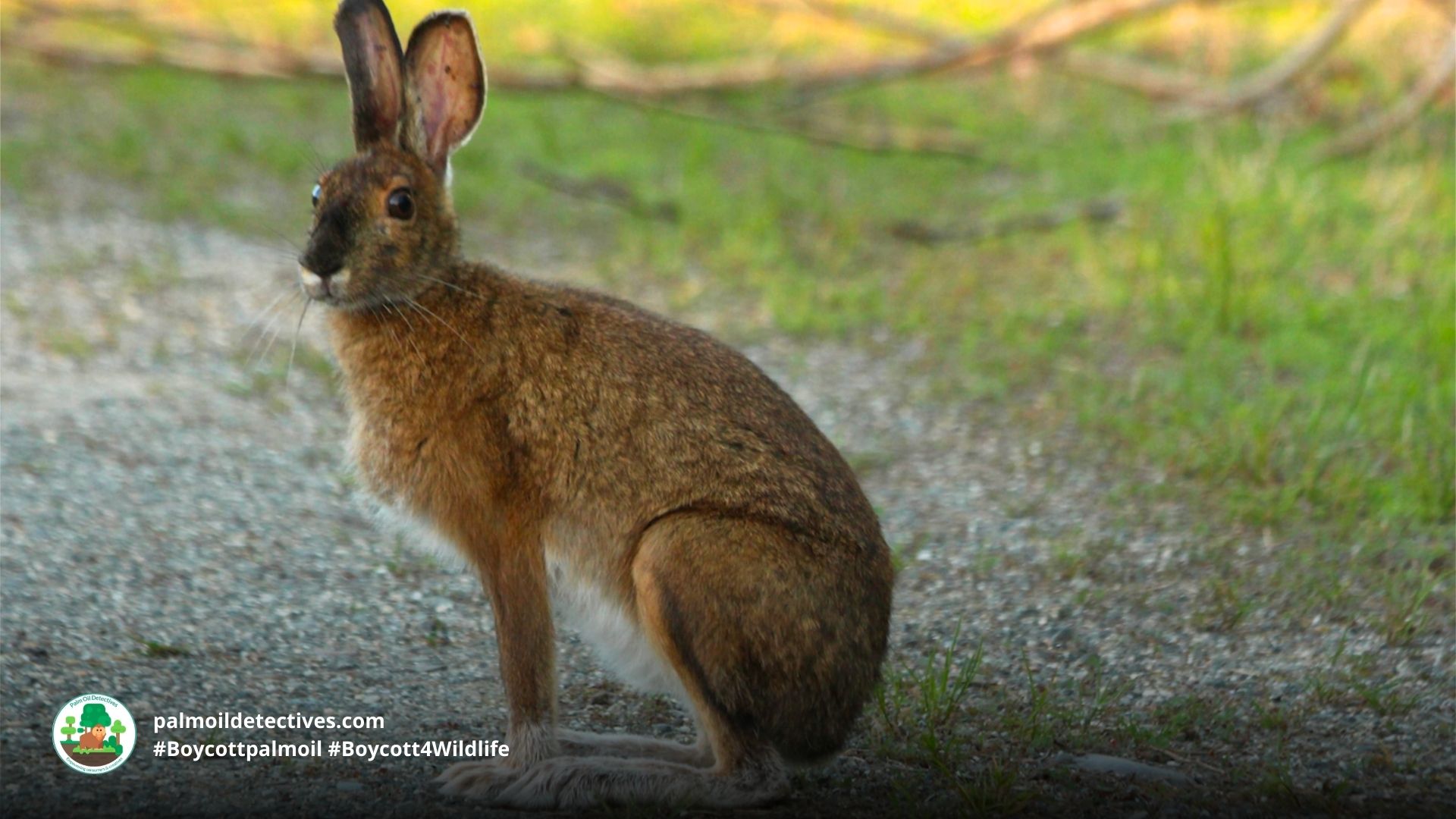
A medium-sized hare, they are typically 47 cm in height, with males being slightly smaller than females. Females weigh an average of 2.5kg, with pregnant females weighing an average of 3.2kg. They possess a bristly haired coat with a dark brown and black back and a creamy white abdomen. This enables them ample camouflage in a grassland environment.

Threats
The primary threat to Hispid Hare populations is habitat loss, caused by encroaching agriculture, logging, summer flooding, and human development (Bell et al. 1990).
IUCN RED LIST
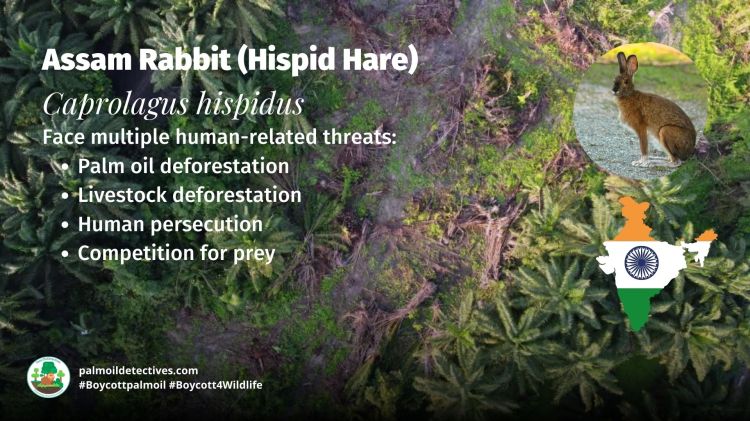
The Indian Hare faces multiple anthropogenic threats including:
- Palm oil expansion: A significant part of their range is earmarked for destruction for palm oil.
- Climate change: extreme weather, fire and flooding as a result of climate change
- Livestock grazing and other agricultural expansion.
- Competition with other animals for food in a shrinking range.
- Human persecution.

Habitat
Hispid hares are found infrequently in Bangladesh, India, Nepal, and possibly Bhutan. They live in tall grasslands and during the dry season. These areas are vulnerable to extreme weather events like fires and floods which are exacerbated by climate change. When these areas are under threat, the Hispid hare retreats to marshes and areas close to riverbanks.
Diet
Hispid hares are herbivores feeding mainly on roots of grasses, shoots, bark, and occasionally crops.
Mating and breeding
More research is needed to understand the mating and reproductive behaviour of these hares. From limited research, it is understood that they have a small litter size and that they are crepuscular, preferring both dawn and twlight for hunting.
Support Assam Rabbit by going vegan and boycotting palm oil in the supermarket, it’s the #Boycott4Wildlife
You can support this beautiful animal
Support the conservation of this species
This animal has no protections in place. Read about other forgotten species here. Create art to support this forgotten animal or raise awareness about them by sharing this post and using the #Boycottpalmoil #Boycott4Wildlife hashtags on social media. Also you can boycott palm oil in the supermarket.
Further Information
Aryal, A. & Yadav, B. 2019. Caprolagus hispidus. The IUCN Red List of Threatened Species 2019: e.T3833A45176688. https://dx.doi.org/10.2305/IUCN.UK.2019-1.RLTS.T3833A45176688.en. Accessed on 11 November 2022.
Hispid Hare or Indian Hare on Animalia.bio
Hispid Hare/ Indian Hare/ Assam Rabbit on Wikipedia
Assam Rabbit (Hindi translation)
संकटग्रस्त
अस्तित्व में (स्थायी निवासी)
भूटान; भारत (पश्चिम बंगाल, उत्तर प्रदेश, असम); नेपाल
उपस्थिति अनिश्चित
बांग्लादेश; भारत (मध्य प्रदेश, बिहार)
दिखावट और व्यवहार
एक मध्यम आकार का खरगोश, जो सामान्यतः 47 सेमी ऊँचा होता है, जिसमें नर मादा से थोड़े छोटे होते हैं। मादाओं का वजन औसतन 2.5 किग्रा होता है, जबकि गर्भवती मादाओं का वजन औसतन 3.2 किग्रा होता है। इनके पास एक कड़े बालों वाला कोट होता है जिसमें पीठ गहरे भूरे और काले रंग की होती है और पेट क्रीमी सफेद रंग का होता है। यह उन्हें घास के मैदान के वातावरण में पर्याप्त छद्मावरण प्रदान करता है।
असम खरगोश (हिस्पिड हेयर) Caprolagus hispidus #Boycott4Wildlife
खतरे
हिस्पिड हेयर की आबादी के लिए प्राथमिक खतरा आवास की हानि है, जो कृषि के फैलाव, लकड़ी काटने, ग्रीष्मकालीन बाढ़ और मानव विकास (Bell et al. 1990) के कारण होती है।
IUCN रेड लिस्ट
भारतीय खरगोश कई मानवजनित खतरों का सामना कर रहे हैं, जिनमें शामिल हैं:
- पाम तेल का विस्तार: उनके आवास का एक बड़ा हिस्सा पाम तेल के लिए नष्ट किया जा रहा है।
- जलवायु परिवर्तन: जलवायु परिवर्तन के परिणामस्वरूप चरम मौसम, आग और बाढ़।
- पशुधन चराई और अन्य कृषि विस्तार।
- घटते आवास में भोजन के लिए अन्य जानवरों के साथ प्रतिस्पर्धा।
- मानव उत्पीड़न।
आवास
हिस्पिड हेयर बांग्लादेश, भारत, नेपाल और संभवतः भूटान में कम ही पाए जाते हैं। ये लंबे घास के मैदानों में रहते हैं और शुष्क मौसम के दौरान। ये क्षेत्र आग और बाढ़ जैसी चरम मौसम की घटनाओं के लिए असुरक्षित हैं, जो जलवायु परिवर्तन से बढ़ रही हैं। जब ये क्षेत्र खतरे में होते हैं, तो हिस्पिड हेयर दलदल और नदी किनारे के क्षेत्रों में शरण लेते हैं।
आहार
हिस्पिड हेयर शाकाहारी होते हैं और मुख्यतः घास की जड़ों, अंकुर, छाल और कभी-कभी फसलों पर निर्भर रहते हैं।
प्रजनन और संतति
इन खरगोशों के प्रजनन और प्रजनन व्यवहार को समझने के लिए और अधिक शोध की आवश्यकता है। सीमित शोध से यह समझा गया है कि उनके पास छोटे कूड़े का आकार होता है और वे क्रेपसकुलर होते हैं, जो शिकार के लिए सुबह और शाम को प्राथमिकता देते हैं।
असम खरगोश का समर्थन करें
शाकाहारी बनकर और सुपरमार्केट में पाम तेल का बहिष्कार करके असम खरगोश का समर्थन करें, यह है #Boycott4Wildlife। आप इस खूबसूरत जानवर का समर्थन कर सकते हैं। इस प्रजाति के संरक्षण का समर्थन करें। इस जानवर की कोई सुरक्षा व्यवस्था नहीं है। अन्य भूले हुए प्रजातियों के बारे में यहाँ पढ़ें। इस भूले हुए जानवर का समर्थन करने के लिए कला बनाएं या इस पोस्ट को साझा करके और सोशल मीडिया पर #Boycottpalmoil #Boycott4Wildlife हैशटैग का उपयोग करके उनके बारे में जागरूकता बढ़ाएं। आप सुपरमार्केट में पाम तेल का बहिष्कार भी कर सकते हैं।
आगे की जानकारी
- Aryal, A. & Yadav, B. 2019. Caprolagus hispidus. The IUCN Red List of Threatened Species 2019: e.T3833A45176688. https://dx.doi.org/10.2305/IUCN.UK.2019-1.RLTS.T3833A45176688.en. Accessed on 11 November 2022.
- Animalia.bio पर हिस्पिड हेयर या भारतीय खरगोश
- विकिपीडिया पर हिस्पिड हेयर/भारतीय खरगोश/असम खरगोश

How can I help the #Boycott4Wildlife?
Take Action in Five Ways
1. Join the #Boycott4Wildlife on social media and subscribe to stay in the loop: Share posts from this website to your own network on Twitter, Mastadon, Instagram, Facebook and Youtube using the hashtags #Boycottpalmoil #Boycott4Wildlife.
2. Contribute stories: Academics, conservationists, scientists, indigenous rights advocates and animal rights advocates working to expose the corruption of the palm oil industry or to save animals can contribute stories to the website.


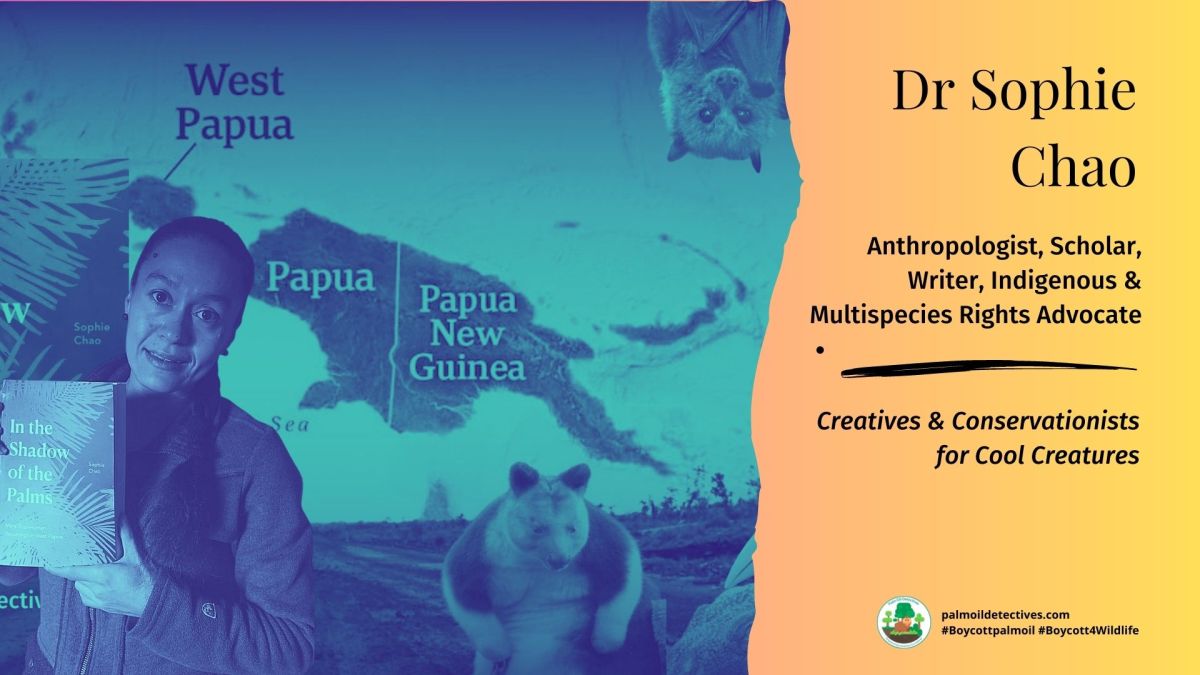



3. Supermarket sleuthing: Next time you’re in the supermarket, take photos of products containing palm oil. Share these to social media along with the hashtags to call out the greenwashing and ecocide of the brands who use palm oil. You can also take photos of palm oil free products and congratulate brands when they go palm oil free.
4. Take to the streets: Get in touch with Palm Oil Detectives to find out more.
5. Donate: Make a one-off or monthly donation to Palm Oil Detectives as a way of saying thank you and to help pay for ongoing running costs of the website and social media campaigns. Donate here
Forgotten Species on Palm Oil Detectives
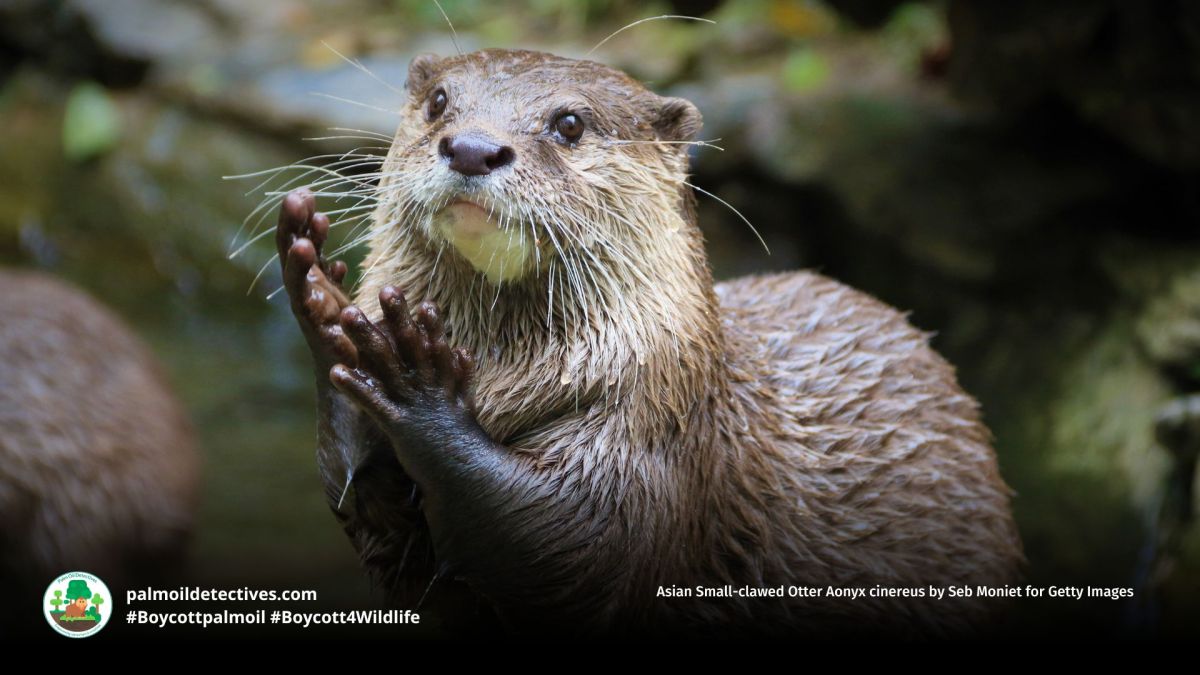
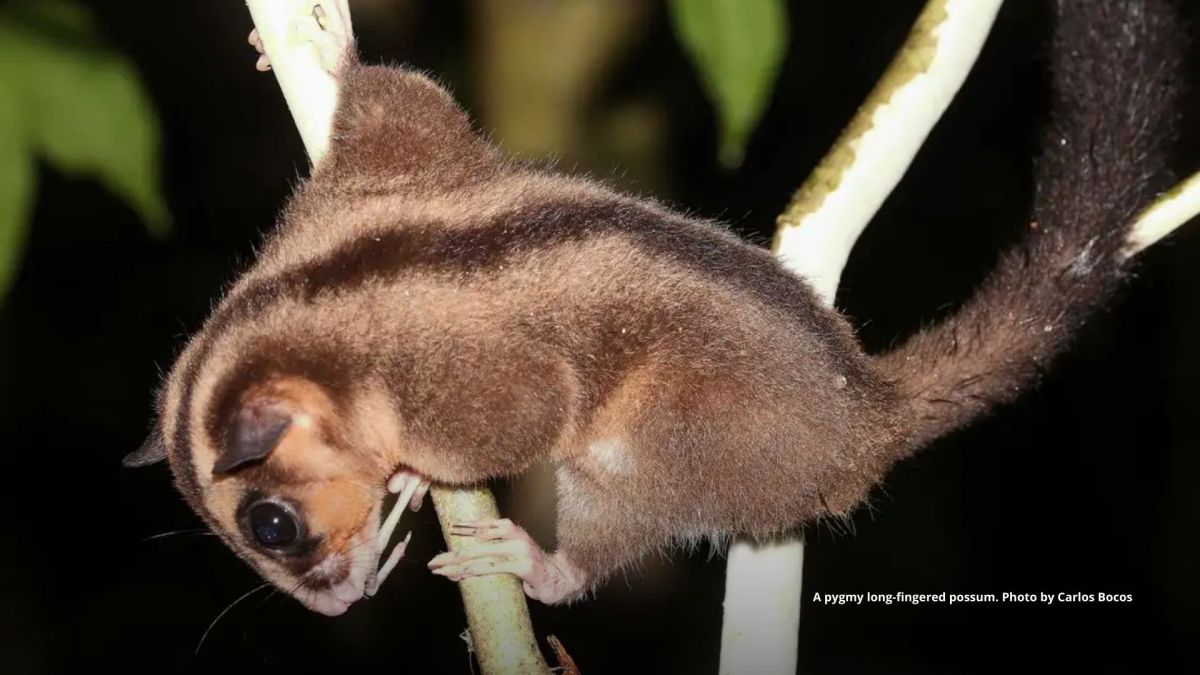
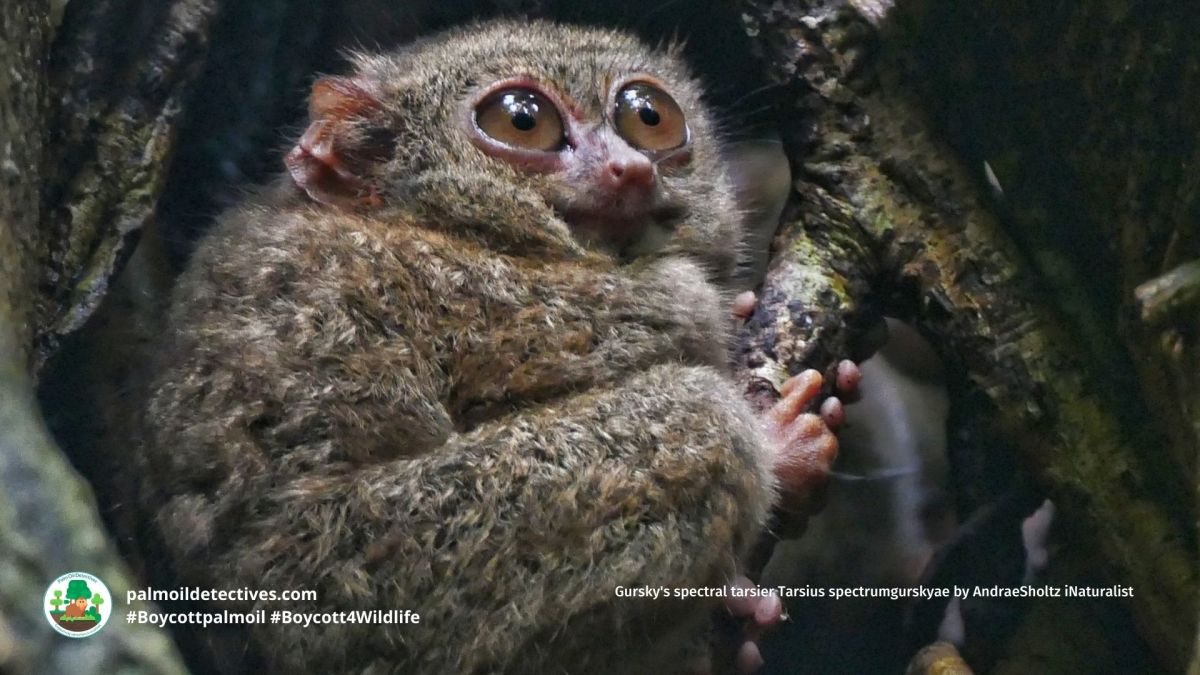
These species have no known conservation actions in place and are silently disappearing before we can save them. Do something about it by boycotting supermarket brands linked to tropical deforestation. Join the #Boycott4Wildlife
Something went wrong. Please refresh the page and/or try again.
Discover more from Palm Oil Detectives
Subscribe to get the latest posts sent to your email.
 Palm Oil Detectives