
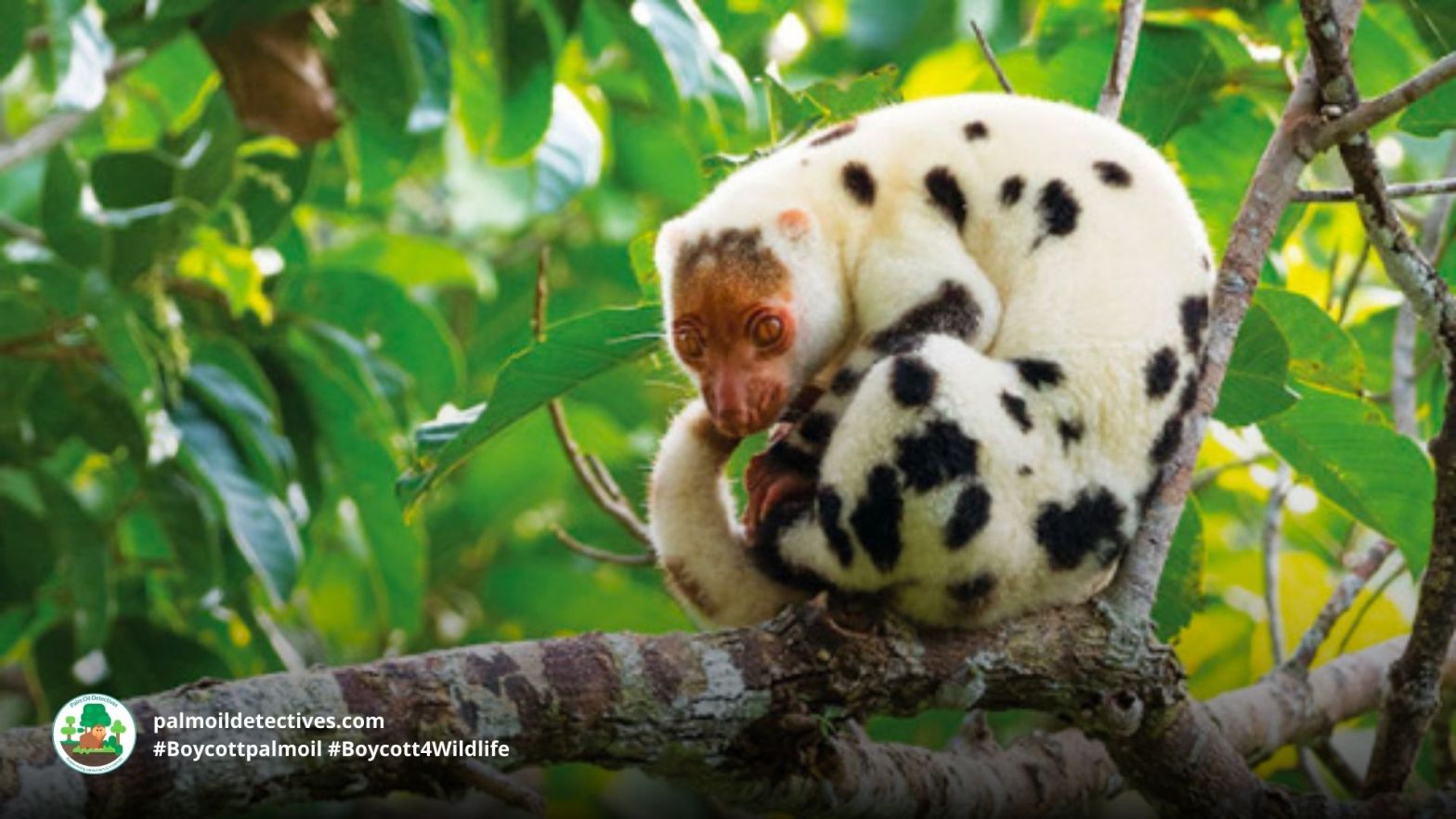
Waigeo Cuscus Spilocuscus papuensis
Vulnerable
Extant
West Papua (Waigeo Island)
Cryptic and solitary marsupials, Waigeo Cuscuses cling to tree canopies on a Waigeo Island, West Papua. They are classified as vulnerable on IUCN Red List due to palm oil deforestation and mining on the tiny island where they live. Help them each time you shop and be #vegan, #Boycottpalmoil and #Boycott4Wildlife
Cryptic and solitary #marsupials, Waigeo #cuscus 🐒 cling to tree canopies on Waigeo Island #WestPapua, they are vulnerable from #palmoil 🌴🪔🩸💀⛔️ #deforestation. Help them and go #vegan and #Boycottpalmoil #Boycott4Wildlife @palmoildetect https://palmoildetectives.com/2023/07/09/waigeo-cuscus-spilocuscus-papuensis/
Pocket sized cuties 🧸😻🩷 Waigeo #Cuscus are #vulnerable due to #palmoil #deforestation on a tiny island in #WestPapua. Fight for their survival, go #vegan 🥦🍅 and #Boycottpalmoil 🌴🪔🔥🧐🏂🙈🚫 #Boycott4Wildlife each time you shop https://palmoildetectives.com/2023/07/09/waigeo-cuscus-spilocuscus-papuensis/ via @palmoildetect
Behaviour & Appearance
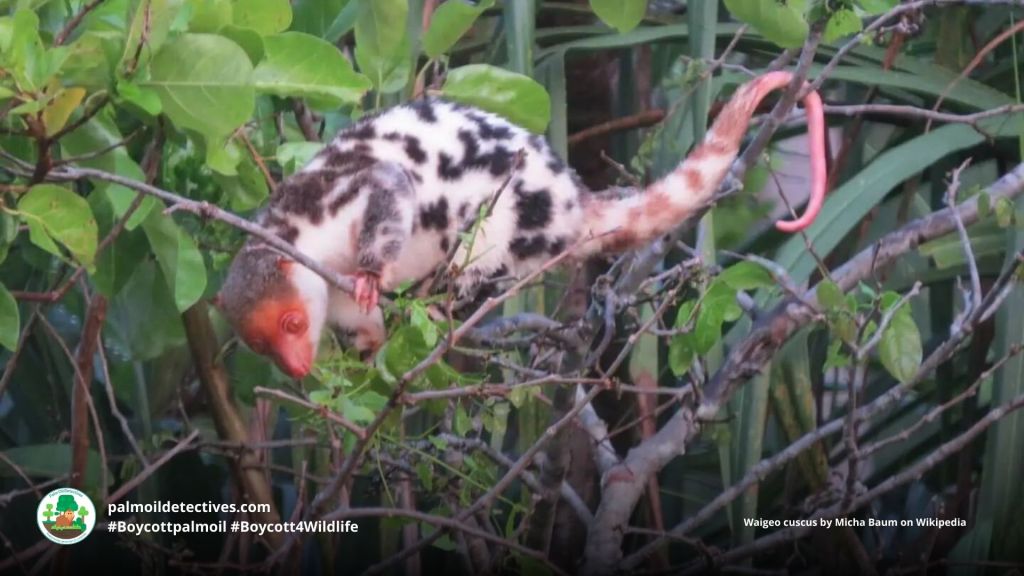
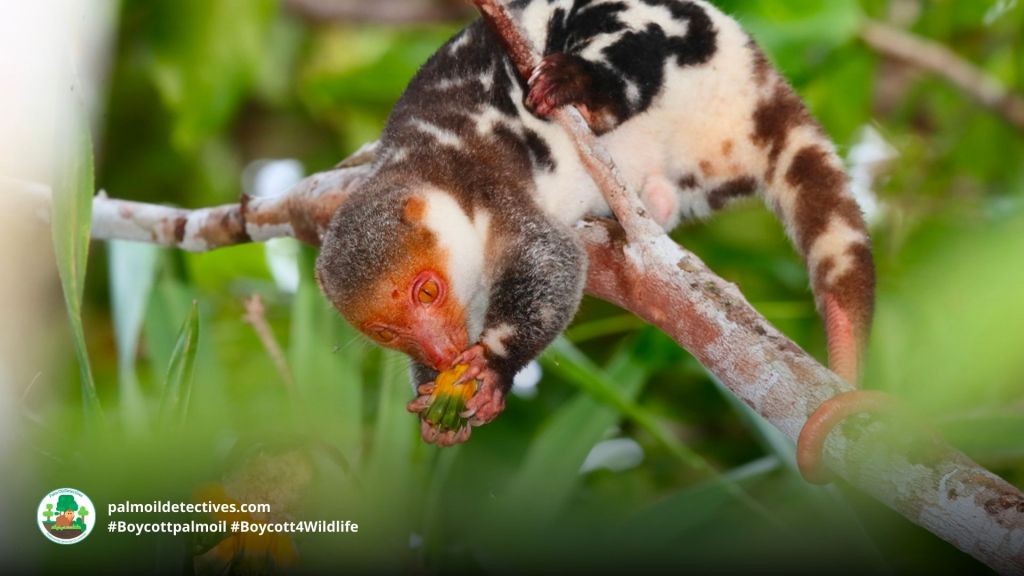
Waigeo Cuscus, also known as the Waigeou Spotted Cuscus are cryptic and solitary marsupials of the family Phalangeridae. Not much is known about their ecology and behaviour and more research is needed in this area.
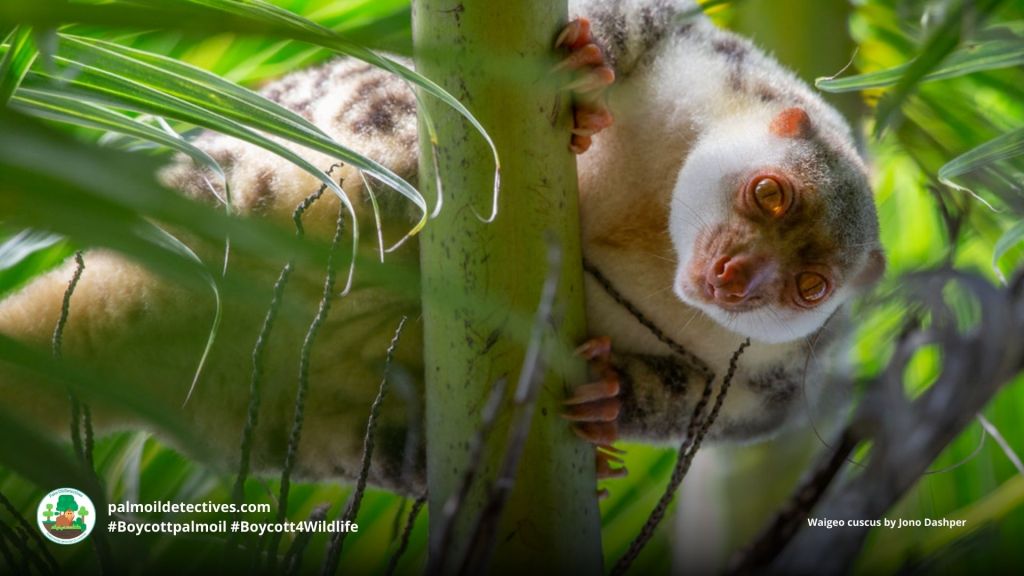
Waigeo Cuscus like other cuscus species have a strong prehensile tail that allows them to swing and hang in tree canopies.
Different cuscus species have eyes of varying colours. Waigeo Cuscuses have amber or orange eyes with have vertical pupils, similar to a cats or reptiles. This allows cuscuses to have superior night time vision. Like other cuscus, Waigeo Cuscuses have long nails to help with grip on tree branches and for grooming.
Geographical range
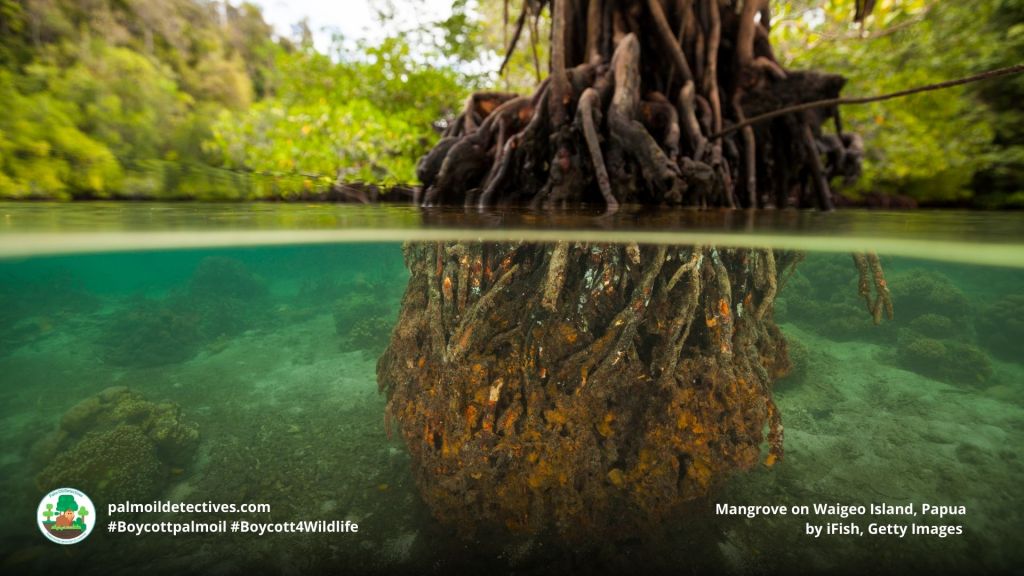
They are restricted to a small islet off the coast of the West Papua province called Waigeo Island. They prefer to live in primary or secondary tropical forests.
Threats
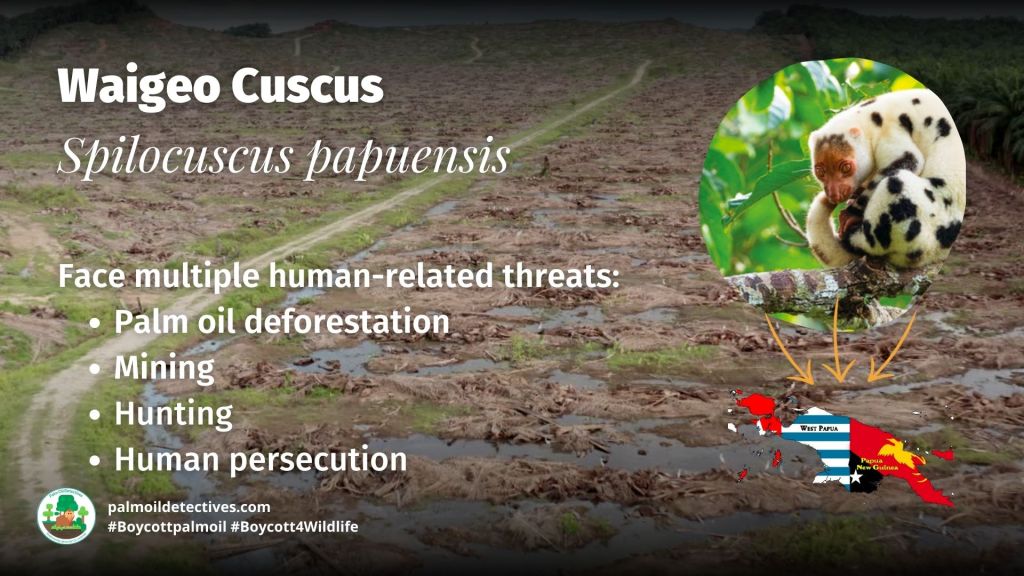
Their isolated and small geographic location makes their existence fragile and threatened by increased palm oil deforestation and mining in Waigeo Island, which is now taking place. An increase in hunting, mining and palm oil deforestation on the island would have a disastrous impact on this species.
Waigeo Cuscuses are classified as Vulnerable on IUCN Red List as they face many human-related threats including:
- Palm oil deforestation: Concessions for palm oil have been sold which invade into the Waigeo Cuscus’ range. They are limited to the small island and so any reduction in georgraphic range for palm oil will have disastrous consequences for them.
- Hunting and human persecution: These cuscus are hunted for their meat and fur.
- Mining: Mining concessions on Waigeo Island have been sold and this limits the geographic range of the Waigeo Cuscus across the small island.
Support the conservation of this species
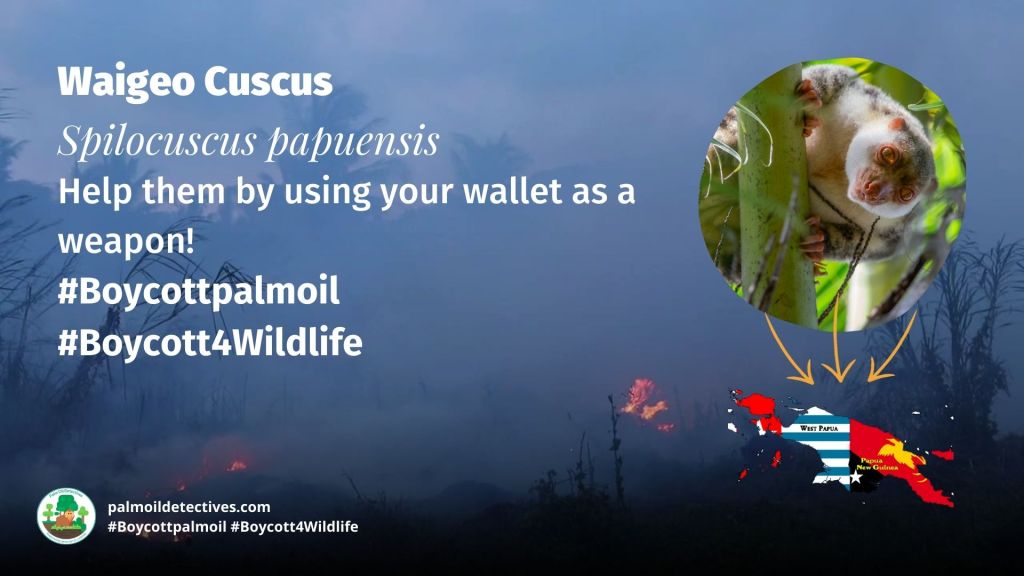
This animal has no protections in place. Read about other forgotten species here. Create art to support this forgotten animal or raise awareness about them by sharing this post and using the #Boycottpalmoil #Boycott4Wildlife hashtags on social media. Also you can boycott palm oil in the supermarket.
Further Information

Helgen, K., Aplin, K. & Dickman, C. 2016. Spilocuscus papuensis. The IUCN Red List of Threatened Species 2016: e.T20638A21949972. https://dx.doi.org/10.2305/IUCN.UK.2016-2.RLTS.T20638A21949972.en. Accessed on 16 November 2022.

How can I help the #Boycott4Wildlife?
Take Action in Five Ways
1. Join the #Boycott4Wildlife on social media and subscribe to stay in the loop: Share posts from this website to your own network on Twitter, Mastadon, Instagram, Facebook and Youtube using the hashtags #Boycottpalmoil #Boycott4Wildlife.
2. Contribute stories: Academics, conservationists, scientists, indigenous rights advocates and animal rights advocates working to expose the corruption of the palm oil industry or to save animals can contribute stories to the website.




3. Supermarket sleuthing: Next time you’re in the supermarket, take photos of products containing palm oil. Share these to social media along with the hashtags to call out the greenwashing and ecocide of the brands who use palm oil. You can also take photos of palm oil free products and congratulate brands when they go palm oil free.
4. Take to the streets: Get in touch with Palm Oil Detectives to find out more.
5. Donate: Make a one-off or monthly donation to Palm Oil Detectives as a way of saying thank you and to help pay for ongoing running costs of the website and social media campaigns. Donate here
Discover more from Palm Oil Detectives
Subscribe to get the latest posts sent to your email.
 Palm Oil Detectives
Thanks so much dear friend for the share!
LikeLike