
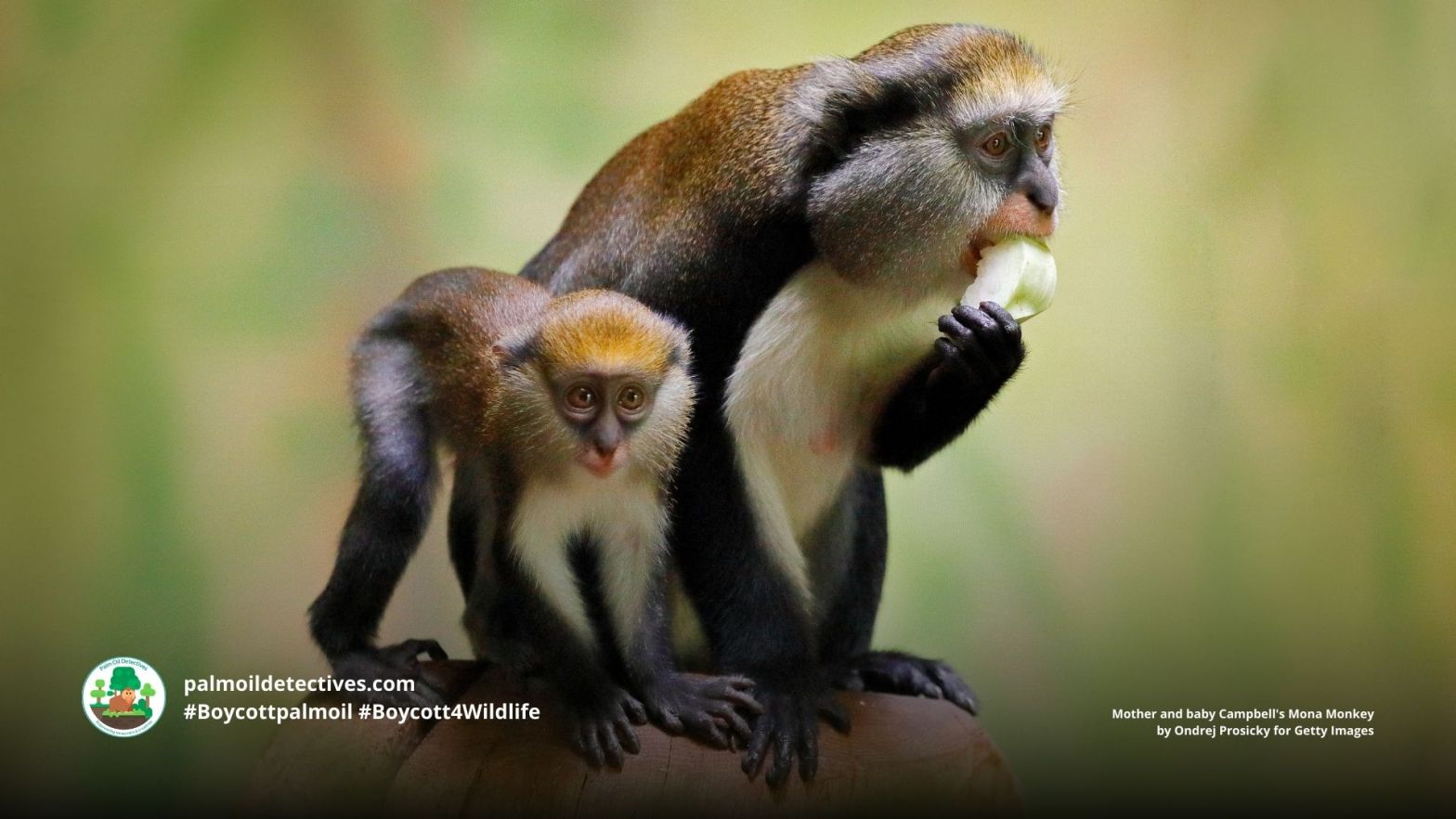
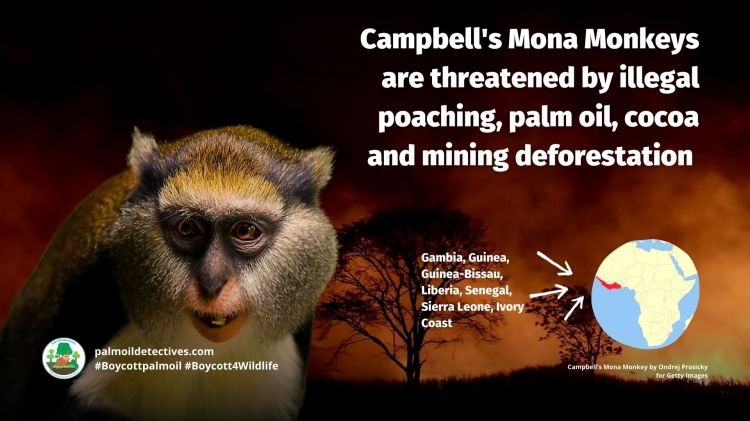
Campbell’s Mona Monkey Cercopithecus campbelli
Red List: Near Threatened
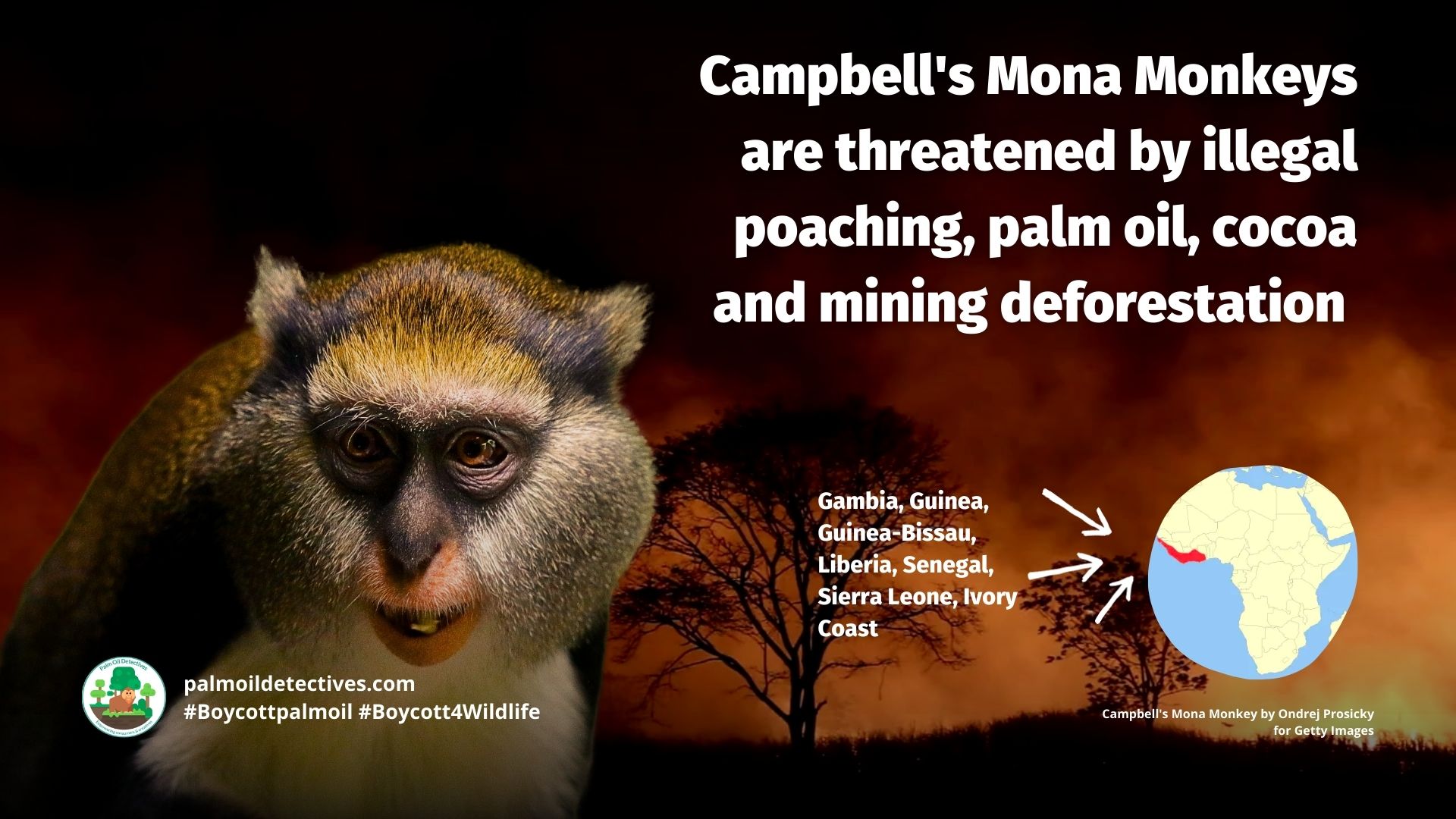
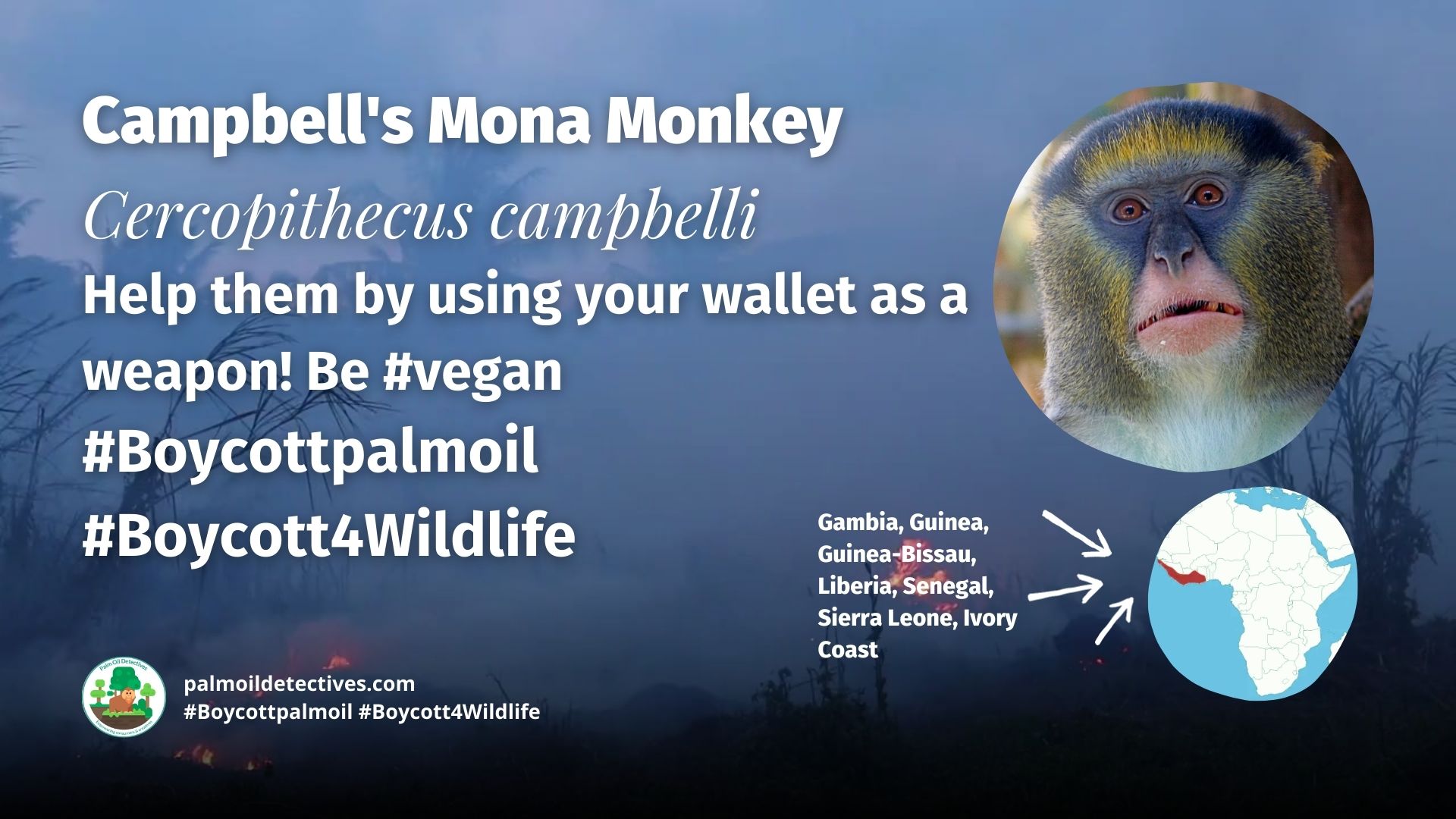
Extant (resident): Gambia; Guinea; Guinea-Bissau; Liberia; Senegal; Sierra Leone; Ivory Coast.
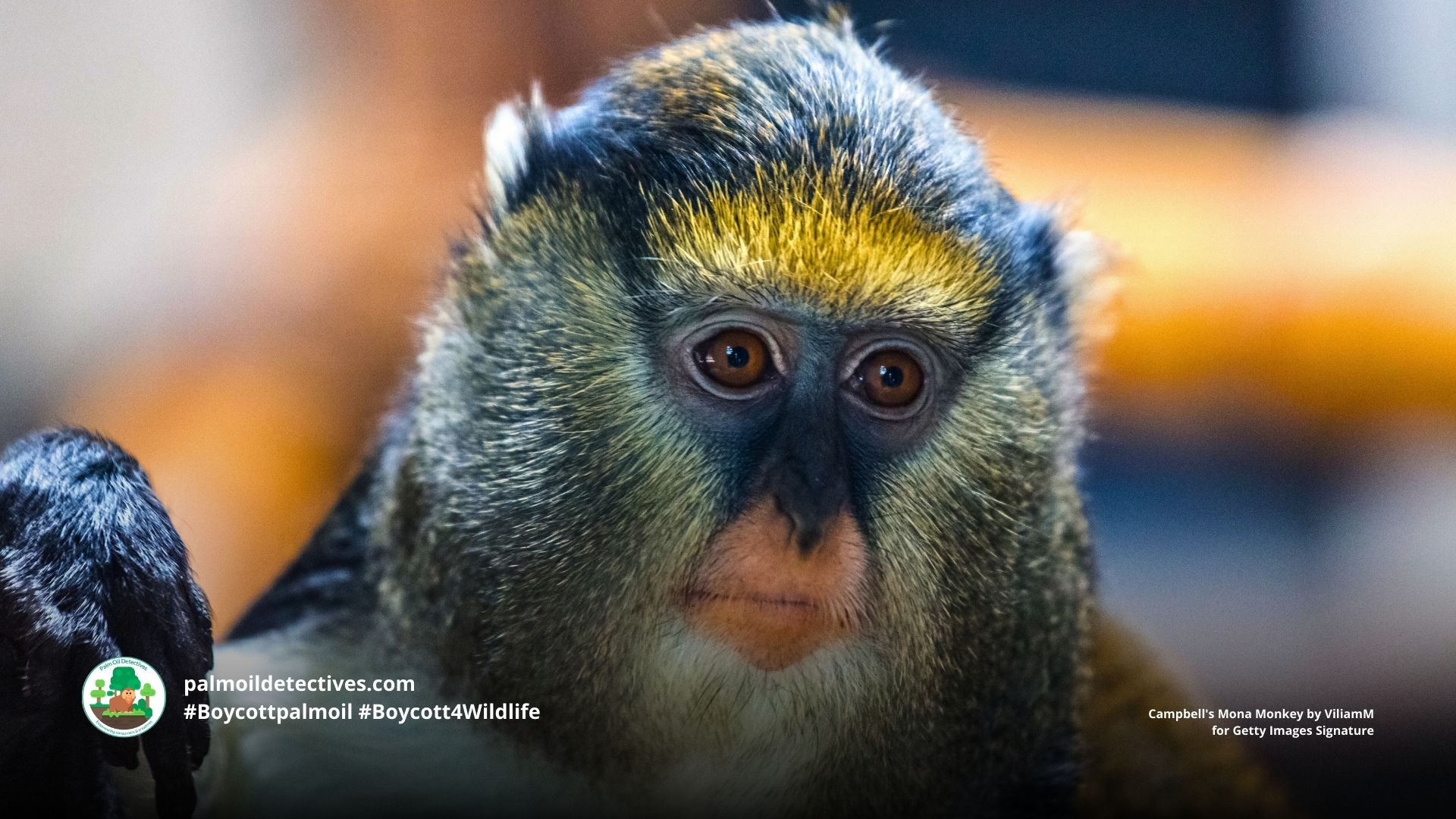
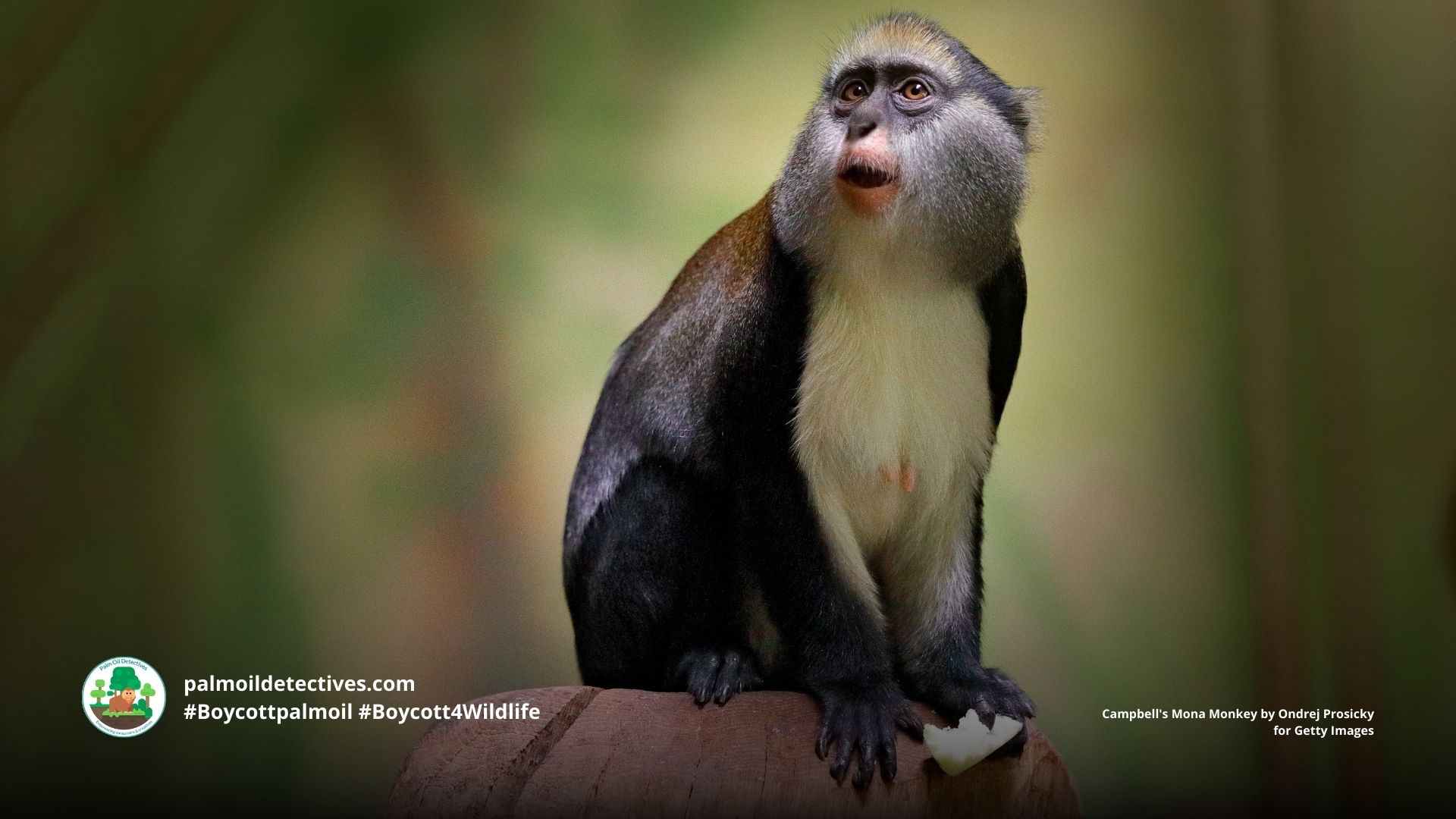
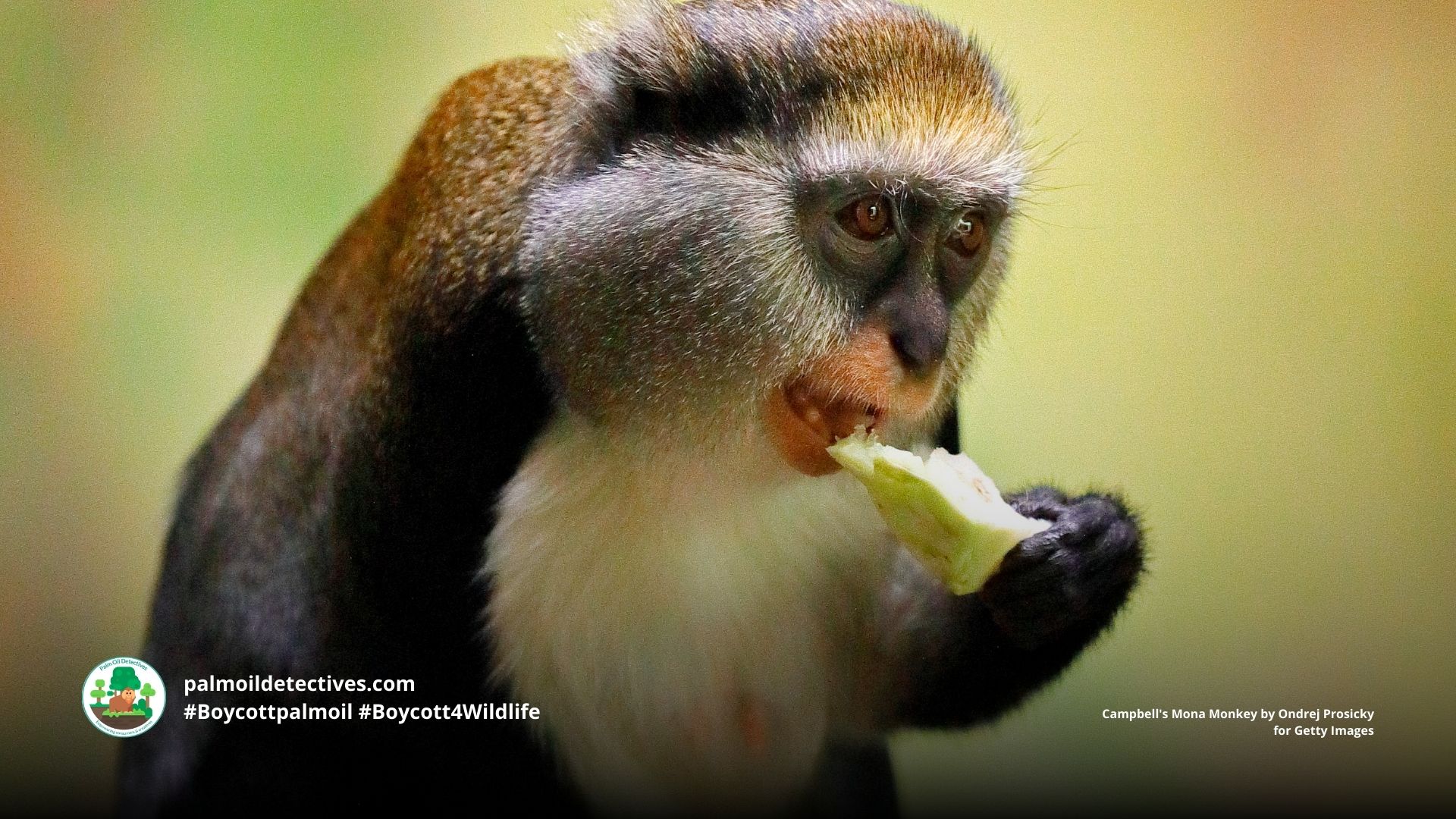
Inquisitive and highly social Campbell’s Mona Monkeys are known for their intense hazel eyes and bright yellow brows. They use their large puffy cheeks to store food while they climb to the top of tree canopies to eat it. Males will engage in a dawn and dusk symphony of calling along with other species in a coordinated ritual. They are Near Threatened due to hunting and extensive forest loss throughout their range in West Africa for palm oil, coffee, cocoa and mining. Help them every time you shop by using your wallet as a weapon – #Boycottpalmoil #Boycott4Wildlife
Social and cheeky Campbell’s Mona Monkeys 🐵🐒🤎 use their puffy cheeks to store food. Threats include #hunting #cocoa #palmoil #deforestation in #Gambia 🇬🇲 #Liberia 🇱🇷 Help save them! #Boycottpalmoil #Boycott4Wildlife 🌴🩸🔥☠️🚜⛔️ @palmoildetect https://palmoildetectives.com/2024/01/28/campbells-mona-monkey-cercopithecus-campbelli/
Beautifully coloured male Campbell’s Mona #Monkeys 🐵🐒🤎 sing in chorus ✨🎵🪇 with other species at dawn 🌄🌅 and dusk in #Liberia 🇱🇷 #SierraLeone 🇸🇱 Fight for them and #Boycottpalmoil #Boycott4Wildlife @palmoildetect https://palmoildetectives.com/2024/01/28/campbells-mona-monkey-cercopithecus-campbelli/
Appearance & Behaviour
Male Campbell’s Mona Monkeys are known for engaging in interpecies dawn and dusk choruses. Sounds carry for at least a kilometre in low rumbling booms and other males join in. Interspecies songs and calling obey ritualised rules. The Campbell’s Mona Monkey has an advanced form of communication with rudimentary and basic syntax.
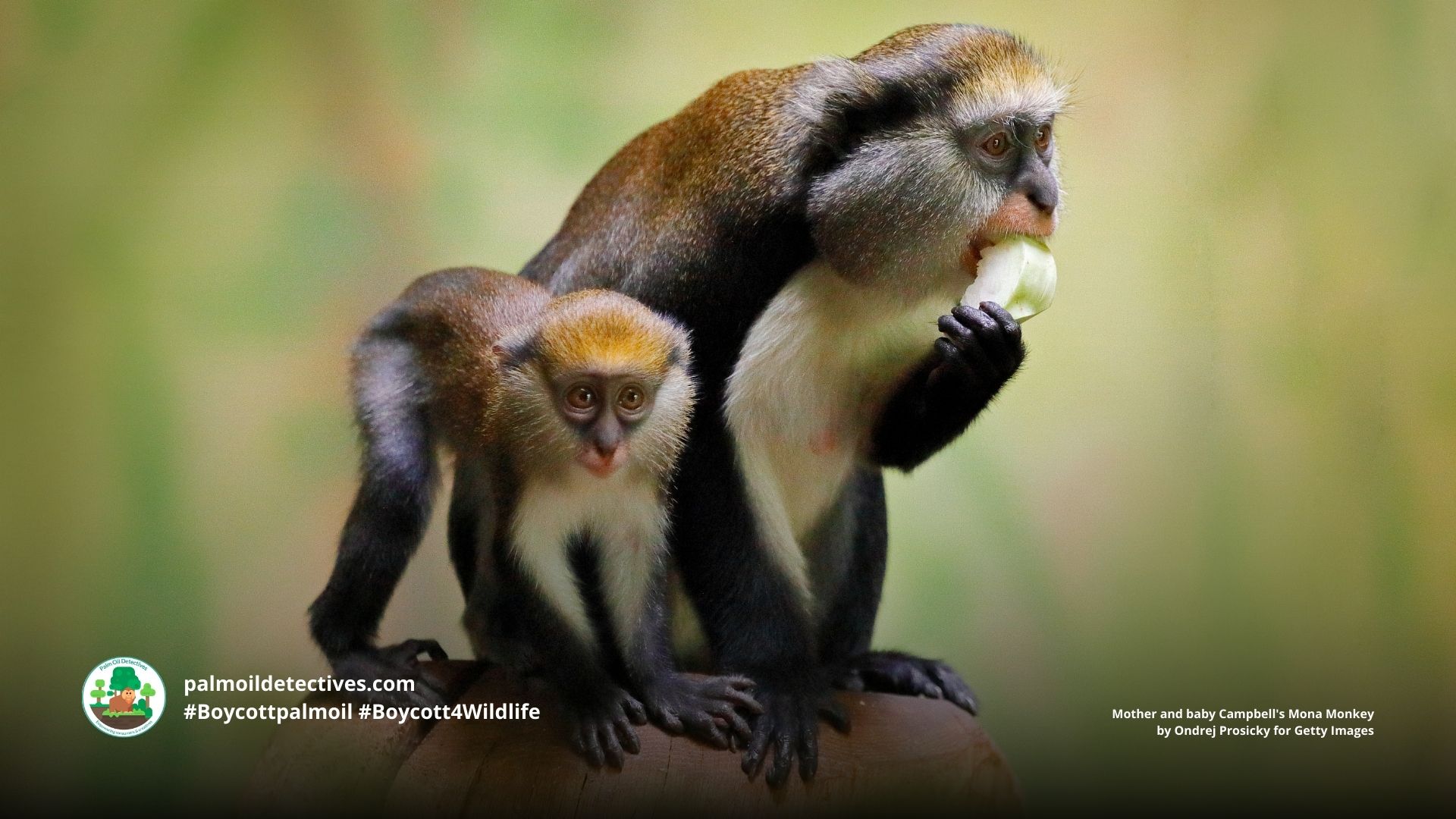
They are a highly social and gregarious species, preferring to stay in groups of about eight individuals.
They are slow and careful foragers and will look for wild and cultivated fruit, seeds and vegetables along with small invertebrates, lizards, amphibians and worms.
Threats
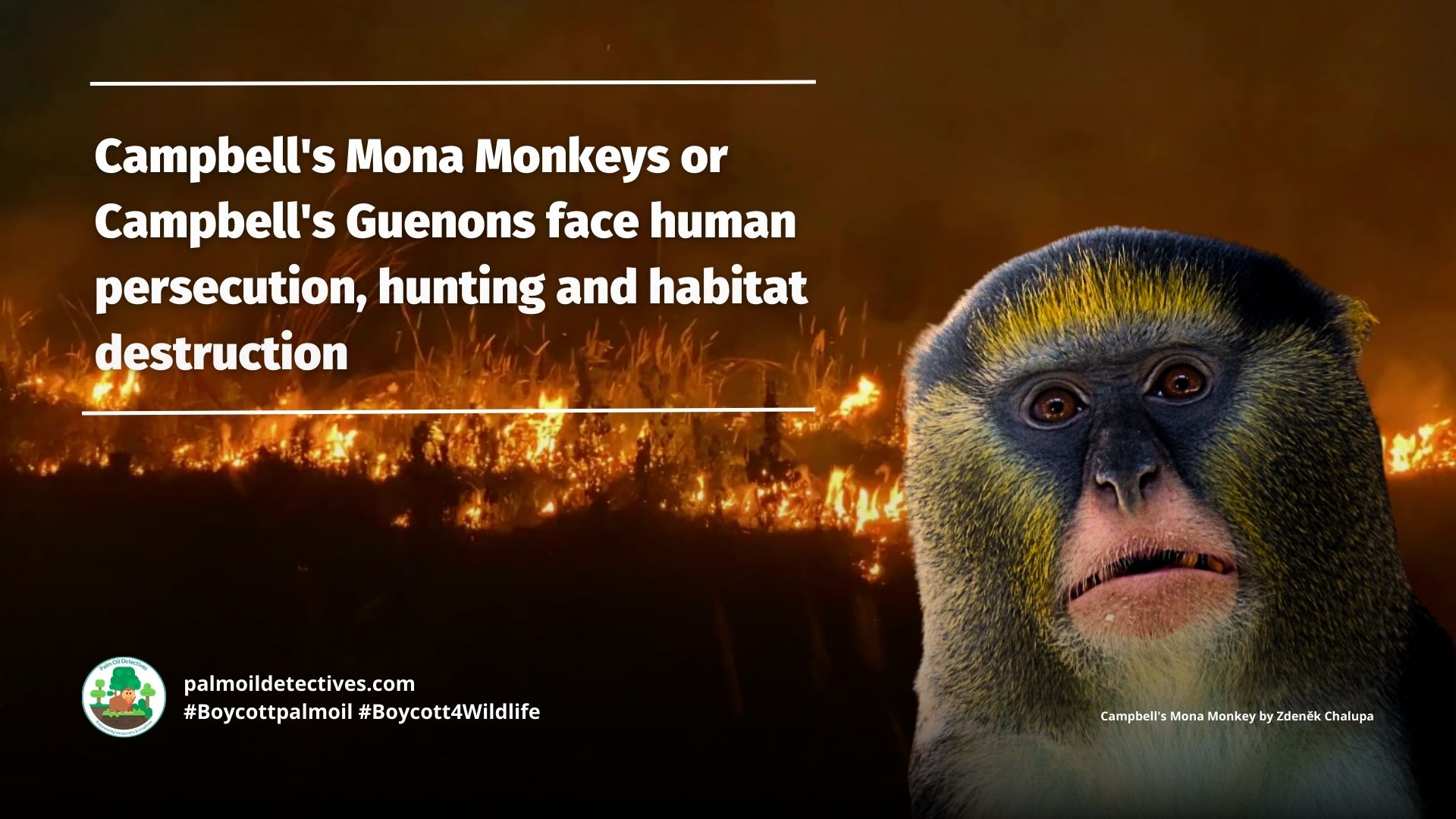
Campbell’s Guenons or Campbell’s Mona Monkeys are still common to some areas of their range and are relatively flexible and adaptable to their environment. However, their habitat is rapidly declining and becoming fragmented due to forest loss and deforestation for agriculture – mainly palm oil, coffee and cocoa.
[Campbell’s Guenons] have been impacted by, first and foremost, bushmeat hunting, and secondly, habitat loss.
IUCN Red LIST
Due to their small body size, they are not the prime target for hunters. However in recent years with unregulated hunting and removal of other larger monkey species – the Campbell’s Mona Monkey have now become a target for the illegal bushmeat trade.
In Mount Nimba, Liberia, Bené et al. (2013) monitored hunters’ activities in 2009–2011 and found a high rate (0.7 per km) of encountering hunters carrying the carcasses of this species.
IUCN RED LIST


Habitat
Campbell’s Mona Monkeys Cercopithecus campbelli are also known by the name Campbell’s guenon. They are endemic to the Ivory Coast, Liberia, Senegal, Sierra Leone, Guinea-Bissau, Gambia and Ghana. They are found in lowland forest, gallery forest, mangroves, riverine environments and within farms and agricultural land.
This species once thrived in disturbed habitats and farmbush, but many of these habitats have been converted to plantations of non-native species.
IUCN RED LIST
Diet
Campbell’s Mona Monkeys are slow, deliberate foragers. The greater part of their diet is wild fruit and agricultural crops. However, they will also eat seeds, invertebrates, grubs, small amphibians and lizards. They use their puffy cheeks to store food and then climb high into the boughs of trees to eat it.
Support Campbell’s Mona Monkey by going vegan and boycotting palm oil in the supermarket, it’s the #Boycott4Wildlife
Support the conservation of this species
This animal has no protections in place. Read about other forgotten species here. Create art to support this forgotten animal or raise awareness about them by sharing this post and using the #Boycottpalmoil #Boycott4Wildlife hashtags on social media. Also you can boycott palm oil in the supermarket.
Further Information
Matsuda Goodwin, R., Gonedelé Bi, S. & Koné, I. 2020. Cercopithecus campbelli. The IUCN Red List of Threatened Species 2020: e.T136930A92374066. https://dx.doi.org/10.2305/IUCN.UK.2020-2.RLTS.T136930A92374066.en. Accessed on 25 May 2023.
Campbell’s Mona Monkey: Wikipedia article
Campbell’s Mona Monkey: Animalia.bio article

How can I help the #Boycott4Wildlife?
Take Action in Five Ways
1. Join the #Boycott4Wildlife on social media and subscribe to stay in the loop: Share posts from this website to your own network on Twitter, Mastadon, Instagram, Facebook and Youtube using the hashtags #Boycottpalmoil #Boycott4Wildlife.
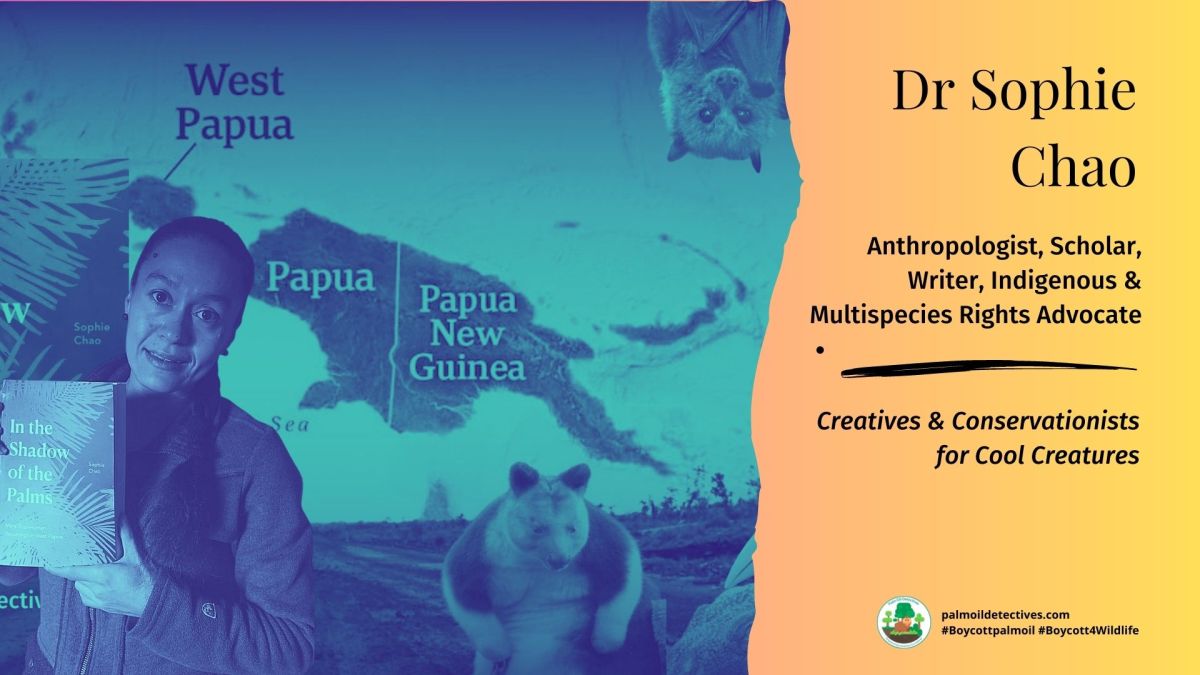
2. Contribute stories: Academics, conservationists, scientists, indigenous rights advocates and animal rights advocates working to expose the corruption of the palm oil industry or to save animals can contribute stories to the website.



3. Supermarket sleuthing: Next time you’re in the supermarket, take photos of products containing palm oil. Share these to social media along with the hashtags to call out the greenwashing and ecocide of the brands who use palm oil. You can also take photos of palm oil free products and congratulate brands when they go palm oil free.
4. Take to the streets: Get in touch with Palm Oil Detectives to find out more.
5. Donate: Make a one-off or monthly donation to Palm Oil Detectives as a way of saying thank you and to help pay for ongoing running costs of the website and social media campaigns. Donate here
Discover more from Palm Oil Detectives
Subscribe to get the latest posts sent to your email.
 Palm Oil Detectives
Thank you dear Ned for your constant support
LikeLike