

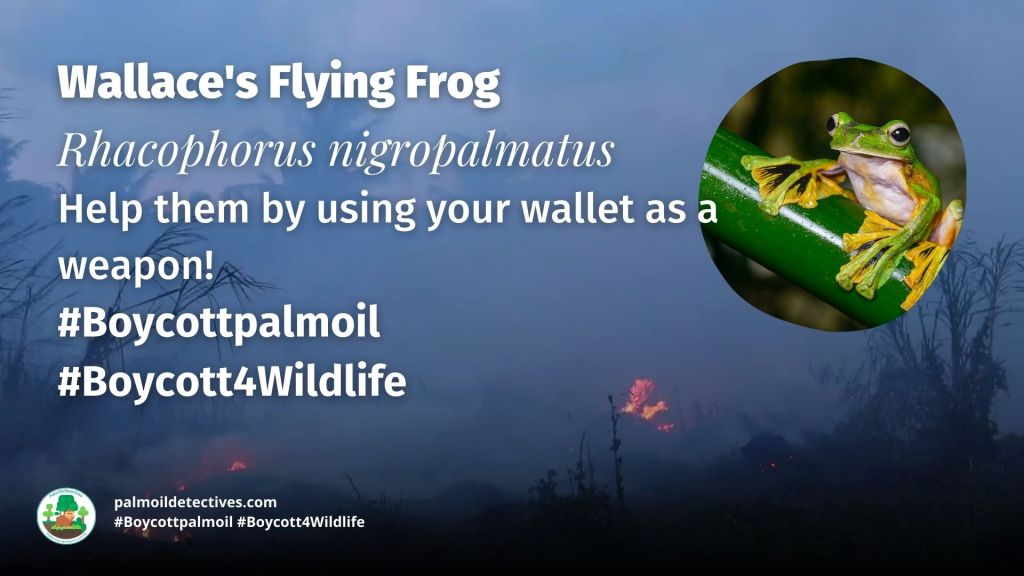
Wallace’s Flying Frog Rhacophorus nigropalmatus
Extant (resident): Brunei Darussalam; Indonesia (Sumatera, Kalimantan); Malaysia (Peninsular Malaysia, Sabah, Sarawak); Myanmar; Thailand
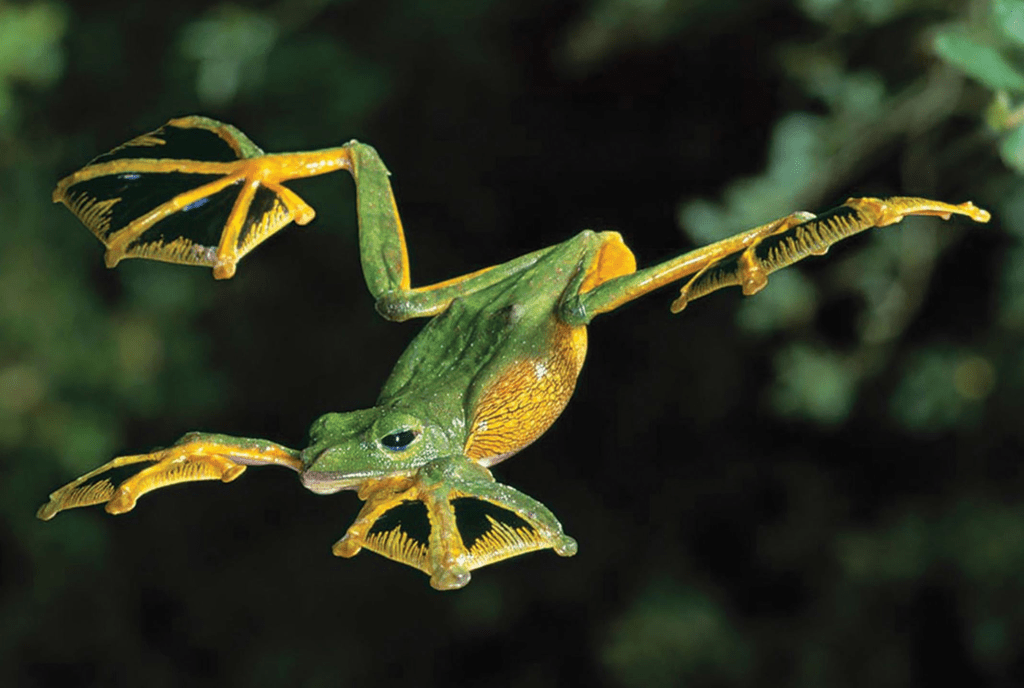
The elusive and visually stunning Wallace’s Flying #Frog are known for their mysterious nature and their ability to take flight and glide through the air like dancers. They reveal themselves only during breeding aggregations when they descend from the trees.
Recent surveys in various regions, including the Matang Range in #Sarawak, #Malaysia, and the Endau-Rompin in West Malaysia, have documented the presence of this species. However, their overall population faces a concerning decline due to the ongoing loss of habitat for #palmoil #deforestation. Urgent conservation efforts are critical to reverse this trend and to ensure the survival of this intriguing species in their natural environment. Help this frog to survive every time you shop, make sure that you #Boycottpalmoil #Boycott4Wildlife in the supermarket!
Elusive and stunning Wallace’s Flying #Frogs are able to take flight and glide through the #forest 💃🕺🐸✨💖 like dancers! A major threat is #palmoil #deforestation. 🌴🩸☠️🤮🔥❌ Help them to survive when you #Boycottpalmoil #Boycott4Wildlife in the supermarket @palmoildetect https://wp.me/pcFhgU-747
Colourful parachuting #frog species the Wallace’s Flying Frog is native to rainforests of #Malaysia and #Indonesia and is threatened by #palmoil #ecocide. Fight for them every time you shop and #Boycottpalmoil #Boycott4Wildlife via @palmoildetect https://wp.me/pcFhgU-747
Appearance & Behaviour
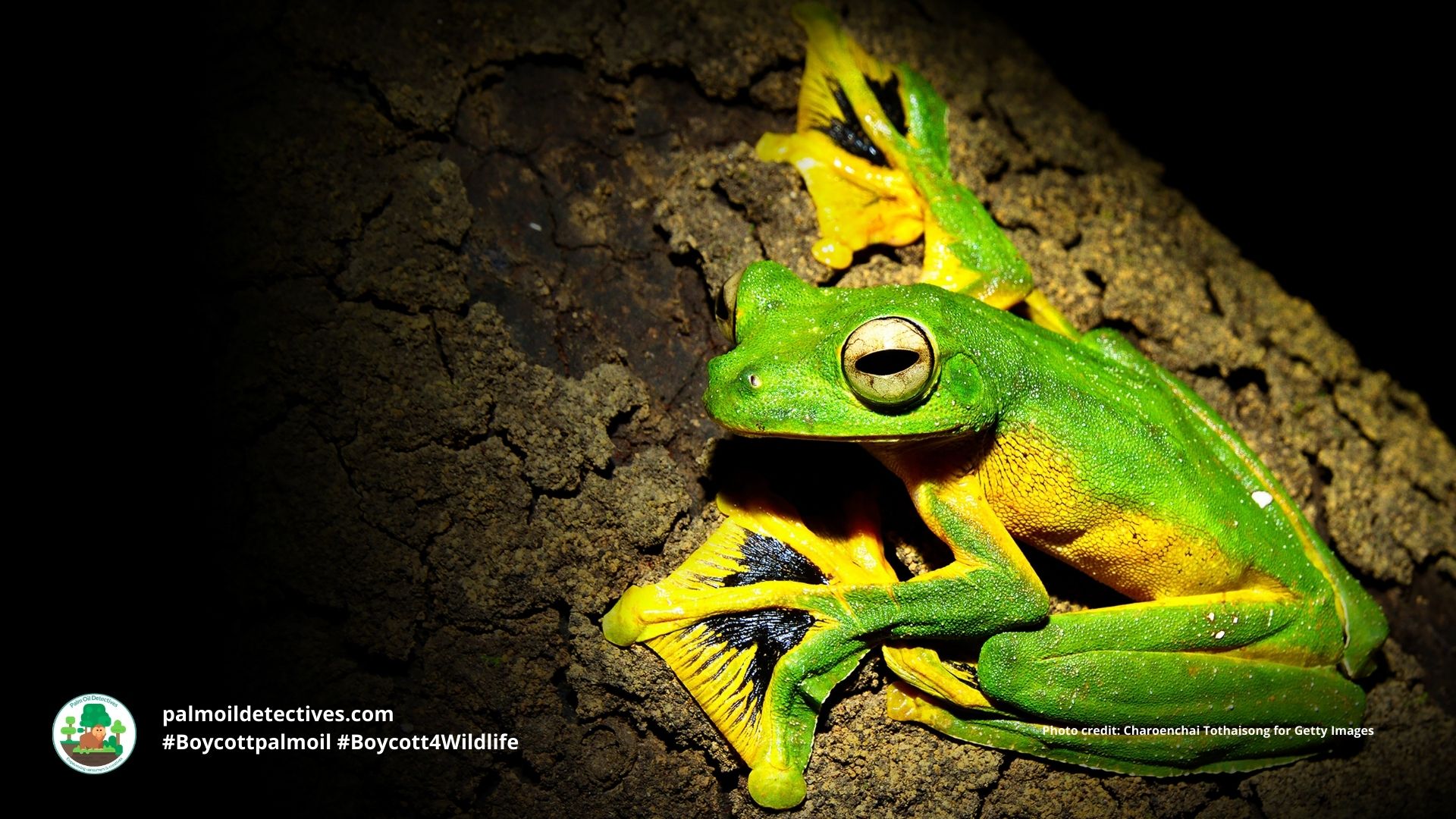
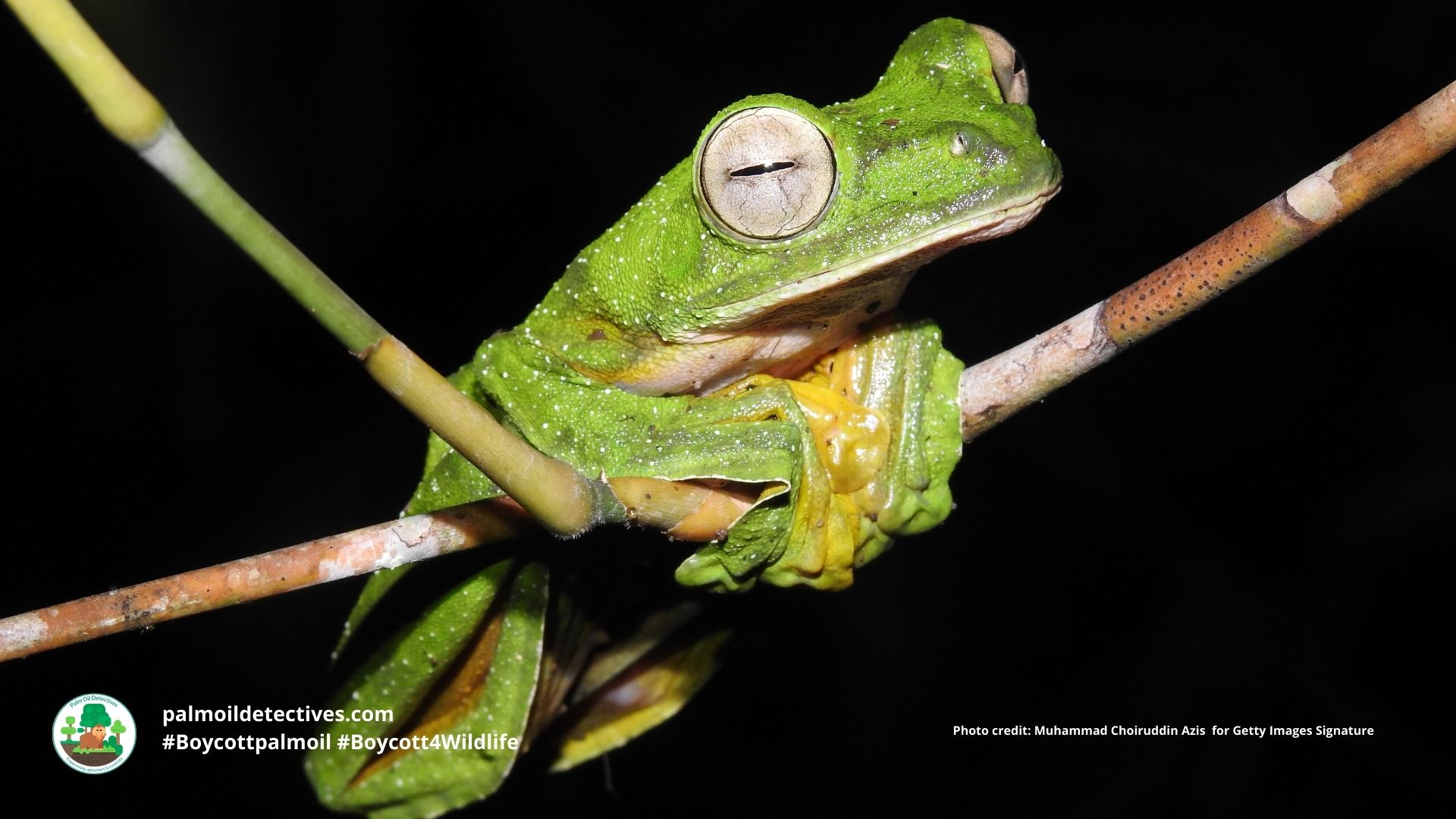
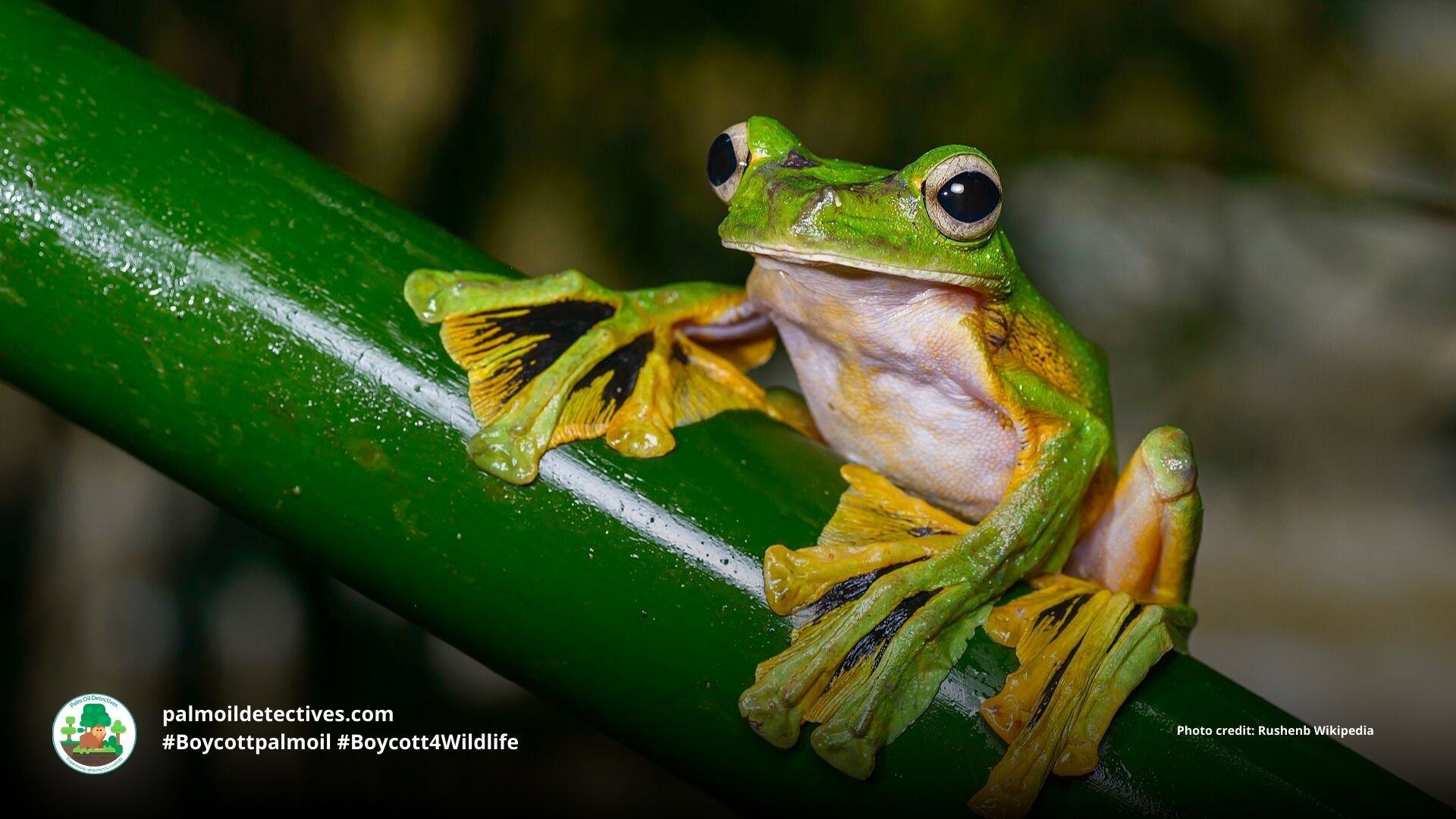
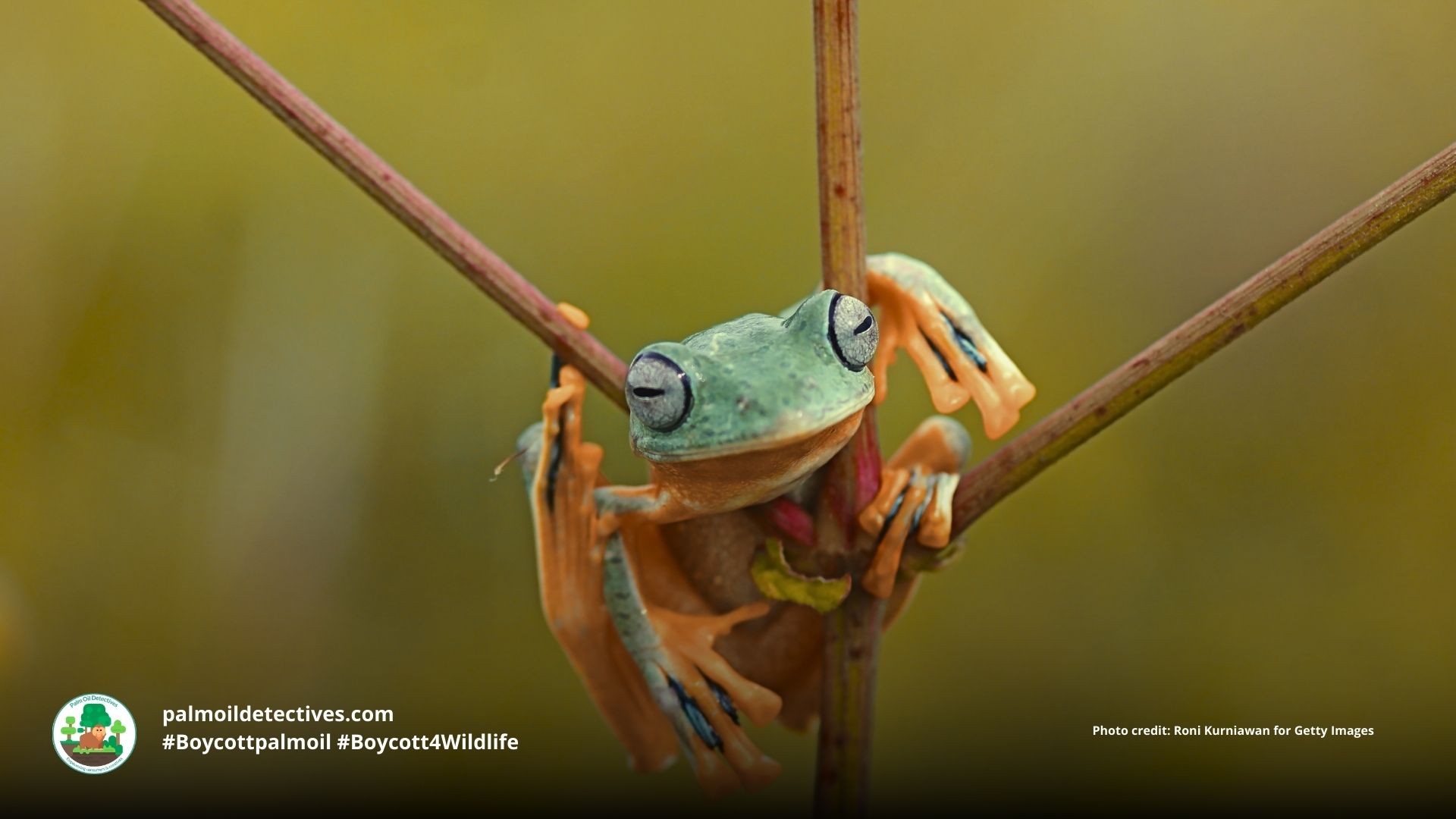
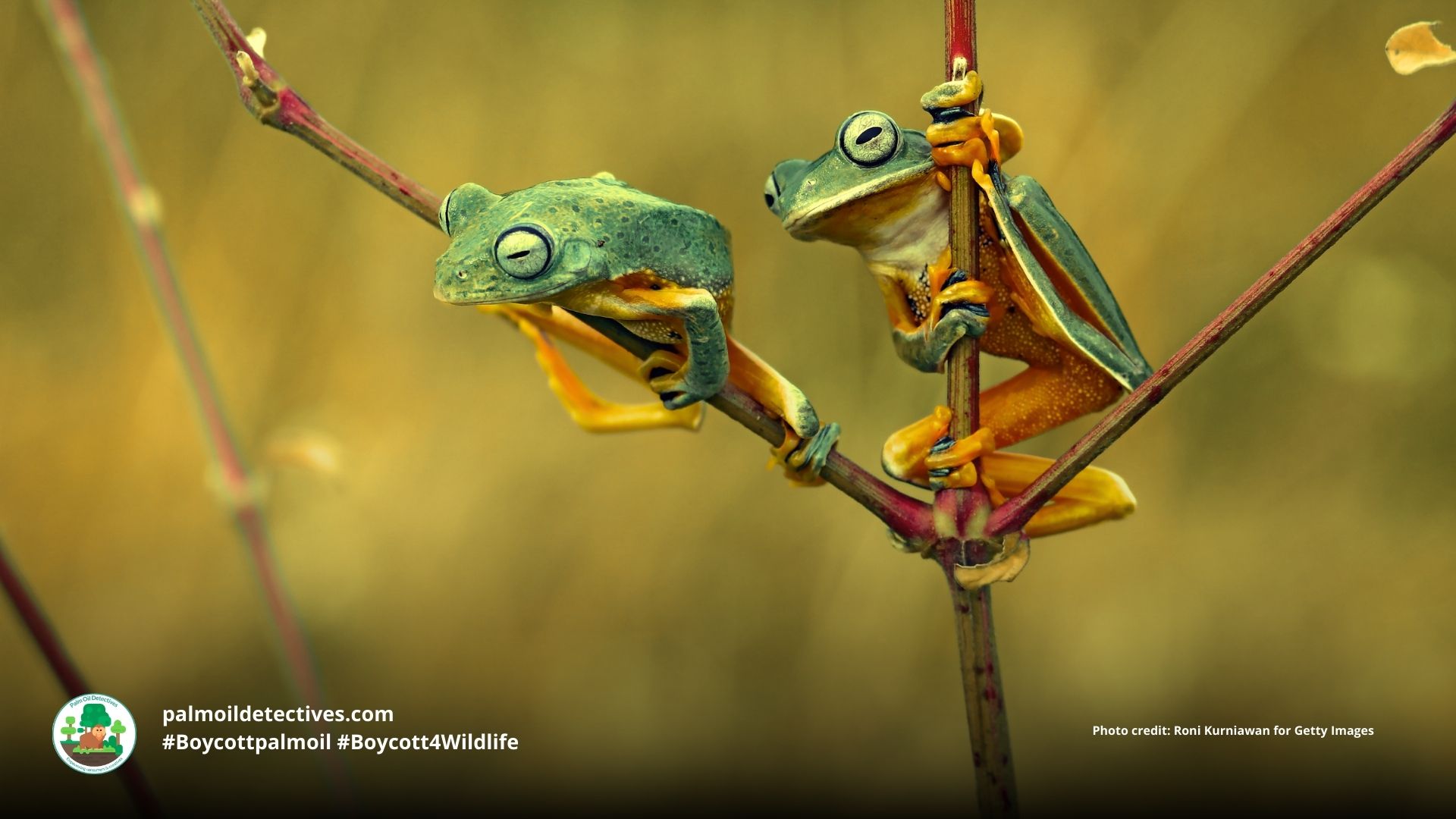
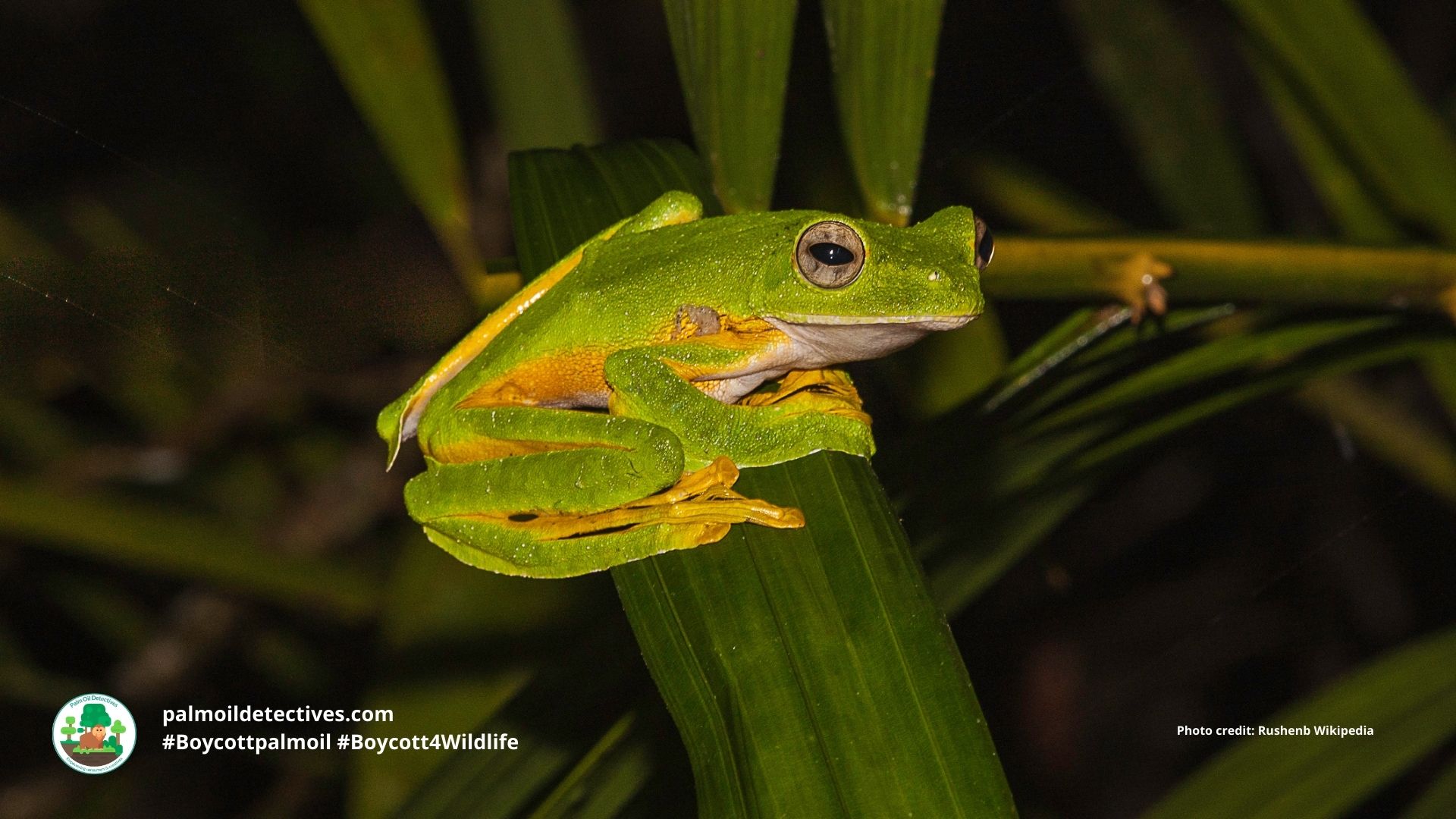
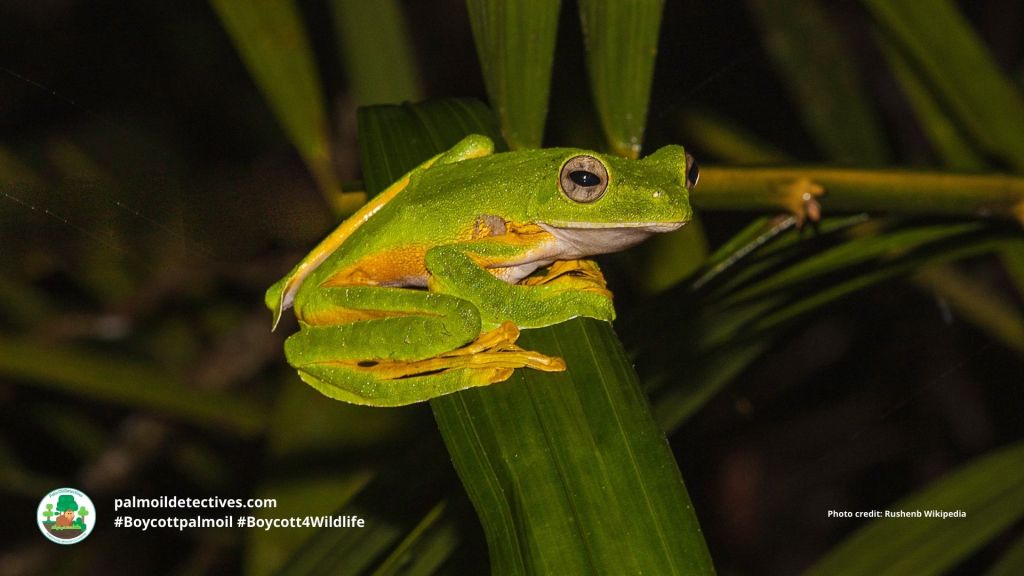
This photogenic frog captivates with vibrant colours, large size, and fascinating behaviour. They measure around 80–100 mm in body length and are one of the largest Rhacophorus species, with males being smaller than females.
They possess large eardrums and captivating horizontal-pupiled eyes. Their remarkable long limbs, webbed fingers and toes extending to the tips are fringed with skin. This forms a natural parachute allowing them to move quickly between trees and to the forest floor. With a bright shiny green back, white to pale yellow underside, and brilliant yellow accents on their toes, this species of frog is a visual delight to behold.
Threats
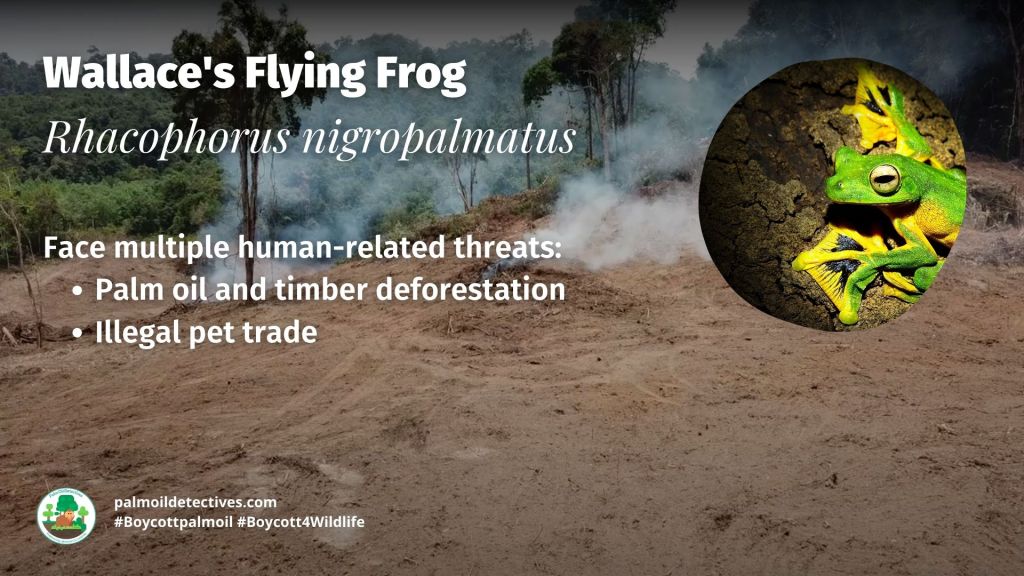
This species of frog is classified as Least Concern and yet their number has been decreasing at a worrying rate over decades as a direct result of palm oil deforestation. They are completely reliant on a healthy rainforest habitat for survival. It is for this reason that they are included on this website.
- Widespread and rapid clear-cutting of lowland tropical rainforest for palm oil plantations.
- Forest loss and degradation, particularly from the conversion of forests into agricultural land, posing a significant threat to all biodiversity in Southeast Asia
- A secondary threat is small-scale pet trade, both nationally and internationally although this is deemed to be not as serious as habitat loss.
Habitat
They live mainly in tree canopies deep in dense rainforests. They make ballerina-like leaps and “flights” from tree to tree, showcasing their impressive and precise gliding agility. When threatened, Wallace Flying Frogs gracefully glide using its webbed feet and loose skin flaps. This frog’s oversized toe pads help with soft landings and tree trunk adhesion.
Diet
Known for their insectivorous diet, the Wallace’s Flying Frog have on occasion been known to eat toads and small birds. However, they face threats from tree-climbing snakes in their arboreal habitat.
Support Wallace’s Flying Frogs by going vegan and boycotting palm oil in the supermarket, it’s the #Boycott4Wildlife
Support the conservation of this species
This animal has no protections in place. Read about other forgotten species here. Create art to support this forgotten animal or raise awareness about them by sharing this post and using the #Boycottpalmoil #Boycott4Wildlife hashtags on social media. Also you can boycott palm oil in the supermarket.
Further Information
IUCN SSC Amphibian Specialist Group. 2022. Rhacophorus nigropalmatus. The IUCN Red List of Threatened Species 2022: e.T59008A64129329. https://dx.doi.org/10.2305/IUCN.UK.2022-2.RLTS.T59008A64129329.en. Accessed on 27 December 2023.
Wallace’s Flying Frog Wikipedia article https://en.wikipedia.org/wiki/Wallace%27s_flying_frog
Wallace’s Flying Frog Animalia.bio https://animalia.bio/wallaces-flying-frog


How can I help the #Boycott4Wildlife?
Take Action in Five Ways
1. Join the #Boycott4Wildlife on social media and subscribe to stay in the loop: Share posts from this website to your own network on Twitter, Mastadon, Instagram, Facebook and Youtube using the hashtags #Boycottpalmoil #Boycott4Wildlife.
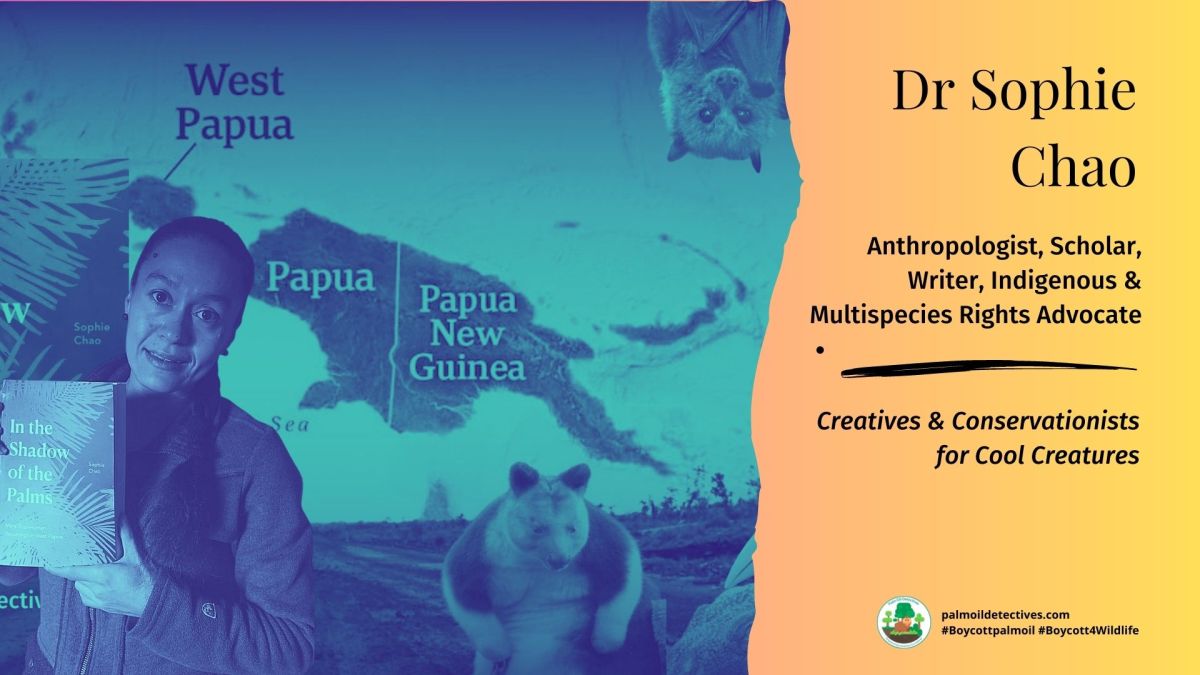
2. Contribute stories: Academics, conservationists, scientists, indigenous rights advocates and animal rights advocates working to expose the corruption of the palm oil industry or to save animals can contribute stories to the website.





3. Supermarket sleuthing: Next time you’re in the supermarket, take photos of products containing palm oil. Share these to social media along with the hashtags to call out the greenwashing and ecocide of the brands who use palm oil. You can also take photos of palm oil free products and congratulate brands when they go palm oil free.
4. Take to the streets: Get in touch with Palm Oil Detectives to find out more.
5. Donate: Make a one-off or monthly donation to Palm Oil Detectives as a way of saying thank you and to help pay for ongoing running costs of the website and social media campaigns. Donate here
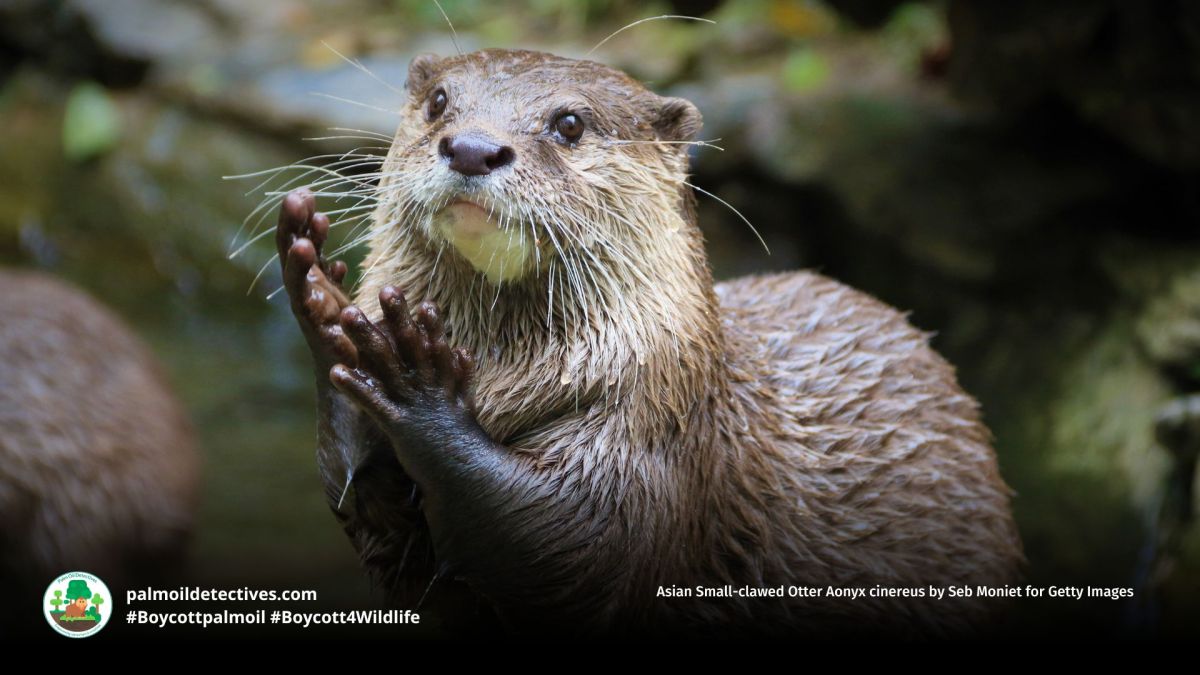
Learn about other animals endangered by palm oil and other agriculture
Learn about “sustainable” palm oil greenwashing
Read more about RSPO greenwashing
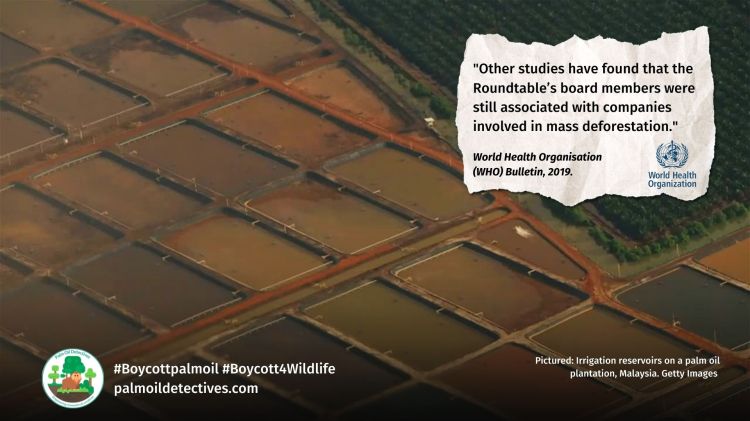
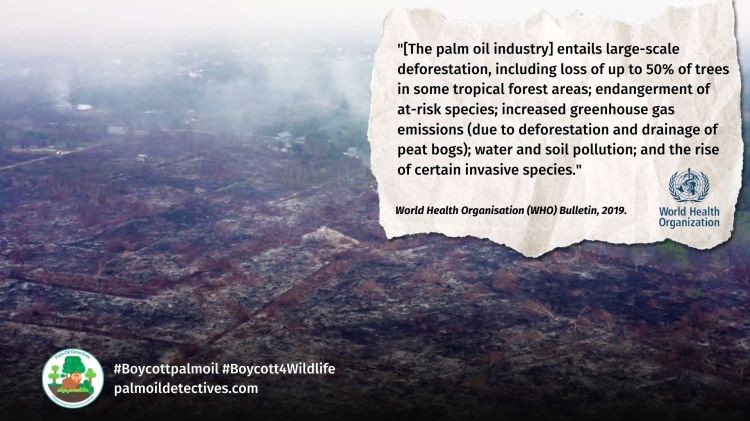
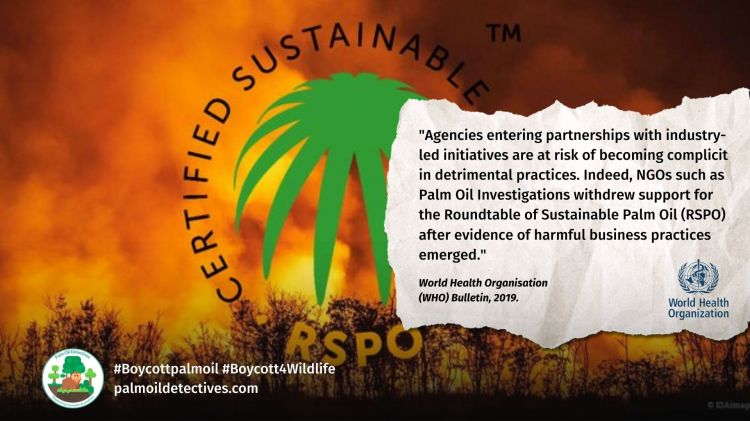
A 2019 World Health Organisation (WHO) report into the palm oil industry and RSPO finds extensive greenwashing of palm oil deforestation and the murder of endangered animals (i.e. biodiversity loss)


Discover more from Palm Oil Detectives
Subscribe to get the latest posts sent to your email.
 Palm Oil Detectives
Thank you Ned 🙂
LikeLiked by 1 person