
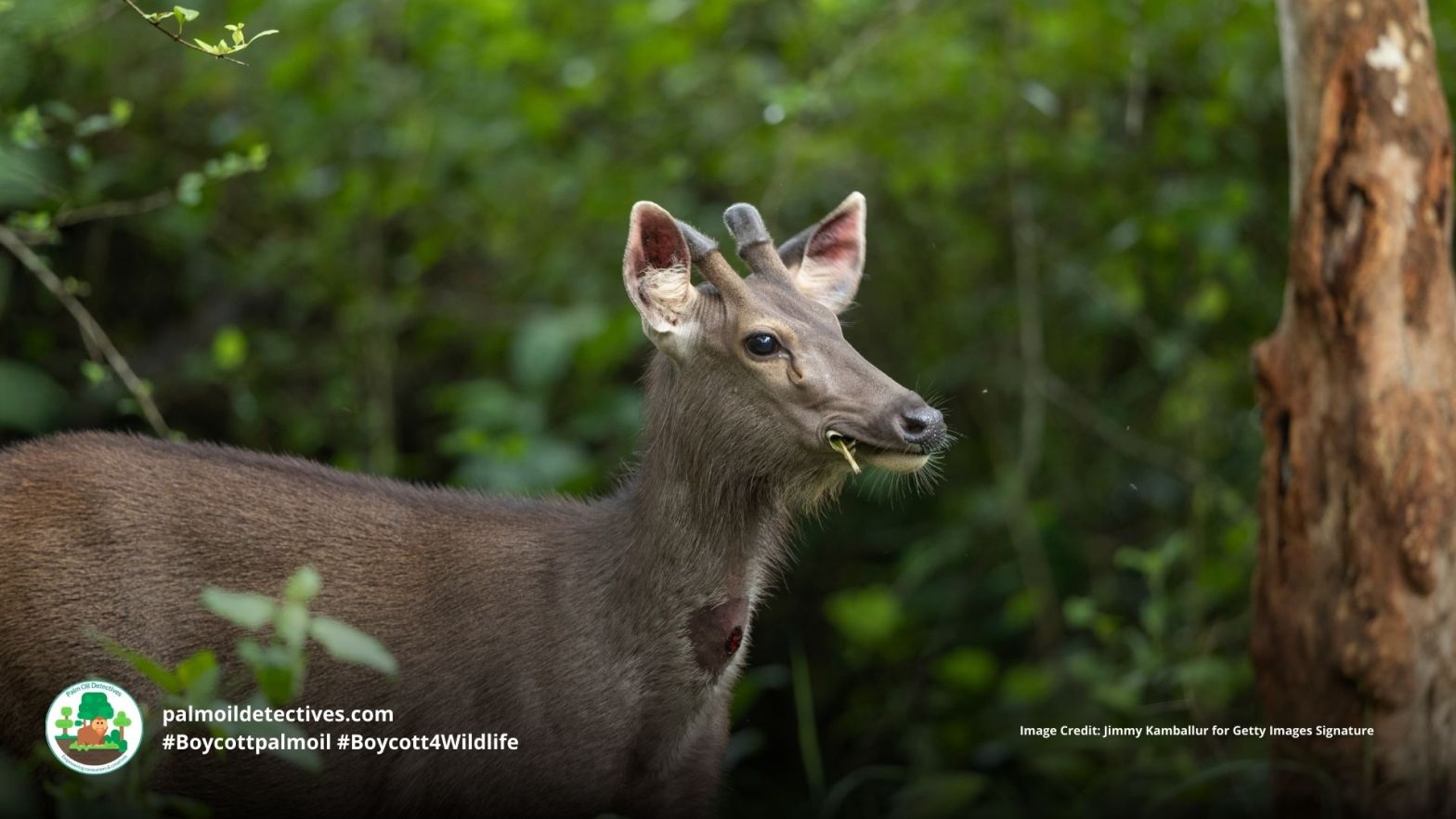
Sambar deer Rusa unicolor
IUCN Red List: Vulnerable
Extant (resident): Bangladesh; Bhutan; Brunei Darussalam; Cambodia; China; India; Indonesia (Sumatera); Laos; Malaysia; Myanmar; Nepal; Sri Lanka; Taiwan; Thailand; Vietnam.
The majestic Sambar deer, cloaked in hues ranging from light brown to dark gray, are distinguished by their rugged antlers and uniquely long tails. Adorned with a coat of coarse hair and marked by a distinctive, blood-red glandular spot on their throats, these deer embody the beauty of the wild. Their adaptability is evident in their alert behavior, silent movements, and the gradual development of their unique spots. Perfectly designed for grazing, these deer use their antlers and feet deftly in defense, relying on their acute senses of hearing and smell to evade predators. To protect these splendid deer and their habitats from the impacts of deforestation and agricultural expansion, especially for palm oil, join the movement: #BoycottPalmOil and #Boycott4Wildlife to aid in their survival.
Sambar deer are #vulnerable from habitat destruction for #timber and #palmoil and relentless hunting. Help them survive, be #vegan for them and #BoycottPalmOil and #Boycott4Wildlife to safeguard these magnificent beings. Learn more via @palmoildetect https://wp.me/pcFhgU-75t
Save the magnificent Sambar #deer, threatened in multiple countries like #India #Malaysia #Indonesia by #palmoil #deforestation and hunting. Fight for them by being #vegan and use your wallet as a weapon #Boycottpalmoil #Boycott4Wildlife @palmoildetect https://wp.me/pcFhgU-75t
Appearance & Behaviour
The enigmatic Sambar deer captivates with their varied coat, ranging from light brown to almost black, highlighted by a grayish or yellowish tinge and complemented by paler underparts.
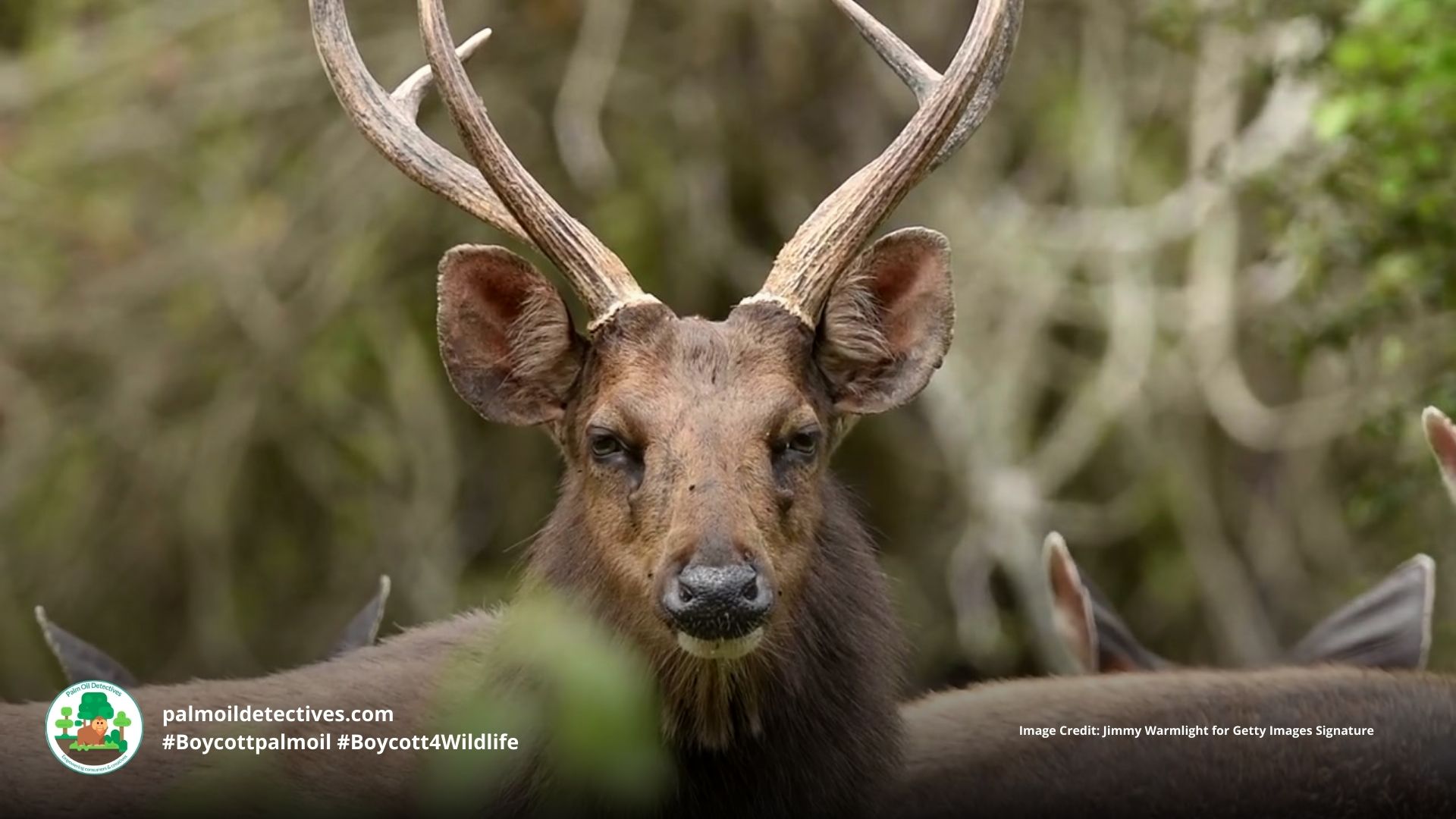
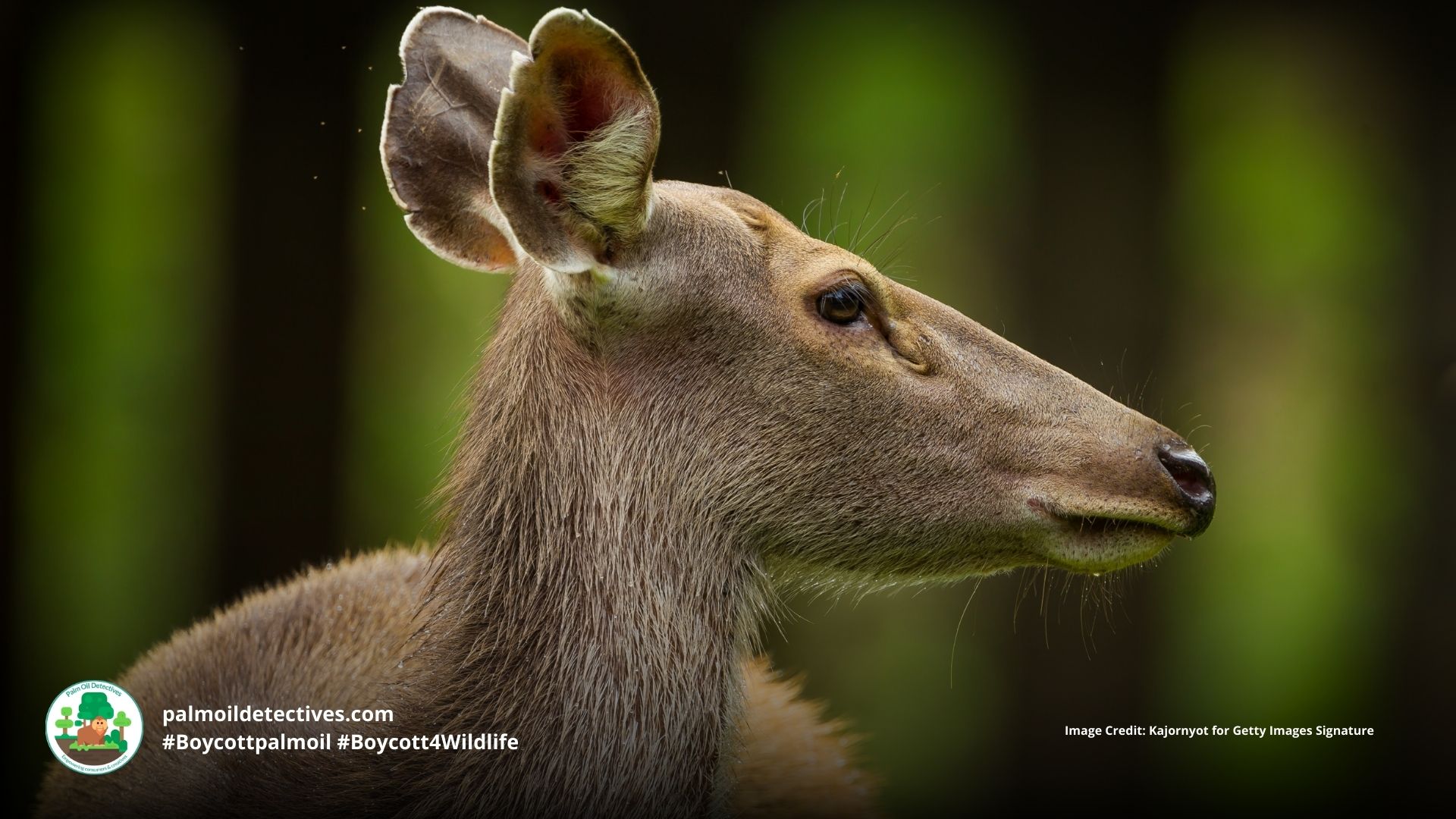
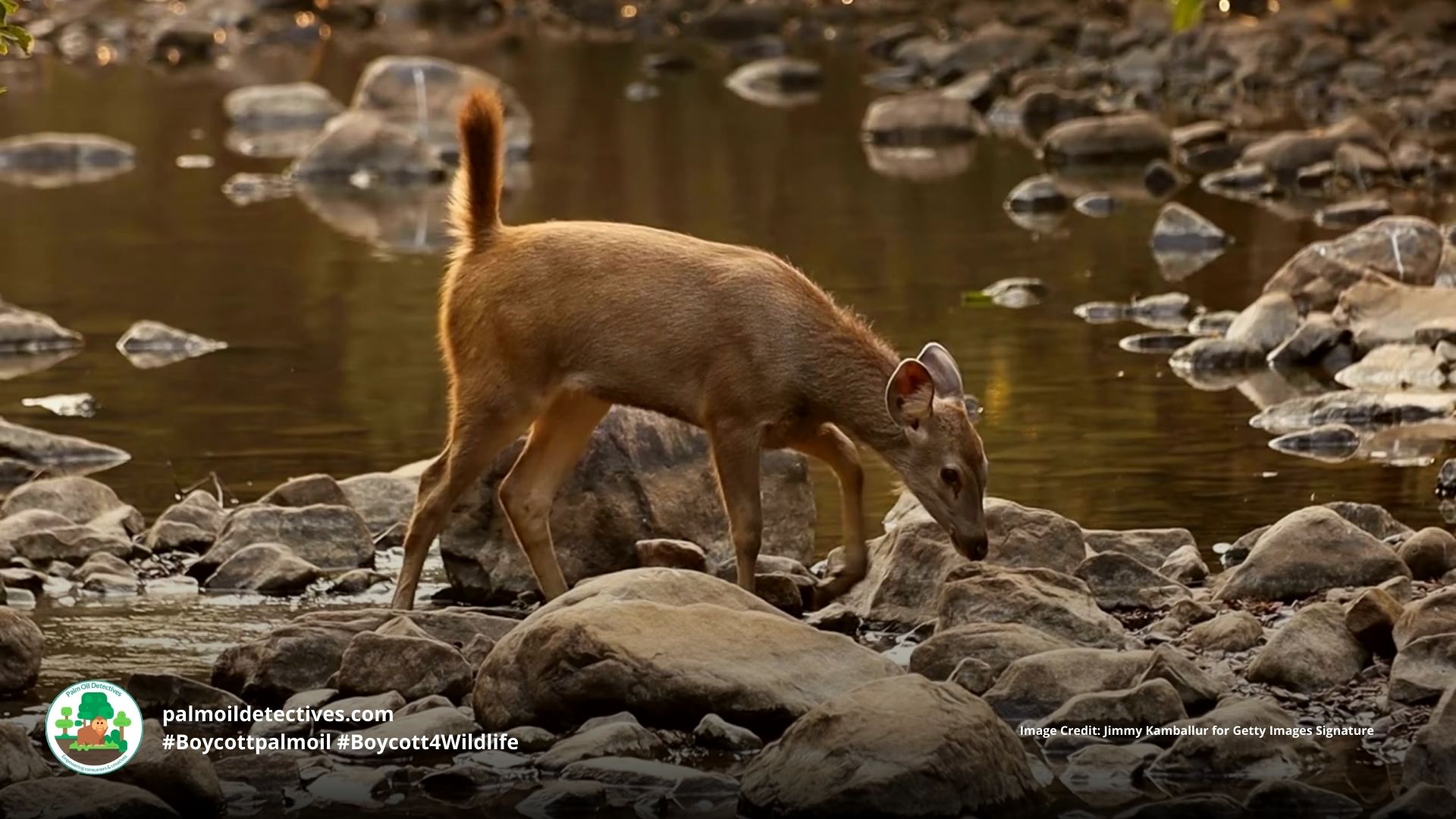
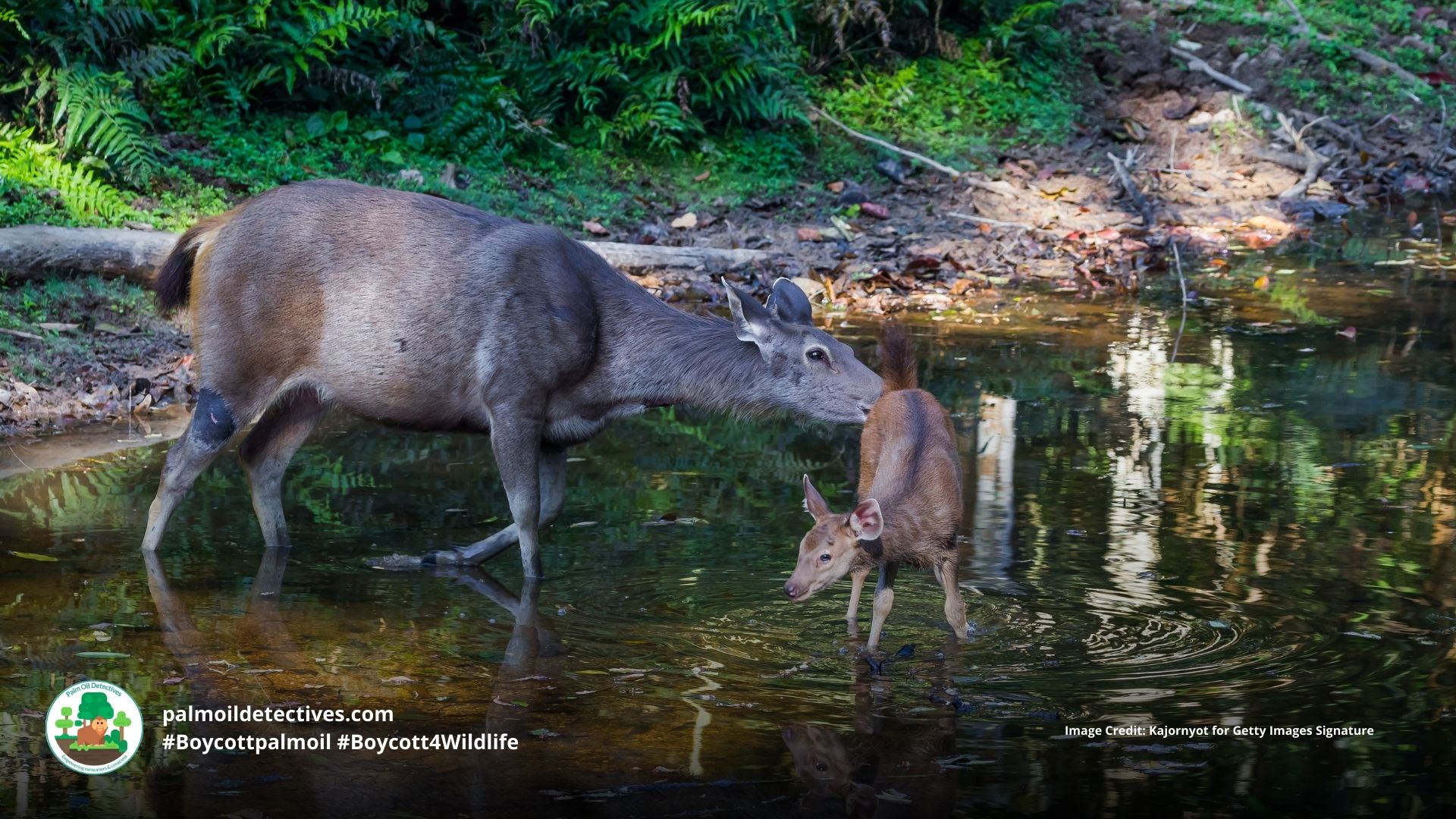
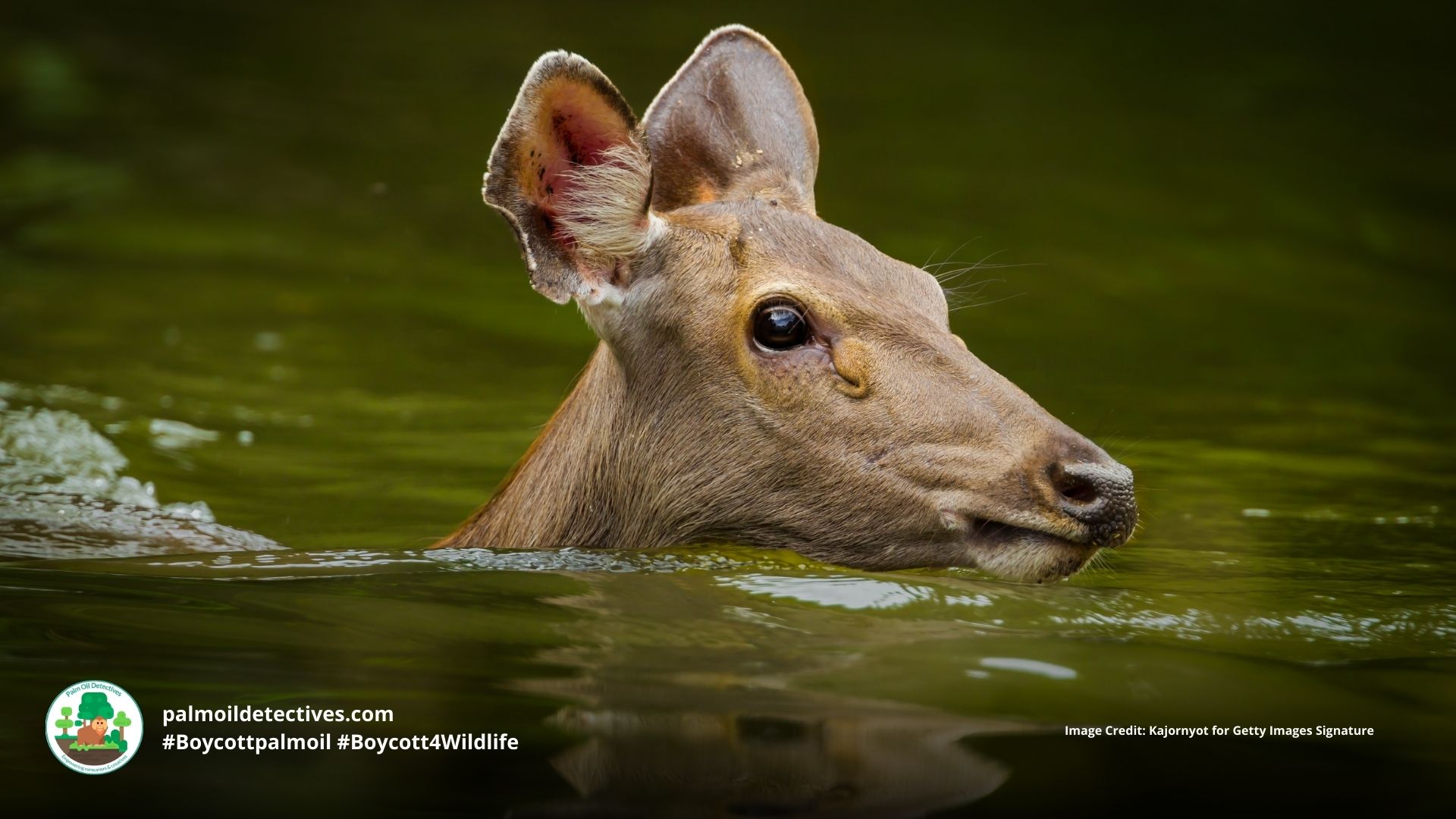
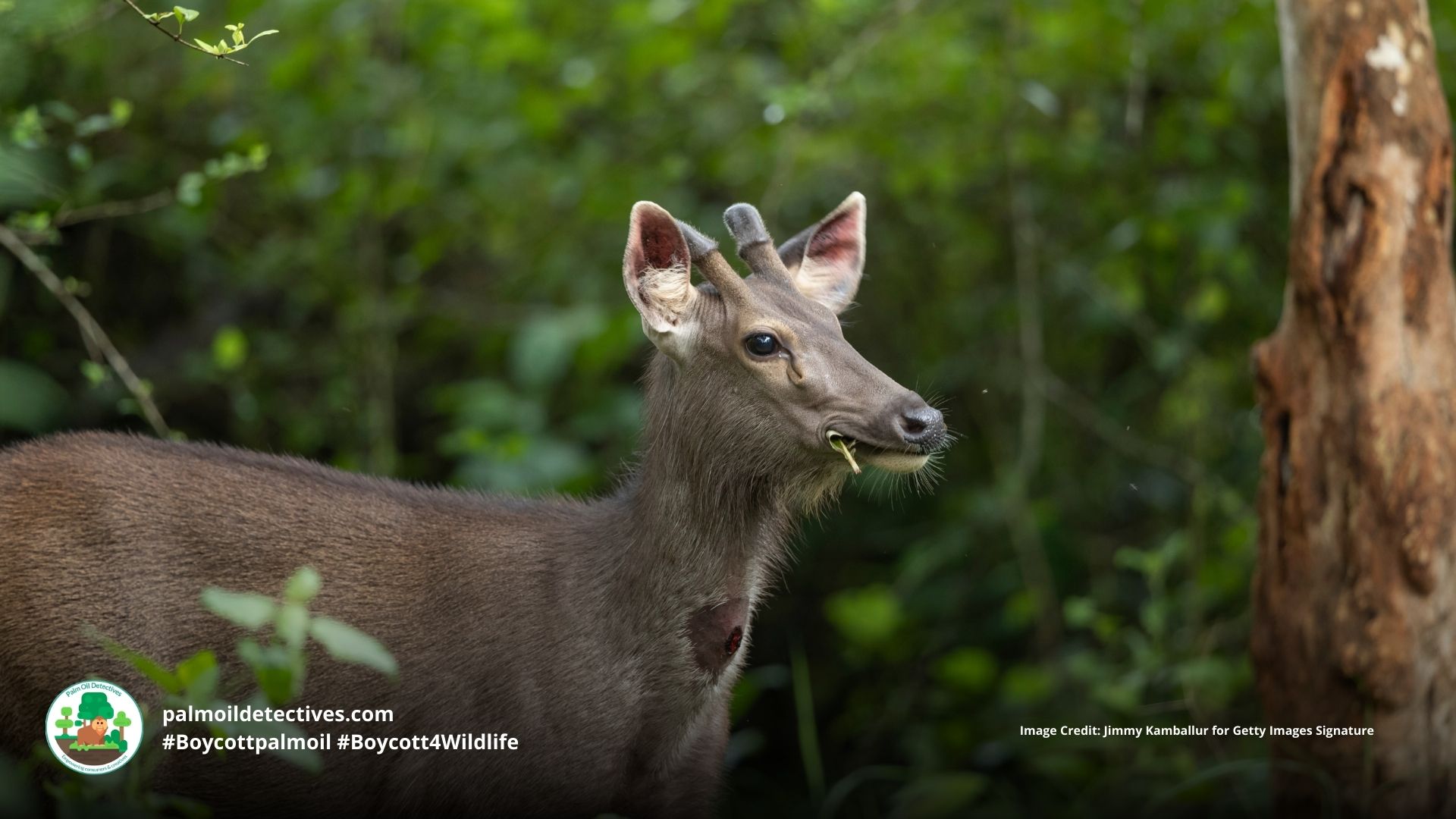
Males boast robust, three-tined antlers, advertising their strength and virility to their female counterparts. Their long tails, a blend of black and white, along with their striking dark brown legs and long, brownish-gray ears, add to their distinct appearance.
Both adult males and some females sport an unusual, hairless, blood-red spot on their throats, a mysterious glandular feature.
These crepuscular beings prefer the solitude of night or twilight and remain largely alone or with small, close-knit herds. Males, particularly nomadic and territorial during breeding seasons, engage in unique behaviors like wallowing in urine-soaked soil and marking trees with their antlers. Females show maternal fierceness and will bravely defend their young, fearlessly confronting predators, especially in shallow waters, forming protective formations, and emitting a resonant ‘pooking’ sound as a warning.
In some cases Sambar deer come together to form large temporary groups, especially in India’s dry deciduous and semi-arid forests. These groupings, sometimes reaching up to 100 individuals near water bodies during peak summer, indicate a complex social structure influenced by environmental conditions.
Threats
- Impact of Agricultural Expansion for Timber and Palm Oil: Agricultural expansion, particularly for timber and palm oil plantations, significantly contributes to the loss of the Sambar deer’s natural habitat. This expansion not only destroys their forest environment but also facilitates easier access for hunters, further escalating the threats to their survival.
- Habitat Encroachment and Hunting: The Sambar deer faces severe threats from habitat encroachment and hunting across their range, especially in the Sundaic region. Logging activities often lead to increased hunting, causing local extinctions. In many areas, such as Sarawak, hunting following logging is the primary threat to ungulates.
- Hunting for Meat and Trade: Sambar deer are a popular source of wild meat and are heavily hunted for this purpose. In Southeast Asia, hunting is largely commercially driven, catering to affluent urban classes and workers in industries like logging. The trade in Sambar meat is extensive, with adult males additionally targeted for their antlers, used as trophies and in traditional medicine.
- Variation in Hunting Patterns and Impact: Hunting methods and intensity vary across the Sambar’s range, with some areas experiencing intense, market-driven hunting. In places like India, even well-protected areas see poaching. The Sambar’s tolerance of habitat degradation ironically makes them more accessible to hunters, exacerbating their decline.
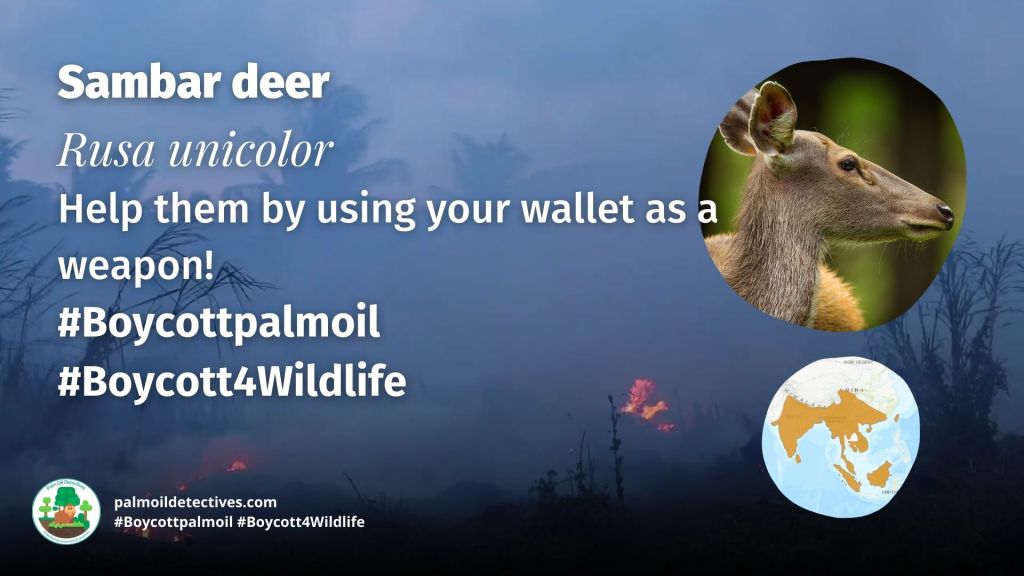
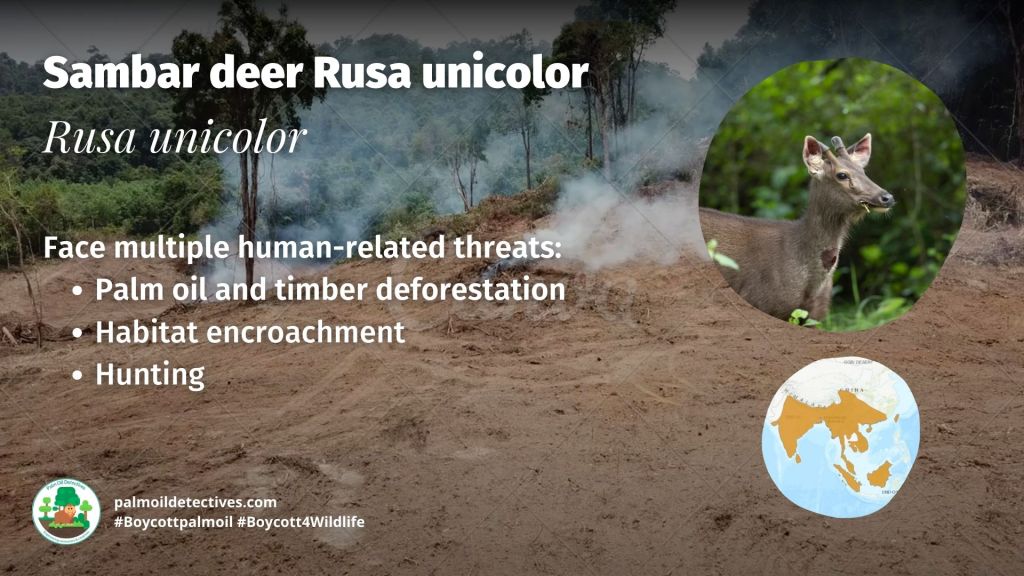
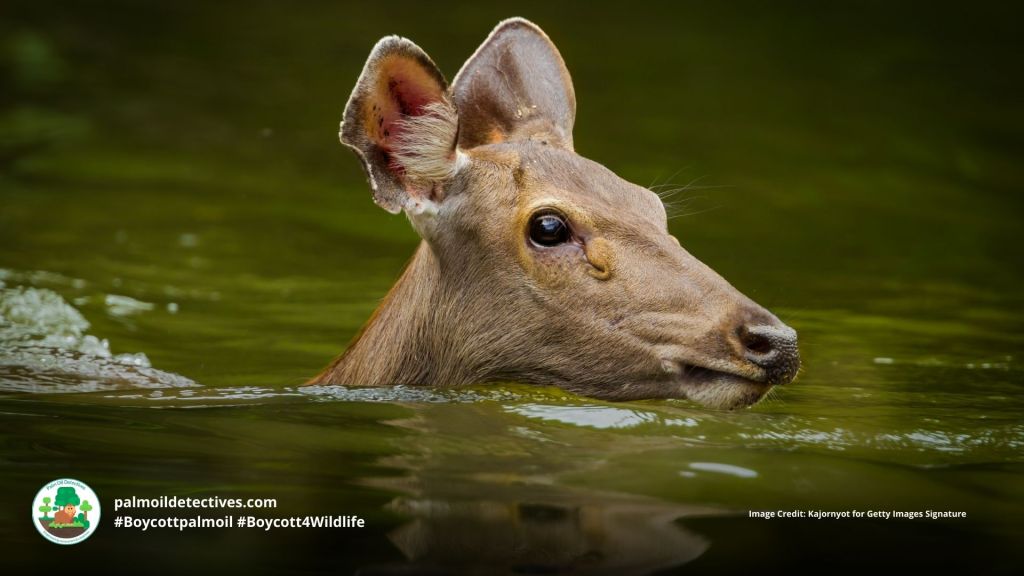
Sambar deer are imperiled by rampant habitat destruction, primarily due to deforestation for timber and palm oil. They are further threatened by relentless hunting. To make a tangible difference in their survival, stand with us in this vital cause, be #vegan for them and #BoycottPalmOil and #Boycott4Wildlife to safeguard these magnificent beings.
Habitat
Sambar deer are renowned for their remarkable adaptability to diverse forest types and environmental conditions, showcasing an impressive geographical range. They are found in various habitats within India, from thorn forests in Gujarat and Rajasthan to the lush evergreen forests of the Western Ghats and northeastern India, and even in the pine and oak forests at the Himalayan foothills. Their adaptability extends beyond India, inhabiting temperate and alpine-zone woodlands in Taiwan, thriving in a wide array of environmental conditions.
Diet
Sambar deer possess a broad diet, consuming a wide variety of plant species, which enables them to thrive in diverse habitats. Depending on the availability of forage, they alternate between grazing and browsing. Their diet varies across different altitudes and regions, reflecting the changes in local plant communities. This dietary flexibility allows them to inhabit regions with varying vegetation, from moist deciduous forests, where they are found in higher densities, to semi-arid forests.
Mating and breeding
Breeding by Sambar deer tends to be seasonal, with a peak in the rutting period observed in various regions. Males, especially during the rut, can travel significant distances, marking territories with scent glands. Fawns are typically born singly, with the birth season peaking in the warmer months. Predation, primarily by tigers, leopards, and dholes, significantly influences their populations, especially in well-protected forest reserves where they are a key prey species.
Sub-species of the Sambar Deer
The Sambar deer has several distinct subspecies, each exhibiting unique characteristics and adaptations to their respective habitats.
- The Sri Lankan Sambar Rusa unicolor unicolor: Found primarily in India and Sri Lanka, this subspecies is noted for being the largest in the genus, boasting the most substantial antlers in terms of both size and body proportions.
- The South China Sambar Rusa unicolor dejeani: Inhabiting Southern China and mainland Southeast Asia, this subspecies ranks second in size, possessing slightly smaller antlers compared to the Indian sambar.
- The Sumatran Sambar Rusa unicolor equina: Native to the Malay Peninsula and Sumatra, these deer are characterized by having smaller antlers in relation to their body size.
- The Bornean Sambar Rusa unicolor brookei: Similar to the Sumatran sambar, the Bornean variant also exhibits smaller antlers when compared to their body size.
- The Formosan Sambar Rusa unicolor swinhoii: This subspecies is identified as the smallest, with antler-body proportions akin to the South China sambar.
Support Sambar Deers by going vegan and boycotting palm oil in the supermarket, it’s the #Boycott4Wildlife
Support the conservation of this species
This animal has no protections in place. Read about other forgotten species here. Create art to support this forgotten animal or raise awareness about them by sharing this post and using the #Boycottpalmoil #Boycott4Wildlife hashtags on social media. Also you can boycott palm oil in the supermarket.
Further Information
Timmins, R., Kawanishi, K., Giman, B, Lynam, A., Chan, B., Steinmetz, R., Sagar Baral, H. & Samba Kumar, N. 2015. Rusa unicolor (errata version published in 2015). The IUCN Red List of Threatened Species 2015: e.T41790A85628124. https://dx.doi.org/10.2305/IUCN.UK.2015-2.RLTS.T41790A22156247.en. Accessed on 29 December 2023.
Sambar Deer on Wikipedia https://en.m.wikipedia.org/wiki/Sambar_deer
Sambar on the Animalia.bio website https://en.m.wikipedia.org/wiki/Sambar_deer

How can I help the #Boycott4Wildlife?
Take Action in Five Ways
1. Join the #Boycott4Wildlife on social media and subscribe to stay in the loop: Share posts from this website to your own network on Twitter, Mastadon, Instagram, Facebook and Youtube using the hashtags #Boycottpalmoil #Boycott4Wildlife.
2. Contribute stories: Academics, conservationists, scientists, indigenous rights advocates and animal rights advocates working to expose the corruption of the palm oil industry or to save animals can contribute stories to the website.






3. Supermarket sleuthing: Next time you’re in the supermarket, take photos of products containing palm oil. Share these to social media along with the hashtags to call out the greenwashing and ecocide of the brands who use palm oil. You can also take photos of palm oil free products and congratulate brands when they go palm oil free.
4. Take to the streets: Get in touch with Palm Oil Detectives to find out more.
5. Donate: Make a one-off or monthly donation to Palm Oil Detectives as a way of saying thank you and to help pay for ongoing running costs of the website and social media campaigns. Donate here
Learn about other animals endangered by palm oil and other agriculture
Learn about “sustainable” palm oil greenwashing
Read more about RSPO greenwashing
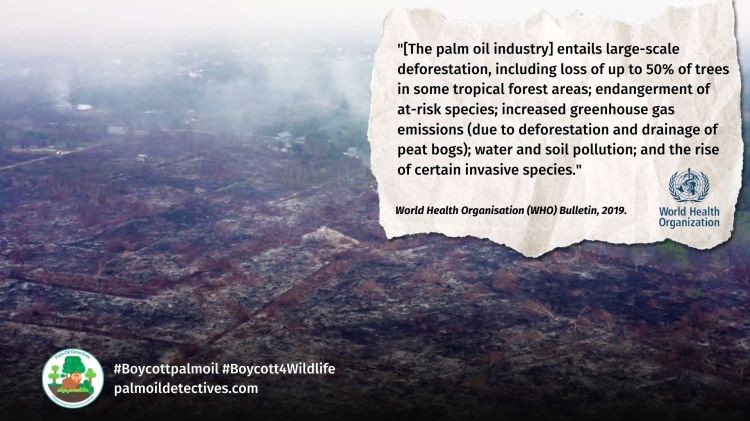
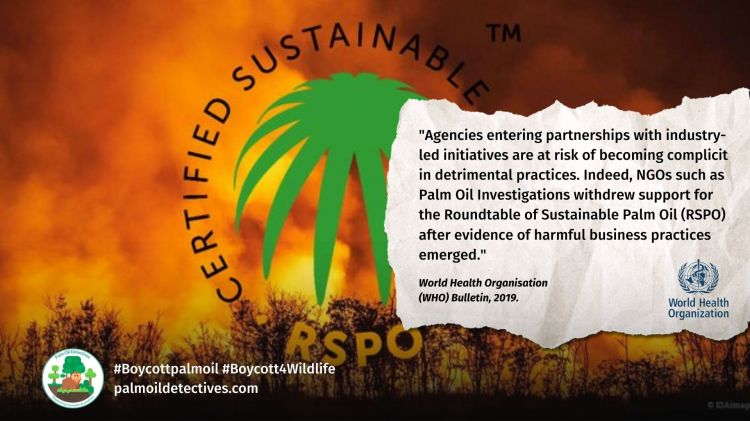
A 2019 World Health Organisation (WHO) report into the palm oil industry and RSPO finds extensive greenwashing of palm oil deforestation and the murder of endangered animals (i.e. biodiversity loss)



Discover more from Palm Oil Detectives
Subscribe to get the latest posts sent to your email.
 Palm Oil Detectives