
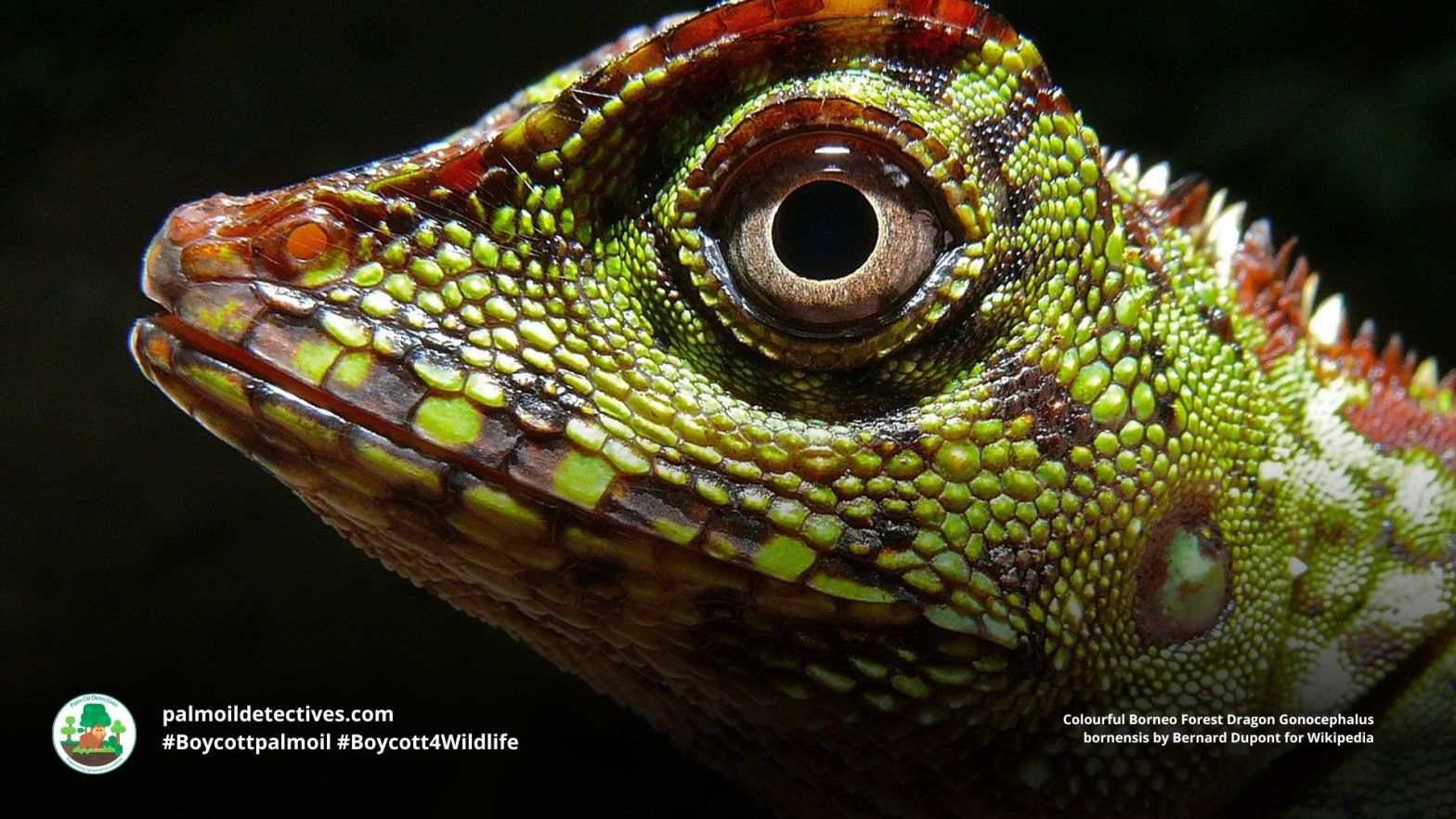
Borneo Forest Dragon Gonocephalus bornensis
Extant (resident): Brunei Darussalam; Indonesia (Kalimantan); Malaysia (Sarawak, Sabah)
The #Borneo Forest Dragon, also known as the Borneo Anglehead #Lizard is a vividly coloured lizard native to Borneo. This arboreal #reptile is known for their prominent crest and beautifully camouflaged body, allowing them to blend seamlessly into their rainforest surroundings. Found primarily in undisturbed and secondary rainforests, the Borneo Forest Dragon thrives in humid environments, often near streams.
Although the latest assessment by IUCN Red List revealed that they are ‘least concern’, the plans to move the capital of Indonesia to Kalimantan is concerning to conservationists and animal lovers alike. Rampant habitat loss from #palmoil and #timber #deforestation on the island of Borneo posses a grave threat. Protect these striking animals and their rainforest home when you #BoycottPalmOil #Boycott4Wildlife!
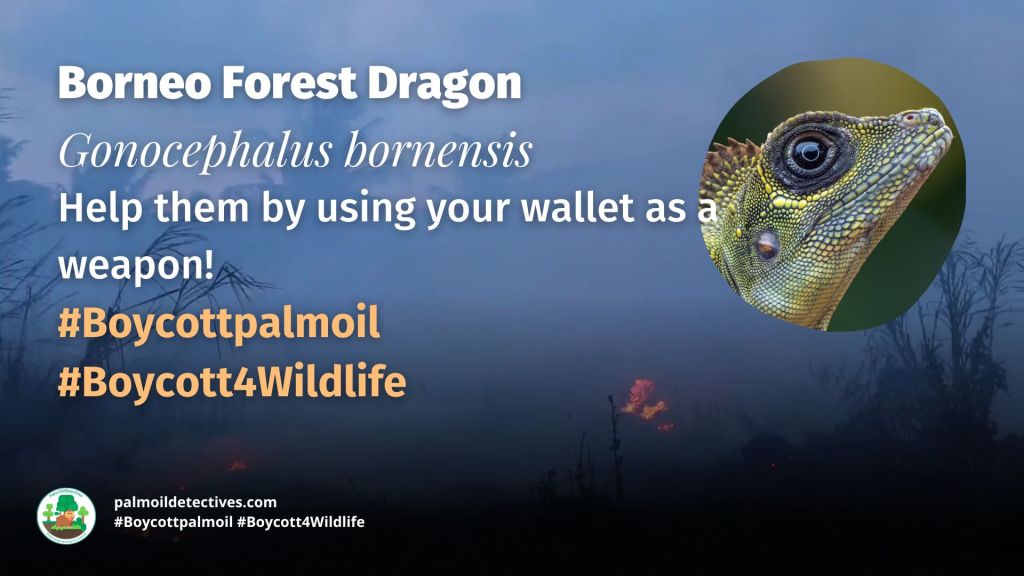
Cheeky, charismatic Borneo Forest #Dragons 🦎are the most beautiful #lizards you’ve never heard of. Living inside of #Borneo’s #forests, threats include #palmoil #deforestation and more. Help them survive #Boycottpalmoil #Boycott4Wildlife @palmoildetect https://wp.me/pcFhgU-8PU
Borneo Forest Dragons 🦎 are cold-blooded #reptile royalty in the #rainforests of #Malaysia and #Indonesia. Endless forests are being destroyed for #palmoil and #mining. Fight for #lizards 👊💚when u shop #Boycottpalmoil #Boycott4Wildlife @palmoildetect https://wp.me/pcFhgU-8PU
Appearance & Behaviour
Male Borneo Forest Dragons are bigger than females, with longer tails and a more prominent crest. They lay up to four eggs per clutch, which are deposited in a small burrow in the soil. Their colouration provides excellent camouflage from predators in the rainforest canopy, where they spend most of their time.
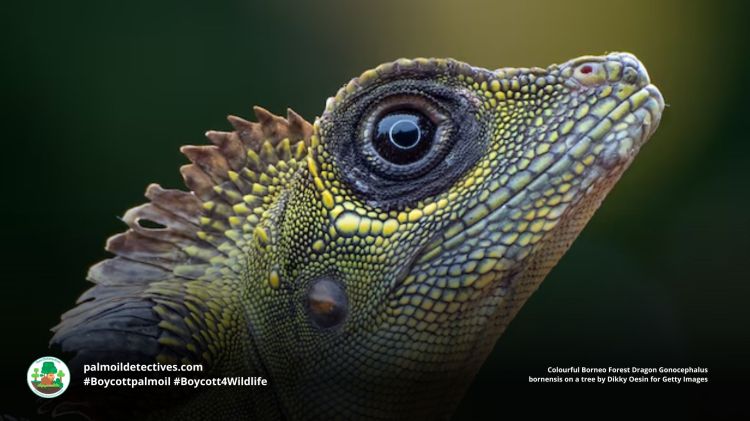
Males can grow to up to 13.6 cm long and with longer tails than females, who are slightly smaller. These lizards stand out thanks to the crest on their necks and backs, which looks like a sharp, lance-shaped ridge. Males and females show colour dimorphism, with males typically brown, olive, and green, with dark patterns. Meanwhile females have a striking rust-red colour with oval spots on their sides.
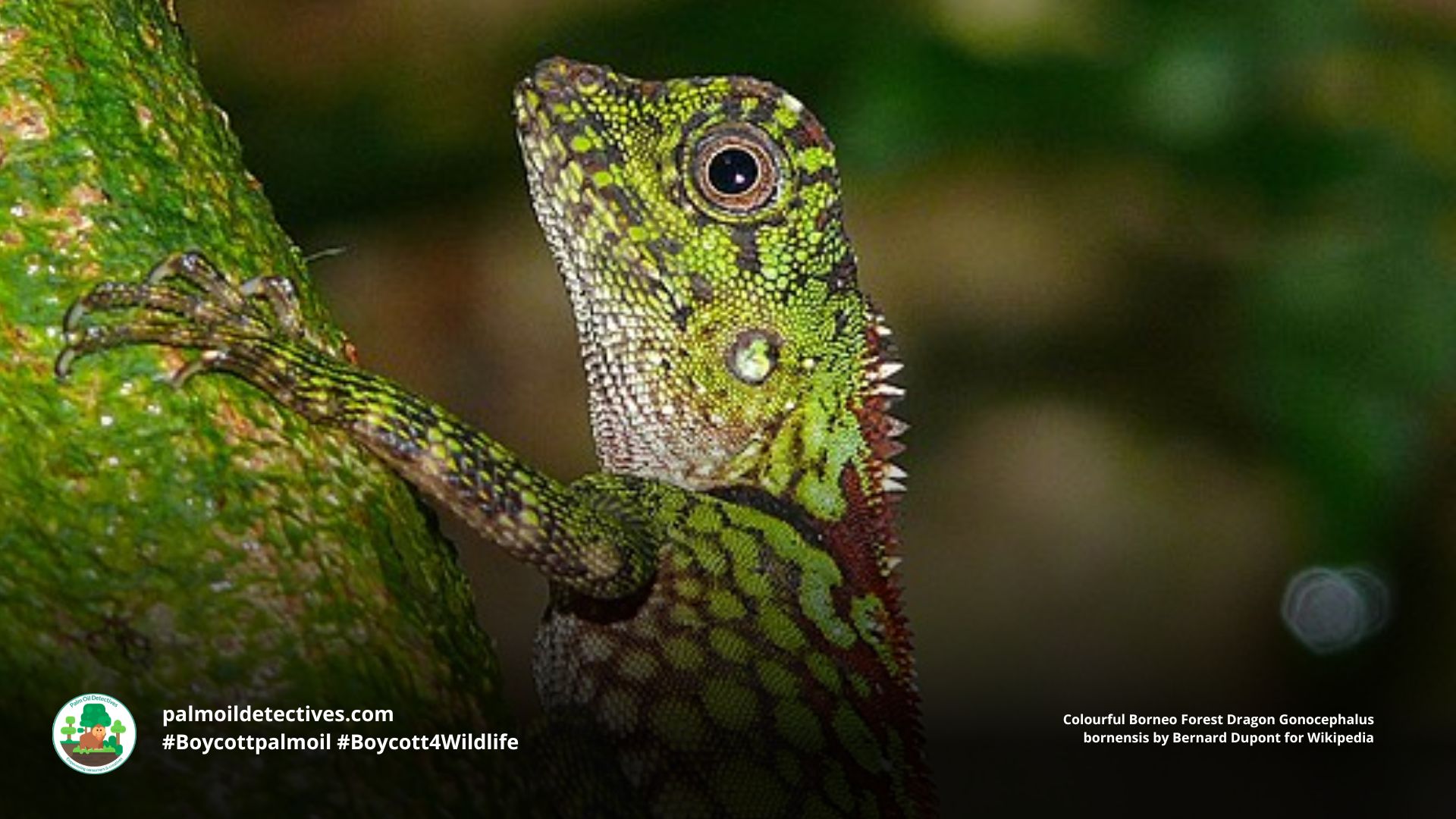
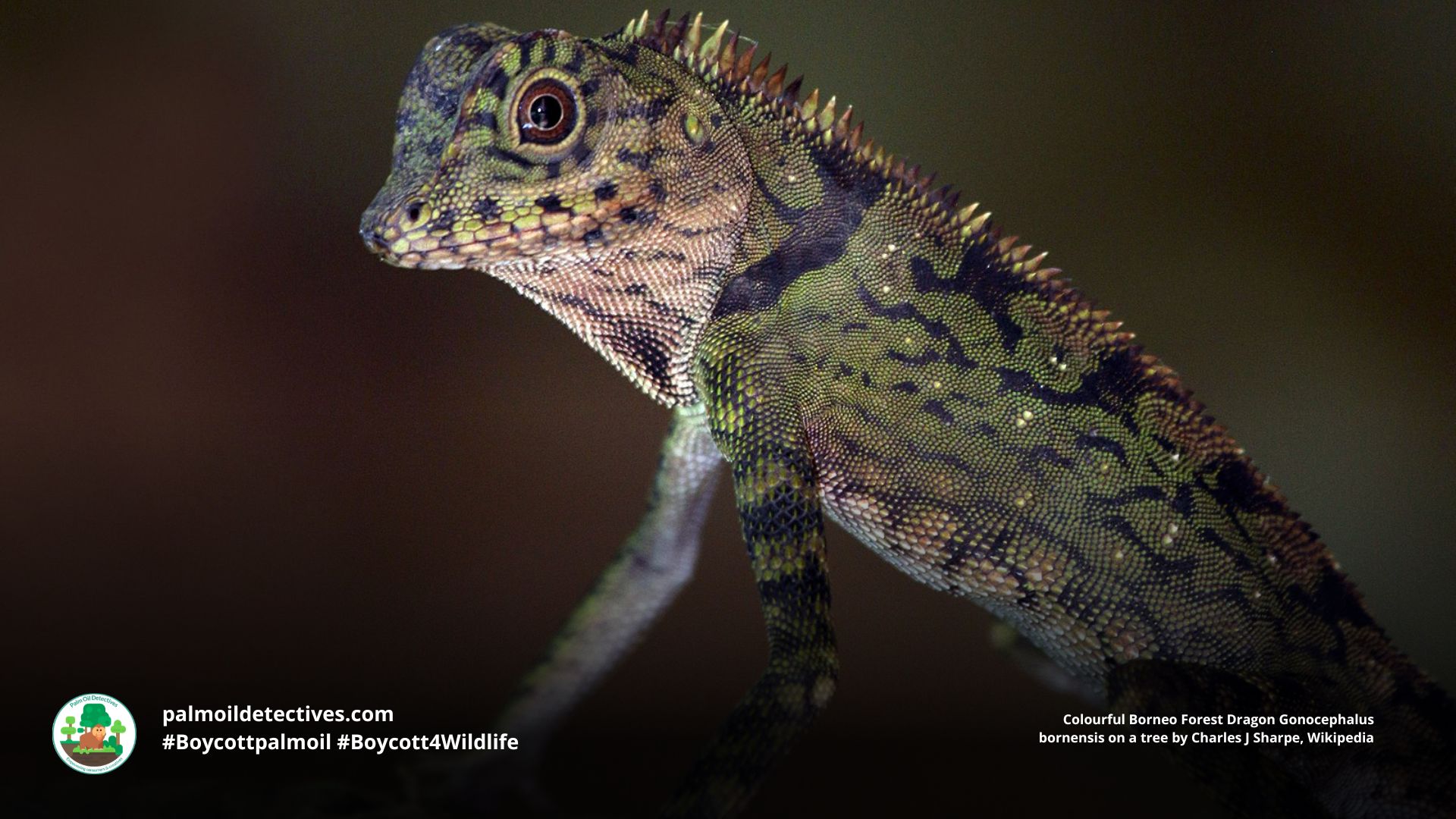
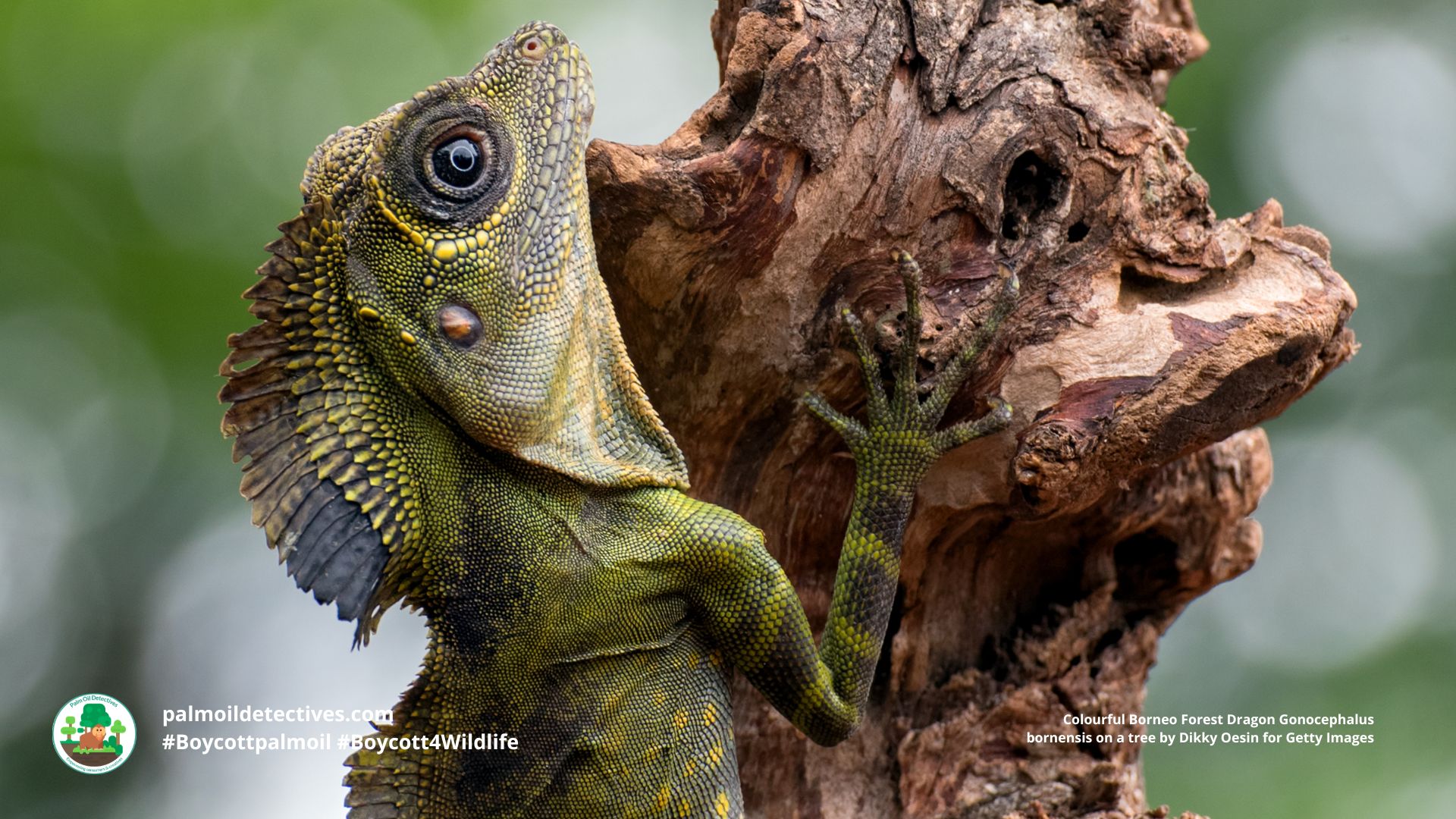
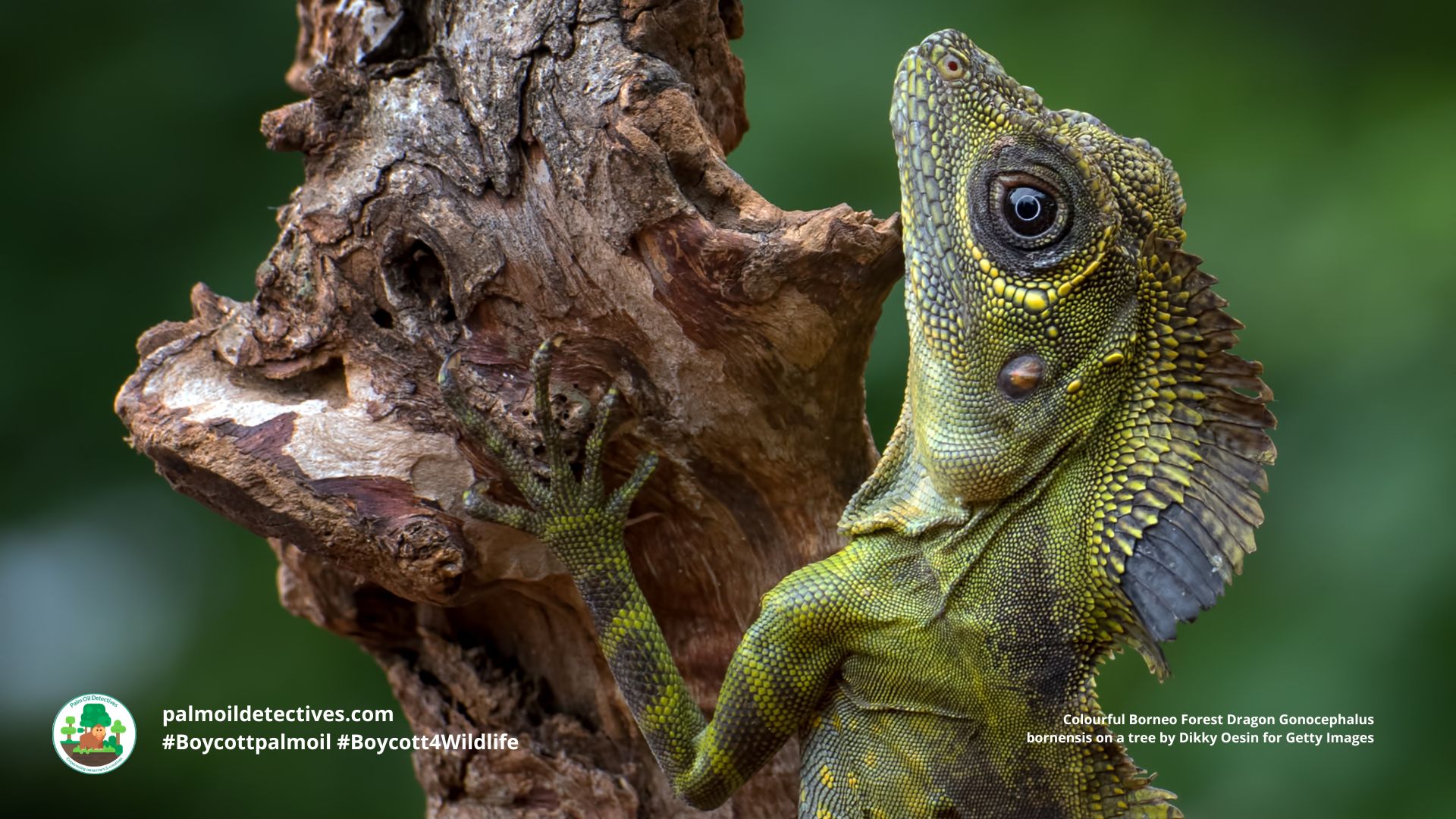
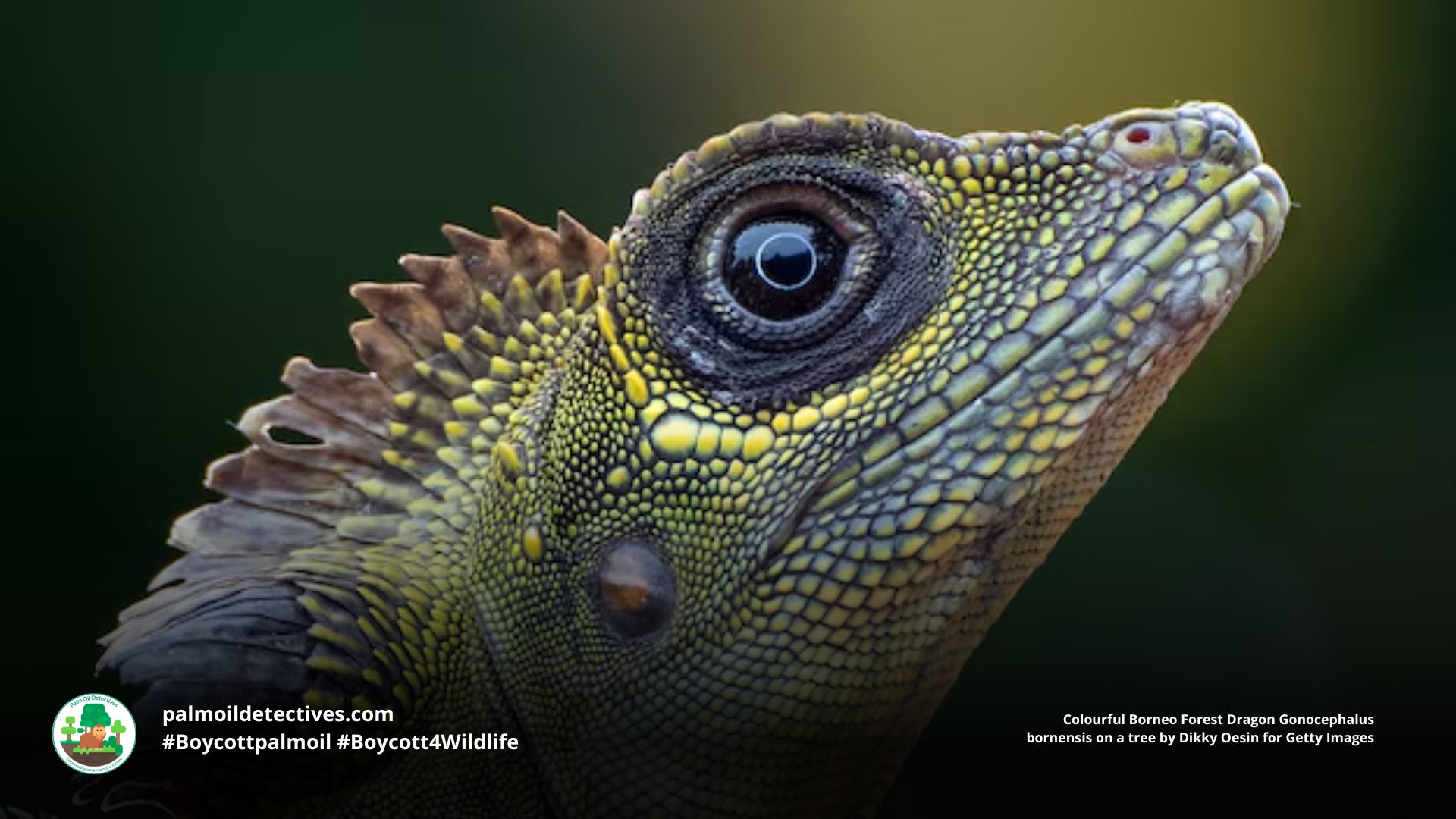
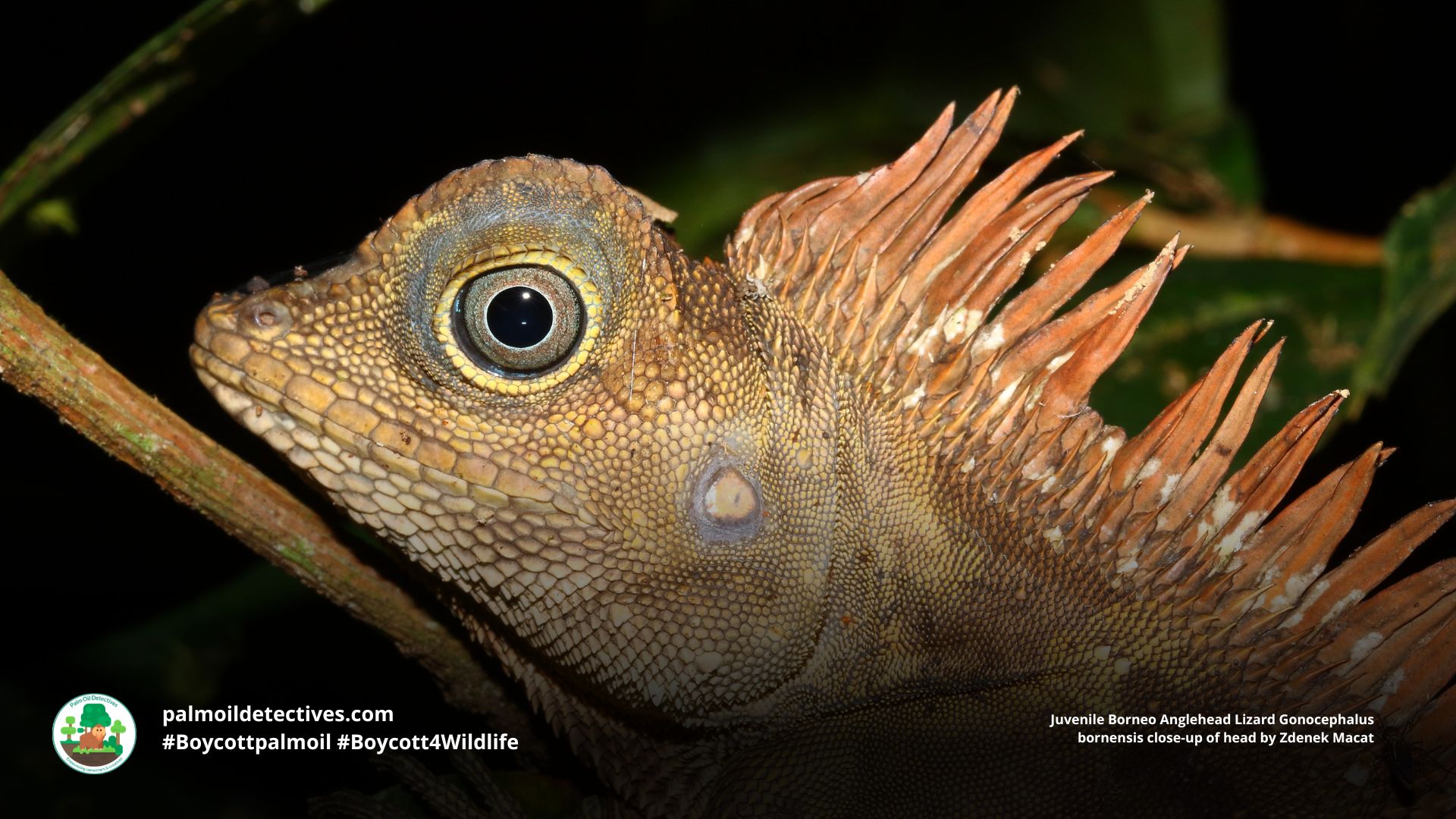
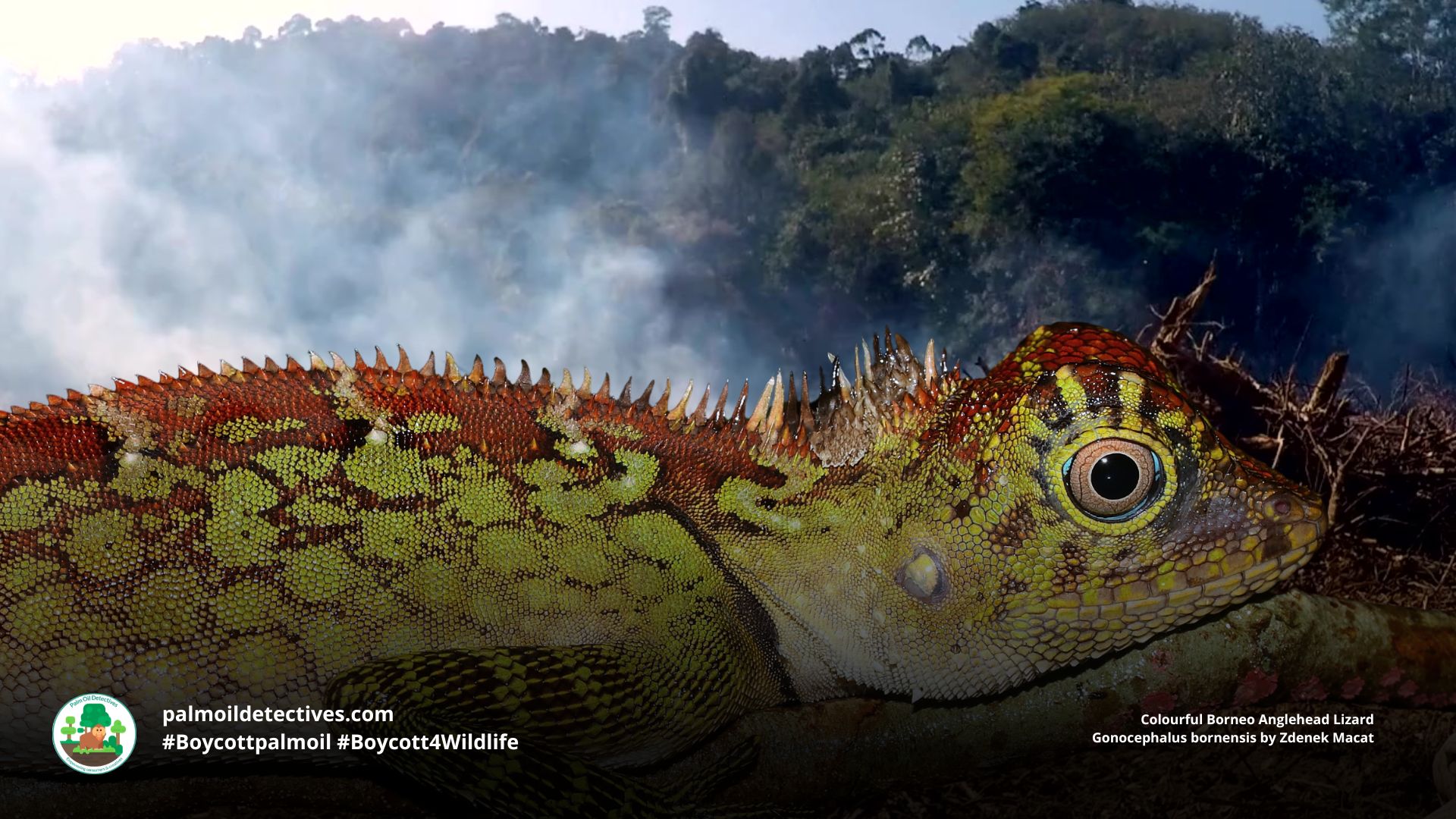
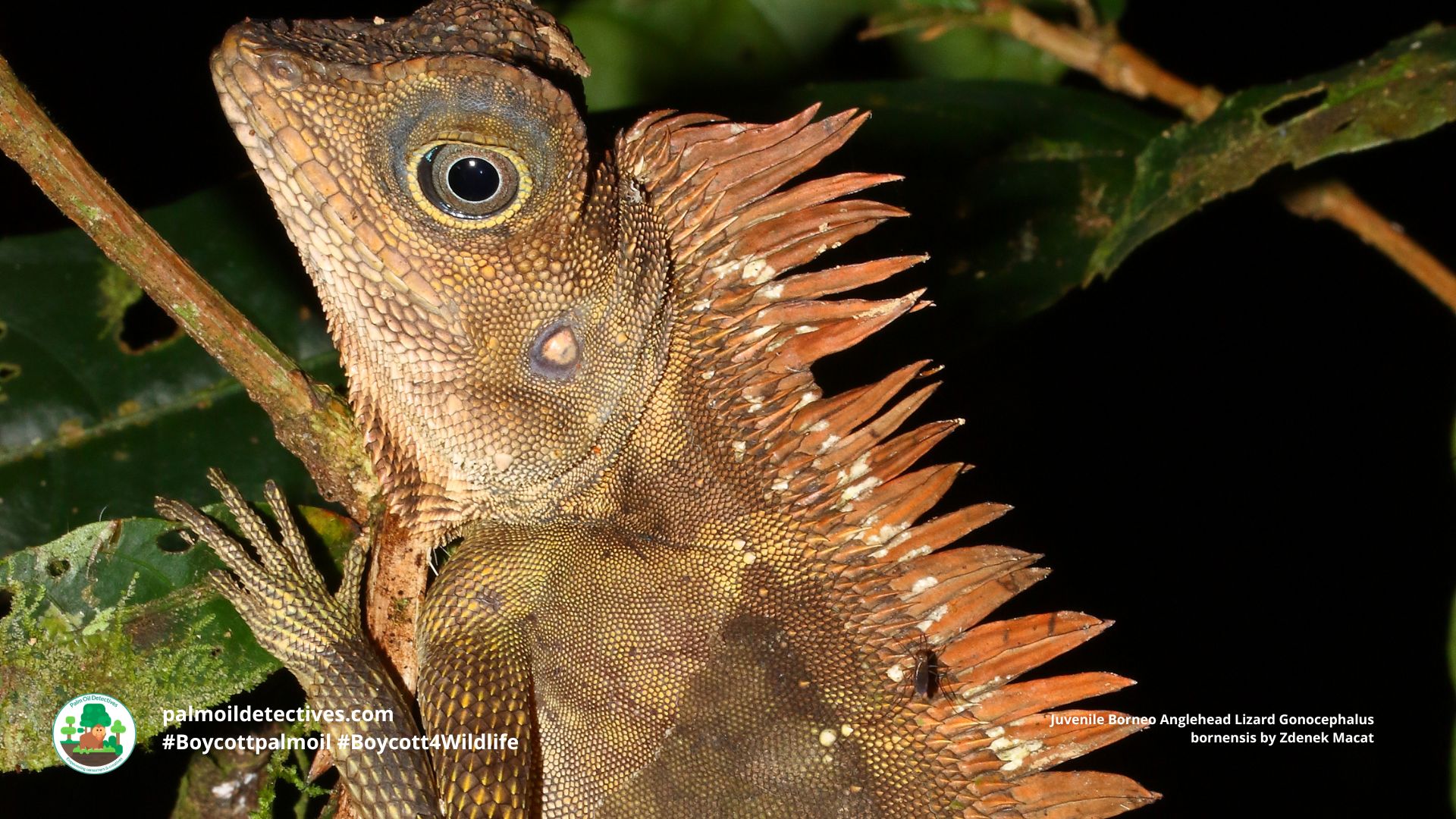
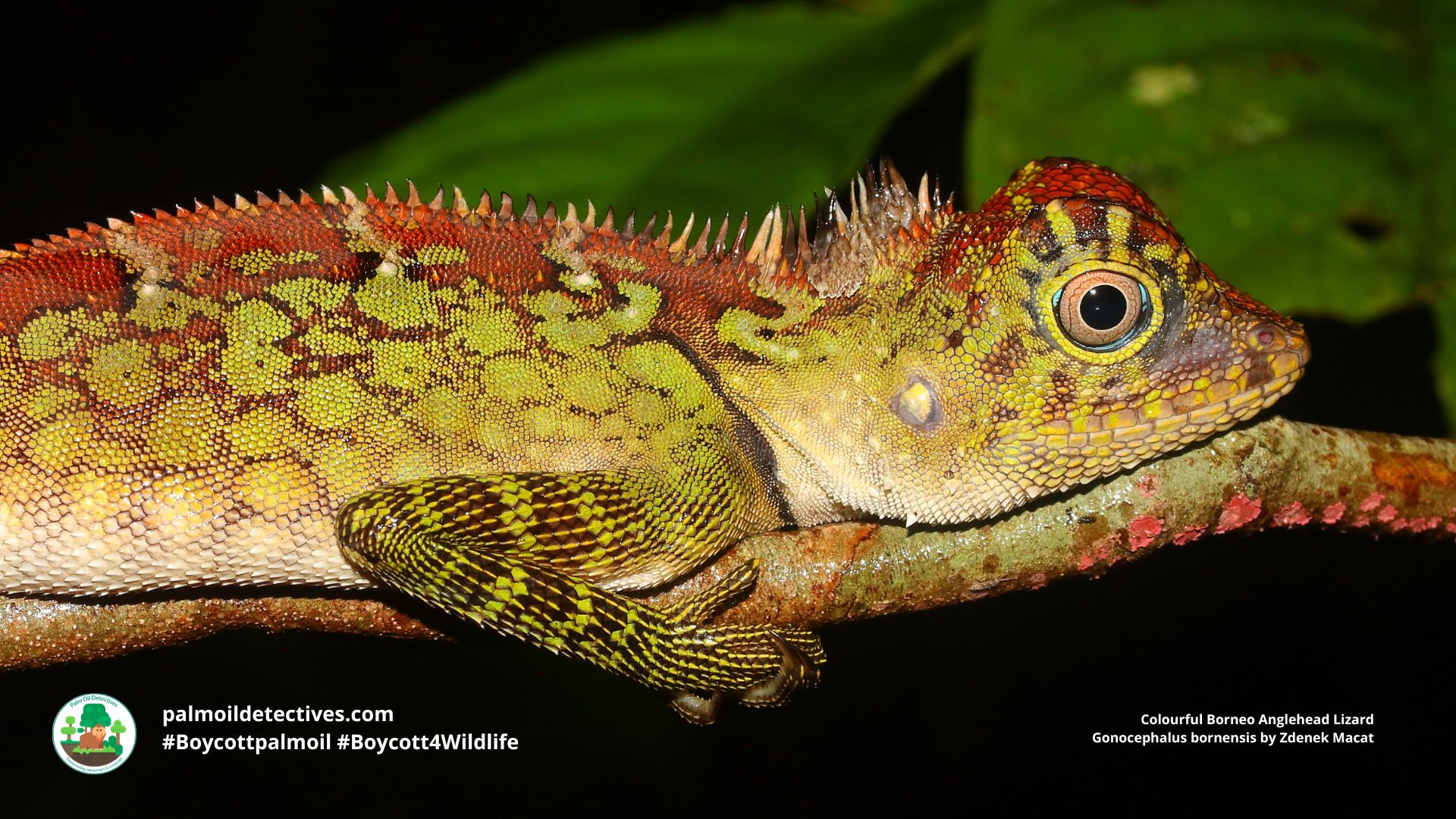
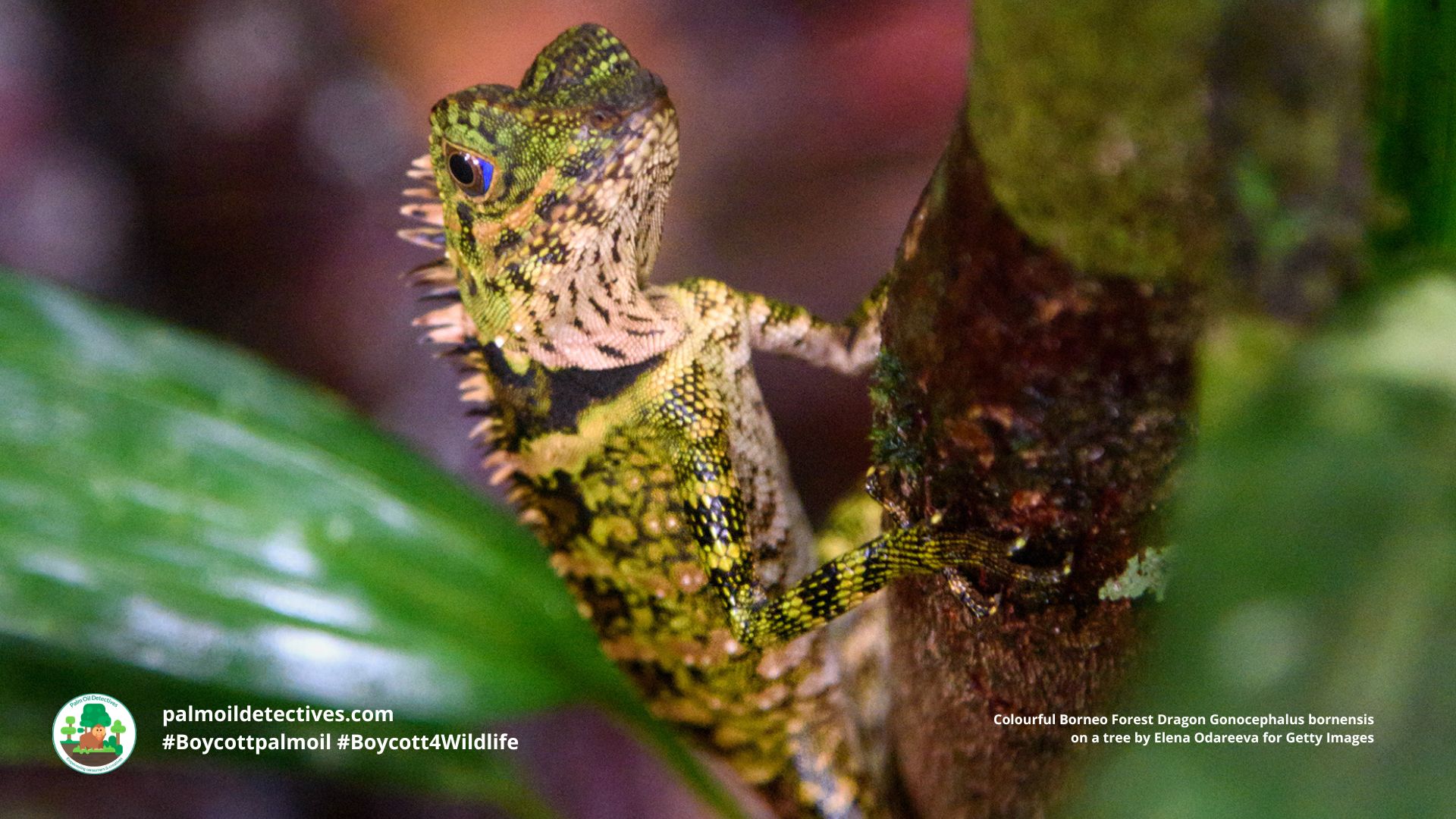
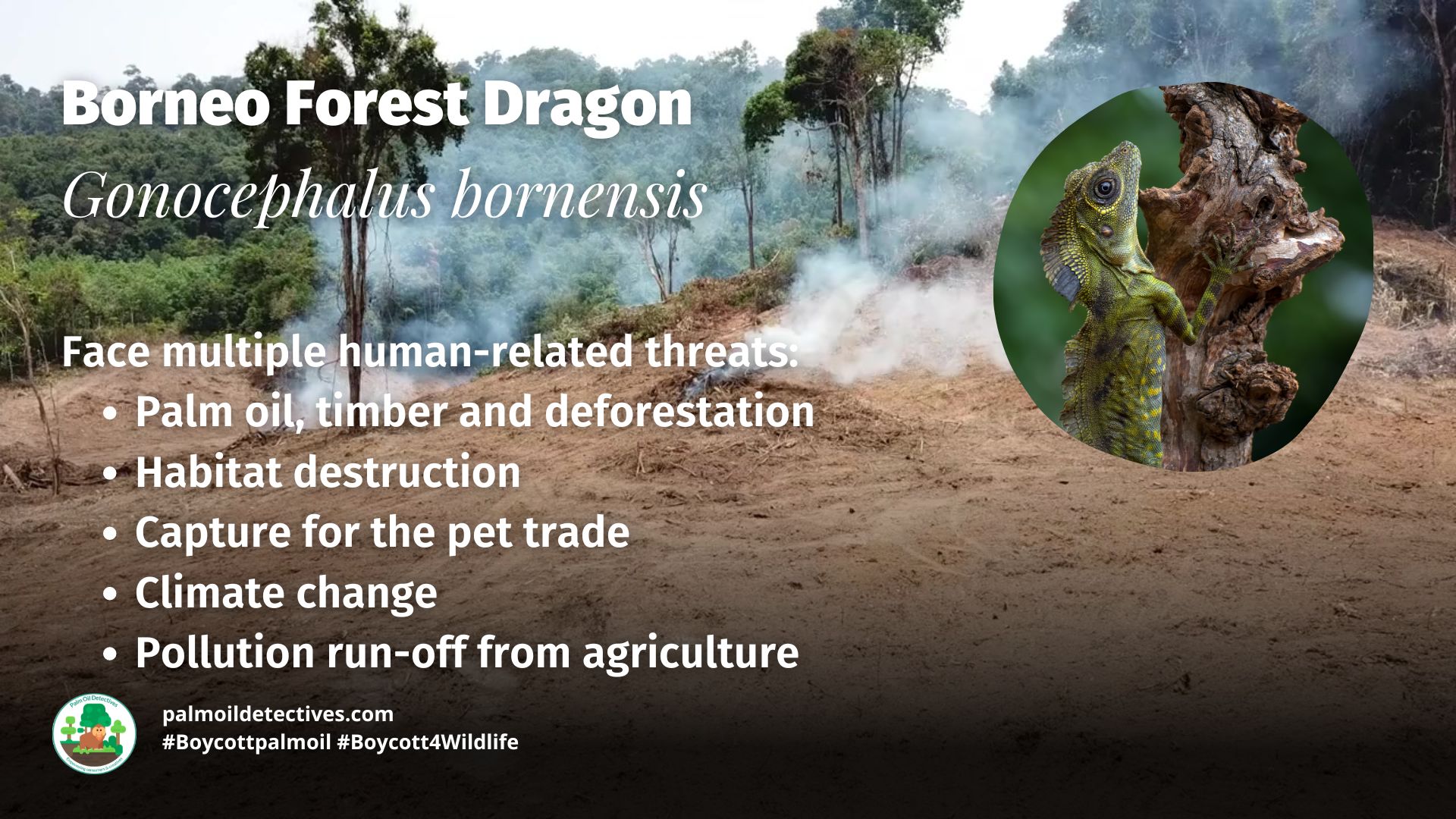
Found in the vines and tree trunks of primary and secondary rainforests, these lizards are tree-dwellers, spending most of their time in the forest canopy. When they feel threatened, they raise their bodies and flare the crest on their neck to look bigger.
Threats
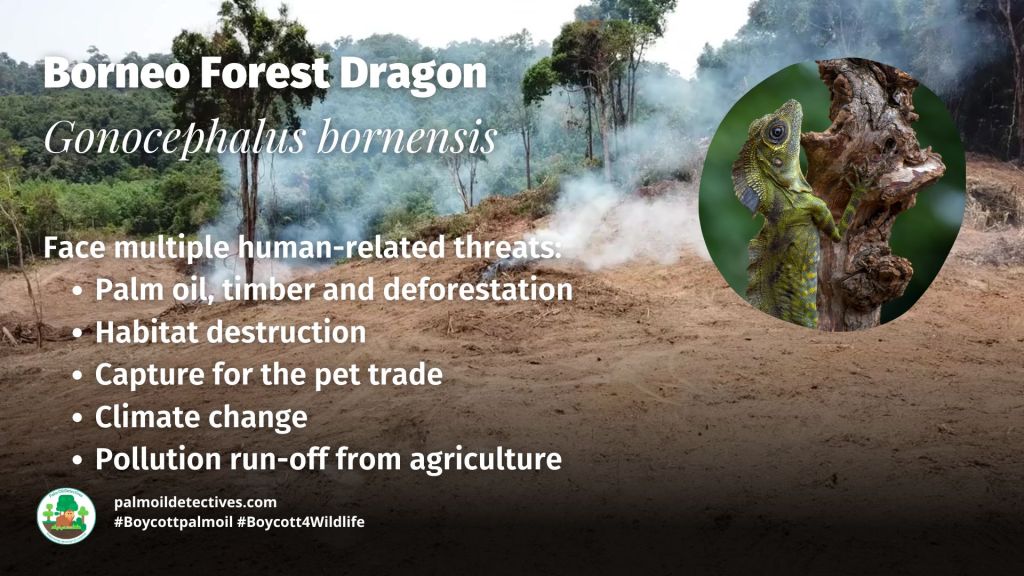
Palm oil and timber deforestation
The primary threat to the Borneo Forest Dragon is habitat loss due to the clearing of forests for agriculture, including palm oil plantations, and logging activities. As rainforests are cut down, lizards lose access to the trees they depend on for shelter, food, and breeding sites. Fragmentation of their habitat isolates populations and increases their vulnerability to other threats. They are also threatened by agricultural run-off and toxic pesticides impacting their fragile ecosystem.
Habitat destruction
Selective logging and human encroachment have fundamentally changed the structure of the forest making it less suitable for arboreal species like the Borneo Forest Dragon and other reptiles. Secondary forests, while still viable habitats, do not offer the same quality of resources as primary forests.
Climate change
Extreme weather and changes to rainfall patterns due to climate change are likely to threaten their rainforest ecosystem. This shift in weather conditions may disrupt their breeding and food availability, forcing them to move to less suitable environments.
Diet
The Borneo Forest Dragon is an insectivore, feeding primarily on small invertebrates found in their rainforest habitat. These lizards may opportunistically eat other small prey available in the forest, hunting in the trees.
Mating & Reproduction
Borneo anglehead lizards reproduce by laying eggs. Females deposit up to four eggs in a small burrow dug in the soil. The eggs, which are around 22 mm in length, are laid at intervals of three months. The species’ arboreal nature means they rely on well-structured forests with plenty of trees and lianas for shelter and nesting sites.
Habitat
The Borneo Forest Dragon is endemic to the island of Borneo. Their range includes Malaysia (Sabah and Sarawak) and Indonesia (Kalimantan), along with the Kingdom of Brunei. The Borneo Anglehead Lizard inhabits primary and secondary rainforests up to 700 metres above sea level. Preferring humid environments near streams where they can find abundant food and nesting sites.
Support the Borneo Forest Dragon by going vegan and boycotting palm oil in the supermarket, it’s the #Boycott4Wildlife
Support the conservation of this species
This animal has no protections in place. Read about other forgotten species here. Create art to support this forgotten animal or raise awareness about them by sharing this post and using the #Boycottpalmoil #Boycott4Wildlife hashtags on social media. Also you can boycott palm oil in the supermarket.
Further Information
Ecology Asia. (2024). Borneo anglehead lizard. Retrieved from https://www.ecologyasia.com/verts/lizards/borneo-anglehead-lizard.htm
Iskandar, D. & McGuire, J. 2019. Gonocephalus bornensis. The IUCN Red List of Threatened Species 2019: e.T99929470A99929479. https://dx.doi.org/10.2305/IUCN.UK.2019-3.RLTS.T99929470A99929479.en. Accessed on 15 September 2024.
Wikipedia contributors. (2024). Gonocephalus bornensis. In Wikipedia, The Free Encyclopedia. Retrieved from https://en.wikipedia.org/wiki/Gonocephalus_bornensis

How can I help the #Boycott4Wildlife?
Take Action in Five Ways
1. Join the #Boycott4Wildlife on social media and subscribe to stay in the loop: Share posts from this website to your own network on Twitter, Mastadon, Instagram, Facebook and Youtube using the hashtags #Boycottpalmoil #Boycott4Wildlife.
2. Contribute stories: Academics, conservationists, scientists, indigenous rights advocates and animal rights advocates working to expose the corruption of the palm oil industry or to save animals can contribute stories to the website.




3. Supermarket sleuthing: Next time you’re in the supermarket, take photos of products containing palm oil. Share these to social media along with the hashtags to call out the greenwashing and ecocide of the brands who use palm oil. You can also take photos of palm oil free products and congratulate brands when they go palm oil free.
4. Take to the streets: Get in touch with Palm Oil Detectives to find out more.
5. Donate: Make a one-off or monthly donation to Palm Oil Detectives as a way of saying thank you and to help pay for ongoing running costs of the website and social media campaigns. Donate here
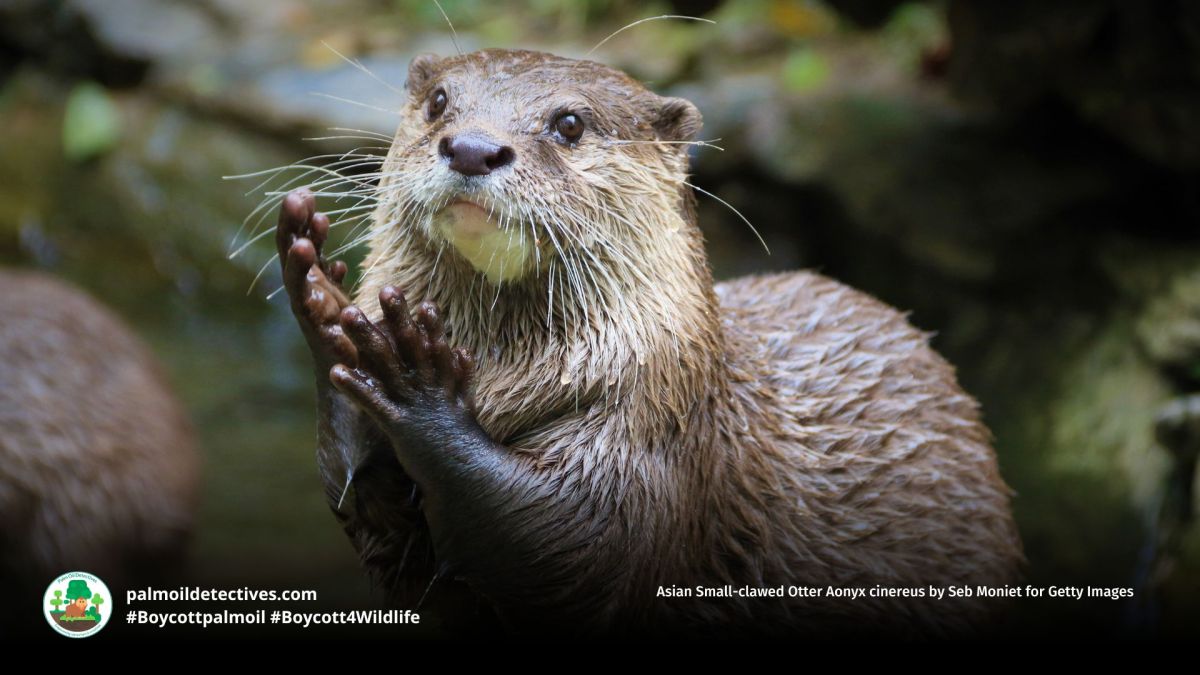
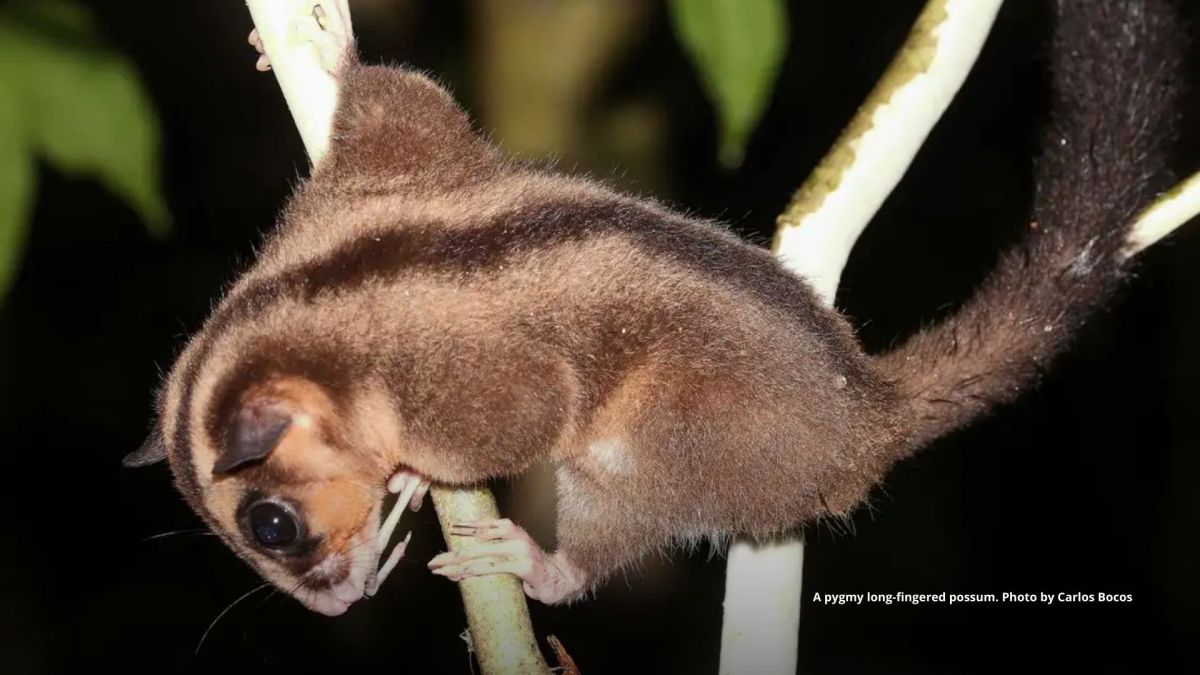
Learn about other animals endangered by palm oil and other agriculture
Learn about “sustainable” palm oil greenwashing
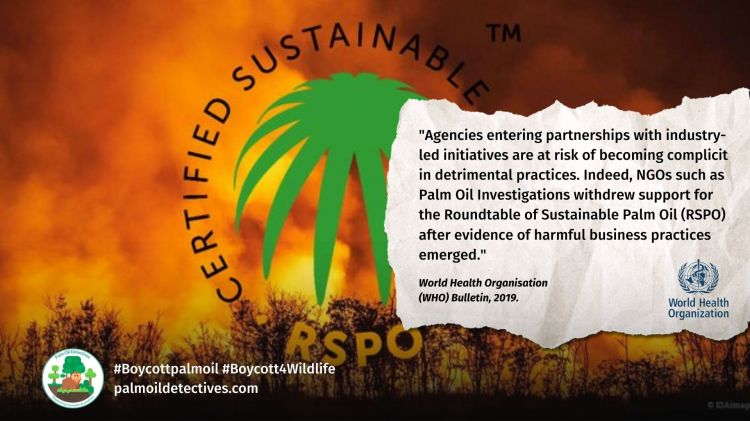
Read more about RSPO greenwashing
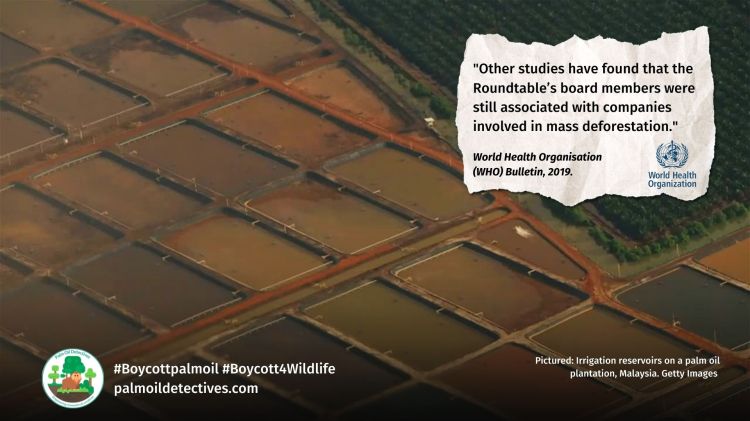
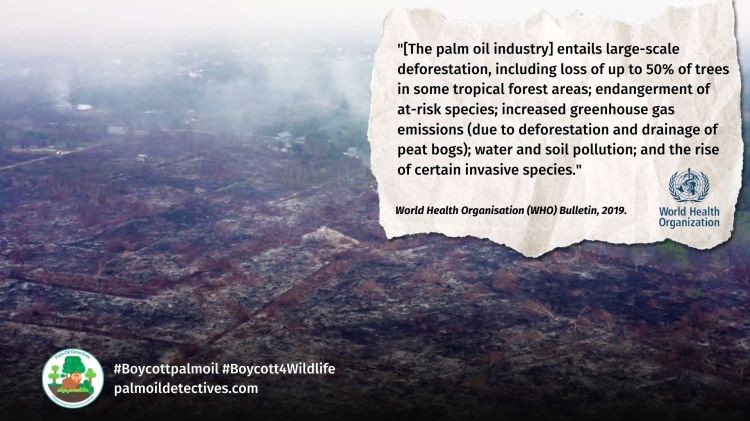
A 2019 World Health Organisation (WHO) report into the palm oil industry and RSPO finds extensive greenwashing of palm oil deforestation and the murder of endangered animals (i.e. biodiversity loss)


Discover more from Palm Oil Detectives
Subscribe to get the latest posts sent to your email.
 Palm Oil Detectives

One thought on “Borneo Forest Dragon Gonocephalus bornensis”